Connect with us

Politics

Tinubu defends reforms as Atiku faults economic policies

Published

on

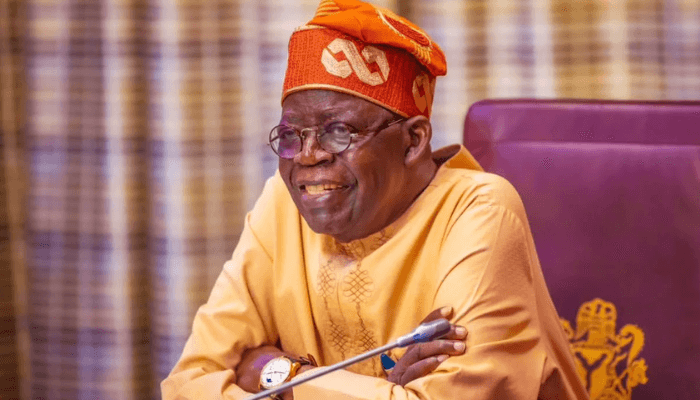
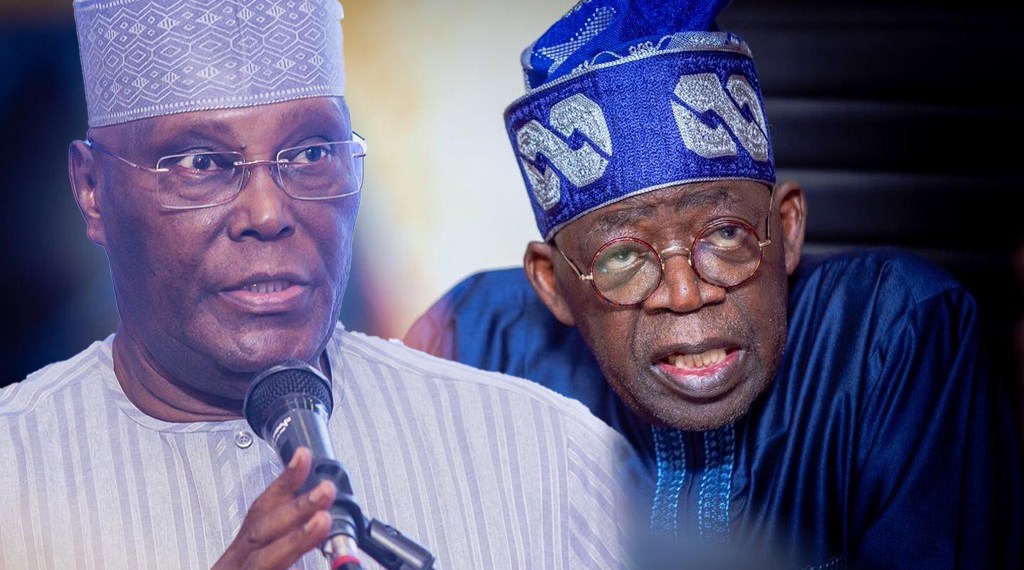
President Bola Tinubu on Tuesday defended his administration’s economic reforms as necessary steps towards building a $1tn economy by 2030, as former Vice President Atiku Abubakar challenged the policies, asking why Nigerians had to endure years of hardship before the government began promising relief.

Tinubu, represented by the National Chairman of the All Progressives Congress, Prof Nentawe Yilwatda, at the second edition of the Asiwaju Scorecard Series and Policy Roundtable in Abuja, said the reforms had strengthened the foundation for economic stability and growth, citing improved foreign reserves, revenue mobilisation, trade and gross domestic product.

Atiku, however, said the administration’s recent promises of cheaper transportation, increased food production and relief for vulnerable Nigerians amounted to a belated response to a cost-of-living crisis it had allowed to persist for more than three years.

Atiku, the presidential candidate of the African Democratic Congress, has continued to oppose the policies of the Tinubu administration as the 2027 general elections draw nearer, particularly its economic reforms and their impact on the cost of living.

Speaking at the event, Tinubu, represented by Yilwatda, said the economic reforms introduced by his administration had placed Nigeria on the path to achieving a $1tn economy by 2030.

He said the reforms had strengthened the foundation for economic stability, growth and prosperity.

The President said the removal of fuel subsidy and reforms in the foreign exchange market, alongside increased revenue mobilisation and investments in critical infrastructure, were necessary to move the country away from years of economic uncertainty and towards sustainable growth.

“When President Bola Ahmed Tinubu assumed office on 29 May 2023, Nigeria faced a difficult economic inheritance. We had fuel subsidy distortions, multiple exchange-rate windows, weak revenue mobilisation, foreign-exchange shortages, rising debt-service pressures and years of inadequate investment in critical infrastructure.

“The President understood that Nigeria could not continue on that trajectory and therefore took difficult decisions, including the removal of the fuel subsidy and the reform of the foreign-exchange market.

“The evidence increasingly shows that the foundation is strengthening. Nigeria’s gross external reserves have risen to about $52.7bn by August 2026.

“Consolidated non-oil revenue increased from approximately N13.63tn in 2023 to N16.4tn in the first two quarters of 2026, demonstrating the growing contribution of non-oil sources to government revenue.

“Our trade position has also improved dramatically: from a merchandise trade surplus of only about N44.8bn for the whole of 2023 to approximately N7.54tn in the first quarter of 2026 alone.

“Real GDP grew by 4.43 per cent in Q2 2026, while inflation has fallen significantly from its earlier peak to about 15.4 per cent.

“These figures do not mean that our economic challenges have disappeared, but they demonstrate that the direction of travel has changed.

“And let me emphasise: macroeconomic stability is not the destination; it is the foundation. The ultimate test is when stability translates into cheaper food, more jobs, affordable credit, reliable electricity and greater purchasing power for Nigerians,” Yilwatda said on Tinubu’s behalf.

Speaking on the $1tn economy, Tinubu said: “It is not merely a number, but a national mission: a Nigeria that produces more, exports more, attracts more investment, creates more jobs and gives its young people a greater stake in the future.”

He said Nigeria’s $1tn economy ambition requires adequate infrastructure, stressing that the Renewed Hope Agenda prioritises roads, rail, ports, energy and digital connectivity.

See also  Adeleke’s defection attracting more members to Accord – Chair

The President added, “Nigeria must now take full advantage of its enormous maritime opportunity by developing an integrated five-port maritime and logistics corridor.

“Our strategic ambition should be to develop and connect five major deep-sea ports at Lagos, Ondo, Ibom, Port Harcourt and Calabar, linking them by modern rail and road infrastructure, with the Lagos-Calabar Coastal Super Highway serving as the principal coastal road spine. But the vision does not stop at the coastline.

“The Western Corridor will connect the maritime gateways to the interior through the Lagos–Abuja–Kaduna–Kano rail corridor, complemented by the Sokoto–Badagry Super Highway, thereby opening a direct trade route from the Atlantic coast to the markets of the Northwest and the Sahel.

“The Eastern Corridor will similarly connect the eastern maritime gateways through the Port Harcourt–Abuja–Kaduna–Kano rail corridor, complemented by the proposed Calabar–Maiduguri Trans-Sahara Super Highway, creating a second major east-to-north trade route.

“In this way, Nigeria can create an integrated national transport system in which our five deep-sea ports are connected, connected to our major cities and production centres, and connected ultimately to the landlocked markets of Niger, Chad, Burkina Faso, Sudan and the Central African Republic.”

He further stated, “This is how Nigeria can move beyond being simply a coastal trading nation to becoming the maritime gateway and logistics hub of West and Central Africa, capturing a much larger share of the continent’s trade, logistics, manufacturing and distribution value chain.

“That is more than transportation infrastructure, but a trade architecture. It would generate opportunities in logistics, warehousing, freight forwarding, customs, banking, insurance, manufacturing, distribution and agro-processing. It would create jobs, generate foreign exchange and strengthen Nigeria’s position as a regional commercial hub.”

Tinubu said Nigeria must develop industrial parks, export-processing zones, logistics hubs, agro-processing clusters and manufacturing centres along major transport corridors.

He said linking rail lines to agricultural and mineral-producing areas would attract processing and manufacturing industries, turning infrastructure into an engine of economic growth.

He added that Nigeria’s ambition must go beyond individual ports to developing an integrated maritime economy covering shipping, logistics, ship repair, marine services, finance, fisheries, offshore energy, tourism and marine technology.

“Every container through a Nigerian port is an economic opportunity. Every Nigerian agricultural product exported is an opportunity. Every factory established along a transport corridor is an opportunity. Every international company that chooses Nigeria as its African distribution base is an opportunity. That is how we grow GDP, create jobs, earn foreign exchange and build the foundation of a $1tn economy,” he said.

He listed Nigeria’s abundant gas and the Ajaokuta-Kaduna-Kano gas pipeline as strategically important in connecting gas resources to major population and industrial centres in Northern Nigeria to generate energy.

“It is about electricity, fertiliser, manufacturing, transportation, energising homes and industrialisation,” he said.

On investment in youths, Tinubu said, “We are investing in the future of our young people because they are the greatest asset of the Nigerian economy.

“Through NELFUND, we are expanding access to higher education so that financial circumstances do not prevent young Nigerians from acquiring the knowledge they need to succeed.

“We are also supporting young people in technical and vocational education through grants and skills-development opportunities, while programmes to train young Nigerians in digital technologies are equipping a new generation with the skills required for the global digital economy.

See also  Terrorists kill Nigerian brigadier general – AFP report

“At the same time, through initiatives such as CREDICORP, we are expanding access to responsible credit so that workers, entrepreneurs and businesses can acquire productive assets, grow their enterprises and create jobs.

“This is not simply social investment; it is an investment in the productive capacity of Nigeria and in the young Nigerians who will ultimately build and drive our $1 trillion economy.”

Earlier in his remarks, the Chairman of the APC Professionals Forum’s Board of Trustees, Dr Isa Yuguda, said the 2027 presidential election should focus on achievements, policies and realistic solutions.

Yuguda described fuel subsidy removal as a difficult but necessary reform, saying his experience as chairman of the 2009 Fuel Subsidy Task Force exposed widespread fraud and financial leakages in the system.

He said the reform had reportedly saved over N15tn, providing more resources for education, security, agriculture and infrastructure.

Yuguda also warned that restoring subsidy could reverse the gains recorded.

“As we approach the 2027 election, Nigerians must carefully evaluate political promises, particularly those relating to the return of fuel subsidy.

“The proposal by former Vice President Alhaji Atiku Abubakar to restore subsidy may appear attractive to citizens seeking immediate relief, but it must be examined against our national experience.

“The old subsidy regime was associated with massive leakages, fraudulent claims, inefficiency, and a significant drain on public finances.

“Presenting a return to that system without clearly addressing these problems risks misleading Nigerians for short-term political gain and could reverse the fiscal space now supporting critical national investments,” he added.

Atiku, however, hit back at Tinubu over his criticism of proposals to reduce energy costs, accusing the administration of making Nigerians endure years of economic hardship while promising relief only as the 2027 elections approach.

Atiku, through his Senior Special Assistant on Public Communication, Phrank Shaibu, said the central issue was not a personal contest between him and Tinubu but the inability of millions of Nigerians to afford necessities.

Shaibu, in a statement on Tuesday titled, “Tinubu, the issue is not Atiku — it is why Nigerians can no longer afford to live,” said Atiku would not engage the President in a personal exchange but would continue to defend policies aimed at reducing the cost of living.

He said, “Atiku has more important people to engage directly: the mother struggling to feed her children; the civil servant whose salary disappears into transportation; the farmer paying more to move produce to market; the student being pushed into debt simply to remain in school; and millions of Nigerians whose daily reality bears no resemblance to the prosperity advertised in your tweets.”

The statement was a response to Tinubu’s recent remarks on economic policy, in which the President criticised Atiku’s proposals to reduce the cost of energy and dismissed the possibility of returning to the era of fuel subsidy.

Shaibu questioned why the administration was now promising cheaper transportation, increased food production and relief for vulnerable Nigerians after more than three years of hardship.

“Why did Nigerians have to suffer for more than three years before your government discovered that economic growth must reach ‘the dining table and the pocket’?

“Why is intervention backwards when Atiku proposes it, but progressive when you announce it?” he asked.

See also  PDP factions open peace talks as Wike denies split

Atiku’s camp argued that reducing the cost of energy would have a wider impact on the economy by lowering transportation and production costs and ultimately reducing prices of food and other essential goods.

The statement noted that the Atiku Economic Recovery Plan would provide targeted support for Nigerian crude supplied for domestic refining under a capped and transparently budgeted framework.

According to him, the proposal would include tracking of crude supplied, monitoring of refined products and a consumer pass-through mechanism to ensure that the benefit of the intervention reaches consumers.

“The economics is straightforward. Reduce fuel costs, and you reduce pressure on transportation. Reduce transportation costs, and you reduce the cost of moving tomatoes, rice, yam, livestock and manufactured goods,” he said.

He added that the objective was to provide “structural relief” rather than allow living costs to rise before introducing temporary palliatives.

The Atiku camp also aimed the administration’s student loan programme, accusing the government of increasing the cost of education and subsequently presenting student loans as the solution.

Atiku described the argument that cheaper fuel would threaten the Nigerian Education Loan Fund, workers’ salaries or the minimum wage as ‘fearmongering dressed up as economics.’

“Celebrating NELFUND as proof that education has become affordable under your government is like setting school fees on fire and then boasting that you lent students a bucket of water,” he said.

The statement stressed that Atiku had reviewed the student loan policy and would seek to reduce the underlying cost of education while considering forgiveness for qualifying student debts.

“A student loan is not a scholarship. It is a liability,” Atiku said, arguing that education policy should enable young Nigerians to acquire education without being pushed into unsustainable debt.

The former vice president also demanded explanations over the financial gains from the removal of petrol subsidy.

According to him, the Federal Government had stated that subsidy removal mobilised about N15.8tn between June 2023 and December 2025, asking what measurable benefits had accrued to ordinary Nigerians in return for the sacrifice.

“Atiku wants to offer Nigerians more than empty figures. He has a plan that respects the dignity and protects the survival of the Nigerian people,” he said.

The statement further renewed demands for a reconciliation of figures involving about N30tn in Federation Account revenues, deductions, savings, transfers and related entries.

It also questioned Import Duty Exemption Certificate approvals covering about N34tn worth of imports in 2025, asking the government to disclose the beneficiaries, values, legal basis and public benefits of the exemptions.

“So when you suddenly announce that relief is coming ‘in the next few weeks,’ Nigerians are entitled to ask: Why now?” the statement added.

The ADC presidential candidate alleged that the promised relief could amount to “a temporary dose of political anaesthesia as 2027 approaches,” but said Nigerians should distinguish election-season measures from sustainable economic recovery.

The statement comes as political parties and opposition figures intensify preparations for the 2027 general elections, with economic hardship, fuel prices, food inflation, wages and social protection expected to feature prominently in the emerging political contest.

Source: punchng.com

FOLLOW US ON:

FACEBOOK

TWITTER

PINTEREST

TIKTOK

YOUTUBE

LINKEDIN

INSTAGRAM

Continue Reading
Click to comment

Leave a Reply

Your email address will not be published. Required fields are marked *

Politics

2027: Yayi promises continuity, unveils development plan

Published

on

The Ogun State governorship candidate of the All Progressives Congress, Senator Solomon Adeola, popularly known as Yayi, on Monday unveiled his nine-pillar manifesto, tagged “ITESIWAJU for Ogun State”, calling for continuity in governance and development policies in the state.

Adeola, who is also the Chairman of the Senate Committee on Appropriation and represents Ogun West Senatorial District, cited Lagos State as an example of how successive administrations could build on the achievements of their predecessors to accelerate economic and infrastructural development.

The senator disclosed this in Abeokuta while meeting with members of the Inter-Party Advisory Council in the state.

He argued that the development recorded in Lagos since the return to democratic rule in 1999 was partly attributable to what he described as a relatively seamless transition from one administration to another.

Adeola said Ogun could experience similar multiplier effects if successive governments maintained and completed viable projects initiated by their predecessors instead of abandoning them for new ones.

According to him, Lagos’ development experience demonstrated the importance of policy continuity, noting that research on the state had documented how successive administrations since 1999 had worked on governance reforms, infrastructure, transportation, revenue generation and urban development.

The APC governorship candidate said that, if elected, his administration would continue viable infrastructure projects inherited from the current government rather than abandoning them because they were initiated by a previous administration.

The senator said discontinuity in government could delay development by several years, stressing that projects should be evaluated by their benefits to the people rather than by the political administration that initiated them.

See also  APC, PDP Abuja conventions of varied colours

He also called for an issue-based campaign ahead of the 2027 election, urging governorship candidates to clearly explain what they intended to do in the areas of youth development, women’s empowerment, industrialisation, agriculture, infrastructure, security, job creation and economic growth.

Adeola said, “If Lagos could achieve what it has achieved through seamless transition of government from one administration to another, we can begin to imagine the multiplier effects that continuity can bring to the economy and development of Ogun.

“People must be able to know what your plans are for the youth, the economy, women, industrialisation, infrastructure, contractors and agriculture. Where are you taking us to? People should judge us on those issues,” he said.

The lawmaker subsequently unveiled his proposed development agenda, tagged “Itesiwaju”, which he said was designed after extensive consultations and intended to address the needs of the state across multiple sectors.

He explained that the slogan, “Itesiwaju Ipinle Ogun”, meaning the progress of Ogun State, was built around a comprehensive development framework.

According to him, the acronym ITESIWAJU represents I — Infrastructure; T — Tourism and Culture; E — Economic Empowerment; S — Security and Welfare; I — Inclusive Growth and Well-being; W — Women, Youth and Poverty Eradication; A — Agriculture and Food Security; J — Job Creation and Industrialisation; and U — Urbanisation and Transparency.

He said the agenda was not designed merely as a vehicle for seeking political power but as a development framework intended to address what he described as the state’s needs across different sectors.

The senator added, “This is not a document put together for the sake of putting a document together. It is not a document put together to grab power.

See also  Primaries aftermath: Obi rallies NDC aspirants for unity

“I put this document together with a sense of purpose. A document that took me three years to put together. It is a document meticulously crafted to attend to every need of everyone in this state.”

He revealed that the proposed agenda was developed from consultations with thousands of people across the state.

Adeola further maintained that the state possessed sufficient economic and human resources to become a model of development, saying his ambition was motivated by what he described as a desire to contribute to the state’s progress.

He urged other candidates and political parties to present their programmes to the electorate and allow voters to assess the competing plans ahead of the election.

He, therefore, dismissed the controversy surrounding his ancestral roots as mere political manoeuvring and what he described as the opposition’s desperation for power.

He said he remained focused on the development of Ogun State, insisting that he would not be distracted, intimidated or blackmailed by the controversy.

“My ancestral challenge is mere politics and desperation for power. I have a vision and believe in the development of this state, so I refuse to be bothered. I refuse to be blackmailed. Under my government, you must be eminently qualified to earn a position,” he said.

Speaking earlier, the Ogun State IPAC Chairman, Comrade Abayomi Sanyaolu, lauded the APC governorship candidate for what he described as his giant strides across the three senatorial districts of the state.

Sanyaolu cautioned all governorship candidates against heating up the polity with vulgar language and personal attacks.

He said, rather, that all candidates should present their manifestos to the electorate and focus on issue-based campaigns.

See also  Wike says PDP crisis over, declares doors open for returnees

Source: punchng.com

FOLLOW US ON:

FACEBOOK

TWITTER

PINTEREST

TIKTOK

YOUTUBE

LINKEDIN

INSTAGRAM

Continue Reading

Politics

Wike draws fresh battle lines with APC governors ahead of 2027 elections, read details

Published

on

The Minister of the Federal Capital Territory, Nyesom Wike, on Monday dismissed concerns by some governors of the All Progressives Congress that the proposed Rainbow Coalition could undermine the ruling party ahead of the 2027 elections.

Speaking on TVC’s Journalists’ Hangout, Wike said the coalition was primarily aimed at mobilising support for President Bola Tinubu’s re-election and would not prevent politicians from contesting governorship and legislative elections on their respective party platforms.

The minister alleged that the opposition of some APC governors to the coalition was driven by their political interests, particularly attempts to influence the emergence of the next Senate President and Speaker of the House of Representatives.

Wike specifically alleged that Imo State Governor and Chairman of the Progressive Governors Forum, Hope Uzodimma, was positioning himself to become Senate President after leaving office.

His comments came days after APC governors declared that they would not support any political alliance capable of weakening the party or affecting its candidates at any level in the 2027 elections.

Uzodimma, at a meeting of APC governors in Abuja, said the forum would exclusively support APC candidates and would not endorse candidates outside the party.

Wike, however, argued that supporting Tinubu for President did not amount to an agreement to abandon candidates of other political parties in governorship and legislative elections.

He cited the experience of the G5 governors during the 2023 elections, saying members of the group supported Tinubu for President while their parties retained their candidates for other elective positions.

“In 2023, core leadership G5, we said we are going to support Mr President. But we never said that all our candidates in other elections will fail. We never said so,” Wike said.

He added, “Particularly in Rivers State, we supported Asiwaju Bola Tinubu; he won the presidential election. But in National Assembly election and the state election, PDP won.”

According to the minister, a similar arrangement could operate in 2027, with politicians supporting Tinubu for President while backing candidates of their preferred parties in governorship and legislative contests.

He rejected claims that such an arrangement would confuse voters, arguing that Nigerians had previously demonstrated their ability to vote across party lines.

See also  Mambilla power: Nigeria wins $3.38bn battle, 1,500MW project gets lifeline

Wike said, “Who will be more confused? Is it not my own candidates that will even be more confused when I’ve told them to support Asiwaju Bola Ahmed Tinubu, and then again, they now go back to support other candidates?”

The minister alleged that some APC governors were concerned that politicians denied tickets by the ruling party could seek alternative platforms, win their elections and subsequently refuse to support candidates favoured by the governors.

He said the governors were seeking to influence the composition of the next National Assembly in order to determine who would emerge as its presiding officers.

“APC in their ongoing party primaries, the governors, in their own wisdom, believe that they should be able now to put senators or House of Reps members who they will dictate to who will become the next Senate President or the Speaker,” he alleged.

Wike said politicians who lost APC tickets could defect to the Peoples Democratic Party or other opposition platforms, win their elections and subsequently refuse to support the candidate preferred by the governors for Senate President or Speaker.

“The fear now is that, if they run and they win, it means that they’re not going to support him to be the Senate President,” he said.

The FCT minister then directly addressed the reported ambition of Uzodimma to emerge as Senate President.

“Mr. President will be inaugurated by May 29. This man’s office will expire by January, February 2028.

“Now, he wants to leave his office to run for Senate. Now, what does that mean? He wants to run for Senate President. Now, what he does is to say to his colleagues, ‘Look, let us, the governors, be the ones that will produce the senators that will produce members of the House of Representatives.

“And of course, some of the governors are not experienced. They buy in, thinking it’s going to make them powerful, not knowing that he has his own interests, his own agenda, to become Senate President,” Wike said.

Wike insisted that he would not support the Imo State governor for the position.

See also  Kidnapping spree escalates as FG negotiates hostages’ freedom

“Life or death, I will never support a character of Hope Uzodimma to be the Senate President of Nigeria. Everybody knows that,” the minister stated.

He, however, maintained that his position was not personal, arguing that the political calculations surrounding the 2027 elections should be examined on their merits rather than reduced to a dispute between individuals.

Wike also alleged that some governors were putting pressure on him because of his decision to remain in the Peoples Democratic Party while supporting Tinubu’s re-election.

He maintained that his support for the President did not require the PDP to withdraw or abandon its candidates in other elections.

The FCT minister also dismissed reports that Tinubu had agreed to concede nine states to the PDP or the Rainbow Coalition as part of a political arrangement ahead of the 2027 elections.

Challenging those behind the claim to identify the states allegedly covered by the arrangement, Wike said, “The nine states, did they tell you the nine states?”

He added, “Let us help Nigerians. Let’s get the facts. Who are… which are those states? Tell us. That they said the President agreed with me that he has conceded nine states.”

Wike said his primary political objective was to secure Tinubu’s re-election, adding that he would campaign on the administration’s record.

He cited the President’s support for state police and what he described as the devolution of resources and powers to sub-national governments as some of the issues he would highlight in making a case for Tinubu’s re-election.

“Mr. President is showing his postcard. We are selling Mr. President what he’s been doing, why he should be re-elected,” he said.

Wike further disclosed that Tinubu was aware of the Rainbow Coalition, saying he did not expect the President to intervene by summoning members of the coalition and the APC governors for a truce.

According to him, Tinubu understood his political activities and had been aware of his position on the coalition.

“As I speak to you here, Mr. President knows about my concept, of the rainbow coalition…. Mr. President understands me very well,” Wike said.

He maintained that the coalition was not designed to take over or weaken the APC, arguing that politicians could support Tinubu for President while retaining their preferred party candidates for governorship and legislative elections.

See also  Adamawa ADC chairman resigns as Fintiri’s aide

The dispute followed the September 15 position of the APC Governors Forum that its members would neither participate in nor support or endorse any alliance or political arrangement capable of undermining Tinubu’s re-election, weakening the APC or adversely affecting its candidates.

Uzodimma, who read the forum’s communique, said the governors’ campaign commitment would be exclusively to APC candidates at all levels.

Wike, however, has continued to argue that the governors’ opposition to the coalition is driven by their political calculations rather than concerns about Tinubu’s re-election.

He had previously accused Uzodimma and Kwara State Governor, AbdulRahman AbdulRazaq, of spearheading opposition to the coalition.

The APC governors, however, have maintained publicly that their position is aimed at protecting the party, its candidates and Tinubu’s re-election, while rejecting support for candidates outside the APC.

Wike nevertheless insisted that the Rainbow Coalition would continue to mobilise support for Tinubu across party lines, arguing that the presidential contest should not be conflated with governorship and legislative elections.

Efforts by our correspondent to obtain a reaction from the All Progressives Congress National Publicity Secretary, Felix Morka, were unsuccessful, as he did not respond to calls placed to his phone.

However, sources within the ruling party told The PUNCH that the National Working Committee was already working behind the scenes to broker a truce, and ensure both parties ended the feud ahead of next year’s polls.

The peace deal is expected to take place with the return of the APC national chairman, Prof. Nentawe Yilwatda, who is scheduled to return from vacation soon.

“The party is leaving nothing to chance. Preparations are well underway, and once the national chairman returns at the beginning of the week, he will lead the NWC to meet with the President and discuss the best way to resolve the matter,” the party source said.

Source: punchng.com

FOLLOW US ON:

FACEBOOK

TWITTER

PINTEREST

TIKTOK

YOUTUBE

LINKEDIN

INSTAGRAM

Continue Reading

Politics

Abiodun, Yayi receive 5,000 Ogun PDP defectors into APC

Published

on

No fewer than 5,000 stalwarts and members of the Peoples Democratic Party in Ogun State on Sunday defected to the ruling All Progressives Congress at an event held in Ilaro, the headquarters of Yewa South Local Government Area of the state.

The PDP members, who were mainly from the Ogun West Senatorial District, were officially received into the APC by Governor Dapo Abiodun, the governorship candidate of the ruling party, and the party chairman in the state, Yemi Sanusi.

Speaking at the event, the former state chairman of the PDP, Sikirullahi Ogundele, said he decided to lead other notable PDP leaders to the ruling party to escape “political slavery” in his former party, where he disclosed that he spent seven years.

He said the mass movement of governors and other prominent politicians away from the PDP was evidence of the deep crisis within the party, stressing that it would amount to political suicide for experienced party leaders like himself and others to remain in the party.

Ogundele explained that “The truth is that there is nothing like the PDP again in the state; what is left behind is an empty shell, the umbrella which is the symbol of the party has been shredded into pieces, and some of us have escaped so as not to allow the PDP dilapidated house to collapse on us.

“We have therefore moved away from the opposition party and embrace the APC, which we know is also the next victorious party in the state come 2027 elections. We are all ready to work diligently and deploy our wealth of experience to further mobilise for the APC landmark victory in 2027.”

See also  Tinubu sends state police amendment bill to Senate

Commenting on the controversy surrounding the origin status of the APC governorship candidate, Ogundele described such allegations as a recurring feature peculiar to governorship contests in the state.

He, however, urged party supporters to disregard claims questioning Adeola’s Ogun roots, recalling that similar allegations had been made against past governors of the state, beginning with Aremo Olusegun Osoba in 1999, Otunba Gbenga Daniel in 2003 and Ibikunle Amosun in 2011, stressing that they all won the elections despite the allegations.

“They said Amosun is from Benin Republic, Daniel from Delta State, Osoba from Osogbo. Despite that, they all emerged as governors of the state. So, what is going on against Yayi now is an indication that he will also win”, he stated.

Those who defected to the APC alongside their supporters included Chief Sina Adejobi, Mr Akinloye Bankole, former Publicity Secretary of the PDP, Evangelist Soji Eweje, former Chairman of Yewa North Local Government, Alhaji Ganiu Dada, popularly called Obanibasiri, and former PDP Woman Leader, Chief Kemi Adeyemi, among others.

Presenting the APC’s ‘broom’ symbol to the defectors, the party chairman in the state, Chief Yemi Sanusi, assured them that they would maintain their leadership status in the APC.

Sanusi further urged the defectors to work assiduously in their respective wards to ensure that the APC won all elective positions in the state in 2027.

In his remarks, Abiodun commended the new entrants into the APC for taking the bold step to join the ruling party, noting that they would be accommodated and fully integrated into the party.

See also  Terrorists kill Nigerian brigadier general – AFP report

Abiodun said, “I want to thank those who have seen the light and have decided to be part of the APC. We value your courage and decision to join forces with us in the ruling party as we are more delighted to have notable politicians from the state believing in the leadership of the APC government in the state.

“I assure all of you that you will all be accommodated in the scheme of things. So let us all work together as one united family and deliver a landmark victory for the APC in the 2027 general elections.”

Source: punchng.com

FOLLOW US ON:
FACEBOOK

TWITTER

PINTEREST

TIKTOK

YOUTUBE

LINKEDIN

INSTAGRAM

Continue Reading

Trending