Connect with us

News

Tenure countdown: States owe N5.3tn as 12 govs near exit

Published

on

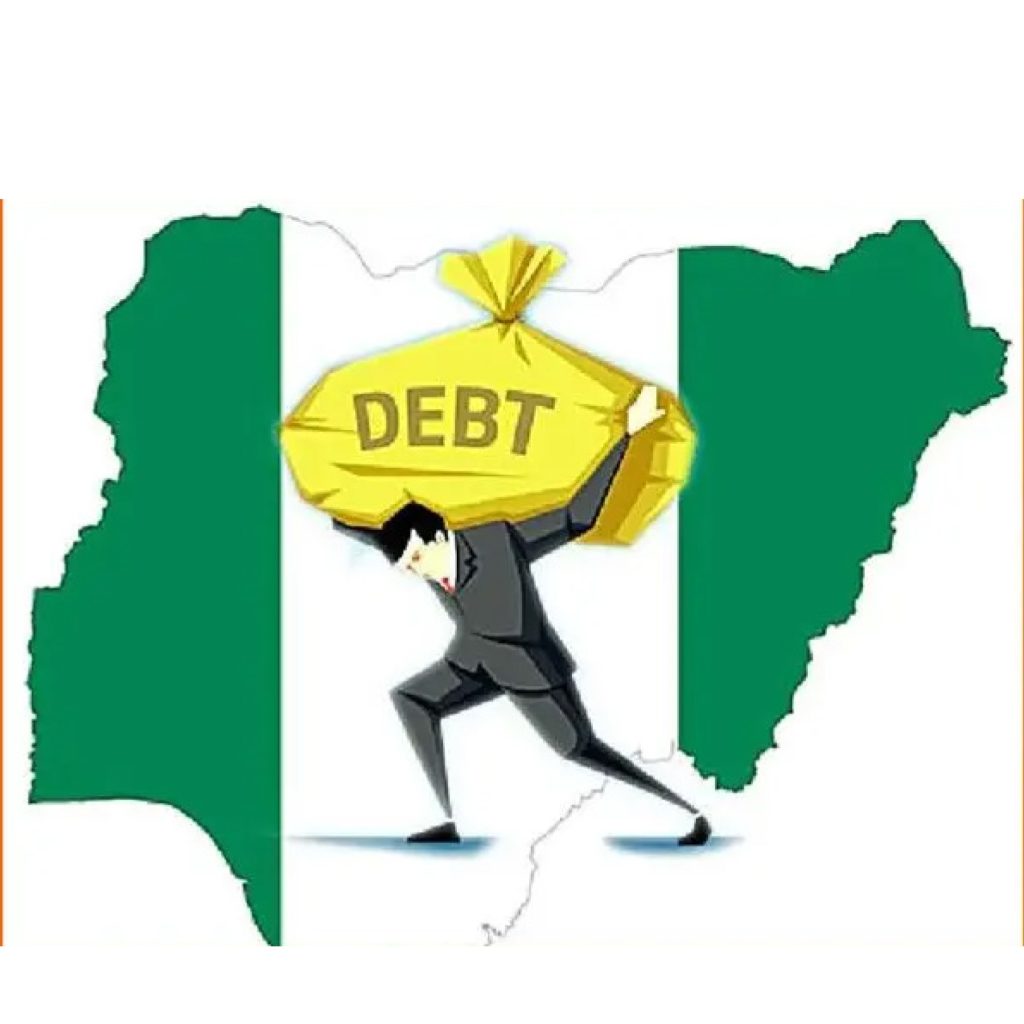
Twelve state governors whose tenures will end in 2027 and early 2028 are set to leave behind a combined debt burden of about N5.3tn, comprising domestic and external obligations, findings by The PUNCH have shown.

The affected governors are Umaru Fintiri of Adamawa, Mai Mala Buni of Yobe, Abdullahi Sule of Nasarawa, AbdulRahman AbdulRazaq of Kwara, Dapo Abiodun of Ogun, Inuwa Yahaya of Gombe, Bala Mohammed of Bauchi, Babajide Sanwo-Olu of Lagos, Babagana Zulum of Borno, Seyi Makinde of Oyo, Hope Uzodimma of Imo and Douye Diri of Bayelsa.

Data obtained from the Debt Management Office showed that the 12 states had accumulated domestic debts of N2.16tn as of the first quarter of 2026, while their external obligations stood at about $2.33bn based on the latest available state-level external debt data.

Most of the governors are expected to complete their second terms in 2027, while Uzodimma and Diri will remain in office until January 15 and February 14, 2028, respectively.

The debt positions of the states have, however, followed different trajectories under the governors, with some reducing their domestic or external obligations despite the overall increase in the combined debt stock.

Lagos tops list

Lagos State carries by far the largest domestic debt burden among the 12 states.

The state’s domestic debt stood at N1.205tn as of the first quarter of 2026, according to the DMO, accounting for more than half of the N2.16tn combined domestic debt of the affected states.

At the other end of the scale is Nasarawa, whose domestic debt stood at N27.15bn, the lowest among the 12 states.

Lagos also recorded the highest external debt, with outstanding foreign obligations of $1.174bn in the DMO’s 2025 external debt profile.

Yobe had the lowest external debt at $46.67m.

See also  FULL LIST: FG lists federal hospitals where dialysis costs ₦12,000

The combined obligations could increase further before the governors leave office if the states undertake fresh borrowing or updated DMO data show additional liabilities.

Debt management record

An analysis of the debt positions inherited by the governors shows a mixed record, with some administrations increasing both domestic and external obligations while others succeeded in reducing at least one component of their debt.

In Adamawa, Fintiri is expected to leave office with domestic debt of N64.7bn, down from N95.22bn when he assumed office. However, the state’s external debt increased to $124m from $100.614m.

Yobe’s Buni increased domestic debt to N98.60bn from N27.47bn. Its external obligations also rose to $46.67m from $26.911m.

Sule is expected to leave Nasarawa with domestic debt of N27.15bn, which is a reduction from N89.95bn when he came to office. His state has external debt of $60.82m.

In Imo, Uzodimma reduced domestic debt substantially to N81.65bn from N164.436bn inherited when he took office. However, external debt increased to $117.08m from $64.762m.

Kwara also recorded a reduction in domestic debt under AbdulRazaq, falling to N56.92bn from N59.58bn. External obligations, however, rose to $64.159m from $47.961m.

Abiodun of Ogun increased both domestic and external debt. Domestic obligations rose to N200.748bn from N97.050bn, while external debt increased to $217m from $102.154m in the first quarter of 2019.

Gombe’s Yahaya reduced domestic debt to N65.17bn from N76.895bn but increased external obligations to $88.7m from $36.960m.

In Bauchi, domestic debt climbed to N154.45bn from N93.320bn under Bala Mohammed, while external debt rose to $220.6m from $133.705m.

Zulum increased Borno’s domestic debt to N88.44bn from N78.259bn and external debt to $69.9m from $21.313m.

Bayelsa recorded one of the sharper reductions. Diri cut domestic debt to N50.17bn from N147.930bn and external debt to $55.5m from $59.551m.

Makinde also reduced Oyo’s domestic debt to N69.8bn from N94.140bn and external obligations to $87.5m from $136.531m.

See also  FG demands protection after two Nigerians killed in South Africa

In Lagos, Sanwo-Olu increased domestic debt to N1.205tn from N542.231bn but reduced external obligations to $1.174bn from $1.421bn.

A Professor of Development Economics at Nnamdi Azikiwe University, Uche Nwogwugwu, said states could reduce their debt burden by investing borrowed funds in productive sectors capable of generating sufficient revenue to repay the obligations.

He said the lack of policy continuity remained a major obstacle, as successive administrations often abandoned existing strategies and introduced new ones instead of building on previous investments.

“Under the current arrangement, every government that comes wants to invent its own wheel. States can actually reduce their debts if they can identify productive investments and channel resources into them,” he said.

Nwogwugwu cited Imo’s investment drive in the gas sector as an example of an attempt to develop alternative sources of economic growth.

“Hope Uzodimma is being inventive in Imo State by trying to channel investments into gas. Alex Otti is also being very inventive by focusing on people-oriented programmes,” he said.

He warned that governments that prioritise projects without clear economic returns risk accumulating large debt burdens.

“Governments that work on publicist projects borrow very heavily. It is not rocket science because every state has something that it can invest in and generate returns,” he said.

According to him, borrowing is not inherently harmful if the funds are deployed into investments that generate returns and improve citizens’ welfare.

“Debt is a micro-unit of a nation. Every part of the state should feel both the cost and the benefits. States have to borrow. There is nothing wrong with states borrowing as far as the debts will be paid back,” he said.

Similarly, a Professor of International Economics, Jonathan Aremu, said borrowing could support economic development when funds were channelled into productive investments but could become a burden when used for projects that generated little or no economic returns.

See also  TCN declares force majeure as rainstorm collapses Lagos-Osun power line

“I always say that there is nothing wrong with debt. If the debt is productive, there is nothing wrong with it. If you borrow N10m and it generates N20m, the debt is a good one,” Aremu said.

He said infrastructure that improves economic activity could constitute productive borrowing.

“If I can borrow and build a road that will help agricultural produce get to the market, the debt is a good one. If it is not producing anything, it is dead-weight debt. It means it is putting a lot of burden on the economy,” he said.

Aremu urged governments to assess the long-term economic impact of every borrowing decision, particularly its ability to generate revenue and improve living standards.

“You have to decide whether it is productive or a dead weight. One thing about debt is that it should not tamper with the sustainability of the economy. The government must consider whether it is productive, dead weight or whether it will improve the lives of the people in the future,” he said.

An emerging markets analyst, Ike Ibeabuchi, meanwhile, warned states against excessive reliance on external borrowing, particularly because the naira’s depreciation has significantly increased the local-currency cost of servicing foreign obligations.

He noted that the naira had weakened substantially from about N465/$ in May 2023 to around N1,326/$, making dollar-denominated obligations considerably more expensive when measured in naira.

“With naira depreciating, external debts are quite a big burden. If you must borrow, look for domestic sources or assets to sell,” he said.

Source: punchng.com

FOLLOW US ON:

FACEBOOK

TWITTER

PINTEREST

TIKTOK

YOUTUBE

LINKEDIN

INSTAGRAM

Continue Reading
Click to comment

Leave a Reply

Your email address will not be published. Required fields are marked *

News

Implement Ogun disability law, PWDs beg Abiodun

Published

on

The Joint National Association of Persons with Disabilities and the Spinal Cord Injuries Association of Nigeria have called on the Ogun State Government to fully implement the state’s Disability Law, nearly nine years after it was signed into law.

The groups made the demand at a joint press briefing held on Wednesday at the NUJ Hall, Iwe Iroyin House, Oke-Ilewo, Abeokuta, urging Governor Dapo Abiodun to provide the political direction required to conclude the implementation process before the expiration of his tenure in eight months.

The Ogun State Disability Law was signed by the former governor, Senator Ibikunle Amosun, on December 27, 2017.

The groups, however, said the law had yet to be fully operationalised, leaving persons with disabilities waiting for the legal framework to translate into functioning institutions, enforceable protections and accessible public systems.

The National President of SCIAN, Abdulwahab Matepo, and the Chairman of JONAPWD, Ogun State chapter, Ayo Awobona, made the call during the joint briefing.

They said, “A law passed to protect the rights of persons with disabilities must not remain a law on paper. It must become a law in action.”

According to the groups, the disability community had engaged the state government and other stakeholders through meetings, consultations, letters, courtesy visits and media advocacy since 2025 in an effort to resolve issues surrounding the implementation of the law, without any success recorded.

They stressed that their campaign was not intended to confront the state government but to ensure that commitments were translated into concrete action.

See also  FG demands protection after two Nigerians killed in South Africa

The groups said discussions about possible amendments to the law should not be allowed to indefinitely delay its implementation.

They advocated the operationalisation of the existing law in accordance with applicable legal procedures while any necessary amendments were pursued through the appropriate legislative process.

They said this would enable the government and the disability community to address implementation and possible improvements to the legal framework simultaneously.

The organisations said non-implementation had practical consequences for persons with disabilities, particularly in education, healthcare, transportation, employment, economic participation and political engagement.

They also called for accessible public institutions and mechanisms through which the rights of persons with disabilities could be protected and government obligations monitored.

The groups said the World Health Organisation estimated that about 16 per cent of the global population experienced significant disability.

They added that a 2025 JONAPWD “Assumptive Data of Persons with Disabilities in Nigeria” estimated that 1,032,221 persons were living with disabilities in Ogun State, based on a 15 per cent benchmark applied to the National Population Commission’s 2025 population projection.

Matepo said, “JONAPWD and SCIAN recognise government as an essential partner in achieving disability inclusion. We are therefore not presenting ourselves as opponents of government.

“We are presenting ourselves as partners seeking accountability and implementation. We remain ready to provide technical input, participate in consultations, review proposed amendments, mobilise the disability community and work constructively with government.

“But partnership must produce results. The disability community has demonstrated patience. We have written letters. We have attended meetings. We have made courtesy visits.

See also  2027: Kwankwaso supporters propose Obi-Kwankwaso presidential ticket

“We have engaged legal experts. We have engaged government officials. We have undertaken public awareness activities. We have participated in consultations. And we have continued to pursue dialogue. The next step should now be action.”

He added, “We respectfully call on His Excellency, Prince Dapo Abiodun, CON, to provide the necessary political direction to ensure that the process of implementing the Ogun State Disability Law is concluded before the expiration of his term in office.

“JONAPWD has already formally appealed to the Governor to intervene and direct the relevant authorities to conclude the necessary processes and commence implementation. We therefore ask that this matter receive the necessary attention at the highest level of the state government.”

Source: punchng.com

FOLLOW US ON:

FACEBOOK

TWITTER

PINTEREST

TIKTOK

YOUTUBE

LINKEDIN

INSTAGRAM

Continue Reading

News

Argentine president slams UN as ‘useless’ over Falklands dispute

Published

on

Argentine President Javier Milei attacked the United Nations in a speech to the world body on Wednesday, calling it a “useless organisation” filled with “arrogant parasites.”

Milei, one of US President Donald Trump’s closest Latin American allies, has repeatedly used the UN platform to criticise global governance and its “woke” agenda.

He accused the United Nations on Wednesday of having failed in its duty to guarantee collective security and human rights, saying it had instead allowed “chaos, violence and international terrorism” to flourish.

The UN, he said, “has become a useless organisation, serving only to feed a caste of fatally arrogant parasites disguised as well-intentioned bureaucrats.”

He accused the organisation of “looking the other way” on Argentina’s claim to the Falkland Islands, a British overseas territory which Argentines refer to as Las Malvinas and claim as part of their land.

Argentina has accused Britain of flouting a UN resolution ordering both parties to desist from unilateral action in the islands, over which the two countries fought a war in 1982.

“Those who follow the rules receive no reward for doing so, while those who break them face no repercussions whatsoever,” Milei said.

Underscoring Milei’s close ties with Trump, Argentina and the United States on Wednesday announced a joint initiative to improve the Latin American nation’s infrastructure and connect it with “vital economic sectors to major Atlantic ports and Western markets.”

The so-called Andes-Atlantic Corridor aims to facilitate investment in transport, digital infrastructure, minerals and energy, including Vaca Muerta, a massive hydrocarbon deposit in southern Argentina, a joint statement said.

See also  TCN declares force majeure as rainstorm collapses Lagos-Osun power line

Last Saturday, PUNCH Online reported that the United Kingdom backed businesses and individuals operating in the Falkland Islands after an Argentine federal judge ordered British and Israeli companies to halt development of an oil project near the disputed territory.

The UK Minister for Overseas Territories, Uma Kumaran, said the government stood behind businesses and individuals supplying goods and services to the Falkland Islands, including those in the hydrocarbons sector.

AFP

Source: punchng.com

FOLLOW US ON:

FACEBOOK

TWITTER

PINTEREST

TIKTOK

YOUTUBE

LINKEDIN

INSTAGRAM

Continue Reading

News

After over 200 days in detention, El-Rufai speaks on silence of friends he stood by in the past

Published

on

Former Kaduna State Governor, Nasir El-Rufai, has addressed the silence of some of his former colleagues, friends and associates amid his current circumstances, saying he does not resent those who have chosen not to stand by him.

El-Rufai, in a statement titled “My Relationships and the Aftermath,” said he had received concerns over the apparent silence of people he had publicly supported or closely associated with in the past.He said his decision to stand by people and causes throughout his life was guided by his Islamic faith, Arewa upbringing, personal values and conscience.

“Over the years, I have stood by people and for causes I believed in, sometimes in difficult circumstances and at considerable personal cost,” he said.

According to him, such actions were not motivated by expectations of praise, gratitude or reciprocity, but by his conviction that they were the right things to do.

El-Rufai said those he had supported were equally free to make their own choices now that their circumstances had changed.

He noted that some might speak in his support, while others might remain silent or even distance themselves from relationships they previously shared.

“Their reasons are their own, and I do not wish to judge them merely because their response differs from what others or even I might have expected,” he said.

The former governor said difficult circumstances could reveal the nature of relationships, adding that the experience of the past few months might cause him to reconsider some relationships.

“Adversity has a way of illuminating relationships,” he said, adding that what he had learnt during the difficult period could lead him to “quietly and without regret” reassess certain relationships and what people who look up to him expect from them.

See also  Jonathan will be on 2027 ballot, says coalition convener; read details

He, however, stressed that such reassessment should not be interpreted as condemnation or reproach.

El-Rufai said he had no regrets about supporting people or causes whenever he believed doing so was right.

“I bear no resentment towards anyone who chooses not to do the same for me,” he said.

He added that he would rather remain faithful to the principles that had guided his conduct than allow the actions of others to change those principles.

On any perceived injustice, ingratitude or injury against him, El-Rufai said he was not seeking revenge or retribution.

“Ultimate accountability belongs to Almighty Allah, and I leave that judgment to Him, in this world and in the Hereafter,” he said.

He concluded by saying that everyone would ultimately have to live with the choices they made, while posterity would form its own judgment.

“My only concern is to remain at peace with my conscience and, above all, with Almighty Allah,” he said.

El-Rufai, who accused the Tinubu administration of witchhunt, has spent 220 days in detention.

Source: dailytrust.com

FOLLOW US ON:

FACEBOOK

TWITTER

PINTEREST

TIKTOK

YOUTUBE

LINKEDIN

INSTAGRAM

Continue Reading

Trending