Connect with us

News

Tenure countdown: States owe N5.3tn as 12 govs near exit

Published

on

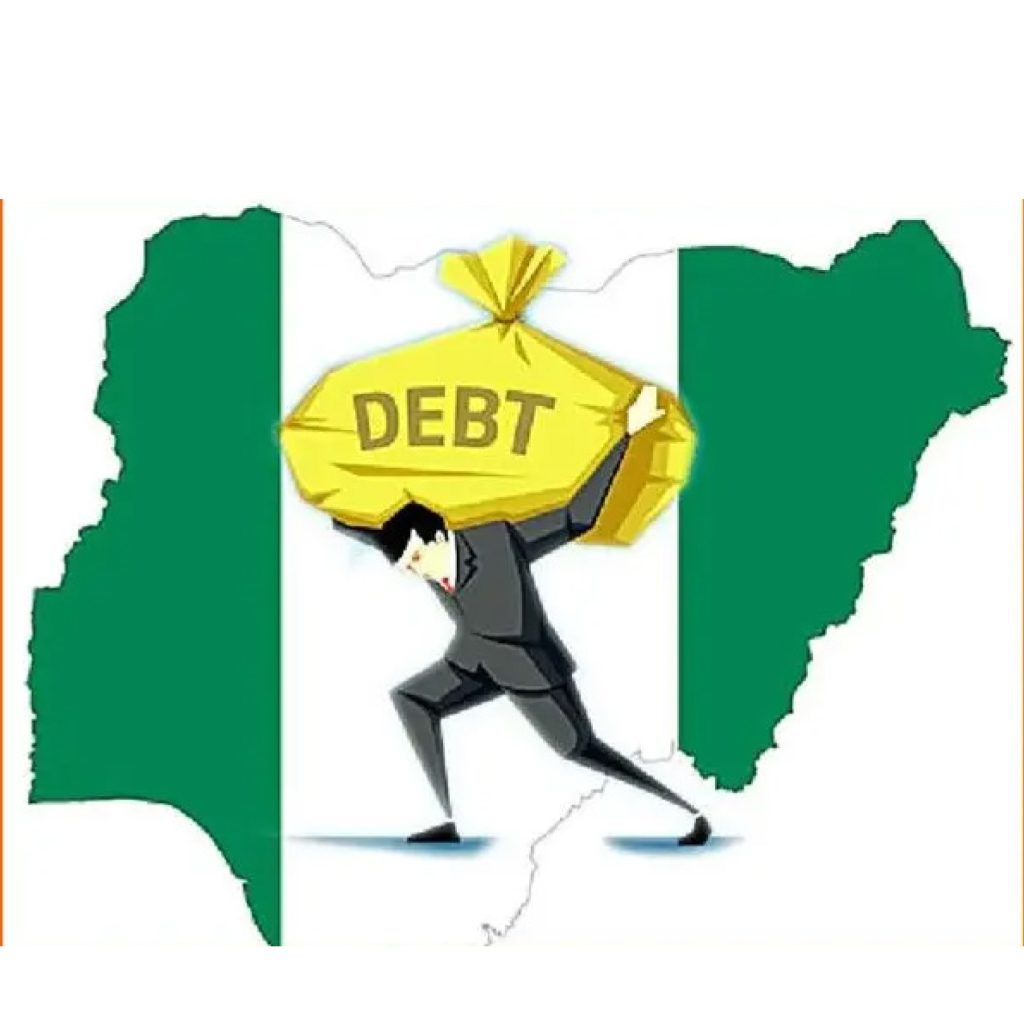
Twelve state governors whose tenures will end in 2027 and early 2028 are set to leave behind a combined debt burden of about N5.3tn, comprising domestic and external obligations, findings by The PUNCH have shown.

The affected governors are Umaru Fintiri of Adamawa, Mai Mala Buni of Yobe, Abdullahi Sule of Nasarawa, AbdulRahman AbdulRazaq of Kwara, Dapo Abiodun of Ogun, Inuwa Yahaya of Gombe, Bala Mohammed of Bauchi, Babajide Sanwo-Olu of Lagos, Babagana Zulum of Borno, Seyi Makinde of Oyo, Hope Uzodimma of Imo and Douye Diri of Bayelsa.

Data obtained from the Debt Management Office showed that the 12 states had accumulated domestic debts of N2.16tn as of the first quarter of 2026, while their external obligations stood at about $2.33bn based on the latest available state-level external debt data.

Most of the governors are expected to complete their second terms in 2027, while Uzodimma and Diri will remain in office until January 15 and February 14, 2028, respectively.

The debt positions of the states have, however, followed different trajectories under the governors, with some reducing their domestic or external obligations despite the overall increase in the combined debt stock.

Lagos tops list

Lagos State carries by far the largest domestic debt burden among the 12 states.

The state’s domestic debt stood at N1.205tn as of the first quarter of 2026, according to the DMO, accounting for more than half of the N2.16tn combined domestic debt of the affected states.

At the other end of the scale is Nasarawa, whose domestic debt stood at N27.15bn, the lowest among the 12 states.

Lagos also recorded the highest external debt, with outstanding foreign obligations of $1.174bn in the DMO’s 2025 external debt profile.

Yobe had the lowest external debt at $46.67m.

See also  PHOTOS: Recover slain Oyo teacher’s body for befitting burial, family begs FG

The combined obligations could increase further before the governors leave office if the states undertake fresh borrowing or updated DMO data show additional liabilities.

Debt management record

An analysis of the debt positions inherited by the governors shows a mixed record, with some administrations increasing both domestic and external obligations while others succeeded in reducing at least one component of their debt.

In Adamawa, Fintiri is expected to leave office with domestic debt of N64.7bn, down from N95.22bn when he assumed office. However, the state’s external debt increased to $124m from $100.614m.

Yobe’s Buni increased domestic debt to N98.60bn from N27.47bn. Its external obligations also rose to $46.67m from $26.911m.

Sule is expected to leave Nasarawa with domestic debt of N27.15bn, which is a reduction from N89.95bn when he came to office. His state has external debt of $60.82m.

In Imo, Uzodimma reduced domestic debt substantially to N81.65bn from N164.436bn inherited when he took office. However, external debt increased to $117.08m from $64.762m.

Kwara also recorded a reduction in domestic debt under AbdulRazaq, falling to N56.92bn from N59.58bn. External obligations, however, rose to $64.159m from $47.961m.

Abiodun of Ogun increased both domestic and external debt. Domestic obligations rose to N200.748bn from N97.050bn, while external debt increased to $217m from $102.154m in the first quarter of 2019.

Gombe’s Yahaya reduced domestic debt to N65.17bn from N76.895bn but increased external obligations to $88.7m from $36.960m.

In Bauchi, domestic debt climbed to N154.45bn from N93.320bn under Bala Mohammed, while external debt rose to $220.6m from $133.705m.

Zulum increased Borno’s domestic debt to N88.44bn from N78.259bn and external debt to $69.9m from $21.313m.

Bayelsa recorded one of the sharper reductions. Diri cut domestic debt to N50.17bn from N147.930bn and external debt to $55.5m from $59.551m.

Makinde also reduced Oyo’s domestic debt to N69.8bn from N94.140bn and external obligations to $87.5m from $136.531m.

See also  𝐄𝐂𝐎𝐖𝐀𝐒, 𝐈𝐬𝐥𝐚𝐦𝐢𝐜 𝐥𝐞𝐚𝐝𝐞𝐫𝐬 𝐮𝐧𝐢𝐭𝐞 𝐭𝐨 𝐟𝐢𝐠𝐡𝐭 𝐭𝐞𝐫𝐫𝐨𝐫𝐢𝐬𝐦 𝐢𝐧 𝐖𝐞𝐬𝐭 𝐀𝐟𝐫𝐢𝐜𝐚

In Lagos, Sanwo-Olu increased domestic debt to N1.205tn from N542.231bn but reduced external obligations to $1.174bn from $1.421bn.

A Professor of Development Economics at Nnamdi Azikiwe University, Uche Nwogwugwu, said states could reduce their debt burden by investing borrowed funds in productive sectors capable of generating sufficient revenue to repay the obligations.

He said the lack of policy continuity remained a major obstacle, as successive administrations often abandoned existing strategies and introduced new ones instead of building on previous investments.

“Under the current arrangement, every government that comes wants to invent its own wheel. States can actually reduce their debts if they can identify productive investments and channel resources into them,” he said.

Nwogwugwu cited Imo’s investment drive in the gas sector as an example of an attempt to develop alternative sources of economic growth.

“Hope Uzodimma is being inventive in Imo State by trying to channel investments into gas. Alex Otti is also being very inventive by focusing on people-oriented programmes,” he said.

He warned that governments that prioritise projects without clear economic returns risk accumulating large debt burdens.

“Governments that work on publicist projects borrow very heavily. It is not rocket science because every state has something that it can invest in and generate returns,” he said.

According to him, borrowing is not inherently harmful if the funds are deployed into investments that generate returns and improve citizens’ welfare.

“Debt is a micro-unit of a nation. Every part of the state should feel both the cost and the benefits. States have to borrow. There is nothing wrong with states borrowing as far as the debts will be paid back,” he said.

Similarly, a Professor of International Economics, Jonathan Aremu, said borrowing could support economic development when funds were channelled into productive investments but could become a burden when used for projects that generated little or no economic returns.

See also  Personal loans rise to N2tn as Nigerians borrow more

“I always say that there is nothing wrong with debt. If the debt is productive, there is nothing wrong with it. If you borrow N10m and it generates N20m, the debt is a good one,” Aremu said.

He said infrastructure that improves economic activity could constitute productive borrowing.

“If I can borrow and build a road that will help agricultural produce get to the market, the debt is a good one. If it is not producing anything, it is dead-weight debt. It means it is putting a lot of burden on the economy,” he said.

Aremu urged governments to assess the long-term economic impact of every borrowing decision, particularly its ability to generate revenue and improve living standards.

“You have to decide whether it is productive or a dead weight. One thing about debt is that it should not tamper with the sustainability of the economy. The government must consider whether it is productive, dead weight or whether it will improve the lives of the people in the future,” he said.

An emerging markets analyst, Ike Ibeabuchi, meanwhile, warned states against excessive reliance on external borrowing, particularly because the naira’s depreciation has significantly increased the local-currency cost of servicing foreign obligations.

He noted that the naira had weakened substantially from about N465/$ in May 2023 to around N1,326/$, making dollar-denominated obligations considerably more expensive when measured in naira.

“With naira depreciating, external debts are quite a big burden. If you must borrow, look for domestic sources or assets to sell,” he said.

Source: punchng.com

FOLLOW US ON:

FACEBOOK

TWITTER

PINTEREST

TIKTOK

YOUTUBE

LINKEDIN

INSTAGRAM

Continue Reading
Click to comment

Leave a Reply

Your email address will not be published. Required fields are marked *

News

Soludo seeks pharmacists’ support to tackle fake drugs

Published

on

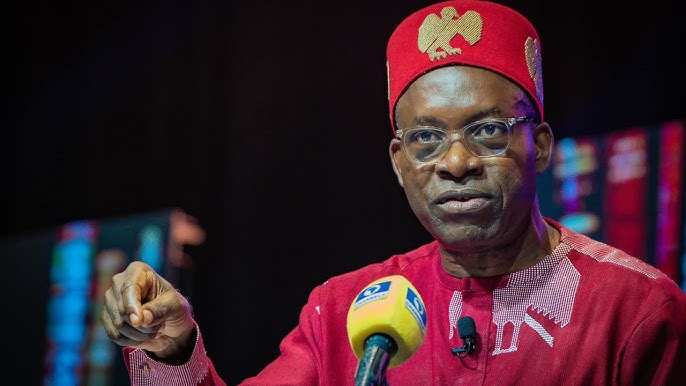
Anambra State Governor, Chukwuma Soludo, has called for stronger collaboration between his administration and the Pharmaceutical Society of Nigeria to improve healthcare delivery and tackle the circulation of counterfeit drugs.

Soludo made the call on Tuesday while declaring open the 99th Annual National Conference of the PSN at the International Convention Centre, Awka.

Welcoming delegates to the state, the governor described Anambra as “Nigeria’s pharmaceutical headquarters”.

The conference, tagged “Ijele 2026”, has the theme, ‘One health, One pharmacy: Bridging knowledge, practice and policy for national impact’.

Soludo said pharmacists played a vital role in building a healthy and productive society, urging the professional body to work with the state government to strengthen regulation and ensure safe pharmaceutical practices.

He said, “We urge pharmacists to join hands with the state government in cracking down on fake and counterfeit drugs. We also call on the leadership to police members’ operations and eliminate fake shops posing as registered pharmacies.

“Human capital remains Anambra’s greatest asset. Our major strides in public education, where reforms and free schooling from kindergarten to secondary level have slashed the out-of-school children rate to 0.25 percent, the lowest in the country.”

The governor also highlighted his administration’s efforts to improve healthcare delivery, including the revamp of primary healthcare centres and a free antenatal care programme.

He said the programme had served more than 250,000 pregnant women and supported over 900 free caesarean section deliveries.

Soludo added that work was ongoing on a dedicated pharmaceutical hub in Oba, alongside a Coordinated Wholesale Centre expected to be completed early next year.

See also  Personal loans rise to N2tn as Nigerians borrow more

Earlier, the President of the PSN, Ayuba Ibrahim, recalled his previous pledge to host the society’s flagship national conference in Anambra.

Ibrahim also noted that his earlier prediction of Soludo’s electoral victory had materialised, while expressing appreciation to the governor for his support for the pharmacy profession.

The society later presented an excellence award to Soludo in recognition of his support for pharmacy practice in Anambra and beyond.

The pharmaceutical sector plays a critical role in Nigeria’s healthcare system, particularly in the production, distribution and dispensing of medicines.

However, the circulation of fake and substandard drugs, unlicensed medicine outlets and poor regulatory compliance remain concerns for public health

The Pharmacists Council of Nigeria regulates the training and practice of pharmacists, as well as the registration of pharmacy premises, while the National Agency for Food and Drug Administration and Control oversees the regulation of medicines and other regulated products.

Source: punchng.com

FOLLOW US ON:

FACEBOOK

WHATSAPP CHANNEL

TWITTER

PINTEREST

TIKTOK

YOUTUBE

LINKEDIN

INSTAGRAM

Continue Reading

News

Democrat Abdul El-Sayed becomes first Muslim elected US senator

Published

on

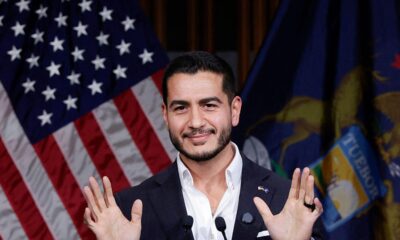
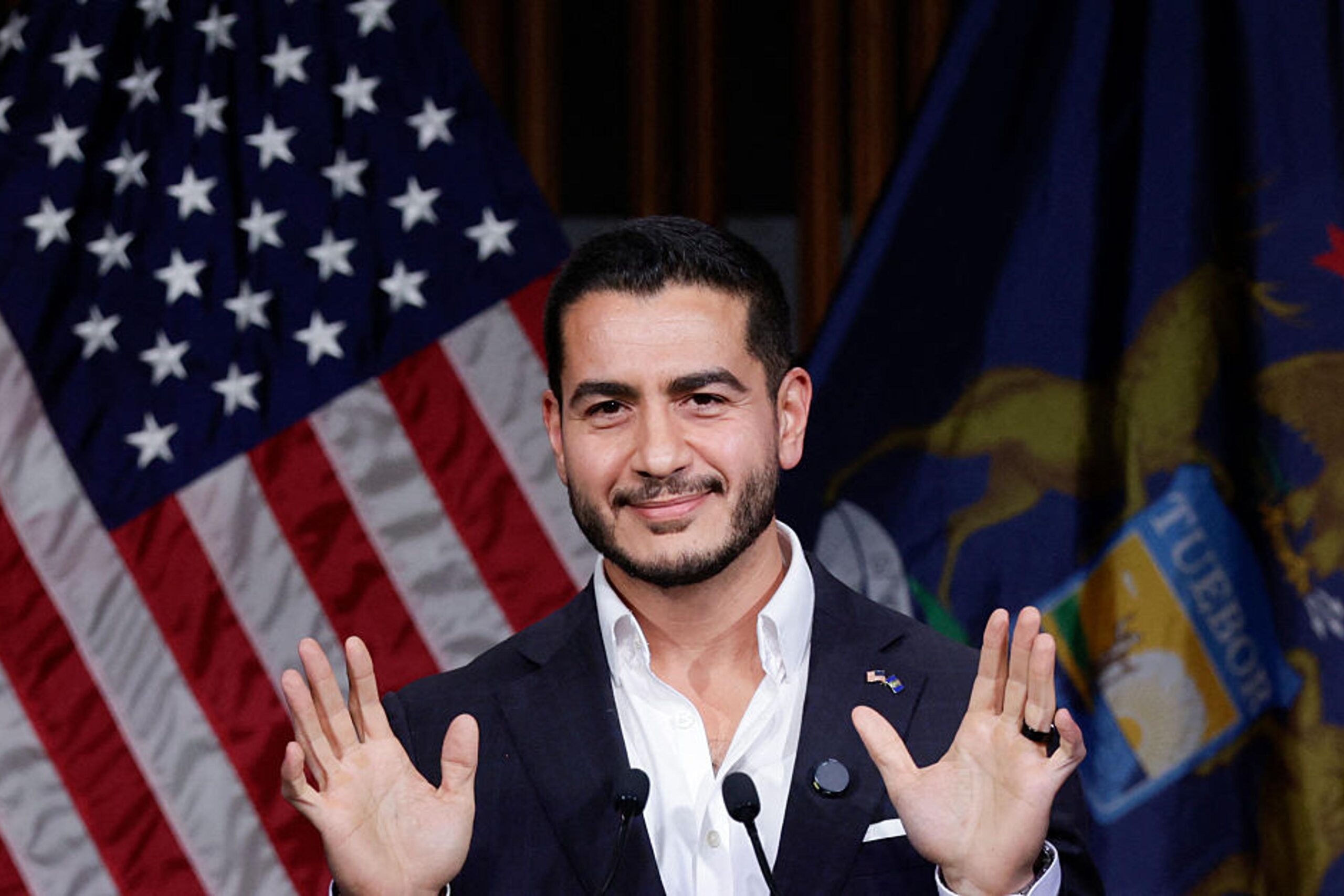
Democrat Abdul El-Sayed has made history as the first Muslim elected to the United States Senate after defeating former Republican Representative Mike Rogers in Michigan’s closely watched midterm election.

El-Sayed’s victory, projected by US media on Tuesday, secured the seat being vacated by retiring Democratic Senator Gary Peters and marked a milestone for Muslim representation in American politics.

According to Anadolu Agency, the 42-year-old Egyptian-American former public health official will assume office when the new Congress convenes in January.

His victory followed a competitive Democratic primary in August, in which he defeated Representative Haley Stevens before securing his party’s ticket for the general election.

El-Sayed’s campaign attracted support from prominent progressive politicians, including Senator Bernie Sanders, Representative Alexandria Ocasio-Cortez and Michigan Representative Rashida Tlaib.

He campaigned on expanding access to healthcare through Medicare for All, reducing housing costs, limiting the influence of wealthy donors in politics and improving economic opportunities for working families.

His position on US support for Israel also featured prominently during the campaign.

El-Sayed criticised American military assistance to Israel, described its military operations in Gaza as genocide and called for an end to unconditional US military support.

The issue generated divisions within the Democratic Party, particularly after Stevens, whom he defeated in the primary, endorsed Rogers two days before the general election.

Stevens said her decision was informed by concerns about El-Sayed’s campaign rhetoric and political associations, drawing criticism from some Democrats.

El-Sayed rejected allegations linking him to extremism, arguing that the attacks were an attempt to divert attention from the economic challenges facing Americans.

See also  Presidency backs EFCC on Atiku’s son-in-law hunt

Born in Rochester Hills, Michigan, to Egyptian immigrant parents, El-Sayed studied medicine and public health before venturing into politics.

He graduated from the University of Michigan in 2007 and obtained a doctorate in public health from the University of Oxford in 2011 as a Rhodes Scholar.

He later earned his medical degree from Columbia University in 2014.

In 2015, he was appointed health director for Detroit, where he oversaw efforts to rebuild the city’s public health services following its financial crisis. He held the position until 2017.

He contested the Michigan governorship in 2018 but lost the Democratic primary to Gretchen Whitmer.

Between 2023 and 2025, he served as director of the Wayne County Department of Health, Human and Veterans Services.

His election marks a new chapter in Muslim political representation in the United States. Although Muslim Americans have previously served in the House of Representatives, none had been elected to the Senate before his victory.

Keith Ellison became the first Muslim elected to Congress in 2006, while Tlaib and Ilhan Omar made history in 2018 as the first Muslim women elected to the House of Representatives.

Source: punchng.com

FOLLOW US ON:
FACEBOOK

WHATSAPP CHANNEL

TWITTER

PINTEREST

TIKTOK

YOUTUBE

LINKEDIN

INSTAGRAM

Continue Reading

News

Trump rejects blame for Republican losses, says candidates failed to inspire voters

Published

on

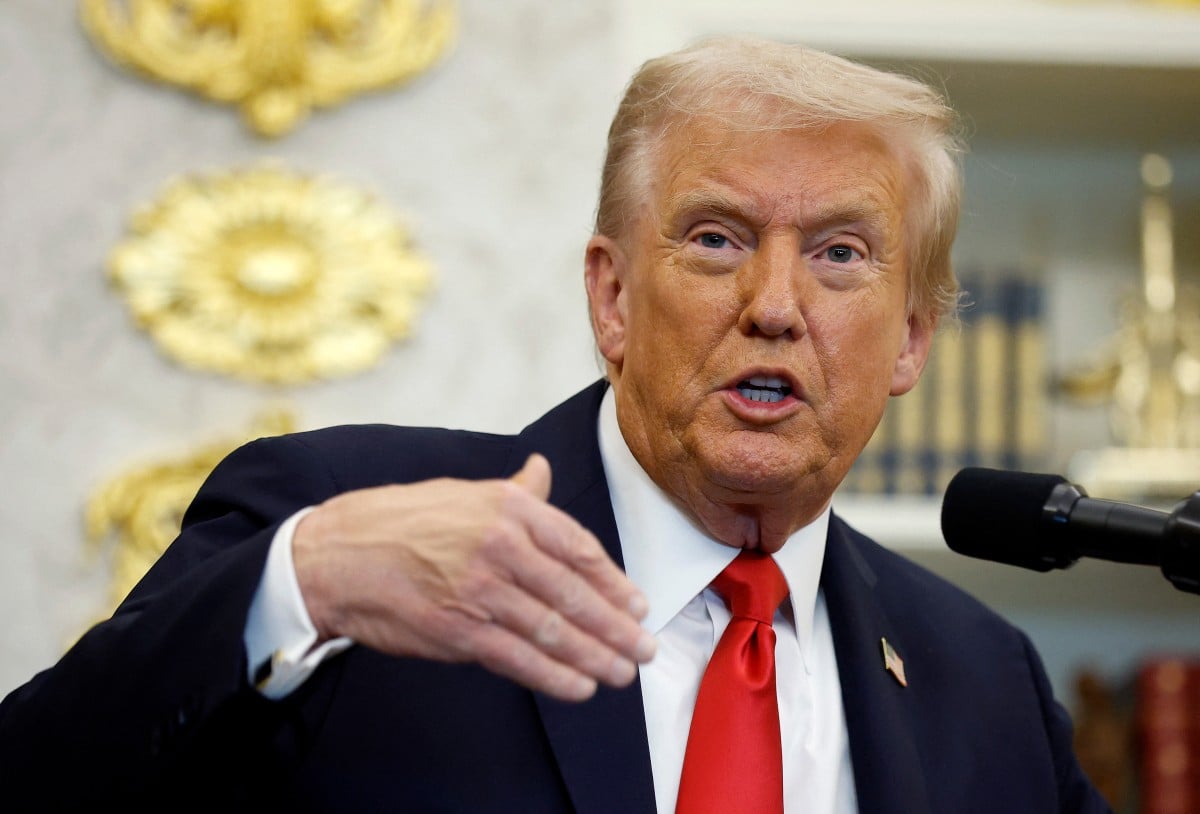
United States President Donald Trump has rejected suggestions that his leadership and policies contributed to Republican losses in the midterm elections, instead blaming the party’s candidates for failing to mobilise voters.

The election results, which saw Democrats win control of both the House of Representatives and the Senate on Tuesday, have raised questions about Trump’s political standing and the direction of his administration for the remainder of his term.

While members of both parties viewed the outcome as a rejection of Trump’s record in office, the President dismissed the suggestion that the results represented a setback for him.

“But I don’t view it as a hit on me,” Trump told Fox News in a live phone interview.

“We’ve had the greatest two years in the history of the presidency in terms of the economy, in terms of all the things that we’ve done.”

Trump argued that the losses were largely caused by the performance of individual Republican candidates rather than his administration’s policies, including the war in Iran and tariffs that have contributed to rising prices.

He also blamed what he described as favourable media coverage of Democratic candidates, particularly on Fox News, saying the election outcome came as only a “little surprise”.

“I thought they’d do better,” he said, referring to Republican candidates.

He later attributed the outcome to a “mood in the air”, while maintaining that his administration’s policy agenda would continue despite the Democrats’ gains in Congress.

The election followed weeks of campaigning by Trump, who travelled to Republican-leaning states to rally support for candidates, urging voters to “pretend I’m on the ballot”.

See also  Tinubu brokers peace as Fubara, Wike exit Villa together

However, the strategy failed to deliver the expected results, with Trump insisting that the candidates did not do enough to attract voters.

“They just didn’t inspire the people to get out and vote,” he told Fox News.

“And I wasn’t on the ballot. If I was on the ballot, they would have got out.”

Several of the defeated candidates, including Darline Graham in South Carolina, Ken Paxton in Texas, Michael Whatley in North Carolina and Mike Collins in Georgia, had received Trump’s endorsement.

Some of the endorsements had also been made against the wishes of other Republican leaders.

Trump, however, did not acknowledge his role in selecting the candidates as he criticised their performances.

“I had no choice,” he said, defending his decision to support Paxton over incumbent Senator John Cornyn in Texas.

“When it wasn’t fashionable, he kissed my ass.”

In a post on his Truth Social platform shortly before midnight, Trump indicated that he would publicly analyse the reasons behind the party’s losses.

“I’m going to become a Political Pundit, both good and bad, on the reasons these Candidates won and lost!” he wrote.

He subsequently criticised Texas Governor Greg Abbott, describing him as a “Republican in name only” and accusing him of returning to an unsuccessful political strategy.

“He went back to his original formula, and it wasn’t pretty!” Trump wrote.

However, in an interview with Politico around the same period, the President said he was not interested in blaming anyone for the outcome.

“I don’t want to blame anybody,” he said.

See also  Aguiyi-Ironsi family demands compensation, apology 58 years after counter-coup

“I just want to say, you know, it was a very interesting period of time. I watched with great interest, learned from it.”

Trump also expressed willingness to work with Democrats, who will now have greater influence over legislative decisions in Washington.

He said he had already spoken with some Democratic politicians, although he did not identify them.

“You know, I have a lot of friends that are Democrats. Believe it or not, I’ve already spoken to some of them,” he said.

The President spoke about finding areas of agreement with the opposition party, although similar promises of bipartisan cooperation following Republican losses in the 2018 midterm elections did not produce significant results.

Meanwhile, Trump dismissed suggestions that he regretted his decision to launch the war in Iran, an issue some Republicans have identified as contributing to the party’s poor electoral performance.

“I don’t think about it. I did the right thing,” he told The Wall Street Journal when asked whether he regretted the military action.

“I would have done it again.”

Source: punchng.com

FOLLOW US ON:

FACEBOOK

WHATSAPP CHANNEL

TWITTER

PINTEREST

TIKTOK

YOUTUBE

LINKEDIN

INSTAGRAM

Continue Reading

Trending