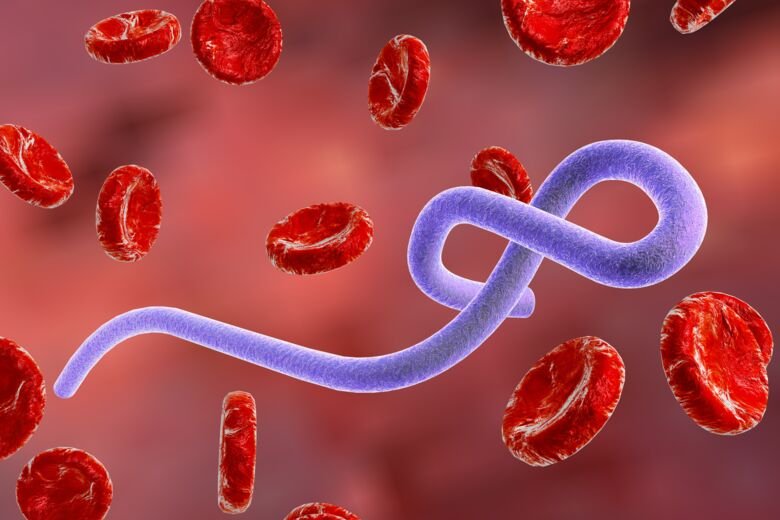
The Ogun State Government has intensified surveillance and preparedness measures following the Federal Government’s announcement of an Ebola case in the Federal Capital Territory, assuring residents that no case had been recorded in the state as of October 21, 2026.
The government urged residents to remain vigilant, observe preventive measures and avoid panic or the spread of unverified information.
The Commissioner for Health, Dr Tomi Coker, disclosed this in a statement on Wednesday, noting that Ogun had been on heightened alert since the declaration of Ebola in the Democratic Republic of the Congo in March 2026.
Coker said about 111 persons of interest, comprising passengers from high-risk countries, had been identified, monitored and subsequently discharged from follow-up after completing the required surveillance period.
The commissioner said, “The state’s Public Health Emergency Operations Centre is also coordinating preparedness and response activities to ensure the prompt identification, reporting and management of any suspected case’
“The government has strengthened the capacity of Disease Surveillance and Notification Officers, port health officers, health educators, clinicians and community informants through training on appropriate response procedures.
“Relevant national guidelines, protocols and resource materials have been adapted and deployed to guide the state’s response, while public sensitisation and infection prevention and control measures in healthcare facilities were being intensified.”
She urged residents to remain calm and obtain information from official public health authorities.
Coker explained that Ebola is a serious disease that can cause severe illness and death, noting that its early symptoms may resemble those of other common illnesses.
She listed the symptoms to include fever, severe weakness, fatigue, headache, muscle pain, sore throat, vomiting, diarrhoea and abdominal pain. Unexplained bleeding or bruising may also occur in some cases.
According to her, symptoms can develop between two and 21 days after exposure. She stressed, however, that experiencing these symptoms does not automatically mean a person has Ebola, although prompt professional assessment is essential, particularly where there has been possible exposure or travel to a high-risk area.
The commissioner explained that Ebola spreads through direct contact with the blood or body fluids of an infected person who has developed symptoms, the body of someone who has died from the disease, or materials contaminated with such fluids.
She advised residents to wash their hands regularly with soap and running water and use alcohol-based hand sanitiser when soap and water are unavailable.
Residents were also cautioned against contact with the blood and body fluids of anyone suspected of having the disease and sharing needles, razors or other items that could be contaminated.
Coker urged anyone who might have been exposed to Ebola to contact public health authorities promptly without waiting for symptoms to develop.
She further advised anyone who develops symptoms after possible exposure to avoid close contact with others and contact public health authorities before visiting a healthcare facility to enable safe referral to an appropriate medical centre.
The commissioner also called on residents to cooperate with surveillance and follow-up teams, provide accurate information when contacted by public health officials and comply with the guidance issued.
She warned against touching the bodies of people who die from suspected or confirmed Ebola, stressing that safe and dignified burials must be handled by trained teams.
Coker also cautioned against rumours, discrimination and stigmatisation, urging residents to share only information from verified public health sources.
She said the Ogun State Government would continue to work with the Federal Ministry of Health and Social Welfare, the Nigeria Centre for Disease Control and Prevention and other relevant partners to monitor developments and implement appropriate measures to protect public health.
The commissioner called on healthcare workers in public and private facilities to maintain a high index of suspicion, promptly identify and isolate suspected cases, observe strict infection prevention and control protocols and immediately notify the state surveillance team through the Disease Surveillance and Notification Officers in their respective local government areas.
She provided the contact number of the State Epidemiologist as 08084250881 and the NCDC toll-free line as 6232 for reporting suspected cases and obtaining public health guidance.
Coker emphasised that early detection, timely reporting and cooperation among residents, healthcare workers and public health authorities were essential to preventing the spread of the disease.
Source: punchng.com
FOLLOW US ON:
FACEBOOK
WHATSAPP CHANNEL
TWITTER
PINTEREST
TIKTOK
YOUTUBE
LINKEDIN
INSTAGRAM