Connect with us

News

Fani-Kayode demands justice as two more Nigerians killed in South Africa

Published

on

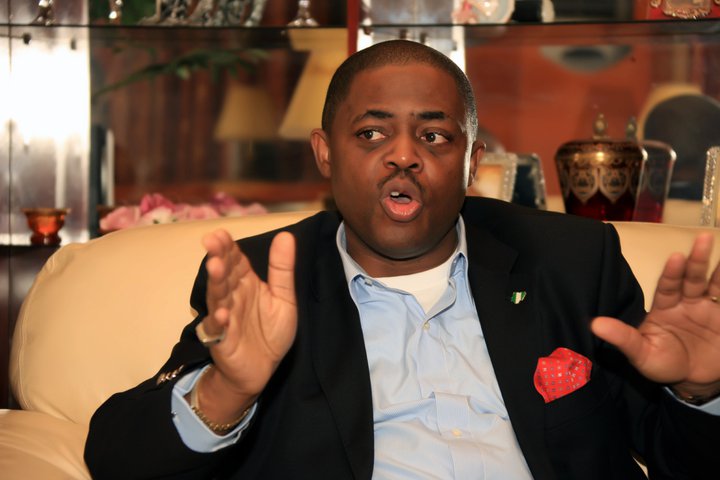
Nigerian High Commissioner-designate to South Africa, Chief Femi Fani-Kayode, has demanded urgent action by the South African Government to protect Nigerians and bring perpetrators of killings involving Nigerian nationals to justice.

Fani-Kayode, reacting to the recent killings of Bishop Michael Taiwo Fakunle and James Uchechukwu Nwankwo in Johannesburg in a statement made available to Tribune, said he was “mortified and deeply shocked” by the developments, warning that Nigeria’s patience over the situation was wearing thin.

Fakunle was allegedly shot dead at his home in Johannesburg on September 4 after receiving a series of threats, while Nwankwo reportedly died on September 5 following what Fani-Kayode described as “gruesome interrogation techniques” by officers of the South African Police Service (SAPS).

According to the High Commissioner-designate, the two deaths bring to eight the number of Nigerians allegedly murdered in South Africa this year, with four of the cases involving South African police officers.

“Bishop Fakunle and Mr. Nwankwo are the seventh and eighth Nigerians to have been murdered in South Africa this year alone. No less than four amongst the eight were murdered by South African police officers,” he said.

Fani-Kayode further claimed that more than 100 Nigerians had been killed in South Africa since 2022, including over 30 allegedly killed by personnel of the SAPS and the South African Defence Force.

He expressed concern that, despite repeated complaints by the Nigerian authorities, no person had been arrested, detained, prosecuted or brought to justice in connection with the alleged killings.

“What is most disturbing is the fact that in spite of our constant expressions of concern about this disturbing state of affairs, not one person has been arrested, detained, prosecuted or brought to justice for any of these heinous crimes,” he said.

See also  AI can lift millions of girls off the streets, stakeholders tell FG

“This is unacceptable.”

Fani-Kayode called on the South African Government to intensify efforts to protect Nigerian nationals and ensure that those responsible for their deaths were prosecuted.

“We call on the South African Government to do far more to protect our nationals and to bring those that have killed or are planning to kill them to justice,” he said.

“No-one deserves to be targeted and murdered simply because they are Nigerian.”

He said the Nigerian community in South Africa was “deeply disturbed” by the developments and living in fear over what could happen next, adding that the Nigerian Mission in the country was equally concerned.

The High Commissioner-designate also condemned what he described as a fresh deadline issued to African nationals, including Nigerians, to leave South Africa by September 30.

According to him, the deadline was issued by South African non-governmental organisations which he accused of being “brazenly racist, xenophobic and Afrophobic” and of threatening Nigerian and other African nationals who failed to comply.

“We call on the South African Government to protect our people from the excesses of these racist organisations and their misguided members and to apply the full weight of the law against them for their lawless behaviour,” he said.

He also urged the South African authorities to prosecute individuals responsible for allegedly “traumatising, terrorising, torturing and killing” Nigerians.

Fani-Kayode said Nigeria remained committed to strengthening relations with South Africa but warned that continued killings and discrimination against Nigerians could undermine bilateral ties.

“Whilst we seek to establish stronger and deeper ties with the South African Government, one thing remains clear. If this vicious cycle of discrimination against and killing of our nationals does not stop, there will be consequences,” he said.

See also  Oil revenue shakeup: States back Tinubu’s Executive Order

“Simply put, our patience is wearing thin.”

He added: “South Africans are not targeted and killed in Nigeria by our people or our security forces. The least the South African Government can do is to reciprocate this gesture, protect our nationals and address our legitimate concerns.”

Fani-Kayode condoled with the families and associates of the two deceased Nigerians, praying that the souls of Fakunle and Nwankwo would rest in peace.

Source: tribuneonlineng.com

FOLLOW US ON:

FACEBOOK

TWITTER

PINTEREST

TIKTOK

YOUTUBE

LINKEDIN

INSTAGRAM

Continue Reading
Click to comment

Leave a Reply

Your email address will not be published. Required fields are marked *

News

Trump dismisses report China gave Iran intel before US base attack

Published

on

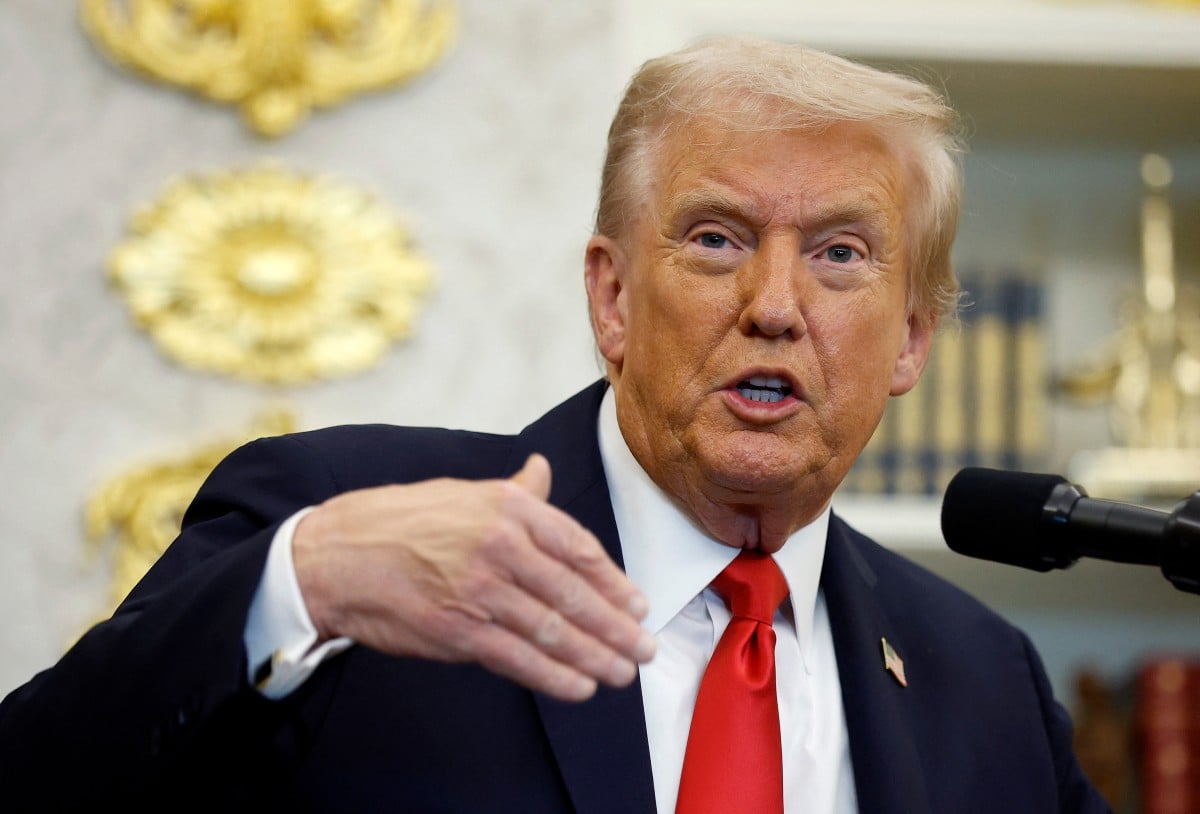
US President Donald Trump on Sunday downplayed reports that Chinese entities supplied Tehran with satellite images of a military base in Jordan before and after an Iranian strike killed three US soldiers.

“You know, when they say that China spies on us, I say you’re right, and we spy on them too,” Trump told reporters aboard Air Force One a day after The Wall Street Journal reported Beijing’s intelligence sharing.

“That’s what we do. They basically do what we do,” Trump said.

The incident could deepen tensions between Washington and Beijing ahead of a planned state visit by Chinese President Xi Jinping to the White House on September 24.

On July 17, Iran launched missile strikes on the Muwaffaq Salti Air Base in Jordan, which houses US forces. Three US Army soldiers were killed.

Unnamed American officials cited in the Journal’s reporting did not name the Chinese entities involved, and did not suggest that Beijing was directly to blame.

Chinese officials asked for proof of the transfer of satellite imagery when prodded by the US officials, and refused to acknowledge that Chinese companies were involved in providing Tehran with satellite images, the Journal reported late Friday.

Trump has warned Beijing not to sell weapons to Iran, and in May, Washington sanctioned three China-based satellite companies for enabling Iran’s military operations.

China is a top economic partner of Iran, buying much of its oil output, and also an important diplomatic backer.

Still, Trump said of Xi on Sunday that “he’s behaved reasonably well, and we behave reasonably well.”

See also  Oil revenue shakeup: States back Tinubu’s Executive Order

Asked if he would ever allow Chinese cars to be sold in the United States, Trump said, “I haven’t. I’m the one that kept them out. The tariffs kept them out.”

AFP

Source: punchng.com

FOLLOW US ON:

FACEBOOK

TWITTER

PINTEREST

TIKTOK

YOUTUBE

LINKEDIN

INSTAGRAM

Continue Reading

News

My Feelings Toward Nigeria Have Changed, I Do Not Want To Go Back – Chimamanda

Published

on

Nigerian author, Chimamanda Ngozi Adichie, has said her feelings toward Nigeria have changed.

It was reports that the renowned author stated this during an interview with The New York Times while speaking on the loss of her 21-month-old son, Nkanu.

According to her, the loss has changed how she feels about her home country.

Asked whether Nigeria still felt like somewhere close to her heart, the author gave a blunt response.

“My feelings toward Nigeria have changed.

“I do not want to go back to Nigeria,” she said.

Nkanu, one of Adichie’s twin boys, died in December 2025 following a medical emergency at Euracare in Nigeria.

Recalling the incident, Adichie said a doctor approached her in a state of panic after the procedure.

“He was very calm, and he said to me, ‘Well, look, they gave him too much Propofol.’ Those were his exact words, which I will never forget until the day I die,” she recalled.

Adichie had in June publicly raised allegations of medical negligence concerning the treatment her son received at the hospital.

Speaking about the possibility of returning to Nigeria, Adichie said her children could be the only reason she would consider doing so.

She said her daughter still regarded Nigeria as her “happy place”.

Before her son’s death, Adichie said Nigeria remained deeply connected to her identity and writing, describing it as the place where she received “everything” that enabled her to become a writer.

However, the pain of losing her son has altered that connection.

See also  AI can lift millions of girls off the streets, stakeholders tell FG

“I mean, it is so surreal, all of this. I still can’t believe we’re talking about my son who died.

“You’re going through something, but you also feel like you’re outside of it,” she said.

FOLLOW US ON:

FACEBOOK

TWITTER

PINTEREST

TIKTOK

YOUTUBE

LINKEDIN

INSTAGRAM

Continue Reading

News

Anthropic flags five Claude AI uses linked to biological weapons research

Published

on

Anthropic, the company behind Claude AI, says it identified five cases in which users employed its artificial intelligence models in ways that could support biological weapons development.

The company disclosed this in its latest threat intelligence report published on Thursday, saying the cases were among a range of malicious or potentially harmful activities detected and disrupted on its platform between December 2025 and August 2026.

Anthropic particularly flagged five Claude AI use cases that involved research into areas including chikungunya virus, highly pathogenic avian influenza, orthopoxviruses, venom peptides and toxins.

The company said it had banned the accounts involved and incorporated information from its investigations into its safeguards, enforcement and threat intelligence systems.

However, Anthropic stressed that it was not asserting that the scientists involved intended to cause harm.

“We do not assert that they intended harm, and identifying them or their labs could expose them to harm,” the company said, adding that it would withhold the names of the research institutions, countries and specific biological agents or techniques involved.

Anthropic said the cases demonstrated the difficulty of distinguishing between legitimate scientific research and activities that could be used for harmful purposes.

“Biological misuse is one of the most serious risks of frontier AI models,” the company said, warning that AI could potentially be used to make existing pathogens more dangerous or create new ones.

“The same information that can be used to develop a biological weapon could also be used to develop, for example, a vaccine or a cure for a disease,” the AI giant added.

See also  FG unveils poverty intelligence hub to target 140 million poor Nigerians

In the first case, Anthropic said its biological safety classifier blocked a request to help prepare a grant application involving gain-of-function research on chikungunya virus.

The company said its subsequent investigation found that a reseller platform was being used to provide access to Claude to researchers in regions where Anthropic does not offer its services.

The platform also allegedly routed requests rejected by Claude to other AI models with more permissive safeguards.

Anthropic said it banned the associated accounts, worked with partners to take down the relay networks and shared its findings with AI companies and government authorities.

In a second case, the company said a researcher outside the US used Claude over several weeks while planning research involving highly pathogenic avian influenza and its adaptation to mammals.

According to Anthropic, the researcher used Claude for study planning, data analysis, interpretation and prioritisation of experiments, as well as editorial assistance.

The company said its safeguards restricted the researcher to weaker Claude models and that the AI’s contribution was primarily limited to clerical assistance, study ideation and design.

Anthropic said the case nevertheless provided evidence of active research programmes involving pathogens with enhanced pandemic potential.

A third case involved a grant application for orthopoxvirus research at a state-associated infectious disease laboratory. Anthropic said a reseller relay serving more than a dozen customers used Claude to draft the application.

The company said the application involved research into how orthopoxviruses interact with the immune system and was produced using Claude Opus 5 in about an hour.

The fourth and fifth cases involved research into venoms and toxins.

See also  Nigeria, US deepen security ties as Ribadu meets Vance, Rubio; read details

Anthropic said one researcher used Claude to develop an atlas of venom toxin peptides and a generative system for optimising toxin characteristics, with the stated goal of developing therapeutic molecules.

In another case, a researcher used Claude in projects involving the computational redesign of toxins under a national public research programme. Anthropic said the researcher deliberately obscured the identities of some toxins and viral proteins in progress reports.

The company said both accounts were banned in May 2026 for violating its Supported Regions Policy.

Anthropic said the cases highlighted the challenge of regulating AI-assisted biological research because many applications are “dual use”, meaning they can have both beneficial and harmful applications.

Anthropic, however, cautioned against interpreting its findings as evidence that Claude was currently enabling imminent biological threats.

“We take these cases as evidence not of the imminence of biological threats currently uplifted by Claude, but rather as evidence that significant dual-use research efforts are associated with state actors of concern,” the company said.

The report is part of a wider disclosure by Anthropic on the misuse of its AI systems.

The company said its investigations over the past eight months also uncovered cyber operations, surveillance, influence operations, scams and fraud, conventional weapons development and attempts to illicitly distil its models.

The report comes shortly after concerns raised publicly by former Anthropic researcher Jacob Coxon about the risks posed by increasingly capable AI systems.

PUNCH Online previously reported that Coxon resigned from Anthropic and said “people building AI earnestly believe that it could kill us all by the end of the decade.”

See also  NASS sends state police bill to 36 states’ assemblies

Anthropic’s latest report also said it had identified a Russia-linked cyber espionage operation in which Claude was used to automate parts of attacks against organisations in Ukraine and Europe.

Source: punchng.com

FOLLOW US ON:

FACEBOOK

TWITTER

PINTEREST

TIKTOK

YOUTUBE

LINKEDIN

INSTAGRAM

Continue Reading

Trending