Connect with us

Business

Dangote plans $10bn investment to tackle power crisis

Published

on

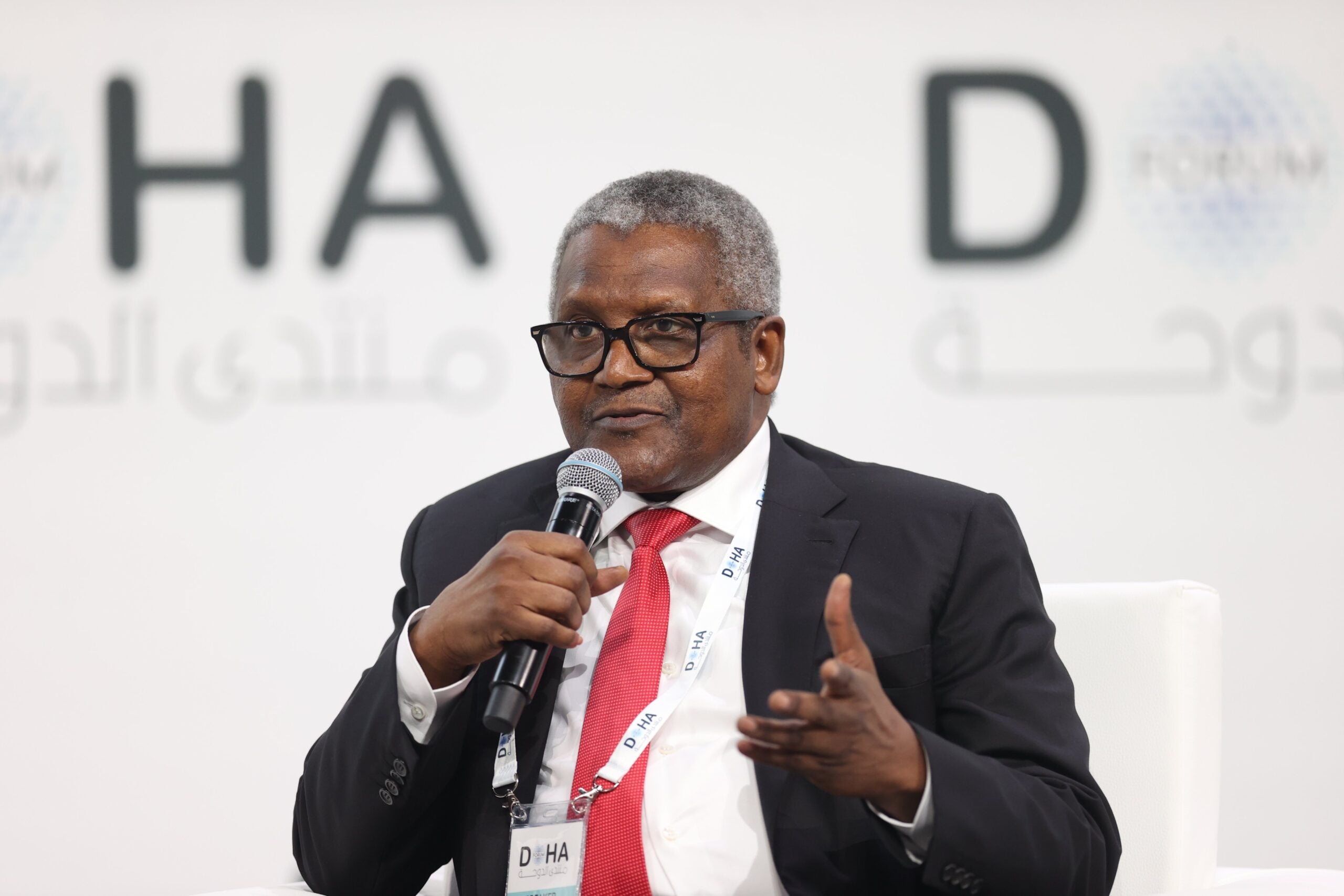
Africa’s richest man, Aliko Dangote, has said his conglomerate plans to invest over $10bn in the power sector to address the electricity crisis in Nigeria and drive industrialisation.

Dangote stated this during an interview with Al Jazeera, where he identified inconsistent government policies and inadequate electricity supply as major challenges discouraging Africans from investing in the continent.

He disclosed that the group is considering redirecting funds from certain businesses, including steel, towards electricity generation and other power-related investments.

“And I’m telling you in the next three to four years, there will be a major transformation in Africa, and that’s why we’re looking at power. We are going to invest in power. There are one or two businesses that we might cancel, like steel, and we will put the money in power. We want to invest over $10bn alone in power.”

He expressed concern that more than 600 million Africans continued to live without electricity, describing the situation as one that the continent must address, saying, “We Africans should not really allow over 600 million of our people to remain in darkness.”

The industrialist linked electricity supply to economic development and argued that governments that successfully deliver power to their citizens may not need to go for campaigns again during elections.

“You know, if some politicians work hard and have a plan, when you deliver power, you don’t need to go for a campaign when you’re going for an election. Power is key; we will never create growth without power. That’s why they say power is growth. When I say power, I mean electricity is growth.”

He said Africa would be unable to create jobs and achieve sustainable economic growth without industrialisation, stressing that the continent must reduce its dependence on imported goods.

On what some are saying about not investing in Africa, he said, “The problem really is, it takes two to tango. I think in the past, there’s been a lot of flip-flops in government policies. Government policies were changing every day, and then, the lack of electricity is also there.

See also  FG moves to share electricity subsidy costs with states

“So, these two issues haven’t gone away. They are still there. But for some of us that really mean business, we are here, and we know that yes, without our intervention, Africa will never be able to create jobs. If there’s no industrialisation, how do you create jobs? You can’t,” he said.

Dangote warned that Africa could eventually lack the financial resources to continue importing the goods it consumes, making industrial development and local production necessary for the continent’s future.

“One day we will not have money to import what we are consuming. So how can we remain an import continent? It has to change. But that change can only happen when Africans believe in Africa, and they invest in Africa,” he stated.

According to the businessman, a growing number of investors are showing interest in supporting African businesses because of the opportunities available on the continent. He added that his investment approach was focused on spreading wealth, expanding participation in businesses and strengthening corporate governance.

“We want to make sure it’s about spreading the wealth. It’s about getting more people in the business. It’s also about corporate governance. So that’s the direction.”

Responding to accusations that his business activities were creating a monopoly, Dangote said he would remain focused on his objectives rather than be distracted by his critics.

He used football star Lionel Messi as an example, explaining that a player must concentrate on the ball rather than the audience while playing.

“Well, you know, if I’m going to listen to that, have you ever seen a footballer looking at the audience? He has to continue looking at the ball. If I’m Messi, for example, I’m kicking the ball, and I’m looking at the audience, do you think I won’t miss the ball? I will miss the ball,” he stated.

Dangote argued that people would not always be satisfied with the activities of businesses, adding that accusations of monopoly would not stop him from pursuing his investment plans.

See also  Ramaphosa slams xenophobic violence, vows illegal immigrants arrest

“If I’m going to make my continent great and people want to call me a monopoly for no reason, so be it. I mean, it’s not going to reduce the colour of my face or whatever. You can call me whatever you want to call me; I didn’t stop anybody; it is an opportunity given to everybody, every one of us has that opportunity whether Africans, foreigners or whoever,” he stressed.

He said the government had not granted his businesses exclusive rights to operate in any sector, maintaining that opportunities were available to investors who were willing to participate.

“There’s nothing that the government gave us and say, ‘this is only for Dangote ’. The government will create a policy around a sector, and they will blow a whistle and say, ‘ Yes, this is it,” he noted.

Using a 100-metre race as an illustration, Dangote said investors who had chosen not to participate should not blame those who entered and won.

“If there’s a 100-metre race, some people were on the bench while I’m on the track, and I agreed to run that race, and I won that race alone, are you going to blame me or are you going to blame people who just sat on the bench?” he asked.

The businessman added that businesses and individuals needed to believe in Africa and invest in its development if they want to benefit from the continent’s economic opportunities.

“They’re not ready, they’re not prepared, they don’t even believe in Africa itself. If you don’t invest, you are not going to get fruit of that labour,” he replied to those accusing him of monopoly.

See also  PDP govs, Wike camp move to open reconciliation talks after Appeal Court fallout

Addressing his critics, Dangote said opposition and distractions would continue but maintained that his businesses would remain committed to their objectives.

He said he considered the industrial development of Africa a responsibility that required determination, adding that he was willing to make personal sacrifices towards achieving the goal.

“The distraction will continue. But we have what you call a very thick skin. No matter what you do, even if you take bullets, you are hitting our body with it; we’re not going to stop. We have a target, and we’re getting to our target.

“And if we don’t do it, believe me honestly, Africa will be in trouble. And I would rather save my continent at the expense of even my life. This continent must get to the promised land,” he declared.

Dangote further called for increased processing of Africa’s raw materials within the continent, arguing that local value addition would help retain economic benefits and promote industrial development.

He added that African governments could eventually adopt measures to encourage local processing once the continent demonstrated the benefits of transforming raw materials before exporting them.

“Eventually they (foreigners) will stop taking our raw materials. They must produce on our own continent.

“You see, once we show people how to do all these, even the governments themselves will start saying, no, you can’t take our cocoa, process it here and add value, then you take it out,” he stated.

Source: punchng.com

FOLLOW US ON:

FACEBOOK

TWITTER

PINTEREST

TIKTOK

YOUTUBE

LINKEDIN

INSTAGRAM

Business

NAFDAC destroys N8bn products, targets sachet alcohol in N’Central

Published

on

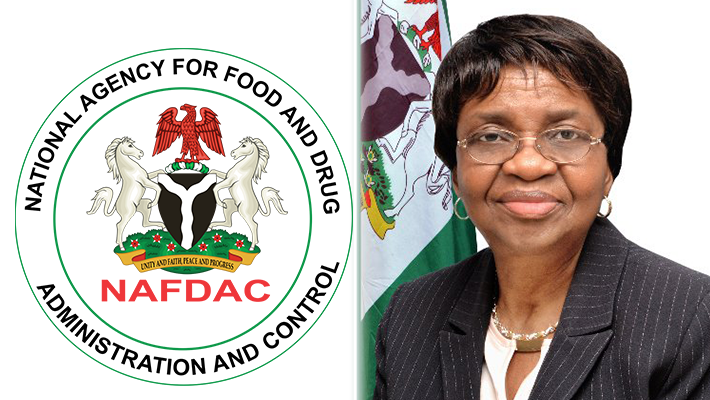
The National Agency for Food and Drug Administration and Control (NAFDAC) has confiscated and destroyed unwholesome, banned, fake and adulterated products worth more than N8 billion in the North-Central states.

Speaking during the destruction ceremony on Thursday in Lafia, the Nasarawa State capital, the Director-General of NAFDAC, Prof. Mojisola Adeyeye, said the products were seized from manufacturing outfits, sales outlets, markets and motor parks across the zone.

The DG, who was represented by a Deputy Director of NAFDAC in the zone, Joseph Edor, said most of the confiscated products were banned alcoholic beverages in small volumes of less than 200 ml (20 cl).

According to her, NAFDAC was established by Decree No. 19 of 1993, as amended, with the mandate to protect and promote public health by ensuring that only quality, efficacious and regulated products are manufactured, imported, distributed and sold in Nigeria.

She explained that the agency banned alcoholic beverages in sachets and glass bottles of less than 200ml due to their availability, affordability and portability, which have made them easily abused by youths and underage schoolchildren.

“Research has shown that early exposure to alcohol affects the brain and other vital organs such as the liver and kidneys.

“It stymies the brain, resulting in mental retardation, brain damage, poor performance of pupils in school, low productivity and several types of illnesses,” she said.

The DG said the ban and subsequent raids were based on these abuses, addiction and adverse health effects, while other seized items included expired, fake and unwholesome food, drugs and cosmetics.

“It is in the course of carrying out these activities that this heap of unwholesome, banned, fake and adulterated products worth about eight billion naira was confiscated from manufacturing outfits, sales outlets, markets and motor parks.

See also  Dangote faces price war as NNPC backs fuel imports

“The bulk of the products in that pile are predominantly banned alcoholic beverages in low volumes of less than 200ml (20cl),” she emphasised.

The Director-General further commended other law enforcement agencies, sister agencies and stakeholders for their continuous collaboration, especially in intelligence sharing and security cover during operations.

Also speaking at the event, the Nasarawa State Coordinator of NAFDAC, Dr Gyani Stephen, explained that the exercise was not targeted at hurting people but was intended to save lives.

He advised those in the habit of selling fake and banned products to desist or be ready to face the full wrath of the law, warning that the agency would come after them if they did not change their ways.

In his goodwill message, the Nasarawa State Commander of the National Drug Law Enforcement Agency, Daniel Saidu, represented by Yakubu Awoh, commended NAFDAC for saving lives through the regular seizure and destruction of expired and fake drugs.

He explained that if these dangerous products were allowed into the markets, they could have destroyed millions of lives and affected the mental health of many others.

Source: punchng.com

FOLLOW US ON:

FACEBOOK

WHATSAPP CHANNEL

TWITTER

PINTEREST

TIKTOK

YOUTUBE

LINKEDIN

INSTAGRAM

Continue Reading

Business

Seven modular refineries to begin operations in 2027, read details

Published

on

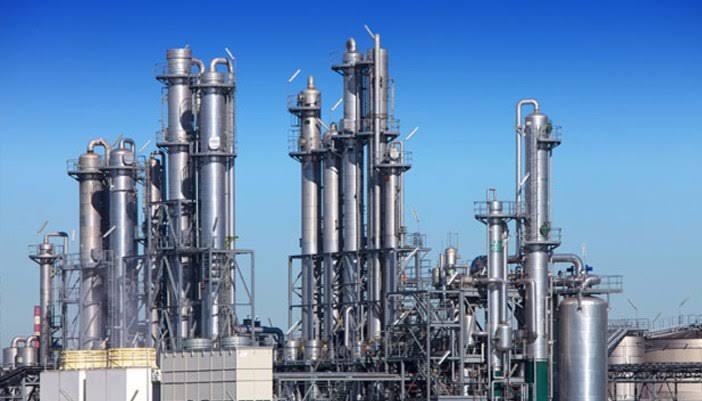
Nigeria’s modular refining sector is expected to expand next year, with seven new refineries projected to commence operations with a combined capacity of 83,000 barrels per day, according to Argus Media’s George Maher-Bonnett.

Maher-Bonnett disclosed this in Lagos on Wednesday during a presentation at the OTL Africa Downstream conference, where he highlighted the changing dynamics of Nigeria’s petroleum products market amid rising local refining capacity and declining fuel demand.

In his presentation, titled ‘African Energy Outlook’, Maher-Bonnett said four modular refineries operated in Nigeria in September, with a combined capacity of 32,000 barrels per day.

“Four modular refineries operating in September, total 32,000 b/d capacity,” he said.

He added, “Seven new modular refineries to start next year“ with a total of 83,000 barrels per capacity.

The projected additions would represent more than two and a half times the combined capacity of the four modular refineries operating in September, potentially increasing the contribution of smaller refining facilities to Nigeria’s domestic petroleum products supply.

However, the presentation did not identify the seven proposed refineries, their owners or locations, or provide individual capacity figures and commissioning schedules.

Maher-Bonnett also highlighted the growing role of the Dangote Petroleum Refinery in improving Nigeria’s self-sufficiency in petroleum products, despite a decline in fuel demand during the year.

“Nigerian fuels demand is down this year,” the presentation stated, attributing the development to “higher flat prices.”

He added self-sufficiency is improving with Dangote ramp-up, projecting that modular refineries would play a growing role.

The presentation linked the decline in demand to higher prices and noted that the only government intervention during the period covered was an NNPC price reduction.

See also  2027 candidates: Saturday deadline puts political parties under pressure

“No government interventions, besides NNPC price cut this month,” it stated.

The expected expansion of modular refining capacity comes as Nigeria’s petroleum products market adjusts to increased domestic production and changing international trade flows.

Maher-Bonnett said the Dangote refinery is operating at a high rate, with steady petrol output, reducing the attractiveness of importing some petroleum products from Europe into West Africa.

“Dangote’s 700,000 bpd Lekki refinery is running hard, gasoline output is steady,” the presentation stated.

It also highlighted Ghana’s growing refining capacity, noting that the 45,000-barrel-per-day Tema refinery is ramping up production and improving the country’s self-sufficiency.

According to the presentation, the economics of shipping petroleum products from Europe to West Africa and from Europe to the United States has weakened, with freight costs further affecting the competitiveness of the routes.

Source: punchng.com

FOLLOW US ON:

FACEBOOK

WHATSAPP CHANNEL

TWITTER

PINTEREST

TIKTOK

YOUTUBE

LINKEDIN

INSTAGRAM

Continue Reading

Business

Falana tasks Senate on recovery of $123bn, N66bn oil funds, read details

Published

on

Human rights lawyer, Femi Falana, has asked the National Assembly to compel the recovery of $123.17bn in alleged outstanding oil royalties, taxes and dividends, alongside N66.4bn, from the Nigerian National Petroleum Company Limited and other oil and gas companies.

In a letter dated 28 October, 2026, and titled ‘Request to Recover Dividends, Taxes and Royalties Worth $123.17bn and N66.4bn from NNPC and Other Companies and Remit Same to the Federation Account’, Falana urged the National Assembly to ensure that the alleged outstanding revenues were recovered and remitted to the federation account.

He warned that he would institute legal proceedings at the Federal High Court if the authorities failed to initiate measures to recover the funds within 14 days of receiving the letter.

In an acknowledged copy of the letter made available to The PUNCH on Thursday, the senior advocate said the outstanding revenues covered several categories, including $62bn in unpaid oil royalties, $23.1bn in alleged unremitted dividends from Nigeria LNG Limited, $6.071bn in outstanding industry revenues, and claims relating to stolen crude oil and refinery rehabilitation contracts.

The letter also cited a Supreme Court consent judgment delivered on 20 October, 2018, which it said directed the Federal Government to collect outstanding royalties accrued over 18 years under the Deep Offshore and Inland Basin Production Sharing Contracts Act.

According to Falana, the governments of Akwa Ibom, Bayelsa and Rivers states had approached the Supreme Court to compel the Federal Government to enforce the law, which provided for an upward review of royalties when international crude oil prices exceeded $20 per barrel.

He said a committee constituted by the Office of the Attorney-General of the Federation subsequently determined that $62bn in royalties had not been collected from international oil companies.

Falana added that Akwa Ibom and Rivers states later obtained a Federal High Court judgment for a combined $3.3bn, while Bayelsa State secured a separate judgment for $951m over their alleged entitlements from the outstanding royalties.

See also  2027 candidates: Saturday deadline puts political parties under pressure

He said the Federal Government had yet to comply with the judgments.

The lawyer also called for the recovery of $29bn linked to alleged crude oil theft and undeclared exports, citing investigations by the Nigerian Maritime Administration and Safety Agency and the House of Representatives.

He said lawyers engaged by NIMASA discovered that about 60.2 million barrels of crude oil, valued at $12.7bn, allegedly stolen from Nigeria, were discharged at the Port of Philadelphia in the United States between 2011 and 2014.

According to the letter, the lawyers submitted their findings to the Office of the Attorney-General after which they filed nine civil cases at the Federal High Court in Abuja and Lagos to recover the value of the alleged stolen crude oil and liquefied gas.

Falana further cited a 2016 House of Representatives ad hoc committee investigation, which he said found that $17bn worth of crude oil and liquefied natural gas had been exported from Nigeria without proper records.

He said the committee found that the crude oil was discharged at the ports of Houston and Lake Charles in the United States.

He urged the National Assembly to direct the Economic and Financial Crimes Commission to pursue the recovery of the funds from the companies allegedly involved.

On the NLNG dividends, Falana alleged that NNPC had failed to remit $23.1bn due to the Federal Government from its 49 per cent shareholding in NLNG.

He explained that NLNG, established in 1989, had paid more than $47bn in dividends to its shareholders over 26 years, with the Federal Government’s share paid through NNPC.

The other shareholders listed in the letter are Shell, with 25.6 per cent; TotalEnergies, 15 per cent; and Eni International, 10.4 per cent.

Falana argued that the dividends received by NNPC on behalf of the Federal Government should have been transferred to the Federation Account in accordance with Section 162 of the 1999 Constitution, as amended.

See also  FG moves to share electricity subsidy costs with states

He added that resolutions of the Senate and the House of Representatives calling for the remittance of the funds had allegedly been ignored.

The senior advocate also called for the recovery of $6.071bn and N66.4bn in outstanding revenues owed by oil and gas companies, citing the Nigerian Extractive Industries Transparency Initiative’s 2022/2023 Independent Oil and Gas Industry Report.

According to him, NEITI disclosed on 27 September, 2024, that the outstanding collectible revenues due to the Federal Government as of June 2024 stood at the stated amounts.

He said copies of the report were forwarded to both chambers of the National Assembly in November 2024 in line with the provisions of the NEITI Act.

Falana urged lawmakers to support NEITI in recovering the outstanding revenues without further delay.

The letter also questioned the outcome of the rehabilitation of the Port Harcourt, Warri and Kaduna refineries, for which the Federal Executive Council approved contracts totalling about $2.98bn in 2021.

It said the government approved $1.5bn for the rehabilitation of the Port Harcourt refineries in April 2021 and another $1.48bn for the Warri and Kaduna refineries in August of the same year.

Falana argued that NNPC announced in December 2024 that the Port Harcourt and Warri refineries had been substantially completed, while work on the Kaduna refinery was almost finished.

However, he cited NNPC’s subsequent announcement that the Warri refinery ceased operations on 25 January, 2025, following safety issues involving its crude distillation unit main heater. He also referred to the shutdown of the Port Harcourt refineries for planned maintenance in May 2025.

See also  Kwara, Kebbi abductions: FG blames US as kidnap outrage spreads

He argued that the contractors had breached the terms of the rehabilitation agreements and called for the recovery of the contract sums.

“In view of the foregoing, we are compelled to request the Office of the Attorney-General to recover the total sum of $123.17bn and N66.4bn owed the Government of the Federation by the Nigerian National Petroleum Corporation Limited, and some oil and gas companies operating in Nigeria,” the letter stated.

Falana said recovering the funds would reduce the Federal Government’s dependence on external borrowing and provide additional revenue for the federation and the states.

He warned that failure to begin recovery measures within 14 days would prompt legal action.

“If you fail to initiate legal measures for the recovery of the aforesaid huge funds belonging to the Government of the Federation within 14 days of the receipt of this letter, we shall not hesitate to file the necessary processes in the Federal High Court with a view to compelling you to discharge the duty of your office,” he wrote.

Falana also defended his firm’s standing to pursue the matter, citing its involvement in drafting and submitting a bill to amend the Deep Offshore and Inland Basin Production Sharing Contracts Act in 2017.

He noted that the bill was adopted and sponsored by a senator, subsequently passing first reading in the Senate before the dissolution of the Eighth National Assembly. According to him, the Ninth National Assembly subsequently adopted and passed the amendment.

He recalled that the then President of the Senate, Ahmad Lawan, had said the amendment would increase the country’s revenue by at least $1.5bn annually.

Source: punchng.com

FOLLOW US ON:

FACEBOOK

WHATSAPP CHANNEL

TWITTER

PINTEREST

TIKTOK

YOUTUBE

LINKEDIN

INSTAGRAM

Continue Reading

Trending