Connect with us

Education

NECO records 58.67% pass rate in English, Maths

Published

on

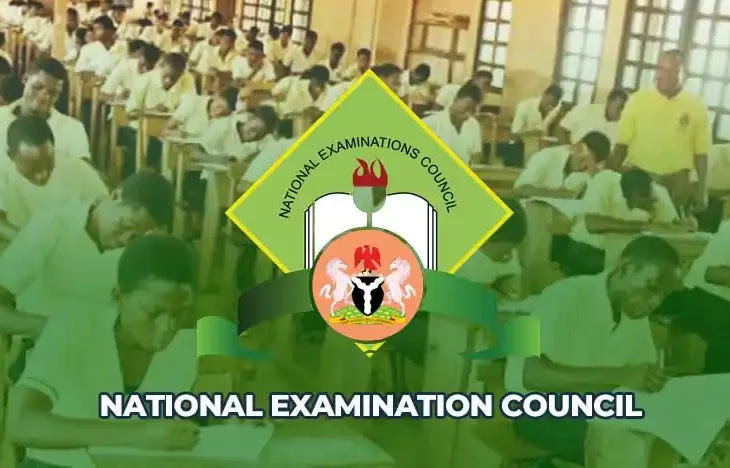
A total of 804,948 candidates, representing 58.67 per cent of those who sat for the 2026 Senior School Certificate Examination conducted by the National Examinations Council, obtained five credits and above, including English Language and Mathematics.

The Registrar of NECO, Prof Dantani Wushishi, disclosed this on Thursday during the release of the 2026 internal examination results.

Wushishi said 1,378,048 candidates registered for the examination, comprising 682,352 male and 695,696 female candidates.

He said 1,371,992 candidates sat for the examination, comprising 678,903 males and 693,089 females.

According to him, 1,162,118 candidates, representing 84.70 per cent, obtained five credits and above irrespective of English Language and Mathematics.

Wushishi said 1,334 candidates with special needs also sat for the examination.

He disclosed that 1,406 candidates were involved in examination malpractice in 2026, compared with 3,878 in 2025, representing a 64.74 per cent decrease.

The registrar said the 2026 examination represented an improvement over the 2025 exercise.

Wushishi, while responding to questions from journalists, also distanced NECO from so-called miracle centres, saying the examination body had no dealings with such centres.

“NECO is not aware of miracle centres because we don’t have any business with them,” he said.

He added that NECO had only one school and could not be associated with miracle centres.

“We register centres and have criteria for which we register these centres. We don’t know miracle centres because we have only one school and we cannot be associated with miracle centres.

“If there are miracle centres, it is the state governments that established these miracle centres or they are privately owned, but NECO does not believe in miracle centres,” he said.

See also  Abiodun signs Education, Skills Trust Fund Bill into law

Meanwhile, at an event preceding the release of the 2026 examination results, Wushishi honoured staff of the examination body at the 2025 Annual Staff Productivity Awards.

He said the awards were designed to reward workers and pupils for their hard work, dedication and performance.

The registrar stressed that banditry, kidnapping and sit-at-home orders could not stop NECO examinations.

Highlighting the council’s achievements, he cited the successful and transparent conduct of its internal examinations, prompt release of results, rancour-free promotion exercises and development of ICT software.

Wushishi said the annual awards recognised workers in zones, states and headquarters, as well as pupils who excelled in its examinations during the year.

He disclosed that 55 former workers received certificates of service for their retirement in 2025.

He noted that the awards were grouped into categories, including certificates for retirees, recognition for hardworking and dedicated staff, and prizes for the best state coordinator, best driver and top-performing pupils.

The Director-General of Student Affairs, Niger State Government, Bello Sheriff, who spoke on behalf of the state government, congratulated the recipients and charged the council to sustain its tempo of success.

Among the awardees were Akai Kuyet, who emerged best female in the SSCE category, and Felix Emenike, who emerged best male.

Others were Ezeudu Akachukwu, who emerged best male, and Ubochi Nancy, who emerged best female in the National Gifted Examination category.

Source: punchng.com

FOLLOW US ON:

FACEBOOK

TWITTER

PINTEREST

TIKTOK

YOUTUBE

LINKEDIN

INSTAGRAM

Continue Reading
Click to comment

Leave a Reply

Your email address will not be published. Required fields are marked *

Education

Ignore fake conference advertisement, Army College tells Nigerians

Published

on

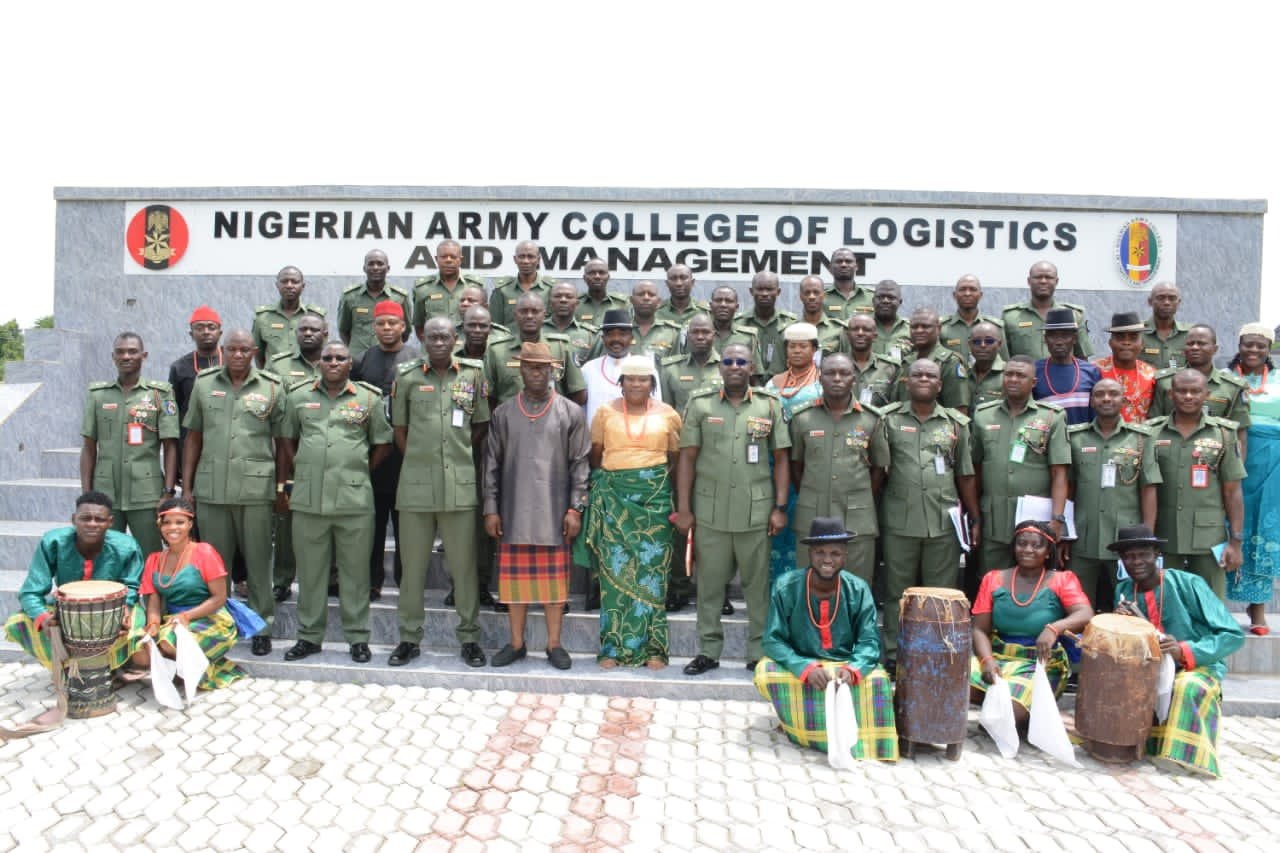
The Nigerian Army College of Logistics and Management (NACOLM), Ojo, Lagos, has warned Nigerians to disregard an online advertisement promoting a purported “Highstone Global University USA International Research Conference” allegedly scheduled to hold at the college.

The college, in a statement dated September 22, 2026, said the advertisement was false and fraudulent, stressing that it had no connection with the purported programme.

NACOLM’s Public Relations Officer, Major Innocent Audu, said, “The College has no affiliation, partnership, endorsement or involvement whatsoever with the said programme, and no such conference has been authorised to take place at the College.”

The college urged members of the public not to make payments or disclose personal information in connection with the purported conference.

“Members of the public are therefore advised to disregard the advertisement and refrain from making any payments or providing personal information in connection with the purported programme,” Audu said.

According to the statement, NACOLM remains committed to protecting the integrity of its name, facilities and official engagements.

It added that any authorised programme or event involving the college would be communicated through its recognised official channels and those of the Nigerian Army.

The college also urged the public to exercise caution and report any suspicious solicitation linked to the purported event to the appropriate authorities.

Source: punchng.com

FOLLOW US ON:

FACEBOOK

TWITTER

PINTEREST

TIKTOK

YOUTUBE

LINKEDIN

INSTAGRAM

See also  Land grabbers, illegal occupants taking over Osun varsity land – Vice-Chancellor
Continue Reading

Education

Ondo, varsity unions reach agreement over wage dispute – Gov’s aide

Published

on

The Ondo State Government and tertiary institution unions have reached an agreement on the implementation of the new Federal Government and university unions’ wage structure and allowances.

This is contained in a statement made available to newsmen on Monday by the Chief Press Secretary to the Governor, Mr Ebenezer Adeniyan.

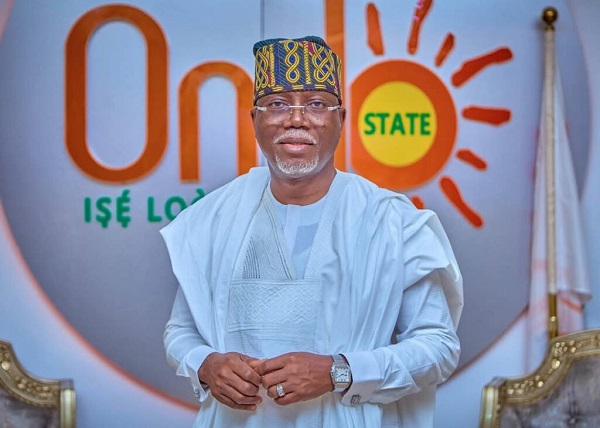
The agreement followed a series of meetings between officials of the state government, led by Governor Lucky Aiyedatiwa, and the leadership of labour unions in state-owned universities.

According to the statement, the unions involved in the meeting included the Academic Staff Union of Universities, Senior Staff Association of Nigerian Universities, National Association of Academic Technologists, and Non-Academic Staff Union.

The News Agency of Nigeria reports that academic and non-academic unions in the three Ondo State-owned universities are currently on a total and indefinite strike over unpaid allowances to members.

The statement said the meeting addressed outstanding issues relating to salary adjustments, allowances and other welfare matters affecting workers in the state-owned universities.

It added that a major resolution was the approval by Aiyedatiwa for the full domestication of the Federal Government-ASUU agreement on the Consolidated University Academic Salary Structure for academic staff of state-owned universities.

According to the statement, implementation of the resolution will take into account the peculiarities of the state.

It said that during the meeting, Aiyedatiwa described education as a cardinal priority of his administration, with a promise to the unions of his commitment to sustain industrial harmony in the state’s tertiary institutions.

“Our administration will continue to prioritise the welfare of workers, especially in the education sector, because we understand that a motivated workforce is key to academic excellence.

See also  Technical education, Nigeria’s fastest job creation route – NABTEB

“We have approved the FGN-ASUU pact for our universities because we want our institutions to compete favourably and our staff to be at par with their counterparts elsewhere,” the statement read.

It said that the government would continue to engage stakeholders to ensure that the state’s tertiary institutions remained centres of excellence without incessant industrial action.

According to the statement, the Adekunle Ajasin University, Akungba-Akoko, chapter of ASUU, while speaking on behalf of the unions, commended Aiyedatiwa for approving the FGN-ASUU agreement for the state universities.

Source: punchng.com

FOLLOW US ON:

FACEBOOK

TWITTER

PINTEREST

TIKTOK

YOUTUBE

LINKEDIN

INSTAGRAM

Continue Reading

Education

Read about the return of ASUU strikes at state universities

Published

on

ALL eyes are back on tertiary education. While most federal universities are running smoothly, it is not the case at some state-owned universities. From Lagos to Plateau, Kaduna to Taraba, the age-long disruption of the academic calendar is rearing its head again at state-owned universities. State governors, who are basking in more resources than before, should address the underlying issues.

In the recent past, Nigeria’s public universities were infamous for lengthy strikes.

But President Bola Tinubu’s mantra to end lecturers’ strikes that had plagued the public university system appears to have worked so far. In January, the Federal Government increased salaries by 40 per cent. This has restored stability in these institutions.

Conversely, strikes have returned to some state-owned institutions.

The states have no genuine excuse. After Tinubu removed the petrol subsidy, floated the naira and expanded the tax net, including VAT, the sub-national governments are more buoyant than ever.

Since 2009, public universities have experienced persistent strikes, which Tinubu pledged to end. Until the Tinubu administration’s pact, the 2009 agreement of N1.51 trillion for the revitalisation of universities and the enhancement of salaries was poorly implemented.

The outcome is predictable. In the latest Webometrics ranking, the best is the University of Ibadan at No. 1,291 in the world. UI is followed by the University of Lagos (1,355) and the University of Nigeria (1,397). This is depressing.

At the core of the face-off is the December 2025 Federal Government-Academic Staff Union of Universities agreement. Essentially, the Federal Government increased lecturers’ salaries by 40 per cent.

See also  Technical education, Nigeria’s fastest job creation route – NABTEB

Other key provisions include an annual credit allowance of N1.8 million for professors and between N840,000 and N870,000 per annum for academic readers, and enhanced pensions.

Ironically, Lagos, Tinubu’s home, is the latest state where ASUU has just declared a strike, following the breakdown in negotiations between the state government and the joint unions of the three universities in Lagos.

According to the ASUU chapters of Lagos State University, Lagos State University of Science and Technology and Lagos State University of Education, the government did not implement the 2025 FGN-ASUU agreement despite a 14-day notice.

In Kaduna, the ASUU state chapter at the Kaduna State University, Kakuri, recently ended its strike after Governor Uba Sani approved the implementation of the agreement from October 1.

A similar story is unfolding in Plateau State. After downing tools over the agreement, the ASUU chapter of the Plateau State University, Bokkos, terminated its strike on September 16.

It said the state government had agreed to implement its six-point demand.

But lecturers at the three state-owned universities in Ondo State are still on strike over the non-implementation of the FGN-ASUU pact.

On September 15, the ASUU chapter of the Taraba State University, Jalingo, issued a 14-day ultimatum to the state government to implement the agreement or face a strike. The ultimatum will expire on September 28.

These contradictions expose Nigeria’s flawed federalism. The centre was at the forefront of the negotiations with ASUU. While the Federal Government has gone ahead to implement the agreement, states are delaying implementation for reasons best known to them.

See also  FG to scrap JSS-SSS separation policy

In many areas of national life, the Federal Government imposes its will on the federating units. The unbridled federal power is an overreach. In a federal jurisdiction, this is wrong.

So, state governments should not be under this overarching federal influence in the funding and administration of universities at the second tier of government.

The independence of states and the centre has a crucial inflexion point.

In this, private universities offer the best lesson. With their independence and self-funding system, the 182 private institutions determine the remuneration they can offer the academic and non-academic staff. Therefore, strikes over pay are non-existent in private institutions. With proper independence and control, it could also be so at state-owned universities.

State governments share in the blame. Currently, there are 69 state-owned universities in the country. Without proper preparation for funding, staffing and infrastructure, state governments establish multiple universities. This is ridiculous.

Some states have more than three universities. Thus, they find it difficult to cope with the financial and infrastructure demands of such institutions. But it is wrong to see universities as a political symbol.

After a spree, the Federal Government placed a seven-year moratorium on the establishment of new universities in a bid to address the issues at stake.

Therefore, the National Universities Commission should exercise its independence. It should thoroughly scrutinise the centre, the states and private entrepreneurs who bid to establish universities.

Source: punchng.com

FOLLOW US ON:

FACEBOOK

TWITTER

PINTEREST

TIKTOK

YOUTUBE

LINKEDIN

INSTAGRAM

Continue Reading

Trending