Connect with us

News

Tinubu demands two permanent seats, veto powers for Africa at the UN Security Council

Published

on

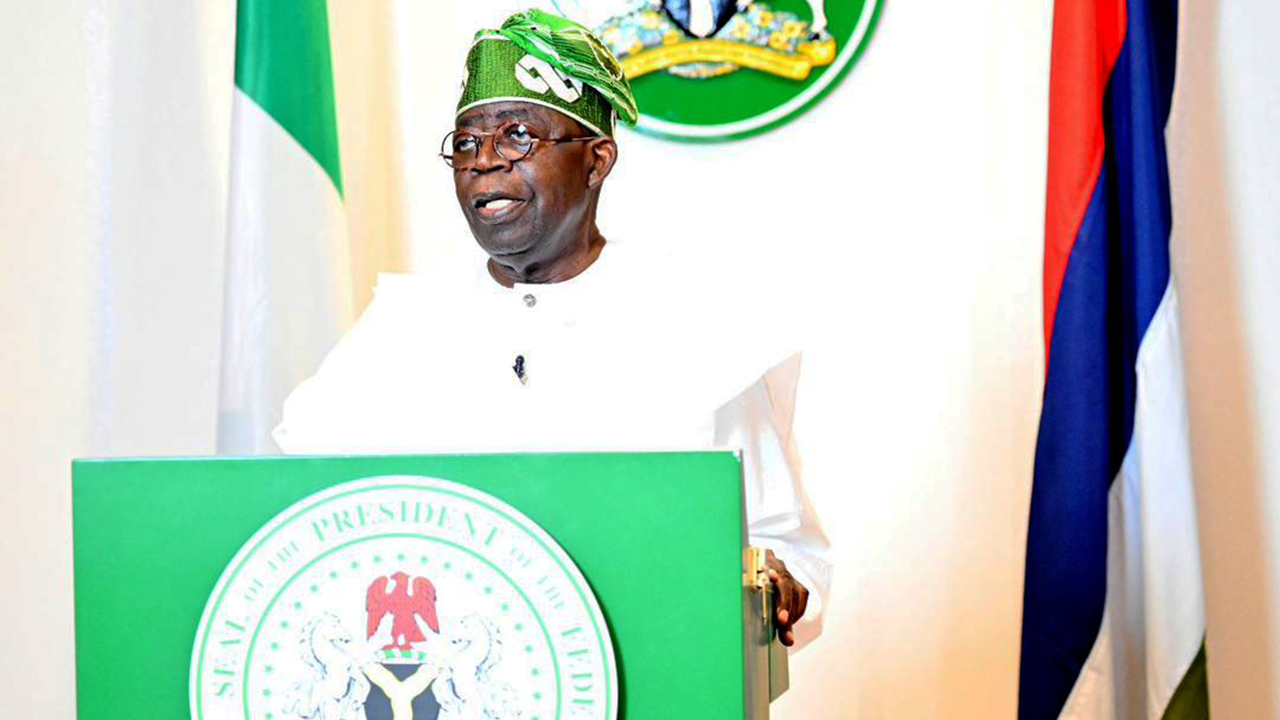
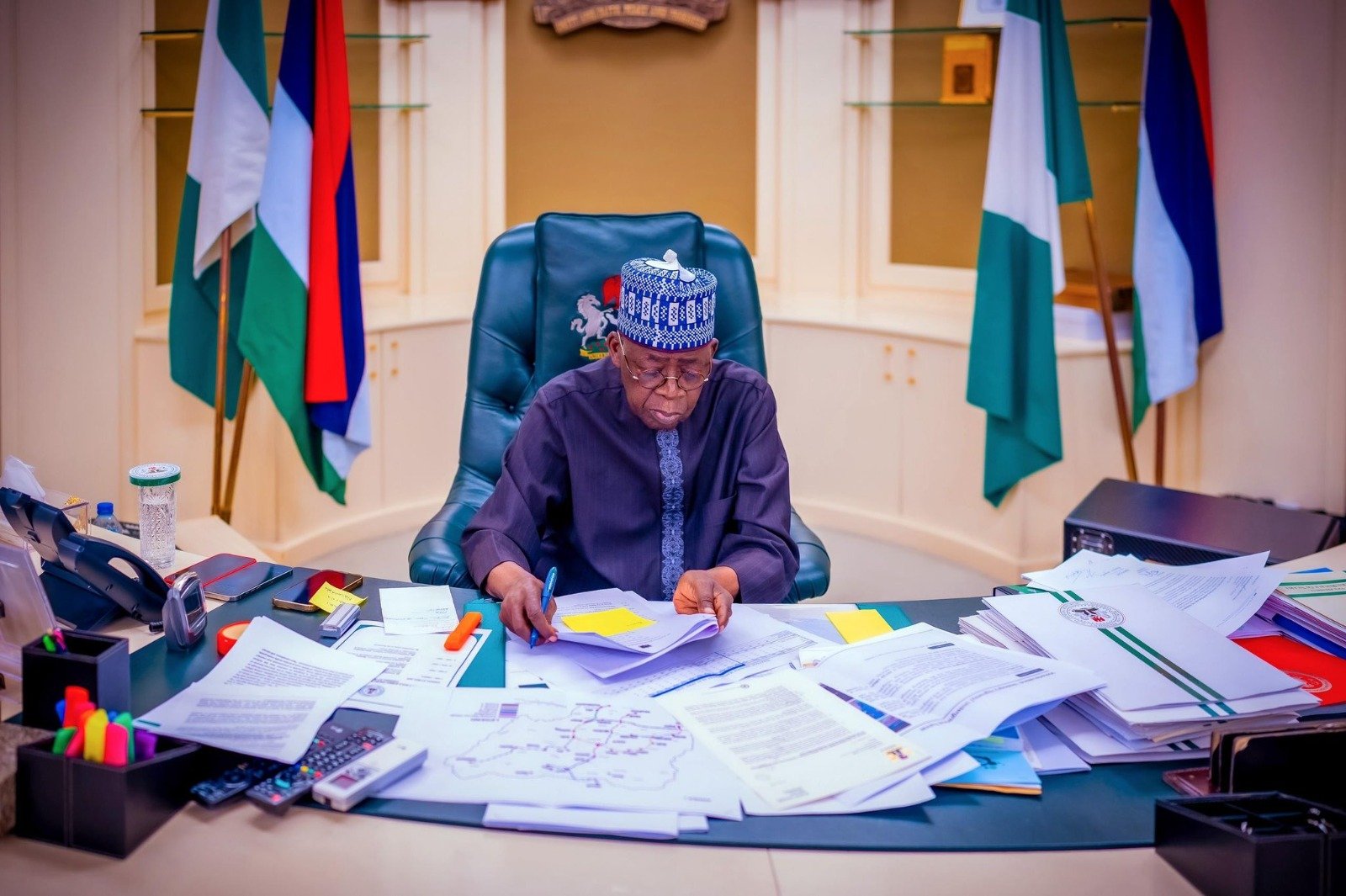
President Bola Tinubu has demanded at least two permanent seats for Africa on the United Nations Security Council, with veto powers, saying the current structure no longer reflects the distribution of global power.

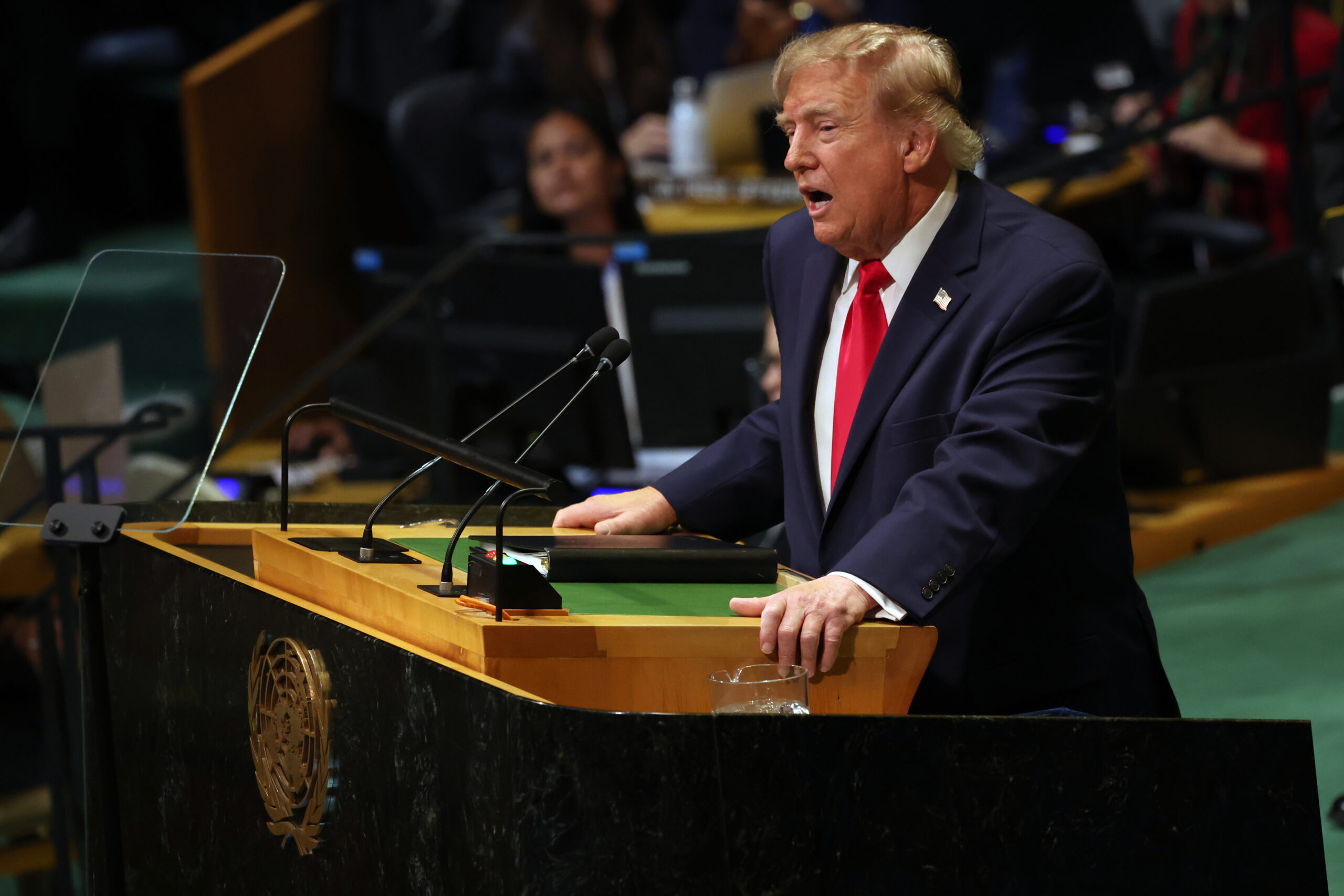
Tinubu made the demand on Thursday in his address to the General Debate of the 81st Session of the United Nations General Assembly in New York.

The President’s address, delivered by Vice President Kashim Shettima, also called for five non-permanent seats for Africa on the Security Council.

He said the reform of the global body must begin with restructuring the Security Council, arguing that Africa could not continue to contribute to the council’s agenda without having permanent representation.

“The reform of this institution must begin with the reconstitution of the Security Council, for the world of 2026 cannot remain captive to the distribution of power in 1945. Africa cannot continue to fill the Council’s agenda while remaining absent from its permanent membership. Nigeria demands, in accordance with the Ezulwini Consensus and the Sirte Declaration, at least two permanent seats for Africa, with all the rights and responsibilities of permanent membership, including the veto for as long as it exists, and five non-permanent seats in total. The authority to speak for humanity carries an obligation to represent it.”

Tinubu said Nigeria was prepared to take on greater responsibility in international peace and security, citing the country’s contributions to peacekeeping and mediation efforts across Africa.

He listed Nigeria’s involvement in Liberia, Sierra Leone, Darfur, Mali and The Gambia, adding that the country continued to advance mediation, democratic governance, counter-terrorism and maritime security through ECOWAS, the African Union and Gulf of Guinea partnerships.

On climate change, the President rejected what he described as a false choice between development and climate action, saying developing countries needed support to industrialise while reducing emissions.

“We reject the false choice between development and climate action. Developing countries must industrialise, eradicate poverty and expand energy access through low-carbon pathways supported by technology transfer, capacity building and climate finance.

See also  Customs dismiss smuggling, revenue leakage allegations

“Africa contributes less than four per cent of greenhouse gas emissions, yet bears disproportionate consequences. Nigeria remains committed to the Paris Agreement and an equitable energy transition that reflects historical responsibility and capacity while protecting people’s right to development.”

Tinubu said Nigeria’s Energy Transition Plan was targeting net-zero emissions by 2060 while expanding access to affordable and reliable energy.

He said the plan combined renewable energy, clean cooking and gas as a transitional fuel with climate-smart agriculture and nature-based solutions.

The President also called for international climate finance to be based on equity and shared responsibility.

“Finance must be governed by equity and shared responsibility rather than charity, with international commitments translated into accessible, predictable and adequately funded mechanisms enabling developing countries to pursue climate action without compromising development objectives.”

On artificial intelligence, Tinubu called for responsible deployment of the technology, saying it could be used either for destructive purposes or to improve lives.

“We refuse to surrender our technological future to paranoia. An invention can be destructive or beneficial, depending on the purposes it serves and the judgement of those who use it. A knife can take a life in the hands of an assailant and save one in the hands of a surgeon. We can deploy artificial intelligence to wage war or use it to transform healthcare, education, agriculture, governance and economic productivity.

“Much of the anxiety surrounding AI reflects the distrust we have allowed to grow among us.”

He said Nigeria was investing in digital public infrastructure, broadband connectivity, innovation ecosystems, research institutions and technology entrepreneurship.

Tinubu invited international partners to collaborate with Nigerian youths in directing AI towards development.

“We invite the world to work with our inventive, resourceful and enterprising young people to direct AI towards humanity’s advancement rather than its destruction.”

The President also called for reforms to the international financial system, saying inadequate financing remained one of the biggest obstacles to sustainable development.

See also  ‘If I don’t give you electricity, don’t vote for me again’ – ADC reminds Tinubu of failed promise

“Nigeria therefore calls for reform of the international financial architecture, wider access to concessional financing and debt sustainability frameworks that recognise developmental needs.”

He said Nigeria also supported innovative financing through private capital, blended finance, South-South cooperation and strategic partnerships for sustainable development, climate adaptation and resilient infrastructure.

Tinubu highlighted the African Continental Free Trade Area as an opportunity to strengthen regional value chains, increase intra-African trade and promote industrialisation.

He said Africa must move beyond exporting raw materials and focus on value addition, manufacturing, technological innovation and knowledge-driven growth.

“Our abundant natural resources must become engines of shared prosperity rather than sources of perpetual dependency.”

On security, the President said Nigeria’s experience fighting Boko Haram, ISWAP and other armed groups had shown that military victories alone could not guarantee lasting peace.

“Nigeria’s prolonged struggle against Boko Haram, ISWAP and other armed groups has taught us that military victories require enduring foundations in education, economic opportunity, accountable governance and communities whose rights and dignity are protected. Development cannot take root where violence repeatedly uproots livelihoods, and peace cannot endure where injustice and exclusion replenish the ranks of those who threaten it.”

Tinubu called for greater international cooperation against terrorism, organised crime, cyberattacks and illicit finance.

He also expressed concern about the continuing conflicts in Sudan and other war-torn countries, calling for urgent diplomacy and protection of civilians.

“All parties must uphold international humanitarian and human rights law, protect civilians and facilitate humanitarian access. Negotiated settlements must respect sovereignty and territorial integrity.”

The President said Nigeria remained committed to peaceful dispute settlement under the UN Charter and urged the strengthening of peacekeeping, peacebuilding, mediation and institution-building.

“We place our faith in diplomacy because military victories alone cannot secure lasting peace.”

Tinubu further called for greater recognition of Africa’s contribution to global development, describing the continent as a potential major driver of global growth.

“Developing countries must be recognised as indispensable partners whose contributions to global solutions and shared prosperity extend far beyond their need for assistance.”

See also  Alaafin, Soun absent as Makinde kicks off Oyo 50th anniversary

He said the UN must evolve to reflect the aspirations of present and future generations, warning that institutions that failed to adapt risked losing their relevance.

Tinubu said Nigeria would continue to support cooperation, dialogue and partnership among nations.

“Nigeria pledges to choose cooperation over confrontation, dialogue over division, hope over fear and partnership over isolation.”

Concluding the address, the President said a reformed UN remained necessary to achieve global peace and sustainable development.

“A reformed, inclusive and effective United Nations is indispensable to the peaceful, just and sustainable world that future generations deserve. Whatever our differences, we must remember that humanity is our oldest citizenship, and peace is the inheritance we owe every child.”

The demand came against the backdrop of renewed calls for reform of the UN Security Council, with UN Secretary-General António Guterres saying Africa’s continued absence from permanent membership was “unjust and indefensible”. Guterres, speaking as world leaders gathered in New York for the 81st session of the UN General Assembly, said the council must be reformed to reflect the present-day global order.

He said, “We must reform the Council so that it reflects today’s world with the legitimacy and effectiveness that today’s challenges demand.”

The 15-member council currently has five permanent members China, France, Russia, the United Kingdom and the United States all of which have veto powers. The African Union has been seeking at least two permanent seats with full privileges, including veto power if the veto is retained, as well as five non-permanent seats.

Guterres has repeatedly backed reforms of global institutions to reflect present-day geopolitical realities. In February, he told African leaders that the absence of permanent African seats on the council was “indefensible”, arguing that the UN system must reflect today’s realities rather than that of 1945.

Source: punchng.com

FOLLOW US ON:

FACEBOOK

TWITTER

PINTEREST

TIKTOK

YOUTUBE

LINKEDIN

INSTAGRAM

Continue Reading
Click to comment

Leave a Reply

Your email address will not be published. Required fields are marked *

News

UK to strengthen immigration enforcement with facial recognition

Published

on

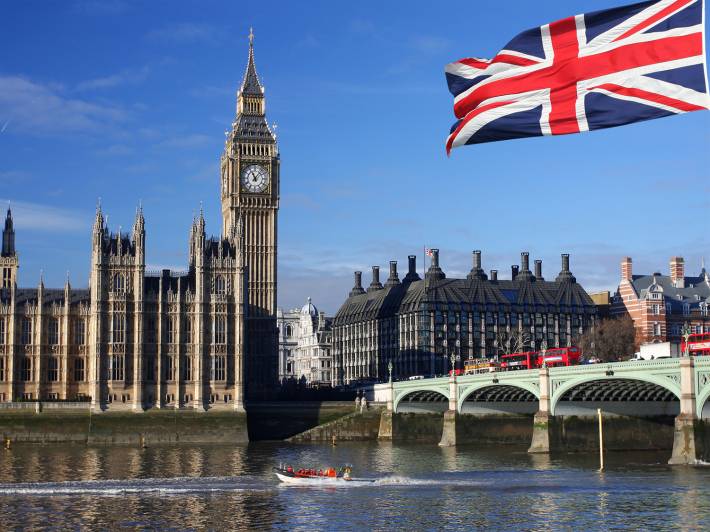
The United Kingdom government plans to expand live facial recognition technology to strengthen immigration enforcement and identify individuals who have violated immigration rules.

The initiative, being developed by the Home Office, could see facial recognition cameras deployed at transport hubs and public events to help immigration officers identify people who have overstayed their visas, entered the country unlawfully or breached their immigration conditions.

According to policy documents published in October and sighted by PUNCH Online on Thursday, the proposed expansion could extend the technology’s use to general immigration enforcement, including civil immigration violations that do not necessarily involve criminal offences.

The development comes as Home Secretary Shabana Mahmood seeks to intensify immigration enforcement through increased funding, additional personnel and expanded deportation operations.

The Home Office said the technology would help officers identify individuals subject to removal proceedings and those attempting to re-enter the UK unlawfully.

The policy documents also suggest that facial recognition could reduce the need for repeated enforcement visits to residential properties and workplaces.

Authorities have already conducted three trials of the technology at Holyhead port in north Wales between November 2025 and February 2026. The trials focused on identifying individuals travelling from Ireland who were subject to deportation orders or wanted over immigration-related criminal offences.

The programme has now entered its formal delivery phase, with officials considering wider deployments at transport hubs and large public gatherings.

A Home Office spokesperson confirmed that further trials were being considered while the government examined the potential benefits and implications of the technology.

See also  Wike vs APC govs: Tinubu may broker truce in France

U K Home Secretary, Shabana Mahmood, said: “Facial recognition technology has been the biggest breakthrough for catching criminals since DNA matching, already helping police take thousands of dangerous criminals off our streets.

“The benefits are clear, but we must ensure that its use is fair, safe and proportionate.

“It is right we put in place clear laws to ensure that the use of this technology is watertight, so the public can have confidence that these tools, which are vital to our safety, are used responsibly too.”

However, the proposed expansion has raised concerns among civil liberties organisations and migrant rights advocates over privacy, surveillance and the possibility of inaccurate identification.

The Joint Council for the Welfare of Immigrants described the development as a significant escalation of immigration enforcement powers, while the Open Rights Group questioned the transparency of the plans, public consent and the absence of comprehensive legislation governing facial recognition.

Critics have also warned that the technology could disproportionately affect people of colour because of concerns about identification accuracy.

Meanwhile, Biometrics and Surveillance Camera Commissioner William Webster has questioned whether existing regulatory arrangements are sufficient to oversee the expanding use of facial recognition across government agencies.

Under the proposed policy, individuals under 18 will not be included on facial recognition watchlists.

Source: punchng.com

FOLLOW US ON:

FACEBOOK

WHATSAPP CHANNEL

TWITTER

PINTEREST

TIKTOK

YOUTUBE

LINKEDIN

INSTAGRAM

Continue Reading

News

Senate considers Tinubu’s N10.79tn foreign loan request

Published

on

The Senate on Wednesday began scrutiny of President Bola Tinubu’s request to secure $7.7bn (N10.79tn) external loan, referring the proposal to its Committee on Local and Foreign Debts for detailed consideration.

The proposed borrowing, which forms part of the Federal Government’s financing plan for the 2026 fiscal year, is expected to contribute to funding a budget deficit estimated at N31.4tn, further placing government borrowing and growing debt obligations under legislative and public scrutiny.

Tinubu’s request, contained in a letter dated October 26, 2026, and addressed to the President of the Senate, sought the National Assembly’s approval to raise N10,790,366,835,481, equivalent to $7,707,404,882.49, using the budget exchange rate of N1,400 to the dollar.

The letter was read during Wednesday’s plenary, following which the Senate President, Godswill Akpabio, referred the request to the Committee on Local and Foreign Debts and directed it to report back as soon as practicable.

The proposed $7.7bn external borrowing represents the foreign component of the N29.2tn new borrowing provision contained in the 2026 Appropriation Act.

According to the President, the approved borrowing plan comprises N18.4tn in domestic loans and N10.79tn in external financing to part-finance the country’s projected N31.4tn budget deficit.

“The 2026 Appropriation Act approved the sum of N29.2tn as new borrowings to part-finance the 2026 budget deficit of about N31.4tn,” the letter stated.

Explaining the rationale for the request, Tinubu said the proposed borrowing complied with Sections 21(1) and 27(1) of the Debt Management Office (Establishment, etc.) Act, 2003, which require external borrowing proposals to be submitted to and approved by the National Assembly.

See also  Ondo crash: NAF sets up probe, FG plans safety reforms

The President disclosed that the Federal Government would explore several financing options simultaneously, taking into consideration borrowing costs, the benefits of each option and the time required to access the funds.

However, he indicated that Eurobond issuance would receive greater attention because of its relatively faster processing time and capacity to generate substantial funds.

“In view of this, emphasis will be on the issuance of Eurobonds, which is typically faster to conclude. Additionally, a larger amount can be raised through Eurobonds at a relatively lower cost in respect to the terms and conditions of the Eurobond,” he stated.

Other financing options identified in the letter included concessional and commercial loans from multilateral and bilateral institutions, facilities from the International Monetary Fund, bridge financing arrangements from book runners, loan syndications and direct borrowing from international financial institutions.

Tinubu, however, acknowledged that the final interest rates, repayment periods and other loan conditions would depend on prevailing market conditions when the financing arrangements are concluded.

He assured lawmakers that the Ministry of Finance and the Debt Management Office would work together to secure the most favourable terms for the country.

“The final terms and conditions, interest rate and tenors can only be determined at the time of pricing. They will all be subject to market conditions prevailing at the time.

“The Federal Ministry of Finance and the Debt Management Office will ensure that Nigeria secures the best terms and conditions within the context of the market,” the President said.

On the proposed utilisation of the funds, Tinubu said the external borrowing would support critical projects and programmes captured in the 2026 Appropriation Act.

See also  NSCDC deploys 4500 personnel in FCT ahead of Independence

He identified defence and security, transportation, agriculture, power, education and healthcare as priority sectors expected to benefit from the financing.

The President argued that the additional funds would provide the resources required to execute key budgetary programmes while consolidating the macroeconomic reforms and gains recorded by his administration.

He also made a case for the borrowing on the grounds that the foreign currency proceeds would contribute to Nigeria’s external reserves.

According to him, the funds would be received by the Central Bank of Nigeria on behalf of the Federal Government, leading to an accretion to the country’s foreign reserves.

Tinubu said the anticipated increase in reserves would provide additional support for the naira and strengthen Nigeria’s external position.

Under the proposed resolution, the President is seeking authorisation to raise the N10.79tn, equivalent to $7.7bn, through one or more of the identified financing channels, with particular emphasis on Eurobond issuance.

Reacting to the request, the Senate President stressed the need for the Federal Government to negotiate favourable borrowing conditions and ensure that any agreement reached with prospective lenders would be beneficial to Nigeria.

He cautioned against accepting loan arrangements without adequately examining their economic implications and the country’s repayment obligations.

“So we have to go out there and search for the best terms, and that’s what they may call a win-win seller, win-win buyer approach,” the Senate President said.

He subsequently referred the request to the Committee on Local and Foreign Debts for detailed examination, directing the panel to submit its report as soon as practicable.

See also  FG to borrow N800bn via February bonds

The committee is expected to scrutinise the proposed financing arrangements, available borrowing options and the terms under which the Federal Government intends to access the funds before the Senate takes a final position.

The latest request comes against the backdrop of persistent concerns over Nigeria’s rising public debt, debt-servicing obligations and the increasing reliance on borrowing to finance annual budget deficits.

Although the Federal Government has consistently maintained that borrowing is necessary to bridge revenue shortfalls and fund critical infrastructure and development projects, concerns remain over the sustainability of the country’s debt profile and the capacity of borrowed funds to generate returns that justify their cost.

Source: punchng.com

FOLLOW US ON:
FACEBOOK

WHATSAPP CHANNEL

TWITTER

PINTEREST

TIKTOK

YOUTUBE

LINKEDIN

INSTAGRAM

Continue Reading

News

Democrats seize Congress as Trump suffers midterm rout

Published

on

Democrats have seized control of both chambers of the United States Congress in a sweeping midterm election defeat for President Donald Trump’s Republican Party, setting up two years of divided government and a more assertive challenge to his administration.

The victories in Tuesday’s elections, which included flipping at least seven Republican-held Senate seats and more than two dozen House districts, have handed Democrats control of the legislative branch for the first time since Trump returned to the White House.

The outcome represents a major reversal of fortunes for Republicans, who entered the election controlling both chambers, and gives Democrats the power to block legislation, scrutinise presidential appointments and launch investigations into the administration during the final two years of Trump’s term.

Democrats made decisive gains in states that had been considered safe Republican territory, including Texas, South Carolina, Kansas and Iowa.

They also captured Senate seats in Ohio, North Carolina and Maine, overturning the Republican majority that stood at 53 to 47 before the election.

In the House of Representatives, Democrats swept the key competitive races, with gains extending into traditionally conservative districts.

An Associated Press tally reported by Al Jazeera put the party at 228 seats won, with leads in another 34, leaving it on course for a potentially historic majority.

The scale of the defeat prompted an immediate reckoning within the Republican Party, with House Speaker Mike Johnson informing aides that he would not seek to lead the party’s conference in the minority.

Republican Representative Jim Jordan of Ohio has indicated that he will seek the leadership position, arguing that the party must adopt a more aggressive approach to its opposition role.

See also  Tinubu to review state police bill Sept 3

The election also exposed divisions within the Trump administration over the causes of the Republican collapse, particularly the unpopular war with Iran.

Vice President JD Vance blamed war, which has been described as a war of choice of the Trump administration, for the party’s losses, saying in a social media post: “The reason we lost is the war.”

He wrote: “If you’d like to argue it was worth it, that losing the Senate for the next 6 years was worth it, then do so. Agree or disagree, that’s at least honest. But everyone knows why we lost.”

His comments marked a notable departure from Trump’s defence of the military action. The President said Vance’s assessment was “largely true” but insisted that, given the choice, he would not have changed his decision.

However, preliminary ABC News voter polling suggested that the election backlash extended beyond the war.

Fifty-five per cent of House voters said government corruption was crucial to their vote, while 49 per cent identified the cost of living and 34 per cent cited the Iran war.

Democratic leaders have promised to use their new congressional majority to challenge the administration’s policies and intensify oversight of the executive branch.

House Minority Leader Hakeem Jeffries, who is expected to become Speaker, described the result as an “American tsunami”, saying: “The days of the House of Representatives functioning like a wholly-owned subsidiary of the Trump administration are over.”

Senate Democratic leader Chuck Schumer also signalled a more confrontational approach, saying the party’s priorities would include reducing living costs and tackling corruption.

See also  Osun Govt To Sack Monarch Jailed In US For Fraud

Trump, however, said he was willing to accept the election outcome and work with Democrats, despite his previous efforts to cast doubt on electoral integrity.

The Democratic gains extended beyond Congress to state governments, with the party making significant advances in gubernatorial and other down-ballot contests.

Republicans retained Florida, where Trump ally Byron Donalds won the governorship, but lost ground in several states previously considered Republican strongholds.

With some closely contested races still being counted, the final congressional seat totals remain subject to change. The transfer of control in both chambers, however, marks a decisive setback for Trump and raises the prospect of sustained congressional scrutiny of his administration.

Source: punchng.com

FOLLOW US ON:

FACEBOOK

WHATSAPP CHANNEL

TWITTER

PINTEREST

TIKTOK

YOUTUBE

LINKEDIN

INSTAGRAM

Continue Reading

Trending