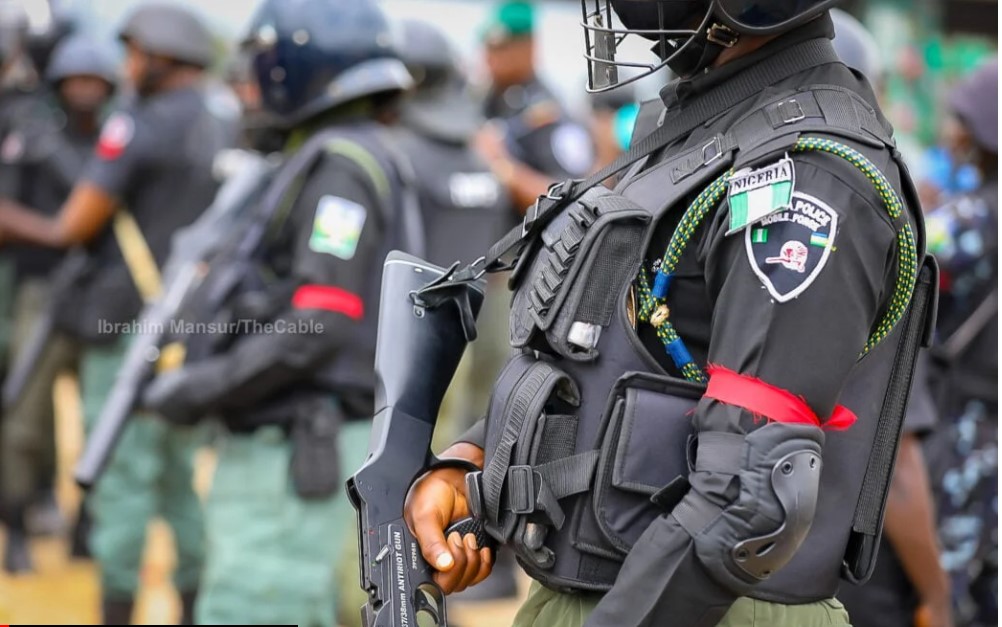
The proposed constitutional amendment to establish State Police has suffered a setback, with only five of the 36 State Houses of Assembly having approved the bill as of Thursday, October 15, despite a 30-day deadline set by the National Assembly for the state legislatures to communicate their positions.
The Assemblies of Edo, Osun, Oyo, Rivers and Zamfara have passed the proposed amendment, which seeks to decentralise Nigeria’s policing system and provides a constitutional framework for the establishment and operation of state police services.
However, several other state legislatures are still studying the bill, consulting stakeholders or waiting to begin deliberations, leaving the proposed reform far short of the constitutional requirement for approval by at least 24 state Houses of Assembly.
The bill was transmitted to the state legislatures on September 16, 2026, following its passage by the Senate on June 24 and the House of Representatives on July 23. The 30-day period given to the Assemblies was due to expire on October 16 (today).
Despite the deadline, the leadership of the House of Representatives has yet to make a formal statement on the status of the exercise or explain the next steps following the limited number of approvals.
The development raises questions about the pace of the constitutional amendment process, which requires broad support from state legislatures before the proposed changes can take effect.
Section 9(2) of the 1999 Constitution requires a constitutional alteration to be approved by resolutions of at least two-thirds of all state Houses of Assembly, representing 24 of the 36 states, before it can be presented for presidential assent.
With only five states having approved the proposal, the bill remains a considerable distance from the required threshold.
The establishment of state police has featured prominently in Nigeria’s security debate amid persistent challenges involving banditry, kidnapping, terrorism, communal violence and other criminal activities.
However, supporters argue that decentralised policing would enable states to respond more effectively to local security threats, while concerns have been raised over the possible political misuse of state-controlled security agencies.
The proposed amendment provides for a Federal Police Service alongside state police services, with each state empowered to establish its own service through legislation. It also outlines arrangements for the administration, oversight and accountability of state police personnel.
States back Bill
Zamfara State House of Assembly confirmed passing the bill, joining the legislatures of Osun, Oyo, Rivers and Edo in supporting the proposed constitutional amendment.
The spokesperson for the Zamfara Assembly, Malam Nasiru Biya-Buki, told The PUNCH that the House had completed the process and forwarded the bill to the National Assembly.
“The Zamfara State House of Assembly has since passed the bill regarding the creation of the state police,” he said.
“The bill has been sent to the National Assembly, Abuja, as requested. So, we are waiting for the next line of action to take.”
The Speaker of the Osun State House of Assembly, Adewale Egbedun, similarly, read a letter from the National Assembly requesting state legislatures to consider and approve the proposed constitutional alteration.
During deliberations, lawmakers, including Lawrence Adeoti, representing Ife South State Constituency, and Taofeek Olayiwola, representing Ede South, supported the proposal, arguing that state police would improve security across the country.
Adewumi Adeyemi, representing Obokun State Constituency, and Jeremiah Awoyeye, representing Ife Central, also described the proposal as timely.
They argued that the establishment of state police would strengthen security at state and local government levels by enabling authorities to respond more effectively to threats within their jurisdictions.
The motion supporting the amendment was moved by the Majority Leader, Babajide Kofoworola, representing Ede North, and seconded by Tajudeen Adeyemi, representing Ifelodun.
In Oyo, the House of Assembly passed the Constitution of the Federal Republic of Nigeria (Sixth Alteration) Bill, 2026 on September 29 after clause-by-clause consideration.
The session was presided over by the Speaker, Adebo Ogundoyin, following the receipt of a letter from the Clerk to the National Assembly, Kamoru Ogunlana, transmitting the bill for consideration and approval.
Ogundoyin said the passage of the amendment would have significant legislative implications for the state, particularly the need to enact a comprehensive law to guide the operation of its police service if the constitutional alteration is completed.
He explained that the proposed framework would provide for a Federal Police Service alongside state police services, with each state empowered to establish its own service through legislation.
According to him, state police would be responsible for enforcing state laws, maintaining public safety and order, preventing and detecting offences, protecting lives and property, and performing other local policing functions prescribed by state law.
The proposal also provides for State Police Service Commissions to oversee appointments, promotions, transfers, discipline, complaints and accountability.
A State Commander of Police would head each state service, with the governor appointing the commander on the recommendation of the National Police Council, subject to confirmation by the State House of Assembly.
The framework would also empower the National Assembly to prescribe minimum policing standards for federal and state police services, while allowing states to establish higher or additional standards.
Others undecided
While five states have approved the proposed amendment, several others are yet to take a definitive position, with some still examining the bill and others planning consultations or public hearings before voting.
In Ogun State, the former Speaker of the House of Assembly and Chairman of the House Committee on Constitutional Amendment, Olakunle Oluomo, said the legislature was considering holding a public hearing on the proposed changes.
Oluomo said he had proposed a public hearing to familiarise residents with the contents of the bill and allow them to contribute before the Assembly reached a decision.
“The Speaker is working round the clock to ensure success of everything. As the House Committee Chairman on Constitution Amendment, I have proposed that we should have public hearing about it.
“I look forward to meeting the Speaker this week so that we can fix a date for public hearing about it, so that our people can get familiarised with the content of the bill and then we take it up from there,” he said.
The Speaker, Oludaisi Elemide, also confirmed that the Assembly was still working on the proposal.
In Delta, the House of Assembly received the bill but has yet to announce whether it will support or reject it.
The Chief Press Secretary to the Speaker, Nkem Nwaeke, confirmed this to The PUNCH, saying that the Assembly was following due legislative process.
“I can confirm that the bill has been received by the House and due legislative process is being followed,” he said.
Nwaeke said the Speaker, Emomotimi Guwor, who also chairs the Conference of Speakers of State Legislatures of Nigeria, would announce the House’s position after consultations with relevant stakeholders.
“The interest of Delta people remains uppermost to the Assembly, hence the need for due diligence,” he added.
However, he did not disclose when the bill would be debated or voted on.
In Abia, the Speaker, Emmanuel Emeruwa, confirmed that the House had received the constitutional amendment proposal and that it had been brought before members.
“We have this on the floor,” Emeruwa said.
Asked whether a public hearing had been scheduled and when the Assembly would vote, the Speaker said, “I don’t have a position yet on the matter.”
In Anambra, the Clerk of the House of Assembly, Tony Ughenu, said the bill had been communicated to lawmakers but had not been formally listed for consideration.
“It has been communicated on the floor that Anambra State House of Assembly is in receipt from the National Assembly a Bill on State Police Constitution Amendment. It was announced two sessions ago,” Ughenu said.
He noted that the Assembly could not alter the provisions of the proposed constitutional amendment but was required to vote in support of or against it.
“The House normally is expected to vote ‘yes’ or ‘no’ on it,” he said.
Ughenu attributed part of the delay to ongoing deliberations at the Speakers’ Forum, adding that the position of the Assembly would become clearer in the coming weeks.
In Imo, the Chairman of the House Committee on Information and Judiciary, Dominic Ezerioha, said the bill arrived as lawmakers were proceeding on recess.
He said the House was expected to resume on Thursday, expressing hope that the proposal would be listed for consideration.
“The bill came when we were going for recess. But we resumed on Thursday and it was presented,” Ezerioha said.
He explained that lawmakers would examine the provisions and deliberate on their implications before reaching a decision.
Also, the Kaduna State House of Assembly has begun examining the proposed amendment and plans to organise a public hearing before taking a final position.
The Chairman of the House Committee on Information, Henry Marah, said lawmakers were reviewing the provisions to determine how they would apply to the state’s security situation.
“We are still studying the bill. We are looking at the underlying clauses and everything that is peculiar, in particular, to Kaduna State,” Marah said.
He said the Assembly would bring the bill to the floor after completing its review and would subsequently engage members of the public and other stakeholders.
“The public hearing is important because we need to hear from the people and stakeholders. Their contributions will also guide us when we consider the bill further,” he added.
Reps mum
The leadership of the House of Representatives has declined to comment on the status of the state police bill as the deadline for the state legislatures to communicate their decisions elapsed on Thursday.
In a telephone conversation with our correspondent, spokesperson for the House, Akin Rotimi, told our correspondent that not picking his calls was an indication that he was not interested in speaking on the subject matter.
“If you asked me a question and you did not get an answer, it means I don’t want to answer. You cannot be pressurising me like this,” he said, adding, “You know that question is not for me.”
The insistence of our reporter for an official comment notwithstanding, Rotimi stood his ground and subsequently ended the call.
The silence leaves unresolved questions about whether the National Assembly will extend its deadline, issue a fresh directive or take any other step to advance the constitutional amendment process.
Senate pledges passage
However, the Senate was more accommodating as it assured Nigerians that the proposed establishment of state police would be completed before the tenure of the 10th National Assembly elapsed, despite delays in securing the approval of state legislatures for the constitutional amendment.
The Chairman of the Senate Committee on Media and Public Affairs, Senator Yemi Adaramodu, gave the assurance in an exclusive interview with The PUNCH, dismissing fears that the process could be prolonged until the inauguration of the 11th National Assembly.
Despite the slow pace of approvals, Adaramodu said the Senate was not under pressure, noting that the constitutional amendment required the consent of at least 24 state Houses of Assembly, representing two-thirds of the 36 states.
He said, “We are still waiting after transmitting to the states. We only need 24 State Houses of Assembly to consent. That’s two-thirds of 36. So, once we get that, we will go ahead and promulgate.”
The senator also allayed fears that the constitutional amendment could be delayed until the 11th National Assembly, insisting that the current 10th Senate would complete the process before the next legislature takes over before the end of July 2027.
“There is no need for fear. This is the 10th Senate, isn’t it? I can assure you that it will be done in the life of this 10th Senate before the next one comes on board,” he assured.
Asked whether the National Assembly had set another deadline for the state legislatures to approve or reject the bill, Adaramodu said the federal lawmakers expected their responses soon.
The proposed amendment comes amid persistent security challenges and growing calls for the decentralisation of policing, with proponents arguing that state-controlled police formations would enable authorities to respond more effectively to local security threats.
The National Assembly had, on September 16, 2026, transmitted the Constitution of the Federal Republic of Nigeria 1999 (Sixth Alteration) Bill, 2026, titled, “A Bill for an Act to Alter the Constitution of the Federal Republic of Nigeria, 1999 to Provide for the Establishment of State Police Services; and for Related Matters,” to the 36 state Houses of Assembly.
The transmission followed widespread demands for a review of the country’s centralised policing structure to address insecurity across the federation.
The Clerk to the National Assembly, Kamoru Ogunlana, subsequently clarified that the State Police Bill was the only constitutional amendment proposal that had so far been transmitted to the state legislatures.
The bill’s prospects ultimately depend on securing approval from at least 24 state Houses of Assembly, as required by the Constitution.
Until that threshold is met and the remaining constitutional procedures are completed, the proposed establishment of state police will remain a proposal rather than an operative constitutional arrangement.
National Policing Bill
Meanwhile, the Presidency said on Thursday that the National Policing Bill, the proposed law to give effect to the planned state police system, is 90 per cent ready and would be transmitted to the National Assembly within two weeks, on October 29.
The Chief of Staff to the President and Chairman of the Presidential Working Group, Femi Gbajabiamila, disclosed this while speaking to State House correspondents after a steering committee meeting at the Aso Rock Villa, Abuja.
He said, “The National Policing Bill is more or less ready for transmission to the National Assembly. We will probably have one more meeting after this to cross the t’s and dot the i’s and make sure every area is covered. So, we are 90 per cent ready.
“The governors have one or two observations, and we should be ready in about a week or so.”
Gbajabiamila described the proposal as “the most consequential Bill of the administration so far”.
He said it had gone through intense deliberation in the weeks since the steering committee began work on August 3.
Asked whether states might delay approving the constitution amendment on state police, particularly as only five states had passed it, Gbajabiamila said there was a national consensus among Nigerians on the need for the change.
“I see no reason why anyone will want to have a rethink on it,” he stated.
The meeting was attended by the Chairman of the Nigeria Governors’ Forum and Governor of Kwara State, AbdulRahman AbdulRazaq; Governors Dapo Abiodun (Ogun) and Uba Sani (Kaduna); and the Inspector-General of Police, Tunji Disu.
The Attorney-General of the Federation was represented by the Solicitor-General and Permanent Secretary, Federal Ministry of Justice, Beatrice Jedy-Agba.
Other members present included the Chairman of the Policy Advisory Committee, Justice Abdullahi Liman (retd); the Head of the Nigeria Police Reform Secretariat, Prof. Olu Ogunsakin; the Special Adviser to the President on National Assembly Matters (House of Representatives), Lanre Smart; the committee secretary, Nnadubem Moghalu; and a representative of the Nigerian Bar Association president.
President Bola Tinubu inaugurated the seven-member Presidential Working Group on July 7, with Gbajabiamila presiding on his behalf.
It was mandated to produce a “technically robust, implementation-ready draft National Policing Bill.”
Tinubu said the bill would cover minimum policing standards, state readiness certification, federal-state coordination, accountability, human rights safeguards and fiscal conditions.
“The Constitution Amendment Bill establishes the framework for dual policing, but it does not operationalise it,” Tinubu said, according to a speech read on his behalf.
On Wednesday, at the inauguration of the APC Presidential Campaign Council, Tinubu told the gathering that state police “will be a reality.”
Source: punchng.com
FOLLOW US ON:
FACEBOOK
WHATSAPP CHANNEL
TWITTER
PINTEREST
TIKTOK
YOUTUBE
LINKEDIN
INSTAGRAM