Connect with us

Business

FG seeks fresh $1.5bn World Bank loan

Published

on

The Federal Government has opened discussions with the World Bank for three new loans totalling $1.5bn, even as Nigeria’s public debt climbed to a record N166.79tn at the end of June 2026.

Documents obtained from the World Bank show that the proposed financing comprises three separate $500m facilities for climate resilience, social protection and early childhood development.

The most immediate is a proposed $500m additional financing for the Agro-Climatic Resilience in Semi-Arid Landscapes project, known as ACReSAL. The World Bank has fixed October 29, 2026, as the estimated date for consideration by its board. The borrower is the Federal Republic of Nigeria, while the Federal Ministry of Environment is the implementing agency.

The financing would raise the size of ACReSAL from its previously approved $700m to $1.2bn, entirely financed through the International Development Association, the World Bank’s concessional financing arm.

The document said, “The Government of Nigeria has requested AF of $500m to scale up demonstrated project results and strengthen the institutional, operational and financing arrangements needed to sustain integrated landscape management.”

The additional financing is expected to support landscape restoration, watershed rehabilitation, erosion and flood management, irrigation and drainage, water harvesting and storage, reforestation and other climate-resilient interventions.

Of the additional $500m, $310m is proposed for dryland management, $165m for community climate resilience and $25m for institutional strengthening and project management.

ACReSAL currently operates across 19 northern states and the Federal Capital Territory and is targeted at land degradation, water insecurity, climate vulnerability and declining agricultural productivity.

The World Bank said desertification and land degradation affected an estimated 43 per cent of Nigeria’s land area, while failure to address climate change could reduce gross domestic product by about 2.6 per cent annually by 2030 and as much as 6.7 per cent by 2050.

The second proposed loan is another $500m IDA credit for the Household Prosperity and Empowerment-Social Protection Project.

Unlike the ACReSAL facility, the HOPE-SP project is at an earlier stage of preparation. Its technical design review is expected on October 30, 2026, while the World Bank has tentatively fixed March 16, 2027, as its approval date. The Federal Ministry of Finance is listed as the borrower, while the Federal Ministry of Humanitarian Affairs and Poverty Reduction will implement the programme.

The project has an estimated cost of $500m, comprising a $420m results-based programme and an $80m investment project financing component, with the entire financing expected from IDA.

It is designed to establish regular social assistance for poor and vulnerable households, while gradually shifting financing responsibility towards federal and state budgets.

The World Bank document said the programme would establish “a sustainable social assistance to poor and vulnerable households, financed increasingly from federal and state budgets and delivered through strengthened state and local government systems.”

The proposed programme would finance targeted unconditional and conditional cash transfers, modernise the social registry, integrate the National Identification Number into the social protection information system and strengthen implementation at federal, state and local government levels.

The lender said Nigeria spent only 0.14 per cent of GDP on social safety-net programmes in 2021, compared with a global average of 1.5 per cent and 1.2 per cent among lower-middle-income countries.

See also  FIRS, judiciary strengthen collaboration on emerging tax laws

The bank also painted a grim picture of household welfare, estimating that the proportion of Nigerians living in poverty had increased from 40 per cent in 2019 to 56 per cent in 2023 and could reach 62.5 per cent in 2026. It attributed the deterioration to several factors, including the pandemic, inflation, natural disasters and conflict, while noting that fuel subsidy removal and exchange-rate reforms worsened living costs in the short term.

The third proposed $500m facility is for the Nigeria Early Childhood Development programme, with an estimated approval date of March 15, 2027, a day before the proposed HOPE-SP approval. Its technical design review is also scheduled for October 30, 2026.

The Federal Ministry of Finance is the borrower, while the Federal Ministry of Budget and Economic Planning is expected to implement the programme.

The project would cover all 36 states and the FCT and seek to improve access to an integrated package of health, nutrition, early learning, childcare, water and sanitation, and other services for children aged zero to five.

It would be financed through $500m IDA credit, consisting of a $400m programme-for-results component and $100m investment project financing component.

The World Bank said the intervention had become necessary because “40 percent of children under five are stunted, fewer than half are developmentally on track, 36 percent of children aged 36 to 59 months attend organised early learning,” with poor rural households carrying much of the burden.

Debt jumps

The proposed borrowing comes as fresh figures from the Debt Management Office show that Nigeria’s total public debt rose by N14.39tn within one year, from N152.40tn in June 2025 to N166.79tn at the end of June 2026.

That represented an increase of 9.44 per cent year-on-year. Measured in dollars, however, the expansion was considerably larger. Public debt jumped by $21.27bn, or 21.35 per cent, from $99.66bn to $120.93bn over the same period.

The divergence reflects, among other factors, the stronger naira used in valuing the June 2026 external debt. The DMO applied an official exchange rate of N1,379.1842/$ in June 2026 compared with N1,529.2105/$ a year earlier. Consequently, dollar-denominated debt rose much faster than its naira equivalent.

On a quarterly basis, the debt stock increased by N7.44tn, or 4.67 per cent, from N159.35tn in March 2026 to N166.79tn in June.

In dollar terms, it rose by $5.98bn, or 5.20 per cent, from $114.95bn at the end of March. The June figures show that domestic liabilities remained the larger component of the debt portfolio.

Domestic debt stood at N91.59tn, representing 54.91 per cent of total public debt, while external debt amounted to N75.20tn, or 45.09 per cent. Domestic debt increased by N11.04tn, or 13.70 per cent, from N80.55tn in June 2025. In dollar terms, it climbed 26.07 per cent from $52.67bn to $66.41bn.

Between March and June 2026 alone, domestic debt rose by N4.19tn, or 4.79 per cent, from N87.40tn.

External debt moved from $46.98bn in June 2025 to $54.52bn in June 2026, an increase of $7.54bn or 16.05 per cent. Its naira value, however, rose by only N3.35tn or 4.66 per cent, from N71.85tn to N75.20tn because of the exchange-rate effect.

Quarter-on-quarter, external debt increased by $2.62bn or 5.05 per cent from $51.90bn in March to $54.52bn in June. Its naira equivalent increased by N3.25tn or 4.51 per cent.

See also  Nigerians spend N50bn on US visa applications

The Federal Government remained responsible for the overwhelming majority of the portfolio. Its domestic debt stood at N87tn in June, while states and the FCT owed N4.59tn domestically. Federal Government external liabilities were N65.77tn, compared with N9.42tn owed externally by states and the FCT.

Treasury bills

A closer examination of the Federal Government’s domestic liabilities shows that the growth was increasingly driven by Treasury bills and conventional naira bonds.

FGN domestic debt rose from N76.59tn in June 2025 to N87tn in June 2026, an increase of N10.41tn or 13.60 per cent. It also increased by N4.12tn or 4.97 per cent in the second quarter alone.

FGN bonds remained the dominant instrument at N64.84tn, accounting for 74.53 per cent of Federal Government domestic debt. The figure included N41.47tn in conventional naira bonds, N22.11tn in securitised Ways and Means advances and N1.27tn in domestic dollar bonds.

But Treasury bills recorded the sharpest absolute expansion. Outstanding Nigerian Treasury Bills jumped from N12.76tn in June 2025 to N19.48tn in June 2026, an increase of N6.72tn or 52.64 per cent within one year. Their share of Federal Government domestic debt consequently rose from 16.67 per cent to 22.39 per cent.

The increase was also concentrated in the second quarter. Treasury bills rose by N2.92tn, or 17.60 per cent, from N16.57tn in March to N19.48tn in June. Conventional FGN naira bonds increased by N4.94tn or 13.54 per cent year-on-year to N41.47tn and by N2tn or 5.08 per cent between March and June.

In contrast, the securitised Ways and Means balance declined from N22.72tn in March to N22.11tn in June, a reduction of N613.34bn or 2.70 per cent. Promissory notes also fell substantially, dropping from N1.73tn in June 2025 to N1.22tn in June 2026, a 29.81 per cent reduction.

FGN Savings Bonds, by contrast, rose 33.78 per cent from N91.53bn to N122.45bn, although they still represented just 0.14 per cent of domestic Federal Government debt.

Loans hit $20.73bn

The DMO figures further show why the proposed $1.5bn facilities are significant for Nigeria’s creditor profile. Nigeria’s outstanding debt to the World Bank Group reached $20.73bn at the end of June 2026, comprising $19.12bn owed to IDA and $1.61bn to the International Bank for Reconstruction and Development.

The combined exposure increased by $1.34bn or 6.93 per cent from $19.39bn in June 2025, when IDA debt stood at $18.04bn and IBRD debt at $1.35bn.

The rise accelerated during the second quarter of 2026. World Bank exposure increased by $907.09m, or 4.58 per cent, from $19.82bn in March to $20.73bn in June. IDA alone increased by $733.08m during the quarter, while IBRD exposure rose by $174.01m.

At $20.73bn, the World Bank Group accounted for about 38 per cent of Nigeria’s entire $54.52bn external debt stock at the end of June. IDA was by far Nigeria’s single largest identified external creditor, with its $19.12bn exposure alone equivalent to roughly 35 per cent of the country’s external debt.

Nigeria’s overall multilateral debt stood at $24.76bn, or 45.42 per cent of external debt. This means World Bank obligations accounted for roughly 84 per cent of the country’s multilateral debt.

See also  NNPC urged to revive refineries after Dangote snub

The remainder included $2.17bn owed to the African Development Bank, $1.01bn to the African Development Fund, $406.41m to the Islamic Development Bank and $314.98m to the International Fund for Agricultural Development, among others.

Commercial debt was almost as large as multilateral borrowing, reaching $23.16bn and representing 42.47 per cent of external liabilities. Eurobonds alone accounted for $18.55bn.

Other commercial obligations included $1.87bn owed to First Abu Dhabi Bank, $835.78m to Afreximbank and a $1.5bn First Abu Dhabi Bank total return swap.

Bilateral debt was considerably smaller at $6.61bn, representing 12.12 per cent of the external portfolio. China remained the largest bilateral source, with $4.91bn owed to the Export-Import Bank of China and another $573.53m to the China Development Bank. France accounted for $906.23m.

The creditor mix has shifted over the past year. In June 2025, multilateral institutions accounted for 49.36 per cent of Nigeria’s external debt, compared with 45.42 per cent in June 2026, despite an increase in their nominal exposure.

This reflects faster growth elsewhere in the external portfolio, particularly commercial borrowing. Eurobond liabilities increased from $17.32bn in June 2025 to $18.55bn in June 2026, while Nigeria also accumulated sizeable syndicated and other commercial obligations during the period.

The PUNCH earlier reported that former Vice-President Atiku Abubakar demanded a full reconciliation of Nigeria’s public debt, including new borrowings, Treasury Bills and controversial charges contained in the latest external debt-service records, as the country’s debt stock climbed to N166.79tn.

Atiku also demanded an apology from the President Bola Tinubu administration over the hardship Nigerians have experienced since the removal of the petrol subsidy and other economic reforms introduced in 2023.

The demands were contained in a statement on Saturday by Phrank Shaibu, Director of Strategic Communications of the African Democratic Congress Presidential Campaign Council.

“A government that says more money is coming in must explain why it keeps borrowing and why the people paying for its policies cannot see the promised gains,” Atiku said.

He urged the government to “identify the old debt newly recorded, the foreign debt whose naira value rose with the exchange rate, and every new loan contracted since he assumed office.”

Atiku also questioned the cost of servicing the country’s debt, arguing that rising obligations were limiting resources available for public services and development.

Reacting to the rising World Bank commitments to Nigeria, Lagos-based economist Adewale Abimbola said loans from multilateral institutions such as the World Bank are largely concessionary, with interest rates typically below market levels and longer repayment tenors.

He noted that the critical question is not whether Nigeria should be borrowing, but whether the loans are structured and deployed effectively. “If it’s concessionary and tied to viable projects with medium-term revenue prospects, I don’t think it’s a bad idea,” Abimbola explained. “Borrowing isn’t bad; what matters is utilisation.”

He stressed that the economic impact of such loans depends on how well they are channelled into projects that can generate sustainable growth, strengthen revenue, and improve public services over time.

Source: punchng.com

FOLLOW US ON:

FACEBOOK

TWITTER

PINTEREST

TIKTOK

YOUTUBE

LINKEDIN

INSTAGRAM

Continue Reading
Click to comment

Leave a Reply

Your email address will not be published. Required fields are marked *

Business

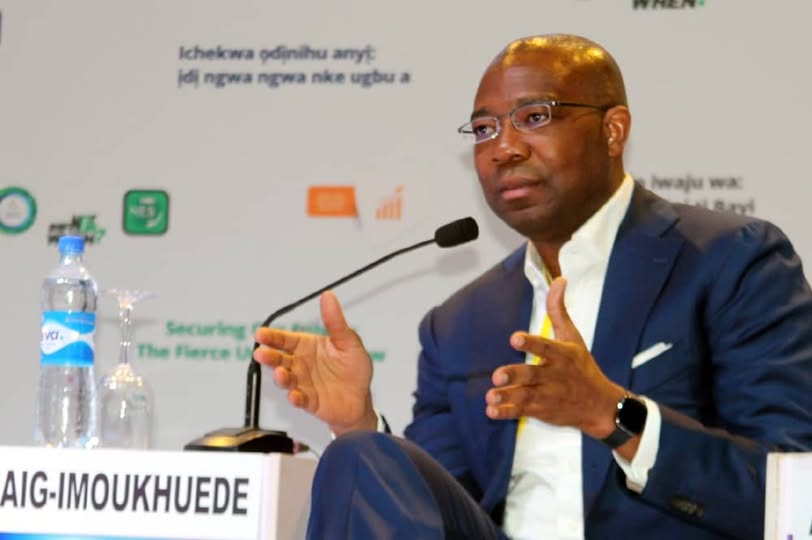
Aig-Imoukhuede: Building Africa’s public sector brain trust

Published

on

The first world owes much of its progress to philanthropy. In those climes, those whose palm-kernels were cracked by the benevolent spirit, to borrow from the late Chinua Achebe, are constantly paying it forward through their philanthropic support for the arts, humanities, education, health, and other charitable endeavors. Even Africa isn’t left out of the enduring helping hands of J.D. Rockefeller, Henry Ford, John D. MacArthur, and many more. Nigeria still counts on the enduring support of Bill Gates through his Gates Foundation to tackle several public health challenges. I suppose the pioneering efforts of these philanthropists of yore and those of today continue to inspire public-spirited business elites. It is heartening to note that Africa is building an influential corps of philanthropists who are deploying their immense means to take on challenges that can unlock significant value for the greatest number of people on the continent. I am a beneficiary of the transforming impact of the largely unsung philanthropic interventions of a Nigerian Banker, especially in developing human capital for Africa’s public sector.

In January 2016, I dared to dream. After my performance evaluation with my then-boss the previous month, I resolved to pursue graduate studies at all costs. I knew I wanted a stint at an elite institution, so I put all my eggs in one basket and applied only to the University of Oxford’s Blavatnik School of Government.  After submitting my application and references, I waited.  The next month, a mentor asked if I was sure I’d get a place in the incoming cohort. I told her I was confident. I considered my profile stellar enough to earn a place in the competitive program. I followed an online forum for prospective graduate students for updates and waited with bated breath. On the evening of March 30, 2026, an email arrived announcing an offer for the Master of Policy Programme at the Blavatnik School of Government, University of Oxford. After congratulating me, my wife’s first question was: “Where will you get the money to fund the program?” It was a pertinent question. The fee was a whopping £40,000, not including living expenses.  We had welcomed our son a few months earlier, so all our life savings had gone into hospital bills.

See also  Dangote refinery expansion to create 95,000 jobs

I was sure I would get a scholarship. It was the only way I could afford to take my place in the programme. The alternative was to take on a student loan. For the next four months, my life was consumed by the quest to secure funding to pursue my dream course at the great citadel of learning. I wrote several essays in response to scholarship calls and sent unsolicited letters to philanthropists. While waiting for feedback on some of these essays, I came across news that Nigerian banker, Mr Aigboje Aig-Imoukhuede had announced that his foundation would sponsor a select number of West African students to study Public Policy at the Blavatnik School of Government every year.

It was news to my ears and felt like an immediate answer to my prayers. But there was a snag: I already had an offer to study in September 2016; meanwhile, the AIG scholarship awards would not begin until September 2017. I was momentarily deflated. Not easily deterred, I did some research, found the Aig-Imoukhuede Foundation’s landing page, and sent a well-composed email. Although I received two initial partial scholarship offers from the University of Oxford, I still had a huge shortfall. I showed my strong interest in the program by accepting the offer and paying the non-refundable acceptance fee.

I wrote to some Nigerian philanthropists who, at one time or another, had helped indigent students achieve their academic dreams, but I did not hear back from any. Time was now running out. Distraught, I decided to follow up on my previous email to Aig-Imoukhuede’s foundation by sending a letter by courier to his Lagos office. This was my last-ditch effort, as the deadline was closing in and I needed the necessary documents from the school to begin the visa application. By some stroke of providence, in the second week of July, I got an email from the University awarding me a full tuition scholarship. Two days later, I received an email from the Aig-Imoukhuede Foundation acknowledging my email and letter. In the email, they asked me to respond to two essay questions, which I did immediately. In my reply, I added that I had been awarded a full scholarship and requested support to cover the shortfall in living expenses, since the school would refund my initial deposit. The director of the foundation, thereafter, asked me to send a breakdown of my living expenses. Days later, I received feedback that the foundation would cover the shortfall in full. In return, I was asked to do a Nigeria-focused internship. Nothing more. Thanks to Aig-Imoukhuede’s generosity, thirty-five other Nigerians and Ghanaians and I have attended the competitive Master of Public Policy programme at the University of Oxford. Recipients of the AIG MPP scholarships now work in the public and development sectors in both countries.

In September 2016, when I subsequently met Aig-Imoukhede, he told me that after reading my letter, he had resolved that the process for selecting scholars for the MPP programme would be rigorous and impersonal. Applicants for the AIG scholarship must go through a competitive selection process even before they apply to the University of Oxford. This reflects his conviction that, if Africa’s fortunes are to change, the public sector must be overhauled and staffed with the most competent individuals. This conviction is further evident in the development of the AIG Public Leaders Programme, a leadership capacity-building initiative designed to equip public sector leaders to drive, lead, and deliver effective change. Now, in its fifth cohort, the PLP programme has trained over three hundred public sector leaders since its launch in 2021.

See also  NNPCL appoints new heads of corporate communications, relations

Aig-Imoukhuede’s philanthropic intervention in Africa’s public service is remarkable and exemplary. By identifying a clear gap in the public sector and consistently and methodically deploying resources to address it, he is charting a new course for Africans to tackle African problems instead of relying on aid and foreign philanthropists whose well-intentioned efforts often erode our agency as a people. After decades of impressive strides in banking and Nigeria’s capital market, Aig-Imoukhuede’s relentless focus on supporting efforts to overhaul Africa’s public sector, starting with Nigeria, rests on the fundamental thesis that a country is as good as the quality of its bureaucrats. This thesis has been tested worldwide, including by Swedish political scientist Prof. Bo Rothstein, a global authority on the quality of government who incidentally taught me at the Blavatnik School of Government.

Nigeria needs more public-spirited philanthropists in the mold of Aig-Imoukhuede. To whom much is given, much is expected, and giving back should not be restricted to tokenistic dispensing of palliatives to people experiencing poverty. Philanthropy should be structured, intentional, and mission-driven and should dare to confront challenges that other forms of capital would not venture. This is the road less travelled. The courageous benevolence of Aig-Imoukhuede is thus worth celebrating. As Aig-Imoukhuede turns 60 this week, I wish him many more decades of impactful and inspiring work in the public sector, and I hope the seeds of his contributions to the development of Africa’s public sector brain trust will germinate and bear fruit in his lifetime.

Adedotun Eyinade writes from Abuja

Source: punchng.com

FOLLOW US ON:

FACEBOOK

TWITTER

PINTEREST

TIKTOK

YOUTUBE

LINKEDIN

INSTAGRAM

Continue Reading

Business

Food, beverage firms lead Nigeria’s real investments with N375bn

Published

on

Nigeria’s food, beverage and tobacco industry attracted N375.03bn in fresh investment in 2025, making it the biggest recipient of manufacturing investment during the year.

Investment in the sector jumped by 63.5 per cent from N229.42bn recorded in 2024, according to data from the Manufacturers Association of Nigeria.

The increase reflects continued expansion by major manufacturers as they seek to meet demand in Nigeria’s large consumer market.

Companies including Flour Mills of Nigeria, BUA Foods, Nestlé Nigeria, Dangote Sugar, Dufil, Cadbury Nigeria, CHI Limited, Unilever Nigeria and Honeywell Flour Mills were among firms investing in the sector.

The non-metallic products industry ranked second with N280.12bn, driven largely by investments in cement and glass manufacturing.

Motor vehicle assembly attracted N170.8bn, while the chemical and pharmaceutical sector received N123.61bn billion.

Industrial plastics, rubber and foam manufacturers invested N123.44bn, while the textile and carpet industry attracted N112.53bn.

Total investment in 2025 stood at N1.33tn. While the food and beverage industry led by sector, Lagos and Ogun remained the main destinations for manufacturing capital.

In 2024 and 2025, the two states attracted N1.74tn in industrial investment, accounting for 87.32 per cent of total investment recorded across Nigeria during the period.

The remaining 34 states attracted only N252.23bn, representing 12.7 per cent.

The figures underline the dominance of the Lagos-Ogun corridor in Nigeria’s manufacturing industry.

Lagos’ large consumer market and access to major ports remain key reasons manufacturers prefer the state.

The Apapa, Tin Can Island and Lekki ports provide access to imported raw materials and export markets, while the state also has a large financial and commercial ecosystem.

See also  NLC rejects petrol price hike, demands more crude for refineries

Ogun has benefited from its location next to Lagos. Industrial areas such as Agbara, Igbesa, Ota and Sango-Ota have become important manufacturing centres.

The availability of land for factories and lower expansion costs compared with Lagos have also helped Ogun attract manufacturers.

Data from MAN showed that between 2014 and 2020, manufacturers invested N3.35tn in Nigeria.

Ogun received N1.68tn, representing 50.16 per cent of the total, while Lagos attracted only N928bn, or 27.7 per cent.

Manufacturers in other parts of the country face higher logistics costs because of weak road networks, limited port access and other infrastructure challenges.

Chief Executive Officer of the Centre for the Promotion of Private Enterprise, Muda Yusuf, said the Lagos-Ogun axis benefits from both its large market and proximity to ports.

He noted that manufacturers must consider the cost of bringing in raw materials and moving finished products when deciding where to locate factories.

A consultant economist and former Central Bank of Nigeria analyst, Nonso Ihuoma, also linked Lagos’ advantage to its location and functioning seaports.

He said developing ports in other parts of the country could reduce the cost of moving goods and encourage manufacturers to invest outside Lagos and Ogun.

Security challenges in some states also remain a concern for businesses, increasing the cost and risk of operating outside the main industrial corridor.

Experts said better ports, roads, rail infrastructure and investment incentives would help attract more factories to other parts of Nigeria.

Source: punchng.com

FOLLOW US ON:

FACEBOOK

TWITTER

PINTEREST

TIKTOK

YOUTUBE

LINKEDIN

INSTAGRAM

See also  Dangote refinery expansion to create 95,000 jobs

Continue Reading

Business

Ardova-led consortium to acquire Powergas

Published

on

A consortium led by Ardova Plc and including Diadem Energy has agreed to acquire Powergas Global Investments Nigeria Limited and Powergas Ebedei Limited, collectively known as Powergas, in a transaction expected to close by the end of 2026.

The deal, announced on Friday by A.P. Moller Capital, will see the Danish investor exit its stake in one of Africa’s largest compressed natural gas producers and virtual pipeline distributors.

Powergas, founded in 2013 by the Clean Energy Group, pioneered the “virtual pipeline” model—compressing natural gas and transporting it by road to industrial, commercial and power customers beyond the reach of Nigeria’s fixed pipeline grid.

Its flagship Ebedei flare gas monetisation project in Delta State, developed with A.P. Moller Capital’s backing since 2019, converts otherwise flared gas into usable energy and has helped cut emissions while supplying firms that would otherwise rely on diesel generators.

The company now operates four mother stations—in Ikorodu (Lagos), Ogbele (Rivers), Ebedei (Delta) and Ore (Ondo)—and a fleet of more than 250 tube skids, having delivered over 600 million standard cubic metres of CNG as at December 2025.

For Ardova, the acquisition adds a strategic gas platform to its existing downstream portfolio of petroleum products, LPG, aviation fuel, lubricants, shipping and logistics.

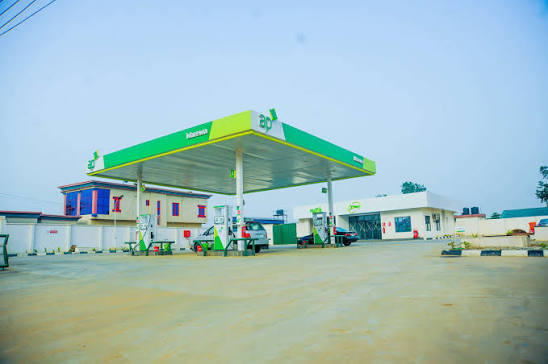
The Lagos-based integrated energy company, which traces its roots to BP Nigeria in 1964, plans to deploy CNG infrastructure across its nationwide retail network, targeting 100 CNG refuelling sites within 24 months.

The expansion aligns with the federal government’s Decade of Gas initiative, launched in 2021 to transform Nigeria into a gas-powered economy by 2030, and President Bola Tinubu’s Presidential Initiative on Compressed Natural Gas and Electric Vehicles, which seeks to lower transport costs and emissions by promoting auto-gas adoption.

See also  Price Of Bag Of Dangote, BUA, Other Cement This Week

“Nigeria’s next era of energy development will be built on gas, and it will be built at scale. “Powergas has built the compression backbone required to take natural gas beyond the conventional pipeline grid. Ardova brings a national distribution network, deep customer relationships, and the ability to invest for the long term.

“Together, we intend to connect Nigeria’s abundant gas resources to industry, power and transportation, supporting President Bola Ahmed Tinubu’s Presidential Initiative on Compressed Natural Gas and Electric Vehicles and the federal government’s Decade of Gas programme.

“Our ambition is to deliver more affordable, lower-emission energy and lower transportation costs for Nigerians, while building a gas platform with relevance far beyond Nigeria,” explained the Executive Chairman of Ardova Plc, Dr AbdulWasiu Sowami.

The Managing Director of Ardova Plc, Dr Abiola Babatunde-Ojo, noted that the deal would enable the firm to harness the opportunities in the gas industry.

“This combination gives us the infrastructure, reach and capabilities to turn the opportunity in gas into something tangible for customers across Nigeria. Our focus now is execution: expanding compression capacity, bringing CNG into our retail network and connecting more industries and fleets to a reliable domestic energy source. We are building a platform that will serve customers at scale today and grow with Nigeria’s energy needs for decades to come,” he asserted.

“Powergas began in 2013 with the Clean Energy Group’s vision of taking gas beyond the pipeline, and A.P. Moller Capital’s partnership helped us scale it. We are deeply grateful to both. Ardova’s national reach and our compression backbone are a natural fit – together, we can expand into new markets and geographies and play a leading role in delivering Nigeria’s Auto-Gas vision. We are very excited about the next chapter,” Vice-Chairman of Powergas, Pulak Sen, added.

See also  NNPCL appoints new heads of corporate communications, relations

According to a Partner at A.P. Moller Capital, Sam Senbanjo, since 2019, PEL has progressed from concept to a fully operational compressed-natural-gas business.

“Working alongside our partners, management and employees, we supported the business through development, construction, commissioning and scale-up, helping customers access domestic gas beyond the reach of the pipeline network. We are proud of what has been achieved and believe Ardova and Diadem are well placed to support Powergas in its next phase of growth,” he stated.

“Having worked closely with Powergas as its virtual-pipeline logistics partner, we have seen first-hand the transformative potential of taking natural gas beyond the conventional pipeline network. For Diadem Group, this is the continuation of a journey that began on the ground with Powergas, and a real opportunity to contribute to Nigeria’s energy future,” Chairman of Diadem Group, the parent company of Diadem Energy, George Eluwa, highlighted.

The enlarged platform is expected to position Ardova as a leading domestic gas infrastructure and monetisation partner for upstream producers, with plans to expand compression capacity across viable gas-producing corridors and extend the business into wider West African markets over time.

The deal’s completion is subject to customary closing conditions, including regulatory and third-party approvals.

Source: punchng.com

FOLLOW US ON:

FACEBOOK

TWITTER

PINTEREST

TIKTOK

YOUTUBE

LINKEDIN

INSTAGRAM

Continue Reading

Trending