Connect with us

Business

FG unveils five-year blacklist for defaulting contractors

Published

on

The Federal Government has approved new guidelines for the debarment of contractors, consultants and service providers, outlining six grounds that could lead to their exclusion from Federal Government procurement for between three and five years.

The grounds include offering bribes or other benefits to influence procurement decisions, conviction for fraud, wilful failure to perform contractual obligations, a history of unsatisfactory performance, falsification of documents and debarment by a multilateral organisation.

The directive was contained in a circular titled “Implementation of the National Guideline on Debarment of Contractors,” signed by the Secretary to the Government of the Federation, George Akume.

The circular was addressed to the Chief of Staff to the President, Deputy Chief of Staff to the President, Head of the Civil Service of the Federation, Principal Secretary to the President, ministers and ministers of state, National Security Adviser, Economic Adviser to the President, special advisers and senior special assistants.

Others addressed included service chiefs and the Inspector-General of Police; the Governor of the Central Bank of Nigeria; chairmen of the Federal Civil Service Commission, Police Service Commission, Code of Conduct Bureau, Code of Conduct Tribunal, Federal Character Commission, Revenue Mobilisation Allocation and Fiscal Commission, Federal Inland Revenue Service and Independent National Electoral Commission.

The circular was also sent to the chairmen of the National Population Commission, Independent Corrupt Practices and Other Related Offences Commission, Economic and Financial Crimes Commission and National Drug Law Enforcement Agency; all permanent secretaries and heads of extra-ministerial departments; Clerk of the National Assembly; Chief Registrar of the Supreme Court; Accountant-General of the Federation; Auditor-General for the Federation; and directors-general and chief executives of parastatals, agencies and government-owned companies.

Akume said the guideline was introduced “in order to promote integrity, transparency, accountability in public procurement and to ensure value for money in public expenditure and to protect government from bad and non-performing contractors.”

See also  Electricity Power subsidy hits N418bn, losses exceed N300bn

The circular stated that the guideline establishes “the grounds and procedures for excluding contractors, suppliers and service providers from participating in Federal Government procurement” where they are found to have violated the Public Procurement Act, 2007, or engaged in wrongdoing relating to contract delivery.

Under the guideline, a contractor, consultant, or service provider may face debarment where there is evidence that the firm or individual gave or promised money, gifts, or any tangible item to a current or former employee of a procuring entity or the Bureau of Public Procurement in an attempt to influence a procurement action or decision.

The government also listed offering or giving employment or another benefit that can be quantified in monetary terms to a current or former employee of a procuring entity or the BPP as a ground where it is intended to influence a procurement activity.

Another ground is conviction for fraud or any other offence connected with obtaining, attempting to obtain or performing a public contract or subcontract.

The guideline further targets contractors that breach government contracts through “willful failure to perform in accordance with the terms of a contract” or those with “a history of failure to perform or of unsatisfactory performance of a contract.”

Falsification of documents is also expressly listed as a ground for debarment. In addition, the government said a contractor already debarred by a multilateral organisation “may be considered for debarment by the government.”

Once a contractor is debarred, Ministries, Departments and Agencies are prohibited from soliciting offers from the contractor, awarding contracts to it or consenting to subcontracts involving the contractor. The circular also provides that a debarred contractor “shall not conduct business with the government as an agent or representative of any other contractor, consultant or service provider.”

However, an existing government contract or subcontract may continue despite the debarment where a government agency determines there are other good reasons for doing so. The sanction will also apply to partners in a joint venture agreement.

See also  NNPC awaits reports on PH, Warri refineries’ revival

The guideline stipulates that the Debarment Committee may impose a sanction “for a period of not less than three years and not exceeding five years.” The guidelines set out a process requiring the BPP to investigate and notify contractors before a final debarment decision is made.

The BPP may commence proceedings where, during its review, surveillance or audit, it has cause to believe that a contractor has contravened the Public Procurement Act or regulations made under it.

A procuring entity can also submit a debarment recommendation after conducting adequate findings, provided the recommendation is based on evidence approved by its Accounting Officer.

The BPP is required to acknowledge a debarment request within seven working days, while the Secretary of the Debarment Committee must review the information within 10 working days.

Where a case capable of leading to debarment is established, the BPP is to issue a notice to the affected contractor within five working days. The notice must contain the specific allegations and grounds for the proposed debarment. The contractor, consultant or service provider will then have 10 working days to respond. The BPP may grant an extension of not more than five working days upon request.

The circular provides that the respondent may submit a written response personally or through counsel, together with additional information in support of its defence. It adds that the response must be accompanied by a verifying affidavit “attesting that the information provided is truthful, after exercising due diligence in reviewing the matter.”

Where the notice cannot be delivered physically or electronically, the intention to debar may be published in two national newspapers, the Tenders Journal and the BPP’s website, for at least 10 working days.

If no response is received within 10 working days after publication, the respondent may be considered to have been served, allowing the Debarment Committee to proceed on the basis of the available material.

See also  Dangote beats US, ships N757bn jet fuel to Europe – Report reveals

Upon receiving a response, the committee is required to consider it within 15 working days and arrive at a decision on the merits. Where the committee decides to impose debarment, the BPP must issue the final notice within five working days of receiving the committee’s decision.

The circular states that the final notice must contain “the decision to debar, grounds for the debarment, period of debarment and the implications of the debarment.” The name of the debarred contractor will then be entered into the BPP database and published on the Bureau’s website, the Federal Tenders Journal and other platforms.

The new guidelines build on Nigeria’s existing public procurement framework established by the Public Procurement Act 2007, which provides the legal framework for public procurement and establishes the BPP as the regulatory body responsible for monitoring and regulating procurement processes.

The Act provides for measures to promote competition, transparency and value for money in public procurement and contains offences and sanctions relating to procurement misconduct, including fraud, collusion and other breaches.

The BPP has also developed procurement systems and platforms intended to improve transparency and public access to information on Federal Government contracting and procurement processes.

The new guideline provides a specific administrative framework for acting against contractors, including the grounds for debarment, notification, opportunity to respond, committee review, publication of sanctioned contractors and possible reinstatement after the sanction period.

The circular directs all Accounting Officers to bring the contents of the guideline to the attention of their Tenders Boards, Procurement Planning Committees, Procurement Departments and all officers involved in public procurement.

It concluded, “The implementation of this circular is effective immediately, and strict compliance is advised.”

Source: punchng.com

FOLLOW US ON:

FACEBOOK

TWITTER

PINTEREST

TIKTOK

YOUTUBE

LINKEDIN

INSTAGRAM

Continue Reading
Click to comment

Leave a Reply

Your email address will not be published. Required fields are marked *

Business

WHY DO WE VALUE FOREIGN PRODUCTS MORE THAN OUR OWN? THE MINDSET HOLDING AFRICA BACK

Published

on

Africa is rich in natural resources, creativity, culture, and entrepreneurial talent. Yet one uncomfortable question continues to deserve our attention: **Why do we sometimes trust products made abroad more than products made by our own people?**

Consider this scenario: a Nigerian entrepreneur produces shoes, clothing, cosmetics, food, or household products locally. Some consumers immediately question the quality. But when a similar product carries a foreign label, those same consumers may suddenly see it as more fashionable, prestigious, or desirable.

Is the foreign product necessarily better, or have we developed a mindset that automatically associates foreign with quality and local with inferiority?

## The Psychology of Foreign Products

In many African markets, foreign brands are associated with prestige, social status, and international recognition. For some consumers, owning imported products is not merely about functionality; it is also about how those products make them appear in the eyes of others.

This creates a difficult environment for local entrepreneurs. They must compete not only on price and quality but sometimes also against perceptions that are deeply rooted in consumer behaviour.

However, it would be unfair to claim that all foreign products are better or that all locally made products meet acceptable standards. Consumers have legitimate reasons to demand durability, safety, reliability, attractive packaging, and value for money.

The real challenge is to ensure that local manufacturers can compete on a fair playing field.

## How This Mindset Can Affect African Economies

When locally produced goods struggle to attract consumers, businesses may find it harder to expand, invest in modern equipment, hire workers, and develop new products.

See also  FG to end regulated gas pricing in 2028

Strong local industries can create employment, develop technical skills, support farmers and suppliers, and keep more economic activity within a country. Countries that successfully build globally competitive industries generally combine investment, innovation, infrastructure, quality control, and consumer confidence.

Africa cannot build a stronger manufacturing base through slogans alone. It requires practical action from governments, businesses, financial institutions, and consumers.

## Local Manufacturers Must Also Take Responsibility

Supporting African businesses should not mean accepting poor-quality products simply because they are locally made.

Manufacturers must take responsibility for improving their standards, customer service, packaging, product safety, and innovation. Governments must tackle barriers such as unreliable electricity, expensive financing, inadequate infrastructure, and unfair competition.

Consumers, meanwhile, should judge products by their actual quality and value rather than automatically dismissing them because of their country of origin.

**Patriotism should encourage excellence, not protect mediocrity.**

## Can Africa Change This Mindset?

The answer begins with education, investment, accountability, and a willingness to give good local products a fair chance.

African entrepreneurs need opportunities to prove themselves. Consumers need reliable products they can trust. Governments need policies that make local production more competitive.

The goal should not be to reject everything foreign. International trade brings technology, ideas, competition, and useful products. The goal should be to build African industries strong enough to compete with the best in the world.

## The Big Question for Our Readers

Why do some consumers proudly display foreign brands but hesitate to support products made in their own countries?

Is it a genuine concern about quality, a desire for social status, a lack of trust in local manufacturers, or a combination of these factors?

See also  NNPC awaits reports on PH, Warri refineries’ revival

**Newsbreak365 wants to hear your opinion.**

Would you choose a quality Nigerian-made product over an imported alternative if both offered similar quality and value for money?

Join the discussion in the comments. Your perspective matters.

*Newsbreak365 — Real News. Real People. Real Issues.*

FOLLOW US ON:

FACEBOOK

TWITTER

PINTEREST

TIKTOK

YOUTUBE

LINKEDIN

INSTAGRAM

Continue Reading

Business

AFRICA, WAKE UP! WHY SHOULD A CONTINENT WITH SO MUCH LAND STILL STRUGGLE TO FEED ITS PEOPLE?

Published

on

Africa, we must confront an uncomfortable question: **How can a continent with enormous agricultural potential continue to depend on food imports while millions of its people search for jobs and farmers struggle to make a living?**

We cannot talk about economic independence while neglecting the very industry that puts food on our tables.

From Nigeria to Ghana, Kenya to Uganda, agriculture has the potential to create jobs, build businesses, empower young people, and strengthen local economies. Yet this potential cannot be fully realised without investment, modern technology, reliable infrastructure, and policies that support farmers.

FARMING IS NOT A SIGN OF FAILURE. DEPENDING TOO HEAVILY ON OTHERS FOR ESSENTIAL FOOD CAN BECOME A NATIONAL RISK.

Imagine what Africa could achieve if more young people entered commercial farming, local industries processed more homegrown produce, and farmers had access to affordable financing, irrigation, modern equipment, and profitable markets.

The answer is not simply to tell Africans to return to the farms. Governments must make agriculture productive and profitable. Investors must support food production. Communities must respect farmers, and young people must be given the tools to build successful agricultural businesses.

A STRONGER AFRICA BEGINS WITH THE ABILITY TO FEED ITS PEOPLE.

The continent has opportunities worth developing. The real challenge is turning agricultural potential into practical results.

LET’S TALK!

If African countries invested seriously in agriculture, would it create more jobs, reduce dependence on imported food, and help make food more affordable?

Drop your opinion in the comments. Is Africa neglecting one of its greatest economic opportunities, or are deeper problems holding agriculture back?

See also  FG to end regulated gas pricing in 2028

Share this post and follow **Newsbreak365** for more thought-provoking discussions about Africa’s future.

#Newsbreak365 #Africa #Agriculture #FoodSecurity #AfricanDevelopment #SupportFarmers #EconomicDevelopment

FOLLOW US ON:

FACEBOOK

TWITTER

PINTEREST

TIKTOK

YOUTUBE

LINKEDIN

INSTAGRAM

Continue Reading

Business

Nigerian, Indonesian firms sign $10m business deals

Published

on

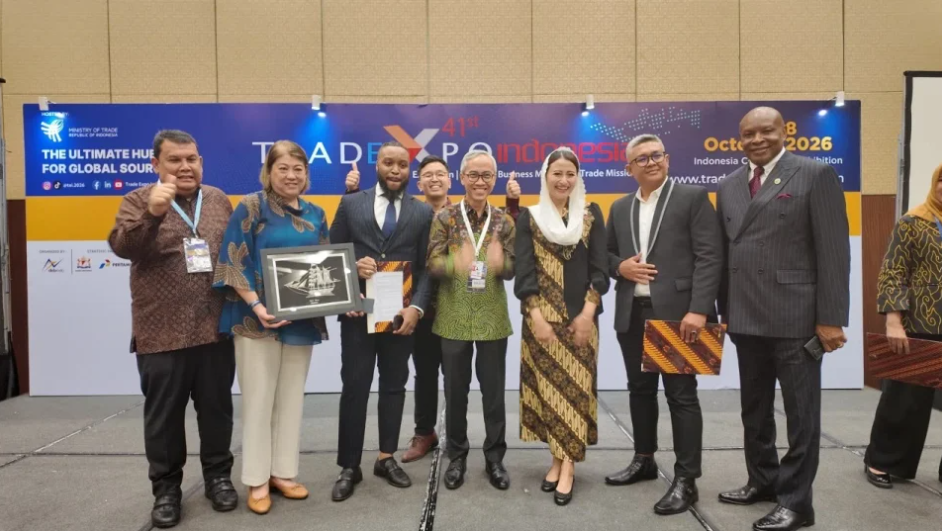
Nigerian and Indonesian companies have signed business agreements worth a combined $10m to strengthen trade and economic cooperation between the two countries.

The Indonesian Ambassador to Nigeria, Bambang Suharto, disclosed this on Thursday during a memorandum of understanding signing ceremony involving Nigerian investors and their Indonesian counterparts at the 2026 Trade Expo Indonesia.

The agreements were among a broader collection of business commitments at the expo, where 55 memoranda of understanding involving Indonesian companies and international business partners were signed.

The participating countries included Nigeria, Australia, Canada, Chile, Germany, Hungary, Malaysia, Mexico, the Netherlands, Romania, South Africa, South Korea, Thailand, the United Arab Emirates and Vietnam.

The event had present ambassadors, diplomatic representatives, international buyers and business partners.

The occasion was highly praised as one of the significant moments of the 2026 Trade Expo Indonesia which kickstarted and was declared opened on Wednesday.

Suharto speaking to Journalists described the agreements involving Nigerian and Indonesian companies as a historic development, expressing optimism that the partnerships would expand bilateral business relations and deliver economic benefits to both countries.

“Today we are witnessing a very historical moment for this year. We have two companies who are having signing ceremony, the MOU, a business contract with their counterpart in Indonesia. So, the amount reached in total 10 million USD or 5 million USD each,” the ambassador said.

He explained that the agreements covered the dental equipment and pharmaceutical sectors, describing them as important areas with significant implications for public welfare.

The ambassador urged Indonesian businesses to look beyond commercial trading and explore investment opportunities in Nigeria, noting that some Indonesian companies already operating in the country had demonstrated the benefits of long-term business engagement.

See also  FG to end regulated gas pricing in 2028

“I mentioned that there are now some Indonesian companies operating in Nigeria. So, they are a good example. For so many years, they have been doing business in Nigeria, creating job opportunities for the locals and also absorb the local resources that can be produced in their factory and bring, of course, for the benefit of Nigeria as well,” he said.

Suharto encouraged Nigerian companies to invest in Indonesia, highlighting the countries’ large populations, available human resources and investment potential.

“We have 280 million people and Nigeria has 230 million people. In both countries, we have a demographic bonus. So, we have also attractive manpower, which is good for investment,” he said.

He added that Indonesia remained open to Nigerian businesses seeking opportunities in its market.

One of the Nigerian investors who signed an agreement, Ralph-Michael Simon-Michael of Irad Investment Limited, said his company had partnered with Indonesian firm PT Winn Appliance to introduce domestic gas appliances into the Nigerian market.

Simon-Michael, whose company is headquartered in Port Harcourt, Rivers State, said the partnership was aimed at making the products accessible to ordinary Nigerians through established distribution channels.

“So, we’re based in Port Harcourt, our headquarters. So, we’re an oil and gas servicing company. We’ve come to Indonesia to partner with a company called Win Appliances. So, we’re going to be bringing gas, domestic appliances into Nigeria,” he said.

He explained that the products would be targeted at everyday consumers and distributed nationwide through established retail outlets and cash-and-carry distributors.

“The appliances that we’re bringing are for domestic use, for the everyday consumer. So, the everyday man can essentially afford these appliances that we’re bringing in,” he said.

See also  Electricity Power subsidy hits N418bn, losses exceed N300bn

Simon-Michael named Shoprite, Next cash-and-carry distributors among other outlets, through which he said the products would be distributed across Nigeria.

He said the company’s long-term plan was to establish a factory in Indonesia, and expand its operations into other African countries.

The investment agreements also formed part of broader efforts to deepen trade relations between Nigeria and Indonesia, according to Sheye Oyetade, Executive Director of Invest Nigeria, who said the Nigerian delegation was working to translate existing cooperation agreements into practical business opportunities.

Oyetade said the delegation’s participation was linked to the memorandum of understanding between Invest Nigeria and the Developing Eight (D-8) countries, a grouping of countries that includes Nigeria and Indonesia.

“We actually came to service our Memorandum of Understanding with D8 to make sure that trade is actually seamless between Nigeria and Indonesia,” he said.

He added that economic reforms in Nigeria had created opportunities for cross-border trade and investment, while the country’s growing population offered businesses access to a large consumer market.

“The signing of the MOU is key, simply because, whether you like it or not, Africa is becoming the major darling of the world in terms of the market,” Oyetade said.

He projected that Nigeria’s population would rise to about 400 million by 2050, arguing that the expansion would increase its importance as a destination for investment and consumer goods.

“So, where the people are, there the market is. So, that’s exactly what we are doing here today,” he said.

The agreements are expected to strengthen commercial links between businesses in both countries, with participants expressing hope that the partnerships would encourage further investment, job creation and the exchange of products and expertise.

See also  One week to deadline, banks in last-minute rush for Recapitalisation

Source: punchng.com

FOLLOW US ON:

FACEBOOK

WHATSAPP CHANNEL

TWITTER

PINTEREST

TIKTOK

YOUTUBE

LINKEDIN

INSTAGRAM

Continue Reading

Trending