Connect with us

Politics

PDP, APGA, Accord back Wike, Soludo, Adeleke for APC campaign

Published

on

Three opposition political parties have backed the inclusion of their chieftains in the All Progressives Congress Presidential Campaign Council to re-elect President Bola Tinubu in the 2027 general election.

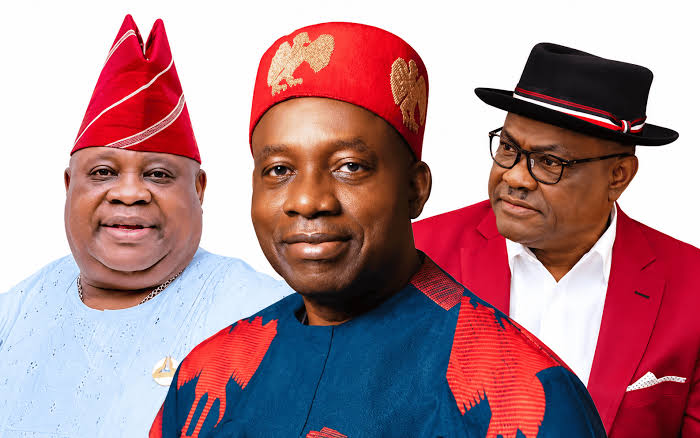
The parties — the Peoples Democratic Party, All Progressives Grand Alliance and Accord, expressed support for the roles assigned to the Minister of the Federal Capital Territory, Nyesom Wike; Anambra State Governor, Chukwuma Soludo; and his Osun State counterpart, Ademola Adeleke, in the ruling party’s revised campaign council.

The APC named the three politicians in its expanded Presidential Campaign Council on Tuesday, despite their affiliations with parties other than the ruling party.

This comes as the APC national chairman, Prof. Nentawe Yilwatda, while receiving the former Chief Justice of Nigeria, Justice Olukayode Ariwoola-led Savannah Centres for Diplomacy, Democracy and Development, on Tuesday, confirmed that the ruling party appealed to Wike, Adeleke, Soludo and other opposition figures to support and work for Tinubu’s re-election.

While Wike is a prominent PDP chieftain, Soludo belongs to APGA, while Adeleke is a member of the Accord.

Their inclusion reflects the political alliances and cross-party relationships shaping the race ahead of the 2027 presidential election.

Speaking exclusively with The PUNCH on Wike’s inclusion in the council, the National Publicity Secretary of the PDP National Caretaker Committee, Jungudo Mohammed, said the minister’s willingness to work with Tinubu was never in doubt.

He explained that the PDP had given Wike the go-ahead to support the President from the beginning of the current administration.

“The FCT minister got the blessing of the PDP during the era of its former National Chairman, Umar Damagum, to work with Mr President. His inclusion in the Presidential Campaign Council was therefore expected but this does not make him a member of the APC National Working Committee.

“Every political party including the PDP would like to have Mr Nyesom Wike in their campaign council, but the party had already endorsed his invitation to help the current administration from day one. He is working for President Tinubu and not for APC.”

APGA also welcomed Soludo’s appointment as the Anambra State coordinator of Tinubu’s 2027 presidential campaign, describing it as well deserved.

In a statement signed by its National Publicity Secretary, Ejimofor Opara, the party congratulated the governor and reaffirmed its support for Tinubu’s re-election bid.

“The National Working Committee of the All Progressives Grand Alliance heartily congratulates our National Leader and Governor of Anambra State, Prof Chukwuma Charles Soludo, CFR, on his well-deserved appointment as the Anambra State Coordinator of the President Bola Ahmed Tinubu 2027 Presidential Campaign Council.

See also  INEC recognises David Mark-led ADC leadership

“This appointment is a testament to Governor Soludo’s exemplary leadership, his uncommon commitment to progressive ideals, and his consistent advocacy for a strategic partnership between APGA and the Federal Government for the collective good of Ndi Anambra and Ndigbo at large.

“As a party, APGA has made its position clear. At our National Executive Committee meeting and during Mr President’s working visit to Anambra on May 8, 2025, we formally adopted President Bola Ahmed Tinubu as our consensus presidential candidate for the 2027 general election.

“In line with this resolution, APGA did not field a presidential candidate for the 2027 election,” the statement read.

The party said Soludo’s appointment was consistent with its political position and its support for cooperation between APGA and the Federal Government.

It added that the governor’s message that “Progressives are working together” reflected a shared political outlook between the party and the ruling party.

“Governor Soludo’s mantra that ‘Progressives are working together’ is not just a slogan, but a statement of historical truth.

“APGA, as the first truly progressive party in Nigeria, shares ideological DNA with the progressive movement at the centre.

“This synergy has already yielded tangible dividends for Anambra State, including federal collaboration on critical infrastructural interventions and economic development enablers.”

Reaffirming its position ahead of the elections, APGA said it would continue to seek electoral victories for its candidates at the state and federal legislative levels while supporting Tinubu.

The statement further stressed that “while APGA remains firmly in control of Anambra State, our position remains: In Anambra, it is Tinubu for President, APGA for Senate, House of Representatives, and state House of Assembly.

“We are confident that Gov Soludo will bring his intellectual depth, organisational capacity, and wide acceptability across the Southeast to galvanise massive support for President Tinubu’s Renewed Hope Agenda.”

Similarly, a chieftain of the Accord and member representing Ede South/Ede North/Ejigbo/Egbedore Federal Constituency of Osun State, Bamidele Salam, described Adeleke’s appointment to lead Tinubu’s re-election campaign in Osun as “a welcome development.”

Salam’s reaction signals support for Adeleke’s campaign role despite the governor’s membership of the Accord Party rather than the APC.

Our appeal

The APC national chairman, Prof Yilwatda, confirmed that the ruling party had reached out to opposition leaders to seek their support for Tinubu’s re-election in 2027.

See also  Peter Obi left ADC because he was scared of Atiku – Party chieftain, Fabiyi

He stated, “You see, the APC is doing a lot, and despite our achievements and accomplishments as a government, we are still not relaxing. We are not resting. We have been reaching out to all stakeholders, including our party members and even those who are not members of our party.

“In Osun State, we contested the election against the incumbent governor, Ademola Adeleke, of the Accord. Our party lost that election, but we approached the governor. We begged him and asked him to work for President Bola Tinubu’s re-election. He agreed to work for the President’s re-election.

“In Anambra State, we also lost to the APGA candidate, the incumbent governor, Charles Soludo. But after the election, we went back and appealed to him because we know that he is a stakeholder in that state.

“We appealed to him to come and work for us, work for our party and support President Bola Tinubu’s re-election. He agreed to work for us.

“We did the same thing in other states, including Rivers State. We begged the Minister of the Federal Capital Territory, Wike, to work for the party. He has agreed to work for the candidate, President Bola Ahmed Tinubu, in Rivers State and the FCT.”

Yilwatda said the APC’s efforts to secure support across party lines were driven by the national interest, stressing that the initiative was aimed at advancing the interests of the Federal Republic of Nigeria beyond partisan considerations.

“So, the party is moving. We are reaching out to Nigerians. We are not just relaxing and saying that we are delivering good governance or the dividends of democracy. No. We are reaching out to stakeholders to support our party across party lines.

“The interest goes beyond political parties. This is in the interest of the Federal Republic of Nigeria, and that is why we are doing what we are doing,” he said.

‘Rainbow Coalition stays’

Meanwhile, Wike has insisted that the Rainbow Coalition will remain a feature of Nigeria’s political landscape ahead of the 2027 general elections.

Speaking at his monthly media chat in Abuja on Tuesday, Wike played down claims that the coalition had caused unease among APC governors or might trigger defections from the ruling party.

Wike has continued to promote the Rainbow Coalition in Rivers State and FCT in support of Tinubu ahead of the 2027 elections.

See also  Ekiti 2026: Oluyede Emerges PDP Candidate, Vows To Rebuild Trust In State

He recently alleged that Kwara State Governor, AbdulRahman AbdulRazaq and Imo State Governor, Hope Uzodimma, were behind some of the political challenges confronting him, linking their opposition to the coalition’s growing influence and its support for politicians challenging APC candidates in governorship and senatorial elections.

Uzodimma, who chairs the APC Progressive Governors’ Forum, has said APC governors would not support any alliance capable of undermining Tinubu’s re-election or weakening the party ahead of 2027, insisting that they would campaign for APC candidates at all levels.

Wike, however, maintained that his support for Tinubu’s presidential bid did not require him to back APC candidates in other elections, saying he remained free to support candidates of his choice, amid continued tensions between him and some APC governors.

Wike maintained that the Rainbow Coalition had come to stay, adding that, “If you have any problem against me, come out and face Wike. Don’t go under the Rainbow Coalition. For Rainbow Coalition, it has come. It will stay. There is nothing anybody can do about it.”

Wike, who oversees the coalition’s activities in Rivers State and the FCT, said it brings together APC members and supporters of President Tinubu from other political parties to work towards a common goal.

He said, “If you see that word, PBAT/APC, it means those who are supporting the President who are not members of the party, together with the party, are working together to achieve that purpose.

“The major thing is Mr President. Whatever we are going to do, whoever has any idea or anything to contribute is to the success of Mr President. That is the whole thing.”

Wike cited the FCT as an example of the coalition’s effectiveness, saying its members would support Tinubu in the 2027 election while backing APC candidates for the National Assembly.

He questioned why the arrangement should be considered problematic and dismissed suggestions that the political alliance was new to Nigeria.

Wike added, “When you say a new thing that never happened, I don’t think so,” adding that such backing had existed before without being formalised.

“But this time, it came out because of the period we are in,” he said.

Source: punchng.com

FOLLOW US ON:

FACEBOOK

TWITTER

PINTEREST

TIKTOK

YOUTUBE

LINKEDIN

INSTAGRAM

Continue Reading
Click to comment

Leave a Reply

Your email address will not be published. Required fields are marked *

Politics

Traditional rulers face neutrality test as politicians storm palaces ahead of 2027 elections

Published

on

As political interests increasingly seek the influence of traditional institutions, Nigeria’s royal fathers face a delicate battle to preserve their neutrality, authority and place above partisan divisions, writes CHIMA AZUBUIKE

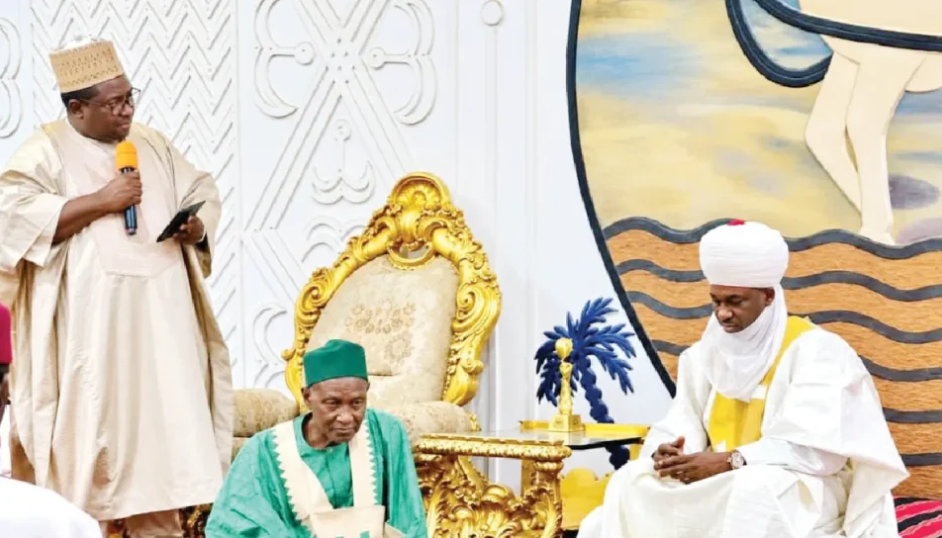
When the Emir of Gombe, Abubakar-Shehu Abubakar III, declared that traditional rulers belonged to no political party and would not allow personal considerations to divide the communities entrusted to their care, his message resonated beyond the confines of his palace. Abubakar echoed this imperative when the Chairman of the Independent National Electoral Commission, Prof Joash Amupitan, visited him in his palace last Monday. The visit touched on one of the most delicate questions in Nigeria’s political landscape: whether traditional institutions can remain impartial despite the fact that their positions, privileges and continued relevance are often tied to the political establishment. It was also a timely reminder of the responsibility traditional rulers bear as custodians of community values, mediators in local disputes and influential voices in grassroots political engagement. The visits of political office holders, political office seekers to palaces is bound to increase ahead of the 2027 elections.

Amupitan’s visit was part of INEC’s North-East zonal interactive meeting with electoral officials and stakeholders ahead of the 2027 general election. Beyond seeking royal blessings and prayers, the engagement offered an opportunity to reflect on the influence traditional rulers wield over their subjects and the extent to which that influence can contribute to credible elections.

The emir’s position was unambiguous: traditional rulers must serve everyone, regardless of political affiliation, religious beliefs or social background. He said, “As royal rulers, we recognise that free and peaceful elections are essential to the stability, unity and progress of our country.

“Our task is to ensure that we are in a unique position in this regard. Royal fathers serve all our subjects irrespective of their political affiliation, religious beliefs or social backgrounds.

“We belong to no political party, and we have never allowed our personal considerations to divide the community entrusted to our care. This is a responsibility we take very seriously.”

It was a statement of principle, but one that also raises the question: How can traditional rulers remain politically neutral when the political system within which they operate sometimes rewards loyalty and punishes perceived disloyalty?

Across Nigeria, traditional rulers occupy a complicated position. They are expected to be above partisan politics, yet they operate in an environment where political actors frequently seek their endorsement, blessings and influence. Their palaces are important stops for politicians seeking legitimacy, while their public appearances can be interpreted as signals of political preference.

For many politicians, a royal reception is more than a courtesy call. It is an opportunity to demonstrate acceptance by the community, mobilise grassroots support and communicate political strength to rivals.

Conversely, an absent monarch, a closed palace gate or a reception organised away from the traditional seat of authority can become a political statement in itself.

The emir’s declaration invites a deeper examination of whether traditional rulers can successfully separate their public responsibilities from the political calculations that increasingly shape their relationships with elected officials.

Traditional rulers have long occupied an important place in Nigeria’s community life. Their influence extends beyond ceremonial functions to conflict resolution, cultural preservation, mobilisation for development and mediation between governments and citizens.

In many rural communities, they remain among the most accessible authorities. Their words carry weight because of longstanding cultural relationships, inherited institutions and their familiarity with local grievances. That proximity to the people makes them valuable partners in electoral administration.

While INEC is responsible for organising elections, it cannot independently resolve issues of voter apathy, community tensions, misinformation and resistance to electoral participation. Traditional rulers can easily help bridge that gap. They can explain the importance of voter registration, encourage eligible citizens to collect their Permanent Voter Cards, discourage political violence and urge residents to resolve disagreements through lawful democratic processes. They can also challenge attempts by political actors to exploit ethnic, religious or communal divisions for electoral advantage.

See also  Ekiti 2026: Oluyede Emerges PDP Candidate, Vows To Rebuild Trust In State

But the same influence that makes traditional rulers valuable to electoral administration can become problematic when deployed in the service of partisan interests.

Recollections by some Nigerians suggest that the relationship between traditional institutions and political competition has not always matched the ideal of neutrality expressed by the Emir of Gombe.

Samaila Dati, a Gombe resident, recalled an incident in which an emir allegedly shut his palace gates because he feared receiving a governor who was then seeking election.

According to Dati, the experience illustrated the difficulties politicians can encounter when traditional rulers are caught between their responsibility to serve the entire community and their relationship with the incumbent political leadership.

“Today’s Gombe governor tasted that bitter pill during his campaign to one of the emirates in the north. The emir failed to turn up despite being informed about the engagement. It took party loyalists who are members of the emirate to organise a reception in another location to welcome the current governor, who was then a candidate,” he added.

The account, as recalled by Dati, illustrates how a palace can become an arena for political calculations even when the traditional ruler’s public responsibility is to maintain open channels of communication with all political actors.

For a candidate seeking office, access to a traditional ruler can be an opportunity to present campaign promises, discuss community needs and demonstrate respect for local institutions. When that access is denied because of political considerations, the encounter risks sending a message that the community is closed to a particular political interest.

The consequences can extend beyond the immediate political contest. Where residents perceive that a traditional ruler favours one political camp, those who support opposing parties may begin to question whether the palace remains an impartial institution.

Such perceptions can weaken the palace’s ability to mediate disputes after elections, especially when political disagreements spill into family relationships, community associations and local development initiatives.

Dati’s recollection offers a perspective on the political pressures facing traditional rulers, but the circumstances surrounding the incident would require independent verification and a response from the emir concerned.

Dati’s account raises the question: should access to traditional institutions depend on a politician’s relationship with the government of the day, or should every credible political actor be treated with the same measure of courtesy?

For those who believe that traditional rulers must remain impartial, the answer should be straightforward.

Danladi Adamu, a teacher, said that tensions could emerge in the relationship between political officeholders and traditional institutions when monarchs are perceived to be close to politicians opposed to the sitting governor.

Adamu referred to the political disagreements between Governor Muhammadu Yahaya and his predecessor, Governor Danjuma Goje, during which, according to him, some traditional rulers came under pressure.

He said, “Recall Governor Inuwa Yahaya’s political tussle with his former boss, Governor Danjuma Goje. Some emirs were nearly affected, including the Emirs of Gona in Akko Local Government Area and Deba in Yamaltu-Deba LGA, but thank God for how they were resolved.”

The accounts point to the vulnerability of traditional institutions when political disagreements between powerful individuals extend into the structures of customary authority.

Adamu’s recollection does not, on its own, establish the full circumstances of the tensions he described. But it reflects a concern that deserves serious attention: the extent to which political rivalries can expose traditional rulers to pressure and threaten their ability to serve communities impartially.

For Mohammed Ahmed, a civil servant, the problem runs deeper than individual incidents involving palace visits. He believes the process through which traditional rulers are selected, nominated or recognised can influence their willingness to challenge political authorities. Ahmed invoked a popular maxim to explain his position. “He who pays the piper determines the tune,” he said. He argued that traditional rulers would struggle to remain neutral while depending on politicians for their selection and continued security in office.

“Until traditional rulers stop depending on politicians for their selection and nomination, they cannot be neutral; they can’t see something bad and say it. They will continue to be underdogs, busy watching the body language of the governors and chairmen. They will continue to be partisan,” Ahmed added. His argument raises a structural question about the relationship between traditional institutions and democratic governance.

See also  Defected Rivers lawmakers free to leave PDP, says Wike

In Nigeria, traditional institutions are not uniform. Their succession arrangements differ according to local customs, historical practices and the legal frameworks governing chieftaincy matters in individual states.

In some communities, succession involves kingmakers or other customary authorities. State governments may also have formal roles in recognition, approval or the administration of chieftaincy affairs, depending on the applicable law.

Ahmed’s argument is that such dependence can turn traditional rulers into observers of political signals rather than independent voices of community interest.

The visit by Amupitan to the Gombe Emir’s Palace, therefore, carried significance beyond its ceremonial setting. The INEC chairman said the commission was consulting traditional rulers across the country to seek their blessings, prayers and support ahead of the 2027 general elections.

He explained that the North-East was the fourth geopolitical zone visited by the commission as part of its readiness assessment, following similar engagements in the South-West, North-West and South-East.

“We have visited other zones. We started with the South-West. From there, we moved to the North-West, and then to the South-East. Today, we are in the North-East,” he said.

Amupitan acknowledged the importance of traditional rulers in electoral administration, particularly in mobilising voters and promoting peaceful participation.

“Your role cannot be underestimated, most especially in ensuring the success of the 2027 general election. I am delighted to lead my team here today to seek your blessings, prayers and support,” he told the emir.

The chairman said the North-East had approximately 19.96 million registered voters, representing 13.51 per cent of Nigeria’s total registered voters.

The figures underline the region’s significance in the national electoral process and the need to ensure that eligible citizens are able to participate without intimidation, misinformation or avoidable administrative obstacles.

Amupitan appealed to the emir to mobilise eligible voters to collect their Permanent Voter Cards, emphasising that the cards were necessary for exercising their voting rights.

“Collection of PVCs is currently ongoing. It is not a favour anybody is doing the electorate to come out and vote, but you cannot vote without your PVC. We want your Royal Highness to help INEC mobilise the electorate to go out and collect their PVCs so that they can exercise their voting rights,” he said.

He urged the emir to appeal to political leaders to conduct their campaigns peacefully and discourage actions capable of undermining the electoral process.

The INEC chairman also sought the support of traditional rulers in tackling misinformation and disinformation, warning that false reports circulated on social media could cause panic, discourage voter participation and incite violence.

“People will start posting fake news, claiming that there is fighting or killing when it is not true, most of the time. We are appealing to your Royal Highness to help educate our people so that they will not be carried away by fake news and can verify information before it causes panic,” he said.

Amupitan reaffirmed the commission’s commitment to impartiality, assuring Nigerians that INEC would work towards delivering free, fair, inclusive and credible elections.

“INEC is committed, I can assure you, sir, and the good people of Gombe State that under my watch, INEC will remain absolutely impartial. We have no candidate of our own, but we will do everything possible to conduct a free, fair, inclusive and credible election come 2027,” he said.

The parallel between INEC’s commitment and the emir’s declaration is significant. Both institutions must demonstrate impartiality not merely through public statements but through decisions that citizens can observe and evaluate.

For INEC, that means applying electoral rules consistently, providing accurate information and ensuring that eligible voters can participate in accordance with the law.

For traditional rulers, it means opening channels of communication to competing political interests, discouraging violence regardless of who is responsible and resisting pressure to turn customary authority into an instrument of electoral advantage.

See also  Tinubu will win 2027 with 15m votes—Ex-APC aspirant

The INEC chairman’s appeal for traditional rulers to combat misinformation is especially relevant. False reports can inflame communal tensions, undermine confidence in electoral procedures and create confusion about where and when citizens can vote.

Traditional rulers can help counter such narratives by communicating verified information through community meetings, religious and cultural gatherings, local networks and other trusted channels.

The Emir of Gombe’s declaration provides a standard against which the conduct of traditional institutions can be assessed as Nigeria approaches another general election.

But it is not enough for a monarch to announce that he belongs to no political party. It must be reflected in how the palace treats competing political actors and how the ruler responds when political interests threaten to divide the community.

A traditional ruler need not pretend to have no personal political opinions. Like other citizens, he may have views about public affairs. The more important distinction is between personal preference and the exercise of public authority.

The responsibility of the office requires that personal sympathies should not determine access to the palace, the distribution of communal attention or the willingness to mediate disputes involving competing political interests.

As the 2027 elections approach, Nigeria’s traditional institutions face an important opportunity to reaffirm their relevance in a changing political environment. Their influence will be most valuable when it is used to strengthen peaceful coexistence, protect civic participation and preserve channels of communication across political divisions.

The challenge is particularly acute in communities where access to public authorities is often mediated through traditional leaders. If a palace closes its doors to political opponents, it risks narrowing the space for democratic engagement. If it welcomes competing interests fairly, it can demonstrate that political disagreement does not have to become social hostility.

The experiences recalled by Dati, Adamu and Ahmed suggest that the question of royal neutrality cannot be resolved through appeals for good conduct alone. It also requires attention to the institutional arrangements and political relationships that may discourage traditional rulers from acting independently.

Governments must respect the distinction between their constitutional responsibilities and the customary authority exercised by traditional institutions. Political parties must recognise that a monarch’s willingness to receive an opponent is not an act of hostility. Traditional rulers, for their part, must resist the temptation to trade impartiality for political favour.

Communities also have a role to play by demanding fairness, encouraging accountability and rejecting attempts to portray political access as a privilege reserved for supporters of those in power.

Ultimately, the credibility of a traditional institution is measured not by the number of politicians who visit its palace but by the confidence people across political divides place in its ability to serve them fairly.

The Emir of Gombe’s declaration that traditional rulers belong to no political party offers a starting point. The more difficult task is ensuring that the principle survives the pressures of electoral competition.

For Nigeria’s democracy to benefit fully from the influence of traditional institutions, the palace must remain a place where political differences can be acknowledged without becoming grounds for exclusion.

The true test of neutrality, therefore, is not whether traditional rulers can avoid wearing party colours. It is whether they can protect the dignity and rights of people who wear different political colours.

As the countdown to 2027 continues, Nigeria needs traditional institutions that can stand above partisan rivalries without standing apart from the concerns of their communities.

The palace should not be a campaign office, an extension of a governor’s political structure or a refuge for one faction against another. It should remain a meeting point for the community in all its diversity. Only then will the declaration that traditional rulers belong to no political party become more than a believable statement.

Source: punchng.com

FOLLOW US ON:

FACEBOOK

WHATSAPP CHANNEL

TWITTER

PINTEREST

TIKTOK

YOUTUBE

LINKEDIN

INSTAGRAM

Continue Reading

Politics

Makinde’s commissioner, two aides resign, read why

Published

on

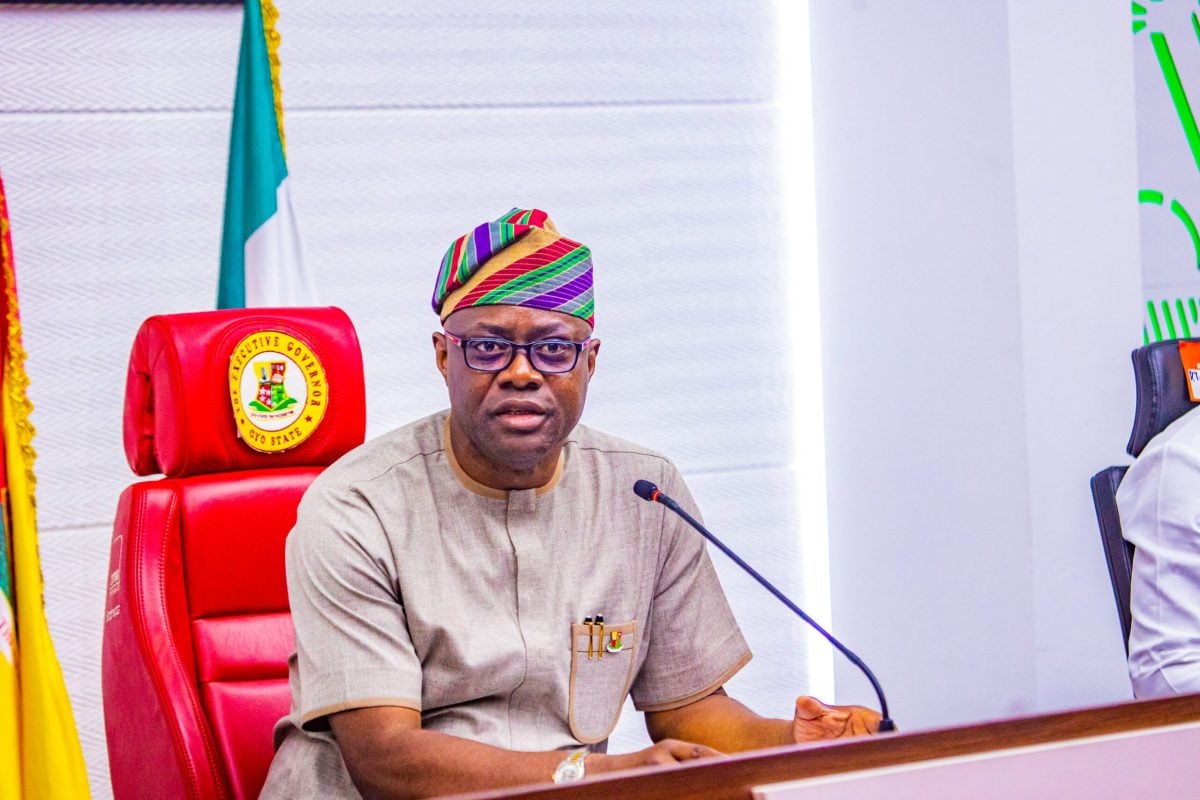
Three key appointees of the Oyo State Governor, Seyi Makinde, officially resigned from the state cabinet on Monday.

They were the Commissioner for Budget and Economic Planning, Ayobami Ojo; Special Adviser on Budget and Economic Planning, Adegbola Oyeleke; and a member of the state Independent Electoral Commission, Sunday Falana.

Ojo, who hails from Ago-Are in Atisbo Local Government Area of the state, communicated his resignation in a letter addressed to the governor through the Secretary to the State Government, Prof. Musibau Babatunde.

The PUNCH reports that in October, the governor’s Chief of Staff, Segun Ogunwuyi, resigned after more than five years in office.

His resignation was followed by that of the former Director-General of the state’s Due Process Office, Tara Adefope.

Ogunwuyi, a former member of the House of Representatives, did not publicly disclose his reason for resigning.

Following his departure, Makinde appointed Akinwole Akinwole as his replacement, while Aderonke Adedayo was appointed Director-General of the Due Process Office.

However, Ojo, on Monday, referenced his appointment letter dated June 22, 2026, and said his resignation takes immediate effect.

Ojo, who did not disclose his reason for leaving the state Executive Council, expressed appreciation to Makinde for the confidence reposed in him and the opportunity to serve the state.

Also, a former two-term member of the state House of Assembly and former council chairman, Oyeleke, announced his resignation as Special Adviser on Budget and Economic Planning.

Oyeleke, in his letter dated November 2, 2026, and addressed directly to Makinde, said he was no longer comfortable with the working environment in the administration.

See also  Osun 2026: Adeleke will defeat Oyetola again if he’s APC candidate — Aide

He added that the circumstances had made it difficult for him to effectively pursue and fulfil the aspirations of his people while serving in the government.

Oyeleke, however, appreciated the governor for his leadership, encouragement, support, as well as the opportunity to contribute to the administration’s policies and development programmes.

He wrote, “I sincerely appreciate Your Excellency’s leadership, encouragement, support and the invaluable experience I have gained during my period of service. I remain grateful for the opportunity to have been part of this administration and to have contributed to its laudable achievements.”

The third official, Falana, who hails from Ogbomoso, also resigned his appointment as a member of OYSIEC.

In a letter dated November 2 and addressed to the governor through the Chief of Staff, Falana announced that his resignation would take immediate effect.

He did not disclose the reason for his decision but thanked Makinde for the opportunity to serve on the state’s electoral management body, describing his experience as “worthwhile.”

When The PUNCH contacted the Director-General, Media and Publicity, Bimbo Adekanmbi Campaign Council, Yinka Oladoyinbo, in Ibadan, the state capital, on Monday, he said, “The resignation will not affect the chances of our candidate (APM) in the next election. This election is not about politicians alone; it’s about the people of Oyo.

“It’s about 7.9 million people of Oyo, and they are the ones that going to decide who become the governor.

“As people are moving out of Allied People’s Movement, we also have people that are moving into APM. Like my principal said this afternoon, this is the moment we call the transfer market in politics; it’s in football. Some people would come, some people would go.

See also  Tinubu will win 2027 with 15m votes—Ex-APC aspirant

“But the ultimate power resides with the people. It is the people in the majority who will decide who becomes the governor of Oyo State, and we have the majority on our side.

“So, definitely, politicians moving or resigning will not affect our party’s chances negatively in the next general elections,” Oladoyinbo insisted.

Meanwhile, the latest departures add to the growing list of officials who have left the Makinde administration in recent months.

Other notable officials who had left their positions include former Commissioner of Police and Special Adviser on Security, Fatai Owoseni; former member of the state Advisory Council, Babatunde Oduyoye; and former Senior Special Assistant on Diaspora Matters, Funmi Arulogun.

Also included were the former Chairman of the Governing Board of the College of Agriculture, Igboora, Damilare Gideon Amusan, and former lawmaker, Peter Oyetunji.

Four other appointees — Joshua Olusola Afolabi, Rebecca Oladoja Agbejimi, Noah Adeyanju and Suleiman Adegbola — also resigned their appointments on October 19.

In a related development, the Executive Chairman of Ogbomoso North Local Government, Jimoh Idowu, resigned his membership of the APM.

Idowu announced his decision in a letter addressed to the party’s executives in the local government on Monday, expressing “appreciation for the opportunity to serve and his contributions to grassroots mobilisation and party unity.”

He also promised to hand over party documents, assets and records to the appropriate authorities.

The development comes as the state Independent Electoral Commission prepares for the December 29, 2026 local government elections across the 33 LGAs.

See also  Ekiti 2026: Oluyede Emerges PDP Candidate, Vows To Rebuild Trust In State

The commission released its final list of candidates on October 27.

Source: punchng.com

FOLLOW US ON:

FACEBOOK

WHATSAPP CHANNEL

TWITTER

PINTEREST

TIKTOK

YOUTUBE

LINKEDIN

INSTAGRAM

Continue Reading

Politics

Natasha begins re-election campaign in Kogi ahead of 2027 elections

Published

on

Senator Natasha Akpoti-Uduaghan on Sunday commenced her re-election campaign across Kogi Central ahead of the February 6, 2027 senatorial election, with her supporters and Peoples Democratic Party candidates joining the campaign engagements.

The campaign featured roadside receptions across communities in Okene and other parts of the district, culminating in a gathering at the senator’s residence in Obeiba, Ihima, Okehi Local Government Area.

Her media aide, Mike Idoko, disclosed this in a statement issued in Abuja on Monday.

The campaign activities attracted party members, community leaders, political stakeholders and supporters, while PDP candidates contesting National Assembly and Kogi State House of Assembly seats in the district also participated.

Akpoti-Uduaghan, accompanied by her husband, Emmanuel Uduaghan, and other political associates, used the engagements to reaffirm her commitment to quality representation, constituency development, and legislative advocacy.

She said her relationship with the people of Kogi Central went beyond elections, adding that their support remained a source of motivation for her public service.

“My relationship with the people of Kogi Central goes beyond elections. These are my people, my family and the very reason I remain committed to public service. I do not need an election season to remember where I come from or who entrusted me with the responsibility of representing them.

“What we witnessed today is a reflection of the bond we have continued to build over time. I am deeply grateful to everyone who came out, not because they were compelled to do so, but because they believe in the journey we have undertaken together. Their love and confidence mean a great deal to me, and I will never take them for granted,” she said.

See also  27 Reps dump PDP, others for APC, ADC in a defection tsunami

The senator also pledged to intensify efforts to attract infrastructure, economic opportunities and other development projects to the district, particularly the Ajaokuta area, whose development concerns she said required sustained attention.

She stressed that effective representation should go beyond occupying public office to include regular engagement with constituents, responsiveness to their needs and purposeful legislative interventions.

Among those who participated in the campaign were PDP candidates for the House of Representatives seats representing Adavi/Okehi, Ajaokuta and Okene/Ogori-Magongo Federal Constituencies, as well as the party’s candidates for the various Kogi State House of Assembly constituencies in Kogi Central.

Their participation provided an opportunity for party members and candidates to strengthen their cooperation ahead of the 2027 general elections.

The statement said thousands of supporters gathered at the senator’s Ihima residence, with many remaining there late into the night.

Kogi Central comprises five local government areas: Adavi, Ajaokuta, Okehi, Okene and Ogori-Magongo.

Source: punchng.com

FOLLOW US ON:

FACEBOOK

WHATSAPP CHANNEL

TWITTER

PINTEREST

TIKTOK

YOUTUBE

LINKEDIN

INSTAGRAM

Continue Reading

Trending