Connect with us

Business

Fani-Kayode defends Obasanjo over Nigeria Airways liquidation, read details

Published

on

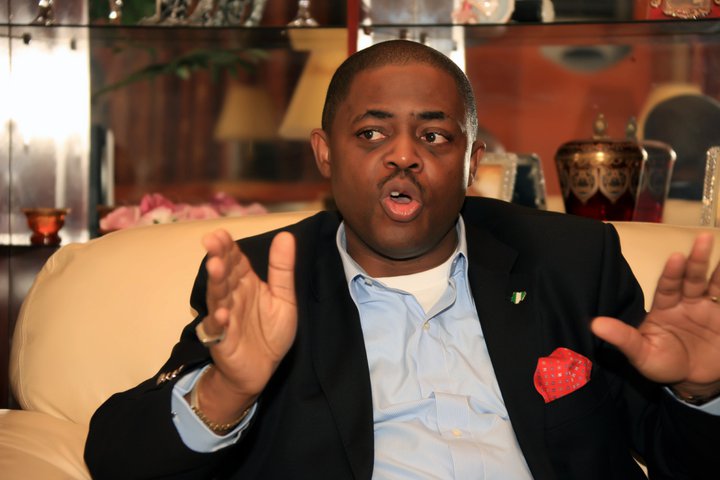
A former Minister of Aviation, Femi Fani-Kayode, has defended former President Olusegun Obasanjo over the liquidation of Nigeria Airways, insisting that the airline’s collapse resulted from years of mismanagement, corruption and mounting debts before Obasanjo returned to power in 1999.

Fani-Kayode, who served as the Minister of Aviation in 2006, said Obasanjo inherited a virtually collapsed airline and had little choice but to liquidate it in 2004.

He stated this in a post on his X account on Thursday while responding to the Minister of Aviation and Aerospace Development, Festus Keyamo, who had earlier accused former Vice-President Atiku Abubakar of hypocrisy over his comments on Nigeria’s economic hardship and insecurity.

In a post published on Wednesday, Keyamo accused the administration in which Atiku served as vice-president of liquidating Nigeria Airways in September 2004, leaving thousands of workers without jobs and their pensions and gratuities unpaid.

The minister said the outstanding entitlements had remained unresolved for years, claiming that some former workers died while waiting for their benefits.

He added that President Bola Tinubu had approved and released N36bn to settle the outstanding obligations, with beneficiaries already receiving payment alerts.

Keyamo also accused Atiku of taking credit for the achievements of the Obasanjo administration when convenient while distancing himself from controversial decisions.

Responding to the debate, Fani-Kayode said it was unfair to blame Obasanjo for the airline’s collapse, arguing that its decline had begun long before his return to office.

“In fairness to President Obasanjo the Nigeria Airways ‘mess’, as you have described it, was established before he came back to power in 1999.

See also  Nigeria, Indonesia trade tops $3bn annually — envoy reveals

“And it was indeed a mess but it was not of Obasanjo’s making!

“He met it there after he was sworn in and what he found broke his heart,” Fani-Kayode wrote.

He recalled that when Obasanjo left office as military Head of State in 1979, Nigeria Airways had 32 functional aircraft, experienced pilots and crew members, a first-class management team and an accountable board of directors.

He described the airline at the time as “the pride of the nation”.

However, Fani-Kayode said the situation had deteriorated considerably by 1999, when Obasanjo returned as a civilian president.

“By the time Obasanjo came back to power in 1999, 20 years later, there was only one plane left and it was not functional.

“The rest had vanished together with virtually all of the company’s assets,” he said.

According to him, successive management teams and boards contributed to the airline’s decline through corruption and mismanagement between 1979 and 1999.

He said the company’s liquidation followed chronic insolvency, operational collapse and unsuccessful attempts to revive its operations, including privatisation advice from the International Finance Corporation, which later withdrew.

Fani-Kayode maintained that the Obasanjo administration was justified in refusing to continue providing public funds to the struggling airline.

“This is why Obasanjo liquidated it in 2004 and I believe that he had no choice,” he said.

“There was nothing left to save even though it was a painful decision given the fact that he was one of those that had done so much for that company when he was Military Head of State.”

See also  FG generates N5.21tn from oil sales in H1

The former minister said the payment of outstanding pensions became a major issue following the liquidation.

He recalled that a committee chaired by the then Head of Service of the Federation, Yayale Ahmed, recommended that funds be released to pay the pensioners.

Fani-Kayode said he subsequently presented a memo to the Federal Executive Council in 2006, advocating the payment of the outstanding entitlements.

However, he said the proposal was rejected because some cabinet members believed former management teams and board members were responsible for the airline’s destruction and did not deserve pensions.

“I did not share that view but sadly I and those that supported me were in a minority and we lost the debate,” he said.

He added that the matter was revisited under the administration of the late President Umaru Yar’Adua, which paid most of the pensioners, while the administration of former President Muhammadu Buhari also made payments.

Fani-Kayode commended Keyamo for ensuring that the remaining pension obligations were settled under the Tinubu administration.

“It is gratifying that under your leadership the remainder of the pensions have been paid. I only wish we had done that when we were in office,” he wrote.

“The pensioners suffered immensely over the years. I have always maintained that paying them was the right thing to do.”

He also referred to Atiku’s position during the Federal Executive Council deliberations on the pension payments but declined to disclose details of the former vice-president’s stance.

“As for His Excellency Waziri @atiku I know what side of the divide he was during that debate in council but I will not share that publicly because whatever decision was finally taken was a collective one,” he said.

See also  Tinubu launches N52,500 minimum pension for 173,209 retirees

Fani-Kayode added that members of the administration collectively bore responsibility for the decision and its consequences.

He concluded by commending Keyamo for completing the payment of the outstanding entitlements owed to former Nigeria Airways workers.

Source: punchng.com

FOLLOW US ON:

FACEBOOK

WHATSAPP CHANNEL

TWITTER

PINTEREST

TIKTOK

YOUTUBE

LINKEDIN

INSTAGRAM

Continue Reading
Click to comment

Leave a Reply

Your email address will not be published. Required fields are marked *

Business

Ogun attracts US firms’ interest in LNG, Deep Seaport projects at governors’ forum

Published

on

Ogun State has attracted significant investment interest from leading United States-linked energy and infrastructure companies following its participation in the inaugural US–Nigeria Governors Government-to-Business (G2B) Forum, where the state showcased its proposed NNPC-led Liquefied Natural Gas, LNG, project, Deep Seaport and Blue Marine Special Economic Zone.

The engagement generated particular interest from global technology company Honeywell and LNG project developer Fulcrum LNG, which expressed interest in exploring opportunities around the state’s gas development ambitions. The discussions also opened prospects for technical partnerships in energy infrastructure and industrial power solutions, further strengthening Ogun’s profile as an emerging destination for strategic international investment.

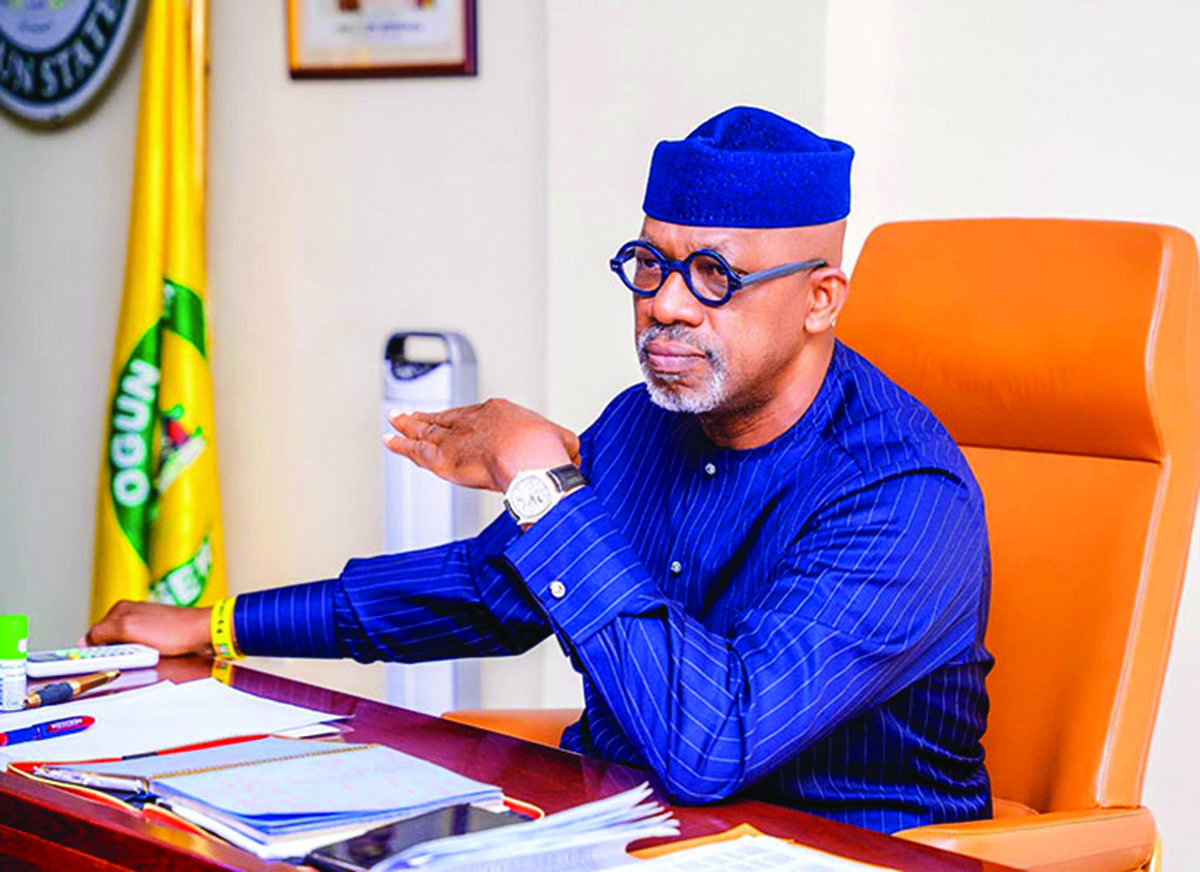
Governor Dapo Abiodun was represented at the high-level forum by his Special Adviser, Governor’s Office and Special Projects, Mr. Seyi Ogunseye, who presented the state’s investment prospects and conveyed the Governor’s commitment to building strategic partnerships capable of accelerating Ogun’s industrial and economic transformation.

The forum brought together Nigerian state governments, the US Department of Commerce and international companies operating in energy, engineering, mining and infrastructure, providing a platform for direct engagement between sub-national governments and prospective investors and technology providers.

Among the companies represented were KBR, Lummus Technology, Fulcrum LNG, Prismecs, GR2 Engineering, Catalyst Energy Services, Hydria Gas Technologies, Voltera Industries, MetWAVE Carbon Trust and Honeywell.

In his presentation, Ogunseye highlighted Ogun State’s strategic geographical location, its proximity to Lagos and the Republic of Benin, its concentration of manufacturing industries, availability of land for large-scale investments and the investor-friendly policies of the Abiodun administration.

See also  NISO cuts transmission losses to 7% from 10% in one year

He described Ogun as Nigeria’s industrial gateway, noting that its established manufacturing base, expanding infrastructure and strategic location provide considerable opportunities for investors seeking to establish or expand operations in West Africa.

Particular attention was given to two major investment propositions with the potential to transform the state’s economic landscape.

The first was the proposed Ogun Deep Seaport and Blue Marine Special Economic Zone at Ogun Waterside, which is expected to unlock significant opportunities in maritime trade, energy logistics, industrial manufacturing, gas processing, storage and supporting infrastructure.

Ogunseye informed participants that memoranda of understanding with global logistics and port operator DP World for the development of the Deep Seaport and the Special Economic Zone were signed in Paris on September 24, 2026.

The proposed Blue Marine Special Economic Zone, covering approximately 10,000 hectares, is designed to complement the deep seaport and establish a major industrial and commercial hub with enormous potential for employment generation and economic expansion.

He explained that the project should be viewed not merely as maritime infrastructure but as a major economic platform capable of supporting energy-intensive industries, gas-based manufacturing, storage facilities and other ancillary businesses.

The second major investment opportunity was the Ogun/NNPC LNG project, which was presented as a strategic initiative for gas monetisation, industrial development and energy security.

Potential areas of participation for international partners include liquefaction technology, engineering, procurement and construction, gas storage and distribution, as well as gas-to-power solutions.

To demonstrate the state’s capacity to support large-scale investments, Ogunseye also screened videos showcasing major infrastructure projects completed and ongoing across the state.

See also  Naira hits two-year high at 1,347/$

The presentation underscored the administration’s commitment to infrastructure development and its determination to provide the enabling environment required to attract and sustain major investments.

An interactive question-and-answer session followed, during which participants sought further clarification on the state’s investment opportunities and prospects. Ogunseye responded to their questions on behalf of the state government.

The engagement subsequently progressed to bilateral meetings with selected companies, producing encouraging interest in the state’s LNG and power development opportunities.

Honeywell expressed specific interest in the Ogun/NNPC LNG project, with discussions focusing on the potential application of its LNG process technology capabilities.

Fulcrum LNG also indicated interest in possible participation in LNG development in Ogun State, while Prismecs explored opportunities in distributed and captive power solutions, particularly mobile energy systems that could serve industrial clusters and project locations.

A significant direct outcome of the forum is the ongoing engagement between Fulcrum LNG, the Nigerian National Petroleum Company Limited, NNPC, and Renaissance, following Fulcrum LNG’s expression of specific interest in the Ogun/NNPC LNG project. The engagement marks an important step towards exploring potential technical and commercial collaboration for the project and reflects growing international interest in Ogun State’s gas development ambitions.

The interest shown by Honeywell and Fulcrum LNG, alongside the ongoing engagement involving NNPC and Renaissance, represents one of the most significant outcomes of Ogun State’s participation, creating opportunities for focused technical discussions and further engagement towards developing strategic partnerships.

The discussions also reinforced the strategic importance of the proposed Deep Seaport and Blue Marine Special Economic Zone as more than transportation and logistics infrastructure. Their potential to support energy investments, gas-based industries and large-scale manufacturing positions them as important catalysts for Ogun State’s next phase of industrial growth.

See also  FG generates N5.21tn from oil sales in H1

The presentation of completed and ongoing infrastructure projects further demonstrated the administration’s commitment to delivering critical infrastructure and building the capacity required to support international businesses.

The forum ended at 2:00 p.m. following presentations, interactive engagements and bilateral discussions.

Ogun State’s participation represents another step in the Abiodun administration’s sustained efforts to attract foreign direct investment, strengthen international partnerships and consolidate the state’s position as a leading destination for industrial and economic development in Nigeria.

With follow-up discussions already underway involving Fulcrum LNG, NNPC and Renaissance, the state is pursuing the opportunity to translate the interest generated at the forum into concrete technical and commercial partnerships. This aligns with Governor Abiodun’s broader vision of building a prosperous and industrialised Ogun State through strategic investments in infrastructure, energy, manufacturing and other critical sectors of the economy.

FOLLOW US ON:

FACEBOOK

WHATSAPP CHANNEL

TWITTER

PINTEREST

TIKTOK

YOUTUBE

LINKEDIN

INSTAGRAM

Continue Reading

Business

Singapore engages firms over tighter US chip export controls

Published

on

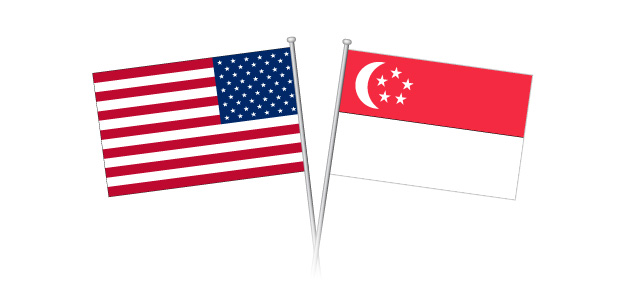
Singapore said on Friday it was “engaging” with local businesses over tightened US export controls on Nvidia’s advanced AI chips but said it could not confirm reports that the firm had halted server shipments to four Southeast Asian countries.

Citing national security concerns, the United States has since 2022 restricted exports to China of Nvidia’s industry-leading chips, which are used to train and run AI tools.

Washington last week moved to close a loophole in those controls in the wake of a scandal that has engulfed the US tech titan, forcing out longtime CEO Jensen Huang before his reinstatement on Sunday.

The new US rules crack down on alleged chip smuggling to China, as well as the large grey market of Chinese companies renting computing power from data centres in third countries, often in Southeast Asia.

“We are in the process of engaging our businesses, to reach out to them to see how this impacts their businesses,” Deputy Prime Minister Gan Yong told a local summit in Singapore on Friday.

But he added, “I think that our businesses are also organising themselves to work with different partners to continue to have access.”

Gan said Singapore would continue to work with the US to give local companies access to high-end chips.

“Many of the operators, hyperscalers in Singapore, are also Americans, and many companies are operating here,” he added.

“It’s important for America to also continue to support our services and customers in this region.”

The Financial Times and other media outlets cited sources on Thursday as saying Nvidia had instructed manufacturing partners to stop shipping computer servers containing its chips to buyers in Malaysia, Singapore, Thailand and Indonesia.

See also  Fuel Subsidy Was Big Scam – Ex-Minister Of Science and Technology, Ikoh Says

It was unclear how long the halt would last, the reports said, but it could be a temporary measure while data centre operators seek clarity on how to obtain a newly required licence.

Singapore engages firms over tighter US chip export controls

This photo illustration shows the Nvidia logo displayed on a smartphone screen in New Delhi on November 26, 2026.

AFP has contacted Nvidia for comment.

The scandal surrounding the company erupted following reports of Huang’s affair with Alice Huang — a former executive at Megaspeed International, a Singapore-based company under investigation for the alleged transfer of Nvidia chips to China in circumvention of US rules.

Alice, no relation to Jensen, is also reportedly suspected by some US officials of spying for Beijing.

Massive investments from US and Chinese tech giants have driven a data centre construction boom in Southeast Asia, especially in the countries surrounding hyper-connected Singapore.

Analysts at Fitch Ratings warned that data centre investment across Asia-Pacific would “slow and become more selective under tighter US controls over advanced AI chips” and access to computing power.

“Southeast Asian governments will face a more difficult balancing act between retaining access to advanced US technology and attracting investment from Chinese technology companies,” the Fitch analysts said in a note published Thursday.

AFP

Source: punchng.com

FOLLOW US ON:
FACEBOOK

WHATSAPP CHANNEL

TWITTER

PINTEREST

TIKTOK

YOUTUBE

LINKEDIN

INSTAGRAM

Continue Reading

Business

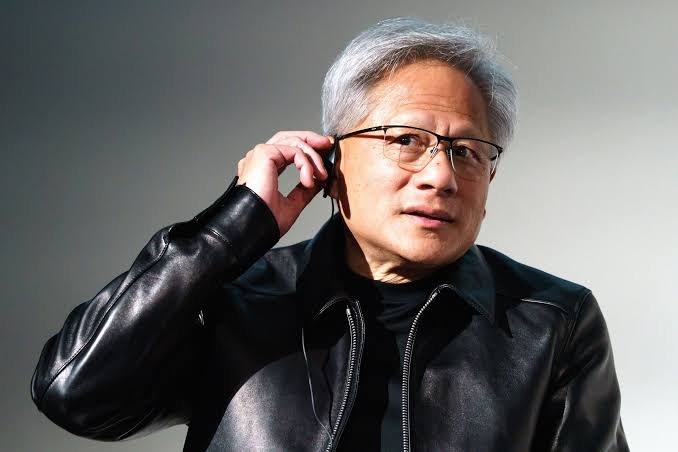
Women decry Jensen Huang ’s return as Nvidia CEO

Published

on

News of Jensen Huang’s shocking return to Nvidia had barely landed when President Donald Trump posted an AI-generated image of the Nvidia cofounder holding up a red bra, surrounded by security personnel whisking him offstage, blood streaked across his face.

The image was based on a real photo taken in 2024 when Trump survived an assassination attempt during a campaign rally in Butler, Pennsylvania, and implied that Huang, too, had survived a bid to take him out.

For many women, though, the image spoke insultingly to longstanding frustrations about sexism, double standards and a lack of accountability for men in power — across politics and business.

Meanwhile, many “tech bros” rushed to Huang’s defense over the past couple of weeks. Billionaire Elon Musk was among many people who signed a petition calling for Huang’s reinstatement.

Venture capitalist Jason Calacanis described Huang as a “hero” and downplayed the scandal that led to Huang’s resignation as less important than the United States winning the AI race against China.

“They’re standing up for the idea that certain men can do whatever they want,” Cleo Capital Managing Director Sarah Kunst told AFP.

Part of the problem might be “hero worship,” she said.

It also reflects the tech industry’s mythology around “founder mode” — the belief that companies thrive when founders stay hands-on rather than cede control to executives.

Huang resigned on November 12 from Nvidia, the company he cofounded and has led for more than three decades, amid allegations that he had multiple extramarital affairs, including one with a woman that US officials suspect was working for Chinese intelligence, triggering national security concerns.

See also  NISO cuts transmission losses to 7% from 10% in one year

Another of Huanga’s alleged lovers was a subordinate at Nvidia.

“This is a great example of why integrity matters,” Kunst said. “As soon as I heard about the honeypot element, it was clear to me that there were lapses in judgment that were really big.”

On November 17, board Chairman Harvey Jones said the company “does not intend to reinstate Jensen as CEO.” Then President Donald Trump intervened.

“I made the deal,” Trump told CNBC, referring to Huang’s reinstatement.

Trump himself was found liable in 2023 for sexual assault and defamation and ordered to pay millions as punishment.

-Dreaded “glass cliff”-

For an industry with very few women as executives, Huang’s departure became a brief opportunity for the company’s chief financial officer to step into one of the most prominent roles in tech. Nvidia’s advanced chips are used to train and run the AI models reshaping modern life.

The board appointed Chief Financial Officer Colette Kress as interim CEO on November 12 while they searched for a permanent chief.

It’s unclear if Kress wanted the job permanently, but women are often thrown into leadership positions during times of crisis and frequently blamed for any subsequent failure or replaced after things improve.

Nvidia declined to comment.

Australian National University Professor Michelle Ryan coined a term over two decades ago that describes this situation: the “glass cliff” — women or other under-represented people being appointed to senior roles during a crisis, when risk of failure is high.

Ryan is also the director of the university’s Global Institute for Women’s Leadership.

See also  PHOTOS: Lee Group’s industrial park targets 15,000 jobs, 29 factories

A “glass cliff” situation can also come with intense scrutiny, Ryan told AFP last week, before Huang’s reinstatement.

“When you’re dealing with a crisis, there’s a whole lot of things that you have to be dealing with. It’s not just sort of everyday business and just get on with being a CEO,” Ryan said.

Kress tried to reassure analysts and investors that it was “business as usual” during Nvidia’s quarterly earning call on November 17, when the company reported blockbuster results.

“Our momentum is real. Our demand is accelerating, our supply is growing, our customers and our partners are with us, and employees are committed. We’ve got this,” Kress said on the call.

The results turned out to be a brief salve for Nvidia’s share price, which dropped nearly three percent the following day after already losing more than a quarter of its market value since the initial revelations concerning Huang in late October.

“I can say with a high degree of certainty that what the interim CEO will face, and is facing, is a question of legitimacy,” Berkeley Professor Laura Kray told AFP last week. Her research includes the intersection of gender and business management.

Ultimately, a multifaceted pressure campaign from employees, billionaires and President Trump ended Kress’s tenure as CEO prematurely.

AFP

Source: punchng.com

FOLLOW US ON:

FACEBOOK

WHATSAPP CHANNEL

TWITTER

PINTEREST

TIKTOK

YOUTUBE

LINKEDIN

INSTAGRAM

Continue Reading

Trending