Connect with us

Business

FAAC nine-month revenue surpasses four years’ full collections

Published

on

Gross revenue shared by the three tiers of government rose to N31.46tn in the first nine months of 2026, exceeding the full-year collections recorded in four of the previous five years, according to a new report by Agora Policy.

The report, titled ‘Ten Insights from FAAC Disbursements for January–September 2026,’ showed that the Federation Account Allocation Committee generated N31.46tn between January and September, surpassing the N28.74tn recorded in the whole of 2024 and approaching the N35.81tn collected in 2025.

The latest figures underline the substantial growth in government revenue in nominal terms, although the report warned that collections remained volatile, growth was slowing and mineral revenue was significantly below budget.

The report, obtained on Wednesday, said the Federal Government received about N7.35tn from the distributions during the nine-month period, while state governments received N7.01tn and local governments got N4.92tn.

The report read, “The Federation Account Allocation Committee has completed the distribution of revenue for January to September 2026, following its October meeting. The figures show continued nominal revenue growth, but also volatile monthly receipts and a substantial shortfall in mineral revenue against budget. This analysis examines the sources of revenue, deductions and allocations across the three tiers of government, and considers the implications for fiscal planning and public services.”

The report noted that gross FAAC revenue for January to September 2026 totalled N31.46tn, with statutory revenue contributing N24.25tn, or 77.1 per cent.

Value added tax contributed N7.21tn, or 22.9 per cent.

“Of the gross revenue, N20.36 trillion, or 65  per cent, was available for distribution before augmentation. The remaining N11.10tn, or 35 per cent, was deducted for savings, interventions, refunds, transfers and collection costs.”

See also  Over 4,600 tricycles, 100,000 vehicles run on CNG in Nigeria – Official

It revealed that oil-producing states received N1.53tn under the 13 per cent derivation principle, which allocates a share of oil revenue to states, from which the resources are extracted. The derivation allocation is reported separately but also accrues to state governments.

The report put total distributions, including a N450bn augmentation, at N20.81tn. This comprised N20.36tn available for distribution before the augmentation.

However, deductions from gross revenue amounted to N11.10tn, representing 35 per cent of total receipts. The deductions covered savings, interventions, refunds, transfers and collection costs.

Statutory revenue accounted for N24.25tn, or 77.1 per cent of the N31.46tn gross receipts, while value-added tax contributed N7.21tn, representing 22.9 per cent.

The report noted that the nine-month revenue figure was 240.8 per cent above the full-year total of N9.23tn recorded in 2021, 154.5 per cent above the N12.34tn recorded in 2022, 93.2 per cent above the N16.28tn generated in 2023 and 9.5 per cent above the N28.74tn collected in 2024.

The figures are nominal and do not account for inflation or changes in the purchasing power of the naira.

According to Agora Policy, gross revenue increased by N3.51tn, or 12.6 per cent, from N27.95tn in January to September 2025 to N31.46tn in the corresponding period of 2026.

Although revenue continued to rise, the pace of growth was slowing. The N3.51tn increase recorded in the first nine months of 2026 was less than half the N8.97tn increase recorded in the corresponding period of 2024.

The report said the sharp increase in revenue in 2024 followed the foreign exchange and petrol subsidy reforms introduced in 2023, which provided a plausible explanation for part of the rise in naira receipts.

See also  Wike-led PDP faction expels Makinde, Bode George, others

It added that tax reform implementation and higher oil prices associated with the conflict in Iran might also have supported revenue in 2026, although aggregate figures alone could not establish the contribution of each factor.

It said average monthly revenue in the first nine months of 2026 stood at N3.50tn, compared with N2.98tn over the whole of 2025.

“Gross FAAC revenue for the full year rose from N9.23tn in 2021 to N35.81tn in 2025. The largest annual increase occurred in 2024, when revenue rose by 76.5 per cent from N16.28tn in 2023 to N28.74tn in 2024. By September 2026, cumulative revenue of N31.46tn had exceeded the full-year totals for 2021, 2022, 2023 and 2024, and reached approximately 88 per cent of the 2025 total. The 2026 nine-month figure was 240.8 per cent above the 2021 annual total, 154.5 per cent above 2022’s, 93.2 per cent above 2023’s and 9.5 per cent above 2024’s. It should be borne in mind that these changes are in nominal terms, and not like-for-like measures of annual growth or purchasing power.

“If the nine-month pace continues, full-year gross revenue would reach approximately N41.95 trillion. This is a simple annualisation, not a forecast, as averages do not take account of seasonal revenue peaks,” it added.

The report also cautioned that changes in crude oil prices and the exchange rate could increase or reduce receipts in the remaining months of the year.

Source: punchng.com

FOLLOW US ON:

FACEBOOK

WHATSAPP CHANNEL

TWITTER

PINTEREST

TIKTOK

YOUTUBE

LINKEDIN

INSTAGRAM

Continue Reading
Click to comment

Leave a Reply

Your email address will not be published. Required fields are marked *

Business

Lagos moves to convert $50bn climate target into investments, read details

Published

on

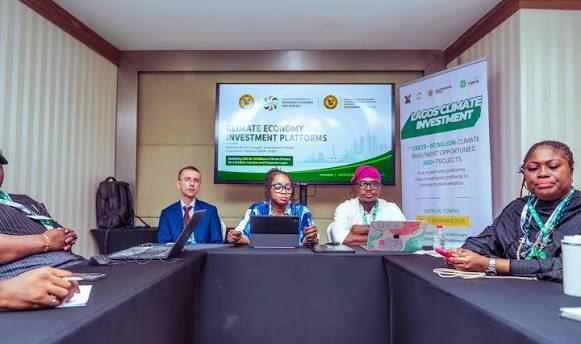
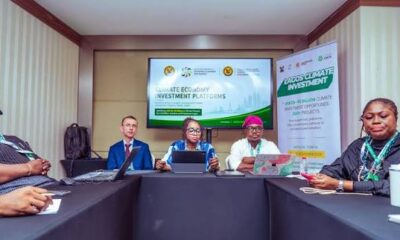
The Lagos State Government says investors have begun expressing interest in partnerships across its climate investment projects, following engagements with financial institutions, energy companies and project developers at the ongoing 31st United Nations Climate Change Conference in Antalya, Türkiye.

The discussions have produced initial partnership opportunities in healthcare, solar energy, women’s empowerment and clean transportation, as the state seeks to turn its previously unveiled $25bn-$50bn investment pipeline into bankable projects.

The engagements followed the presentation of more than 300 potential climate projects by the state, with investors participating in project pitches, exchanging contacts and exploring financing arrangements with government representatives and local businesses.

In a statement issued on Tuesday following a reception at the Lagos Climate Investment Day, which capped a week-long engagement with investors, the Special Adviser to the Governor on Climate Change and Circular Economy, Titilayo Oshodi, said the interactions had strengthened the state’s confidence in its ability to attract private capital for climate investments.

She said, “We’ve brought in the public sector. We’ve brought in the private sector. We’ve brought in young enterprises who are already doing stuff in the green economy. We’ve brought in financial institutions who are ready to show that where we can take the risk, we can begin to fix green finance.

“We have experimented with these things and we have seen that there’s a possibility in them, and it gives us a lot of confidence right now. So, I just want to say thank you to our financial institutions, once again, Sterling Bank, for taking the pain, for taking a shot at us, taking a chance on government.”

Oshodi disclosed that project developers and investors had held discussions after a full day of presentations, with participants asking questions and exploring possible areas of cooperation.

See also  Firm Partners Cross River To Improve Agriculture

“We had a full day of pitches just a few hours ago. The investors that we brought in asked questions, they were exchanging cards. They were having conversations to discover themselves, and they are beginning to look at what is possible going beyond now,” she said.

She added that the objective was to move beyond announcements and ensure that investment discussions translated into projects, employment and improved living conditions.

“Let’s carry this momentum. Let’s take it along with us. Let’s turn our pledges into projects. Let’s turn our projects into jobs. Let’s turn our jobs into real impact for Lagos State and, by extension, for Nigeria,” she said.

One of the private-sector partners, Tonye Cole, said the initiative provided an opportunity to connect international capital with sustainable development projects and businesses across Africa.

Cole, who said he had spent decades developing and financing sustainable projects, explained that he had worked with his partner, Funke Shobanjo, to establish a platform connecting available global funding with investment opportunities at the grassroots.

He said, “Together, we have developed this platform, and the platform works. What we are now working with Lagos State Government to bring to COP is the opportunity to partner with businesses like ours, with the state government, to develop and work on how sustainable projects and finance can meet the people that need it the most.

“This is an invitation to help you make a difference in a world that needs a difference. Let’s work together to make this happen.”

The Chief Operating Officer of FBNQuest Merchant Bank, Funke Shobanjo, also pledged support for the initiative, saying private investors were prepared to provide financing through a pan-African sustainable finance platform.

See also  Over 4,600 tricycles, 100,000 vehicles run on CNG in Nigeria – Official

She said, “We are extremely excited about what Lagos State is doing, and we are passionate about driving the climate ambition forward for the projects under the umbrella.

“Our commitment is in private individuals coming together to provide capital and financing through a pan-African sustainable finance platform. I want to congratulate Lagos State on this goal and ambition and commit, on behalf of my co-founder and myself, our support to see the projects in the pipeline.”

The early engagements have also produced interest in social-sector projects. A member of the Lagos delegation disclosed that five investors had indicated willingness to partner with projects, including healthcare insurance initiatives aimed at reducing out-of-pocket medical expenses.

The delegate said Sterling Bank had also indicated support for providing between 50 and 100 tricycles for women’s empowerment programmes in Lagos, while Worldwide Energy had promised to solarise a primary healthcare centre.

Climate and carbon asset expert, Dr Adebola Odunsi, described the engagements as an opportunity to unlock economic value through partnerships across states and sectors.

He said the waste generated in one state could serve as raw material for businesses in another, creating opportunities for trade, investment and shared climate benefits.

“The waste that is being generated in one state can become the raw material in another state. So very soon, there are trade opportunities and climate outcome opportunities that we can share, all for the shared climate prosperity of our beautiful country, Nigeria,” Odunsi said.

He added that the investment platform had taken years of work to develop and had attracted considerable interest from international stakeholders.

See also  Leave before visa expires, UK warns foreign students

The engagements come as Lagos seeks to bridge the financing gap between its climate ambitions and actual project delivery. Its previously announced pipeline covers more than 300 potential projects across clean energy, transportation, water management, climate resilience, circular economy, agriculture and green enterprise.

In a related development, the Lagos State Commissioner for Energy and Mineral Resources, Biodun Ogunleye, has identified private capital as a critical factor to addressing the state’s electricity supply deficit and financing its energy transition.

He said Lagos, with an estimated electricity demand of 12,000 megawatts, could not depend solely on government resources to finance the infrastructure required to bridge the gap.

“Our goal as government is to create an enabling environment and not to generate the power ourselves. But reforms alone must not build power plants. Indeed, capital does.

“Government balance sheet alone cannot fund the investment that we know is required,” Ogunleye said.

He disclosed that the state was targeting an additional 2,000 megawatts of electricity capacity and had established regulatory institutions to encourage private investment across generation, distribution and mini-grid development.

Ogunleye urged investors to take advantage of financing mechanisms, including the Global Fund for Infrastructure and Investment Finance, to support project preparation and reduce investment risks.

He said, “Government provides legitimacy, enabling policy and a pipeline, while the private sector provides structuring, capital, credit decisions and asset management.”

He added that the state was ready to share priority projects with financing partners and explore guarantees and other risk-sharing arrangements to make the investments attractive to lenders.

Source: punchng.com

FOLLOW US ON:

FACEBOOK

WHATSAPP CHANNEL

TWITTER

PINTEREST

TIKTOK

YOUTUBE

LINKEDIN

INSTAGRAM

Continue Reading

Business

NYSC pays Oyo corps members’ delayed allowances, blames technical glitch

Published

on

The National Youth Service Corps (NYSC) says it has paid the delayed October 2026 allowance to corps members who served in Oyo State and completed their service year on October 29.

The scheme attributed the delay to a technical glitch in the Government Integrated Financial Management Information System, the Federal Government platform used to process corps members’ monthly allowances.

In a statement on Tuesday, the NYSC management said the affected corps members had been paid as of November 17, adding that anyone yet to receive the money by the close of business on Wednesday should contact the Oyo State Coordinator for verification.

The statement was signed by the Director of Information and Public Relations, Caroline Embu.

The management apologised for the delay, acknowledging that the affected corps members’ complaints were justified and that the situation might have caused them hardship.

It explained that while other corps members received their October allowances before completing their service, payments to those in Oyo State were delayed by the technical problem with the GIFMIS platform.

The NYSC, however, maintained that the allowance had been fully provided for in the budget and that no corps member’s entitlement had been withheld, diverted or reduced.

It added that the allowances were paid directly into individual bank accounts from the scheme’s Central Bank of Nigeria account through the GIFMIS platform.

According to the statement, the Oyo State Coordinator had earlier informed the affected corps members about the reason for the delay.

It also disclosed that the Director-General of the NYSC, Brigadier General Olakunle Nafiu, met some of the affected corps members during his visit to the Oyo State Orientation Camp in Iseyin on Saturday, November 14.

See also  Soludo closes Onitsha market for one week, see why

The management said Nafiu had assured them that the payment issue would be resolved.

The statement read, “As expected, the affected Corps Members were sensitised by the Oyo State Coordinator on the cause of the delay in their payment.

“Also, on Saturday, 14 November 2026, the Director-General, Brigadier General Olakunle Nafiu, met some of the affected Corps Members in person during his visit to the Oyo State Orientation Camp in Iseyin.

“In line with the Director-General’s assurance, as of today, 17 November 2026, the affected Corps Members have been paid, and any of them not credited by close of business tomorrow, 18 November 2026, should notify the Oyo State Coordinator for necessary verification.”

The development followed complaints by corps members who served in Oyo State that they had yet to receive their October allowance after completing their service year.

The complaints attracted public attention, with some affected members taking to social media to demand payment of their entitlements.

The NYSC management said it recognised the financial importance of the monthly allowance to corps members, particularly those posted to states where they had no family or established support networks.

It described prompt payment of their allowances as an obligation rather than a favour.

“Management appreciates the fact that Corps Members leave their homes to serve in States where many know no one, and that their allowance sustains them throughout the service year.

“For this reason, it regards prompt payment of allowance to these patriotic Nigerians as a duty, not a favour,” the statement added.

See also  FG showcases $125m housing PPP model to African nations

The management thanked the affected corps members for their patience and members of the public who drew attention to the delay.

It also urged Nigerians to rely on the scheme’s official communication channels for clarification and avoid spreading unsubstantiated claims.

The NYSC, established in 1973, is a mandatory one-year national service programme for eligible Nigerian graduates, with participants deployed to states outside their states of origin to promote national unity and development.

Source: punchng.com

FOLLOW US ON:

FACEBOOK

WHATSAPP CHANNEL

TWITTER

PINTEREST

TIKTOK

YOUTUBE

LINKEDIN

INSTAGRAM

Continue Reading

Business

Read details of things to know about Enugu’s proposed 2% rent cap

Published

on

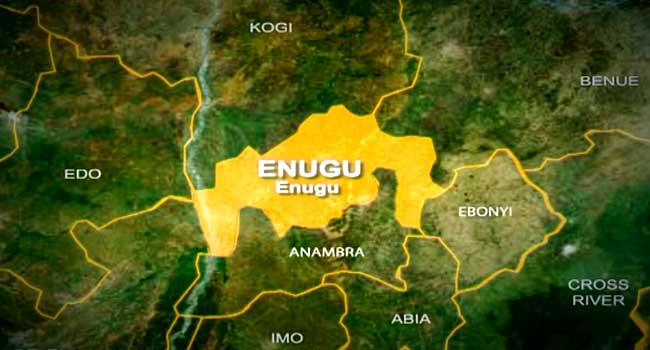
The Enugu State House of Assembly has passed a bill seeking to restrict landlords from increasing rents by more than two per cent every four years, a proposal that could significantly change the relationship between property owners and tenants if it becomes law.

The proposed amendment to the state’s Landlord and Tenant Law comes amid complaints about rising accommodation costs, arbitrary rent increases, excessive agency commissions and legal fees.

Although the bill has passed its third reading, it is yet to become law, as it requires the assent of Governor Peter Mbah.

If signed, the legislation could introduce new restrictions on rent reviews, provide additional safeguards for tenants and regulate certain charges associated with securing accommodation.

Here are five things the proposed law could mean for residents of Enugu State.

1. Landlords may not increase rent every year

One of the most significant provisions of the proposed amendment is the restriction on how frequently landlords can increase rent.

Under the proposal, landlords would have to wait at least four years before increasing the rent of a property. Any subsequent increase would be limited to two per cent of the existing rent.

This means tenants could potentially enjoy greater certainty about their accommodation costs instead of facing annual or frequent rent increases.

For instance, if a tenant currently pays ₦500,000 annually, a two per cent increase would amount to ₦10,000, bringing the annual rent to ₦510,000 after the permitted review period.

Similarly, a tenant paying ₦1m annually would face a maximum two per cent increment of ₦20,000, bringing the rent to ₦1.02m.

See also  Tinubu’s directive triggers new power play in Rivers ahead of 2027

However, the actual effect would depend on the final wording of the legislation, particularly how the four-year period and rent calculation are defined.

2. Renovated properties could attract higher rent

The proposed amendment also makes provision for landlords who undertake reasonable renovations to their properties.

In such circumstances, landlords would be permitted to increase rent by not more than 10 per cent.

This means that a property owner who carries out qualifying renovations could potentially charge a higher rent than the ordinary two per cent limit allows.

For example, if a property attracts an annual rent of ₦500,000, a 10 per cent increase would amount to ₦50,000, bringing the new rent to ₦550,000.

The provision could allow landlords to recover part of the costs of improving their properties while preventing unlimited increases.

However, the definition of reasonable renovations, the evidence required and the conditions for applying the 10 per cent increase would be important in determining how the provision works.

3. Tenants could face lower accommodation-related charges

Beyond rent increases, the proposed amendment is also intended to address complaints about excessive agency commissions and legal fees when residents seek accommodation.

Such charges can significantly increase the amount prospective tenants must pay before moving into a property.

The House committee chairman, Okey Mbah, said the legislation was designed to protect residents from exploitation by landlords and estate agents.

“This bill will subsidise over 60 per cent of what residents used to pay while trying to secure accommodation,” he said.

A previous published version of the amendment bill contained provisions requiring estate agents to obtain permits from the Enugu State Housing Development Corporation.

See also  IMPI projects Nigeria’s GDP to hit 5.5%

It also proposed limiting agency fees to 10 per cent of the rent paid by prospective tenants and legal fees for preparing tenancy agreements to 10 per cent.

However, the final version passed by the Assembly should be examined to establish whether these provisions were retained and whether additional conditions apply.

4. Landlords may face greater restrictions over eviction

The proposed reform also raises questions about the procedures landlords must follow when seeking to recover their properties from tenants.

According to a report by THISDAY, the committee chairman said the amended legislation would require landlords to properly serve tenants before initiating court proceedings.

“A tenant must be properly served before being charged to court. Without proper service, no case should be established or treated in the first instance,” Mbah said.

If retained in the final legislation, the provision could strengthen procedural protections for tenants facing eviction disputes.

It would also emphasise that landlords must follow the legally prescribed process rather than resorting to arbitrary eviction.

However, it would not mean tenants could occupy properties indefinitely without paying rent or complying with their tenancy agreements.

5. Landlords could face financial and enforcement challenges

While the proposed restrictions could offer tenants greater predictability, property owners have questioned whether the two per cent limit is sustainable in an economy where the costs of maintaining buildings, purchasing construction materials, electricity and other services continue to change.

A landlord in Enugu, Onyekwere Johnson, according to a Punch report on Tuesday, described the proposed cap as unrealistic and difficult to enforce.

See also  Trump’s threats: FG engages diplomats, rallies military commanders

“That would have been a natural law if the prices of petroleum products and electricity tariffs increased by two per cent. Otherwise, it is an unnatural law. It is neither sustainable nor can it be obeyed,” he told PUNCH.

He added, “You cannot single out landlords and regulate their business while other sectors are struggling to meet the benchmark of inflation set by the managers of the Nigerian economy. It violates landlords’ rights against discrimination.”

The disagreement raises questions about how the government would enforce the proposed restrictions, verify qualifying renovations and address disputes between landlords and tenants.

It also raises the possibility that property owners could seek other ways to adjust their charges, making effective enforcement and clear regulations important.

When will the proposed law take effect?

The Enugu State House of Assembly passed the Landlord and Tenant Amendment Bill on Tuesday, November 17, 2026, after it scaled its third reading.

The bill, which passed its second reading on March 11 and underwent a public hearing on March 26, now awaits the assent of Governor Peter Mbah.

Until the governor signs it and it commences in accordance with its provisions, the proposed restrictions should not be treated as an existing law.

If assented to, the legislation could introduce significant changes to how rents are reviewed, accommodation charges are regulated and tenancy disputes are handled across Enugu State.

Source: punchng.com

FOLLOW US ON:

FACEBOOK

WHATSAPP CHANNEL

TWITTER

PINTEREST

TIKTOK

YOUTUBE

LINKEDIN

INSTAGRAM

Continue Reading

Trending