Connect with us

Lifestyle

Scholars urge Lagos mosques to improve documentation, sanitation

Published

on

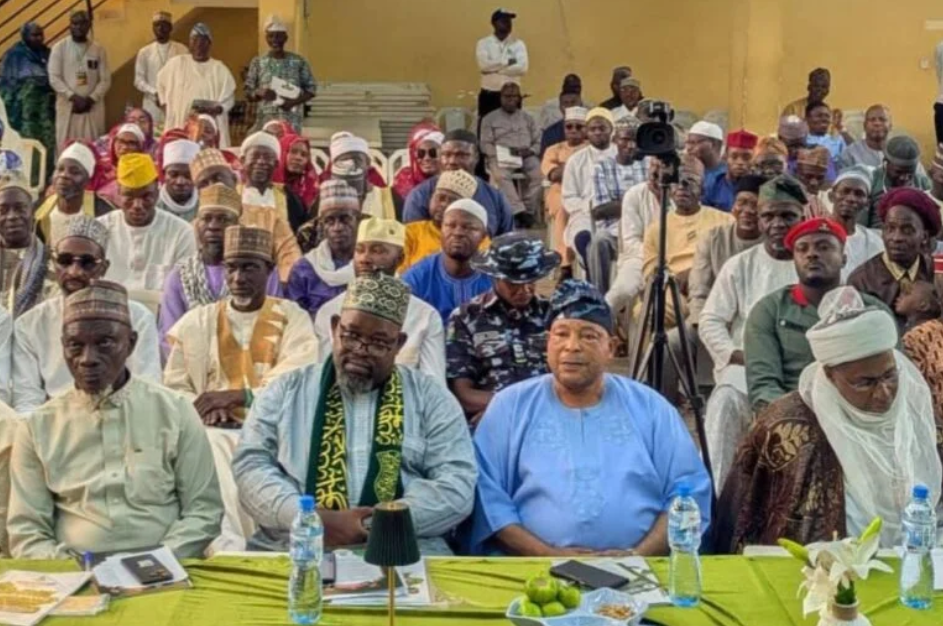
Islamic scholars and experts have warned that poor documentation, weak governance and inadequate sanitation threaten the sustainability of some mosques in Lagos.

They gave the warning at the annual programme of the Mosque Guidance and Development Lagos Initiative (MGDLI), held in Lagos on Sunday.

The programme had the theme, “Building Better Mosques: Documentation, Good Governance and Hygiene Environment”.

Prof. Saheed Timehin of the Department of Foreign Languages, Lagos State University (LASU), said “proper documentation, good governance and hygiene were essential for sustainable mosque development.”

Delivering the keynote address, Timehin said “mosques must reflect Islamic values through transparency, accountability, cleanliness and responsible administration.”

He said “many mosques lacked reliable records of their properties, finances, activities and membership, exposing them to disputes and possible loss of assets.”

L-R: A Surveyor, Alhaji Adegbenga Ojikutu; the General Manager, Lagos State Urban Renewal Agency, Dr Oladimeji Animashaun;  former Lagos Commissioner for Home Affairs, Dr Abdul-Hakeem Abdul-Lateef;  Chief Imam Satellite Town Lagos, Abdul-Raham Dauda, and the moderator, Hajia Shakirah Adunola, during panel discussion at the event on Sunday

He urged “mosque leaders to preserve land titles, survey plans, waqf deeds and registration certificates to protect properties dedicated to Allah.”

He also advocated written constitutions, meeting minutes, succession plans and maintenance records to promote institutional continuity.

On hygiene, Timehin urged “mosque managers to ensure regular cleaning of toilets, ablution areas, prayer halls and water tanks.”

He called for “sanitation committees, cleaning schedules, dedicated budgets and proper waste management.”

In his welcome address, Alhaji Musoddiq Adele-Sanni, Chairman of MGDLI, said “inadequate documentation exposed many Lagos mosques to demolition and unlawful sale.”

Adele-Sanni said the initiative began during his tenure as Chairman of the Muslim Lawyers Association of Nigeria, following complaints about mosque demolitions across Lagos.

He said “investigations revealed that some mosque properties had been sold or demolished because donors failed to transfer legal ownership to the mosques.”

See also  RAISE YOUR CHILDREN WELL, SO STRANGERS WON’T RAISE THEM FOR YOU

He recalled that the first sensitisation programme was held on October 28, 2023, at Shamsideen Adisa Central Mosque.

He said the initiative now had more than 20 professionals, including lawyers, journalists, surveyors and engineers.

The Grand Chief Imam of Lagos State, Sheikh Sulaiman Abou-Nolla, said “proper documentation was essential to protecting mosque properties under the law.”

Abou-Nolla urged mosque managers to “obtain title documents before commencing construction and comply with relevant legal procedures.”

Alhaji Muhammad-Bello Danmole, former Lagos Commissioner for Home Affairs, urged mosque managers to establish committees for effective and sustainable administration.

During a panel discussion, Dr Abdul-Hakeem Abdul-Lateef, a former Lagos Commissioner for Home Affairs, urged mosques to adopt written constitutions, clear succession plans and electronic documentation.

Abdul-Lateef “warned against running mosques as personal establishments and advocated collective management and accountability.”

The General Manager of the Lagos State Urban Renewal Agency (LASURA), Dr Oladimeji Animashaun, said “mosques needed title documents, survey plans and planning approvals to avoid demolition.”

Animashaun urged mosque leaders to regularise properties built without the required approvals.

He identified inadequate funding and resistance from some mosque leaders as challenges to proper documentation.

A surveyor, Alhaji Adegbenga Ojikutu, warned that treating “mosque land as family property could expose it to unlawful sales and commercial encroachment.”

He advised “donors to execute transfer documents, obtain the governor’s consent and register properties in the mosque’s name.”

The Chief Imam of Satellite Town, Lagos, Abdul-Raham Dauda, lamented poor sanitation in some mosques.

Dauda urged mosque leaders to provide cleaning materials, appoint cleaners and enforce sanitation rules.

See also  10 most developed African countries in 2025

He warned that dirty environments could discourage worshippers, spread diseases and undermine Islamic teachings on cleanliness.

The moderator, Hajia Shakirah Adunola, said documentation, good governance and hygiene were essential to sustainable mosque development.

She urged “mosque leaders to embrace legal compliance, institutional structures and cleanliness to preserve mosques’ spiritual and community roles.”

(NAN)

Source: punchng.com

FOLLOW US ON:

FACEBOOK

WHATSAPP CHANNEL

TWITTER

PINTEREST

TIKTOK

YOUTUBE

LINKEDIN

INSTAGRAM

Continue Reading
Click to comment

Leave a Reply

Your email address will not be published. Required fields are marked *

Lifestyle

N8.2bn inadequate for 30 million PWDs — Experts reveal

Published

on

Disability advocates, a journalist and a public finance analyst have described the N8.2bn allocated to issues affecting persons with disabilities in the 2026 Appropriation Act as grossly inadequate.

They warned that poor budget releases, vague allocations and corruption are undermining efforts to improve their welfare.

They made the observations on Sunday during an X Space titled “Nigeria Disability Budget Discussion,” organised by PWDSpotlight in collaboration with BOFIM and BO News.

The moderator, Habeeb Adisa, who is also the Project Manager at PWDSpotlight, said the organisation’s review of the 2026 Appropriation Act showed that N8.2bn was allocated to issues affecting persons with disabilities, estimated at more than 30 million nationwide.

Giving a breakdown of the allocation, Adisa said N2.0044bn was earmarked for awareness campaigns, programmes and policy development, representing the largest share, while skills acquisition received N1.413bn and construction N1.86bn.

He said the discussion was timely as the country approached the 2027 election cycle, when the performance of governments would come under increased scrutiny.

Speaking on the allocation, Blessing Oladunjoye of BOFIM and BO News said although N8.2bn might appear substantial, it was insufficient to address the needs of persons with disabilities, including inclusive education, healthcare, assistive devices and accessible transportation.

She said the amount would translate to about N273 per person, adding that persons with disabilities often incur additional expenses, such as paying for guides or hiring taxis, which should be considered in budget planning.

“When you think N8.2 billion, much. But in real terms, looking at what exactly they should address, you know that it’s grossly inadequate,” she said.

Oladunjoye argued that disability funding should not be the responsibility of a single agency, noting that infrastructure and public services, including roads, schools, elections and transportation, should be designed to accommodate persons with disabilities.

See also  RAISE YOUR CHILDREN WELL, SO STRANGERS WON’T RAISE THEM FOR YOU

“We should understand that disability is a cross-cutting issue,” she said.

She also urged journalists to monitor budget implementation by comparing approved allocations with actual releases and expenditure reports, while verifying government claims on the ground.

To illustrate the need for scrutiny, she cited an instance where an agency reportedly claimed to have distributed guide canes to 100,000 blind people, but accompanying photographs appeared to show only about 10 recipients.

PWDs
disability-inclusive development specialist Dr Adebukola Adebayo. Photo: PWDSpotlight

On the broader challenge of translating policies into action, a disability-inclusive development specialist, Adebukola Adebayo, said Nigeria had made progress in establishing legal and institutional frameworks for disability inclusion.

He noted that the country had a national disability law, while nearly 30 of the 36 states had enacted disability laws and about 22 or 23 had established disability agencies.

However, he said inadequate funding and poor implementation continued to limit the impact of those policies.

“The only vehicle to do that is the budget,” he said of the need to translate policies into action.

Adebayo cited a study conducted in 2022 or 2023 which reportedly found that less than N5bn was budgeted nationwide for more than 30 million persons with disabilities.

He also said some state disability agencies received less than N1bn annually but were unable to access even a fraction of their approved funds.

“It’s not the lack of policies, but it’s the lack of budget,” he said.

“If you’re budgeting 500 million, for example, for PWDs in your state, and they can’t even draw up to 10 million or 20 million or 100 million, then it means that we are not yet serious about caring for the most vulnerable in the society,” he said.

He further cited UNICEF figures indicating that only three per cent of children with disabilities were able to attend school, arguing that government must take primary responsibility for addressing the challenges.

See also  10 most developed African countries in 2025

“Government is the big, big culprit here, both at state and national level,” he said.

Adebayo proposed that every ministry, department and agency should have a disability desk officer or unit to ensure that the needs of persons with disabilities were considered in policy formulation and implementation.

He stressed that disability should be treated as a development issue rather than an act of charity.

“It’s not just about charity, it’s an investment,” he said.

He also identified corruption as a major challenge affecting disability-related spending, recounting an incident during his tenure on the board of the Lagos State Office for Disability Affairs between 2016 and 2019.

He said a supplier had delivered a fairly used vehicle under a contract meant for assistive devices and vehicles, adding that the board rejected the item and reported the matter to the state government.

“There’s a lot of corruption in disability budgeting,” he said.

Adebayo alleged that politicians sometimes exploited the vulnerability of those managing disability agencies and urged journalists to scrutinise the quality of procured items and compliance with due process.

He also highlighted a disconnect between government disability agencies and Organisations of Persons with Disabilities, saying the situation often resulted in budgets that failed to reflect the actual needs of beneficiaries.

He called for greater collaboration between both sides, particularly during budget consultations before allocations were finalised.

Adebayo urged journalists to report disability issues from a human rights and development perspective rather than treating them as matters of charity.

PWDs
Oluwatimilehin Olugbemi of BudgIT. Photo: PWDSpotlight

On transparency and budget monitoring, Oluwatimilehin Olugbemi of BudgIT said publishing approved allocations was not enough without clear information on how the funds were distributed and spent.

See also  The Pressure to Live a Fake Life in the Age of Social Media

Olugbemi said several budget line items grouped persons with disabilities alongside other vulnerable groups, making it difficult to determine the amount specifically allocated to them.

She cited N250m allocated in Osun State for vulnerable people, widows, persons with disabilities and the elderly.

“The budget description identifies four beneficiary groups, but it does not specify how the money will be distributed among them,” she said.

She called for the publication of details on project scope, fund releases, actual expenditure, procurement records and the number of beneficiaries reached.

Olugbemi also said the absence of codes for some budget line items made tracking difficult, forcing researchers to search through hundreds of pages to identify specific allocations.

“Imagine having to go through over 300 and something pages of a budget document because you’re trying to find a line item.

“We should be able to click on something and be able to read each of the line items,” she said.

Nigeria’s Discrimination Against Persons with Disabilities (Prohibition) Act was signed into law in January 2019.

The law prohibits discrimination against persons with disabilities and provides for the establishment of the National Commission for Persons with Disabilities to promote and protect their rights.

Several states have also enacted disability laws since then.

However, the panellists said the challenge now extended beyond legislation to adequate funding, effective implementation, transparency and accountability.

Adebayo also said persons with disabilities accounted for roughly 40 per cent of the country’s out-of-school children, a figure he put at 18 million, noting the need for greater government investment in inclusive education.

Source: punchng.com

FOLLOW US ON:

FACEBOOK

WHATSAPP CHANNEL

TWITTER

PINTEREST

TIKTOK

YOUTUBE

LINKEDIN

INSTAGRAM

Continue Reading

Lifestyle

10-year-old found wandering in Anambra, police seek parents

Published

on

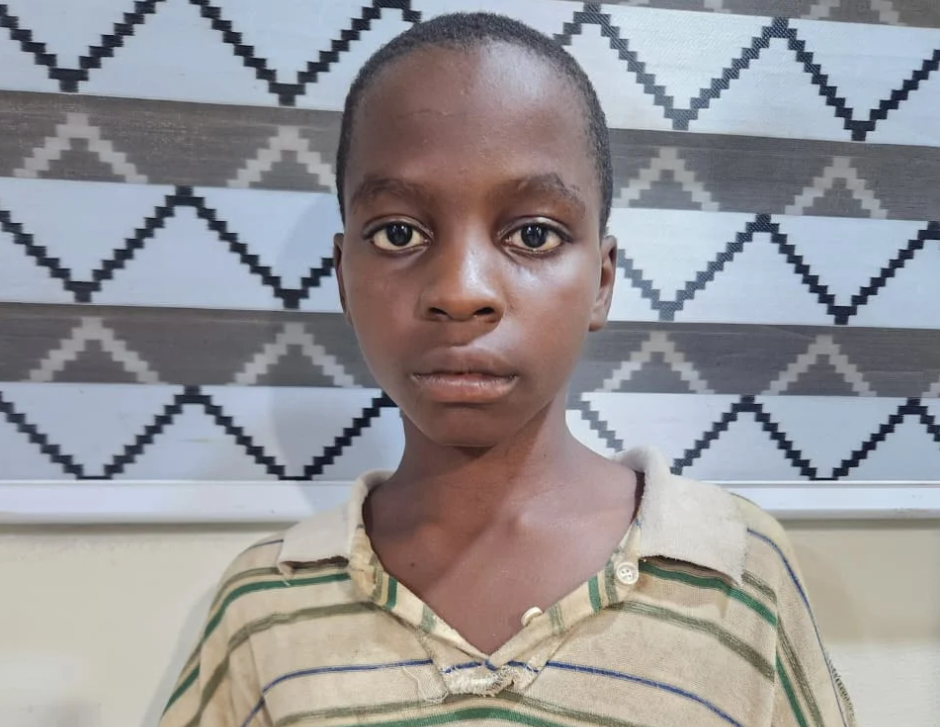
The Anambra State Police Command has rescued a 10-year-old boy, identified as Chinecherem Onuwasoanya, who lost his way home after going out to play in Okpoko, Ogbaru Local Government Area of the state.

In a press statement released on Sunday, the spokesman for the state police command, SP Tochukwu Ikenga, said the rescue was carried out by operatives attached to Okpoko Police Division.

Ikenga added that interaction with the child revealed that he had left home to play, but subsequently became unable to find his way back or locate his family members.

The statement read, “The Anambra State Police Command has rescued a 10-year-old boy, identified as Chinecherem Onuwasoanya, who lost his way home after going out to play in Okpoko, Ogbaru Local Government Area of Anambra State.

“The rescue was carried out by operatives attached to Okpoko Police Division in the afternoon of November 1, 2026.

“Preliminary interaction with the child revealed that he had left home to play but subsequently became unable to find his way back or locate his family members.

“A concerned resident, who found the little boy wandering, promptly took him to Okpoko Police Division for assistance. The child also disclosed that he is from Ebenebe, Anambra State.

“The Command has commenced efforts to establish contact with his parents or guardians and facilitate his safe reunion with his family.”

Meanwhile, the Commissioner of Police, Anambra State Command, CP Nnanna Ama, commended the Good Samaritan for his prompt intervention and responsible conduct.

The CP also urged members of the public to remain vigilant and supportive of efforts aimed at protecting children and other vulnerable persons in society.

See also  WHERE CRITICAL THINKING IS ABSENT, RETROGRESSION BECOMES THE ORDER OF THE DAY

“Parents and guardians are equally advised to ensure adequate supervision of their children and take necessary precautions to make them easily identifiable and traceable in situations of separation.

“Anyone with useful information that could assist in identifying or locating the child’s parents or guardians is kindly requested to contact Okpoko Police Division or the Anambra State Police Command,” the statement added.

In October, the Lagos State Police Command foiled a suspected human trafficking operation in Badagry, Lagos State and rescued three young girls allegedly being trafficked.

The Force Public Relations Officer, Ani Iniedu, disclosed said, “A team of policemen on routine patrol intercepted a commercial motorcycle conveying three young girls along Owode Apa Road, Badagry.

“Interrogation revealed the girls were victims of human trafficking. They were rescued and debriefed, while efforts are ongoing to track down the suspected traffickers.”

Source: punchng.com

FOLLOW US ON:
FACEBOOK

WHATSAPP CHANNEL

TWITTER

PINTEREST

TIKTOK

YOUTUBE

LINKEDIN

INSTAGRAM

Continue Reading

Lifestyle

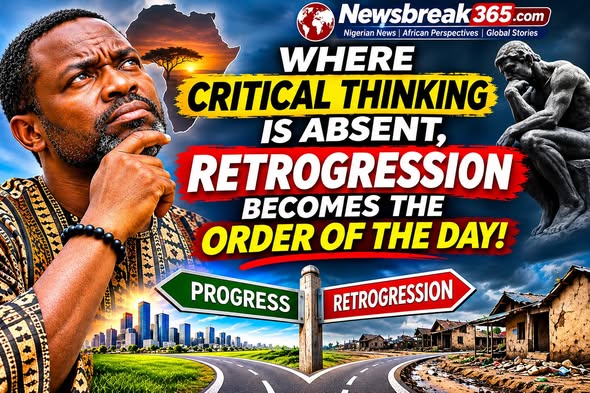
WHERE CRITICAL THINKING IS ABSENT, RETROGRESSION BECOMES THE ORDER OF THE DAY

Published

on

A society that discourages questions, celebrates ignorance, and blindly defends outdated beliefs cannot expect to make meaningful progress.**

One of the biggest obstacles to human development is not necessarily a lack of natural resources, money, or opportunities. Sometimes, the greatest obstacle is the absence of critical thinking.

A society cannot move forward when its people are discouraged from questioning authority, examining evidence, challenging established beliefs, and demanding accountability.

Unfortunately, across many African societies, independent thinking is sometimes mistaken for disrespect, questioning religious authorities is labelled rebellion, and challenging political leaders is treated as an act of disloyalty.

This mentality creates an environment where people defend ideas without examining whether those ideas are beneficial to society.

## WHEN QUESTIONING BECOMES A PROBLEM

How can a society develop when asking questions is considered offensive?

How can corruption be defeated when citizens defend politicians based on political loyalty rather than performance?

How can education transform society when people are encouraged to memorise information instead of understanding, analysing, and applying knowledge?

How can Africa compete globally when scientific evidence, innovation, research, and rational thinking are sometimes pushed aside in favour of superstition and unquestionable traditions?

These are uncomfortable questions, but uncomfortable questions are sometimes exactly what a society needs.

## BLIND LOYALTY IS THE ENEMY OF PROGRESS

A responsible citizen should be able to question political leaders without being branded an enemy.

A person should be able to examine religious teachings without being insulted or threatened.

Cultural traditions should be respected, but traditions should not be immune to criticism, particularly when they conflict with human dignity, justice, equality, and social development.

See also  WHERE CRITICAL THINKING IS ABSENT, RETROGRESSION BECOMES THE ORDER OF THE DAY

No political leader, religious institution, cultural authority, or traditional belief should be above reasonable questioning.

Respect should never mean surrendering your ability to think.

## AFRICA NEEDS THINKERS, NOT JUST FOLLOWERS

Look at the societies making remarkable progress in science, technology, medicine, engineering, education, and industrial development.

Their progress is supported by investment in knowledge, research, innovation, institutions, accountability, and the freedom to challenge existing ideas.

Africa cannot solve modern problems with an unwillingness to question old assumptions.

We cannot continue blaming every national failure on spiritual forces while ignoring corruption, poor leadership, weak institutions, inadequate education, unemployment, and economic mismanagement.

Prayer may offer personal comfort to believers, but responsible governance, sound policies, education, scientific research, and accountability are essential to national development.

The future belongs to societies willing to learn, question, adapt, and improve.

## THE REAL QUESTION

Africa does not lack intelligent people. What it urgently needs is an environment where intelligence, curiosity, independent thought, and constructive criticism are encouraged rather than suppressed.

A society that fears questions will struggle to discover answers.

A society that rejects evidence will struggle to solve problems.

And a society that blindly protects outdated thinking will struggle to move forward.

**Critical thinking is not the enemy of religion, culture, or tradition. It is a necessary tool for examining ideas and making better decisions.**

The question is no longer whether Africa needs progress. The question is whether its people are willing to challenge the attitudes and systems that stand in the way.

**NEWSBREAK365 — Informing, Challenging Perspectives, and Encouraging Critical Conversations.**

See also  I want nine kids, says ex-BBNaija housemate Liquorose

—

**JOIN THE CONVERSATION:**

What is holding Africa back the most?

1. Lack of critical thinking and independent reasoning.
2. Bad leadership and corruption.
3. Blind religious and cultural loyalty.
4. Poor educational systems.

Share your opinion. Let’s have an honest conversation.

#Newsbreak365 #CriticalThinking #AfricanDevelopment #Education #IndependentThinking #GoodGovernance #AfricaMustProgress

FOLLOW US ON:

FACEBOOK

WHATSAPP CHANNEL

TWITTER

PINTEREST

TIKTOK

YOUTUBE

LINKEDIN

INSTAGRAM

Continue Reading

Trending