Connect with us

News

Hamzat reveals Lagos will enforce one-year rent rule, read details

Published

on

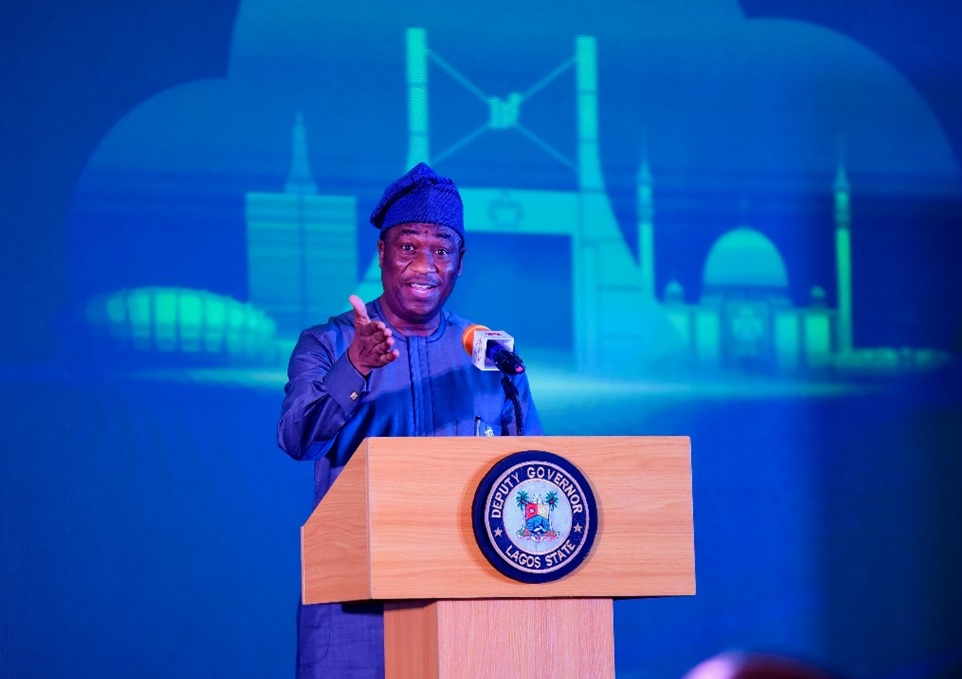
Lagos State Deputy Governor, Obafemi Hamzat, says the state government plans to enforce the one-year rent payment provision in its real estate law to prevent landlords from demanding two or three years’ rent in advance.

Hamzat, who is also the All Progressives Congress Party’s governorship candidate, said the provision was contained in the Lagos State Real Estate Registration Agency law passed in 2025, adding that the government’s next priority was to ensure compliance.

He stated this on Sunday during a governorship debate organised by the Nigeria Debate Consortium in Lagos.

The debate was organised by the Nigeria Debate Consortium, a coalition comprising  The PUNCH, Channels Television, TVC News, TheCable and Vanguard.

He also outlined measures being considered to address housing affordability and other challenges in the state’s property sector.

“So the next chapter for Lagos is to enforce, to make sure. So people should not be asked 2 years, 3 years ahead because nobody gets salary three years ahead,” he said.

The governorship hopeful also said the law requires real estate agents to register with the state and be listed on an official database.

He urged residents to use the Lagos State Real Estate Registration Agency’s online platform to report issues and help the government monitor activities in the sector.

“So our appeal to the citizens is in terms of communication, to make sure that people use that site, because that is the only way we can track. Because this— when these things happen, government must also have the feedback,” he said.

See also  Return home - President Tinubu pleads with diaspora health workers

On efforts to increase access to affordable housing, Hamzat said the government would complete ongoing housing projects and work towards reducing the time required to obtain property regularisation and title documents.

He explained that delays in processing land documents could increase the cost of housing, adding that the state had completed the automation of the process to enable residents to make applications online.

Hamzat also called for greater collaboration with private developers to ensure that housing projects were not concentrated in high-income areas.

He said developers undertaking projects in affluent locations such as Ikoyi and Victoria Island should also consider building in less affluent communities.

“As you develop a property, say in Ikoyi or VI, can you develop another one in Egodo? So those are part of the discussions that we will have so that as we are building for the rich, we’re also building for the poor, apart from what the government is doing to make sure that people actually have housing,” he said.

Referring to his manifesto, Hamzat said its “Everyday Dignity” component was designed to ensure that residents were not burdened by rent payments to the extent that their dignity was undermined.

“If you look at my manifesto, the E part is everyday dignity. What it says is people should not pay rent that demystifies their dignity. And what that means is we must work with landlords. We understand that we run a capitalist economy,” he said.

The issue of advance rent payments has remained a concern for tenants in Lagos, where demands for multiple years’ rent have been reported despite existing legal restrictions.

See also  NBC seeks fresh appeal over ruling voiding broadcast fines

Section 4 of the Lagos State Tenancy Law 2011 makes it unlawful for landlords or their agents to demand more than one year’s rent in advance from a new tenant.

It also limits advance payments by sitting tenants, depending on the type of tenancy.

The Lagos State Government has also been considering reforms to its tenancy framework to address concerns about rent increases, agency practices and other disputes between landlords and tenants.

However, the proposed 2025 amendments should not be presented as an enacted law without confirmation of their passage and commencement.

Source: punchng.com

FOLLOW US ON:

FACEBOOK

WHATSAPP CHANNEL

TWITTER

PINTEREST

TIKTOK

YOUTUBE

LINKEDIN

INSTAGRAM

Continue Reading
Click to comment

Leave a Reply

Your email address will not be published. Required fields are marked *

News

Gospel singer Toluwanisings for burial today

Published

on

The burial of late gospel singer, Olayemi Bolaji, popularly known as Toluwanisings, is scheduled to hold on Monday in Ibadan, Oyo State, weeks after his death on October 14, 2026.

An order of funeral arrangements was posted via the deceased official Instagram page on Monday, showing that the lying-in-state will hold from 9am to 10am, followed by a burial service from 10am to 11am.

The venue was given as Banjola Event and Conference Centre, No. 20, Hope Road, Alakia, Ibadan.

The poster, which carried the inscription, “Forever in our Hearts, always in our Lives,” did not state where the interment would take place.

The family had announced that the singer passed away in the early hours of 14 October 2026.

His father had reportedly proposed that he be buried at the house he built or beside his late mother in Osun State, while his wife was said to have opposed burying him at their home.

His family had also called for an investigation into his death and the suspension of the planned burial.

It was reports that the Oyo State Police Command had earlier brokered peace over the burial arrangements of the late singer following the information received by the state Commissioner of Police, Olugbenga Abimbola, on October 28, 2026, concerning the disagreement between the deceased’s family and associates over the proposed burial arrangements, which had generated tensions and exchanges across various public communication platforms..

On November 3, the singer’s widow, Mrs Elizabeth Damilola Olayemi; his father, Mr Muniru Olayemi; and his friends and associates, including Oyindamola Esther, Babadunni Gbolabo and Lawal Ademola Rafiu, signed a peace undertaking before the commissioner.

See also  AMCON officials and lawyers face contempt charges for contravention of court orders

Under the agreement, the parties pledged to stop public exchanges, interviews and social media publications about the disagreement.

FOLLOW US ON:

FACEBOOK

WHATSAPP CHANNEL

TWITTER

PINTEREST

TIKTOK

YOUTUBE

LINKEDIN

INSTAGRAM

Continue Reading

News

Kaduna-Kano rail project hits 90%, inauguration set for December

Published

on

The All Progressives Congress Presidential Campaign Council has said that President Bola Tinubu will inaugurate the Kaduna-Kano Standard Gauge Railway project on December 3, 2026, as the Federal Government intensifies efforts to complete major rail projects across Northern Nigeria.

In a statement on Sunday, the APC PCC spokesperson and Minister of Solid Minerals, Dele Alake, disclosed that the 203-kilometre Kaduna-Zaria-Kano railway project had reached 90 per cent completion, while the 400-kilometre Kano-Katsina-Maradi rail project had attained 70 per cent completion.

The council said the projects were below 30 per cent and five per cent completion, respectively, when Tinubu assumed office in 2023, describing their progress as evidence of the administration’s commitment to expanding railway infrastructure and improving regional connectivity.

The statement read, “President Bola Ahmed Tinubu is accelerating the completion of major railway projects in Northern Nigeria, with the Kaduna–Kano Standard Gauge Railway scheduled for inauguration on December 3, 2026.

“The 203-kilometre Kaduna–Zaria–Kano railway project, one of the administration’s legacy projects, has reached approximately 90 per cent completion, while the 400-kilometre Kano–Katsina–Maradi railway project has attained 70 per cent completion.

“When President Tinubu assumed office in 2023, the Kano–Katsina–Maradi rail project was barely five per cent complete, while the Kaduna–Kano project was less than 30 per cent complete.

“The projects demonstrate the administration’s commitment to expanding Nigeria’s railway infrastructure, improving regional connectivity and facilitating the movement of passengers and goods across the country and beyond.”

The APC PCC said the Kaduna-Kano railway would extend the existing Abuja-Kaduna standard gauge line, creating a continuous rail link between Abuja, Kaduna, Zaria and Kano and improving connectivity among major commercial centres in Northern Nigeria.

See also  Only ‘idiots’ think N’Korea will give up nukes, says Kim’s sister

It stated, “The two rail projects were recently inspected, on the directive of President Tinubu, by a Federal Government team led by the Permanent Secretary of the Federal Ministry of Transportation, Funso Adebiyi, who expressed satisfaction with the quality of construction work, particularly the railway alignment, drainage infrastructure, embankment protection, stone pitching and soil stabilisation.

“The inspection included a train test-run journey from Jaji in Kaduna State to Kano, allowing officials to assess the completed track infrastructure and passenger comfort.

“The President has also directed that all outstanding land acquisition and compensation issues within Kaduna metropolis be resolved immediately so that the railway corridor from Abuja to Kano can be completed.

“The completed 190-kilometre Jaji-Kano section out of the entire 205-kilometre stretch of the Kaduna-Kano rail project and the 250-kilometre Dawanu-Kano-Kazaure-Daura-Katsina section of the Kano-Maradi project will be inaugurated by December 3, 2026.”

APC PCC explained that the Kaduna–Kano railway project is expected to boost passenger transportation, enhance commercial activities and provide an alternative to road travel along one of Northern Nigeria’s busiest economic corridors when operational.

The council also said the Kano–Katsina–Maradi railway, which is 70 per cent complete, would strengthen cross-border trade and transportation between Nigeria and neighbouring Niger Republic.

It added that the Tinubu administration remained committed to completing ongoing infrastructure projects across the country as scheduled.

Infrastructure development has remained a key component of President Tinubu’s economic agenda and is expected to continue featuring prominently in the APC’s campaign for the January 16, 2027 presidential election.

With the President seeking a second term, the ruling party has continued to showcase ongoing and completed projects across the country as evidence of its commitment to economic growth, improved transportation and regional connectivity.

See also  Female soldier, children, others injured in Nasarawa grenade explosion — Report

Source: punchng.com

FOLLOW US ON:

FACEBOOK

WHATSAPP CHANNEL

TWITTER

PINTEREST

TIKTOK

YOUTUBE

LINKEDIN

INSTAGRAM

Continue Reading

News

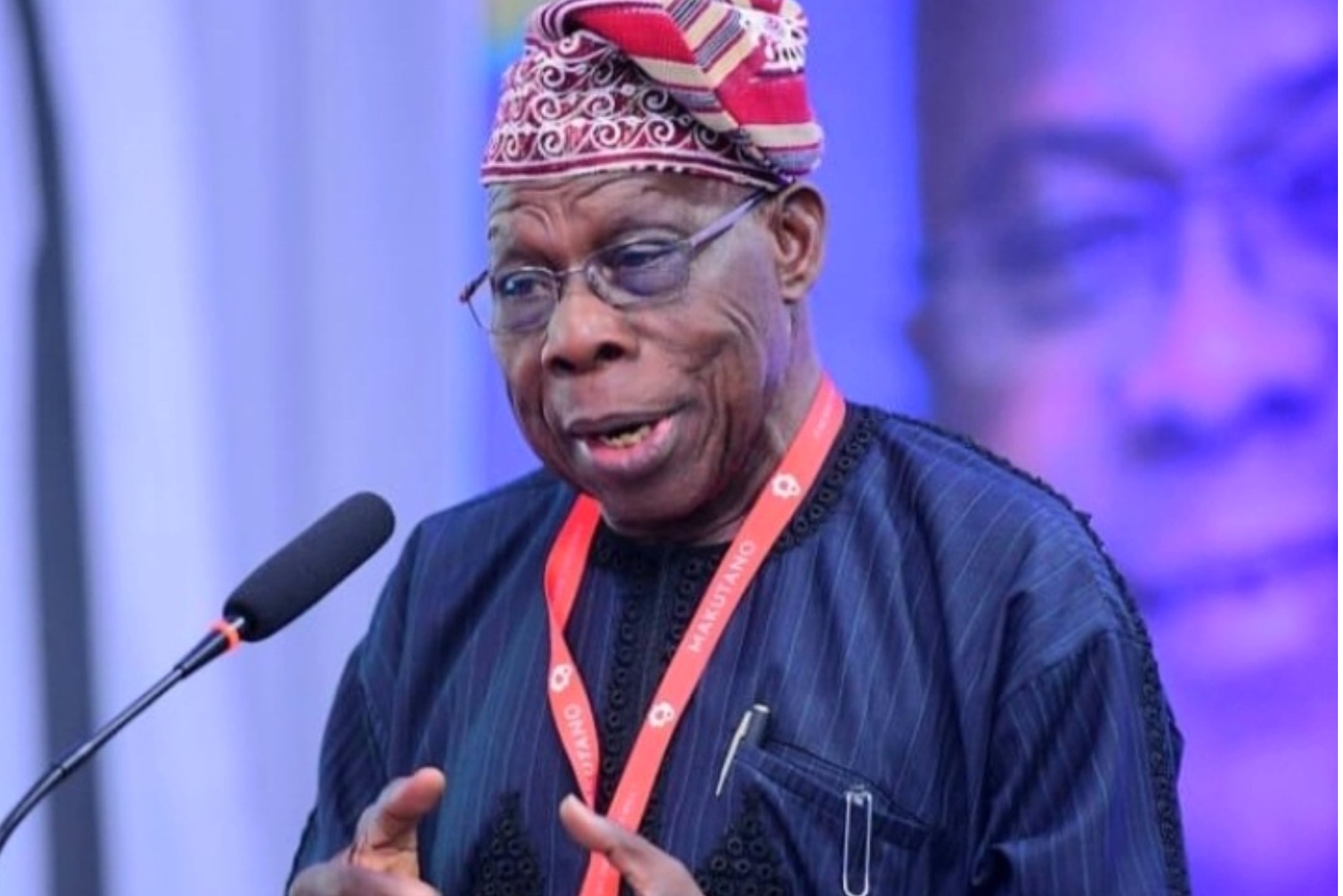
Obasanjo reveals reason for Nigerians deadly migration, read details

Published

on

Former President Olusegun Obasanjo has called for urgent action to address worsening insecurity, unemployment and poverty in Nigeria, warning that leadership failures are forcing citizens to seek better opportunities abroad, often through dangerous migration routes.

Obasanjo spoke on Saturday during a panel session themed “Lest We Forget” at the Creative Africa Nexus Weekend 2026, organised by the African Export-Import Bank in Lagos State.

The former president, who reflected on Nigeria’s security situation since independence, said the country must confront the governance failures responsible for declining safety and economic opportunities.

“We just have to do what we should do to provide job opportunities, to stem the tide of impunity, to stem the tide of poverty, to stem the tide of kidnapping and insecurity,” he said.

Obasanjo recalled returning to Nigeria in 1959 after completing his military training in Britain, noting that he could travel freely across the country without fear of attacks or kidnapping.

“I came back to this country after my commission as an officer in Britain in 1959. And I could go anywhere; I was posted to the North; I could go anywhere in the North, by myself alone, by day, by night,” he said.

Contrasting that experience with the current security situation, he questioned how Nigeria had deteriorated to the point where citizens could no longer travel safely across several parts of the country.

“Now, if you can’t do that, what has gone wrong? We have to correct what has gone wrong,” he stated.

He argued that unemployment, particularly among university graduates, had become a major source of economic desperation, making it difficult to discourage young Africans from leaving their countries in search of opportunities.

See also  Pentagon restores name of US Pacific Command

According to him, governments cannot continue producing graduates without creating sufficient employment opportunities and expect them to remain economically productive.

Obasanjo recalled an encounter with Nigerians arrested for drug-related offences, explaining that one of the suspects had attributed his involvement in the illegal trade to the loss of legitimate employment.

He said the encounter demonstrated how economic hardship could push otherwise productive individuals towards desperate decisions, although he stopped short of justifying criminal activities.

Addressing irregular migration, Obasanjo said he had interacted with Africans who attempted to reach Europe through the Sahara Desert and the Mediterranean Sea, describing their experiences as distressing.

“I have got those people who have attempted to cross, and the story they told me is pathetic. Some die in the Sahara, some die in the Mediterranean,” he said.

The former president maintained that improving governance and creating economic opportunities would reduce the pressure on Africans to undertake life-threatening journeys abroad.

“We have to improve our leadership to deliver, and once our leadership delivers, what does any man want in the world?

“But if they have nothing here, they will look for whatever they can get anywhere else, and you can’t blame them,” he said.

Responding to concerns about corruption, poor governance and Africa’s development challenges, Obasanjo placed substantial responsibility for the continent’s underdevelopment on its political leadership.

“Africa is not where it should be, and that Africa is not where it should be is substantially the responsibility of our leaders. It’s as simple as that,” he declared.

See also  Female soldier, children, others injured in Nasarawa grenade explosion — Report

The former president also advocated greater freedom of movement across Africa, disclosing discussions with Ghanaian President John Mahama on a proposal to eliminate visa requirements among approximately 25 African countries.

He explained that the initiative would initially involve countries already operating visa-on-arrival arrangements, with the possibility of expanding the framework across the continent.

“These countries should eliminate visas among themselves, about 25 of them, and if they can do it successfully, then maybe in a matter of a few years, the whole of Africa will be able to move,” he said.

Obasanjo further criticised the limited recognition of the African passport and urged African governments to grant automatic citizenship to people of African descent seeking to return to the continent.

“I believe that all African states should have such a policy. That anybody from the diaspora who wants to be a national of any African country should automatically be given,” he said.

Obasanjo also called for greater unity among Africans and people of African descent worldwide, stressing that historical divisions must not prevent cooperation towards shared prosperity.

He maintained that African countries must strengthen their leadership, expand economic opportunities and deepen continental integration to overcome the challenges confronting their citizens.

The session, which also featured former Prime Minister of St Vincent and the Grenadines, Dr Ralph Gonsalves, and Jamaican scholar, Prof. Paulette Ramsay, examined African identity, slavery, colonialism, reparations and the need for stronger connections between Africa and its diaspora.

The three speakers called for reparatory justice over the trans-Atlantic slave trade and colonialism, arguing that the historical exploitation of Africans continued to affect the continent’s development, among other things.

Ramsay, author of “Lest We Forget: Slavery, Slave Trade, Colonisation, Emancipation and Reparation,” commended Obasanjo for supporting the publication, which brought together scholars, policymakers and cultural experts to examine Africa’s historical experiences.

She argued that reparations should extend beyond monetary compensation to include the return of stolen artefacts, stronger protection of African cultural heritage and an end to the continuing exploitation of the continent’s natural resources.

“We must not remember with bitterness. We must teach younger generations that we remember the horrible things that were done, but we survived, and that’s the best part of the African story, that we survived,” she said.

Source: punchng.com

FOLLOW US ON:
FACEBOOK

WHATSAPP CHANNEL

TWITTER

PINTEREST

TIKTOK

YOUTUBE

LINKEDIN

INSTAGRAM

Continue Reading

Trending