Connect with us

Business

Apple to face trial over alleged iPhone repair restrictions in France, read details

Published

on

Apple is to stand trial in Paris in June 2027 on suspicion of having organised the planned obsolescence of various iPhone models by preventing repairs outside official outlets, a source close to the case told AFP on Tuesday.

The case brought by French prosecutors against the US tech giant on charges of “obstructing repair and refurbishment” is a first, campaign group Stop Planned Obsolescence said, welcoming the move after filing a complaint on December 7, 2022.

“We strongly contest these unfounded allegations,” Apple said when contacted by AFP.

Planned obsolescence refers to techniques used by manufacturers to deliberately shorten the lifespan of their products, generally electronic devices, thereby encouraging consumers to discard and replace them more frequently.

According to the source close to the case, Apple Distribution International and parent company Apple Inc are due to appear in court for a four-day trial starting on June 17.

They are accused of preventing repairs to a range of iPhone models for more than two and a half years, from November 2021 to July 2024.

Apple is accused of configuring its smartphone software to “make it impossible to repair or refurbish” devices outside its authorised network, the source added.

The alleged aim was to boost sales of Apple’s flagship product and increase the revenue of the multinational, which now generates more than $400 billion a year, about half of that from iPhone sales.

AFP

Source: punchng.com

FOLLOW US ON:

FACEBOOK

WHATSAPP CHANNEL

TWITTER

PINTEREST

TIKTOK

YOUTUBE

LINKEDIN

INSTAGRAM

See also  NNPCL spends N17.5tn securing fuel pipelines, others in 12 months
Continue Reading
Click to comment

Leave a Reply

Your email address will not be published. Required fields are marked *

Business

NNPC probes Lagos filling station fire, read details

Published

on

The Nigerian National Petroleum Company Limited (NNPC) has commenced an investigation into a fire outbreak at an affiliated filling station along Ekoro-Ajasa Road in the Alimosho Local Government Area of Lagos State.

The company said the fire, which occurred on Monday, November 16, 2026, had been brought under control by emergency responders, adding that no deaths or injuries had been reported.

NNPC Limited disclosed this in a statement issued by its Chief Corporate Communications Officer, Andy Odeh.

The incident affected seven classrooms at St Lawrence Greater Height School, located beside the filling station, as well as two vehicles and three fuel dispensing pumps.

A DAF truck and a Toyota Camry were also reportedly destroyed in the fire.

The Lagos State Emergency Management Agency said preliminary investigations indicated that the fire started while a tanker was discharging diesel at the filling station before spreading to the dispensing pumps and the adjoining school.

Confirming that the fire had been contained, NNPC said its retail, health, safety and environment teams, alongside the management of the affiliated station, were reviewing the circumstances surrounding the incident.

The statement read, “NNPC Limited confirms that the fire at an NNPC-affiliated filling station on Ekoro-Ajasa Road in Alimosho Local Government Area of Lagos earlier today, 16 November 2026, has been contained.

“Based on preliminary information, no fatalities or injuries have been reported.

“We understand the fear and distress this incident has caused residents, customers and businesses in the area. Our thoughts are with everyone affected, particularly those whose property or livelihoods may have been impacted.”

See also  NNPCL spends N17.5tn securing fuel pipelines, others in 12 months

The company commended the Lagos State Emergency Management Agency, the Lagos State Fire and Rescue Service and other emergency responders for containing the fire and limiting further damage.

It said, “NNPC Limited commends the Lagos State Emergency Management Agency (LASEMA), the Lagos State Fire and Rescue Service and other emergency responders for bringing the fire under control and limiting further damage.”

The oil firm said the safety of customers, employees and neighbouring communities remained a priority, assuring residents that it would cooperate with relevant authorities and the station’s management in investigating the incident.

“NNPC Retail, Health, Safety and Environment teams and management of the affiliate filling station are reviewing the cause of the fire.

“The safety of customers, employees and neighbouring communities remains a priority. NNPC Limited will support the relevant authorities and management of the affiliate filling station and provide further updates as verified information becomes available,” it stated.

The incident has renewed attention on fire safety at petroleum retail outlets, particularly during fuel offloading operations, when flammable products are transferred from tankers into storage facilities.

NNPC said it would provide further information after its review and investigations by the relevant authorities.

Source: punchng.com

FOLLOW US ON:

FACEBOOK

WHATSAPP CHANNEL

TWITTER

PINTEREST

TIKTOK

YOUTUBE

LINKEDIN

INSTAGRAM

Continue Reading

Business

Kano targets $700m sesame, hibiscus exports by 2027, read details

Published

on

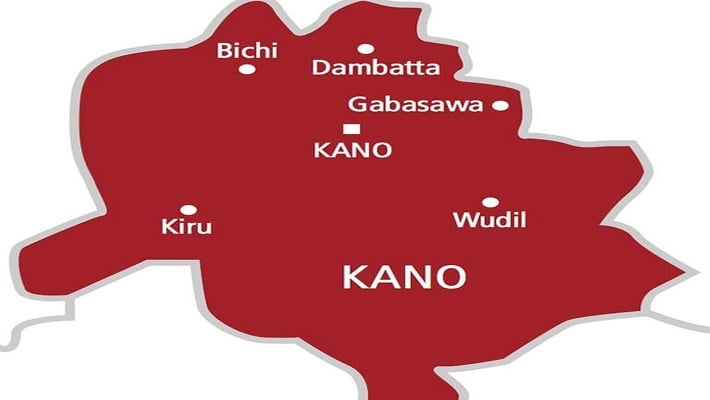
Kano State exported sesame seeds and hibiscus flowers worth more than $350m in 2025, an official of the Nigerian Export Promotion Council has said.

The State Coordinator of the NEPC, Yusuf Ahmed, disclosed this on Monday during the National Single Window Phase Two Sensitisation and Joint Stakeholders Forum in Kano.

Ahmed expressed optimism that the value of the state’s exports of the two commodities could double to $700m by 2027 with the commencement of the National Single Window project, expected to begin operations in December.

“Kano exported over $350 million worth of Sesame and Hibiscus alone in 2025. But we can double this to $700 million by 2027 if documentation becomes easier.

“National Single Window phase two is the tool to double it,” he said.

Ahmed described Kano as Nigeria’s leading exporter of sesame seeds, hibiscus flowers and leather.

He commended Governor Abba Kabir Yusuf for supporting non-oil exports in the state, while acknowledging the contributions of other export regulatory agencies to the sector.

The NEPC coordinator urged exporters to participate actively in the engagement by asking questions and sharing their experiences to help achieve the project’s objectives.

Earlier, the NEPC North-West Regional Coordinator, Amina Abdulmalik, described the forum as timely, noting that Kano was a major commercial centre in northern Nigeria and accounted for more than 40 per cent of the region’s non-oil exports.

She listed sesame, hibiscus flowers, ginger, groundnuts, onions, cowpeas, chilli peppers and leather among the region’s major non-oil export products.

See also  Musk spends $276m backing Republicans in midterms — Report reveals

Abdulmalik, however, said exporters continued to face delays, multiple charges and repeated physical examinations at different government agency offices.

“This forum is timely and strategic. Kano State is the commercial nerve center of commerce in Northern Nigeria, contributing over 40% of non-oil exports from the North: Sesame, Hibiscus Flower (Zobo), Ginger, Groundnut, Onions, Cowpea, Chilli Pepper, and Leather.

“Yet our exporters face delays, multiple charges, and physical examination at every agency desk. National Single Window is the Federal Government’s answer to that problem,” she said.

The engagement is part of the Federal Government’s efforts to sensitise stakeholders, deepen understanding and encourage participation in the implementation of the National Single Window project.

The initiative is designed to establish a centralised electronic trade platform that will streamline import and export processes by integrating and harmonising documentation and procedures across government agencies and other stakeholders.

The National Single Window is a Federal Government initiative aimed at reducing the administrative burden associated with international trade by allowing traders to submit required information and documents through a single electronic platform rather than dealing separately with multiple agencies.

The system is expected to improve coordination among government agencies, reduce delays and make trade documentation more transparent and efficient.

For exporters in Kano and other parts of northern Nigeria, improved processing could help reduce the time and costs involved in moving agricultural commodities and other products to international markets.

Source: punchng.com

FOLLOW US ON:

FACEBOOK

WHATSAPP CHANNEL

TWITTER

PINTEREST

TIKTOK

YOUTUBE

LINKEDIN

INSTAGRAM

Continue Reading

Business

NBS report reveals Inflation drops to 14.05%, read details

Published

on

Nigeria’s headline inflation rate declined to 14.06 per cent in October 2026 from 14.63 per cent in September, marking the fifth consecutive month of moderation, although food inflation remained elevated at 19.13 per cent.

The latest figure represents a decline of 0.57 percentage points from September and 4.91 percentage points from the 18.97 per cent recorded in October 2025.

This was disclosed in the October 2026 Consumer Price Index report released on Monday by the National Bureau of Statistics.

The report read, “In October 2026, the Headline inflation rate stood at 14.06 per cent, down from 14.63 per cent in September 2026 and stood at 18.97 per cent in the same month of the preceding year (October 2025).”

Despite the moderation in annual inflation, the report showed that consumer prices increased faster on a monthly basis, indicating that inflationary pressures persisted.

Month-on-month headline inflation rose to 0.43 per cent in October from 0.06 per cent in September, an increase of approximately 0.37 percentage points.

The NBS explained, “This means that in October 2026, the rate of increase in the average price level was higher than the rate of increase in the average price level in September 2026.”

The Consumer Price Index increased to 147.0 points in October from 146.4 points in September, reflecting a continued rise in the general price level.

Further analysis showed that food and non-alcoholic beverages remained the largest contributors to annual headline inflation, accounting for 5.63 percentage points.

Restaurants and accommodation services followed with 1.82 percentage points, transportation contributed 1.50 percentage points, while housing, water, electricity, gas and other fuels accounted for 1.18 percentage points.

See also  Volkswagen to export 300,000 vehicles from China by 2030

Education and health services contributed 0.87 and 0.85 percentage points, respectively.

Food inflation stood at 19.13 per cent year-on-year in October, compared with 16.30 per cent in October 2025, representing an increase of 2.83 percentage points.

However, on a month-on-month basis, food inflation stood at -0.75 per cent, compared with -1.55 per cent in September, indicating that average food prices declined for the second consecutive month, although at a slower pace.

The bureau explained, “This can be attributed to the rate of change in the average prices of the following products: Vegetable Oil (75cl), Titus Sardines (125g), Green Peas (Prepacked), Mackerel Frozen, Croakers (Apo), Rice Local, Catfish Fresh, Beef tripes, Palm oil (75cl), Millet Flour (sold loose), etc.”

The average annual food inflation rate for the 12 months ending October stood at 15.98 per cent, compared with 26.47 per cent in the corresponding period of 2025.

Core inflation, which excludes volatile agricultural produce and energy prices, declined to 10.78 per cent from 21.25 per cent in October 2025.

On a monthly basis, core inflation fell by 0.53 per cent, reversing the 1.11 per cent increase recorded in September.

Other inflation indicators showed that farm produce prices increased by 18.38 per cent year-on-year, while energy inflation stood at 12.30 per cent. Services inflation was 11.73 per cent, goods inflation reached 13.58 per cent, and imported food inflation stood at 8.39 per cent.

Urban inflation stood at 14.84 per cent year-on-year, compared with 12.17 per cent in rural areas.

On a monthly basis, urban inflation moderated to 0.43 per cent from 0.53 per cent, while rural inflation increased to 0.18 per cent from minus 0.89 per cent.

See also  Shell’s $5bn Bonga S’West project gets presidential support

Across the states, Imo recorded the highest annual headline inflation at 28.66 per cent, followed by Enugu at 22.81 per cent and Kaduna at 21.55 per cent.

Taraba recorded the lowest rate at 6.12 per cent, followed by Sokoto at 6.68 per cent and Ekiti at 7.64 per cent.

For food inflation, Ondo recorded the highest annual rate at 31.74 per cent, followed by Lagos at 31.43 per cent and Imo at 29.75 per cent. Nasarawa recorded the lowest at 3.70 per cent.

The NBS cautioned, “The CPI is weighted by consumption expenditure patterns that vary across States and locations,” adding that differences in consumption baskets could make interstate comparisons misleading.

An analysis of inflation trends in 2026 showed that headline inflation declined from 15.15 per cent in December 2025 to 15.10 per cent in January and 15.06 per cent in February.

However, it increased to 15.38 per cent in March, 15.69 per cent in April and 15.93 per cent in May, before easing to 15.91 per cent in June.

The downward trend continued in July at 15.43 per cent, August at 15.39 per cent and September at 14.63 per cent, before reaching 14.06 per cent in October.

Consequently, inflation has declined by 1.87 percentage points from its May peak, although the continued increase in the general price level means households still face higher living costs.

The latest figures come ahead of the Central Bank of Nigeria’s Monetary Policy Committee meeting scheduled for November 24, following its decision in September to reduce the benchmark interest rate to 23 per cent.

See also  NNPCL spends N17.5tn securing fuel pipelines, others in 12 months

The sustained moderation in annual inflation could strengthen expectations of further monetary easing, although persistent food price pressures and the acceleration in monthly headline inflation remain concerns for policymakers.

Source: punchng.com

FOLLOW US ON:

FACEBOOK

WHATSAPP CHANNEL

TWITTER

PINTEREST

TIKTOK

YOUTUBE

LINKEDIN

INSTAGRAM

Continue Reading

Trending