Connect with us

Crime

50 Nigerians arrested in India drug busts

Published

on

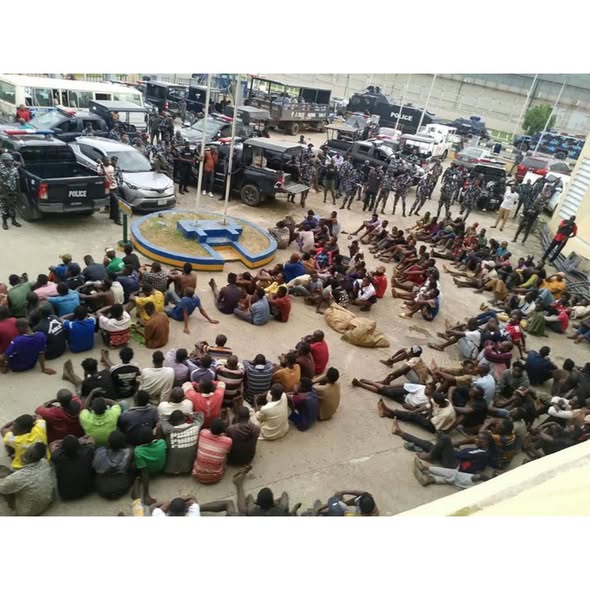
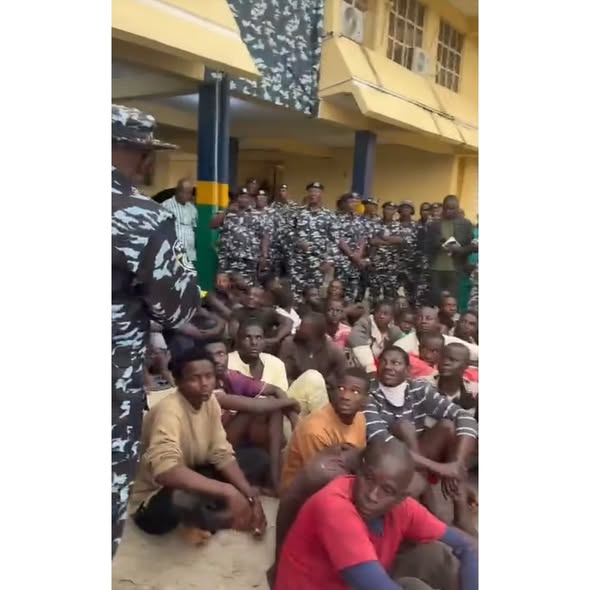
No fewer than 50 Nigerians have been arrested in one of India’s largest coordinated crackdowns on a transnational narcotics network. They are believed to be linked to a sprawling drug-distribution and hawala laundering syndicate spread across several major cities in India.

According to a report on Thursday by NDTV, an Indian news agency, the operation was led by the Delhi Police in collaboration with the Telangana Police’s EAGLE unit.

It was reported that months of intelligence gathering culminated in days of simultaneous raids across Delhi, leading officers to dismantle key layers of a cartel moving methamphetamine and cocaine across India.

According to the report, investigations revealed that the cartel maintained an extensive customer base using encrypted communication and delivery methods modelled after food-delivery apps to execute drug “dead drops” and avoid face-to-face exchanges.

“The network was extremely sophisticated. They used layered communication channels and app-based delivery patterns to evade law-enforcement detection,” the report stated.

Officials also disclosed that the syndicate’s distribution chain was intertwined with a sex-trade ring, which provided both cover and logistics for drug circulation.

The report reads, “Investigators have identified approximately 2,000 individuals who were supplied drugs through courier and dead-drop methods.”

“Furthermore, the authorities uncovered that the sex trade was used as a cover for drug supply and distribution, extending the criminal reach of the cartel.”

The report further stated, “The operation, which involved months of intelligence gathering, culminated with the arrest of 50 Nigerian nationals in Delhi. This massive effort was executed in close collaboration with the Telangana Police’s Elite Action Group for Drug Law Enforcement, along with police teams from Noida, Vizag, and Gwalior.”

See also  Police arrest teenager for armed robbery in Bauchi

On the financial side, authorities said the cartel routed its proceeds through hawala operators. The illicit profits were converted into goods, including garments and human hair, which were exported to Lagos, Nigeria, disguising the drug earnings as legitimate trade.

“The proceeds from drug sales were funnelled through local hawala operators who converted the Indian Rupees into goods such as garments and human hair, shipped to Lagos, Nigeria, effectively cleaning the illicit earnings.”

“One identified kingpin is suspected to have laundered at least ₹15 crore through these hawala channels alone,” the report added.

The report, however, noted that the recent arrest of the 50 Nigerian nationals marked a pivotal moment in multi-agency efforts to root out these persistent drug cartels.

PUNCH Metro had earlier reported multiple arrests of Nigerians in India over synthetic-drug trafficking, including seizures in Bengaluru, Delhi and Goa, where foreign nationals were linked to methamphetamine circuits.

The latest coordinated crackdown, which resulted in the arrest of 50 suspects of Nigerian nationality, is now regarded by Indian police as a major step toward disrupting what they described as an “entrenched and continually evolving” narcotics supply chain.

Police officials said the next phase of the investigation will focus on tightening immigration checks, tracking hawala facilitators, and identifying remaining cartel commanders believed to be operating from outside India.

punch.ng

FOLLOW US ON:

FACEBOOK

TWITTER

PINTEREST

TIKTOK

YOUTUBE

LINKEDIN

TUMBLR

INSTAGRAM

Continue Reading
Click to comment

Leave a Reply

Your email address will not be published. Required fields are marked *

Crime

EFCC probes ‘prophet’ over alleged N70.39m fraud

Published

on

The Economic and Financial Crimes Commission (EFCC) has commenced an investigation into a self-acclaimed prophet, Godwin Sunday Ajuluchukwucheya, popularly known as Prophet Sunday Koboko, over allegations that he defrauded members of his ministry of N70.39m.

The anti-graft agency disclosed this in a statement posted on its official X handle on Wednesday.

According to the EFCC, operatives of its Enugu Zonal Directorate are investigating allegations that the suspect obtained money from church members through various schemes and promises of spiritual interventions and investment opportunities.

One of the petitioners, identified as Okey Uwakwe, alleged that Ajuluchukwucheya collected N6.23m from him for spiritual works aimed at persuading his brother, who had lived abroad since 1997, to return to Nigeria.

The petitioner further alleged that the suspect received N3.25m to perform spiritual works to help his childless sister-in-law conceive after over 15 years without a child.

The EFCC said Uwakwe also claimed that the cleric announced to members of his ministry that he had won N33bn in a lottery and encouraged them to contribute financially with assurances that they would receive dividends from the purported winnings.

According to the commission, the petitioner contributed an additional N3.35m to the scheme and another N500,000 towards a rice-processing business the suspect allegedly claimed was worth N1bn.

The EFCC said the petitioner claimed to have paid a total of N13.33m to the suspect without receiving any benefit.

The commission added that during investigations, several other members of the ministry came forward with similar allegations.

According to the EFCC, some members alleged that the suspect sold items described as “holy ghost thunder”, “miracle stickers” and “spiritual dragons”, promising prosperity and solutions to personal challenges.

See also  Six arrested for arms dealing, kidnapping in Niger

“One of the members and a victim of the suspect said, ‘He asked me to do what they tagged ‘holy ghost thunder’, believing it was going to solve my problems. I bought it, and after all the payments, nothing happened, and my problems persisted,” the EFCC said.

The EFCC said the total amount allegedly collected from members of the ministry stood at N70.39m.

The commission added that investigations were ongoing and that the suspect would be charged to court upon their conclusion.

punch.ng

FOLLOW US ON:

FACEBOOK

TWITTER

PINTEREST

TIKTOK

YOUTUBE

LINKEDIN

Continue Reading

Crime

Anambra couple held as police probe 10-year-old boy abuse

Published

on

A 30-year-old woman, Chisom Chukwukere, who allegedly brutalised a 10-year-old boy in Awada, Obosi, in Idemili North Local Government Area of Anambra State, has been arrested by the police.

Her husband, Chukwudi, was also arrested over allegations that the couple used burning plastic to inflict severe burns on the child.

The victim, whose video showing extensive injuries across his body recently went viral on social media, had sparked widespread outrage.

Operatives of the Anambra State Police Command arrested the suspects.

At the same time, the woman’s infant child was taken into protective custody by the state Ministry of Women’s Affairs and Social Welfare on Thursday.

During interrogation, Chisom reportedly pleaded with police and ministry officials to release the infant to her, claiming that the child was unwell and could not be left alone.

A video circulating online showed the suspect appealing to the authorities to return the child to her because the infant was sick and required attention.

The development has triggered public outrage, with many questioning how someone so concerned about her own child’s welfare could allegedly inflict such severe injuries on another child.

The infant has since been placed in the care of a family member through the Ministry of Women Affairs and Social Welfare.

Confirming the development, the spokesperson for the Anambra State Police Command, SP Tochukwu Ikenga, said investigations had been intensified and assured that all those found culpable would be brought to justice.

He said, “The police remain steadfast in enforcing laws designed to protect children from abuse, neglect, exploitation, and all forms of violence.

See also  PHOTOS: Nigerian Army sentences 4 soldiers to life imprisonment and other jail terms for arms racketeering, aiding enemy

“The Commissioner of Police, Ikioye Orutugu, has reassured residents of the command’s unwavering commitment to collaborating with relevant government agencies, child protection organisations, and community stakeholders to promote and safeguard the rights, safety, and welfare of children throughout the state.

“The Anambra State Police Command remains committed to promoting justice, compassion, and the protection of human rights in line with the vision of the Inspector-General of Police.”

Continue Reading

Business

Boko Haram, banditry, clashes driving poverty across North — Report reveals

Published

on

A new report has revealed that violent conflict across the northern part of the country is deepening poverty and weakening the ability of households to recover from economic shocks.

The report, titled “Insecurity, Livelihoods and Welfare in Northern Nigeria,” identified three major forms of insecurity affecting the region: Boko Haram/ISWAP insurgency in the North-East, farmer-herder conflicts in the North-Central, and banditry and kidnapping in the North-West.

The findings were unveiled on Thursday in Abuja during a high-level webinar convened by the Chronic Poverty Advisory Network of the Institute of Development Studies, United Kingdom; the Development Research and Projects Centre; and the Foreign, Commonwealth and Development Office-supported Strengthening Peace and Resilience in Nigeria project.

The Minister of Humanitarian Affairs and Poverty Reduction, Dr Bernard Doro, opened and closed the session, reflecting on the implications of the findings for the ministry’s One Humanitarian–One Poverty Response System policy.

Presenting the report, CPAN Deputy Director, Dr Vidya Diwakar, said the study explored the relationship between insecurity and household welfare using data from the Nigeria Living Standards Survey 2022/23, the Nigeria Demographic and Health Survey 2024, Armed Conflict Location and Event Data from 2010 to 2025, and extensive fieldwork conducted by dRPC.

The report stated that “Households in the North-East affected by Boko Haram and ISWAP attacks recorded between eight and 14 per cent lower expenditure per adult equivalent when violent incidents occurred within two years before the survey.

“Conflict-related debt accumulated since 2009 was also associated with an additional expenditure loss of between eight and 13 per cent.”

See also  PHOTOS: Court sentences Italy-based Nigerian man to 15 years imprisonment for trafficking 1.30kg of tramadol

The study found that “Farmer-herder clashes had the most severe impact on near-poor households in the North-Central zone, resulting in a 14 per cent drop in expenditure at the 60th percentile, the largest single welfare effect recorded in the study.

“In the North-West, banditry and kidnapping were linked to expenditure losses ranging from four to 11 per cent, particularly among moderately poor households.”

Despite the challenges, the report identified livelihood diversification as the most effective strategy for building resilience and escaping chronic poverty.

According to the findings, combining farming, non-farming and enterprise-based income-generating activities emerged as “the single most consistent protective factor across all three conflict types.”

The report, however, noted that “only 13 per cent of household heads in Northern Nigeria were currently pursuing diversified income opportunities.”

The study also found that education strengthens households’ ability to diversify income sources, although the benefits remain weaker among women- and youth-headed households, which account for 28.9 per cent of households in the region.

Reviewing the findings, Team Lead of SPRiNG, Dr Ukoha Ukiwo; Director of the Plateau State Peace Building Agency, Dr Julie Sanda; and the Senior Special Assistant to the President on Chieftaincy Matters, Abba Waziri, highlighted the importance of linking peace-building efforts with livelihood recovery programmes.

The discussants stressed that rebuilding livelihoods and expanding economic opportunities are critical to reducing vulnerability and promoting long-term peace in conflict-affected communities.

Particular emphasis was placed on training traditional rulers and community leaders to play stronger roles in peace-building initiatives.

Speaking at the close of the webinar, Executive Director of dRPC, Dr Judith-Ann Walker, thanked the FCDO for supporting the research and commended the minister for engaging with evidence-based policy recommendations.

See also  Police arrest teenager for armed robbery in Bauchi

She also praised the ministry’s commitment to implementing the OHOPRS framework, which is built on what she described as “one system, one register and one pathway.”

The minister pledged continued collaboration between the government and stakeholders and challenged researchers to generate evidence that would improve targeting, sequencing and graduation pathways under the OHOPRS framework, particularly for women and young people who are often excluded from poverty reduction interventions.

punch.ng

FOLLOW US ON:

FACEBOOK

TWITTER

PINTEREST

TIKTOK

YOUTUBE

LINKEDIN

Continue Reading

Trending