Connect with us

Education

US exchange programmes boosting Nigeria-US economic ties — US Mission

Published

on

The United States Mission in Nigeria has reaffirmed its commitment to strengthening bilateral relations through educational and professional exchange programmes, saying investments in people continue to deliver lasting benefits for both Nigeria and the United States.

The mission said Nigerian beneficiaries of US-sponsored exchange programmes had returned home with new skills, wider professional networks and a renewed commitment to promoting good governance, entrepreneurship and innovation.

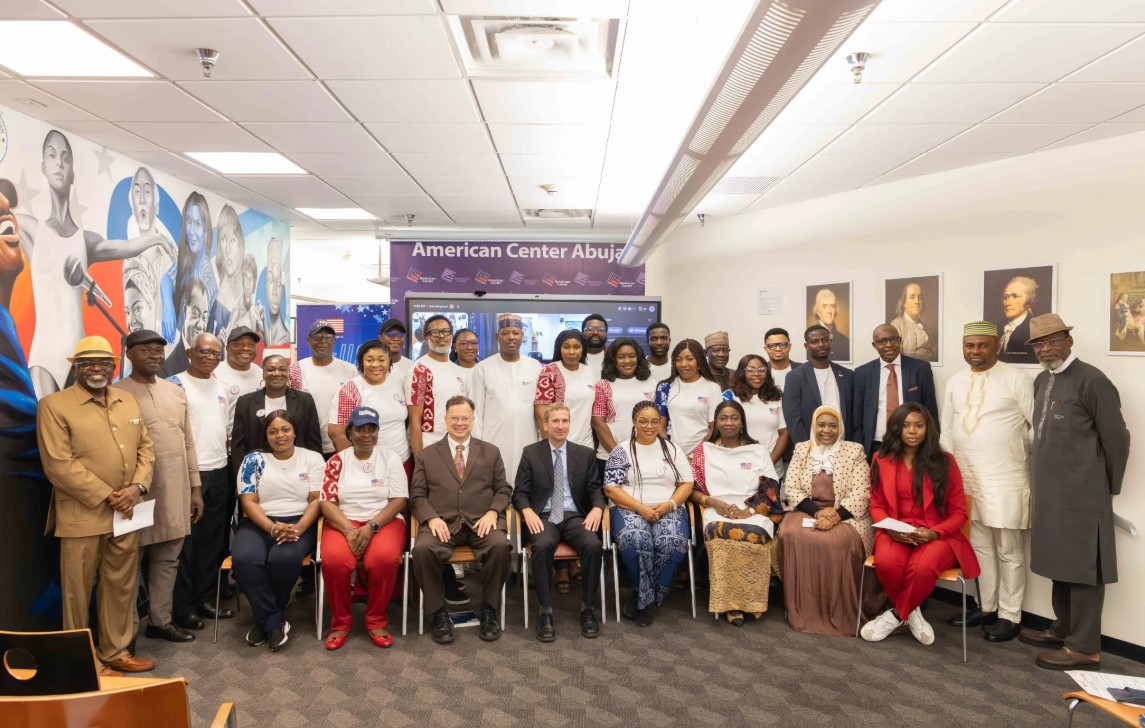
The position was contained in a statement issued by the US Mission in Nigeria on Tuesday following a #Freedom250 event held to celebrate Nigerian alumni of various US exchange programmes.

According to the mission, the event formed part of activities marking the 250th anniversary of the United States’ independence, while reaffirming America’s commitment to partnerships built on mutual benefit.

The mission also explained that the exchange programmes were designed not only to expose participants to educational and professional opportunities in the United States but also to equip them with knowledge and networks that contribute to Nigeria’s development.

The mission’s statement partly read, “What an outstanding #Freedom250 event with our U.S. exchange alumni here in Nigeria! Fulbright scholars, YALI Fellows, IVLP participants, and other exchange programs gathered to demonstrate something the United States has always known: investment in people delivers lasting returns – for Nigeria, and for America.

“These alumni didn’t just visit the United States. They returned home with new skills, expanded networks, and a commitment to the kind of transparent governance, entrepreneurship, and innovation that drives real economic growth, benefiting both countries.

See also  Tinubu renames Federal University of Medical Sciences Azare after Late Sheikh Dahiru Bauchi

“As the United States marks 250 years of independence, events like this one make clear that U.S. engagement in Africa is about building capable, sovereign partners who choose to work with us because it works for them.”

The mission further noted that the US Country Public Affairs Counsellor, Lee McManis, highlighted the role of Nigerian exchange alumni in deepening bilateral relations during his welcome remarks. The mission also praised the leadership demonstrated by the alumni, saying it reflected the enduring value of educational and professional exchanges.

It stated, “In Country Public Affairs Counsellor Lee McManis’s welcome remarks, he underscored how the values imbued in America’s 250th celebratory year are reflected in our thousands of Nigerian exchange alumni, always working to make the U.S.-Nigeria relationship stronger. To our exchange alumni: your leadership is proof that diplomacy delivers results.”

The statement added that the Chargé d’Affaires of the US Mission in Nigeria, Keith Heffern, encouraged participants to continue serving as ambassadors of stronger US-Nigeria cooperation.

In Charge d’Affaires Keith Heffern’s address to the participants, he emphasised, “Your success is the argument for why more Nigerians should choose to partner with the United States in business, tech, agriculture, and the creative economy. So keep building. Keep leading.”

The United States has maintained a long-standing partnership with Nigeria through a range of educational, leadership and professional exchange programmes, including the Fulbright Programme, the Young African Leaders Initiative and the International Visitor Leadership Program.

Thousands of Nigerians have participated in these initiatives over the years, with many going on to occupy leadership positions in government, business, academia, civil society and the creative industry.

See also  NYSC reforms: All you need to know about 11 specialised streams, new camp structure

The programmes form part of broader U.S. efforts to promote people-to-people diplomacy, economic cooperation and democratic governance between the two countries.

punch.ng

FOLLOW US ON:

FACEBOOK

TWITTER

PINTEREST

TIKTOK

YOUTUBE

LINKEDIN

Continue Reading
Click to comment

Leave a Reply

Your email address will not be published. Required fields are marked *

Education

Atiku condemns increase in WAEC, NECO fees

Published

on

Former Vice President Atiku Abubakar has described the recent increase in fees for Federal Unity Colleges and the reported approval of a uniform ₦50,000 examination fee for WAEC and NECO candidates from 2027 as cruel, economically insensitive, and fundamentally incompatible with the government’s constitutional responsibility to make education accessible to every Nigerian child.

Reacting to the development on Sunday through his Senior Special Assistant on Public Communication, Phrank Shaibu, Atiku condemned the Federal Government’s continued escalation of the cost of public education.

The presidential candidate of the African Democratic Congress (ADC) said it is unconscionable that at a time when Nigerian families are battling record inflation, soaring food prices, rising transportation costs, crippling electricity tariffs, stagnant incomes and widespread unemployment, the Tinubu administration has chosen to make education even more expensive.

He noted that education remains the greatest instrument of social mobility and the surest pathway out of poverty for millions of children from humble backgrounds.

According to him, every additional financial burden imposed on parents translates into another child being denied the opportunity to learn, dream, and contribute meaningfully to society.

Atiku therefore called on President Bola Ahmed Tinubu to immediately reverse the increase in Unity School fees and the proposed ₦50,000 WAEC and NECO examination fee and convene an urgent stakeholders’ dialogue on sustainable financing for public education.

He urged the Federal Government to invest more in public schools, strengthen educational infrastructure, recruit more qualified teachers, expand the carrying capacity of tertiary institutions, and ensure that no Nigerian child is denied education because of poverty.

“By the grace of Almighty God, I remain confident that Nigerians will reject policies that punish their children and make education the exclusive preserve of those who can afford it. The African Democratic Congress is committed to restoring education as a public good, not a privilege. An ADC-led government will not permit the implementation of this unjust and punitive increase in examination fees. Instead, we shall reverse policies that place education beyond the reach of ordinary families, expand access to quality education at every level, increase the carrying capacity of our tertiary institutions, and ensure that every Nigerian child, regardless of background, has a fair opportunity to learn, excel and fulfil his or her God-given potential.”

See also  Okpebholo to revive teaching of Edo languages in schools

Atiku argued that education should never become another avenue through which citizens are made to bear the cost of government policy failures.

“No nation has ever taxed its way into educational excellence. Countries that aspire to economic greatness invest more—not less—in education during difficult times because they understand that human capital is the engine of sustainable development. Nigeria cannot build a globally competitive economy while systematically pricing millions of its children out of classrooms.”

He said the administration’s economic choices reveal a troubling pattern in which the burden of governance is repeatedly transferred to ordinary Nigerians.

“When families are being asked to pay more for food, more for transportation, more for electricity, more for healthcare and now significantly more for education, government cannot honestly claim to be protecting the vulnerable. Reform without compassion becomes punishment.”

“A government that genuinely believes in the future of its people does not erect financial barriers between children and education. It removes them. Education is not a privilege reserved for the wealthy; it is the birthright of every Nigerian child and the foundation upon which prosperous nations are built.”

Atiku described the latest decisions as particularly alarming because they come against the backdrop of Nigeria’s worsening education crisis.

“Nigeria already bears the painful distinction of having one of the largest populations of out-of-school children in the world. Depending on the methodology and age group measured, between 10.5 million and about 15 million Nigerian children and young people are already outside the classroom. Any government confronted with such a national emergency should be investing aggressively to bring these children back into school. Instead, this administration is choosing policies that will inevitably swell those numbers.”

See also  St. Gregory’s College, Lagos: A Legacy of Catholic Education in Nigeria

He warned that increasing fees in Federal Unity Colleges while imposing a significantly higher cost on WAEC and NECO examinations would disproportionately affect children from poor and middle-income families whose parents are already making impossible choices between food, healthcare, transportation, and education.

“The consequences of these policies extend far beyond school gates. Every child priced out of education today becomes tomorrow’s victim of unemployment, poverty, child labour, criminal exploitation, drug abuse or insecurity. Nations do not become prosperous by making education more expensive; they prosper by making education more accessible.”

The former Vice President said the recent increase in WAEC and NECO examination fees represents far more than another financial burden on parents.

“It is a systemic filter that will inevitably restrict access to tertiary education for thousands of indigent but academically qualified Nigerian students. For many children from low-income families, the journey to university does not end at the admission gate—it is terminated long before then by the inability to afford the qualifying examinations that determine their future.”

He said the contradiction becomes even more glaring when viewed against the reality of Nigeria’s tertiary education system.

“Instead of investing massively in expanding lecture theatres, laboratories, hostels, libraries, and other critical infrastructure to boost the carrying capacity of our public universities, this administration is making access to education even more difficult. Today, Nigerian universities can admit only about 500,000 to 700,000 students annually, even though more than two million young Nigerians seek admission every year. The inevitable consequence is that well over one million qualified candidates are denied university admission annually—not because they lack the merit or the desire to learn—but because available spaces fall far below national demand. Rather than addressing this structural deficit by expanding infrastructure and increasing admission capacity, the government is effectively constricting access even further through higher Unity School fees and the proposed ₦50,000 WAEC and NECO examination fees.

See also  16-year-old girl emerges Nigeria’s youngest chartered accountant

“The result is a cruel double punishment: first, millions of qualified young Nigerians cannot secure admission because there are insufficient spaces; second, many will now be priced out of even competing for those limited spaces. That is not educational reform; it is the systematic rationing of opportunity and the gradual exclusion of the children of the poor from the promise of higher education.”

Atiku said the irony in the administration’s education policy is impossible to ignore.

“The same administration whose policies are progressively narrowing access to public tertiary education continues to project the Nigerian Education Loan Fund (NELFUND) as one of its flagship achievements. Yet, a university loan offers little comfort to a child who has already been priced out of secondary education or cannot afford the qualifying examination required to secure admission. A government cannot credibly claim to be expanding access to higher education while simultaneously erecting financial barriers that prevent millions of young Nigerians from ever reaching the university gates.”

He added that, in the view of many Nigerians, NELFUND has yet to address the structural barriers confronting access to education.

“Genuine educational reform begins by making education affordable from the primary and secondary levels, expanding the carrying capacity of our tertiary institutions, and ensuring that poverty never becomes the reason a child is denied the opportunity to learn. A government that truly believes in education invests in classrooms before it invests in loans.”

tribuneonlineng.com

FOLLOW US ON:

FACEBOOK

TWITTER

PINTEREST

TIKTOK

YOUTUBE

LINKEDIN

Continue Reading

Education

Oyo teachers celebrate safe return of abducted colleagues, pupils

Published

on

The Nigeria Union of Teachers, Oyo State Wing, has described the news of the rescue of the teachers and learners who were abducted in Oriire Local Government Area of Oyo State, as a victory for humanity and a source of renewed confidence for the education sector.

In a statement on Saturday jointly signed by the Chairman of the union, Hassan Fatai, and the Secretary, Olukayode Salami, the union said the safe return of the victims had lifted a heavy burden from the hearts of teachers, pupils, students, parents, relatives and all lovers of education across Oyo State and beyond.

“The incident tested the resolve of the education community,” Oyo NUT said, commending teachers across the state for remaining united and steadfast while hoping and praying for the safe return of their colleagues and learners.

“We particularly express profound appreciation to the government of Nigeria, starting from the federal government led by President Bola Ahmed Tinubu and the Oyo State Government led by Engr. Seyi Makinde, for demonstrating the political will needed to ensure that every available resource was deployed towards securing the safe release of the victims.

“We also laud the commitment, professionalism, and courage of the security agencies whose tireless operations and collaboration led to the successful rescue of our people unhurt,” the Union said, describing their efforts as reassuring to citizens, particularly to those within the education sector.

The statement further appreciated the national and regional leadership of the union, led by Audu Amba, traditional rulers, religious leaders, labour unions, Oyo State MoES&T, government functionaries, ANCOPSS, AOPSHON, media, civil society organisations, global education community and countless Nigerians.

See also  Tinubu renames Federal University of Medical Sciences Azare after Late Sheikh Dahiru Bauchi

“Your prayers, words of encouragement, and solidarity gave strength to the families of the victims throughout the period of the untold agony and uncertainty.

“While celebrating this joyful development, we commiserate with the families of those gallant colleagues who lost their lives in this unfortunate incident,” Oyo NUT said, urging tiers of government not to relent in their efforts to strengthen security around schools and communities.

“Every child deserves to learn in a safe environment and every teacher deserves to carry out his or her professional duties without fear,” the Union added.

The NUT reaffirmed its commitment to working with government and relevant stakeholders to promote safe schools programmes, quality education, expressing confidence that the unfortunate incident would further strengthen collective resolve to protect lives and the future of every Nigerian.

punch.ng

FOLLOW US ON:

FACEBOOK

TWITTER

PINTEREST

TIKTOK

YOUTUBE

LINKEDIN

Continue Reading

Education

Ejikeme Mmesoma ’s three-year JAMB ban expires July after 2023 forgery scandal

Published

on

Three years after one of Nigeria’s most controversial examination scandals, the three-year ban imposed on Anambra student Ejikeme Mmesoma, by the Joint Admissions and Matriculation Board is due to expire this July, making her eligible once again to sit the Unified Tertiary Matriculation Examination.

Mmesoma became the centre of national attention in July 2023 after she claimed to have scored 362 in the UTME, a result that would have ranked her among the country’s highest-performing candidates.

The claim initially drew public sympathy after she accused JAMB of failing to recognise her achievement. However, the controversy quickly escalated after the examination body declared the result she presented fake.

JAMB insisted that Mmesoma’s authentic score was 249 and alleged that she manipulated her result using her mobile phone before printing a forged copy at a cybercafé.

Anambra student Ejikeme Mmesoma…Photo Credit: Vanguard

The board pointed to several discrepancies, including differences in her registration number, date of birth, examination centre and the format of the result slip, noting that the notification template she used had been discontinued since 2021.

While Mmesoma initially maintained that she printed the result directly from JAMB’s portal and denied any wrongdoing, the Anambra State Government constituted an independent panel of inquiry to investigate the dispute.

The panel, chaired by Prof. Nkemdili Nnonyelu, interviewed JAMB officials, Mmesoma, her school authorities and other relevant parties before submitting its findings.

In its report released on July 8, 2023, the panel confirmed that Mmesoma’s actual UTME score was 249 and that the 362 score she presented was manipulated.

See also  Secondary Schools with unqualified teachers to lose WAEC and NECO accreditation – FG

According to the panel, Mmesoma admitted during the proceedings that she personally altered the result using her Airtel mobile phone before taking it to a cybercafé for printing.

The report stated that she acted alone and apologised to JAMB, the Anambra State Government and her school over the incident.

Following the findings, JAMB withdrew the forged result and announced a three-year ban preventing her from participating in any of its examinations.

The board said the sanction was in line with its established procedures for examination malpractice and result falsification.

“In the meantime, the management of the Board, after considering the weighty infraction committed by Ms. Ejikeme Joy Mmesoma, and in line with its established procedures, has withdrawn her 2023 UTME result and also barred her from sitting the Board’s examination for the next three years,” JAMB spokesman Fabian Benjamin said at the time.

JAMB also maintained that its examination system had not been compromised, insisting that Mmesoma simply falsified a result slip.

The scandal had far-reaching consequences.

Innoson Vehicle Manufacturing withdrew the scholarship earlier awarded to her following the announcement of the alleged outstanding score.

Her father, Romanus Ejikeme, later apologised publicly to JAMB and Nigerians, saying his daughter failed to tell him the truth on time.

“My daughter didn’t open up to me on time. When I realised the mistake she did, I blamed her a lot but I’m still apologising to JAMB and Nigerians to pardon her,” he said in an interview with the Nigerian Television Authority.

Governor Chukwuma Soludo also directed that Mmesoma undergo three months of psychotherapy and counselling.

See also  St. Gregory’s College, Lagos: A Legacy of Catholic Education in Nigeria

The controversy sparked widespread national debate, attracting reactions from politicians, education stakeholders and civil society groups.

While some initially questioned JAMB’s handling of the matter, many later accepted the board’s position after Mmesoma admitted manipulating the result before the state panel.

The House of Representatives had also called on JAMB to suspend the implementation of the ban pending investigation, while former Minister of Education, Oby Ezekwesili, and former Minister of Aviation, Osita Chidoka, appealed for compassion and counselling rather than public condemnation.

With the expiration of the three-year sanction this month, Mmesoma is expected to become eligible again to register for the UTME should she decide to pursue admission into a tertiary institution.

Her case remains one of the most prominent examination fraud controversies in recent years. It is frequently cited in discussions on examination ethics, digital result verification and the consequences of academic dishonesty in Nigeria.

punch.ng

FOLLOW US ON:

FACEBOOK

TWITTER

PINTEREST

TIKTOK

YOUTUBE

LINKEDIN

Continue Reading

Trending