Connect with us

Education

Experts knock FG for reversing mother-tongue policy in schools

Published

on

Educationists and language advocates have faulted the Federal Government’s decision to reverse the 2022 National Language Policy, describing it as a setback to education development, national identity, and cultural preservation.

The Minister of Education, Dr Tunji Alausa, had on Wednesday announced that English would now serve as the sole language of instruction in Nigerian schools, from the primary to tertiary level.

Alausa announced the 2025 Language in Education International Conference organised by the British Council in Abuja, arguing that teaching children in their mother tongues had contributed to poor performance in public examinations.

However, several academics and education experts who spoke with The PUNCH described the reversal as “unwise,” “anti-developmental,” and “a policy somersault” that undermines research-backed gains of learning in one’s first language.

Professor Sikiru Ahmed, a scholar of Physical and Computational Chemistry at Kwara State University, Malete, described the decision as “one of the examples of policy somersaults that have plagued Nigeria’s education system.”

He said, “The national language policy was about enhancing learning by teaching children in a language they understand from a young age. Various research studies have shown that teaching in the local language, alongside English, removes learning barriers.

“There is a popular saying that ‘the gateway to the human heart is his mother tongue.’ If implemented, the policy was capable of fostering national unity and cohesion among different ethnic groups.

“Many countries around the world use their local languages to educate their children; the Chinese use Mandarin, Pakistanis use Urdu, Indians use Hindi, and the Basotho use Sesotho. Nigeria should not be an exception.”

Professor Oyesoji Aremu of the Department of Guidance and Counselling at the University of Ibadan said the decision came as a surprise, especially at a time when several countries were adopting mother-tongue instruction in basic education.

He said, “The policy on the use of mother tongue as a mode of instruction in basic education was an outcome of the famous Ife Six-Year Primary Project and later became a Federal Government policy. Ghana just adopted a similar policy a few days ago.

See also  Nigerian Girls Beat Japan, Canada, Spain To Win Global Tech Grand Prize

“Although the change was justified by claims that mother-tongue instruction promotes poor academic performance, such a conclusion should have been subjected to empirical scrutiny. Research has shown that pupils taught in their local language perform better, comprehend faster, and can learn other languages easily.

“The Ministry should have also examined the role of English as a language of instruction, mainly in elite schools, before concluding. I believe the government should have engaged educationists and university researchers before making such a sweeping reversal.”

A Lead Resource for Safe Schools Lagos, Dr Bisi Akin-Alabi, said that while the previous policy was well-intentioned, its implementation was fraught with challenges due to Nigeria’s linguistic diversity.

She said, “Research consistently shows that children learn foundational concepts and develop stronger cognitive skills when taught in their first language. However, the policy was difficult to implement because Nigeria has over 600 dialects. There were no trained teachers or adequate instructional materials, and there were complications in choosing which language to adopt in multilingual communities.

“The policy may have been abandoned prematurely. Such a reform requires heavy investment in teacher training, the development of textbooks and learning materials, and sufficient time before results can be fairly evaluated.

“While using the mother tongue is vital for preserving indigenous languages and cultural identity, which are at risk of extinction, I think the reversal is pragmatic given the current realities.”

But a youth leader from Biase Local Government Area of Cross River State, Callistus Egwu, criticised the reversal as “a betrayal of Nigeria’s cultural identity” and “an attempt to please Western interests at the expense of national heritage.”

Egwu told The PUNCH in Calabar that the decision would accelerate the extinction of indigenous languages, many of which are already endangered.

He said, “Our mother tongues define who we are and reflect our traditions. It is disappointing that someone would wake up and cancel such an important policy to satisfy foreign interests. The claim that instruction in local languages causes poor performance is baseless. The real problem lies in poor teacher welfare and inadequate learning facilities.”

He added that Nigeria should emulate countries like China and India, which continue to promote science and technology education in their native languages.

See also  PHOTOS: 200-level Niger State varsity d!es after collapsing in her off-campus residence

A mother of two, Mrs Mmakim Ette, also described the decision as “a sad development” that could further alienate children from their native tongues.

“I am still learning to speak clear Efik, but my children can barely understand it. This policy reversal will only make matters worse,” she lamented.

An activist, Mr Akpan David, said he deliberately speaks Ibibio with his children and commended radio stations such as FAD FM, Atlantic FM, and Tangsio FM for promoting local dialects.

He urged the government to emulate East African countries that have elevated Swahili to national language status.

An educationist, Mr Anthony Otaigbe, also described the reversal as “a step backwards” for Nigeria’s education system.

Otaigbe said, “The new directive effectively erases one of the most progressive provisions in Nigeria’s education framework. The justification offered by the minister is deeply ironic, as global research and local data consistently show that children taught in their first language achieve better outcomes.

“The directive not only contradicts the National Policy on Education, which stipulates that the language of the immediate environment shall be the medium of instruction for the first three years of primary education, but also violates the 2022 National Language Policy approved in line with UNESCO’s Mother Tongue-Based Multilingual Education model.”

He added, “Such a unilateral pronouncement cannot override the NPE, which remains the legal foundation of Nigeria’s education system. The decision is bureaucratic and detached from the realities of classrooms, teachers, and learners.”

Otaigbe further argued that abandoning mother-tongue instruction contradicts President Bola Tinubu’s Renewed Hope Agenda, which emphasises innovation and national identity.

See also  FG sets 12-year new minimum age for JSS1 admission

“You cannot build an innovative or self-confident generation on a foundation that erases its linguistic and cultural roots,” he said. “Innovation thrives where identity is secure, and human capital grows when learning begins in comprehension, not confusion.”

He warned that reverting to English-only instruction would deepen educational inequality between rural and urban pupils, erode children’s confidence, and hasten the extinction of Nigeria’s indigenous languages.

“No country ever developed by erasing its linguistic foundation. Japan, France, Korea, and China all built strong economies by first educating their citizens in their own languages,” Otaigbe added.

He urged the government to modernise and expand mother-tongue education rather than abolish it by introducing bilingual programmes, retraining teachers, and leveraging technology for language learning.

On his part, Prof Gbade Ojo, of the Department of Political Science, University of Ilorin, described the policy reversal as a “somersault” that could undermine educational progress in the country.

He said, “The policy somersault is not good for our educational advancement. The use of mother tongue from Primary One to Six was experimented with by Prof Babs Fafunwa [of blessed memory] when he was Education Minister.

“Nigeria needs a strategic plan that is enduring and consistent. This back-and-forth approach is haphazard and sends confusing signals to teachers, parents, and students alike. The best outcome for the country is to allow mother tongue instruction to remain alongside English as part of a dual-language approach.”

Ojo emphasised that a stable, well-planned language policy is critical not just for literacy, but also for fostering national cohesion and preserving Nigeria’s diverse cultural heritage.

He added, “Education is a long-term investment. Frequent policy reversals create instability and weaken the capacity of schools to implement reforms effectively. A mother-tongue policy, properly supported, can coexist with English instruction and strengthen learning outcomes for all Nigerian children.”

punch.ng

FOLLOW US ON:

FACEBOOK

TWITTER

PINTEREST

TIKTOK

YOUTUBE

LINKEDIN

TUMBLR

INSTAGRAM

Continue Reading
Click to comment

Leave a Reply

Your email address will not be published. Required fields are marked *

Education

Ignore fake conference advertisement, Army College tells Nigerians

Published

on

The Nigerian Army College of Logistics and Management (NACOLM), Ojo, Lagos, has warned Nigerians to disregard an online advertisement promoting a purported “Highstone Global University USA International Research Conference” allegedly scheduled to hold at the college.

The college, in a statement dated September 22, 2026, said the advertisement was false and fraudulent, stressing that it had no connection with the purported programme.

NACOLM’s Public Relations Officer, Major Innocent Audu, said, “The College has no affiliation, partnership, endorsement or involvement whatsoever with the said programme, and no such conference has been authorised to take place at the College.”

The college urged members of the public not to make payments or disclose personal information in connection with the purported conference.

“Members of the public are therefore advised to disregard the advertisement and refrain from making any payments or providing personal information in connection with the purported programme,” Audu said.

According to the statement, NACOLM remains committed to protecting the integrity of its name, facilities and official engagements.

It added that any authorised programme or event involving the college would be communicated through its recognised official channels and those of the Nigerian Army.

The college also urged the public to exercise caution and report any suspicious solicitation linked to the purported event to the appropriate authorities.

Source: punchng.com

FOLLOW US ON:

FACEBOOK

TWITTER

PINTEREST

TIKTOK

YOUTUBE

LINKEDIN

INSTAGRAM

See also  My administration’s education investments already yielding positive results — Aiyedatiwa
Continue Reading

Education

Ondo, varsity unions reach agreement over wage dispute – Gov’s aide

Published

on

The Ondo State Government and tertiary institution unions have reached an agreement on the implementation of the new Federal Government and university unions’ wage structure and allowances.

This is contained in a statement made available to newsmen on Monday by the Chief Press Secretary to the Governor, Mr Ebenezer Adeniyan.

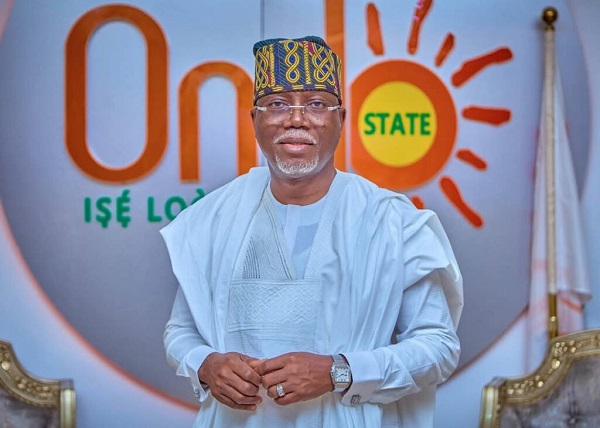
The agreement followed a series of meetings between officials of the state government, led by Governor Lucky Aiyedatiwa, and the leadership of labour unions in state-owned universities.

According to the statement, the unions involved in the meeting included the Academic Staff Union of Universities, Senior Staff Association of Nigerian Universities, National Association of Academic Technologists, and Non-Academic Staff Union.

The News Agency of Nigeria reports that academic and non-academic unions in the three Ondo State-owned universities are currently on a total and indefinite strike over unpaid allowances to members.

The statement said the meeting addressed outstanding issues relating to salary adjustments, allowances and other welfare matters affecting workers in the state-owned universities.

It added that a major resolution was the approval by Aiyedatiwa for the full domestication of the Federal Government-ASUU agreement on the Consolidated University Academic Salary Structure for academic staff of state-owned universities.

According to the statement, implementation of the resolution will take into account the peculiarities of the state.

It said that during the meeting, Aiyedatiwa described education as a cardinal priority of his administration, with a promise to the unions of his commitment to sustain industrial harmony in the state’s tertiary institutions.

“Our administration will continue to prioritise the welfare of workers, especially in the education sector, because we understand that a motivated workforce is key to academic excellence.

See also  How Nigerians can apply for 2026 UK commonwealth fellowships

“We have approved the FGN-ASUU pact for our universities because we want our institutions to compete favourably and our staff to be at par with their counterparts elsewhere,” the statement read.

It said that the government would continue to engage stakeholders to ensure that the state’s tertiary institutions remained centres of excellence without incessant industrial action.

According to the statement, the Adekunle Ajasin University, Akungba-Akoko, chapter of ASUU, while speaking on behalf of the unions, commended Aiyedatiwa for approving the FGN-ASUU agreement for the state universities.

Source: punchng.com

FOLLOW US ON:

FACEBOOK

TWITTER

PINTEREST

TIKTOK

YOUTUBE

LINKEDIN

INSTAGRAM

Continue Reading

Education

Read about the return of ASUU strikes at state universities

Published

on

ALL eyes are back on tertiary education. While most federal universities are running smoothly, it is not the case at some state-owned universities. From Lagos to Plateau, Kaduna to Taraba, the age-long disruption of the academic calendar is rearing its head again at state-owned universities. State governors, who are basking in more resources than before, should address the underlying issues.

In the recent past, Nigeria’s public universities were infamous for lengthy strikes.

But President Bola Tinubu’s mantra to end lecturers’ strikes that had plagued the public university system appears to have worked so far. In January, the Federal Government increased salaries by 40 per cent. This has restored stability in these institutions.

Conversely, strikes have returned to some state-owned institutions.

The states have no genuine excuse. After Tinubu removed the petrol subsidy, floated the naira and expanded the tax net, including VAT, the sub-national governments are more buoyant than ever.

Since 2009, public universities have experienced persistent strikes, which Tinubu pledged to end. Until the Tinubu administration’s pact, the 2009 agreement of N1.51 trillion for the revitalisation of universities and the enhancement of salaries was poorly implemented.

The outcome is predictable. In the latest Webometrics ranking, the best is the University of Ibadan at No. 1,291 in the world. UI is followed by the University of Lagos (1,355) and the University of Nigeria (1,397). This is depressing.

At the core of the face-off is the December 2025 Federal Government-Academic Staff Union of Universities agreement. Essentially, the Federal Government increased lecturers’ salaries by 40 per cent.

See also  FG sets 12-year new minimum age for JSS1 admission

Other key provisions include an annual credit allowance of N1.8 million for professors and between N840,000 and N870,000 per annum for academic readers, and enhanced pensions.

Ironically, Lagos, Tinubu’s home, is the latest state where ASUU has just declared a strike, following the breakdown in negotiations between the state government and the joint unions of the three universities in Lagos.

According to the ASUU chapters of Lagos State University, Lagos State University of Science and Technology and Lagos State University of Education, the government did not implement the 2025 FGN-ASUU agreement despite a 14-day notice.

In Kaduna, the ASUU state chapter at the Kaduna State University, Kakuri, recently ended its strike after Governor Uba Sani approved the implementation of the agreement from October 1.

A similar story is unfolding in Plateau State. After downing tools over the agreement, the ASUU chapter of the Plateau State University, Bokkos, terminated its strike on September 16.

It said the state government had agreed to implement its six-point demand.

But lecturers at the three state-owned universities in Ondo State are still on strike over the non-implementation of the FGN-ASUU pact.

On September 15, the ASUU chapter of the Taraba State University, Jalingo, issued a 14-day ultimatum to the state government to implement the agreement or face a strike. The ultimatum will expire on September 28.

These contradictions expose Nigeria’s flawed federalism. The centre was at the forefront of the negotiations with ASUU. While the Federal Government has gone ahead to implement the agreement, states are delaying implementation for reasons best known to them.

See also  PHOTOS: Tinubu’s son, Olayinka, bags Master’s degree from UK varsity

In many areas of national life, the Federal Government imposes its will on the federating units. The unbridled federal power is an overreach. In a federal jurisdiction, this is wrong.

So, state governments should not be under this overarching federal influence in the funding and administration of universities at the second tier of government.

The independence of states and the centre has a crucial inflexion point.

In this, private universities offer the best lesson. With their independence and self-funding system, the 182 private institutions determine the remuneration they can offer the academic and non-academic staff. Therefore, strikes over pay are non-existent in private institutions. With proper independence and control, it could also be so at state-owned universities.

State governments share in the blame. Currently, there are 69 state-owned universities in the country. Without proper preparation for funding, staffing and infrastructure, state governments establish multiple universities. This is ridiculous.

Some states have more than three universities. Thus, they find it difficult to cope with the financial and infrastructure demands of such institutions. But it is wrong to see universities as a political symbol.

After a spree, the Federal Government placed a seven-year moratorium on the establishment of new universities in a bid to address the issues at stake.

Therefore, the National Universities Commission should exercise its independence. It should thoroughly scrutinise the centre, the states and private entrepreneurs who bid to establish universities.

Source: punchng.com

FOLLOW US ON:

FACEBOOK

TWITTER

PINTEREST

TIKTOK

YOUTUBE

LINKEDIN

INSTAGRAM

Continue Reading

Trending