Connect with us

Education

National Assembly shifts WAEC’s CBT adoption to 2030

Published

on

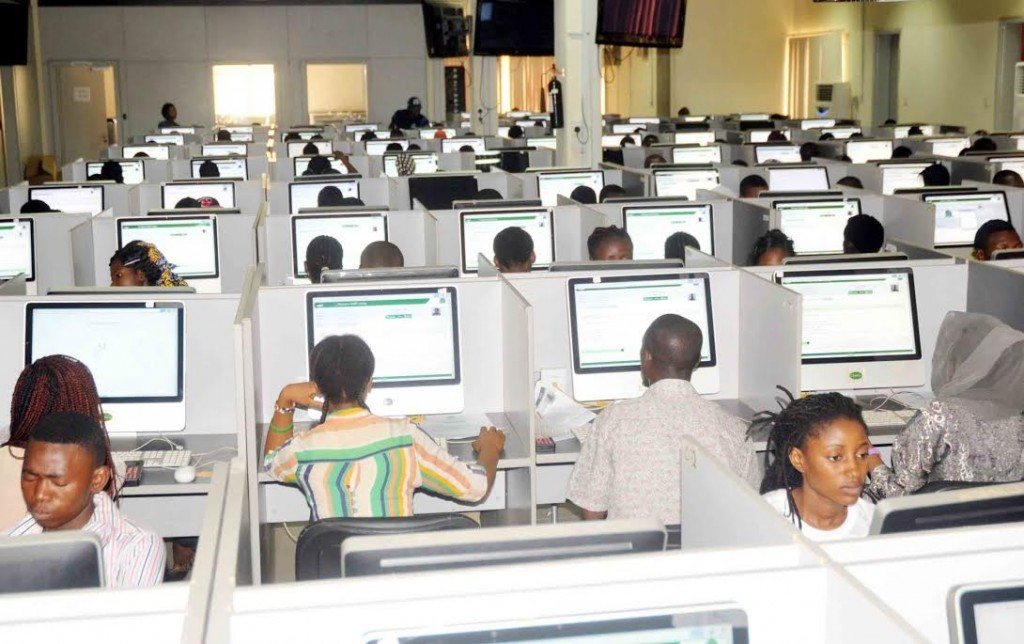
The House of Representatives has ordered the Federal Ministry of Education and the West African Examinations Council to suspend the planned introduction of Computer-Based Testing for the 2026 West African Senior School Certificate Examination.

The directive followed the adoption of a motion of urgent public importance moved by Kelechi Wogu during Thursday’s plenary session.

His  motion was titled “Need for Intervention to Avert Massive Failure in the Proposed 2026 WAEC Computer-Based Examination.”

The lawmaker warned that rushing into the CBT model could trigger widespread failure, frustration, and mental distress among students.

Wogu expressed concern that the Ministry of Education was determined to proceed with the digital examination format despite objections from the National Union of Teachers and heads of schools, especially those in rural areas, where more than 70 per cent of candidates are located.

He noted that most schools, particularly outside urban centres, lack functional computer laboratories, internet access, reliable electricity, and trained ICT teachers.

He stressed that introducing CBT in such conditions would be disastrous, citing the technical glitches that disrupted the 2025 WAEC results portal as evidence of unpreparedness.

“The computer-based system requires well-equipped halls with functional computers, stable internet, and constant power supply. Many schools are simply not ready for that level of transition,” he said.

To address these challenges, the House directed the Ministry of Education, in collaboration with state governments, to include in their 2026–2029 budgets provisions for recruiting computer teachers, constructing ICT halls, installing internet facilities, and providing backup power sources.

See also  FG to unveil ₦50m grant for STEMM students

The House further resolved that the CBT system should not be implemented before the 2030 academic year.

The motion was unanimously adopted, with the House mandating its Committees on Basic Education, Digital and Information Technology, Examination Bodies, and Labour to engage relevant stakeholders and report back within four weeks for further legislative action.

The CBT was introduced in Nigeria partly to address incessant cases of examination malpractices and also to modernise the nation’s education system.

The Joint Admissions and Matriculation Board  pioneered the use of CBT in 2013 and successfully conducted the first fully computer-based Unified Tertiary Matriculation Examination in 2015.

Since then, other examination bodies, such as the National Examinations Council and the National Business and Technical Examinations Board, have gradually introduced elements of CBT in limited or pilot forms.

Despite these efforts, challenges remain, including inadequate digital infrastructure, irregular power supply, poor internet connectivity, and limited access to functional computers, particularly in rural and public schools.

In 2024, the West African Examinations Council announced plans to adopt CBT for the West African Senior School Certificate Examination starting in 2026.

The announcement triggered widespread debate. Teachers, parents, and education unions expressed concern that most schools, especially in rural communities, lack the necessary facilities and trained personnel to support the transition.

Supporters of the policy, however, argue that digital examinations will improve transparency, promote efficiency, and strengthen Nigeria’s global competitiveness in education.

In September, WAEC listed  250 functional laptops with 10 per cent backups, a robust computer server capable of supporting 250 systems simultaneously, and a Local Area Network setup, as key facilities schools must provide ahead of the full migration to CBT in 2026.

See also  NECO Accredits Schools In Burkina Faso To Expand Global Reach

Other mandatory requirements include functional air conditioners and lighting, uninterrupted electricity supply, a backup generator with at least 40kVA capacity, CCTV cameras, and a holding room or reception facility for candidates.


Continue Reading
Click to comment

Leave a Reply

Your email address will not be published. Required fields are marked *

Education

FG bans admission and transfer into SS3 nationwide from 2026/27 session

Published

on

The Federal Government has announced a nationwide ban on admission and transfer of students into Senior Secondary School Three (SS3), effective from the 2026/27 academic session.

The directive applies to both public and private secondary schools across Nigeria, Punch reported.

According to a statement signed by Boriowo Folasade, Director of Press and Public Relations at the Federal Ministry of Education, the decision is part of efforts to curb examination malpractice and restore credibility to the country’s education system.

The ministry explained that only admissions and transfers into SS1 and SS2 will now be allowed, stressing that no student will be permitted to enter SS3 under any circumstance.

Officials said the move is aimed at stopping last-minute transfers often linked to so-called “special centres” during external examinations, as well as ensuring proper academic monitoring and continuity in teaching and learning.

School owners, principals, and administrators have been directed to comply strictly with the new policy, with the Federal Government warning that any violation will attract sanctions in line with existing education regulations.

The ministry added that the policy reflects its commitment to fairness, improved academic standards, and rebuilding public confidence in national examinations.

FOLLOW US ON:

FACEBOOK

TWITTER

PINTEREST

TIKTOK

YOUTUBE

LINKEDIN

TUMBLR

INSTAGRAM

See also  FG to unveil ₦50m grant for STEMM students
Continue Reading

Education

NDLEA, HEPPWAS warn students against drug abuse

Published

on

A non-governmental organisation, Health Promotion for People With Addiction and Suicide, has partnered the National Drug Law Enforcement Agency, Rotary Club of Yenagoa City Centre and Damaris Hotel and Suites to sensitise students on the harmful effects of drug abuse.

Over 100 senior secondary school students of the Government Secondary School, Obogoro on Tuesday benefited from the sensitisation programme with the theme, ‘Sensitisation On Substance Uses And Its Impacts On Youths’ Brain.’

The President and Chief Executive Officer of HEPPWAS, Prof Izebeloko Jack Ibe, a professor of Mental Health and Psychiatric Nursing at the Niger Delta University spoke on the harmful effects of drugs on the human brain.

Ibe, who hails from Obogoro community in the Yenagoa Local Government Area of Bayelsa State, said she shared the same background with the students and enjoined them to strive for the top.

The Prof added, “Don’t let circumstances make you a stumbling block to others. You can be what you want to be, you can strive for the top.”

She, however, warned that while some organs of the body can regenerate, the brain does not regenerate, and “when we take substance in this brain that cannot expand, they excite the brain cells which cannot regenerate, and they damage the brain.”

According to her, some of the social ills among children such as stubbornness and lack of respect for elders are traceable to substance abuse and cautioned the students against engaging in it

Mr. Godwin Erepa, NDLEA Assistant State Commander, Drug Demand Reduction Unit, enumerated some harmful drugs including ice, fentanyl, cannabis and local gin (ogogoro).

See also  First lady distributes 10,000 sanitary pad packs to Anambra schoolgirls

Erepa said such substance abuse leads to crime and criminality, adding that many cases of domestic violence are caused by substance abuse.

Another native of Obogoro community, Dr. Pawei Igodo, warned the students to shun drugs and focus on their studies and also highlighted the harmful effects of drugs on the human brain.

HEPPWAS Executive Secretary, Mr. Ben Ibe, said, “An estimated 14.3 million Nigerians are using drugs and could be responsible for the growing cases of insecurity in the country.”

Earlier, the owner of Damaris Hotel and Suites, Dr. Boma Spero-Jack, an Obogoro indigene who is serving as security adviser to Bayelsa State Governor, Senator Douye Diri, urged the students to listen to the various speakers.

The Principal of Government Secondary School, Obogoro, Mrs. Dick Agbeyen, expressed appreciation to the organisers of the sensitisation programme and said it will be beneficial if government would incorporate teachings on drug abuse in the school curriculum.

A student of the school, Awake Dufaye Daniel, said the programme was helpful as he has learned about the effects of drug abuse and misuse on the brain.

Continue Reading

Education

Law student Ayomiposi Ojajuni kills self over failure to write final exam

Published

on

A student in the Yola Campus of the Nigeria Law School, identified as Ayomiposi Ojajuni, has allegedly taken his own life over failure to sit for his final examination.

The news broke Sunday that he killed himself on Saturday, December 6, because he was barred from doing the bar final examination at the Yola Campus.

People close to the deceased allege that he became distressed in the morning of Saturday on finding that he was indeed not going to be allowed to take the professional examination that commenced that morning.

He reportedly swallowed a deadly substance on receiving the news and died Sunday morning even after he was rushed to nearby Modibbo Adama University Teaching Hospital, Yola.

Sources have explained that the authorities came to the decision to stop him from taking his examination because he did not respond to multiple queries previously issued to him by the school authorities.

The Police Public Relations Officer in Adamawa State, SP Sulaiman Nguroje could not be reached for comment Sunday afternoon when this report was being concluded, but a different police source confirmed Ayomiposi Ojajuni’s suicide story.

FOLLOW US ON:

FACEBOOK

TWITTER

PINTEREST

TIKTOK

YOUTUBE

LINKEDIN

TUMBLR

INSTAGRAM

See also  Rivers varsity suspends lectures, evacuates students after abduction
Continue Reading

Trending