Connect with us

Education

Experts knock FG for reversing mother-tongue policy in schools

Published

on

Educationists and language advocates have faulted the Federal Government’s decision to reverse the 2022 National Language Policy, describing it as a setback to education development, national identity, and cultural preservation.

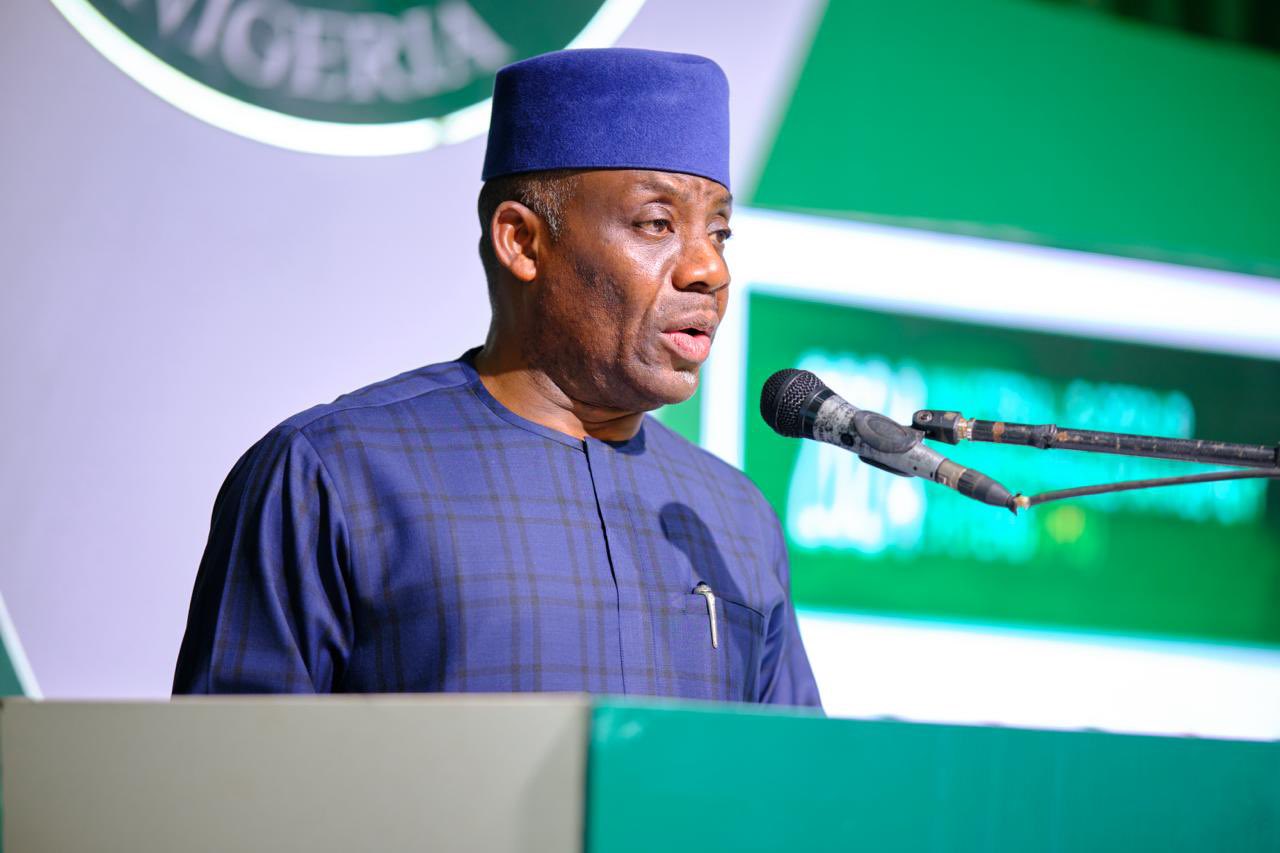
The Minister of Education, Dr Tunji Alausa, had on Wednesday announced that English would now serve as the sole language of instruction in Nigerian schools, from the primary to tertiary level.

Alausa announced the 2025 Language in Education International Conference organised by the British Council in Abuja, arguing that teaching children in their mother tongues had contributed to poor performance in public examinations.

However, several academics and education experts who spoke with The PUNCH described the reversal as “unwise,” “anti-developmental,” and “a policy somersault” that undermines research-backed gains of learning in one’s first language.

Professor Sikiru Ahmed, a scholar of Physical and Computational Chemistry at Kwara State University, Malete, described the decision as “one of the examples of policy somersaults that have plagued Nigeria’s education system.”

He said, “The national language policy was about enhancing learning by teaching children in a language they understand from a young age. Various research studies have shown that teaching in the local language, alongside English, removes learning barriers.

“There is a popular saying that ‘the gateway to the human heart is his mother tongue.’ If implemented, the policy was capable of fostering national unity and cohesion among different ethnic groups.

“Many countries around the world use their local languages to educate their children; the Chinese use Mandarin, Pakistanis use Urdu, Indians use Hindi, and the Basotho use Sesotho. Nigeria should not be an exception.”

Professor Oyesoji Aremu of the Department of Guidance and Counselling at the University of Ibadan said the decision came as a surprise, especially at a time when several countries were adopting mother-tongue instruction in basic education.

He said, “The policy on the use of mother tongue as a mode of instruction in basic education was an outcome of the famous Ife Six-Year Primary Project and later became a Federal Government policy. Ghana just adopted a similar policy a few days ago.

See also  UNILAG faults ASUU strike, insists exams will hold

“Although the change was justified by claims that mother-tongue instruction promotes poor academic performance, such a conclusion should have been subjected to empirical scrutiny. Research has shown that pupils taught in their local language perform better, comprehend faster, and can learn other languages easily.

“The Ministry should have also examined the role of English as a language of instruction, mainly in elite schools, before concluding. I believe the government should have engaged educationists and university researchers before making such a sweeping reversal.”

A Lead Resource for Safe Schools Lagos, Dr Bisi Akin-Alabi, said that while the previous policy was well-intentioned, its implementation was fraught with challenges due to Nigeria’s linguistic diversity.

She said, “Research consistently shows that children learn foundational concepts and develop stronger cognitive skills when taught in their first language. However, the policy was difficult to implement because Nigeria has over 600 dialects. There were no trained teachers or adequate instructional materials, and there were complications in choosing which language to adopt in multilingual communities.

“The policy may have been abandoned prematurely. Such a reform requires heavy investment in teacher training, the development of textbooks and learning materials, and sufficient time before results can be fairly evaluated.

“While using the mother tongue is vital for preserving indigenous languages and cultural identity, which are at risk of extinction, I think the reversal is pragmatic given the current realities.”

But a youth leader from Biase Local Government Area of Cross River State, Callistus Egwu, criticised the reversal as “a betrayal of Nigeria’s cultural identity” and “an attempt to please Western interests at the expense of national heritage.”

Egwu told The PUNCH in Calabar that the decision would accelerate the extinction of indigenous languages, many of which are already endangered.

He said, “Our mother tongues define who we are and reflect our traditions. It is disappointing that someone would wake up and cancel such an important policy to satisfy foreign interests. The claim that instruction in local languages causes poor performance is baseless. The real problem lies in poor teacher welfare and inadequate learning facilities.”

He added that Nigeria should emulate countries like China and India, which continue to promote science and technology education in their native languages.

See also  Only Kebbi offers 100% free education nationwide – Idris

A mother of two, Mrs Mmakim Ette, also described the decision as “a sad development” that could further alienate children from their native tongues.

“I am still learning to speak clear Efik, but my children can barely understand it. This policy reversal will only make matters worse,” she lamented.

An activist, Mr Akpan David, said he deliberately speaks Ibibio with his children and commended radio stations such as FAD FM, Atlantic FM, and Tangsio FM for promoting local dialects.

He urged the government to emulate East African countries that have elevated Swahili to national language status.

An educationist, Mr Anthony Otaigbe, also described the reversal as “a step backwards” for Nigeria’s education system.

Otaigbe said, “The new directive effectively erases one of the most progressive provisions in Nigeria’s education framework. The justification offered by the minister is deeply ironic, as global research and local data consistently show that children taught in their first language achieve better outcomes.

“The directive not only contradicts the National Policy on Education, which stipulates that the language of the immediate environment shall be the medium of instruction for the first three years of primary education, but also violates the 2022 National Language Policy approved in line with UNESCO’s Mother Tongue-Based Multilingual Education model.”

He added, “Such a unilateral pronouncement cannot override the NPE, which remains the legal foundation of Nigeria’s education system. The decision is bureaucratic and detached from the realities of classrooms, teachers, and learners.”

Otaigbe further argued that abandoning mother-tongue instruction contradicts President Bola Tinubu’s Renewed Hope Agenda, which emphasises innovation and national identity.

See also  NELFUND disbursed N174bn to over 800,000 students — MD

“You cannot build an innovative or self-confident generation on a foundation that erases its linguistic and cultural roots,” he said. “Innovation thrives where identity is secure, and human capital grows when learning begins in comprehension, not confusion.”

He warned that reverting to English-only instruction would deepen educational inequality between rural and urban pupils, erode children’s confidence, and hasten the extinction of Nigeria’s indigenous languages.

“No country ever developed by erasing its linguistic foundation. Japan, France, Korea, and China all built strong economies by first educating their citizens in their own languages,” Otaigbe added.

He urged the government to modernise and expand mother-tongue education rather than abolish it by introducing bilingual programmes, retraining teachers, and leveraging technology for language learning.

On his part, Prof Gbade Ojo, of the Department of Political Science, University of Ilorin, described the policy reversal as a “somersault” that could undermine educational progress in the country.

He said, “The policy somersault is not good for our educational advancement. The use of mother tongue from Primary One to Six was experimented with by Prof Babs Fafunwa [of blessed memory] when he was Education Minister.

“Nigeria needs a strategic plan that is enduring and consistent. This back-and-forth approach is haphazard and sends confusing signals to teachers, parents, and students alike. The best outcome for the country is to allow mother tongue instruction to remain alongside English as part of a dual-language approach.”

Ojo emphasised that a stable, well-planned language policy is critical not just for literacy, but also for fostering national cohesion and preserving Nigeria’s diverse cultural heritage.

He added, “Education is a long-term investment. Frequent policy reversals create instability and weaken the capacity of schools to implement reforms effectively. A mother-tongue policy, properly supported, can coexist with English instruction and strengthen learning outcomes for all Nigerian children.”

punch.ng

FOLLOW US ON:

FACEBOOK

TWITTER

PINTEREST

TIKTOK

YOUTUBE

LINKEDIN

TUMBLR

INSTAGRAM

Continue Reading
Click to comment

Leave a Reply

Your email address will not be published. Required fields are marked *

Education

Ekiti approves N165m for rehabilitation of two schools

Published

on

Ekiti State Government has approved about N165m for reconstruction works at two special schools in the state.

The Commissioner for Information, Taiwo Olatunbosun, in a statement in Ado Ekiti on Thursday, listed the schools as Government Special School, Ido-Ekiti and Government Special School for the Deaf, Ikoro-Ekiti.

Speaking on decisions taken at the State Executive Council meeting on Wednesday, Olatunbosun said the council approved N85.73m for the Government Special School, Ido-Ekiti, covering the reconstruction of failed drainage systems and the concrete landscaping of driveways and walkways within the school premises.

Similarly, the government approved N88.94m for the Government Special School for the Deaf, Ikoro-Ekiti, where erosion had severely affected drainage channels, driveways, walkways, and parts of the school frontage.

He said, “The interventions are expected to restore critical infrastructure within the affected schools, improve the safety and accessibility of the facilities, and provide a more conducive learning environment for students, particularly those with special educational needs.

“The approval specifically covers the reconstruction of failed drainage systems and the concrete landscaping of driveways and walkways at the Government Special School, Ido-Ekiti, as well as the construction of a new culvert, drainage systems, and associated concrete works at the Government Special School for the Deaf, Ikoro-Ekiti.”

According to him, the interventions became necessary following the devastating impact of erosion on key infrastructure within the schools, including collapsed drainage channels, damaged walkways, compromised driveways, and in some cases, damaged perimeter fencing and assembly grounds.

These, he said, had significantly affected the learning environment and overall safety of students, particularly given the special needs of the pupils in the affected institutions.

See also  Jigawa federal varsity expels 20, suspends 15 over exam malpractice

The commissioner said the two projects “are to be executed within 16 weeks by the State Bureau of Special Projects through direct labour, given the urgency of the intervention and the need to minimise disruption to the learning activities of the students.”

punch.ng

FOLLOW US ON:

FACEBOOK

TWITTER

PINTEREST

TIKTOK

YOUTUBE

LINKEDIN

TUMBLR

INSTAGRAM

Continue Reading

Education

UNILAG faults ASUU strike, insists exams will hold

Published

on

The management of the University of Lagos UNILAG has chided the varsity’s chapter of the Academic Staff Union of Universities for declaring an industrial action without following due process.

PUNCH Online reports that the ASUU UNILAG, rising from a congress held on Tuesday, asked lecturers to withdraw their services from Wednesday over what they described as ‘amputated’ January and February salaries received.

The Chairman, ASUU, UNILAG chapter, Prof Idou Keinde, stated that the lecturers did not receive the full complement of their salaries: Consolidated Salary Structure for Academics, Consolidated Academic Tools Allowance and Professorial Allowance.

Keinde vowed that the lecturers would not resume work until their full salaries are paid.

But UNILAG, through its Head, Communication Unit, Adejoke Alaga-Ibraheem, on Wednesday, said the university would continue to engage with the ASUU executive to address the issues, especially the unpaid Consolidated Academic Teaching Allowances.

The statement read, “The Management of the University of Lagos has noted reports circulating in the media that the Academic Staff Union of Universities, UNILAG Chapter, at its Congress held on Tuesday, March 10, 2026, directed its members to suspend their services over alleged unpaid Consolidated Academic Teaching Allowances.

“Management observes that due process was not followed in making this declaration. Nevertheless, in its commitment to the welfare of staff and students, the university has continued to engage with the ASUU Executive to address all issues.”

While noting that engagement with the ASUU would continue, the UNILAG management said the ongoing students’ examinations scheduled for Wednesday will proceed as planned.

See also  UNILAG faults ASUU strike, insists exams will hold

“The university is particularly mindful that students are currently at a critical stage of the academic session, with semester examinations already underway.

“Any disruption at this time would adversely affect students, especially those scheduled to commence the Students’ Industrial Work Experience Scheme, internships, and those preparing to proceed to the Law School,” the statement added.

It, however, noted that courses for which students have been informed by their Deans or Heads of Department that examinations will not be held will be rescheduled.

“All examinations will continue as scheduled from Thursday, March 12, 2026, and deans are to ensure that necessary arrangements are put in place for the smooth and successful conduct of the examinations.

“Management appeals to all members of the university community to remain calm and continue to go about their lawful academic activities as discussions with ASUU executive continue toward an amicable resolution of the issues raised,” the statement concluded.

Continue Reading

Education

UNESCO hails Otti’s education reforms, pledges support

Published

on

The United Nations Educational, Scientific and Cultural Organisation has commended Abia State Governor Alex Otti for prioritising education and human capital development, describing the state’s reforms as a strong foundation for improving learning outcomes.

The UNESCO Head of Office and Country Representative to Nigeria and ECOWAS, Dr Jean-Paul Ngome-Abiaga, gave the commendation during a visit by a UNESCO delegation to the governor in Nvosi, Isiala Ngwa South Local Government Area, on Tuesday.

Ngome-Abiaga further commended Otti for the progress made in Abia State since 2023, particularly in infrastructure development, fiscal discipline, and education.

He noted that the reforms introduced by the Otti-led administration since assuming office were already yielding visible results.

Ngome-Abiaga lauded the state government for allocating 20 per cent of its budget to the education sector and disclosed that UNESCO has been working closely with the state government and its institutions, especially in the area of health education.

He said, “Our collaboration has resulted in the training of more than 1,000 teachers on health education, the engagement of over 700 community and religious leaders on HIV and health awareness, and the involvement of more than 300 schools under the Abia First Education Programme.

“And all this started when you launched the Abia First Education Programme. So we would like to thank you for that, and we would like to continue to support you in that very important agenda.”

Ngome-Abiaga urged the state government to further deepen collaboration with UNESCO, increase budgetary provisions for health education, and expand partnerships in areas within the organisation’s mandate.

See also  Honorary awards: TASUED dismisses claims of snubbing Gbenga Daniel

He added that UNESCO is ready to provide technical expertise and institutional support to the Abia State Government in designing and implementing programmes in education, health education, and other areas within its mandate.

“We are here in this country because our mandate focuses on education, science, culture, communication, and information, and we are here for you.

“We are here to assist you, to support your work, and we would like you to know that we are available any time you need such support.

“We would like to continue together and to support you. We will put all our technical expertise at your disposal in any area you need it,” he assured.

Also speaking, the Chief Executive Officer of Sterling One Foundation, Olapeju Ibekwe, highlighted the Africa Social Impact Summit, a platform convened with the United Nations system in Nigeria to accelerate the achievement of the United Nations Sustainable Development Goals.

She said the summit, launched in 2022 after the COVID-19 pandemic, was designed to promote multi-sector partnerships among government, the private sector, and development organisations, adding that it has already helped unlock more than $100m in development financing.

Ibekwe also spoke about the Business Coalition for Education, launched in partnership with the Office of the Vice President to address the challenge of out-of-school children in Nigeria through private sector participation.

She invited Otti to participate in the summit scheduled for July 22–23 at the Eko Convention Centre in Lagos and urged Abia State to join as a pioneer public sector partner in the coalition.

See also  UNILAG faults ASUU strike, insists exams will hold

In his remarks, Otti thanked the delegation for the visit and expressed readiness to deepen collaboration with UNESCO and other development partners.

“What you came with is a request that no one can say no to — partnership, support to reduce the number of out-of-school children, and a call for more investment in health education.

“Those are good, and they are imperative for a government that is serious,” the governor said.

He explained that the Abia State Government currently devotes 20 per cent of its budget to education and 15 per cent to health.

The governor recounted how his administration introduced free and compulsory education after discovering that school fees were a major factor keeping children out of school.

He said the policy led to a surge in school enrolment, prompting the government to recruit thousands of teachers and embark on massive school reconstruction, the introduction of smart schools, curriculum standardisation, and improved security for school facilities.

Otti assured the delegation that Abia State would continue to work closely with UNESCO and other partners to strengthen the education sector and reduce the number of out-of-school children.

punch.ng

FOLLOW US ON:

FACEBOOK

TWITTER

PINTEREST

TIKTOK

YOUTUBE

LINKEDIN

TUMBLR

INSTAGRAM

Continue Reading

Trending