Connect with us

News

Lawmakers claim tax laws altered, warn of constitutional breach

Published

on

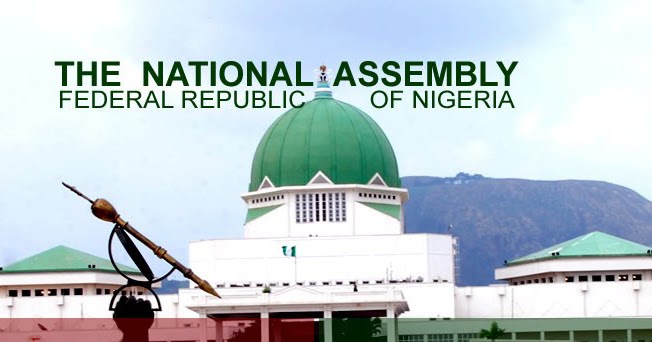
A group of concerned lawmakers in the House of Representatives on Wednesday alleged that the tax reform laws passed by the National Assembly and subsequently signed by President Bola Tinubu were altered after passage, raising questions over the legality of the versions currently being circulated by the Federal Ministry of Information.

The lawmakers said the amendments contained in the gazetted copies did not receive legislative approval and are therefore constitutionally defective and legally vulnerable.

At the resumed plenary on Wednesday, a Sokoto lawmaker, Abdussamad Dasuki, raised the issue under a matter of privilege, drawing the attention of the House to what he described as discrepancies between the harmonised versions of the tax bills passed by both chambers of the National Assembly and the copies gazetted by the Federal Government.

A report compiled by the concerned lawmakers detailed what it described as alterations that could not be dismissed as “clerical or editorial corrections.”

The document, which was made available to our correspondent by a lawmaker who requested anonymity on the grounds that he was not authorised to release it, read in part, “Following concerns that certain tax bills passed by the National Assembly in 2025 were altered after passage, the House constituted a Select Committee on Post-Passage Alterations to investigate discrepancies between votes and proceedings of the National Assembly, Clerk-certified (as-passed) bills and gazetted/ final versions of the Acts.

“The committee’s review, supported by forensic comparisons and independent legal opinions establishes that substantive provisions were inserted, deleted, or modified after passage by both chambers.

See also  How Bandits Negotiator Spent Ransom Share On Luxury Cars, Trips – DSS

“Several oversight, accountability, and reporting mechanisms approved by parliament were removed in the final Acts.

“New coercive and fiscal powers (e.g., arrest powers, garnish without court order, compulsory USD computation, appeal security deposits) appeared without legislative approval.

“These changes cannot be classified as clerical or editorial corrections.”

The lawmakers further argued that Sections 4 and 58 of the 1999 Constitution vest law-making powers exclusively in the National Assembly.

“The executive has no constitutional authority to alter a bill after passage. Any post-passage alteration is ultra vires, unconstitutional, and void to the extent of the alteration,” the report stated, adding that “Affected provisions are vulnerable to judicial invalidation, creating legal and fiscal uncertainty.”

On the methodology adopted, the report said the committee relied on six key annexures, including “a forensic comparison of votes and proceedings, certified bills, and final Acts.

“A formal legal opinion on constitutionality, section-by-section analyses of the Nigeria Tax Administration Act, Nigeria Revenue Service Act, and Joint Revenue Board framework and a comparative table (House version vs Gazetted Act) highlighting material deviations.”

The lawmakers warned that the alleged alterations undermine legislative supremacy and parliamentary integrity, and “weaken oversight and accountability mechanisms.”

They also noted that if left unaddressed, “the alterations would expose Nigeria to litigation risk, regulatory uncertainty, and loss of investor confidence.”

Among their recommendations were an “immediate legislative review of all identified altered provisions, rectification or re-enactment through proper parliamentary process where necessary.”

The report also urged the House to summon officials responsible for the alleged alterations in line with Sections 88 and 89 of the 1999 Constitution (as amended).

See also  Cuba accuses US of killing 32 nationals in Venezuela operation

Speaking under a matter of privilege during plenary, Dasuki alleged that the gazetted copies of the new tax laws currently in circulation differ in key clauses from the harmonised versions passed by the Senate and the House of Representatives.

He said, “I’m here today because my privilege has been breached as a member of this all-important House. Mr Speaker, Honourable colleagues, we passed the tax laws (bills) on this floor. I took my time in the last three days to look at the gazetted copy.

“I also looked at the votes and proceedings of the House of Representatives, and also went an extra mile to look at the votes and proceedings of the Senate of what was harmonised.

“Mister Speaker, Honourable colleagues, what was passed on this floor is not what is gazetted. I’m coming under privilege, because I was here. I gave my vote, and it was counted, and I’m seeing something completely different.

“On that note and on this privilege, I call on Mr Speaker to graciously look at what was harmonised and what is in the gazetted copy- what was passed in the House and the Senate.

“You will find out that what is before Nigerians, which is being sold to Nigerians at the Ministry of Information, is not what was passed.”

He called on the House to revisit the version originally passed by the National Assembly, saying, “I plead that all the documents should be brought before the committee of the Whole so that we can make the relevant amendments,” he said.

See also  Edo Ex-deputy gov challenges Okpebholo’s ultimatum to return govt property

Dasuki described the development as unconstitutional, adding, “This is a breach of the Constitution and our laws, and this should not be taken by this Honourable House.”

In his response, the Speaker of the House, Tajudeen Abbas, assured members that the leadership would look into the allegations and take appropriate steps in the national interest.

The disputed laws form part of a wide-ranging tax reform package signed by President Bola Tinubu as part of his administration’s economic reform agenda aimed at boosting revenue, widening the tax base and reducing Nigeria’s dependence on borrowing.

The reforms, which include the Nigeria Tax Administration Act, the Nigeria Revenue Service Act and amendments to the Joint Revenue Board framework, were designed to modernise tax administration, strengthen enforcement and improve compliance.

The laws were passed by the National Assembly in 2025 against the backdrop of persistently low government revenue, high debt servicing costs and pressure on public finances following the removal of fuel subsidies and foreign exchange reforms.

The current controversy, however, has raised fresh concerns about legislative oversight, the integrity of the law-making process and the potential legal consequences for the implementation of the new tax regime, billed to commence in January 2026.

punch.ng

FOLLOW US ON:

FACEBOOK

TWITTER

PINTEREST

TIKTOK

YOUTUBE

LINKEDIN

TUMBLR

INSTAGRAM

Continue Reading
Click to comment

Leave a Reply

Your email address will not be published. Required fields are marked *

News

Senate names new minority whip as two more senators defect to APC

Published

on

The Senate on Wednesday appointed Senator Tony Nwoye as the new Minority Whip, following a fresh wave of defections that has further boosted the numerical strength of the All Progressives Congress in the upper chamber.

Nwoye, who represents Anambra North Senatorial District, was unanimously selected by the Senate minority caucus to fill the vacancy created by the exit of his predecessor.

His emergence comes on the heels of the defection of former Minority Whip, Senator Osita Ngwu, from the Peoples Democratic Party to the APC on Wednesday, one of several high-profile crossovers that altered the balance within the opposition ranks.

In a letter read on the floor by Senate President Godswill Akpabio, Ngwu said his decision was driven by the need to align with Enugu State Governor, Peter Mbah and President Bola Tinubu.

He also described the APC as the most stable political platform in the country.

Nwoye was elected into the Senate in 2023 on the platform of the Labour Party before defecting to the African Democratic Congress in late 2025, positioning him within the opposition bloc prior to his new leadership role.

The reshuffle in minority leadership came amid a broader pattern of defections that has steadily eroded the strength of opposition parties in the Senate since the inauguration of the 10th National Assembly.

In a related development, Senator Anthony Siyako Yaro, representing Gombe South, also announced his defection from the PDP to the APC, citing internal crises within the opposition party.

Similarly, the Chairman of the Senate Committee on Public Accounts, Senator Aliyu Wadada, formally announced his defection from the Social Democratic Party to the APC.

See also  Senate approves Tinubu’s N1.15tn domestic loan to fill 2025 budget gap

Wadada, who has also been endorsed as the APC consensus governorship candidate for Nasarawa State ahead of the 2027 elections, said he had previously aligned with the ruling party but completed the formal procedures of his defection on Wednesday.

Reacting to the developments, Senator Adams Oshiomhole commended the lawmakers, describing their defections as voluntary and consistent with constitutional provisions.

He said the increasing movement of legislators into the APC reflects growing confidence in the party’s leadership and the administration of President Tinubu.

With the latest defections, the APC’s strength in the Senate has risen to 91 lawmakers—further consolidating its dominance and tightening its grip on legislative proceedings as political realignments gather pace ahead of the 2027 general elections.

Continue Reading

News

Lagos clarifies sanitation modalities, warns defaulters ahead of April 25

Published

on

The Lagos State Government has provided further details on the reintroduced monthly environmental sanitation exercise, set to resume on Saturday, April 25, 2026, with movement restrictions and enforcement measures in place.

In a statement on Wednesday, the Commissioner for Environment and Water Resources, Tokunbo Wahab, said, “The exercise will hold every last Saturday of the month between the hours of 6:30 am and 8:30 am.

During this period, there will be controlled movement across the state to allow residents to carry out thorough cleaning of their homes, surroundings and drainage frontages.”

He stated that enforcement teams comprising officials of the ministry, Lagos State Environmental Protection Agency, Kick Against Indiscipline, Lagos Waste Management Authority, and local government sanitation inspectors would “conduct physical inspections during and after the sanitation window to ensure compliance,” warning that “defaulters will be sanctioned in accordance with the Lagos State Environmental Management and Protection Law of 2017.”

Wahab also stated, “LAWMA intervention trucks will go around to cart away bagged wastes generated during the exercise,” noting that “there will be rewards for the cleanest Local Government Area, Local Council Development Area, and the cleanest street as part of efforts to encourage healthy competition and community participation.”

He urged residents to cooperate with the initiative, saying, “We urge all residents to take ownership of this exercise and join hands with the government in building a cleaner, safer and more sustainable Lagos.”

The clarification follows the symbolic flag-off of the exercise along the Mushin–Agege Motor Road corridor on March 14, ahead of its full implementation later this month.

See also  Nigeria killings: US officials prepare high-level briefing for Trump

The state government had earlier announced in March that the sanitation exercise would resume nearly a decade after it was suspended in November 2016 following a legal pronouncement restricting movement during the programme.

While some residents have welcomed the move, saying it could curb indiscriminate waste disposal and reduce flooding, others have raised concerns about enforcement, warning that movement restrictions could be abused and calling for sustained public education on proper waste management.

punch.ng

FOLLOW US ON:

FACEBOOK

TWITTER

PINTEREST

TIKTOK

YOUTUBE

LINKEDIN

INSTAGRAM

Continue Reading

News

Court remands suspected coup plotters in DSS custody

Published

on

The Federal High Court in Abuja on Wednesday ordered the remand of six defendants in the custody of the Department of State Services after they were arraigned on a 13-count charge bordering on alleged terrorism.

At the sitting, which commenced at about 1:46pm, the Attorney-General of the Federation, Lateef Fagbemi (SAN), informed the court that the charge was ready and sought leave to have it read to the defendants.

Proceedings were briefly stalled after the third defendant informed the court that his counsel was indisposed, while counsel to the sixth defendant said his client understood only Arabic and Hausa, prompting the court to stand down the matter to secure an interpreter.

When the court reconvened at about 2:18 pm, all six defendants took their pleas and denied the allegations, pleading not guilty to the 13 counts.

Following the arraignment, the prosecution applied for their remand in DSS custody and urged the court to grant an accelerated hearing of the case, a request that was not opposed by most defence counsel, although the first defendant’s lawyer indicated an intention to file a bail application.

Ruling, the trial judge ordered an accelerated hearing, directed that the defendants be remanded in DSS custody with access to their lawyers, and adjourned the matter till April 27, 2026, for commencement of trial.

See also  Navy Dredges 11km Waterway In Lake Chad To Stop Terrorists’ Occupation
Continue Reading

Trending