A group of concerned lawmakers in the House of Representatives on Wednesday alleged that the tax reform laws passed by the National Assembly and subsequently signed by President Bola Tinubu were altered after passage, raising questions over the legality of the versions currently being circulated by the Federal Ministry of Information.
The lawmakers said the amendments contained in the gazetted copies did not receive legislative approval and are therefore constitutionally defective and legally vulnerable.
At the resumed plenary on Wednesday, a Sokoto lawmaker, Abdussamad Dasuki, raised the issue under a matter of privilege, drawing the attention of the House to what he described as discrepancies between the harmonised versions of the tax bills passed by both chambers of the National Assembly and the copies gazetted by the Federal Government.
A report compiled by the concerned lawmakers detailed what it described as alterations that could not be dismissed as “clerical or editorial corrections.”
The document, which was made available to our correspondent by a lawmaker who requested anonymity on the grounds that he was not authorised to release it, read in part, “Following concerns that certain tax bills passed by the National Assembly in 2025 were altered after passage, the House constituted a Select Committee on Post-Passage Alterations to investigate discrepancies between votes and proceedings of the National Assembly, Clerk-certified (as-passed) bills and gazetted/ final versions of the Acts.
“The committee’s review, supported by forensic comparisons and independent legal opinions establishes that substantive provisions were inserted, deleted, or modified after passage by both chambers.
“Several oversight, accountability, and reporting mechanisms approved by parliament were removed in the final Acts.
“New coercive and fiscal powers (e.g., arrest powers, garnish without court order, compulsory USD computation, appeal security deposits) appeared without legislative approval.
“These changes cannot be classified as clerical or editorial corrections.”
The lawmakers further argued that Sections 4 and 58 of the 1999 Constitution vest law-making powers exclusively in the National Assembly.
“The executive has no constitutional authority to alter a bill after passage. Any post-passage alteration is ultra vires, unconstitutional, and void to the extent of the alteration,” the report stated, adding that “Affected provisions are vulnerable to judicial invalidation, creating legal and fiscal uncertainty.”
On the methodology adopted, the report said the committee relied on six key annexures, including “a forensic comparison of votes and proceedings, certified bills, and final Acts.
“A formal legal opinion on constitutionality, section-by-section analyses of the Nigeria Tax Administration Act, Nigeria Revenue Service Act, and Joint Revenue Board framework and a comparative table (House version vs Gazetted Act) highlighting material deviations.”
The lawmakers warned that the alleged alterations undermine legislative supremacy and parliamentary integrity, and “weaken oversight and accountability mechanisms.”
They also noted that if left unaddressed, “the alterations would expose Nigeria to litigation risk, regulatory uncertainty, and loss of investor confidence.”
Among their recommendations were an “immediate legislative review of all identified altered provisions, rectification or re-enactment through proper parliamentary process where necessary.”
The report also urged the House to summon officials responsible for the alleged alterations in line with Sections 88 and 89 of the 1999 Constitution (as amended).
Speaking under a matter of privilege during plenary, Dasuki alleged that the gazetted copies of the new tax laws currently in circulation differ in key clauses from the harmonised versions passed by the Senate and the House of Representatives.
He said, “I’m here today because my privilege has been breached as a member of this all-important House. Mr Speaker, Honourable colleagues, we passed the tax laws (bills) on this floor. I took my time in the last three days to look at the gazetted copy.
“I also looked at the votes and proceedings of the House of Representatives, and also went an extra mile to look at the votes and proceedings of the Senate of what was harmonised.
“Mister Speaker, Honourable colleagues, what was passed on this floor is not what is gazetted. I’m coming under privilege, because I was here. I gave my vote, and it was counted, and I’m seeing something completely different.
“On that note and on this privilege, I call on Mr Speaker to graciously look at what was harmonised and what is in the gazetted copy- what was passed in the House and the Senate.
“You will find out that what is before Nigerians, which is being sold to Nigerians at the Ministry of Information, is not what was passed.”
He called on the House to revisit the version originally passed by the National Assembly, saying, “I plead that all the documents should be brought before the committee of the Whole so that we can make the relevant amendments,” he said.
Dasuki described the development as unconstitutional, adding, “This is a breach of the Constitution and our laws, and this should not be taken by this Honourable House.”
In his response, the Speaker of the House, Tajudeen Abbas, assured members that the leadership would look into the allegations and take appropriate steps in the national interest.
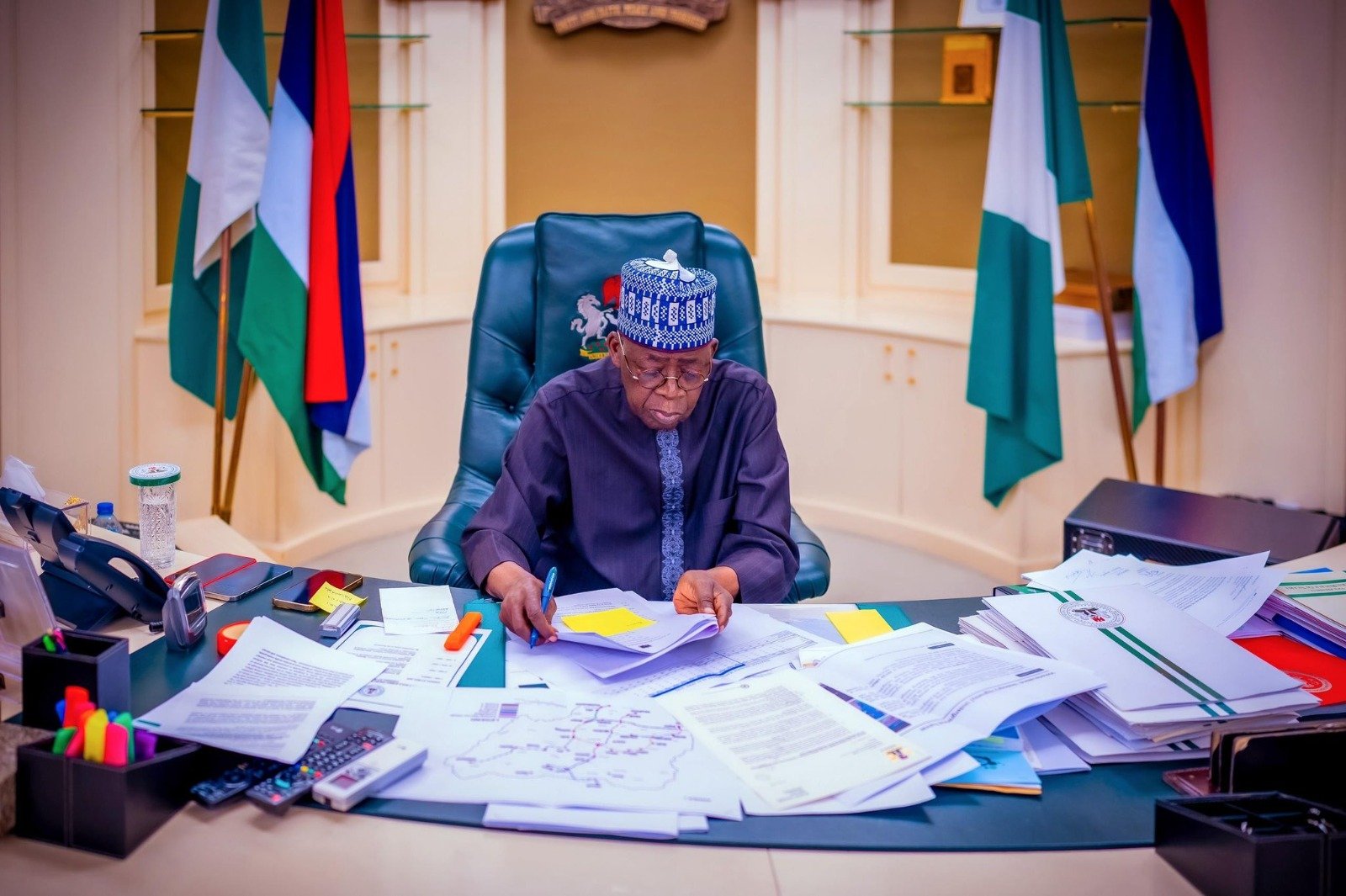
The disputed laws form part of a wide-ranging tax reform package signed by President Bola Tinubu as part of his administration’s economic reform agenda aimed at boosting revenue, widening the tax base and reducing Nigeria’s dependence on borrowing.
The reforms, which include the Nigeria Tax Administration Act, the Nigeria Revenue Service Act and amendments to the Joint Revenue Board framework, were designed to modernise tax administration, strengthen enforcement and improve compliance.
The laws were passed by the National Assembly in 2025 against the backdrop of persistently low government revenue, high debt servicing costs and pressure on public finances following the removal of fuel subsidies and foreign exchange reforms.
The current controversy, however, has raised fresh concerns about legislative oversight, the integrity of the law-making process and the potential legal consequences for the implementation of the new tax regime, billed to commence in January 2026.
punch.ng
FOLLOW US ON: