Connect with us

News

Nigeria needs new Constitution, not amendments – Ezekwesili

Published

on

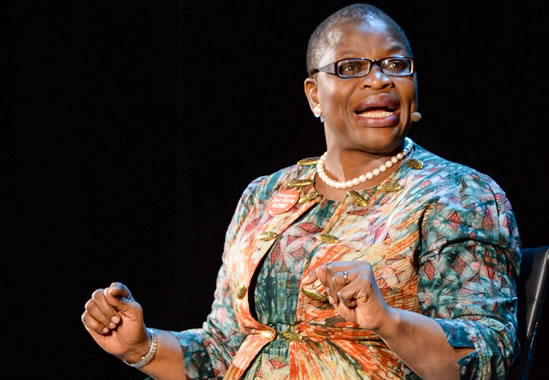
A former Minister of Education and Chief Executive Officer of Human Capital Africa, Dr Oby Ezekwesili, on Thursday knocked the National Assembly over its ongoing constitutional amendment efforts, which she described as a charade and a conduit pipe to waste public funds.

Ezekwesili lamented that Nigeria’s political space, along with much of Africa’s, has been hijacked by what she called a criminal enterprise gang that now dictates the direction of governance in their interest, while the welfare of the larger populace suffers.

The former minister stated this on Thursday in her keynote address, titled “Reworking Nigeria’s Federalism: Perspectives on Restructuring and Fiscal Federalism,” delivered at the 7th Penpushing Anniversary and Annual Lecture in Abeokuta, Ogun State.

She argued that instead of heeding widespread demands for a new constitution capable of correcting imbalances and inequalities in the current system, the National Assembly chose to pursue a process that would yield little or no meaningful change.

Ezekwesili explained that agitations for secession, widespread insecurity, unemployment, poverty, and poor governance could only be addressed through a people-driven constitution that guaranteed devolution of powers, equity, and justice across ethnic and regional lines.

“The ongoing constitutional amendment cannot work; it cannot address our problem. It is a charade and a sheer waste of resources.

The demand for a new constitution is a matter of life and death,” she said.

Using a construction analogy, she stressed the futility of trying to fix a flawed structure with patchwork solutions.

“For instance, when the engineer tells us that the foundation of a building is structurally defective, is it not to take the whole building down? Because it will continue to constitute an endangerment to the people.

See also  Asylum surge: UK stops study visas for four countries

“You won’t say, ‘Oga, can we just do some little adjustment to the building?’ No, it won’t work.

“And this is the same with nation-building. So this expensive charade that the National Assembly is embarking on and spending money on won’t take us anywhere,” she added.

Ezekwesili called on the media to take the lead in advocating for a new constitution that reflects the will of the people.

“The media should take the front seat and be at the vanguard of a demand for a new constitution.

“We must have a constitutional conference that enables the people of this country to have honest conversations around things that will make us make progress and make Nigeria work for all of us.

“If there is anything that will come out of this annual lecture, it must be that the media should be at the vanguard of a push for a constitutional conference, one that will enable the constituent parts of this country, a constituent assembly elected by the people, to sit, discuss the issues that make fiscal federalism work, and come out with proposals eligible for a constitution, which will then be put before the people to vote on in a referendum.

“This is what Kenya did after almost collapsing. Since then, you never hear them talking about break-ups, they talk about the need for good leaders.”

Ezekwesili emphasised that good governance is not a mystery and can be replicated in Nigeria if the political will exists.

“There is nothing mysterious about good governance. This thing has been done elsewhere and could be replicated here in the country.

See also  Nigeria @ 65 - FG cancels Independence Day parade

“Unfortunately, today’s politics has been hijacked. What we now have is a criminal enterprise gang, and this is not only in Nigeria but across the continent.

“A criminal enterprise gang has taken hold of politics and excluded society. These people just sit at the table and slice governance in the direction that suits them. But that must not be allowed to continue,” she added.

The former minister also linked the quality of politics to the economic development of nations, warning that no real progress could be made in Africa without significant improvement in the quality of political leadership.

According to her, a true fiscal federal structure would not only promote regional autonomy and accountability but also satisfy demands for self-determination without jeopardising the unity of the country.

“Fiscal federalism will boost productivity, improve leadership capacity, and foster genuine collaboration among the regions,” she said.

Also speaking at the event, the immediate-past Nigerian High Commissioner to the United Kingdom, Amb Sarafadeen Ishola, stated that Nigeria’s current federalism, while adopted in principle, failed in practice.

“It neither delivers the autonomy expected by the federating units nor promotes the developmental competition required for national growth,” he said.

Amb Ishola, who chaired the occasion, emphasised that true federalism entailed not just devolution of power but also responsible governance, institutional clarity, fiscal equity, and citizen-driven accountability.

“Nigerians must not see restructuring as a sectional agenda but embrace it as a national rebirth strategy to address key challenges facing the country,” he added.

Earlier, the founder of Penpushing Media, an online platform, Mr Dimeji Kayode-Adedeji, said the annual lecture was designed to elevate national discourse and inspire solutions to Nigeria’s most pressing problems.

See also  “The Era Of Monday Sit-At-Home Is Over” – Nnamdi Kanu

He said Penpushing Media continued to grow while contributing significantly to improving the national narrative through credible journalism and impactful philanthropic activities.

He added that the platform had helped train over 80 Mass Communication students from various institutions and instituted an annual award for the best graduating students in the field.

The event also featured goodwill messages from former spokesman to the late President Muhammadu Buhari, Mr Femi Adesina; Chair of the Penpushing Editorial Board and former Lagos NUJ Chair, Funke Fadugba; and the Planning Committee Chair, Dr Abiola Akiyode-Afolabi, among others.

FOLLOW US ON:

FACEBOOK

TWITTER

PINTEREST

TIKTOK

YOUTUBE

LINKEDIN

TUMBLR

INSTAGRAM

Continue Reading
Click to comment

Leave a Reply

Your email address will not be published. Required fields are marked *

News

Tinubu approves N10bn funding for emergency response to Ebola

Published

on

President Bola Tinubu has established a Presidential Task Force on Ebola Virus Disease Preparedness and approved the immediate release of N10bn in emergency intervention funding.

This follows the rapidly expanding outbreak that has already killed at least 349 people across the Democratic Republic of Congo and Uganda, with the World Health Organisation declaring it a Public Health Emergency of International Concern.

A statement by the Special Adviser to the President on Information and Strategy, Bayo Onanuga, said the task force would be chaired by the Chief of Staff to the President, Femi Gbajabiamila, with membership drawn from relevant ministries, departments and agencies and state representatives.

The N10bn, Onanuga said, will strengthen the operational preparedness of the Nigeria Centre for Disease Control and Prevention and support critical national public health emergency response activities.

The task force was constituted following a stakeholder meeting convened by Gbajabiamila to review Nigeria’s preparedness.

It was attended by representatives from the Ministry of Interior, the Federal Airports Authority of Nigeria, the Nigeria Immigration Service, the Nigerian Civil Aviation Authority and the Lagos State Government, among others.

According to Onanuga, Tinubu directed the “intensification of passenger screening at all international airports, including enhanced temperature checks and crowd-control protocols, and enhanced monitoring of passengers arriving on high-risk airline routes, including Air Uganda, RwandAir, Air Tanzania, Air Angola, Kenya Airways and Ethiopian Airlines, all carriers with direct or connecting services from the affected region.”

He ordered the immediate activation of referral and isolation centres at Lagos and Abuja international airports, with other airports to follow, and the mandatory activation of QR code-based pre-arrival health declaration systems for passengers originating from or transiting through designated high-risk countries.

See also  MISSING GIRL FOUND - KINDLY SHARE

The President also directed the disinfection of departure halls, cargo areas, baggage sections and airport facilities as precautionary environmental measures.

Tinubu directed the task force to designate specific airports or terminals for high-risk flights to enable controlled screening and isolation procedures, and to consider adjusting flight timings to minimise interaction between high-risk passengers and other travellers.

He also mandated the group to consult with security, diplomatic and aviation bodies on the possibility of regulating flights from affected and high-risk countries.

The President directed all states hosting international airports and international border corridors, as well as relevant MDAs, to immediately submit their plans, funding requirements and intervention needs for coordinated implementation.

The current outbreak, caused by the Bundibugyo virus, a species of Ebola, was first confirmed in DRC’s Ituri Province on May 15, 2026, and rapidly spread to Uganda after a case was confirmed in Kampala.

As of June 7, the European Centre for Disease Prevention and Control reported 515 confirmed cases and 91 confirmed deaths, with 283 individuals in isolation.

By May 29, the total suspected case count had risen to 1,037 with 349 deaths.

Unlike earlier-known Ebola strains, there is no licensed vaccine or specific therapeutic agent against the Bundibugyo virus, though early supportive care has been shown to be lifesaving.

Case fatality rates in previous Bundibugyo outbreaks ranged from 30 to 50 per cent.

In 2014, during the West African Ebola epidemic, Nigeria recorded 20 confirmed cases and eight deaths after a Liberian-American diplomat, Patrick Sawyer, arrived at Lagos’s Murtala Muhammed International Airport infected.

See also  Do Our Forefathers Belong To The Dustbin? – Oluwo Of Iwo Frowns At How Nigerians Worship Ancestors

punch.ng

FOLLOW US ON:

FACEBOOK

TWITTER

PINTEREST

TIKTOK

YOUTUBE

LINKEDIN

INSTAGRAM

Continue Reading

News

June 12: Atiku backed rotational presidency deal, insists Akume

Published

on

The Secretary to the Government of the Federation, George Akume, has said former Vice President Atiku Abubakar was among political leaders who supported the adoption of rotational presidency in Nigeria following the annulment of the June 12, 1993, presidential election.

Atiku Abubakar
Former Vice President Atiku Abubakar

According to the SGF, the annulment of the June 12 election, won by the late Chief MKO Abiola, prompted political leaders to take difficult decisions aimed at preserving national unity and strengthening democracy.

A statement by his Media Aide, Yomi Odunuga, said Akume made the clarification on Tuesday while responding to questions at a World Press Conference in Abuja, as part of activities marking Nigeria’s 27th Democracy Day anniversary.

He recalled that leaders of the Peoples Democratic Party met in Kaduna under the leadership of the late Chief Solomon Lar and Alhaji Adamu Ciroma to deliberate on the country’s political future, with the issue of power rotation featuring prominently.

“It was a tough argument before the issue of rotational presidency was agreed on. At the end, we had to concede. We must do this.

“June 12 annulment had complicated the whole thing. It was finally agreed that we’ll be alternating between North and South.

“Atiku was one of the leaders at that meeting, which was convened by Chief Solomon Lar. He was part of that agreement,” Akume was quoted as saying.

The SGF explained that the decision to alternate presidential power between the North and South was designed to address the political consequences of the annulled election and promote inclusiveness and national cohesion.

See also  2026 budget twist: MDAs inject N3.5tn new projects despite FG freeze

Akume’s remarks come amid ongoing political debates over power rotation ahead of the 2027 general election.

Atiku, a northerner and the presidential candidate of the African Democratic Congress for the 2027 election, is expected to challenge incumbent President Bola Tinubu, who is seeking a second term in office.

Tinubu, a southerner, was elected President in 2023 following the completion of the constitutionally permitted two-term tenure of the late President Muhammadu Buhari, a northerner.

Atiku has been criticised by political rivals and the Presidency for running for the highest office and maintaining future presidential ambitions during election cycles when political consensus favours power rotation to the South.

Reflecting on the significance of June 12, the SGF described the annulment as a painful setback to the democratic aspirations of Nigerians.

“Abiola won that election round and square. That election was annulled by the military government. It was very painful because the people spoke, and they spoke freely. They made their own choice,” he said.

According to him, one of the major lessons from the June 12 experience is the supremacy of the people’s will in a democratic system.

“The first lesson is that the voice of the people must always be supreme; it must be sacrosanct. That’s the beauty of democracy. We prefer the ballot to bullets,” he stated.

Akume expressed confidence in Nigeria’s democratic institutions, particularly the Independent National Electoral Commission, saying the country had learned from the events of 1993 and would never allow a repeat of such an annulment.

“If an election is conducted very fairly, and one wins, no problem. The actors at the Independent National Electoral Commission are not young people; they were adults when this thing happened.

See also  Do Our Forefathers Belong To The Dustbin? – Oluwo Of Iwo Frowns At How Nigerians Worship Ancestors

“If we were to take a poll at that time, over two-thirds of Nigerians would have condemned that act of annulment,” he said.

The SGF further commended INEC officials, describing them as men and women of integrity committed to protecting the nation’s democratic process.

“Fortunately for us, those at INEC are men of honour and integrity. They are well-read, patriotic Nigerians, and they are determined to make a difference. Never again would such happen in this country.

“You win, you win. When you lose, go back and prepare for another election. Look at the American example. President Trump lost to Joe Biden. He didn’t bring America down. He went back, prepared and came back and won. That’s the beauty of democracy,” Akume said.

He noted that Nigeria’s 27 years of uninterrupted democratic rule reflected the country’s commitment to democratic governance and freedom.

“We have decided to embrace democracy. That is why, for 27 unbroken years, we have been enjoying this freedom in a democratic setting. We love the values and the morals of democracy, and there is no system that is as beautiful as democracy,” he said.

Akume also highlighted freedom of expression as one of the key benefits of democratic rule.

“It is under a democratic system that you can insult your president and insult anybody and still go to bed, and you don’t receive a midnight knock on your door. Try it under a totalitarian regime,” he stated.

The SGF urged political actors to embrace democratic principles, respect electoral outcomes and continue to strengthen the nation’s democratic culture.

See also  “The Era Of Monday Sit-At-Home Is Over” – Nnamdi Kanu

He added that Nigeria’s 27 years of uninterrupted democracy underscored its commitment to the rule of law, freedom of expression and peaceful political participation.

Continue Reading

News

Tinubu orders repatriation of 300 Nigerians held in Ethiopian prison

Published

on

President Bola Tinubu has dispatched a high-level delegation to Addis Ababa, Ethiopia, to secure the immediate repatriation of nearly 300 Nigerian nationals serving prison sentences in the country, The PUNCH learnt.

Sources within the Presidency and the foreign service familiar with the directive said the prisoners are held in deteriorating conditions at Kaliti, a maximum-security prison in Addis Ababa.

Tinubu mandated the delegation, which includes the Minister of Foreign Affairs, Bianca Odumegwu-Ojukwu, and the Attorney-General of the Federation, Lateef Fagbemi (SAN), to sign a Memorandum of Understanding with the Ethiopian government that would allow the prisoners to be transferred to Nigeria to complete the remainder of their sentences in Nigerian correctional facilities.

According to one source, the directive came directly from the President, with the delegation departing for Addis Ababa on Tuesday.

“We are leaving because we have prisoners. The President has directed us to get these prisoners back.

“He directed that we go there right away with the Attorney-General, get an MOU quickly signed, so that these prisoners can be transported back to Nigeria, so that they can serve out the rest of their sentences here,” the official revealed.

A second source told The PUNCH that the urgency was driven by the deteriorating physical condition of the inmates.

“They are dying. We have almost 300 prisoners in the open-air prisons in Ethiopia,” the official told our correspondent.

The directive marks the first direct intervention of President Bola Tinubu on the crisis, which has dragged on through several diplomatic channels for over three years.

See also  Do Our Forefathers Belong To The Dustbin? – Oluwo Of Iwo Frowns At How Nigerians Worship Ancestors

According to official Ministry of Foreign Affairs figures, more than 270 Nigerians are currently serving prison sentences in Ethiopia, largely for drug-related offences.

Most are held at Kaliti Prison in Addis Ababa, where, since 2019, advocacy groups have alleged overcrowding, starvation, lack of medical care and physical punishment.

On March 12, 2023, Chizoba Favour Eze, a Nigerian inmate at Kaliti Prison, died following alleged brutalisation by prison officials.

Another Nigerian, Uchenna Nwanneneme, died from tuberculosis on September 21, 2023, reportedly after receiving little or no medical attention.

A third Nigerian, Basil Lawrence Ilobi, also died in custody.

Their deaths drew protests from Nigeria’s mission in Addis Ababa and renewed calls from families of the incarcerated for the Federal Government to formalise a prisoner transfer arrangement.

In November 2024, Justice Inyang Ekwo of the Federal High Court in Abuja ordered the Ministry of Foreign Affairs and the Nigerians in Diaspora Commission to facilitate the return of the imprisoned Nigerians, noting that the Ethiopian government had admitted it lacked the budget to care for foreign inmates. However, the order yielded no immediate action.

On April 17, 2025, Ojukwu, then serving as Minister of State for Foreign Affairs, led a delegation to meet Ethiopia’s Ambassador to Nigeria, Legesse Geremew Haile, pressing for the immediate ratification of the MOU.

“Our people don’t want to hear that another Nigerian inmate died in an Ethiopian prison,” she declared during the meeting.

According to her, Nigeria had already completed its own side of the MOU formalities.

She said, “The ministry has fulfilled its own side of the formalities for the Transfer of Sentenced Persons MOU. It is the Ethiopian side that is stalling.”

See also  Moves to demolish my house, hotel politically motivated – Gbenga Daniel insists

Haile reaffirmed diplomatic ties but acknowledged that the MOU was still awaiting ratification by Ethiopia’s House of Representatives.

In September 2025, families of inmates at Kaliti Prison appealed directly to President Tinubu, the Senate and NiDCOM to intervene and activate the prisoner transfer arrangement.

In January 2026, the Ethiopian House of People’s Representatives ratified prisoner transfer agreements with China, Brazil and a criminal extradition agreement with South Africa.

In 2019, Ethiopia granted amnesty to Nigerian prisoners. However, several persons subsequently returned to the country and were re-arrested for similar drug-related offences.

Since the 1980s, the United Nations Office on Drugs and Crime has promoted model agreements for the international transfer of sentenced persons, encouraging countries to allow prisoners to serve sentences in their home countries to aid rehabilitation.

Advocacy groups say many Nigerians held at Kaliti are reportedly travellers transiting through Addis Ababa’s Bole International Airport, one of Africa’s busiest aviation hubs, who were arrested on drug charges.

They argue that some were unwitting carriers of narcotics allegedly planted in their luggage.

Continue Reading

Trending