Connect with us

Business

See how Dangote refinery and marketers fuel deal crashed

Published

on

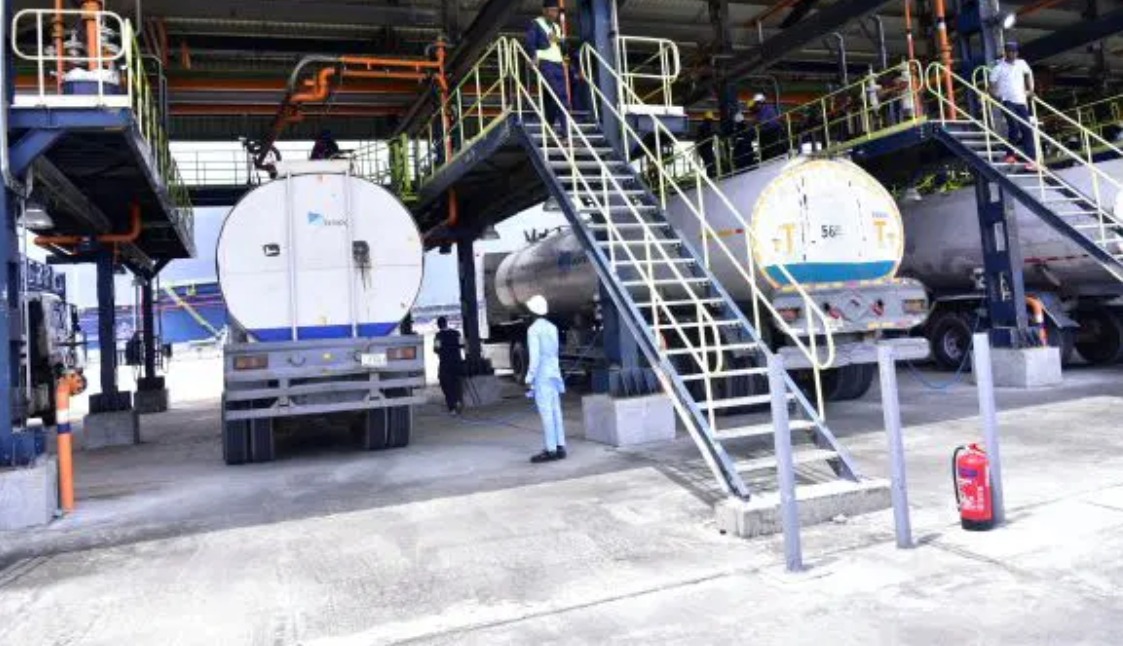
The fuel supply arrangement between the Dangote Petroleum Refinery and 20 major petroleum marketers, under which the parties agreed to offtake 600 million litres of petrol monthly, has collapsed over pricing disagreements, The PUNCH has exclusively learnt.

It was also gathered that the disagreement sparked the surge in petrol importation witnessed in the month of November 2025, with total imports rising to 1.563 billion litres, according to the Nigerian Midstream and Downstream Petroleum Regulatory Authority.

The authority disclosed the import figure in its November 2025 Fact Sheet, titled State of the Midstream and Downstream Sector, which showed a sharp spike in imported volumes during the period the pricing dispute intensified.

Recall that the deal, reached in October 2025, was structured as a pilot arrangement under which 20 depot owners were to collectively offtake about 600 million litres of petrol monthly, with each marketer lifting roughly 30 million litres from the Dangote Refinery.

The National Public Relations Officer of the Independent Petroleum Marketers Association of Nigeria, Chinedu Ukadike, had confirmed in an interview that the refinery set the target after a strategic meeting with key players in the downstream sector.

Ukadike said the agreement was part of efforts to stabilise supply in the domestic market and ease the recent surge in pump prices. According to him, the meeting, which included representatives of A.Y.M. Shafa, A. A Rano, NNPCL Retail, Salbas, and several other major distributors, focused on how to streamline product allocation and reduce the layers of middlemen contributing to price distortions.

“At the meeting, Dangote announced plans to sell to only 20 selected marketers who will serve as primary distributors to other dealers. Each of them will lift a minimum of two million litres, which will translate to about 600 million litres every month,” Ukadike said.

“We believe that once this structure takes effect, petrol availability will improve significantly and retail prices will start to ease,” he added.

However, two industry sources who spoke to The PUNCH on Thursday confirmed that the deal, which lasted barely a month, has now collapsed, attributing the breakdown to the refinery’s reluctance to adjust its gantry price in line with falling international benchmarks.

According to the first source, an industry stakeholder who requested anonymity due to the nature of the matter, the agreement was structured to include monthly price reviews. Products were initially sold to marketers at N806 per litre for coastal delivery and N828 per litre at the gantry.

Under the arrangement, Dangote temporarily suspended direct sales to independent marketers, who could only purchase 250,000 litres or less, forcing them to rely on the 20 approved marketers for supply.

The source said, “The arrangement between Dangote and 20 marketers has collapsed. Remember that there was an agreement in October, and they agreed on a particular price, and that every month, there will be a price review. So in the month of October, the price was shifted for the marketers, and they were given products at N806 per litre and sold gantry at N828 per litre.

See also  Tax reforms will modernise, boost economy – G24 chief

“That was fixed, and they now stopped all forms of product sales to independent marketers who were only buying 250,000 litres or less. Due to the agreement, marketers who needed products had to go buy from the 20 marketers.  This is because the marketers had mentioned in the agreement that Dangote won’t sell directly to other marketers but only to the approved members, and then the rest would buy from them.”

The official added that the initial system functioned smoothly, with products being loaded through ships and gantries, and additional interested parties gradually added to the approved list.

However, the deal began to unravel in November, when importers noticed that international petrol prices had fallen below Dangote’s selling price.

“But the agreement had a bit of issues in the month of November when importers saw prices at the international benchmark and that it was lower than the price Dangote was selling to them. They said it was supposed to drop to around N750 per litre. But Dangote was reluctant to review. This caused the heavy influx of imported petrol in November.”

In response, Dangote later slashed its gantry price to N699 per litre, the lowest in 2025, but the move came too late to prevent losses.

The source also revealed that depot owners and marketers who had purchased products at N828 per litre in October but had not yet sold were left bearing heavy losses, while smaller marketers also struggled to adjust to the sudden price change.

According to data from the Major Energies Marketers Association of Nigeria and petroleumprice.ng during the period, the average landing cost of imported premium motor spirit dropped to N829.77 per litre, a price lower than the ex-depot price of the fuel produced locally.

The MEMAN data showed that the average landing cost of petrol as of October 30 was N829.77 per litre. This was a further drop in the landing cost, which was an average of N849.61 on October 13, N847.61 on October 14, N841.54 on October 20, and N839.97 per litre on October 21.

In contrast, Dangote refinery’s gantry remained N877/litre as of October 24, 2025.

He further said the dispute boomeranged into a public confrontation between Dangote and the former NMDPRA boss, Farouk Ahmed, over the agency’s issuance of multiple import licences to other marketers, a conflict that eventually led to the ACE’s resignation in December 2025.

“Now there is no agreement or alignment between Depot owners and Dangote. The refinery is now selling to another marketer that can offtake any quantity of products,” the source stated.

See also  US sends troops to Nigeria after December airstrikes

Confirming the position of the industry stakeholder, the Chief Executive Officer of petroleumprice.ng, Jeremiah Olatide, said the pricing mechanism for the deal was tied to Eurobob, the international benchmark for European gasoline, with the understanding that prices would be reviewed monthly in line with global crude oil movements. Under the initial arrangement, Dangote published a coastal price of N806 per litre and a gantry price of N828 per litre.

He explained that after the first month, the international crude oil benchmark declined sharply, prompting the depot owners to request a reduction in the gantry price. While Dangote implemented a price adjustment, it fell short of expectations when compared with international prices.

“Yes, it has collapsed. It was agreed that the process would be determined by Eurobob, which primarily refers to the benchmark price for European gasoline (petrol), that is the international benchmark. That for every benchmark, the price would be discussed and agreed to be adjusted.

“They agreed on N806 coastal rate and N828 gantry price as published by Dangote refinery. After the first month, the international crude oil benchmark dropped, and the private depot owners requested a reduction in the Dangote gantry price. The reduction was effected but not what they expected in comparison with international prices. It was this difference that made the marketers turn to imports in the month of November 2025.

“Importation surged in November, and there were a large number of vessels at berth. So when Dangote noticed the new development, he slashed the price from N828 per litre to N699 per litre, a 129 per cent reduction and the highest in 2025. Days later, he had a press conference, making allegations against the former NMDPRA ACE, Farouk Ahmed, on the issuance of licenses to marketers.

“So the relationship between depot owners and Dangote lasted for just a month before falling apart. Now the refinery doesn’t have a choice but to sell to independent marketers who buy in bits.”

Confirming the collapse, the National Publicity Secretary of IPMAN, Chinedu Ukadike, told The PUNCH that the agreement was no longer in force.

“No, it is no longer in place. Dangote has decided to liberalise the buying options. Marketers are now free to buy products, even down to those who can lift as little as 250,000 litres,” Ukadike said.

He added that the refinery had specifically invited independent marketers to come forward and load products directly. “These are market strategies. You don’t want unnecessary issues in distribution or artificial price hikes. The market is now open. It is also about competition,” he said.

Ukadike explained that tensions also arose because some marketers continued importing petrol even after signing the October agreement, undermining the exclusivity clause.

See also  Abductions surge: Northern govs demand mining suspension, unveil N228bn security fund

“Even after the agreement was signed, some marketers still went ahead to start importing petroleum products, which is against the agreement signed. So he decided that since they are keeping to it or evacuating products well, he has decided to allow all marketers to take products. That is the situation on the ground,” he added.

For now, the refinery has reverted to open-market sales, offering product sales from as low as 250,000 litres to any interested marketer, a departure from the offer given in October.

When contacted, Dangote spokesperson, Anthony Chiejina, did not respond to calls and messages sent to his phone number by our correspondent for an official reaction.

Meanwhile, fresh market data show that the spot price of imported petrol into Nigeria has dropped to about N696 per litre, according to the latest energy bulletin released by the Major Energies Marketers Association of Nigeria.

The price, calculated at the Apapa jetty, is below Dangote’s current gantry price of N699 per litre. This was the 30-day average import parity price of N772.65 per litre, reflecting a temporary easing in international crude oil costs and foreign exchange stability.

The bulletin, obtained on Thursday, showed that the difference between the on-spot import price and the 30-day average, currently about N76 per litre, creates opportunities for marketers to optimise inventory and timing, especially as local refiners adjust gantry prices.

For instance, Dangote Petroleum’s gantry petrol price is currently N699 per litre, slightly above the import parity spot price, which could incentivise competitive pricing in the downstream market.

The spot price for petrol in Apapa had fallen steadily alongside a slight decline in Brent and WTI crude prices, which currently trade at $63.75 and $60.14 per barrel, respectively. Similarly, Bonny Light crude fluctuated around $66.22 per barrel, reflecting global market adjustments following a period of relative stability.

According to MEMAN, the decline in spot prices has been driven by a combination of lower international benchmark prices, reduced shipping costs, and a stronger naira, which currently trades at N1,419.07 against the dollar, down from N1,450 earlier in December. The association noted that diesel and kerosene have also experienced downward pressure, with spot prices for diesel at N844.88 per litre and kerosene at N882.94 per litre.

The report also highlighted that average 30-day import parity prices are calculated using Platts commodity prices, freight charges, insurance, and terminal costs, providing a benchmark for local marketers and regulators in the Nigerian downstream sector. According to MEMAN, fluctuations in these prices directly impact retail pump prices, the profitability of depot owners, and the viability of local refining operations.

punch.ng

FOLLOW US ON:

FACEBOOK

TWITTER

PINTEREST

TIKTOK

YOUTUBE

LINKEDIN

TUMBLR

INSTAGRAM

Continue Reading
Click to comment

Leave a Reply

Your email address will not be published. Required fields are marked *

Business

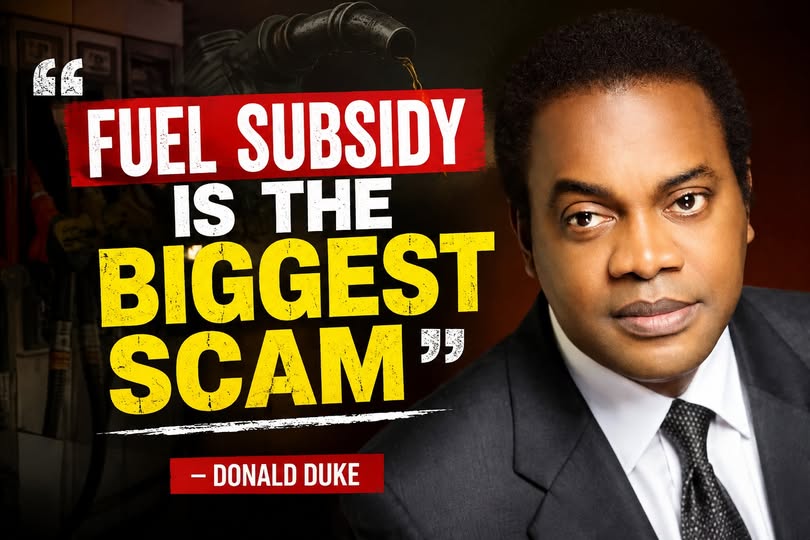
Fuel Subsidy Is The Biggest Scam – Donald Duke

Published

on

Former governor of Cross River State, Donald Duke has described fuel subsidy as the biggest scam.

It was reports that Duke made the claim in a recent interview.

The Peoples Redemption Party (PRP) presidential candidate argued that Nigeria’s crude oil resources could support significantly lower domestic fuel prices if properly managed.

“Look, I don’t believe there’s any subsidy in fuel.

“For a barrel of crude oil, there are about seven by-products. The two consequential ones are diesel and petrol, PMS and AGO, and kerosene, aviation fuel and all those things.

“You sell them at commercial rates, okay? Work it out. You can almost sell petrol today at ₦200 a litre, not the ₦1,000-plus.

“So that thing about subsidy, I think, is the biggest scam that has been perpetrated, maybe globally,” Duke said.

The former governor also described Nigeria as an energy-rich country that has failed to translate its vast resources into affordable and reliable energy for its citizens.

“You’re an energy-blessed country. You have all known forms of energy existing in Nigeria, from the crudest, which is human labour, to hydrocarbons, solar, hydro, uranium and now lithium.

“You have all those things. Why are we still energy-poor? Because the political will is not there. But even beyond the political will, we’re not thinking through this,” Duke said.

Duke said the continued flaring of natural gas, despite the country’s energy challenges, was another indication of what he described as poor management of Nigeria’s resources.

“We easily flare two billion cubic feet of gas a day. That is equivalent to 20 million litres of diesel.

See also  Highest bidder won’t automatically get oil blocks — FG

“If you had a turbine to power all of Africa, it would not consume 20 million litres of diesel daily.

“So, it’s akin to the abundance of water while the fish is thirsty,” he said.

He also rejected arguments that domestic fuel prices should be benchmarked against international prices, saying countries should leverage their natural resources to improve the welfare of their citizens.

“When I hear excuses like, ‘Oh, it’s cheaper in America,’ or, ‘We’re cheaper than it is in America,’ every country has its own endowments.

“You’ve got to use what you’ve got to get what you want. We are an energy-blessed country. The people should feel their blessings,” he said.

FOLLOW US ON:

FACEBOOK

TWITTER

PINTEREST

TIKTOK

YOUTUBE

LINKEDIN

INSTAGRAM

Continue Reading

Business

Whatsapp to begin charging businesses per message from October 1

Published

on

Meta, the parent company of WhatsApp, will begin charging businesses for certain messages sent through the WhatsApp Business Platform from October 1, 2026.

This was disclosed in a WhatsApp Business Platform pricing update in July 2026.

The new charges will be applied to companies using the official WhatsApp Business Platform, formerly known as the WhatsApp Business API, to manage customer conversations at scale.

Banks, fintechs, e-commerce companies, telecoms operators, logistics firms and large retailers that rely on the platform for customer service and transactional communication are among those that could be affected.

However, the development will not affect ordinary WhatsApp users or most small businesses using the standard WhatsApp Business app on their phones.

Under the current system, when a customer sends a message to a business, a 24-hour customer service window opens. During that period, businesses can respond with free-form service messages and certain utility messages without paying Meta.

However, from October 1, Meta will begin charging businesses on a per-message basis for service messages sent during the customer service window.

Meta, in its developer documentation, said, “Effective October 1, 2026, Meta will charge on a per-message basis for all service messages, consistent with how Meta charges for template messages. These messages have not been charged since November 1, 2024.”

The company added, “Effective October 1, 2026, Meta will charge on a per-message basis for utility messages sent in response to users (within an open 24-hour customer service window). These messages have not been charged since July 1, 2025.”

Utility messages include communications such as payment confirmations, order updates and delivery notifications.

See also  Foreign debt servicing gulps almost $1bn in two months

Meta also warned businesses and Solution Providers about the need to add a payment method ahead of the new charges.

It said, “For any Solution Provider or directly-integrated businesses that does not have a payment method on file by September 30, 2026, Meta will stop delivering service messages as of when they become charged on October 1, 2026.”

For Nigerian businesses, a chargeable utility or service message is expected to cost about $0.0101 per message, equivalent to roughly ₦14 based on an exchange rate of about ₦1,340 to the dollar.

Marketing messages are considerably more expensive, at about $0.062 per message, or approximately ₦84 at the same exchange rate.

The charges are Meta’s fees and do not necessarily represent the total amount a business will pay. Companies using Business Solution Providers or third-party platforms to access the WhatsApp Business Platform may incur additional provider charges.

FOLLOW US ON:

FACEBOOK

TWITTER

PINTEREST

TIKTOK

YOUTUBE

LINKEDIN

INSTAGRAM

Continue Reading

Business

FG reaffirms partnership with Taraba to unlock economic potential

Published

on

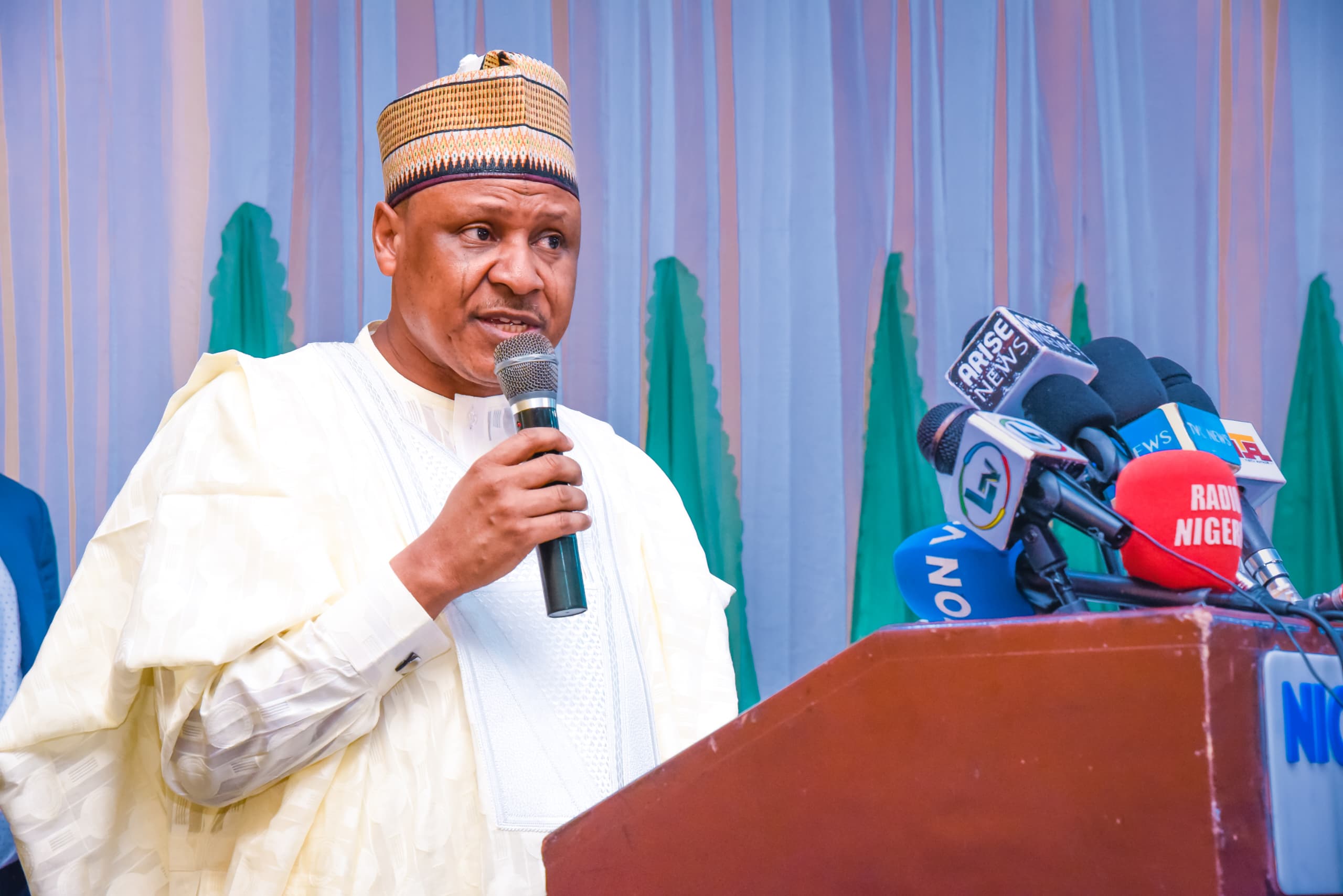
The Federal Government has reaffirmed its commitment to working with the Taraba State Government to unlock the state’s vast potential in agriculture, energy, tourism, infrastructure and mineral resources.

The Minister of Information and National Orientation, Mohammed Idris, stated this on Thursday in Jalingo at the Gala night to mark the Taraba State’s 35th anniversary and the official unveiling of the Taraba Regional Development Master Plan.

He described the newly unveiled Taraba Regional Development Master Plan as an important blueprint for sustainable growth.

Idris, who conveyed the greetings of President Bola Tinubu and the Federal Executive Council to the government and people of Taraba State, said the state’s 35th anniversary offered an opportunity not only to celebrate its progress since creation in 1991, but also to define a clear pathway for its future.

He commended Governor Agbu Kefas of Taraba for adopting a long-term development framework, saying the success of the Master Plan would ultimately depend on sustained implementation and its impact on the lives of citizens.

“The success of this Master Plan will not be measured by the ceremony at which it is unveiled, but by the roads built, businesses created, jobs generated, communities connected and lives improved,” the minister said.

Idris described Taraba as one of Nigeria’s most promising economic frontiers, with enormous opportunities in agriculture and agro-processing, livestock, hydropower, tourism, manufacturing and mineral development.

He praised the Kefas Administration for its investments in education, healthcare, infrastructure, security and economic development, particularly its policy of free and compulsory primary and secondary education.

He said the evidence was in the provision of more than N1.8 billion in 2026 to cover NECO, BECE and NABTEB examination registration for public-school students.

See also  Foreign debt servicing gulps almost $1bn in two months

The minister also highlighted the approximately 268 million dollars financing agreements signed between Taraba State and the ECOWAS Bank for Investment and Development for an integrated industrial park, 10,000 hectares of irrigated rice production and processing, and a 50-megawatt solar power plant in Jalingo.

He said the investments represented the kind of initiatives required to convert the state’s natural advantages into production, value addition, employment and sustainable economic growth.

Idris said Tinubu’s administration was complementing the state’s development drive through major federal infrastructure projects.

“These include the Gembu–Mbamnga–Yang (Lip) Road, the Bali–Serti–Gashaka–Gembu Road, interventions on the Jalingo–Mutum Biyu–Tella–Wukari corridor, as well as further work on the Mayo Selbe–Gembu, Mutum Biyu–Garba Chede and Jalingo–Numan roads.

“These are more than roads. They are investments in connectivity, trade, tourism, agriculture, security and the movement of people and goods,” he said.

The minister also reaffirmed the federal government’s commitment to harnessing Taraba’s agricultural, energy and mineral potential, including the strategic Mambilla Hydroelectric Power Project.

On security, Idris said the federal government was advancing reforms toward the establishment of State Police to bring policing closer to communities while ensuring professionalism, accountability and safeguards against abuse.

He said such a framework could be particularly beneficial to Taraba because of its vast terrain and dispersed border communities, where local knowledge, intelligence gathering and rapid response were critical to effective policing.

The minister also cited the establishment of the Nigerian Army’s 10 Division, headquartered in Jalingo, with operational responsibility for Taraba and Adamawa States, as evidence of the federal government’s commitment to strengthening security in the region.

“Security and development must go together. People cannot invest, farmers cannot move their produce, tourists cannot visit and businesses cannot grow where communities feel unsafe,” Idris said.

See also  World Bank loans drive Tinubu’s social spending agenda

He said the federal government’s economic reforms were designed to create a stronger fiscal foundation for development, noting that the removal of petrol subsidy had mobilised N15.8 trillion in additional resources for the Federation between June 2023 and December 2025.

According to him, approximately N5.4 trillion accrued to the federal government while about N10.4 trillion went to states and local governments, providing additional resources for infrastructure, education, healthcare, security and human capital development.

Idris said the federal government remained opposed to a return to the previous subsidy regime, stressing that the priority was to consolidate the gains of reform, protect vulnerable Nigerians and ensure that additional public resources translated into tangible improvements in citizens’ lives.

He emphasised that development must ultimately be people-centred, creating opportunities for young people, expanding women’s economic participation, supporting farmers and small businesses, and connecting communities to markets and public services.

The minister also pledged stronger collaboration between the Federal Ministry of Information and National Orientation and the Taraba State Ministry of Information and Re-Orientation to ensure citizens understand and embrace the objectives of the Master Plan.

“The vision contained in this Master Plan must go beyond government offices. It must reach the farmer, the entrepreneur, the student, the trader and communities across Taraba.

“This is because a plan for Taraba must ultimately be a plan owned by the people of Taraba,” he said.

Idris congratulated Kefas, the government, and the people of Taraba State on the state’s 35th anniversary, describing the occasion as both a celebration of Taraba’s history and a renewed commitment to its future.

See also  Court remands suspected Lagos assassin, Olori Esho

“35 years of history. A new blueprint for the future. And a renewed commitment to building the Taraba we want and the Nigeria we deserve,” the minister said.

In his remarks, Kefas also called for continuity in governance, acknowledging the contributions of former military administrators and elected governors to Taraba State’s development.

He said his administration was committed to building on previous achievements, correcting what needed to be corrected, completing worthy projects and opening new frontiers for future generations.

He stressed that the development of Taraba must remain bigger than any government, political party, ethnic group or individual, urging former leaders to continue contributing their experience and institutional knowledge to the peace, unity and prosperity of the state.

“Government must be a continuum. Development must be cumulative. Taraba is bigger than any government, any administration, any political party, any ethnic group, or any individual,” Kefas said.

He added that the ultimate credit for development belongs to the people of Taraba State.

Present at the event were the former Governor of Taraba State, Rev. Jolly Nyame; Secretary to the Government of Taraba State, Chief G.T. Kataps; Director-General of the Nigerian Television Authority, Salihu Dembos; and  Director-General of the Federal Radio Corporation of Nigeria, Dr Mohammed Bulama.

Others were the Managing Director of the Nigerian Ports Authority, Dr Abubakar Dantsoho; as well as other distinguished government officials, traditional leaders, members of the diplomatic and business communities, and other dignitaries.

NAN

Source: punchng.com

FOLLOW US ON:

FACEBOOK

TWITTER

PINTEREST

TIKTOK

YOUTUBE

LINKEDIN

INSTAGRAM

Continue Reading

Trending