Connect with us

Education

Some private universities running like business centres – Ex-NOUN VC

Published

on

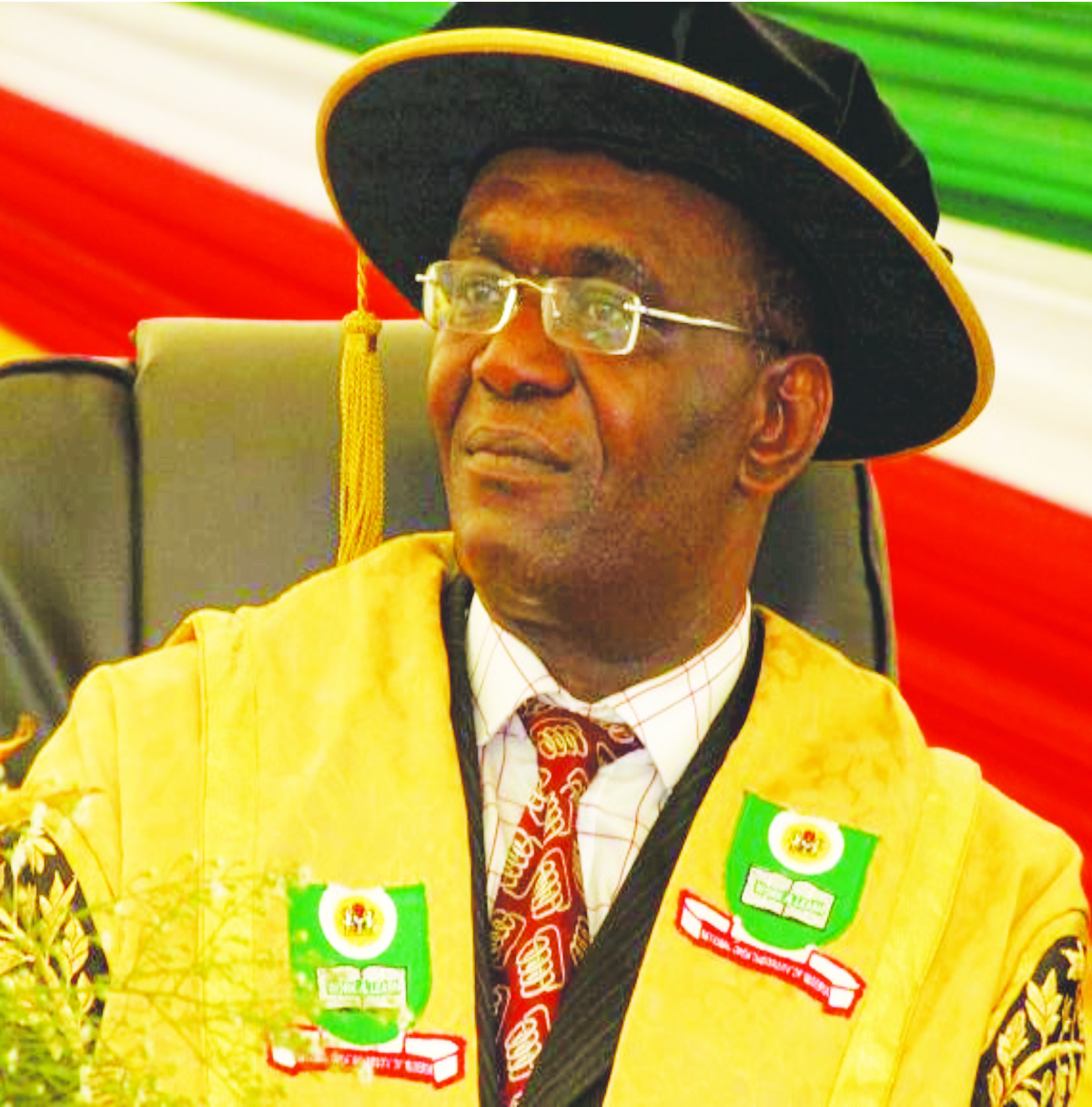
The pioneer Vice-Chancellor of the National Open University of Nigeria, Prof. Olugbemiro Jegede, has warned that some private universities in Nigeria are being run primarily as profit-driven ventures rather than academic institutions, a trend he said could lead to their eventual collapse.

Prof. Jegede raised the concern on Thursday in Abuja while delivering a public lecture organised by the Federal Government College, Warri, as part of activities marking the school’s 60th anniversary. His remarks come amid growing pressure on limited university spaces, as thousands of candidates prepare for the 2026 Unified Tertiary Matriculation Examination (UTME) and other admission-related exams conducted by the Joint Admissions and Matriculation Board (JAMB).

The Emeritus Professor noted that the country’s current university infrastructure is insufficient to meet the needs of Nigeria’s growing student population.

“I think we are almost getting to 200 institutions now. Given the population of Nigeria, we don’t have enough universities. Even the ones we have, their carrying capacity is very low. Many of these universities cannot take more than 1,000 or 2,000 students. Some private universities don’t have more than 500 students. Many will soon close down because of the way they are running it,” he said.

Jegede attributed the problem largely to the misconception among some proprietors that universities should generate quick profits. “Many people who set up these private tertiary institutions believe that it is a business venture. As soon as they set it up, next month they are asking, ‘Where’s the money?’”

He stressed that establishing a university requires long-term commitment and patience. “People don’t know that when you start a private university, it will take between seven and 10 years to break even. Things need to change,” he said.

See also  Ondo approves N350m for student scholarships, bursaries

Advocating a shift toward open and distance learning, Jegede highlighted the National Open University of Nigeria as a sustainable model for expanding access to higher education. “Why establish physical schools when you can establish open universities? That’s what this country needs now,” he said.

Citing NOUN’s achievements since its establishment in 2002/2003, he said the university has produced nearly 750,000 graduates. “That’s just one university. The biggest face-to-face university in this country will not have more than 40,000 or 50,000 students. You can imagine how many conventional universities it would take to match NOUN’s output. Nigeria would need nearly 30 conventional universities to do the same,” he said.

Beyond tertiary education, Jegede expressed concern over the declining state of unity schools, particularly Federal Government Colleges (FGCs), pointing to insecurity as the biggest threat to the schools’ national integration mandate.

Echoing his concerns, Dr Godwin Alo, Global President of the FGC World Students Association, said insecurity was eroding diversity and unity within the schools. He explained that students from certain parts of the country are discouraged from enrolling due to safety concerns.

“When you say you are a unity school but security challenges are reducing diversity among students, you have to face the truth,” Alo said.

He further warned that declining enrolment from some regions threatens the survival of alumni networks. “When students from these branches don’t come to schools like Warri, those branches will die a natural death. If we need to address that, we need to tackle the root causes, such as insecurity. For any nation, once you’re not secure, you have no nation,” he stressed.

See also  Nigeria emerges fifth-best English-speaking country in Africa

The lecture highlighted systemic challenges in Nigeria’s educational sector, including underfunded institutions, limited capacity, and insecurity, while urging policymakers and stakeholders to adopt long-term, sustainable solutions for both higher education and secondary schools.

punch.ng

FOLLOW US ON:

FACEBOOK

TWITTER

PINTEREST

TIKTOK

YOUTUBE

LINKEDIN

TUMBLR

INSTAGRAM

Continue Reading
Click to comment

Leave a Reply

Your email address will not be published. Required fields are marked *

Education

1,032 students gets N110,000 each from C’River lawmaker

Published

on

The Senator representing Cross River South, Senator Asuquo Ekpenyong, has empowered not fewer than 1,032 students with a cash award of N110,000 each to support their academic pursuits.

The education support programme was held in Calabar, and witnessed a large turnout of undergraduate and postgraduate students from federal and state institutions, colleges of education, health technology schools, and schools of nursing.

The programme was designed to provide N100,000 per student, but Ekpenyong announced an additional N10,000 as lunch support, bringing the total disbursement to N110,000 per beneficiary.

Ekpenyong encouraged the students to look beyond the financial assistance and draw inspiration from the broader developmental strides in Cross River State and Nigeria.

He said, “I urge all the students to look beyond the financial assistance and take their studies very seriously. Draw your inspiration from what you have seen. Most especially the developmental strides in the state.”

He highlighted the achievements of Senator Bassey Otu and Bola Ahmed Tinubu, noting that their initiatives are making a positive impact.

“The People’s First administration of Governor Bassey Otu and Renewed Hope agenda of President Bola Tinubu are steadily transforming the state and the nation”, he added.

The lawmaker reaffirmed his dedication to investing in education as a critical tool for human capital development and sustainable growth in Cross River South.

Mr Ewelu Ewelu, the Postgraduate students’ president of the University of Cross River State, expressed gratitude to the Senator, saying, “His intervention is legendary and impactful in easing the financial burden faced by students.”

See also  Ondo approves N350m for student scholarships, bursaries

He added, “The intervention will ease the financial burden faced by students on campus. And we appreciate him for this gesture.”

Several beneficiaries also shared their appreciation for the support.

Continue Reading

Education

UK boarding schools woo Nigerian students at Abuja, Lagos fairs

Published

on

Nigerian families will to meet representatives from United Kingdom boarding schools and learn about academics, extracurricular programmes, and student opportunities.

To make this possible, leading British boarding schools will visit Abuja and Lagos in March for UK Boarding Schools Week 2026, providing parents and students with a firsthand look at the pathways and experiences offered by UK education.

The exhibitions are organised by Mark Brooks Education, led by its founder Mark Brooks, who is also a UK Department for Business and Trade Export Champion and has been advising Nigerian families on British education for over 17 years.

According to a press release by his team on Wednesday, Brooks said, “This programme enables parents and students to meet school heads, explore academic pathways and gain first-hand insight into British boarding education.”

“Families attending will be able to speak directly with schools offering outstanding academic results, strong pastoral care and vibrant co-curricular programmes, all within welcoming international communities,” Brooks said.

According to Brooks, the events provide a rare opportunity for Nigerian families to understand how a UK boarding education supports holistic development.

“British boarding schools are uniquely placed to develop young people academically, socially and personally.

“These events give Nigerian families clearer perspectives on how a UK boarding education can open doors to world-class universities, global networks and lifelong personal development.”

Among the confirmed participating schools are Bromsgrove School, Canford School, Cardiff Sixth Form College, Dean Close School, Downside School, Lancing College, Milton Abbey School, Stamford School, and Wellington School.

School leaders highlighted the long-standing relationship between UK boarding schools and Nigerian families.

See also  VC seeks support as new medical varsity holds maiden matriculation

Alex Battison, head of Wellington School, Somerset, said, “Wellington has a rich history of having fantastic Nigerian families with us, and we’re incredibly proud of that.

“At the heart of what we do is a complete focus on the individual student and helping every child thrive.”

Michael Punt, head of Bromsgrove School, added, “Our school is popular with West African students because of the breadth of opportunities.

“Students know they will be taught extremely well and achieve excellent examination results, but also benefit from sport, music, drama, outdoor pursuits and a whole host of other activities.”

Henrietta Lightwood, global director at Cardiff Sixth Form College, highlighted the strong academic ambition of Nigerian families.

“Nigerian students are highly ambitious, and their parents are too. For many, it’s the academic results and access to top universities that attract them, particularly at Cardiff Sixth Form College.”

Attendance at the exhibitions is free, although advance registration is recommended.

The Abuja exhibition will take place at the Transcorp Hilton on Wednesday, March 4, while the Lagos event will be held at The George Hotel, Ikoyi, on Saturday, March 7, 2026.

Some schools will also host pre-booked appointments and a smaller follow-up exhibition on Sunday, March 8, in the afternoon.

The public exhibitions form part of a wider week-long programme that includes school visits, student presentations, leadership workshops, and parent receptions across both cities.

It was reported in 2024 that no fewer than 1,500 Nigerian pupils studied at a range of preparatory, senior and sixth form schools across UK.

Continue Reading

Education

Kwara college reopens after security closure

Published

on

The Kwara State College of Education, Oro, in Irepodun Local Government Area, has reopened for academic and administrative activities following the directive of the state government amid improved security conditions.

The reopening was contained in an internal memorandum issued on Monday and sighted by The PUNCH.

The memo, referenced CEO/ADMIN/27/Vol.1/268 and dated February 2, 2026, was signed by the Deputy Registrar, Information, Protocol and Publicity, Mrs Lawal Taibat Saka-Bolanta.

The memorandum, addressed to staff and students and issued from the office of the Registrar, stated that the college had resumed with immediate effect.

“In line with the directive of His Excellency, the Executive Governor of Kwara State, Mallam AbdulRahman AbdulRazaq, I write to inform staff and students of the re-opening of the college with immediate effect,” the memo read.

It added that academic and administrative activities would commence immediately, while the management appreciated the state government, the Ministry of Tertiary Education and other stakeholders for their support.

The development followed the earlier announcement by the Kwara State Government on Sunday that schools across the state would reopen from Monday, February 2, after months of closure due to security concerns.

The government’s decision was contained in a statement issued by the Press Secretary of the Ministry of Education and Human Capital Development, Mr Peter Amogbonjaye, quoting the Commissioner for Education, Dr Lawal Olohungbebe.

According to the statement, school authorities across the state had been notified of the reopening.

“The government deems the situation now to be a lot better than it was before. Even so, we continue to maintain vigilance,” the commissioner was quoted as saying.

See also  Ondo approves N350m for student scholarships, bursaries

The statement added that security operations were ongoing to sustain recent gains, while efforts were also being made to strengthen community resilience alongside kinetic operations by security agencies.

The PUNCH had earlier reported the closure of the Kwara State College of Education, Oro, a few weeks ago, following security threats in the area, a development that forced students to vacate the campus and disrupted academic activities.

This had raised concerns among parents, education stakeholders and residents over the safety of students and staff.

The reopening of the college also comes months after the state government ordered the closure of primary and secondary schools in November 2025, following escalating insecurity in parts of Kwara State, particularly in border and forested communities affected by banditry and kidnapping.

At the time, the government said the closure was a precautionary measure to protect learners, teachers and other education workers from possible attacks.

However, the state government has maintained that sustained military and security operations in recent weeks have led to the neutralisation of several criminal elements and the restoration of relative calm in previously affected areas.

Security agencies are said to be maintaining a strong presence in vulnerable communities, with intensified intelligence gathering and community engagement to prevent a resurgence of criminal activities.

The government has also urged parents, teachers and school administrators to cooperate with security agencies and remain vigilant, assuring residents that measures have been put in place to guarantee the safety of students and education workers across the state.

punch.ng

FOLLOW US ON:

FACEBOOK

TWITTER

PINTEREST

TIKTOK

YOUTUBE

LINKEDIN

TUMBLR

INSTAGRAM

See also  VC seeks support as new medical varsity holds maiden matriculation

Continue Reading

Trending