Connect with us

News

Video – Nigerian Soldier Laments: “We Risk Our Lives Daily, Yet No Reward!” | Govt Rewards WAFCON Players with Millions


Published

on

In this powerful and emotional video, a Nigerian soldier opens up about the harsh realities faced by the military – poor welfare, neglect, and lack of appreciation from the government, despite risking their lives daily to protect the country.

He compares their sacrifice to the recent reward of ₦160 million and 3-bedroom apartments given to Nigerian female footballers who played in the just concluded WAFCON tournament for only one month.

▶ Is this fair?
▶ Are Nigerian soldiers being sidelined?
▶ What does this say about how we treat our heroes?

This heartfelt outcry sparks a much-needed conversation about military welfare, equity, and the true value of national service in Nigeria.

🔔 Watch, share, and join the conversation in the comments.

FOLLOW US ON:

FACEBOOK

TWITTER

PINTEREST

TIKTOK

YOUTUBE

LINKEDIN

TUMBLR

INSTAGRAM

See also  Tinubu to Amupitan: Make 2027 polls transparent, violence-free
Continue Reading
Click to comment

Leave a Reply

Your email address will not be published. Required fields are marked *

News

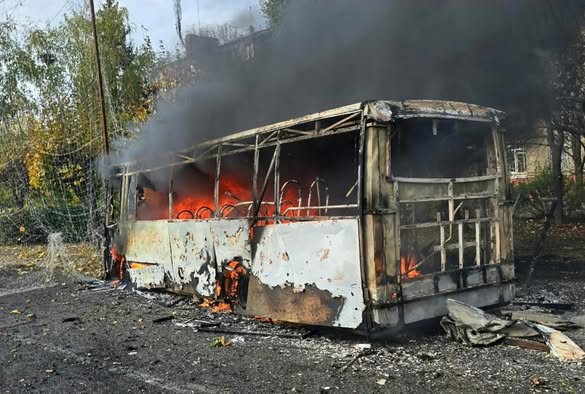
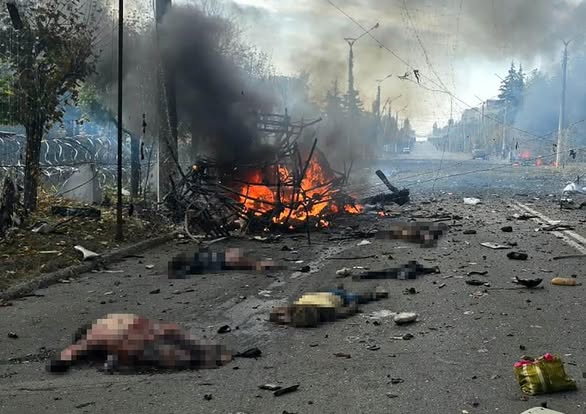
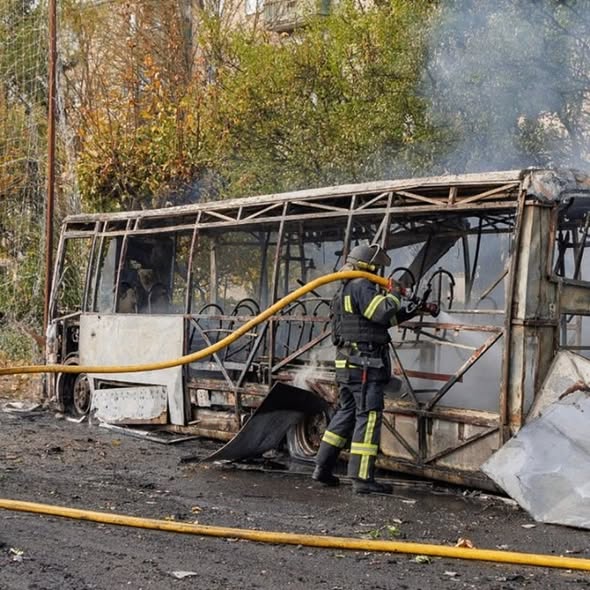
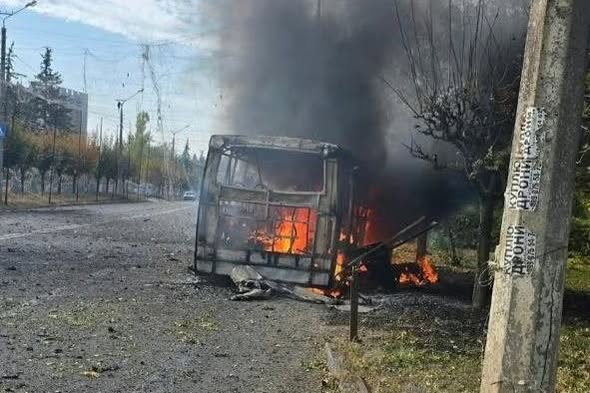
PHOTOS: Russian bus stop bombing k!lls at least 33 in Ukraine

Published

on

ussia has continued its invasion against Ukraine for more than four years and is showing no signs of backing down.

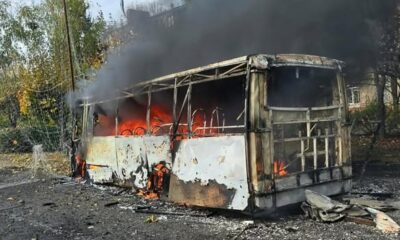
At leaat 33 people were k!lled when Russia carried out a bomb attack on the eastern Ukrainian city of Kramatorsk, authorities said on ​Thursday, October 8.

The Ukrainian authorities described the latest bombing as a targeted strike on civilians in the key ‌stronghold sought by Moscow.

Another 18 people were wounded in one of the largest single attacks this year, which took place on a street where police said two city buses were operating at the time of the strike.

President Volodymyr ​Zelensky described it as a bus stop.

Images posted by police showed bodies ​strewn across a street littered with debris, as well as a ⁠charred shell of what appeared to be a bus.

“For them (the Russians), a ​bus with passengers is an attractive target precisely because one strike can kill as ​many people as possible,” regional governor Vadym Filashkin said on the Telegram app.

There was no immediate comment from Moscow on the attack.

Russia denies targeting civilians, though it has regularly pounded ​Ukrainian cities, towns and other targets during its full-scale invasion that began in ​February 2022.

FOLLOW US ON:

FACEBOOK

TWITTER

PINTEREST

TIKTOK

YOUTUBE

LINKEDIN

INSTAGRAM

See also  One-party dominance threatens federal system, SANs warn
Continue Reading

News

Man decries absence of emergency workers as car burns on Third Mainland Bridge

Published

on

A Nigerian man has called out the Lagos State Government over the absence of emergency workers on the Third Mainland Bridge.

The man said he.was driving on the bridge when he spotted a vehicle that had overturned and burst into flames.

He further explained that what shocked him the most was that the burning vehicle was just a stone’s throw away from the Lagos State Emergency unit stationed on the bridge, but not a single official was in sight to handle the situation.

Lamenting the situation in the viral video, the man could be heard saying: “Imagine, Lagos State Emergency — nobody is here.”

FOLLOW US ON:

FACEBOOK

TWITTER

PINTEREST

TIKTOK

YOUTUBE

LINKEDIN

INSTAGRAM

See also  US, Canada issue travel warnings for Mexico after drug kingpin killing
Continue Reading

News

Belgian parliament to legislate to allow police to enter homes to facilitate undocumented migrant removals


Published

on

Belgian police will soon be able, in conjunction with the Immigration Office (DVZ), to enter the homes of undocumented migrants who pose a threat to public order or national security. This is set out in a bill drafted by the Belgian Asylum and Migration Minister, Anneleen Van Bossuyt (Flemish nationalist N-VA), and Justice Minister Annelies Verlinden (Flemish Christian democrat CD&V), which has now been approved by the House Home Affairs Committee. The proposal still needs to be OKed during a plenary session of the lower house of the Belgian parliament.

Home searches like these are controversial. The aim is to make it easier to deport people residing here illegally and who persistently refuse to cooperate with efforts to facilitate their return.

The new law will make this possible. Following entry into the home, the police may place the person in question – that is, the individual who poses a threat to public order or national security – under administrative detention. However, prior authorisation from an investigating judge is required to enter the home.

Speaking to press agency Belga, Minister Van Bossuyt referred to this as “an historic breakthrough” and had previously said that this “is the final piece in a firm but humane return policy”.

“This is not a witch-hunt against people who have international protection or are simply in the country illegally (..) The law sets out clear conditions, and a search of a home can only take place with the authorisation of an investigating judge.”

(Overly) broad definitions

The bill did, however, attract a great deal of comment and was extensively discussed in parliament.

See also  Nigerian Egusi seeds return from space

The opposition, the federal police, investigating judges and lawyers alike were highly critical. They believe that the exact meaning of ‘a threat to public order or national security’ has not been defined clearly enough.

“It will be up to the investigating judge to determine whether someone poses a threat to public order or national security,” says Van Bossuyt. “The judge will independently assess whether that person poses such a threat. That is a crucial test.”

Minister Van Bossuyt finds the debate strange: “The concepts of public order and national security feature in many parts of our legislation. Nowhere is a specific list provided of what they entail.” What is more, according to Van Bossuyt, the Council of State, which vets Belgian draft legislation, has explicitly stated that it is not desirable to define these concepts, as they may evolve over time.

“When the Justice Minister drafts new legislation, she isn’t asked how judges should apply that law, is she?” Van Bossuyt notes.

Van Bossuyt has also tabled an amendment to her own bill: “We have given investigating judges more time to reach a decision, from 5 days to 7.”

She emphasises that their role is not merely reduced to that of a ‘rubber-stamp judge’: “The investigating judge will absolutely not be a rubber-stamp judge, precisely because they play such a crucial role in assessing whether someone poses a threat or not. They will have access to the full case file.”

What about minors?

Another point of criticism concerns the rights of minors. According to critics, these are not sufficiently safeguarded. Government party Les Engagés (Francophone centrist) was only prepared to vote for the bill if greater protection for minors was provided.

See also  Tinubu to Amupitan: Make 2027 polls transparent, violence-free

“When authorising a search of a home, the investigating judge must determine all the conditions under which that search may take place,” explains Van Bossuyt. “If, for example, children are present, the investigating judge can stipulate that the search must take place during school hours. In that case, the likelihood of children being present is very low.”

The investigating judge may also, for example, require a psychologist to be present during the search, says Van Bossuyt. “So, the possible presence of minors has certainly been taken into account.”

The minister also points to the responsibility of the person who poses a threat to public order or national security: “It is that person who is making life difficult for those children,” says the minister.

Desperately needed, according to Van Bossuyt

Government party, Les Engagés, did not secure all the amendments it had requested, so MP Xavier Dubois boycotted the second reading. However, his group leader, Aurore Tourneur, did defend the amendments in the House Home Affairs Committee.

This enabled the majority to approve the bill after all, with the support of the Flemish liberal opposition party Anders. Although they, too, called for further amendments.

The left-wing opposition parties voted against. The far-right Vlaams Belang abstained. According to MP Francesca Van Belleghem, the law has been “so watered down by coalition negotiations that it will have virtually no effect in practice”.

‘This was a sensitive bill for several government parties: that’s no secret. In practice, there was an absolute need for this,’ concludes Van Bossuyt.

The bill must now be put to a vote during a plenary session, where the law can be definitively approved.

See also  Ghana recalls envoy to Nigeria over alleged electoral malpractice

Speaking to Belga, the minister warned local authorities that have already announced they will not permit home visits, such as Leuven. “Be fully aware of what that choice means. If you refuse to implement this law and things go wrong, do not point the finger at the federal government afterwards. Because then you will be jeopardising the safety of your own residents” she said.

Source: VRT.BE

FOLLOW US ON:

FACEBOOK

TWITTER

PINTEREST

TIKTOK

YOUTUBE

LINKEDIN

INSTAGRAM

Continue Reading

Trending