Connect with us

News

Tinubu to Amupitan: Make 2027 polls transparent, violence-free

Published

on

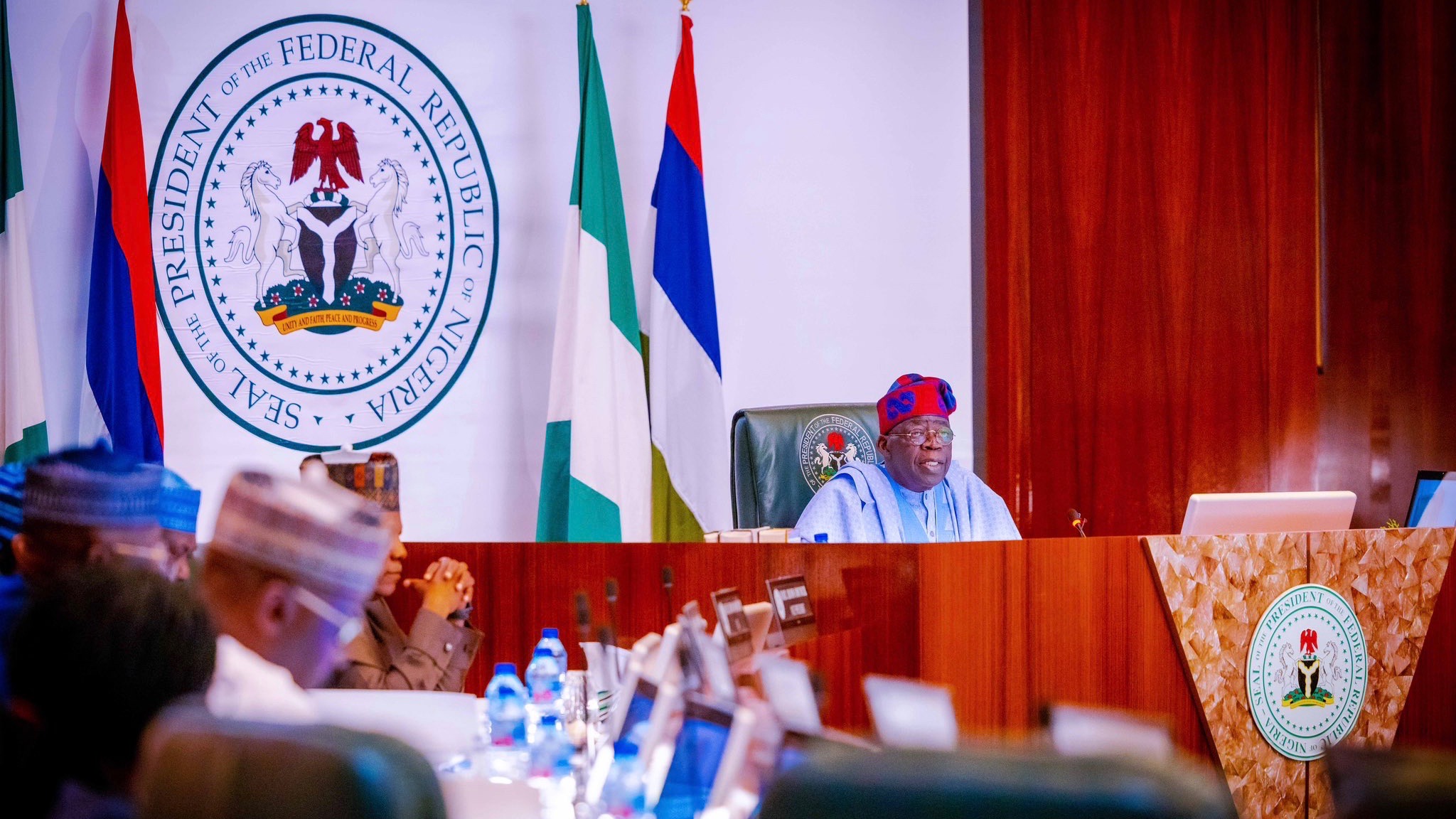
President Bola Tinubu on Thursday charged the new Chairman of the Independent National Electoral Commission, Professor Joash Amupitan, to prioritise transparency and non-violence as Nigeria prepares for the 2027 general elections, saying credible polls remained the foundation of public trust and democratic stability.

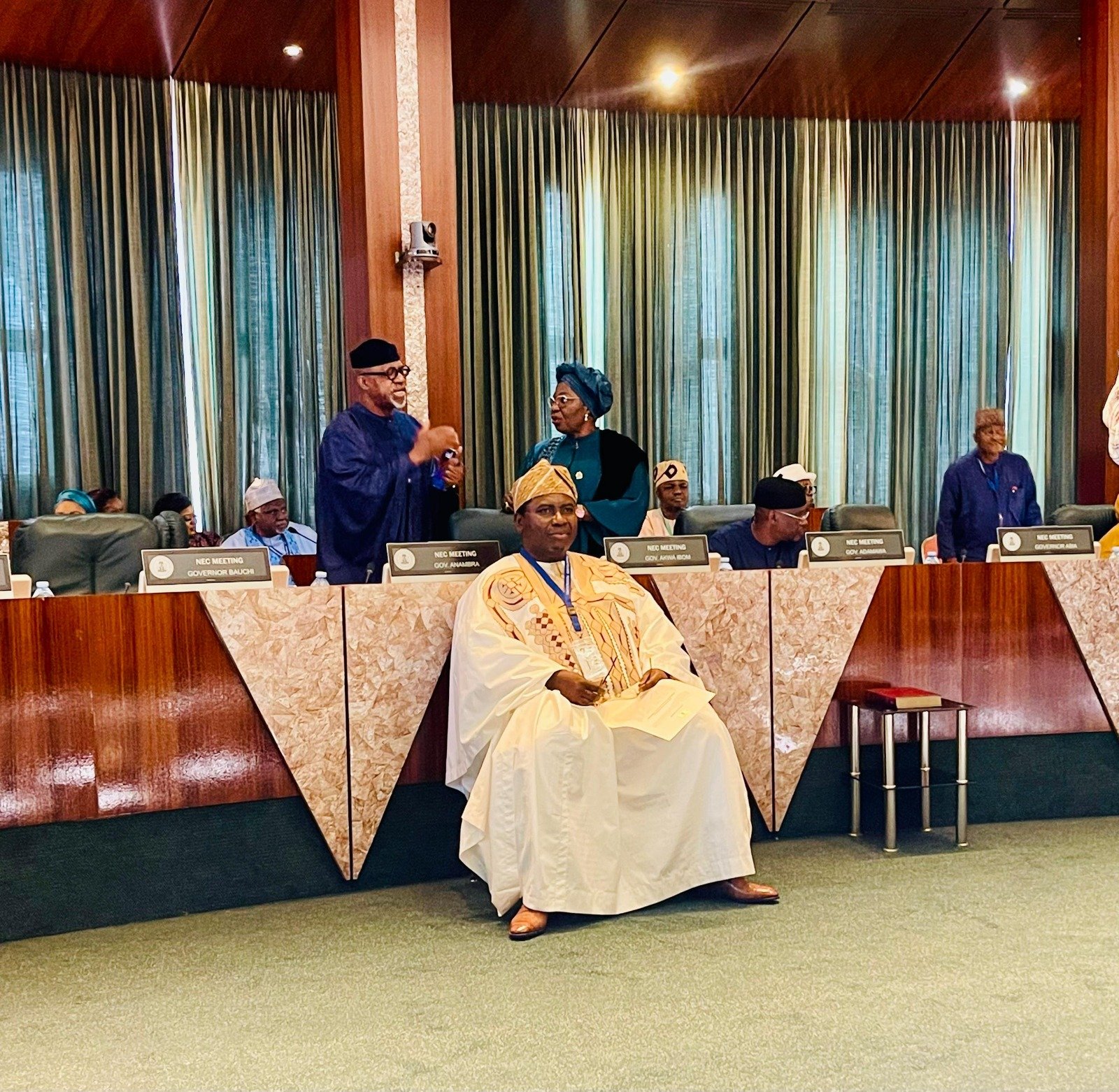
Speaking at the State House in Abuja shortly after administering the oath of office on the new INEC boss, Tinubu said Amupitan’s appointment, confirmed by the Senate a week ago, was a mark of confidence in his competence and character by both the executive and legislative arms of government.

“I, therefore, urge you, Professor Amupitan, as you take on this assignment, to protect the integrity of our elections and the electoral process and the institutional capacity of INEC, and I wish you success on your first assignment in November 2025, which is the governorship election of Anambra state,” Tinubu said.

“As the Chairman of the Independent National Electoral Commission, your nomination and confirmation are a testament to your capacity and the confidence reposed in you,” Tinubu said, adding, “This marks the beginning of a challenging yet rewarding journey, and I trust that you will approach your responsibilities with the highest level of integrity, dedication, and patriotism.”

The President emphasised that Nigeria’s democracy, which has lasted since 1999, had evolved through reforms, innovation, and lessons learned from past challenges.

“Our democracy has come a long way. We have consolidated and strengthened our democratic institutions, particularly our electoral system. To ensure that our democracy continues to flourish, the integrity of our electoral system must be beyond reproach,” Tinubu noted.

President Tinubu added that while no electoral system was flawless, credibility and transparency at every stage, be it registration, campaigning, voting, and results collation, remained critical to sustaining public trust.

He said, “To maintain public trust in elections, electoral integrity must be protected, all aspects of the process from registration to campaigning, the media access, voting and counting should be transparent, non-violent and credible.

“Elections safeguard the people’s exclusive right to choose their leaders and shape their future.

“We must consistently improve our electoral process, addressing the challenges of yesterday and innovating for today and tomorrow.”

Tinubu urged Amupitan to prioritise transparency, inclusivity, and non-violence in future polls.

Shortly after the ceremony, Amupitan told State House correspondents that he would uphold the Constitution and engage all stakeholders in the pursuit of credible elections.

See also  Nigerians self-deport amid Trump’s deadly ICE raids

“I’ve just taken the oath of allegiance and the oath as Chairman of the Independent National Electoral Commission. I reaffirm my commitment to defend the Constitution and the laws of the Federal Republic of Nigeria as they relate to the electoral system. Like the President said, I have been given a clear charge to ensure credible, fair, and free elections, and that I will ensure,” he said.

The new INEC boss said his leadership would prioritise collaboration with political parties, civil society organisations, and security agencies.

“No matter how well you design the system, success requires the cooperation of all stakeholders,” he said.

Amupitan succeeds Prof. Mahmood Yakubu, who is the longest-serving INEC chairman yet, having overseen the commission since 2015.

He took the oath of office at 1:50 pm at the Council Chamber of the Presidential Villa, Abuja.

Amupitan, a Senior Advocate of Nigeria and Professor of Law at the University of Jos, was confirmed by the Senate on October 16, 2025, following his endorsement by the National Council of State.

The National Council of State had approved his nomination on October 9, two days after Yakubu’s exit.

Since the 1993 cycle, Nigeria’s election umpires have come from a handful of zones. The South-East produced Prof. Humphrey Nwosu from Anambra, who supervised the famed June 12, 1993 polls, and later Prof. Maurice Iwu (Imo), who oversaw the 2007 polls.

The South-South produced multiple chairpersons during the transition years. These include Okon Uya from Cross River, who served briefly after June 12, Sumner Dagogo-Jack from Rivers, who served as NECON chairman under Abacha, Justice Ephraim Akpata from Edo State, who oversaw the 1999 transition and Dr. Abel Guobadia (Edo) in 2003.

From 2010, the tide tilted to the North with the appointment of Prof. Attahiru Jega from Kano State (North-West), who oversaw the 2011 and 2015 elections and is widely credited with restoring confidence after the 2007 cycle.

He was succeeded by Prof. Mahmood Yakubu from Bauchi (North-East), who conducted the 2019 and 2023 polls, and expanded the use of biometrics and other forms of tech.

Amupitan is the first INEC chief from Kogi, North-Central.

Upon assuming duties at the commission’s headquarters in Abuja, Amupitan vowed to restore credibility and public confidence in the country’s electoral system, declaring his appointment as a “divine” call to serve the nation.

Speaking during his first official meeting with the commission’s directors, he stressed that fulfilling the commission’s mandate would depend on teamwork, discipline, and integrity within the organisation.

See also  US orders staff to leave Nigeria embassy, lists 23 states as ‘Do Not Travel’

The INEC chairman stated that his mission was to conduct free, fair, and credible elections while strengthening democratic values across the country.

“Our mandate is clear, and what is it? To deliver free, fair, and credible elections that reflect the will of the Nigerian people. To achieve this, we must work together as a team,” he stated.

Addressing INEC staff and directors, the university don pledged to uphold the highest standards of transparency and accountability.

“As we mark the beginning of the new chapter, I want to assure you of my commitment to upholding the highest standard of integrity, transparency, and discipline in all our operations,” he said.

The INEC chairman described the forthcoming Anambra State governorship election as a defining moment for the commission.

“The upcoming Anambra state governorship election is not just another electoral exercise. It represents a pivot opportunity for us to demonstrate our commitment to free, fair, and credible elections,” he declared.

“The eyes of the nation are upon us, and it is our duty to rise to that occasion.

“Credibility in our election is paramount, and we must ensure that every voter feels confident that their vote will count. Because that is a constitutional task, and let’s restore back the confidence of every voter that whenever there is an election, their vote will count,” Amupitan added.

While promising to make staff welfare a central part of his agenda, he acknowledged that the commission’s workforce played a vital role in ensuring credible elections.

“For me, staff welfare is going to be my priority. We are going to be expecting so much from you, so your welfare is going to be a priority.

“We’ll work assiduously and tirelessly to ensure that our working conditions are conducive and that our staff are equipped with the necessary resources to excel,” the new INEC chairman assured staff members.

Amupitan, accompanied by his wife, children, and senior officials from the University of Jos, expressed gratitude to his academic colleagues, who celebrated his appointment.

“I was told that the whole university got shut down out of excitement. One of theirs is now given this very herculean and important responsibility of heading this commission at this time,” he said.

Despite the weight of his new responsibilities, he said he was ready for the challenge.

See also  Nigerian Airforce promotes 57 senior officers

“The places I’ve gone to, including some national commissioners, they were saying, ‘I don’t envy you.’ But let me say that I am excited about the journey ahead.

“Together, let us uphold the values of democracy and work tirelessly for the credibility of our elections,” he said.

He described his appointment as part of a divine plan.

“Maybe if I had a choice, I would say I would not come here. But from all the indications, I could see that God is moving in this country, and my coming is divine.

“If God says go, who are you to say ‘I’m not going?’ I’m here because I have a role to play to ensure that a new Nigeria is birthed. And of course, you know, INEC has a very, very important role to play in this quest.

“God bless you all, and God bless the Federal Republic of Nigeria,” he concluded.

Earlier, the Acting Chairman of INEC, May Agbamuche-Mbu, formally transferred the reins to Amupitan.

Congratulating Amupitan on his appointment and swearing-in, she noted that his emergence was “a recognition of your distinguished record as a legal scholar, administrator, and patriot, but also a call to national service of the highest order.”

She reminded him that he was assuming office at a “most crucial time” as the commission prepared for the Anambra governorship election, adding that four National Commissioners were already in the state on a readiness assessment visit.

Acknowledging the enormity of the task ahead, she said, “Elections are the lifeblood of democracy, and the expectations of Nigerians have never been higher.

“However, you are not walking into an empty field. You are stepping onto the firm and fertile ground laid by your predecessor, Professor Mahmood Yakubu.”

Agbamuche-Mbu praised Yakubu’s leadership for introducing “landmark innovations, from the BVAS and IReV to the strengthening of institutional transparency and voter confidence.”

Describing the assignment before Amupitan as “a herculean national service,” she expressed confidence in his capacity to lead.

“(It’s) one that demands sacrifice, patience, and unflinching dedication, but I have no doubt that you are equal to the task,” the national commissioner noted.

She presented the handover notes to Amupitan, saying, “May your tenure be marked by wisdom, integrity, innovation, and enduring impact.”

punch.ng

FOLLOW US ON:

FACEBOOK

TWITTER

PINTEREST

TIKTOK

YOUTUBE

LINKEDIN

TUMBLR

INSTAGRAM

Continue Reading
Click to comment

Leave a Reply

Your email address will not be published. Required fields are marked *

News

Pentagon restores name of US Pacific Command

Published

on

The Pentagon is set to restore the name of the US Indo-Pacific Command to the US Pacific Command, it said on Tuesday, reversing a 2018 decision.

The renaming will not change the command’s area of responsibility, which stretches from the western part of India to America’s Pacific coastline, the Department of War said in a statement.

Its “fundamental mission and its unwavering commitment to maintaining a free and open theatre alongside regional allies and partners” also remain unchanged, it added.

The name change “honours the command’s deep historical roots, fostering a sense of pride and collective spirit among all who serve in the Pacific,” the department said, without giving additional details.

The US Pacific Command was established by former President Harry Truman after World War II.

It operated under that name for over 70 years before being renamed as the US Indo-Pacific Command in 2018, in a nod to the growing importance of the Indian Ocean in US strategic thinking.

The 2018 name change also came as part of broader efforts by Washington to counter China’s growing influence across the Asia-Pacific domain.

AFP

See also  Ogun govt wades in after father of triplet flees hospital
Continue Reading

News

Labour to engage FG on minimum wage review

Published

on

The Nigeria Labour Congress and the Trade Union Congress said they will restart negotiations with the Federal Government over a new national minimum wage, warning that workers can no longer cope with rising living costs as inflation continues to erode real incomes.

The unions are pushing for what they described as a “genuine living wage” to replace the current framework, which they said no longer reflects Nigeria’s economic realities, particularly sharp increases in food, transport, housing, and healthcare costs.

The position was contained in a joint address delivered at the 114th International Labour Conference in Geneva on Monday, where the unions also rejected any proposal to tax the minimum wage or impose additional fiscal burdens on low-income earners.

Nigeria’s current minimum wage of N70,000 was signed into law on 18 July 2024, in an agreement between organised labour and the federal government. President Bola Tinubu formally announced the wage on 19 July 2024, and it took effect on 29 July 2024.

The agreement originally set a three-year review cycle, shifting from the previous five-year arrangement. However, in January 2025, the Federal Government adjusted the framework, announcing that the minimum wage would now be reviewed every two years, effectively setting 2026 as the next review point.

In light of this, labour leaders said they intend to formally open discussions with the federal government ahead of the July 2026 wage renegotiation deadline, in a bid to prevent the delays that have often hindered previous minimum wage reviews.

“The current Act expires early next year, and we have announced that renegotiation will commence by July 2026 to avoid the painful delays of the past. As soon as we leave here, we shall write again to the government demanding the commencement of the process for renegotiating the national minimum wage,” the unions said.

See also  Nigeria's Consul-General in Cameroon, Ambassador Taofik Obasanjo Coker is de@d

The labour leaders said workers are already under severe pressure from inflation, currency depreciation, and rising costs across essential services, arguing that official economic indicators do not reflect the daily realities of most households.

They warned that taxing the minimum wage would worsen poverty and deepen economic hardship at a time when many citizens are struggling to meet basic needs.

“We demand nothing less than a genuine living wage that reflects today’s harsh economic realities. We also demand immediate relief measures by governments at all levels until a new minimum wage is signed into law. We reject outright any attempt to tax the minimum wage or impose further burdens on the poor,” the unions said in their communiqué.

The unions stressed that the upcoming negotiations must go beyond nominal wage adjustments and instead focus on protecting real incomes, which they said have been steadily eroded by inflation.

They also urged federal and state governments to introduce short-term relief measures pending the conclusion of negotiations, warning that delays could heighten industrial tensions across the country.

Beyond wage concerns, the labour movement used the Geneva platform to highlight broader economic and social challenges, including insecurity, unemployment, and rising poverty levels.

They said insecurity in several parts of the country has made commuting increasingly dangerous for workers, with killings, abductions, and displacement affecting productivity and livelihoods.

According to the unions, nearly 2,000 people were killed in the first quarter of the year, while millions have been displaced, with entire communities and economic activities disrupted by violence.

See also  US orders staff to leave Nigeria embassy, lists 23 states as ‘Do Not Travel’

They warned that worsening insecurity could force workers to remain at home as a survival response, escalating tensions beyond traditional labour action if not urgently addressed.

The labour leaders also said about 65 per cent of Nigerians, estimated at roughly 150 million people, are currently living in multidimensional poverty, driven by inflation, job losses, and declining purchasing power.

They argued that while macroeconomic reforms are aimed at stabilisation, they have yet to translate into improved living standards for ordinary citizens.

As the 2027 general elections approach, the unions said they are developing a charter of demands to shape their engagement with political actors and inform their support for candidates, noting that  only political actors who commit to improved security, functional public services, wage reforms, and protection of labour rights would receive their backing.

The labour movement also raised concerns over alleged interference in union affairs in some states, accusing certain governments of undermining democratically elected labour leadership structures.

They emphasised that organised labour would resist any attempt to weaken union independence or impose external control on labour organisations.

As the current wage regime approaches its 2026 review window, the unions said their priority remains securing a wage structure that reflects economic realities and protects workers from further erosion of income.

They maintained that the outcome of the upcoming negotiations would determine whether Nigerian workers receive what they termed a “living wage” or continue to endure worsening economic hardship.

punch.ng

FOLLOW US ON:

FACEBOOK

TWITTER

PINTEREST

TIKTOK

YOUTUBE

LINKEDIN

INSTAGRAM

Continue Reading

News

Ribadu, Akpabio advocate tech-driven border control over Insecurity

Published

on

The National Security Adviser, Nuhu Ribadu, and President of the Senate, Godswill Akpabio, on Tuesday called for the deployment of modern technology and stronger regional cooperation to strengthen Nigeria’s border security architecture and address growing security threats across the country.

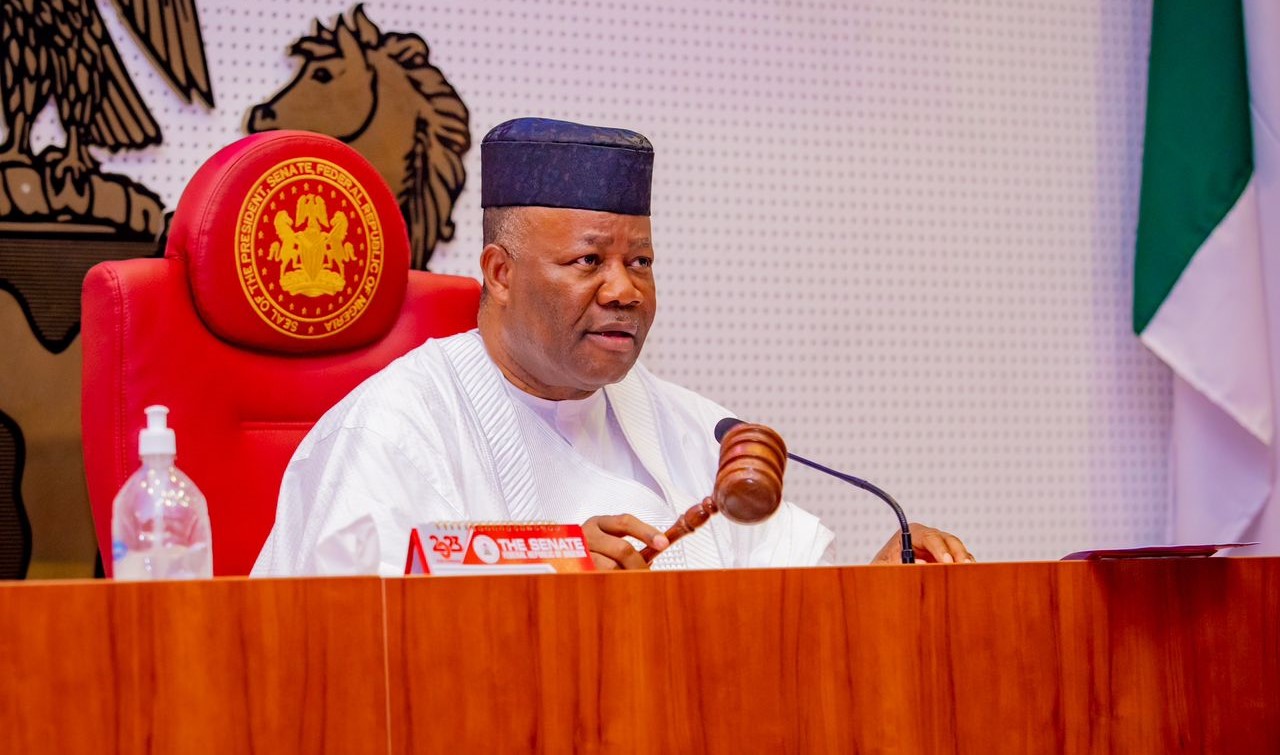
FILE: Akpabio

They made the call at the opening of the 15th National Security Seminar organised by the Alumni Association of the National Defence College in Abuja.

Represented by the Director of Policy and Strategy at the Office of the National Security Adviser, Yazid Gbemudu, the NSA said Nigeria’s territorial integrity and national stability were closely tied to the effectiveness of its border security framework.

He noted that while Nigeria’s extensive land and maritime borders facilitated trade, regional integration and socio-economic development, they also exposed the country to threats including terrorism, arms trafficking, smuggling, human trafficking, irregular migration and other forms of transnational organised crime.

According to him, weak border governance creates vulnerabilities that can be exploited by criminal and terrorist networks, thereby undermining national security and development efforts.

“A major pillar of Nigeria’s contemporary border security framework is the National Border Management Strategy, which promotes an integrated border management approach.

“The strategy seeks to enhance intelligence collaboration, strengthen border infrastructure, improve surveillance capabilities and modernise border management processes,” he said.

Ribadu said the deployment of Border Management Information Systems and other technological solutions at key entry and exit points had improved data collection, traveller screening and migration monitoring.

“These initiatives demonstrate Nigeria’s commitment to aligning its border management practices with international standards,” he added.

See also  Nigerian Airforce promotes 57 senior officers

The NSA stressed the need for the full implementation of an integrated border management system to improve coordination among security, intelligence and law enforcement agencies.

“Effective intelligence sharing, joint operations and harmonised border procedures are essential for addressing contemporary security threats,” he said.

He also advocated increased investment in technology-driven border security solutions.

“Expanding surveillance systems across land, maritime and coastal borders will significantly improve monitoring capabilities and reduce illegal cross-border activities.

“Modern challenges require modern solutions, including biometric identification systems, advanced border monitoring technologies and data-driven security frameworks,” Ribadu stated.

The NSA further emphasised the importance of regional and bilateral cooperation, noting that many of the security challenges confronting Nigeria’s borders were transnational in nature and required coordinated responses among neighbouring countries.

He also called for greater investment in border communities through sustainable development, improved infrastructure and economic opportunities to reduce their vulnerability to criminal exploitation.

“Strengthening Nigeria’s border security architecture is fundamental to ensuring national stability, protecting territorial integrity and promoting socio-economic development,” he said.

Ribadu, however, acknowledged challenges such as porous borders, inadequate infrastructure, limited technological capabilities and gaps in inter-agency coordination, saying they required urgent attention.

“Border security is a shared responsibility that requires the collective efforts of security agencies, government institutions, border communities and international partners,” he added.

Speaking at the event, Akpabio, who was represented by the Chairman of the Senate Committee on Defence, Ahmad Lawan, said Nigeria’s extensive land and maritime boundaries posed significant security challenges.

“As a country with extensive land and maritime boundaries, Nigeria faces significant challenges relating to border control, illegal migration, arms trafficking, smuggling and the infiltration of criminal and extremist elements.

See also  US orders staff to leave Nigeria embassy, lists 23 states as ‘Do Not Travel’

“It is, therefore, imperative that Nigeria prioritises the strengthening of its border security architecture through improved surveillance, enhanced infrastructure, better inter-agency coordination, technological innovation and stronger regional cooperation,” he said.

Akpabio noted that many of the security threats confronting Nigeria had transnational dimensions, making coordinated responses essential.

He stressed that peace and security remained prerequisites for meaningful national development.

“There can be no meaningful development without peace and security. Porous and poorly managed borders can become vulnerabilities that undermine national security efforts and national stability,” he said.

The Senate President also advocated a whole-of-government and whole-of-society approach to addressing insecurity.

According to him, government institutions, security agencies, civil society organisations, the private sector, traditional institutions, the media and academia all have critical roles to play in safeguarding the country.

Earlier, the Acting President of AANDEC, Commodore Amatare Kpou (retd.), described the seminar as a key platform for promoting informed discourse on national security challenges and opportunities.

Kpou said the theme of the seminar, “Strengthening Nigeria’s Border Security Architecture for National Stability,” was timely, given the growing threats of irregular migration, smuggling, trafficking and other cross-border crimes.

He expressed confidence that the deliberations would generate useful recommendations for policymakers and contribute to efforts aimed at building a safer and more secure Nigeria.

Nigeria shares over 4,000 kilometres of land borders with neighbouring countries and an extensive coastline, making border security a critical component of national security.

Authorities have repeatedly identified porous borders as channels for terrorism, arms smuggling, human trafficking and other transnational crimes.

The Federal Government has in recent years intensified efforts to strengthen border management through technology, intelligence sharing and regional cooperation.

See also  Nigeria's Consul-General in Cameroon, Ambassador Taofik Obasanjo Coker is de@d

punch.ng

FOLLOW US ON:

FACEBOOK

TWITTER

PINTEREST

TIKTOK

YOUTUBE

LINKEDIN

INSTAGRAM

Continue Reading

Trending