Connect with us

Business

Dangote rejects NNPC offer to increase stake in refinery; read why

Published

on

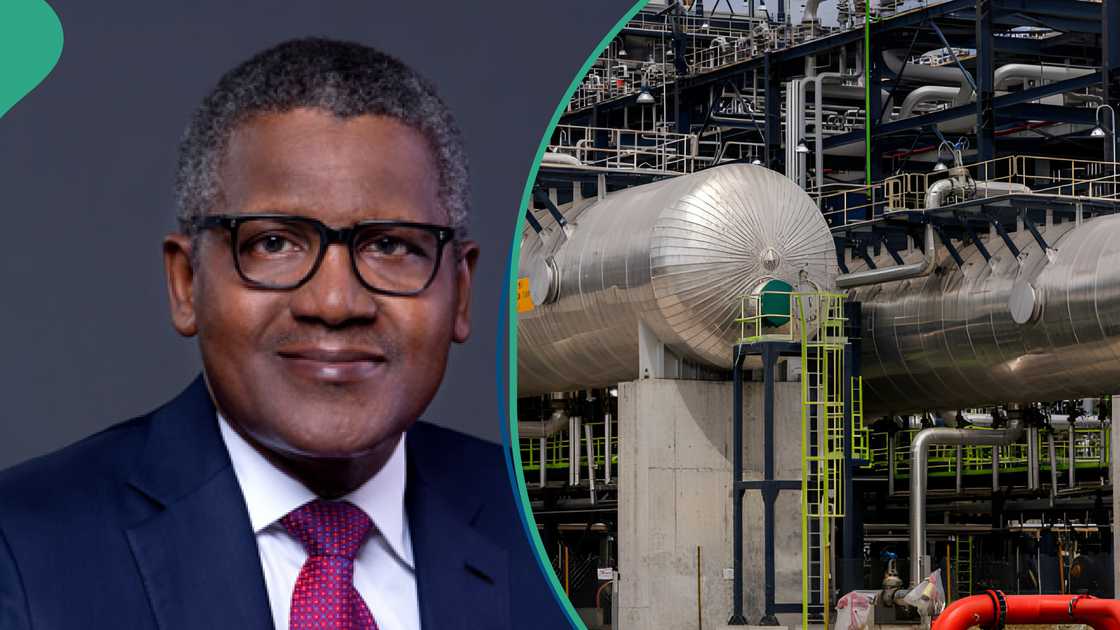
The President of the Dangote Group, Alhaji Aliko Dangote, has said the group rejected requests by the Nigerian National Petroleum Company Limited to increase its 7.25 per cent stake in the Dangote Petroleum Refinery.

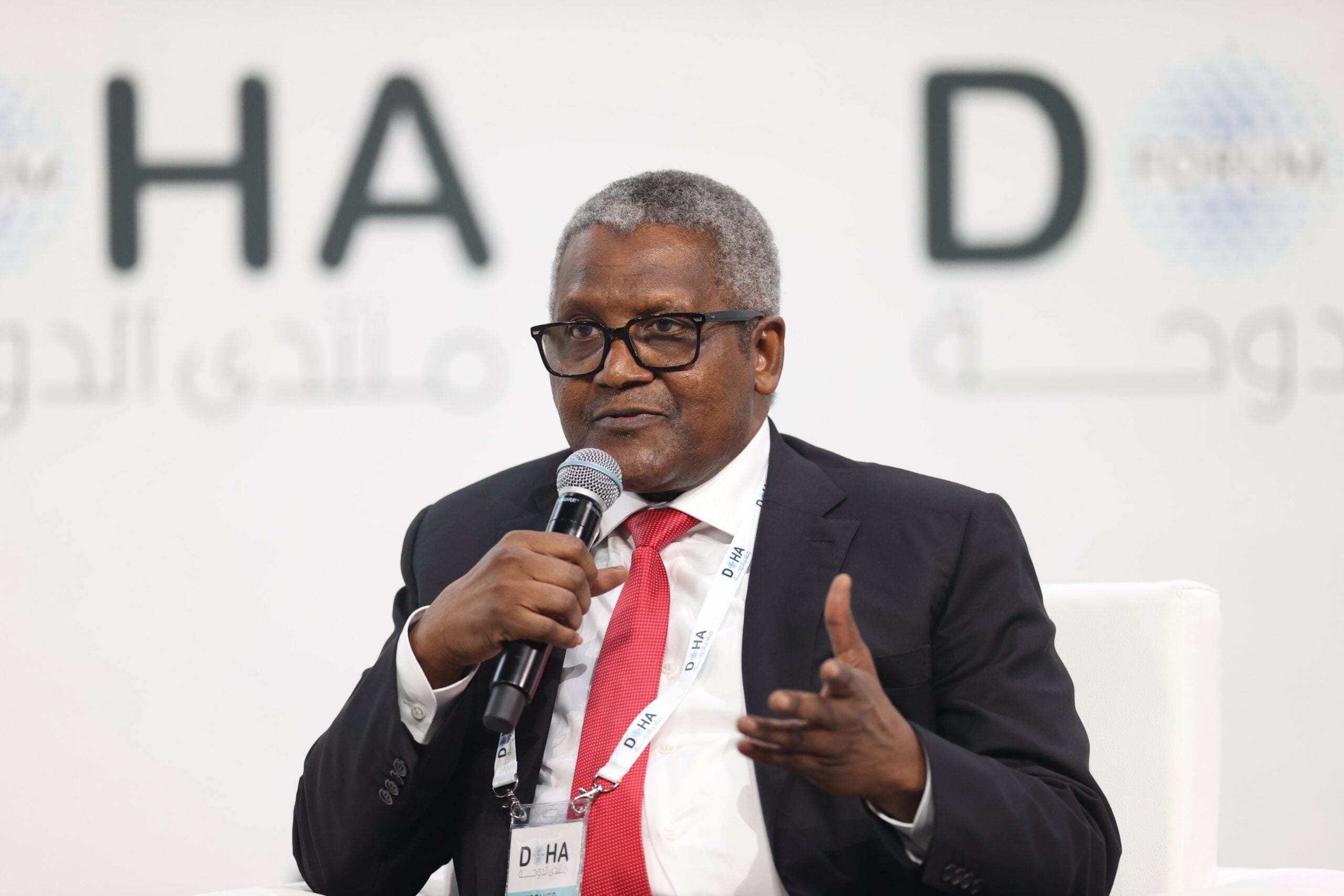
Dangote stated this in an interview with the Chief Executive Officer of the Norwegian Sovereign Wealth Fund, Nicolai Tangen. The interview was monitored by one of our correspondents on Wednesday.

This came as findings by The PUNCH showed that petrol supply from the $20bn Lekki-based refinery rose to 3.18 billion litres in the first quarter of 2026, while imports fell sharply to 965.52 million litres.

Further findings indicated that the average domestic ex-depot petrol price from the Dangote refinery across January to March 2026 was about ₦1,000 per litre. This implies that the multi-billion-dollar plant supplied over N3.2tn worth of petrol domestically during the review period.

Also, the war between the United States and Iran, and its resultant disruption of the oil sector and other sectors, has led to increased revenue for the Dangote refinery, as the plant has raised its refined petroleum products export.

According to Dangote during the interview, the NNPC’s offer to increase its 7.25 per cent stake in the refinery was rejected because the company is planning to go public and give other Nigerians the opportunity to own shares in the plant.

It was reported that in 2021, the NNPC acquired the 7.25 per cent stake in the refinery for $1bn, with an option to acquire the remaining 12.75 per cent stake by June 2024. But the national oil firm reneged on its decision.

During the interview with the Norwegian Sovereign Wealth Fund CEO, Dangote revealed that the national oil company had made attempts to acquire more stakes in the refinery, but this was turned down.

Responding to questions about what could be the biggest risks to his businesses, Dangote mentioned civil war and government policy inconsistencies, saying, “Actually, if there are civil wars, which is not in the offing at all.

“The other biggest risk is government inconsistencies in policies, and we are addressing that one because if you look at our refinery, the national oil company already owns 7.25 per cent, and they are trying to buy more. We are the ones that said no; we want to now spread it and have everybody be part of it.”

Recall that the NNPC, under the former Group Chief Executive Officer, Mele Kyari, reduced its stake in the refinery from 20 per cent to 7.25 per cent. Aliko Dangote made this public in 2024. He disclosed that the NNPC had only a 7.2 per cent stake in the refinery and not 20 per cent as many Nigerians believed.

“The agreement was actually 20 per cent, which we had with NNPC, and they did not pay the balance of the money up until last year; then we gave them another extension up until June (2024), and they said that they would remain where they had already paid, which is 7.2 per cent. So NNPC owns only 7.2 per cent, not 20 per cent,” Dangote stated in 2024, to the surprise of many Nigerians.

Speaking further during the latest interview, the billionaire businessman said shareholders can get their dividends in dollars. “What we are announcing is that when you invest in any of our businesses going forward, in cement or in the refinery, in petrochemicals, in fertiliser, we guarantee to pay you a dividend in dollars because we are very well into exports. 80 per cent of our revenue will be in dollars,” he said.

To raise funds for building the refinery, Dangote said he got a lot of support from various financial institutions, including Nigerian banks.

According to him, the initial plan was to fund most of the construction work “from our internally generated funds”, but because of naira devaluation, the group “had to rely on Afreximbank, Africa Finance Corporation, Zenith Bank, Access Bank, UBA and a couple of the local banks, but of course we also have a very good relationship with the Standard Bank of South Africa and, at the beginning, Standard Chartered Bank of the UK”.

He maintained that the company was lucky and what happened when the plant was completed “turned out to be much more than our own expectations”.

See also  Elon Musk Reacts as Nigeria Makes Top 10 List of Countries Contributing to Global GDP

In the interview, Dangote disclosed how he sold his properties in the United States and the United Kingdom to settle in Nigeria.

“When I decided to go into the industry, you know what I did? I sold all my properties in the US. I had two houses in the US, big mansions, and I had a house in the UK. I wanted to really sit in Nigeria and concentrate.

“You know, sometimes when you own a holiday home anywhere, you have to create that time to go and use that property. So, now my life is very simple. Wherever I go, I use hotels; I pay. When I leave, nobody will call me and say I have a burst pipe or something is wrong. So I’m committed to what I do, and I just don’t do things; I always create a vision.

“It’s just like now; we created a vision for 2030. So, I know I have a target to meet. I just don’t do business. All my businesses are targeted,” he said.

On how he decides which business to venture into, the business mogul replied, “I first of all look at what we need as a people? What is it that we are supposed to be producing, and we’re importing? So we do what you call ‘backward integration’. We produce what the people need, and we are now producing things that when you wake up as a human being every morning, you must use part of what we produce,” he said.

While defending why the NNPC reduced its planned stake in the Dangote refinery in 2024, the NNPC’s former spokesman, Olufemi Soneye, said it was to invest in compressed natural gas stations.


N3.2tn petrol supply

Petrol supply from local refineries rose to 3.18 billion litres in the first quarter of 2026, while imports fell sharply to 965.52 million litres, according to data from official documents of the Nigerian Midstream and Downstream Petroleum Regulatory Authority analysed by The PUNCH.

Although the NMDPRA documents did not directly name Dangote refinery in the first-quarter supply table, industry records show that it is the only refinery in Nigeria currently known to be producing Premium Motor Spirit on a commercial scale.

The agency’s fact sheet also listed Dangote among Nigeria’s active refineries and separately tracked its PMS performance. The figures showed that Nigeria’s total petrol supply stood at 4.14 billion litres between January and March 2026, with local refinery supply accounting for 76.7 per cent, while imports contributed 23.3 per cent.

This marked a major shift from the first quarter of 2025, when domestic refineries supplied 1.99 billion litres, while oil marketers imported 2.43 billion litres. Total supply in Q1 2025 stood at 4.42 billion litres.

For a proper year-on-year comparison, The PUNCH converted the 2025 figures from the average daily supply provided by the NMDPRA into monthly volumes by multiplying each month’s million litres per day by the number of days in the month and then by one million. This became necessary because the 2026 report provided actual monthly litre volumes, while the 2025 data was presented as daily averages.

The analysis showed that local refinery supply jumped by 59.2 per cent from 1.99 billion litres in Q1 2025 to 3.18 billion litres in Q1 2026. Importation, however, dropped by 60.2 per cent from 2.43 billion litres to 965.52 million litres.

Despite the increase in local refining, total petrol supply declined by 6.2 per cent year-on-year from 4.42 billion litres in Q1 2025 to 4.14 billion litres in Q1 2026.

In January 2026, local refinery supply stood at 1.24 billion litres, importation was 698.19 million litres, while total supply reached 1.94 billion litres. This translated to a daily average of 40.07 million litres from local refining, 22.52 million litres from imports, and 62.59 million litres in total supply.

Compared with January 2025, local refinery supply rose by 109.8 per cent from 19.1 million litres per day, while imports fell by 8.8 per cent from 24.7 million litres per day. Total daily supply also increased by 43.2 per cent from 43.7 million litres per day.

In February 2026, local refinery supply dropped to 824.45 million litres, while imports collapsed to 85.10 million litres. Total supply fell to 909.55 million litres. On a daily basis, local refinery supply averaged 29.44 million litres, imports averaged 3.04 million litres, and total supply averaged 32.48 million litres.

See also  2027 battle: Rivers crisis escalates as top APC govs back Fubara

This showed that while local refinery supply was 18.7 per cent higher than the 24.8 million litres per day recorded in February 2025, imports crashed by 88.9 per cent from 27.5 million litres per day. Total supply also fell by 37.9 per cent from 52.3 million litres per day in the same month of 2025.

In March 2026, local refinery supply recovered to 1.11 billion litres, while importation rose to 182.24 million litres. Total supply stood at 1.29 billion litres. This amounted to daily averages of 35.87 million litres from local refining, 5.88 million litres from imports, and 41.75 million litres in total supply.

Compared to March 2025, local refinery supply increased by 56.6 per cent from 22.9 million litres per day, while importation fell by 79.5 per cent from 28.7 million litres per day. Total supply declined by 19.1 per cent from 51.6 million litres per day.

Month-on-month, total petrol supply fell by 53.1 per cent from 1.94 billion litres in January 2026 to 909.55 million litres in February, before rising by 42.3 per cent to 1.29 billion litres in March.

Local refinery supply also fell by 33.6 per cent between January and February, before rising by 34.9 per cent in March. Imports declined by 87.8 per cent in February but increased by 114.2 per cent in March.

The NMDPRA’s April 2026 FAAC report showed that PMS supply rose from 909.55 million litres in February to 1.29 billion litres in March, representing a 42.29 per cent increase. It also showed that PMS distribution through truck-out fell from 1.59 billion litres in February to 1.47 billion litres in March.

The figures indicate that Nigeria’s petrol market is becoming less dependent on imports, with domestic refining now providing the bulk of the national supply.

However, the decline in total Q1 supply suggests that increased local refinery output has not fully translated into higher overall petrol availability compared with the same period of 2025.

The PUNCH earlier reported that Nigerians consumed about 4.93 billion litres of Premium Motor Spirit (petrol) to fuel various economic activities in the first quarter of 2026, according to an analysis of the Nigerian Midstream and Downstream Petroleum Regulatory Authority’s downstream fact sheet monthly data.

It revealed that this amount represents a 7.4 per cent increase from the 4.59 billion litres recorded in the corresponding period of 2025.

The PUNCH also reported that the Dangote Petroleum Refinery exported about 434 million litres of Premium Motor Spirit (petrol) in March 2026, as the facility diversified its customer base after significantly outpacing domestic consumption.

The report indicated that the refinery, owned by Aliko Dangote, operated at an average capacity utilisation of 93.62 per cent, reinforcing its position as the dominant supplier of refined petroleum products in Nigeria.

In earlier remarks reported in 2025, the Dangote group chairman, Aliko Dangote, asserted that the refinery had sufficient refined products in storage to meet domestic needs, saying:

“Right now, we have more than half a billion litres in storage. The refinery is producing enough refined products, gasoline, diesel, and kerosene to meet all of Nigeria’s needs.”

Commenting in an earlier report, renowned energy economist Professor Wumi Iledare, noted that Nigeria’s reliance on imported petrol has declined but has not been eliminated. He also warned against claims that fuel importation has ended following increased domestic supply from the Dangote Petroleum Refinery.

In a personal note titled “Dangote Refinery, Petrol Imports, and Market Reality,” Iledare said recent assertions that Nigeria no longer imports petrol reflect “understandable optimism” but overstate the economic reality of the downstream oil market.

“Recent claims that petrol importation into Nigeria has ended because Dangote Refinery now meets domestic demand reflect understandable optimism, but they overstate economic reality.

“Dangote Refinery has significantly improved domestic supply conditions and reduced Nigeria’s marginal reliance on imported petrol. However, neither Dangote refinery nor petroleum marketers determines national supply outcomes,” he said.

The Chief Executive Officer of petroleumprice.ng, Jeremiah Olatide, recently said that Nigeria’s domestic refining capacity has grown significantly.

Olatide described the development as a major milestone in the country’s long-standing quest to reduce dependence on imported petroleum products.


661,000bpd output

Also during the latest interview, Dangote revealed that his refinery is now operating at 661,000 barrels per day. This was even as he recounted the gains of the US-Iran war for its refinery and fertiliser business.

See also  Military investigation ends: DHQ moves to arraign alleged coup plotters

Dangote boasted that the company has proved its capacity by building a refinery of that magnitude in Nigeria, commissioning it, and running it above its 650,000 bpd nameplate capacity.

With this, he said financial institutions would be ready to support the group whenever the need arises.

“The refinery has been tested. We have now processed even crude at 661,000 barrels a day. So we have demonstrated that capability. Now, a lot of financial institutions are saying that, ‘Yes, if it is you doing this project, we are there to back you because we know that you can deliver; you have the capacity, you have the knowledge, and you have the experience,” he said.

Asked to speak about the impact of the Middle East crisis on his businesses, Dangote recounted the gains of the war, which has sent energy prices high across the globe.

To Dangote, there were windfalls as the demand for fuel rose globally, even with the prices. According to him, fertiliser has risen from $400 to $850 per tonne. Polypropylene went up from $900 to about $3,000. Dangote added that most Nigerian plastic companies would have shut down by now if not for his polypropylene.

“The effect of the war on our businesses is more beneficial than a downside because today, fertiliser is in very high demand. In February, before the Middle East crisis, urea was selling for about $400 a tonne. Today we are selling a tonne of fertiliser for $850, and we are actually oversold. In plastics, polypropylene has moved from $900. In the UK today, it is about $3,000.

“And if not because of the polypropylene we are producing today, all the plastic industries in Nigeria would have shut down because there’s nowhere you can even get it. Our aviation fuel is oversold till the middle of July, and we’re producing 20 million litres of jet fuel a day,” Dangote disclosed.

Speaking about crude supply, Dangote said, “We source about 56 per cent from Nigeria and some from Angola. We buy quite a bit from Angola, we buy from Libya, and we buy from the US. At one point, we were doing about seven to eight cargoes of WTI from the US. But we’re getting more of Nigeria’s crude now. We have to now buy 21 cargoes every month. That’s how big we are. And we’re more than doubling the refinery. You know, in the next 30 months, we will be at 1.4 million barrels per day, which is huge.”

Aliko Dangote named a category of those he called the ‘Mafia,’ trying to sabotage the refinery.

“The Mafia are the people who are actually benefiting because Nigeria was giving out almost $10bn every year as a subsidy. There are shippers who are making tonnes of money. There are traders who are making a lot of money buying crude and sending us refined products. There are also the local people; because it was subsidised, very few people are getting allocations. So they are making billions of naira. So, these are the people that did not want us to settle down because they believed that we were coming here to displace them, and of course, that’s what we have done now,” he said.

He added that plans are underway to sell stakes and inject about $45bn into the businesses for a target of $100bn revenue by 2030.

“We are coming up with selling part of the business, getting more investors into the business, and also making sure that we continue to grow the business. Cement production is going to 100 million tonnes. In cement, we don’t even need much money; we are getting financing, and the cash generation is very liquid.

“So, we’ll be able to actually fund this $45bn, which will eventually take us to $100bn of revenue, because our target is to get to $100bn by 2030, with a market valuation of maybe more than $250bn, because as we speak today, last year, our EBITDA was $3bn, but the target by 2030 is to be 10 times that amount, to be at over $30bn of EBITDA,” he stated.


Continue Reading
Click to comment

Leave a Reply

Your email address will not be published. Required fields are marked *

Business

Dangote emerges recipient of 2026 Ọbafẹmi Awolọwọ Prize for Leadership, read details

Published

on

Alhaji Aliko Dangote, President of the Dangote Group, has emerged the winner of the 2026 Ọbafẹmi Awolọwọ Prize for Leadership.

The African industrialist and philanthropist was announced winner among many nominations received for the prestigious biennial global prize in celebration of the democratic and development-oriented ideals of a foremost Pan-African nationalist, Chief Obafemi Awolowo.

Unveiling the winner for the 2026 edition, the Ọbafẹmi Awolọwọ Foundation, in a statement on Monday signed by its Executive Director, Ambassador Dr Ọlatokunbọ Awolọwọ Dosumu, said a distinguished Selection Committee chaired by former Commonwealth Secretary-General, Chief Emeka Anyaoku, GCON, GCVO, CFR, “recognised Dangote’s extraordinary contributions to entrepreneurship, industrialisation and economic development in Nigeria and across Africa.

“Through decades of sustained investment in manufacturing, cement production, fertiliser, petroleum refining and other strategic sectors, he has demonstrated remarkable vision, courage, resilience and tenacity of purpose, while helping to expand Africa’s productive capacity and advance the prospects of economic self-reliance.”

The Foundation explained that the biennial prize, established in 2012, followed a special dialogue organised by the Foundation on Transformational Leadership and Good Governance: Lessons from the Awolọwọ Example, which seeks to recognise, reward and celebrate individuals whose leadership exemplifies the values and ideals for which Chief Awolọwọ was renowned.

According to the statement, the selection process involves public nominations, rigorous screening, verification and careful evaluation against established criteria, including integrity, vision, courage, discipline, accountability, people-centred leadership and demonstrable contributions to societal advancement.

Continuing, the Foundation explained that the Committee also placed considerable emphasis on Dangote’s commitment to philanthropy and human development through the Aliko Dangote Foundation, established in 1994. “Its interventions in education, healthcare and social welfare reflect a recognition that economic growth must be accompanied by meaningful improvements in people’s lives,” the statement added.

See also  NNPC awaits reports on PH, Warri refineries’ revival

The statement further disclosed that the Prize will be formally presented on Saturday, March 6, 2027, the anniversary of Chief Awolọwọ’s birth, at a ceremony which will also feature the Ọbafẹmi Awolọwọ Prize for Leadership Lecture, to be delivered by the laureate, in keeping with the tradition of the Award.

FULL TEXT:

ALIKO DANGOTE EMERGES RECIPIENT OF 2026 ỌBAFẸMI AWOLỌWỌ PRIZE FOR LEADERSHIP

The Ọbafẹmi Awolọwọ Foundation has announced the recipient of the 2026 Ọbafẹmi Awolọwọ Prize for Leadership, instituted in honour of one of Africa’s foremost statesmen and advocates of visionary, people-centred governance.

Chief Ọbafẹmi Awolọwọ, first Premier of the Western Region of Nigeria, was widely acclaimed for his visionary leadership, integrity, discipline and commitment to social and economic transformation for the citizens. His pioneering programmes in education, healthcare and rural development, together with his advocacy of federalism and economic self-reliance, remain enduring landmarks in Nigeria’s developmental history.

Established in 2012, following a special dialogue organised by the Foundation on Transformational Leadership and Good Governance: Lessons from the Awolọwọ Example, the biennial Prize seeks to recognise, reward and celebrate individuals whose leadership exemplifies the values and ideals for which Chief Awolọwọ was renowned.

The selection process involves public nominations, rigorous screening, verification and careful evaluation against established criteria, including integrity, vision, courage, discipline, accountability, people-centred leadership and demonstrable contributions to societal advancement. The process is overseen by a distinguished Selection Committee chaired by former Commonwealth Secretary-General, Chief Emeka Anyaoku, GCON, GCVO, CFR.

Following the conclusion of the selection process, the Foundation is pleased to announce Alhaji Aliko Dangote, GCON, President of the Dangote Group, as the recipient of the 2026 Ọbafẹmi Awolọwọ Prize for Leadership.

See also  668,000 meters deployed, installed on customers’ premises – FG  

In arriving at its decision, the Selection Committee recognised Dangote’s extraordinary contributions to entrepreneurship, industrialisation and economic development in Nigeria and across Africa. Through decades of sustained investment in manufacturing, cement production, fertiliser, petroleum refining and other strategic sectors, he has demonstrated remarkable vision, courage, resilience and tenacity of purpose, while helping to expand Africa’s productive capacity and advance the prospects of economic self-reliance.

The Committee also placed considerable emphasis on his commitment to philanthropy and human development through the Aliko Dangote Foundation, established in 1994. Its interventions in education, healthcare and social welfare reflect a recognition that economic growth must be accompanied by meaningful improvements in people’s lives.

Of particular significance is the Foundation’s ambitious educational initiative launched in 2026, designed to support 45,000 students initially, with plans to extend its reach to 1.3 million students by 2035. The initiative places special emphasis on science, technology, engineering and mathematics (STEM), closing the literacy gender gap, teacher development and improving the transition from education to employment.

Dangote’s description of this commitment as a “strategic investment” resonates strongly with Chief Awolọwọ’s conviction that education and human-capital development are fundamental to national progress. His declaration that “Every child we keep in school strengthens our economy. Every student we support reduces inequality” is particularly significant in this regard.

The Committee considers Dangote’s combination of visionary enterprise, industrial transformation and commitment to human development a compelling demonstration of leadership whose impact extends beyond individual achievement to the wider society.

The Prize will be formally presented on Saturday, March 6, 2027, the anniversary of Chief Awolọwọ’s birth, at a ceremony which will also feature the Ọbafẹmi Awolọwọ Prize for Leadership Lecture, to be delivered by the laureate, in keeping with the tradition of the Award.

See also  Infractions - FG threatens to disconnect Gencos from power grid

Source: tribuneonlineng.com

FOLLOW US ON:

FACEBOOK

WHATSAPP CHANNEL

TWITTER

PINTEREST

TIKTOK

YOUTUBE

LINKEDIN

INSTAGRAM

Continue Reading

Business

CBN may hold interest rate over naira pressure, read details

Published

on

Financial market analysts have warned that renewed pressure on the naira, declining foreign exchange reserves and rising global interest rates could prevent the Central Bank of Nigeria from implementing further monetary policy easing, despite the continued decline in inflation.

The analysts, in separate pre-Monetary Policy Committee reports obtained by The PUNCH on Monday, projected that the apex bank would retain its Monetary Policy Rate at 23 per cent during its 308th MPC meeting scheduled for 23 and 24 November, 2026.

The PUNCH earlier reported that the approaching 2027 general elections and the Christmas season are adding pressure to the naira, with the currency depreciating to N1,394/$ at the official market on Friday and N1,460/$ at the parallel market on Sunday.

The naira lost N6 at the official market on Friday, extending its depreciation streak after weakening by N8.01 on Thursday to N1,388/$ from N1,379.99/$ recorded on Wednesday.

In its report titled ‘MPC to Hold Rates as Naira Pressure Builds’, Cordros Securities warned that additional interest rate reductions could trigger capital outflows and further weaken the domestic currency.

The investment firm said, “In our view, the naira has become the binding constraint on the MPC’s policy rate decision.”

It added, “With the parallel market premium exceeding NGN100.00/USD, gross FX reserves declining and the carry on short-dated naira instruments narrowing towards estimated breakeven levels, a further rate cut could weaken the attractiveness of naira assets and increase the risk of foreign portfolio investment outflows.”

Similarly, the Financial Markets Dealers Association, in its November 2026 pre-MPC analysis, assigned a 60 per cent probability to the committee retaining the benchmark interest rate and a 40 per cent probability to a reduction of not more than 50 basis points.

See also  Infractions - FG threatens to disconnect Gencos from power grid

The association explained, “Monthly inflation rose in October, the naira is weaker, reserves are off their peak and the Fed is expected to hike in December.”

The projections followed the MPC’s September decision to reduce the benchmark rate by 350 basis points from 26.5 per cent to 23 per cent.

According to Cordros, the naira depreciated from N1,329.16 per dollar at the end of September to N1,346.26 on 31 October, before weakening further to N1,389.73 on 20 November.

This represented a 2.5 per cent depreciation since September, although the currency remained 4.7 per cent stronger than at the beginning of the year.

The firm reported that the gap between official and parallel market exchange rates widened to approximately N107 per dollar.

Foreign exchange reserves also declined from $55.26bn on 27 October to $54.65bn on 19 November, representing a reduction of $610m.

Cordros disclosed that the CBN reportedly supplied $6.66bn to the FX market since September’s MPC meeting, including $3.38bn between 1-20 November.

Despite these interventions, FX conditions deteriorated, with the Nigerian Foreign Exchange Market recording net outflows of $1.41bn in October, compared with net inflows of $1.03bn in September.

The firm also reported that foreign portfolio inflows increased by only 3.4 per cent month-on-month, while domestic foreign exchange inflows rose by 148.1 per cent to $5.11bn.

The FMDA separately observed that weekly FX inflows declined to $808m from $2.48bn, highlighting concerns about dollar availability.

Both institutions identified global monetary conditions as another constraint, particularly the narrowing interest rate differential between Nigeria and the United States.

See also  NNPC April crude supplies to Dangote cross 1bn barrels

The FMDA reported that the gap between Nigeria’s benchmark interest rate and the upper limit of the US Federal Reserve’s policy rate had narrowed from 22.5 percentage points to 19 percentage points.

Meanwhile, annual headline inflation declined for the fifth consecutive month to 14.06 per cent in October from 14.63 per cent in September.

Cordros projected that annual inflation could moderate further to between 13.30 and 13.90 per cent by December.

It nevertheless cautioned that rising input costs and persistent food inflation justified maintaining the current monetary policy stance.

The FMDA acknowledged that declining inflation provided room for additional easing, noting that the real policy rate remained approximately 8.9 percentage points.

It explained, “The case for a cut is real, inflation is down from 18.97 per cent a year ago to 14.06 per cent, and the real policy rate is about 8.9 points.”

On domestic liquidity, Cordros reported that banking system liquidity averaged N5.43tn between 1 and 20 November, while banks’ deposits with the CBN’s Standing Deposit Facility averaged N5.46tn.

The firm suggested that the CBN could consider reducing the deposit facility rate rather than cutting the benchmark rate.

An Abuja-based economist, Chukwunonse Iheoma, said: “This captures the policy dilemma: the CBN may be moving towards lower interest rates to support economic activity, but renewed pressure on the naira could limit its ability to ease monetary policy without risking exchange-rate stability and inflationary pressures.”

Continue Reading

Business

Read how 2027 politics, Christmas spending is squeezing naira

Published

on

The approaching 2027 general elections and the Christmas season are adding pressure to the naira, with the currency depreciating to N1,394/$ at the official market on Friday and N1,460/$ at the parallel market on Sunday.

The naira lost N6 at the official market on Friday, extending its depreciation streak after weakening by N8.01 on Thursday to N1,388/$ from N1,379.99/$ recorded on Wednesday.

On Wednesday, the currency had depreciated by N16.99 to N1,379.99/$ from N1,363/$ on Tuesday, highlighting renewed pressure in the official foreign exchange market.

At the parallel market, the naira traded at N1,440/$ on Thursday, compared with N1,375/$ a month earlier, while some currency traders said they were willing to offer lower rates to buyers purchasing large volumes.

However, currency demand has intensified in recent weeks, with traders attributing part of the pressure to political spending ahead of the 2027 elections and increased foreign exchange needs during the festive season.

A parallel market trader in Abuja, Haruna Ibrahim, said some customers were purchasing dollars on behalf of politicians preparing for the elections.

“There are people we see here who say they are politicians. They come here to buy dollars, claiming that they were sent by their bosses. I do not know which parties they belong, but they come here regularly,” he said.

Another Bureau de change trader in Lagos, who identified himself simply as Ahmed, said traders in Zone 5 believed political activities were contributing to increased demand for dollars, as politicians sought to accumulate foreign currency ahead of the elections.

See also  668,000 meters deployed, installed on customers’ premises – FG  

Speaking in a phone interview with The PUNCH, the Chief Executive Officer of the Centre for Promotion of Private Enterprise, Dr Muda Yusuf, said domestic factors could be contributing to the successive decline of the naira against the dollar.

The economist identified political spending, capital flight and policy uncertainty as possible factors behind the weakening currency and declining foreign reserves.

He said political spending could inject liquidity into the economy and put pressure on the naira, noting that the Central Bank of Nigeria had previously raised concerns about the impact of political activities on exchange rate stability.

“The political spending liquidity may be already putting pressure on the naira. The CBN had expressed that fear before during the latest Monetary Policy Committee meeting,” Yusuf said.

He argued that foreign exchange demand associated with political activities could be channelled through the parallel market because such transactions might not be formally documented or conducted through official channels.

Yusuf also warned that political uncertainty and statements by some politicians about reversing the economic reforms of the President Bola Tinubu administration could trigger capital flight.

An emerging markets expert and economist, Ike Ibeabuchi, attributed the weakening naira and declining reserves to reduced dollar supply and rising demand for foreign exchange.

He said lower inflows from exporters, investors and other sources might be reducing dollar availability in the market, while demand for foreign currency to finance imports and international transactions continued to exert pressure on the naira.

“Lower foreign exchange inflows from exporters, investors and other sources reduce dollar supply in the market, while demand for foreign currency for imports, international payments and other transactions continues to exert pressure on the naira,” Ibeabuchi said.

See also  Cheers In Abuja As Price Of Cooking Gas Per Kg Drops

He said the festive season typically increases demand for foreign exchange, while the influence of election-related spending on the currency could be greater than initially anticipated.

The combination of higher seasonal demand, political spending and weaker dollar inflows could further test the naira’s stability as the country approaches the 2027 elections.

Meanwhile, the reserves stood at $54.65bn on Friday, shedding $60.630m from Thursday’s $54.713bn.

Source: punchng.com

FOLLOW US ON:

FACEBOOK

WHATSAPP CHANNEL

TWITTER

PINTEREST

TIKTOK

YOUTUBE

LINKEDIN

INSTAGRAM

Continue Reading

Trending