Connect with us

Business

Africa urgently needs more fish farms, says UN

Published

on

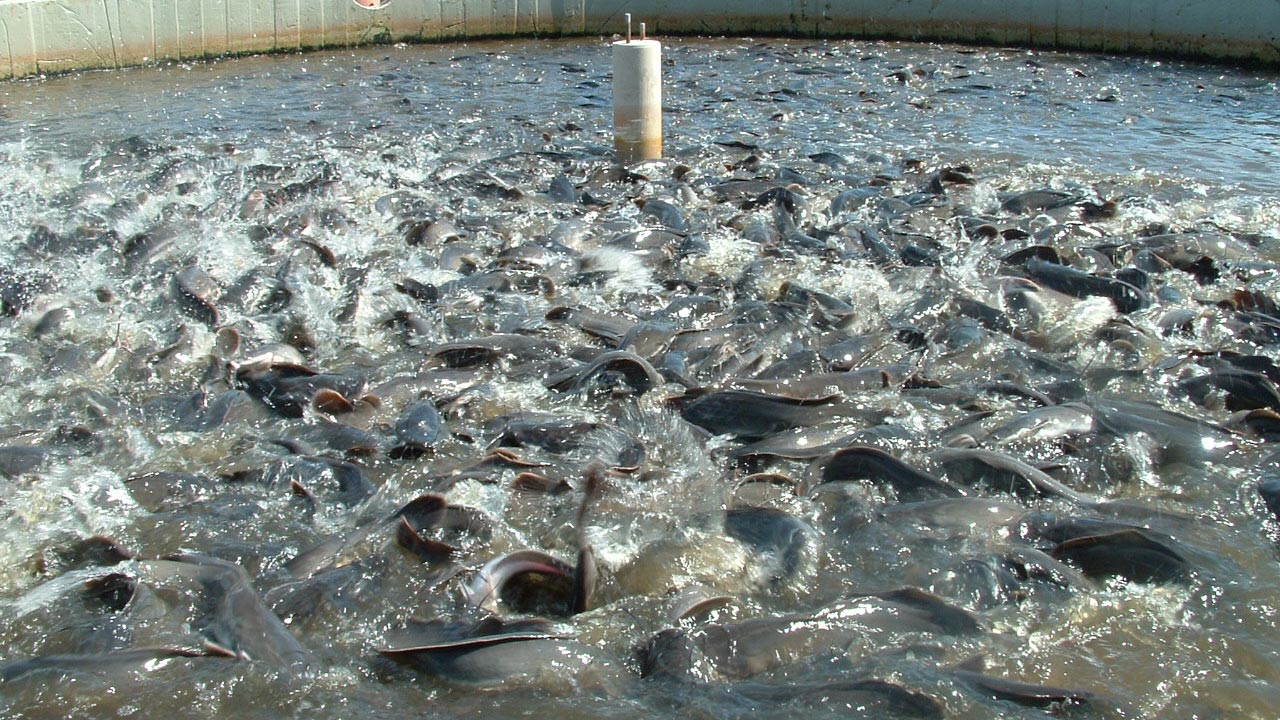
Africa needs to urgently expand its fish-farming sector to meet its food needs, the head of the UN’s fisheries division said Tuesday, even as its latest report found record production levels globally.

Fish and seafood is now a $184-billion trade, according to the State of World Fisheries and Aquaculture report by the United Nations’ Food and Agriculture Organization (FAO), launched at the Our Ocean Conference in Kenya.

Fish-farming, or “aquaculture”, overtook traditional “capture” fishing as a source of food production in 2021 and has continued to grow — surpassing 100 million tonnes for the first time in 2024, the latest year for data.

But Africa is lagging behind the rest of the world, with only 18 percent of its fish coming from farms, compared to around half elsewhere.

Sub-Saharan Africa’s fish production will need to grow by 68 percent between now and 2050 to keep up with its rapidly growing population, the FAO said.

“It’s an opportunity waiting to be exploited… but it’s whether the timing is sufficiently fast to catch up with that demand,” Manuel Barange, director of the FAO’s fisheries division, told AFP.

“Aquaculture can actually be a game-changer,” he said. “If we manage to develop aquaculture in Africa, there’s a lot of opportunities.”

But governments urgently need to create regulations and incentives to attract investors, Barange added.

More than 700 different species of fish are raised for consumption on aquaculture farms around the world and the FAO argues it is a more predictable and sustainable approach than traditional fishing at sea.

See also  Ajaokuta Steel risks power cut over N5.46bn debt

It is also more manageable in the face of climate change, which is causing rapid changes in the volumes and locations of ocean fish.

Climate change is “a disruptor of everything that we do,” said Barange.

More work is also needed to reduce over-fishing: the report found that only 62 percent of global fisheries were sustainably fished.

The 11th edition of the Our Ocean Conference began in the Kenyan port city of Mombasa on Tuesday — its first time in Africa — bringing together politicians, NGOs, investors and innovators.

Since its first edition in 2014, organisers boast that it has led to more than 2,900 commitments valued at over $169 billion, covering marine conservation, sustainable fisheries, climate adaptation, security and pollution reduction.

punch.ng

FOLLOW US ON:

FACEBOOK

TWITTER

PINTEREST

TIKTOK

YOUTUBE

LINKEDIN

INSTAGRAM

Continue Reading
Click to comment

Leave a Reply

Your email address will not be published. Required fields are marked *

Business

FAAN reopens Owerri airport for flight operations, read details

Published

on

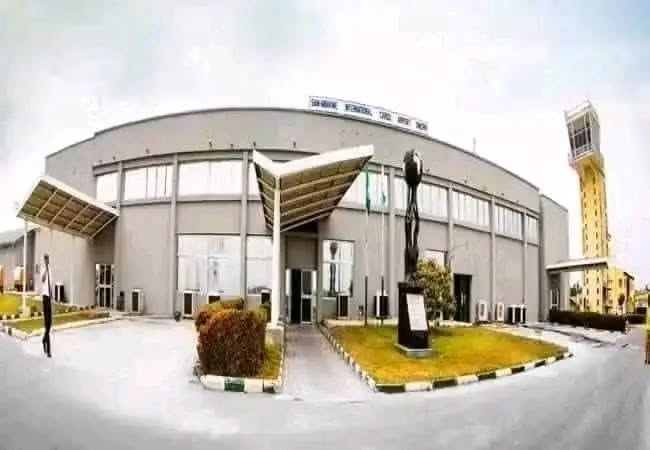
The Federal Airports Authority of Nigeria has reopened the Sam Mbakwe International Cargo Airport, Owerri, Imo State, for flight operations following the successful completion of runway rehabilitation works.

FAAN announced the reopening in a statement signed by its Director of Public Affairs and Consumer Protection, Henry Agbebire, and posted on its official X handle on Wednesday.

FAAN stated that the airport resumed operations on Wednesday, November 25, 2026, following approval by the Nigerian Civil Aviation Authority after post-rehabilitation technical assessments and inspections.

The runway was temporarily closed on October 20, 2026, to allow for rehabilitation works aimed at improving its condition, enhancing operational efficiency and ensuring compliance with aviation safety standards.

FAAN said, “Following post-rehabilitation technical assessments and inspections, the NCAA approved the reopening of Runway 17, subject to specified operational conditions.”

The authority also acknowledged the contributions of Imo State Governor, Hope Uzodimma, and the state government, particularly in extending the runway from 2,700 metres to 3,200 metres.

According to FAAN, the intervention underscores the importance of federal-state collaboration in advancing aviation infrastructure, improving air connectivity and stimulating regional economic development.

However, the authority said the initial resumption of flight operations would be limited to daytime services under Visual Flight Rules.

It added that night operations and other applicable instrument flight operations would commence after the completion and verification of outstanding runway lighting installations.

“Appropriate safety measures will remain in place around areas where associated works are ongoing, in line with NCAA requirements,” the statement added.

See also  Recapitalised banks poised to drive Nigeria’s $1trn economy ambition

FAAN also thanked airlines, passengers, host communities and other stakeholders for their patience and cooperation during the temporary closure.

The authority reaffirmed its commitment to providing safe, secure and efficient airport infrastructure in accordance with national and international aviation standards.

Continue Reading

Business

NGF distances self from $100m Paris Club refund dispute, read details

Published

on

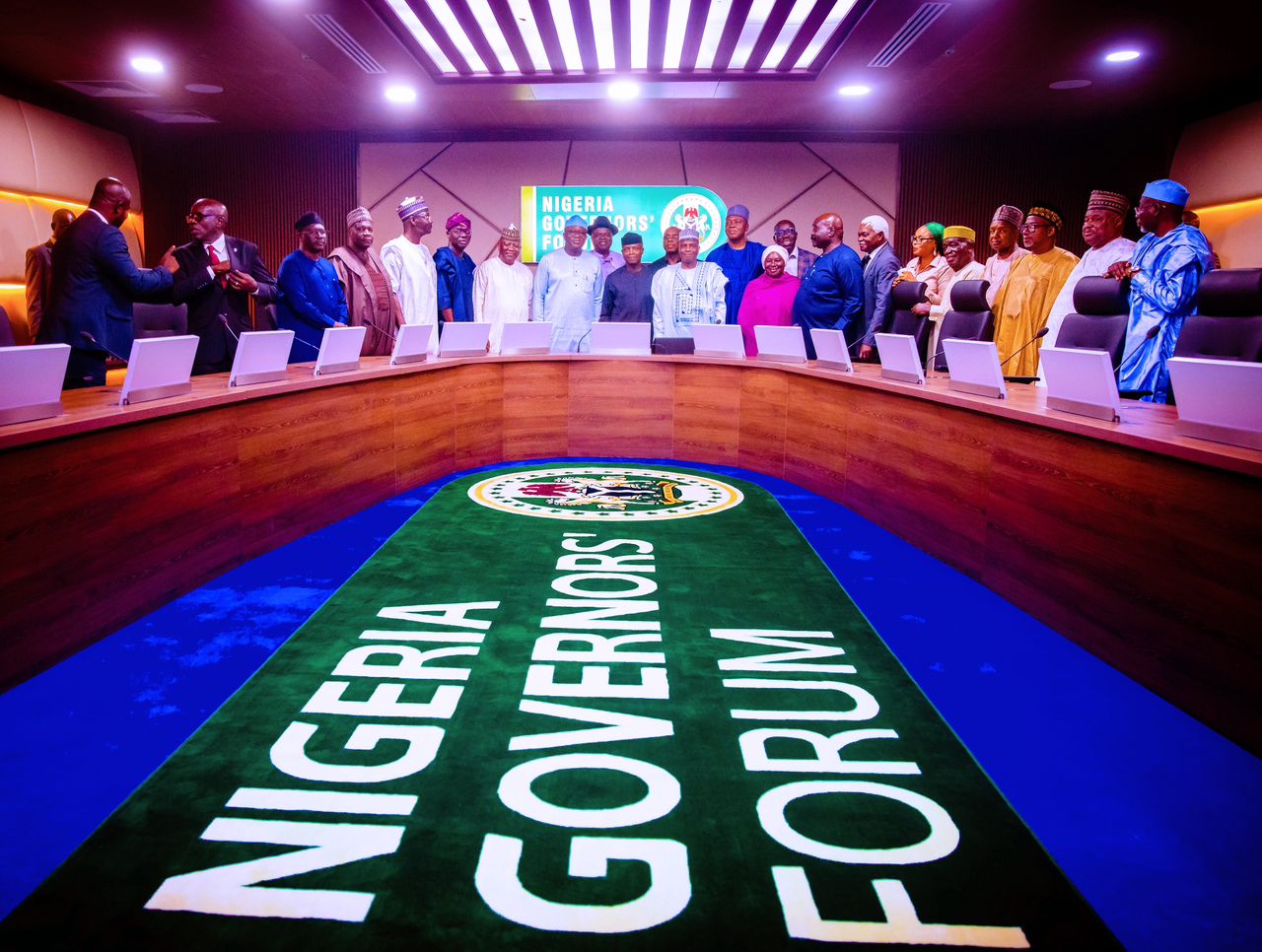
The Nigeria Governors’ Forum has distanced itself from the ongoing Paris Club refund suit, insisting that it was not involved in the transaction between the plaintiff, Dr Ted Iseghohi-Edwards, and the Association of Local Governments of Nigeria.

In a statement issued on Wednesday and signed by its Director of Media and Strategic Communications, Yunusa Abdullahi, the NGF said it neither participated in the transaction nor held any of the funds allegedly involved.

The development followed an interim order issued by the High Court of the Federal Capital Territory, Abuja, directing the freezing of $100m (about N135.58bn) allegedly held by the NGF over a dispute involving the Paris Club refunds and outstanding legal and consultancy fees.

Justice O.C. Agbaza granted the Mareva injunction on November 19, following an ex parte application filed by Iseghohi-Edwards against the Incorporated Trustees of the NGF and 29 commercial banks.

According to the Certified True Copy of the order obtained by The PUNCH on Tuesday, Iseghohi-Edwards is seeking to recover the money based on an alleged indemnity issued by the NGF on December 20, 2018.

The arrangement reportedly involved the Federal Government paying $100m to the forum as a stakeholder pending the determination of its liability for professional fees.

Reacting, the forum said the dispute originated from events in 2016, adding that its legal team was reviewing the court documents and would take appropriate steps in response.

The statement read, “The Nigeria Governors’ Forum is aware of recent media reports regarding the November 19, 2026 interim order, obtained ex parte, issued by the High Court of the Federal Capital Territory, Abuja, in the Paris Club refund suit filed by Dr Ted Iseghohi-Edwards over events that happened in 2016.

See also  Recapitalised banks poised to drive Nigeria’s $1trn economy ambition

“Please note that this issue emanated from allegations of transactions between the plaintiff and the Association of Local Governments of Nigeria. The Nigeria Governors’ Forum had no hand in that transaction and did not engage any party thereto, nor did it hold any such monies in its custody at any time.

“Meanwhile, the NGF’s legal team is currently reviewing the court processes and will respond accordingly.

“The forum reiterates its unwavering commitment to the rule of law, transparency and accountability.”

Source: punchng.com

FOLLOW US ON:

FACEBOOK

WHATSAPP CHANNEL

TWITTER

PINTEREST

TIKTOK

YOUTUBE

LINKEDIN

INSTAGRAM

Continue Reading

Business

CBN holds rate at 23%, warns of election spending, read details

Published

on

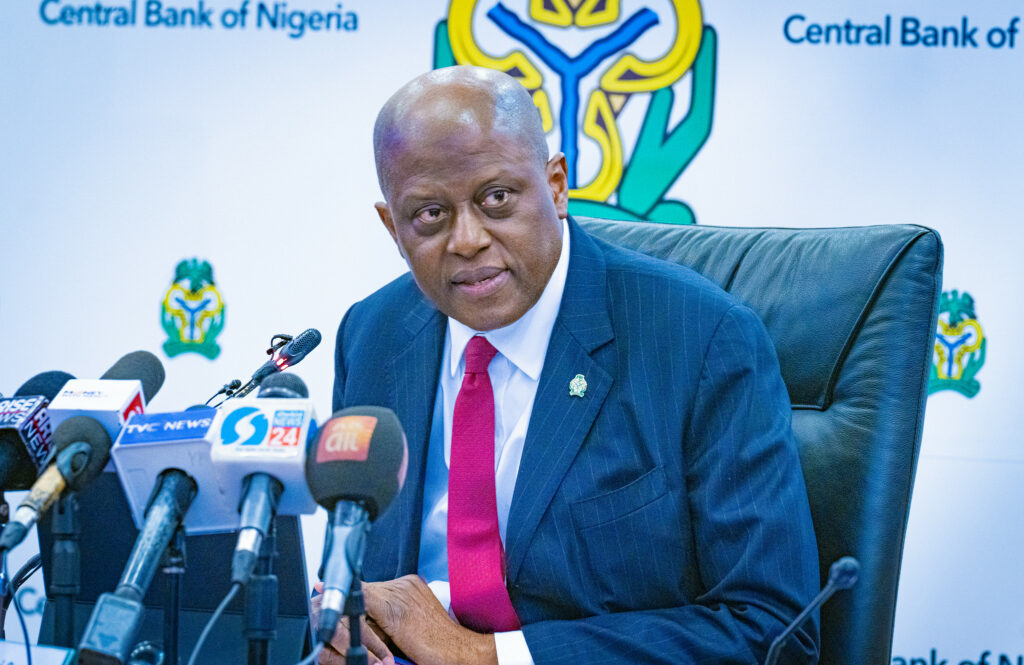
The Monetary Policy Committee of the Central Bank of Nigeria (CBN) has retained the benchmark interest rate at 23 per cent, citing inflationary risks arising from anticipated election-related spending, increased festive season expenditure and disruptions to global energy supplies.

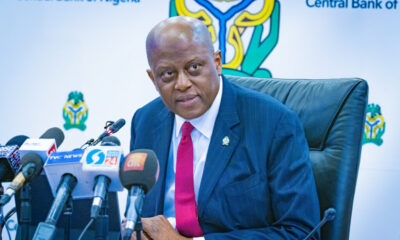
The CBN Governor, Olayemi Cardoso, announced the decision on Tuesday at the end of the committee’s 308th meeting, held on 23 and 24 November, 2026, in Abuja, with 10 members in attendance.

Cardoso said the committee retained the Monetary Policy Rate (MPR) at 23 per cent.

The committee also maintained the Standing Facilities Corridor at +50 and -300 basis points around the MPR. The Cash Reserve Requirement was retained at 45 per cent for deposit money banks, 16 per cent for merchant banks and 75 per cent for non-Treasury Single Account public sector deposits.

The decision follows the 350-basis-point reduction in the benchmark interest rate from 26.5 per cent to 23 per cent in September 2026.

Cardoso explained that although headline inflation had moderated for five consecutive months, prevailing economic risks necessitated maintaining the current monetary policy stance to consolidate the gains recorded in price stability.

He said, “The MPC observed that the anticipated increase in spending from the end-of-year festive season and election-related activities could impact aggregate demand with likely upward pressure on prices.”

The committee also expressed concern over the ongoing Middle East conflict, which could sustain pressure on energy prices, and adverse weather conditions that could undermine food supply.

Nigeria’s headline inflation declined to 14.06 per cent in October from 14.63 per cent in September, while core inflation fell to 10.78 per cent from 12.95 per cent.

See also  Dangote refinery - No plan to shut petrol unit

Food inflation also moderated to 19.13 per cent from 19.59 per cent, reflecting easing price pressures on processed food and farm produce following the commencement of the harvest season.

Cardoso attributed the sustained moderation in inflation to exchange rate stability, improved monetary policy transmission and the restrictive monetary policy stance.

He added that the Composite Purchasing Managers’ Index rose from 53 points in September to 53.2 points in October, reflecting improved activities across the industrial, agricultural and services sectors.

Responding to questions from journalists, Cardoso disclosed that the September interest rate adjustment was yielding the intended results, with interbank lending rates moving closer to the lower band of the Standing Facilities Corridor.

“What we’re finding is that the interbank rates are moving closer to the lower band of the corridor, and that’s exactly where we want to be,” he said.

The governor added that rates on Open Market Operations instruments and Treasury bills had moderated, while the gap between the benchmark interest rate and prevailing market rates had narrowed considerably.

He also disclosed that credit to the private sector was gradually recovering, adding that the apex bank would continue to monitor borrowing costs.

“We are very pleased that, really, the amount of credit going out to the private sector has gradually begun to come up,” Cardoso said.

He maintained that the September adjustment was intended to align the benchmark rate with market realities rather than signal a departure from the restrictive monetary policy stance.

On recent pressure on the naira and declining external reserves, Cardoso dismissed concerns over the sustainability of exchange rate stability, describing the developments as temporary and largely seasonal.

See also  Agency presents new regulatory laws to boost electricity

Nigeria’s gross external reserves stood at $54.02bn as of 17 November, 2026, sufficient to cover 10.26 months of imports of goods and services.

The governor attributed the recent volatility to year-end portfolio adjustments by foreign investors, increased foreign exchange demand by domestic businesses seeking to hedge against future risks and rising election-related expenditure.

“These are all seasonal. And we believe very strongly that as we go into the next year, we will find a major moderation in the volatility that you have seen,” he said.

Cardoso also disclosed that diaspora remittances exceeded $900m in the preceding month, adding that Nigeria’s current account surplus and sustained remittance inflows would strengthen external buffers.

He assured Nigerians that the apex bank would do everything possible to preserve exchange rate stability.

Speaking on the recently signed Memorandum of Understanding between the CBN and the Nigerian National Petroleum Company Limited, Cardoso said the agreement followed months of consultations between both institutions.

He explained that the partnership would improve transparency in the management of oil-related FX inflows, deepen the FX market, strengthen external reserves and support energy project financing.

The governor added that the CBN would deploy its advisory expertise and convening power to support the national oil company’s operations.

On the outlook for 2027, Cardoso promised policy consistency, stronger coordination between fiscal and monetary authorities, sustained banking sector stability and further improvements in monetary policy transmission.

“Our goal is single-digit inflation, and we will not stop until we get there. We will continue to ensure that we do everything possible to move inflation to single digits,” he said.

See also  Lawmakers oppose dollar billing for local petrol sales

Source: punchng.com

FOLLOW US ON:

FACEBOOK

WHATSAPP CHANNEL

TWITTER

PINTEREST

TIKTOK

YOUTUBE

LINKEDIN

INSTAGRAM

Continue Reading

Trending