Connect with us

Business

Lawmakers oppose dollar billing for local petrol sales

Published

on

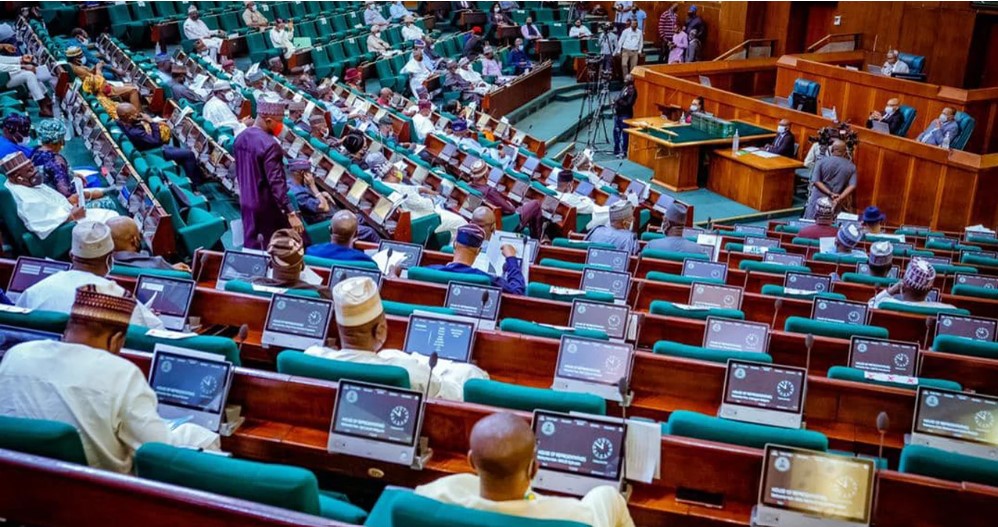
The House of Representatives has commenced moves to address mounting concerns in Nigeria’s downstream petroleum sector, opposing the continued imposition of US dollar-denominated charges on locally refined petroleum products and announcing plans to investigate alleged irregularities in the allocation of fuel import licences.

The House Committee on Petroleum Resources (Downstream) disclosed this on Tuesday during an interactive session with key industry stakeholders, including the Independent Petroleum Marketers Association of Nigeria, the Depot and Petroleum Products Marketers Association of Nigeria, and the Major Energies Marketers Association of Nigeria.

The engagement forms part of the committee’s ongoing consultations on proposed amendments to the Petroleum Industry Act and broader reforms aimed at strengthening domestic refining, guaranteeing national energy security and ensuring a competitive downstream petroleum market.

The Chairman of the committee, Ikenga Ugochinyere, said the lawmakers would invite the Nigerian Midstream and Downstream Petroleum Regulatory Authority, the Nigerian Upstream Petroleum Regulatory Commission, the Nigerian Ports Authority, the Central Bank of Nigeria, refiners and other relevant agencies to respond to issues raised by industry operators.

“We’ll be meeting with the NMDPRA, NUPRC, the refiners—both modular refinery owners and the large refinery operators—as well as the NPA, the CBN and other relevant agencies on the issues that have been raised. These will form part of our downstream reforms, including proposed amendments to the Petroleum Industry Act and legislative motions to correct identified gaps,” Ugochinyere said.

The lawmaker expressed concern over the continued charging of port fees in U.S. dollars for petroleum products refined and transported within Nigeria, describing the practice as detrimental to the economy.

“We have taken special note of the issue of dollar-denominated charges by the Nigerian Ports Authority. It is not good for the economy that, at a time like this, people involved in domestic downstream activities are still being charged in dollars. That ultimately affects the pump price of Premium Motor Spirit,” he said.

Ugochinyere also pledged to investigate allegations that fuel import licences for the first three quarters of 2026 were issued to the same group of marketers.

See also  NNPC confirms successful new oil well discovery

“We have also taken note of what you said about the lopsidedness in the issuance of import licences, where allocations for the first, second and third quarters went to the same set of operators. We will raise these questions when the NMDPRA appears before the committee to explain the criteria used in issuing those licences,” he added.

The committee chairman stressed the need to strike a balance between protecting Nigeria’s expanding domestic refining capacity and preserving the investments of marketers who have built storage and distribution infrastructure over several decades.

“How do we encourage and protect owners of domestic refineries while also protecting the investments of marketers? We cannot continue importing the same volume of petroleum products as before, given that more refineries are coming on stream. At the same time, we must guarantee national energy security in case local refineries experience disruptions.

“We need a balanced framework that supports domestic refining, preserves healthy competition and ensures the country always has a reliable fuel supply. That is the direction this committee is pursuing,” he said.

Presenting DAPPMAN’s memorandum, the association’s Executive Secretary, Mr Olufemi Adewole, urged lawmakers to address what he described as structural distortions affecting petroleum marketers and depot operators.

According to him, at least 72 of Nigeria’s 154 licensed petroleum depots recorded little or no trading activity over the past year because of what he described as an uneven operating environment.

“From the records of the NMDPRA, not fewer than 72 of the 154 depots nationwide had no regular or consistent trading activity in the last one year. They are merely paying salaries without engaging in meaningful business. This is largely due to an uneven playing field, persistent trading losses and the inability to access alternative sources of supply,” he said.

While welcoming the commencement of operations at the Dangote Refinery, Adewole warned against what he described as a near-monopoly in the supply of PMS.

“Our experience has been one of mixed feelings, bordering on an almost total monopoly in the supply of PMS by the mega refinery. Although the Petroleum Industry Act provides for a fully deregulated market where prices are determined by market forces, that has not been our experience,” he said.

See also  Nigeria to partner global allies on clean energy – Tinubu

The association also accused the NMDPRA of allocating import permits repeatedly to the same group of marketers. “The same set of marketers received import allocations in the first, second and third quarters of 2026, as though other qualified operators do not exist. This is unacceptable, and we urge this committee to ensure greater transparency and fairness in future allocations,” Adewole said.

DAPPMAN argued that retaining the option of fuel imports remains necessary to prevent shortages during refinery maintenance, operational disruptions or logistics challenges.

“In order to avoid the return of fuel queues, the import option provided under the Petroleum Industry Act must remain available as a regulated contingency mechanism whenever domestic supply is insufficient,” he said.

The association also decried what it described as duplicated port charges and the continued billing of domestic petroleum transactions in foreign currency.

“Marketers are invoiced at the loading point and again at the discharge port for products moved entirely within Nigeria. More critically, certain charges are still imposed in US dollars despite the purely domestic nature of these transactions. This practice persists despite a presidential directive suspending foreign currency-denominated billing for local operations. We urge the committee to ensure compliance,” Adewole added.

DAPPMAN further called for accelerated dredging of major waterways, rehabilitation of pipelines and depots, improved rail transportation for petroleum products and the creation of a national downstream logistics master plan.

IPMAN National President, Abubakar Shettima, commended the Federal Government for encouraging private investment in refining but said marketers continue to grapple with high financing costs, multiple taxation, foreign exchange volatility, inadequate storage infrastructure and limited access to refinery products.

See also  Agricultural quarantine service postpones release of recruitment shortlist

He called for policies that would support domestic refining while preserving competition. “We support strengthening domestic refining, but we also need equitable access to locally refined petroleum products, affordable financing and reduced regulatory costs that ultimately increase pump prices,” he said.

Shettima proposed the establishment of a specialised Petroleum Bank to provide single-digit interest loans to operators. “Today, marketers borrow from commercial banks at interest rates of up to 32 per cent. Those costs are eventually passed on to consumers. We are proposing a Petroleum Bank that will provide single-digit interest loans, similar to what exists in the agriculture and industrial sectors,” he said.

He also urged multinational oil companies involved in fuel importation to invest in local refining. “Before now, we depended almost entirely on imported petroleum products. Today, Nigeria is exporting refined products. Multinational companies should invest in domestic refineries to complement the existing capacity rather than relying solely on imports,” he added.

On the future of Nigeria’s state-owned refineries, Shettima suggested that independent marketers be allowed to participate in their management.

“If independent marketers are allowed to participate in operating the government refineries, we believe we can contribute significantly to their revival. We have done it before. Independent marketers invested in what is today NIPCO, which has become one of Nigeria’s leading petroleum marketing companies,” he said.

The committee’s consultations come as Nigeria seeks to consolidate gains from recent reforms in the downstream petroleum sector following the implementation of the Petroleum Industry Act and the expansion of domestic refining capacity.

Lawmakers are expected to engage regulators, refiners, NNPC Limited and other stakeholders before proposing legislative measures aimed at creating a more competitive, transparent and sustainable petroleum market while safeguarding the country’s long-term energy security.

punch.ng

FOLLOW US ON:

FACEBOOK

TWITTER

PINTEREST

TIKTOK

YOUTUBE

LINKEDIN

Continue Reading
Click to comment

Leave a Reply

Your email address will not be published. Required fields are marked *

Business

Restoring fuel subsidy will reverse Nigeria’s economic gains

Published

on

The renewed call for the restoration of petrol subsidy under any guise demands a clear-eyed examination of what Nigeria has gained from reform and what the country would have to surrender by reversing course.

The scale of the problem is important to remember. In 2022, when Nigeria was struggling with declining oil production and weak revenues, the country spent about $10 billion on fuel subsidies. The World Bank also warned that the subsidy was consuming resources that could otherwise have gone into education, healthcare, infrastructure and social protection.

This is the system that the administration of President Bola Ahmed Tinubu inherited and boldly decided to change.

At the Federal Government’s recent presentation of “Nigeria’s Reform Scorecard: The Benefits, Costs and Harms Prevented,” the Honourable Minister of Finance and Coordinating Minister of the Economy, Dr Taiwo Oyedele, disclosed that subsidy savings mobilised N15.8tn in resources for the Federation between June 2023 and December 2025.

Of this amount, approximately N5.43tn accrued to the Federal Government, N6.52tn to states and N3.88tn to local governments.

It is important to explain these figures honestly. The N15.8tn is not sitting in a government account as a separate pool of cash called “subsidy savings.” It represents resources released within the Federation’s wider fiscal system and made available across the three tiers of government.

The additional resources available to states and local governments have strengthened their capacity to meet salaries and pensions obligations and to invest in infrastructure and essential services, including primary healthcare, basic education, roads and other needs. At the federal level, the broader fiscal space created by the reforms has supported major investments and obligations that would have been considerably more difficult to sustain under the old subsidy regime.

The Federal Government’s Reform Scorecard records approximately N6.47tn in additional expenditure on strategic infrastructure, covering major investments in transport, housing, agriculture, security and other strategic projects. These include major national corridors such as the Lagos-Calabar Coastal Highway, Sokoto-Badagry Superhighway, and the Trans-Sahara Superhighway.

The reforms have also made room for significant investments in human capital and social support. Over 10 million Nigerian households have benefited from social transfers. The administration has also extended more than N400bn towards landmark social investment initiatives like the Nigerian Education Loan Fund, NELFUND (N223.8bn), the MOFI Real Estate Investment Fund, MREIF (N150bn) and the Nigerian Consumer Credit Corporation, CREDICORP (N50bn).

Renewed domestic and foreign investor confidence founded on the reforms has helped make the Nigerian stock market the world’s best-performing in 2026, pushed the external reserves to the highest level in almost 20 years, and helped the country grow oil production to exceed its OPEC quota for the first time in years.

The additional fiscal space has also supported wage adjustments, minimum-wage obligations and pensions, while expanding the capacity for investments in education, healthcare, agriculture, electricity, security and other critical areas of national development.

Nigeria is also entering a new phase in its petroleum sector, with marked expansion in domestic refining capacity. Reversing policy now will undermine this progress and introduce fresh uncertainty for investors at precisely the time Nigeria should be consolidating domestic refining and strengthening energy security.

See also  Minority caucus, House clash over tax law probe

Our Reform Scorecard also assesses the economic harm that the reforms have helped Nigeria avert. Had the subsidy regime remained unaddressed, petrol scarcity would have returned, pushing prices above N3,000 per litre on the black market. The legacy Ways and Means financing, which stood at about N30 trillion in May 2023 and has since been curtailed, would have doubled to N60 trillion or more. The Scorecard projects that, without the reforms, the inherited situation of 27 States unable to reliably pay salaries would undoubtedly have worsened.

There is another important argument being overlooked. Nigeria already carries a second energy subsidy, on electricity consumption, which cost the country an additional N3.14tn between June 2023 and December 2025. This subsidy helps bridge the gap between actual power production costs and the capped tariffs paid by most consumers. Reintroducing a petrol consumption subsidy on top of this would deal a double blow to Nigeria’s fiscal position.

The above illustrates an important point: restoring the subsidy would almost instantly return Nigeria to the economic conditions of 2022, recreating the same fiscal pressures, distortions, scarcity and incentives for arbitrage that made the old system unsustainable in the first place.

We are not claiming that the reforms have solved all of Nigeria’s economic challenges; there is indeed still much work to be done to translate improved fiscal capacity into better services, jobs, infrastructure and living standards. But the proper response to the hardship associated with reform is not to dismantle the reform; it is to accelerate the benefits – which remains what the Tinubu administration is resolutely focused on.The objective is clear: to move public resources away from subsidising consumption and towards investing in the Nigerian people and the productive foundations of lasting prosperity.

This is also why the debate over restoring subsidy must ultimately come down to hard choices. Do we restore petrol subsidy, or sustain student loans and consumer credit for young Nigerians? Do we restore subsidy, or preserve higher allocations to states and local governments? Do we restore subsidy, or continue funding roads, rail, power and security? Do we restore subsidy, or strengthen the fiscal capacity required to expand healthcare, education and social protection for vulnerable Nigerians?

It is equally significant that the Organised Private Sector and the wider economic community have cautioned against reversing the reform, recognising that fiscal sustainability, policy stability and a competitive downstream petroleum sector are essential to investment, job creation and economic growth.

Nigeria cannot build tomorrow’s economy by returning to yesterday’s unsustainable subsidy regime. We have moved beyond that model.

We do not downplay or deny the challenges associated with subsidy removal and other major reforms. President Bola Tinubu and his administration are daily working – and succeeding – at translating these sacrifices into improved living standards, stronger public services and greater economic opportunities for the Nigerian people.

Idris is the Minister of Information and National OrientationRestoring fuel subsidy will reverse Nigeria’s economic gains

The renewed call for the restoration of petrol subsidy under any guise demands a clear-eyed examination of what Nigeria has gained from reform and what the country would have to surrender by reversing course.

See also  FAAC deductions gulp 41% of N84tn revenue in three years

The scale of the problem is important to remember. In 2022, when Nigeria was struggling with declining oil production and weak revenues, the country spent about $10 billion on fuel subsidies. The World Bank also warned that the subsidy was consuming resources that could otherwise have gone into education, healthcare, infrastructure and social protection.

This is the system that the administration of President Bola Ahmed Tinubu inherited and boldly decided to change.

At the Federal Government’s recent presentation of “Nigeria’s Reform Scorecard: The Benefits, Costs and Harms Prevented,” the Honourable Minister of Finance and Coordinating Minister of the Economy, Dr Taiwo Oyedele, disclosed that subsidy savings mobilised N15.8tn in resources for the Federation between June 2023 and December 2025.

Of this amount, approximately N5.43tn accrued to the Federal Government, N6.52tn to states and N3.88tn to local governments.

It is important to explain these figures honestly. The N15.8tn is not sitting in a government account as a separate pool of cash called “subsidy savings.” It represents resources released within the Federation’s wider fiscal system and made available across the three tiers of government.

The additional resources available to states and local governments have strengthened their capacity to meet salaries and pensions obligations and to invest in infrastructure and essential services, including primary healthcare, basic education, roads and other needs. At the federal level, the broader fiscal space created by the reforms has supported major investments and obligations that would have been considerably more difficult to sustain under the old subsidy regime.

The Federal Government’s Reform Scorecard records approximately N6.47tn in additional expenditure on strategic infrastructure, covering major investments in transport, housing, agriculture, security and other strategic projects. These include major national corridors such as the Lagos-Calabar Coastal Highway, Sokoto-Badagry Superhighway, and the Trans-Sahara Superhighway.

The reforms have also made room for significant investments in human capital and social support. Over 10 million Nigerian households have benefited from social transfers. The administration has also extended more than N400bn towards landmark social investment initiatives like the Nigerian Education Loan Fund, NELFUND (N223.8bn), the MOFI Real Estate Investment Fund, MREIF (N150bn) and the Nigerian Consumer Credit Corporation, CREDICORP (N50bn).

Renewed domestic and foreign investor confidence founded on the reforms has helped make the Nigerian stock market the world’s best-performing in 2026, pushed the external reserves to the highest level in almost 20 years, and helped the country grow oil production to exceed its OPEC quota for the first time in years.

The additional fiscal space has also supported wage adjustments, minimum-wage obligations and pensions, while expanding the capacity for investments in education, healthcare, agriculture, electricity, security and other critical areas of national development.

Nigeria is also entering a new phase in its petroleum sector, with marked expansion in domestic refining capacity. Reversing policy now will undermine this progress and introduce fresh uncertainty for investors at precisely the time Nigeria should be consolidating domestic refining and strengthening energy security.

See also  CBN, NCC to combat SIM-related fraud

Our Reform Scorecard also assesses the economic harm that the reforms have helped Nigeria avert. Had the subsidy regime remained unaddressed, petrol scarcity would have returned, pushing prices above ₦3,000 per litre on the black market. The legacy Ways and Means financing, which stood at about ₦30 trillion in May 2023 and has since been curtailed, would have doubled to ₦60 trillion or more. The Scorecard projects that, without the reforms, the inherited situation of 27 States unable to reliably pay salaries would undoubtedly have worsened.

There is another important argument being overlooked. Nigeria already carries a second energy subsidy, on electricity consumption, which cost the country an additional N3.14tn between June 2023 and December 2025. This subsidy helps bridge the gap between actual power production costs and the capped tariffs paid by most consumers. Reintroducing a petrol consumption subsidy on top of this would deal a double blow to Nigeria’s fiscal position.

The above illustrates an important point: restoring the subsidy would almost instantly return Nigeria to the economic conditions of 2022, recreating the same fiscal pressures, distortions, scarcity and incentives for arbitrage that made the old system unsustainable in the first place.

We are not claiming that the reforms have solved all of Nigeria’s economic challenges; there is indeed still much work to be done to translate improved fiscal capacity into better services, jobs, infrastructure and living standards. But the proper response to the hardship associated with reform is not to dismantle the reform; it is to accelerate the benefits – which remains what the Tinubu administration is resolutely focused on.

The objective is clear: to move public resources away from subsidising consumption and towards investing in the Nigerian people and the productive foundations of lasting prosperity.

This is also why the debate over restoring subsidy must ultimately come down to hard choices. Do we restore petrol subsidy, or sustain student loans and consumer credit for young Nigerians? Do we restore subsidy or preserve higher allocations to states and local governments? Do we restore subsidy or continue funding roads, rail, power and security? Do we restore subsidy, or strengthen the fiscal capacity required to expand healthcare, education and social protection for vulnerable Nigerians?

It is equally significant that the Organised Private Sector and the wider economic community have cautioned against reversing the reform, recognising that fiscal sustainability, policy stability and a competitive downstream petroleum sector are essential to investment, job creation and economic growth.

Nigeria cannot build tomorrow’s economy by returning to yesterday’s unsustainable subsidy regime. We have moved beyond that model.

We do not downplay or deny the challenges associated with subsidy removal and other major reforms. President Bola Tinubu and his administration are daily working – and succeeding – at translating these sacrifices into improved living standards, stronger public services and greater economic opportunities for the Nigerian people.

Idris is the Minister of Information and National Orientation.

FOLLOW US ON:

FACEBOOK

TWITTER

PINTEREST

TIKTOK

YOUTUBE

LINKEDIN

INSTAGRAM

Continue Reading

Business

Dangote refinery expands free fuel delivery to four states

Published

on

The Dangote Petroleum Refinery says it has expanded its free petroleum products delivery initiative to Kano, Imo, Anambra and Nasarawa states, a move it says is expected to reduce distribution costs for independent petroleum marketers and create room for lower petrol prices.

According to a statement on Sunday, the initiative, which initially covered Lagos, Ogun, Rivers, Kaduna, Abuja and Delta states, is designed to bring petroleum products closer to marketers and retailers while eliminating the cost of transporting products over long distances from the refinery to different parts of the country.

By absorbing delivery costs, the refinery is reducing one of the major expenses embedded in the downstream petroleum products distribution chain.

Group Executive Director, Commercial Operations, Oil & Gas, WAEP and Fertiliser, Dangote Industries Limited, Fatima Aliko Dangote, said the initiative was aimed at ensuring that the benefits of domestic refining translated into savings for businesses and consumers.

“The value of domestic refining must ultimately be felt beyond the refinery gate. By absorbing the cost of delivering petroleum products to our customers, we are removing a significant component of the distribution burden and creating room for those savings to flow through the value chain to consumers. Our goal is to make fuel distribution more efficient, reduce avoidable costs and support more competitive pump prices across Nigeria.”

The expansion was reportedly welcomed by the Independent Petroleum Marketers Association of Nigeria, which said the initiative would reduce some of the financial and logistical pressures confronting independent petroleum marketers and contribute to lower prices for consumers.

See also  Nigeria to partner global allies on clean energy – Tinubu

National Publicity Secretary and Public Relations Officer of IPMAN, Chinedu Ukadike, was quoted as saying that the initiative addressed a longstanding challenge in the petroleum products distribution chain, where marketers commit substantial funds to product purchases and may then wait for extended periods before their orders are loaded and transported.

“This gesture, if sustained, will be able to alleviate the sufferings of independent marketers. There has been the issue of financial hold-up, whereby marketers pay for products and are not loaded for days and weeks, and they suffer unnecessary hardship bringing the product down,” he stated.

According to him, the refinery’s delivery arrangement reduces the period for which marketers’ funds remain tied up, improves cash flow and allows businesses to deploy their capital more efficiently.

Dangote said the reduction in distribution costs is particularly significant for marketers supplying areas far from the refinery, as the transportation of petroleum products over long distances attracts additional expenses associated with haulage, vehicle operations, driver costs, insurance, road risks and other logistics.

It was stated that removing or reducing such costs could improve the economics of supplying distant markets and provide marketers with greater room to compete on retail prices.

The initiative also reduces the operational risks associated with moving large volumes of petroleum products over long distances by taking products closer to their destination markets.

The expansion comes as Nigeria’s downstream petroleum sector continues to adjust to increased domestic refining capacity and a more competitive market environment.

The Dangote refinery, with a capacity of 700,000 barrels per day, has been supplying refined petroleum products to the domestic market while also expanding its presence in international markets.

Continue Reading

Business

Banks account for 92% of NFIU suspicious reports

Published

on

The Nigerian Financial Intelligence Unit has disclosed that banks, fintech companies and other reporting entities submitted 42,082 Suspicious Transaction Reports to the agency in 2025.

The figure was contained in the NFIU’s 2025 Annual Report, which highlighted continued risks to Nigeria’s financial system and increased regulatory monitoring of transactions.

The agency also received 41,716,214 Currency Transaction Reports and 10,513 Suspicious Activity Reports during the year.

“During the review period, the NFIU received a total of 41,716,214 CTRs, 42,082 STRs, and 10,513 SARs,” the report stated.

The NFIU said its reporting framework covers threshold-based transactions, suspicious transactions and activities, as well as regulatory submissions relating to anti-money laundering, counter-terrorism financing and counter-proliferation financing compliance.

It noted that it collaborates with the Central Bank of Nigeria, National Insurance Commission, Securities and Exchange Commission and the Special Control Unit Against Money Laundering to ensure that reporting entities comply with applicable regulations.

Deposit Money Banks accounted for the bulk of STR filings, submitting 38,715 reports, representing about 92 per cent of the total received from the various sectors.

Other Financial Institutions submitted 2,185 STRs, while Designated Non-Financial Businesses and Professions accounted for 1,029. Capital market operators and insurance companies filed 104 reports, while Virtual Asset Service Providers, including cryptocurrency-related businesses, submitted 49.

Banks also dominated Suspicious Activity Reports, contributing 8,313 of the 10,513 filings recorded in 2025. Other Financial Institutions accounted for 1,816, capital market and insurance companies filed 295, while Virtual Asset Service Providers submitted 89. The DNFBP sector recorded no SAR during the year.

See also  Nigeria to partner global allies on clean energy – Tinubu

The report further showed that financial institutions filed more than 41.7 million Currency Transaction Reports. Deposit Money Banks accounted for 37,214,139 filings, equivalent to about 89.2 per cent of the total, while Other Financial Institutions submitted 4,212,466.

Capital market operators and insurance companies contributed 289,296 CTRs, while Virtual Asset Service Providers filed 313.

According to the NFIU, Section 11 of the Money Laundering (Prevention and Prohibition) Act requires financial institutions to report transactions exceeding N5m for individuals and N10m for legal entities within seven days.

The agency added that Section 3(1) of the law mandates the reporting of incoming and outgoing transfers above $10,000 within 24 hours.

Data from the four quarters showed a steady rise in STR filings by banks. Reports increased from 9,134 in the first quarter to 9,658 in the second, 9,891 in the third and 10,032 in the fourth quarter.

Currency Transaction Reports from Deposit Money Banks followed a similar upward trend, rising from 7,040,493 in the first quarter to 8,197,292 in the second, 10,885,247 in the third and 11,091,107 in the fourth quarter.

Among Other Financial Institutions, STR filings stood at 451 in the first quarter and 432 in the second before climbing to 719 in the third and falling to 583 in the fourth.

The NFIU also reported increased activity among Virtual Asset Service Providers. The sector recorded no STRs during the first half of 2025 but filed 17 in the third quarter and 32 in the fourth quarter.

VASPs also submitted 28 SARs in the first quarter, 12 in the second, 24 in the third and 25 in the fourth. Their CTR filings emerged in the second half of the year, with 103 reports in the third quarter and 210 in the fourth.

See also  Agricultural quarantine service postpones release of recruitment shortlist

The agency disclosed that reporting entities submitted 28,133,909 reports involving Politically Exposed Persons during 2025.

Deposit Money Banks accounted for most of the PEP filings, recording 7,263,557 in the first quarter, 5,658,079 in the second, 6,235,585 in the third and 8,225,572 in the fourth.

Other Financial Institutions recorded a significant increase in PEP reports, rising from just 12 in the first quarter to 617,286 in the fourth quarter. Capital market and insurance institutions submitted 28,561 reports, while VASPs recorded none.

The NFIU also disclosed that its Designated Non-Financial Businesses and Professions Division conducted joint on-site examinations of 29 reporting entities in the Federal Capital Territory.

The entities were drawn from the real estate, casino, precious metals and stones dealing, and consultancy sectors.

According to the report, the exercise resulted in 20 new registrations on the RapidAML portal and subscriptions to NIGSAC, alongside the submission of 1,029 Suspicious Transaction Reports.

Despite the increased compliance activity, the number of STRs received in 2025 was significantly lower than the previous year. STR filings fell by 40,061, from 82,143 in 2024 to 42,082 in 2025, representing a decline of about 48.8 per cent.

Suspicious Activity Reports also dropped by 12,851, from 23,364 in 2024 to 10,513 in 2025, representing a reduction of approximately 55 per cent.

The contrasting figures indicate that while reporting entities recorded significantly higher volumes of threshold-based transactions and PEP disclosures in 2025, suspicious transaction and activity reports declined sharply compared with the previous year.

Source: punchng.com

FOLLOW US ON:

FACEBOOK

TWITTER

PINTEREST

TIKTOK

YOUTUBE

LINKEDIN

INSTAGRAM

Continue Reading

Trending