Connect with us

Politics

Tinubu retains Shettima as running mate as parties race to meet INEC deadline

Published

on

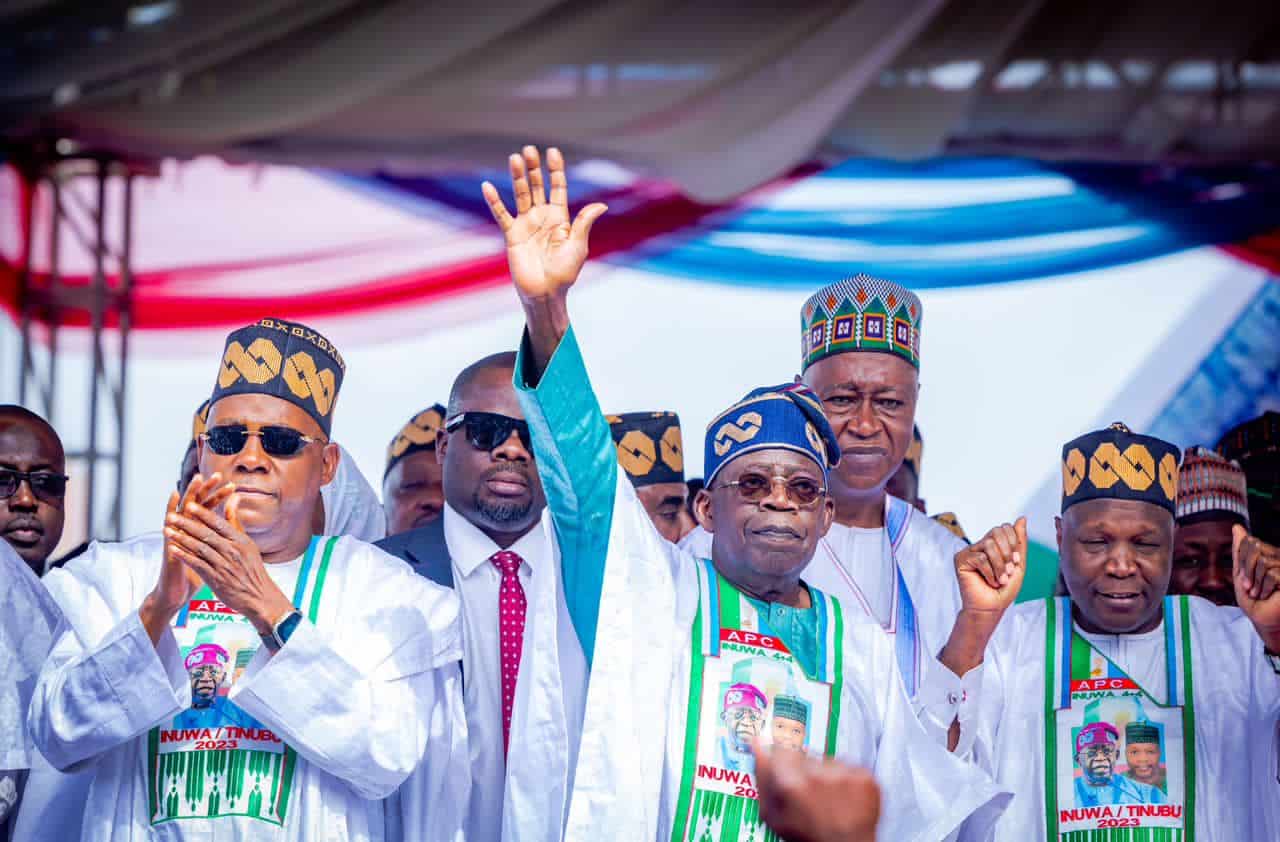
President Bola Tinubu on Friday formally retained Vice President Kashim Shettima as his running mate for the 2027 presidential election.

This was as political parties made last-minute moves to beat the Independent National Electoral Commission’s deadline for the submission of presidential and National Assembly candidates.

The ruling All Progressives Congress presented the nomination forms of Tinubu and Shettima to its National Chairman, Prof. Nentawe Yilwatda, in Abuja for onward transmission to INEC, effectively ending months of speculation that the President could replace his deputy with a northern Christian.

The development came as INEC confirmed that it had received the presidential and vice-presidential nominations of the African Democratic Congress, Nigeria Democratic Congress, Social Democratic Party, Action Alliance, African Action Congress, Peoples Redemption Party and Young Progressives Party.

Meanwhile, several other political parties continued uploading the names of their candidates ahead of the commission’s Saturday midnight deadline.

The electoral commission had fixed July 11, 2026, as the deadline for political parties to upload the nomination forms of their presidential and National Assembly candidates through its online nomination portal in accordance with Section 29(1) of the Electoral Act, 2026.

The submission exercise, which commenced on June 27, covers Forms EC9 and EC9A to EC9E for presidential, vice-presidential, Senate and House of Representatives candidates.

According to the timetable released by the commission, political parties are expected to begin uploading the names of governorship and State House of Assembly candidates from July 18, with the exercise ending on August 8.

INEC is scheduled to publish the personal particulars of presidential and National Assembly candidates on August 1, while those of governorship and state assembly candidates will be displayed on August 29 to allow members of the public raise objections where necessary.

The commission also fixed August 22 as the deadline for the withdrawal and substitution of presidential and National Assembly candidates, while governorship and state assembly candidates have until September 19 for withdrawal or replacement in line with the provisions of the Electoral Act.

The July 11 deadline marks one of the most critical stages in the build-up to the 2027 general elections, as only candidates validly nominated by political parties through primaries monitored by INEC are eligible for submission.

The commission had repeatedly warned political parties against submitting the names of candidates different from those who emerged from duly monitored primaries, insisting that any nomination outside the provisions of the Electoral Act and its regulations would be rejected.

Against this backdrop, the APC used Friday’s presentation ceremony to publicly affirm its presidential ticket, signalling that it would head into the 2027 contest without altering the Muslim-Muslim ticket that secured victory in the 2023 presidential election.

Following President Tinubu’s emergence as the APC’s presidential candidate during the party’s convention, political discussions had intensified over whether the President would retain Shettima or opt for another running mate to broaden the party’s electoral appeal.

Those speculations gathered momentum in recent months amid reports that the ruling party was considering a northern Christian as vice-presidential candidate to address concerns over religious balancing.

Friday’s submission, however, ended the uncertainty, with the APC formally presenting Tinubu and Shettima as its flag bearers for the 2027 election.

The nomination documents were presented on behalf of the President by his Special Adviser on Political Matters, Ibrahim Masari, during a ceremony attended by members of the Progressive Governors’ Forum, the National Assembly, the Federal Executive Council, the APC National Working Committee, state chairmen of the party and APC governorship candidates.

Earlier, the APC National Organising Secretary, Sulaiman Argungu, described the event as the formal presentation of the duly completed nomination forms of the party’s presidential and vice-presidential candidates.

Argungu noted that President Tinubu had earlier secured the party’s presidential ticket through what he described as a transparent primary election, and urged party members to remain united ahead of the 2027 polls.

He also commended the President for what he described as the achievements of his administration before formally handing over the nomination documents to the APC National Chairman for onward submission to INEC.

Speaking on behalf of APC governors, Imo State Governor, Senator Hope Uzodimma, reaffirmed the governors’ support for President Tinubu and the party leadership.

“We are delighted that this event is coming after a well-organised and thoroughly supervised primary process. We reiterate our commitment to continue supporting President Tinubu and the party,” he said.

Uzodimma said the APC remained committed to internal democracy and inclusiveness, adding that the governors would continue mobilising support for the President across the country.

“We will continue to support him in the larger interest of Nigerians and to take the country to greater heights. To the National Working Committee, we reaffirm our support. Together, we are going to deliver victory for President Tinubu and ensure the party wins all elective positions, including the National and State Assemblies,” he added.

See also  Nigeria A Graveyard Of Abandoned Projects – ADC

Receiving the nomination forms, APC National Chairman, Prof. Yilwatda, described the event as a reflection of the confidence reposed in President Tinubu by millions of party members across the country.

According to him, the President’s endorsement by members of the party demonstrated widespread support for his administration and its policies.

He stated, “Today is a reflection of the wishes of over 12 million members of the APC who overwhelmingly voted for Mr. President as the party’s candidate for the 2027 presidential election. We are proud that APC members across the country cast over 12 million votes for Mr. President and overwhelmingly endorsed him.

“I am sure that, together with members of the public who are APC sympathisers, friends of the party, and beneficiaries of the programmes of Mr. President, they will overwhelmingly vote for him. I can’t imagine the over 1.5 million students who are receiving student loans. They have families and friends, and they are part of a larger group that will overwhelmingly vote for Mr. President for supporting their education.”

Yilwatda also pointed to ongoing infrastructure projects across the country, saying the administration had undertaken road construction and other development projects in all six geopolitical zones.

He added, “We have road networks across the country that Mr. President has constructed; some of the longest in the history of Nigeria. Communities that had long forgotten road connectivity now have access to beautiful concrete roads passing through their villages, while local people are being engaged as workers on these projects. These projects cut across all six geopolitical zones, benefiting millions of Nigerians.

“People on social media often ask, ‘Who will vote for the APC?’ They are waiting for us across the country to vote for Mr. President. Look at the roads passing through communities and the many other projects the government is undertaking.”

The APC chairman urged governors and party faithful to intensify grassroots mobilisation and campaign on what he described as the administration’s achievements.

He continued, “Nigerians and our party members will overwhelmingly vote for him come January and give him a second term to continue the excellent work he has done in his first term. I appeal to the governors and to our supporters to go back home and spread the good news about what Mr. President is doing across the country. What we need is to focus on the achievements, the success stories, and the impact of his administration.

“We must go out there with facts. Let us tell our success stories. Believe me, Nigerians have seen the difference between policies that touch the lives of the people and governance that delivers results.”

Yilwatda also challenged governors to compete in delivering the highest number of votes for the President in 2027.

“We will all come out and mobilise across the six geopolitical zones. I am sure there will be healthy competition among the governors. One geopolitical zone has already told me they will deliver the highest number of votes for Mr. President. I will be happy to see such competition among the governors as they mobilise their states so that we can see which state will return the highest number of votes for Mr. President.

“We are excited as a party to present the best candidate in the history of this country in terms of good governance. As a party, we are proud and happy. We will present the best candidate in this election. That is why we are not afraid and have no doubt about our success. There is no shaking at all. Come 2027, our victory as a party is assured.”

INEC insists on midnight deadline

Meanwhile, the Independent National Electoral Commission said five political parties were yet to complete the submission of the names of their presidential and vice-presidential candidates as of Friday, as it insisted that the July 11 deadline remained unchanged.

The commission’s National Commissioner, Mohammed Kudu Haruna, disclosed this in an exclusive interview with Saturday PUNCH while providing an update on submissions through INEC’s online nomination portal.

Haruna explained that while several parties had uploaded their presidential, vice-presidential and National Assembly candidates, others were still completing the exercise, stressing that all political parties had until midnight on Saturday to comply with the commission’s timetable.

He said, “Various parties have uploaded nominees. The deadline is still tomorrow; they have until 12 midnight tomorrow to upload.”

According to him, the parties that had made varying levels of submissions include AA, AAC, ADC, APGA, APM, Labour Party, Nigeria Democratic Congress, National Rescue Movement, Peoples Democratic Party, Peoples Redemption Party, Social Democratic Party, Young Progressives Party and Zenith Labour Party.

See also  Dark horses in Kwara governorship race ahead of 2027

Haruna further disclosed that only a handful of parties had completed the submission of both their presidential and vice-presidential candidates.

He said, “The ones that have so far made submission of presidential and running mates are AA, AAC, ADC, NDC, PRP, SDP and YPP.

“ZLP only submitted presidential candidate, yet to forward that of Vice President. Those yet to make any submissions are APGA, LP, NRM, APM, and PDP.”

The INEC commissioner reiterated that political parties were expected to strictly comply with the provisions of the Electoral Act and the commission’s regulations, warning that candidates whose names did not emerge from primaries monitored by the commission would not be accepted.

The electoral umpire had earlier cautioned political parties against attempting to substitute candidates outside the provisions of the law, insisting that only duly nominated candidates would be recognised.

The commission maintained that the online nomination portal was introduced to improve transparency and efficiency in the submission process and reduce disputes arising from manual documentation.

Reacting to INEC’s update, Labour Party’s National Publicity Secretary, Ken Asogwa, expressed confidence that the party would beat the deadline.

He said, “We have uploaded about 99 per cent of our candidates list. So, it is as good as having it completed. I am pretty sure that before the close of business today, Labour Party would have completed its upload of all the candidates nominated in various primaries held nationwide.

“We are doing it and I can assure you that we are going to meet up. After all, Saturday is the deadline.

“Our candidate for the 2027 election has not changed. He remains Dr Chibuzor Okereke. If anything happens tomorrow and he is no longer the presidential flag bearer, I don’t have the powers of clairvoyance to determine that.”

Nigeria Democratic Congress National Publicity Secretary, Osa Director, also said the party had concluded arrangements to complete the upload of all its candidates before the deadline.

He said, “As we announced to the world, the presidential candidate of the NDC remains Peter Obi and his running mate, Dr Rabiu Kwankwaso. It has not changed.

“We have no fear of uploading all the names of the remaining candidates before the deadline window of INEC closes.”

Similarly, African Democratic Congress National Publicity Secretary, Bolaji Abdullahi, said the party was on course to beat the deadline.

He said, “As of last night, I am aware that a considerable number of the candidates list had been uploaded.

“At least, we are certain that by tomorrow, everything would have been there. I am pretty sure my people are aware of the deadline.”

As political parties raced to conclude the nomination process, fresh concerns also emerged over the credibility of the 2027 general elections, with opposition leaders warning against what they described as attempts to weaken democratic institutions.

The concerns come amid renewed political alignments ahead of the election, with opposition parties intensifying consultations and coalition efforts while raising questions about public confidence in the electoral process following the controversies that trailed the 2023 general elections.

Former Vice President Atiku Abubakar, the African Democratic Congress presidential candidate, spoke through his Senior Special Assistant on Public Communication, Phrank Shaibu.

He accused the APC-led Federal Government of deploying state institutions for partisan purposes.

He said, “My biggest fear is not whether the ruling party can win a free and fair election. My biggest fear is that they have long concluded that they cannot. That is why every institution that should protect democracy is being bent to serve partisan interests.

“When a government consistently ignores court orders, weaponises law enforcement against political opponents, tolerates selective justice, and treats constitutional safeguards as inconveniences, it sends a dangerous message that power, not the law, is supreme. No democracy can survive that mentality.”

The former vice president further alleged that the Tinubu administration was weakening institutions responsible for guaranteeing credible elections.

He said, “What we are witnessing today is not merely poor governance; it is the systematic erosion of the guardrails that guarantee credible elections. The same administration that has presided over unprecedented economic hardship, record inflation, a collapsing naira, rising insecurity, and a cascade of unresolved scandals now appears more invested in weakening democratic institutions than in earning the confidence of Nigerians.

“Governments that perform well seek votes. Governments that fail seek advantages outside the ballot box.”

According to Atiku, credible elections go beyond the conduct of voting on election day.

“Our concern extends beyond election day. Electoral integrity begins long before ballots are cast. It includes an independent electoral commission, security agencies that remain politically neutral, an impartial judiciary, equal access to the media, and the freedom of citizens to organise, campaign, and vote without intimidation.

See also  Troops kill 274 insurgents as Nigeria records 882 attacks

“When these pillars are compromised, democracy is reduced to a mere ritual while the people’s sovereign will is quietly subverted.”

He, however, said the opposition would continue to pursue constitutional means to defend the electoral process.

“Let me, however, make one thing abundantly clear: we will not surrender democracy to those who believe power is an entitlement. We will mobilise Nigerians peacefully, lawfully, and constitutionally to defend every vote. We will engage local and international observers, strengthen legal preparedness, and insist that every institution charged with protecting the electoral process performs its constitutional duty without fear or favour.

“Ultimately, the greatest threat to any incumbent is not the opposition; it is the verdict of a hungry, frustrated, and betrayed people.

“Nigerians have endured enough. They deserve leaders who earn their mandate through performance, not through manipulation.”

He added that history had shown repeatedly that no amount of state power could permanently suppress the will of a determined people.

PDP elder statesman, Chief Bode George, also expressed concern over what he described as attempts to undermine opposition politics.

He said, “I am extremely concerned and worried. Democracy does not mean silencing the opposition. Once you refuse to respect the voices of the opposition, injustice sets in.

“I have continued to tell Mr President that the methods being used to undermine democratic institutions are dangerous to the integrity of this country.”

On his part, the Lagos Central Senatorial candidate of the Nigeria Democratic Congress, Ladipo Johnson, questioned public confidence in the electoral process, particularly in INEC.

He said, “It is a shame that a large proportion of the population of our country does not have confidence in INEC to conduct a free and fair election. Unfortunately, people see INEC as an extension of the government because, under our Constitution, the President appoints its leadership. People need to have confidence in the system, but unfortunately, they don’t.”

Johnson also argued that worsening economic and security conditions could influence the outcome of the election.

“The ruling party knows enough to understand that, given the state of the economy and the security situation, they may not win a truly free and fair election. So why should we assume there will be one?” he asked.

He urged Nigerians to remain vigilant and participate actively in the electoral process.

“At every polling unit, there will be a battle to ensure that the will of the people prevails against those oppressing the Nigerian masses.

“Many people will be tempted by N5,000 or N10,000 and may end up selling their votes.

“As opposition parties, we have a lot to do in the coming months. We must educate and reorient the people and ensure there is a large voter turnout. The higher the turnout, the more difficult it will be for anyone to manipulate the elections.”

Similarly, the Young Progressives Party identified “state capture” as its biggest concern ahead of the election.

The party’s National Publicity Secretary, Wale Egbeola-Martins, said, “The YPP’s greatest concern ahead of the 2027 general elections is the increasing threat of state capture and its implications for Nigeria’s democracy.

“We are already witnessing disturbing signs, with opposition political parties being systematically destabilised while critical state institutions appear to be deployed to intimidate opposition leaders and suppress dissent.

“Our fear is that the electoral environment may not provide a level playing field.”

He also expressed concern about the independence of key democratic institutions.

“There are growing concerns that institutions constitutionally expected to be independent, particularly INEC, could come under undue influence, thereby undermining public confidence in the credibility of the electoral process.”

The Democratic Leadership Alliance also identified declining public confidence in democratic institutions as a major concern ahead of the elections.

Its Deputy National Publicity Secretary, Judith Aguenu, said, “The DLA believes that the greatest threat to the 2027 general elections is not any particular political party, but the erosion of public confidence in Nigeria’s democratic institutions.

“Our concerns are centered on the need to safeguard the integrity of the electoral process. We expect all institutions, particularly INEC and the security agencies, to operate strictly within the provisions of the Constitution and the Electoral Act, free from political interference or intimidation.”

She added that the party was focused on mobilising Nigerians and encouraging peaceful civic participation ahead of the polls.

punch.ng

FOLLOW US ON:

FACEBOOK

TWITTER

PINTEREST

TIKTOK

YOUTUBE

LINKEDIN

Continue Reading
Click to comment

Leave a Reply

Your email address will not be published. Required fields are marked *

Politics

READ FULL LIST: Tinubu’s 2027 campaign promises

Published

on

The All Progressives Congress has unveiled a four-pillar manifesto outlining President Bola Tinubu ’s agenda for a second term in office, with promises to tackle insecurity, reduce the cost of living, expand infrastructure and strengthen governance between 2027 and 2031.

The manifesto, titled Renewed Hope Agenda 2.0, was made available to PUNCH Online on Tuesday.

The document consolidates the eight-point agenda of the Tinubu administration into four strategic pillars: Secure and Resilient Nation; Better Quality and More Affordable Life for Every Nigerian; Energy, Infrastructure and Economic Growth; and Effective and Accountable Governance.

Under the four pillars, the party outlines at least 35 promises.

APC MANIFESTO: ALL COMMITMENTS FOR 2027–2031

PILLAR 1: SECURE AND RESILIENT NATION

1. We Will Restore Peace in Every Community

1. Complete the establishment and equipping of the four new Army divisions in Makurdi, Ilorin, Jalingo and Benin City, recruit and train the 28,000 additional personnel approved, and report publicly on their deployment.
2. Sustain intelligence-led kinetic operations against insurgent and kidnapping networks to degrade and dismantle their operating bases, backed by independent verification of reported operational outcomes to build public trust.
3. Strengthen surrender and rehabilitation frameworks through standardised, verifiable reporting on all screened, reintegrated, and prosecuted ex-combatants.
4. Establish specialised zonal counter-terrorism capabilities while fortifying physical security across schools, commercial markets, places of worship, and vital transport corridors.
5. Expand peace-building, trauma support, and deradicalisation programmes to enable long-term social recovery, rebuild civic trust, and safely resettle internally displaced families in their homes.

2. We Will Build a Police Service People Can See, Trust, and Call

1. Train and deploy the 50,000 newly recruited officers and expand recruitment and tactical training towards a 1:400 police-to-citizen ratio, maximising visible patrols across residential neighbourhoods, commercial centres, schools, and transit corridors.
2. Launch full implementation of the Harmonised Police Reform programme, deploying modern digital record systems, geographic mapping tools, officer body cameras, emergency dispatch channels, and forensic infrastructure nationwide.
3. Transfer static private-protection duties to a fortified Civil Defence service, beginning with recruitment of the 30,150 approved personnel, returning trained police officers to frontline public safety and crime prevention.
4. Work with the National Assembly, State Houses of Assembly, and governors to enact a constitutional and legal framework for accountable state and community policing, maintaining strict national standards and citizens’ rights.

3. We Will Protect Our Borders, Farms, Forests and Shared Wealth

1. Complete e-surveillance coverage of all mapped borders (31 of 190 mapped areas remain), extend e-Gates, passenger-data (APIS) and MIDAS border systems to more entry points, and strengthen patrol, screening and intelligence-sharing.
2. Complete nationwide Mining Marshals coverage across all identified mining sites (over 530 identified, 420 already protected) and resolve outstanding governance and funding questions so the unit is accountable and credible.
3. Deploy trained Forest Guards, Agro-Rangers, and Mining Marshals to safeguard agricultural belts, farming communities, grazing routes, national forest reserves, and mineral deposits.
4. Launch full implementation of the National Protection Policy and Strategy for Critical National Assets, with real-time surveillance across energy pipelines, electrical power grids, railways, schools, and health facilities.

4. We Will Give Our Security Forces the Tools to Act Faster

1. Expand domestic military production of ammunition, personal protective gear, armoured vehicles, and tactical drones, generating high-skilled Nigerian jobs while securing defence supply chains.
2. Construct integrated command, control, communications, and intelligence systems to achieve early threat detection, rapid tactical response, and seamless multi-agency operational coordination.
3. Deepen defence research, technology transfer agreements, and private capital co-investment through strategic regional and international defence industrial partnerships.

5. We Will Stand by Those Who Stand Guard for Us

1. Implement the approved multi-tier salary increases for service personnel in full and extend them to cover operational allowances, while broadening affordable housing, healthcare, and education support for serving personnel and their families.
2. Expedite administrative processing for valid insurance and pension payouts, guaranteeing permanent institutional care and educational sponsorship for the families of fallen heroes.
3. Complete rehabilitation of dilapidated police barracks and housing infrastructure.
4. Institutionalise advanced tactical training, comprehensive psychological support, physical rehabilitation programmes, and modernised working conditions across all military and security services.

6. We Will Respond Faster in Emergencies and Give Second Chances

1. Expand non-custodial measures, cognitive rehabilitation, technical vocational training, and social reintegration pathways for low-risk offenders to reduce overcrowding of correctional facilities.
2. Modernise fire stations, equipment and coordination, extending fire-service coverage progressively towards every local government area.
3. Upgrade maritime surveillance, cybersecurity defences, emergency communications networks, and a national drone fleet for early warning and rapid search-and-rescue operations.

7. We Will Make Identity Safer, Simpler and More Useful

1. Enrol 95 per cent of citizens and legal residents in the National Identity Database (137,260,026 enrolled as at June 2026), establishing specialised mobile registration units for agrarian communities, older persons, and vulnerable citizens.
2. Complete the integration of the remaining databases and agencies (11 of 20 databases and 44 of 50 MDAs are already integrated) into the central foundational identity database, enabling secure digital verification and eliminating administrative redundancy across public service delivery.
3. Enforce rigorous data privacy protections while leveraging biometric identity to eliminate financial fraud, secure digital transactions, and ensure state social welfare reaches verified recipients.

PILLAR 2: BETTER QUALITY AND MORE AFFORDABLE LIFE FOR EVERY NIGERIAN

1. We Will Guarantee School Access, Safety, And Educational Retention

1. Scale HOPE-EDU nationwide to halve the number of out-of-school children by 2031, extend AGILE (now in 18 states) to further states where the number of out-of-school girls is highest, and establish dedicated return-to-school pathways for teenage mothers.
2. Building on the 80,284 teachers already certified and licensed, recruit and train 20,000 additional teachers, prioritising female educators and underserved rural communities nationwide.
3. Enforce safe-school standards, expand school water and sanitation facilities, and publish an annual education dashboard tracking enrolment, dropout, and completion rates.

2. We Will Elevate Learning Quality, STEMM Mastery, And Employable Skills

1. Prioritise foundational learning, science, technology, engineering, mathematics, and digital capabilities across all educational levels.
2. Strengthen partnerships with industry to provide practical, work-linked training and move students into the workforce, aligning courses with labour-market needs.
3. Scale NELFUND, expand the National Smart Learning Initiative, sustain industrial peace in public universities, and extend the Student Venture Capital Grant and Diaspora BRIDGE to additional tertiary institutions.
4. Expand technical, vocational, and digital training programmes, building on the TVET initiative (117,152 verified trainees, monthly stipend raised from N22,500 to N30,000) and the Digital Technical Academy, measuring systemic success by graduate employment, enterprise survival, and workplace productivity.
5. Strengthen the Mandatory School Sports Programme and the National Sports and Education Excellence Programme (N-SEEP) as the cornerstone of sports development, scaling the school-sports pilot (61 schools, 3,500 teachers and 15,000 students trained so far) to all states.

3. We Will Expand Primary Care, Health Insurance, And Medical Manufacturing

1. Expand static and mobile primary care, upgrade secondary facilities across all local government areas, and strengthen referral networks to tertiary hospitals, raising the share of functional primary health centres from 53 per cent today towards 90 per cent by 2031 and extending direct quarterly financing under the Basic Health Care Provision Fund from about 8,300 to all 17,600 primary health centres.
2. Sustain maternal, newborn, immunisation, cancer-screening, and early-detection programmes, prioritising families with the greatest financial need and tracking the proportion of births attended by a skilled health provider as a headline HOPE-PHC indicator.
3. Expand active health insurance coverage from more than 23 million enrollees to 40 per cent of Nigerians by 2031, subsidising poor and vulnerable Nigerians through the Vulnerable Group Fund, and cut out-of-pocket spending from 71 per cent to below 50 per cent of health expenditure.
4. Complete the revitalisation of the remaining primary health centres (about 1,000 still under way), bring steady power to 30 per cent of health facilities by the end of 2027 through Power for Health solar installations, and scale MAMII free emergency obstetric care from 172 local government areas to all 774.
5. Complete the National Health Information Exchange to ensure portable electronic records by 2031, while achieving complete Emergency Operations Centre coverage across all states.
6. Recruit, train, and retain health workers through improved terms and housing, commercialise BioVaccines Nigeria to achieve 50 per cent local production of essential medicines by 2031, and complete oncology centres across all geopolitical zones.

4. We Will Accelerate Youth Employment, Enterprise Finance, And Digital Capabilities

1. Execute a comprehensive national youth employment strategy with a published baseline and annual targets, aiming to halve youth unemployment by 2031 and to report each year the share of new labour-market entrants who find work.
2. Expand skills training to two million young citizens, scale NiYA and Digital Literacy for All (748,988 trained to date) toward 30 million Nigerians, and publish NYSC private-sector placement performance data, making job placement and private-sector partnership the test of every skilling programme.
3. Expand NEXTGEN Bank lending, the rejuvenated Nigeria Youth Investment Fund, and YouthCred’s partner-bank network, and enact the proposed Youth Bank law, to provide credit without traditional collateral requirements.
4. Expand the existing BOI-NYSC window and the NYSC Corpreneur and SAED support (860 corps members funded with grants of N100,000 to N2,000,000) into dedicated entrepreneurship grant and loan windows for corps members and young innovators, rigorously tracking business survival and job creation metrics.
5. Expand MSME support hubs and existing incubation centres, digitise beneficiary tracking, and establish a Digital MSME Academy with integrated e-learning.
6. Complete the first review of the National Youth Service Corps in its 53-year history so that the scheme becomes a skills-driven programme, rebuild the orientation camps, and publish NYSC placement and business-survival data.

5. We Will Expand Women’s Financial Inclusion, Public Leadership, And Protection

1. Achieve at least 35 per cent women’s representation in the next Cabinet and major MDAs, backed by an enforceable legal pathway and a public tracking dashboard, towards 35 per cent across all public appointments.
2. Expand the GLOW credit-guarantee window into a permanent national facility and scale the Nigeria for Women Project across all 36 states.
3. Work with the Development Bank of Nigeria and financial institutions on products and practices, such as collateral-light lending and credit-guarantee facilities, that bring more women entrepreneurs into the formal financial system, and further innovate the Nigeria for Women Project to widen its reach.
4. Deploy Sexual Assault Referral Centres and specialised units nationwide, establishing complete state coverage with integrated shelters, counselling, accelerated prosecution, and published justice outcomes.

6. We Will Deploy Targeted Social Welfare, Minimum Wage Protections, And Decent Work

1. Complete NIN validation of the National Social Register (13,456,371 persons onboarded with NIN or BVN so far) as a unified welfare database, verify 20 million or more by 2030, and scale direct cash transfers well beyond the more than 10 million people reached so far, linking them to skills, productive assets and finance.
2. Implement the US$1 billion HOPE-SP programme, unveiled in August 2026, beginning with its emergency shock-responsive cash transfer for 7.6 million vulnerable households, as the primary framework for moving households from relief to sustainable prosperity, while expanding school feeding into a full national programme.
3. Expand integrated welfare assistance for children, older persons, persons with disabilities, and vulnerable families without bureaucratic barriers or indignity.
4. Enforce the Discrimination Against Persons with Disabilities (Prohibition) Act so that public buildings, schools, transport and workplaces are accessible, and report progress each year.
5. Enforce nationwide implementation of the N70,000 minimum wage, expand employment training to 100,000 unemployed citizens annually by 2030, modernise labour legislation, and strengthen factory inspection.
6. Execute the 2027–2031 Labour Migration Roadmap while extending legal protections and consular safeguards to Nigerians working lawfully abroad.

7. We Will Make Food Affordable For Every Family

1. Steady staple-food prices by building on the Guaranteed Minimum Price scheme and the strategic grain reserve, with published reserve levels and releases, and publish a monthly staple-food price tracker alongside headline inflation so that families and farmers can see what is changing.
2. Cut waste and cost between the farm and the table through the storage, cold-chain, farm-to-market road and agro-processing commitments in Pillar 3, so that harvests reach markets fresh and fewer are lost along the way.
3. Lower the cost of moving food through the CNG, road, rail and port commitments in Pillar 3, so that savings on transport show up in the prices families pay in the market.
4. Give children and mothers nutrition support through schools and primary health centres, alongside the national school feeding programme under HOPE-SP, so that no child’s learning or growth is held back by hunger.
5. Strengthen food-safety standards, including HACCP and ISO 22000, across processing, markets and export chains, working with the Standards Organisation of Nigeria and NAFDAC, so that food is safe as well as affordable.

8. We Will Protect Consumers And Household Purchasing Power

1. We will complete enforcement of the Digital, Electronic, Online and Non-Traditional Consumer Lending Regulations 2025 (DEON), made under the Federal Competition and Consumer Protection Act 2018. The FCCPC register will be the single source of truth for who may lend, unregistered operators will be delisted and prosecuted, and violators will face fines of up to ₦100 million or 19 per cent of turnover and disqualification of directors. Complaint-resolution rates (80.1 per cent in 2025) and effective interest rates will be published so Nigerians can compare before they borrow.
2. We will strengthen redress in banking and fintech, where the largest sums are lost. With the Central Bank of Nigeria, we will establish a joint protocol under which failed transactions are reversed automatically within a fixed window, unexplained deductions are refunded with interest, and unresolved complaints escalate directly to the FCCPC, which recovered over ₦10 billion for consumers in six months of 2025 alone.
3. We will give the Competition and Consumer Protection Tribunal the capacity to deliver justice on time, building on its US$220 million ruling against Meta and WhatsApp with fast-track rules, statutory timelines, digitised filing and a direct mechanism to execute confirmed penalties, with recoveries returned to affected consumers.
4. We will expand market surveillance where households feel inflation most: food, fuel, medicines and everyday essentials. Through a joint FCCPC–SON–NAFDAC framework and a strengthened Weights and Measures Department, we will mandate clear price display, verify scales, pumps and meters nationwide, and keep unsafe products off the shelves, enforcing competition law against price gouging, hoarding and cartels rather than imposing price controls.

9. We Will Deliver Mass Social Housing, Affordable Mortgages, And Secured Land Titles

1. Complete and hand over the Renewed Hope Cities and Estates now under construction (more than 15,000 units on 14 sites); launch the Tinubu Mass Social Housing Scheme in every local government area, building from a costed pilot of 11,421 units to 200 units in each of the 774 local government areas (154,800 units); and, with MREIF and FMBN mortgages and licensed private developers, work towards 200,000 homes in the next term, tracked on a public dashboard that counts units handed over and mortgaged, not just started.
2. Capitalise MREIF toward N1 trillion, with pension-fund participation, to deliver 20-year fixed-rate mortgages nationwide; complete FMBN recapitalisation and the Mortgage Registry, raise the loan ceiling from N50 million to N85 million and grow National Housing Fund contributors from six million to ten million by 2028; and enact the National Housing and Built Environment Regulation Policy and its six Bills, including developer licensing and mandatory escrow for off-plan sales.
3. Deliver the first phase of Land4Growth, one million digital land titles across 18 to 20 reform-ready states, and extend it towards nationwide digital land titling; establish the National Housing Data Centre to publish monthly data on approvals, starts, completions, prices and mortgages; and extend humanitarian housing for conflict-displaced families beyond the 252 homes already piloted.
4. Broaden the housing mix beyond new-build ownership by supporting incremental (build-as-you-earn) housing, affordable rental housing, developer finance and low-income housing finance alongside mortgages, so that more households have a route to a decent home.
5. Within the first 100 days, seek Presidential and Federal Executive Council approval of the National Housing and Built Environment Regulation Policy, the National Mortgage Industry Policy and the six reform Bills, so that there is one verified housing figure and one door for investors.

See also  Ibadan Popular Broadcaster, Oriyomi Hamzat, Declares Govenorship Ambition In Oyo

PILLAR 3: ENERGY, INFRASTRUCTURE & ECONOMIC GROWTH

1. We Will Deliver the Power Nigerian Production Needs

Power must stop being a binding constraint on factories, exports, investment and household welfare. Under the Electricity Act, 2023, we will strengthen coordinated federal and state market development, competitive embedded and captive generation, transparently contracted bilateral supply and bankable distribution investment.

We will execute commercially viable gas-to-power projects by addressing gas supply contracts, transportation, payment security and dispatch constraints together; not by adding stranded generating assets. Transmission reinforcement, the Presidential Power Initiative, network automation and investment in industrial feeders will be programmed against demand from factories, agro-processing zones, technology parks and export-processing facilities.

We will restore the commercial foundations of the Nigerian Electricity Supply Industry: meter households and enterprises, enforce differentiated service obligations, drive down technical and commercial losses, manage legacy liabilities transparently, and protect vulnerable consumers through explicit, fiscally funded support. We will enable dedicated, metered power for industrial clusters and free zones, with quarterly public reporting on average delivered MW, reliable hours of service, voltage quality and manufacturing downtime. Gas should also lower the cost of productive logistics. The Presidential Initiative on Compressed Natural Gas and Electric Vehicles (Pi-CNG & EV) reports 105 refueling stations across 24 states and the FCT. We will expand safe refueling and conversion capacity along viable freight and public-transport corridors, prioritizing export haulage, agricultural logistics and industrial fleets where gas supplies and route economics support genuinely lower total costs. CNG transport must complement; not be misrepresented as; a substitute for gas-fired electricity generation.

2. We Will Diversify the Economy Through Non-Oil Exports for Growth and Shared Prosperity

The new growth model must be organised around productive capital, competitive Nigerian enterprise, industrial scale and exports that earn foreign exchange.

We will move from fragmented projects to an investment-led national production strategy aligned with Priority 7 of the Renewed Hope Agenda: industrialisation, digitalisation, creative industries, manufacturing, export diversification and jobs. We will measure capital actually deployed in productive assets, not headline investment announcements. Total foreign capital importation reached US$23.22 billion in 2025, but only US$923 million was classified as FDI; the bulk was portfolio capital.

We will rebuild viable manufacturing capacity and modernise strategic industrial facilities through disciplined private investment, investment aftercare, restructuring finance and commercially defensible public support. Each geopolitical region will develop at least one anchor industrial cluster with identified anchor investors, shared power and water, skilled labour, industrial logistics, domestic supplier networks and market-tested product specialisation. Regional anchors will compete on clear project economics; they will not be sheltered indefinitely from competition.

We will modernise free zones and export-processing zones as genuine production and export platforms, with enforceable standards against diversion, under-invoicing and illicit entry into the domestic market. We will deploy the Nigeria First procurement approach to create credible initial demand for quality domestic suppliers, while applying evidence-based tariffs, trade remedies, customs valuation and border enforcement to correct distortions, tariff inversions and smuggling. Protection will be targeted, lawful, transparent, time-bound and conditioned on competitive performance; productive machinery and intermediate inputs will not be indiscriminately penalised. The export ambition is measurable. NEPC documented US$6.1 billion in non-oil merchandise exports from 8.02 million tonnes across 281 products and 120 destination markets in 2025.

We will more than double those earnings through processed goods, sophisticated manufacturing, pharmaceuticals and healthcare manufacturing, well-governed free zones, quality infrastructure, reliable certification, market intelligence, factoring, export credit and commercially grounded bilateral market access. Services must be a second export engine: the IMF’s provisional 2025 balance-of-payments estimate places Nigeria’s services-export receipts at approximately US$5.1 billion.


Digital services, finance, engineering, creative work, software and professional services will have distinct export-financing, skills, regulatory and market-entry strategies rather than being treated as merchandise trade.

To mobilise the capital required, we will work with development-finance institutions, commercial banks, domestic institutional investors, equity investors and international partners to expand investment-grade project preparation, supplier finance, working-capital access, export receivables finance and risk-sharing structures. Job quality, local value added, export performance and measurable enterprise productivity; not entitlement; will govern public support.

3. We Will Complete the Roads, Rail, Ports, Airports and Broadband That Connect Our Country

National infrastructure must be designed and evaluated as a production-and-trade network. Nigeria’s ports handled 129.3 million metric tonnes in 2025, including more than 2.1 million TEUs; 39% of cargo tonnage was outward-bound. We will publish corridor-specific completion plans for priority roads, freight rail, ports, airports, inland dry ports, cold chains and intermodal interfaces, with funding, owner, milestones and service-level evidence visible to the public.

We will complete and maintain strategically important highway and railway corridors linking agro-industrial belts, mining centres, manufacturing anchors, major population centres and border crossings. Port reform will combine modern capacity, transparent concession performance, freight rail, pre-arrival processes, equipment availability and effective 24-hour operations. Export cargo; including perishables; will receive properly designed cold-chain facilities, air-cargo access and predictable risk-based inspections. The transport system will be evaluated through freight time, rail cargo, port dwell time, road condition and export volume; not ribbon-cutting alone.

The National Single Window will be the country’s core digital trade infrastructure, not an import-only portal. Its end-to-end Export Track must integrate permits, standards and conformity certificates, licences, inspection, payments, Customs formalities, export documentation and Form NXP workflows, with enterprise-level status visibility and a uniform audit trail.

Project BRIDGE is the digital counterpart of physical trade corridors. The World Bank describes a programme to deploy over 90,000 km of open-access fibre, extending the estimated 2025 national backbone from 35,000 km to 125,000 km. We will move the project from financing commitments to independently certified fibre delivered, live, available and commercially used, connecting industrial zones, schools, hospitals, research institutions, ports and underserved communities. Broadband subscriptions are not unique subscribers; digital success must also be measured by affordability, network uptime, coverage and services exports.

4. We Will Accelerate the Catalytic Industries That Will Build Nigeria’s Next Economy

Nigeria’s value chains must capture more processing, technology, skilled employment and exports; not merely extraction or final consumption. We will focus industry policy on investable national value chains: software, data and creative services; critical minerals, mining services, steel and aluminium; gas-to-fertilisers, methanol, petrochemicals and industrial energy; agro-processing, food manufacturing and sugar; cotton, textiles and garments, footwear and leather; plastics, packaging, pulp, paper and fast-moving consumer products. Growth in information and communication reached 9.62%, arts and entertainment 11.93%, and mining and quarrying 6.37% in Q2 2026.

Each priority industry will have an anchor-project pipeline, product-specific tariff and trade-remedy review, shared infrastructure plan, financing strategy, skills pipeline, standards pathway and export-market development programme. In minerals, beneficiation and transparent traceability must enable value added in Nigeria rather than the shipment of low-value ores. In metals, locally available energy, scrap, ore, engineering capacity and product standards will underpin steel and aluminium production. In leather and footwear, textiles, packaging and pulp and paper, regional clusters will integrate farmers, processors, materials suppliers, manufacturers, designers and exporters.

We will strengthen intellectual-property commercialisation, certified domestic supply, responsible resource extraction, cleaner production and technology transfer. Nigeria First procurement will favour goods that satisfy published quality and price tests. Access to incentives and protection will be linked to improved productivity, locally embedded supply chains, value addition and measurable export competitiveness.

See also  Terrorists’ warning letters spark mass exodus

5. We Will Sustain Stability, Investor Confidence and Deepen Strategic Long-Term Capital

Investors require credible power supply, accessible foreign exchange, consistent policy and financing costs that permit factories to compete.

Stability is not a substitute for productive growth; it is what allows investment to survive the years between a construction decision and commercial production. Headline inflation was 14.63% in September 2026, food inflation 19.59%, and the CBN policy rate stood at 23% after its September Monetary Policy Committee meeting. These indicators show why predictable prices, exchange-market functioning, affordable long-tenor finance and regulatory certainty must be managed as a single investment proposition; while respecting the operational independence of monetary and fiscal institutions.

We will publish clear, prospective and consultative schedules for trade policy, investment incentives, electricity pricing, tariff changes, free-zone administration and sector regulation. Policy consistency must include stable contractual treatment, effective dispute resolution, straightforward permitting, protection of legitimate investor rights and non-discriminatory enforcement against smuggling and uncompetitive import practices. We will maintain openness to essential inputs, capital goods and technology, while using lawful remedies only where domestic production can meet transparent competitiveness tests.

Foreign exchange resilience must come increasingly from competitively earned export receipts, diversified services, responsible investment and lower structural import dependence; not administrative suppression of legitimate trade. The CBN’s 2025 balance-of-payments account recorded a US$14.51 billion goods surplus but a US$14.58 billion net services deficit, while year-end reserves stood near US$45.75 billion. We will monitor both gross and suitably defined net reserves, external earnings, service exports, balance-of-payments composition and investor access to legitimate FX. A surplus financed only by oil, temporary import compression or volatile portfolio inflows is not the intended industrial outcome.

Our capital agenda will prioritise productive investment funds, credit guarantees, factoring, receivables finance, creditworthy power contracts, long-dated local-currency instruments, investable infrastructure concessions and effective corporate governance. Every major investment promise should be traceable from approval to land, financial close, construction, commissioning, exports and jobs. Publishing that pipeline; together with predictable rules; will help convert investor interest into real factories and durable confidence.


PILLAR 4: EFFECTIVE AND ACCOUNTABLE GOVERNANCE

1. We Will Make Justice Faster And Fairer

1. Scale e-filing and electronic case management across all federal court divisions, extend them to magistrate courts and digitalise court processes nationwide by 2029, supported by a dedicated funding line for court facilities.
2. Press for judicial financial autonomy in every state, take forward the structural review of the judicial system and begin phased implementation of its recommendations.
3. Strengthen timelines for filings, hearings and judgments, with transparent digital tracking to reduce avoidable adjournments.
4. Appoint additional judges where justified, expand Alternative Dispute Resolution and extend the Police Duty Solicitors Scheme and legal aid.

2. We Will Defend Integrity And The Rule Of Law

1. Implement the National Policy on Justice and strengthen the National Judicial Council’s disciplinary timelines and transparency so misconduct is dealt with promptly and publicly.
2. Deepen the capacity of anti-corruption agencies and courts to investigate, prosecute and conclude cases lawfully and promptly.
3. Strengthen asset recovery, action against money laundering and trafficking, and reintegration support for survivors of trafficking.
4. Commission an independent audit of unfinished and under-used public assets and recoverable waste within the first 100 days, publish the results, and report each year what has been recovered, completed or put to use.

3. We Will Bring Decisions And Resources Closer To Communities

1. Build on the Supreme Court’s July 2024 judgment affirming the financial autonomy of all 774 councils by closing the remaining implementation gaps, publishing allocations to each council with clear standards for performance and accountability, and supporting the revenue-allocation review through to legislative adoption.
2. Complete the outstanding Oronsaye mergers to lock in lasting savings, complete legislation for the remaining regional development commissions, and publish exactly how subsidy savings are lowering the cost of governance and funding development.
3. Continue constitutional and fiscal review to devolve appropriate powers and resources to states and local governments.
4. Expand citizen participation in state and local planning, budgeting and oversight.

4. We Will Build A Public Service That Respects People’s Time

1. Move all federal ministries and agencies to reliable digital workflows, application tracking and end-to-end public services.
2. Launch a Citizen Service Guarantee with published service standards and response times, and a “tell government once” rule so that citizens and businesses give the same information only once.
3. Implement the Federal Civil Service Strategy and Implementation Plan 2030 and link staff performance to measurable public outcomes.
4. Provide competency-based training, strengthen procurement and improve staff welfare, workplace accessibility, power and infrastructure.

5. We Will Make One Trusted Identity Open Doors To Public Services

1. Use the national identity enrolment drive set out in Pillar 1 to give every citizen one trusted identity for public services, with mobile registration units for rural communities, older persons and others who need them.
2. Complete the integration of the remaining databases and agencies into the central foundational identity database, enabling secure digital verification and simpler public services, so that citizens do not repeat paperwork.
3. Use the identity system to help citizens open accounts, receive benefits and transact securely, within the data-privacy protections set out in Pillar 1.

6. We Will Listen, Explain And Respond

1. Hold quarterly citizen and stakeholder engagements and establish a clear system to receive, track and respond to feedback.
2. Publish service standards, performance information and feedback outcomes so people know what to expect and what has changed.
3. Deepen civic orientation, already delivered in all 36 states and the FCT, complete the digital archive and strengthen accurate, ethical public communication.

7. We Will Use Foreign Policy To Protect Nigerians And Grow Influence

1. Lead regional cooperation on peace, democracy, border security and the Lake Chad Basin; keep diplomatic, trade and security channels open with our Sahel neighbours, building on the 2024 Niger security agreement and the August 2026 Maiduguri Sahel retreat, and strengthen intelligence-sharing against cross-border threats.
2. Complete the remaining 30 per cent of Automated Consular Services, strengthen diaspora data systems to sustain remittance growth, and deepen Nigeria’s role as a BRICS partner country (since January 2025), pursue participation in the G20 and a seat on the UN Security Council, and advance Nigeria’s voice in global climate and maritime negotiations.


HOW THE APC SAYS IT WILL DELIVER THE PROMISES

The manifesto also outlines four delivery principles:

1. Fund it first from what we already lose.

Recover and protect public value, from oil revenue to electricity billing and project completion, so that progress rests less on new taxes and new borrowing.

2. Complete before we begin.

Repair before replacing, complete before starting afresh, prevent before treating, process before exporting, and measure outcomes rather than expenditure.

3. Put a name, a date and a number on every commitment.

Each commitment will carry a baseline, a target, a cost, an owner and a reporting date, published in a public delivery tracker.


4. Let citizens keep the score.

Delivery will be reported on public dashboards, verified by independent bodies and reported honestly and openly.

First 100 Days: Establish the Discipline

Within the first hundred days, the manifesto says the administration will:
1. Publish the baselines and named owners for the headline commitments under each of the four pillars, so that the clock starts in public.
2. Publish the first quarterly cost-of-living basket, so that the measure we will be judged by exists from day one.
3. Name and open the first secured farm-to-market corridors, with published security and output data.
4. Launch the Citizen Service Guarantee and the “tell government once” rule for public services.

Source: punchng.com

FOLLOW US ON:

FACEBOOK

WHATSAPP CHANNEL

TWITTER

PINTEREST

TIKTOK

YOUTUBE

LINKEDIN

INSTAGRAM

Continue Reading

Politics

APC women mobilise support for Tinubu in Jigawa

Published

on

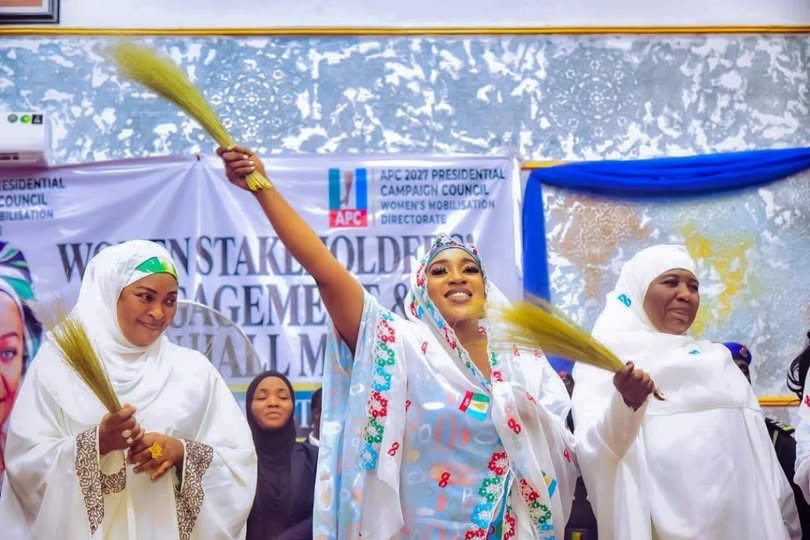
The APC Presidential Campaign Council (PCC) Directorate of Women Mobilisation, led by Dr Betta Edu, has taken the First Lady, Senator Oluremi Tinubu’s women empowerment initiative to markets, hospitals and communities across Jigawa State as part of efforts to strengthen grassroots engagement ahead of the 2027 general elections.

The outreach featured visits to markets and hospitals, interactions with community stakeholders and an empowerment programme for women, aimed at improving livelihoods and supporting vulnerable groups.

In a statement made available to PUNCH Online on Wednesday, speaking during the exercise, Edu said the initiative was designed to bring the First Lady’s empowerment programmes closer to women at the grassroots.

“Our mission is to reach women where they live, work and conduct their businesses. We want them to understand that they are important stakeholders in national development and that their economic wellbeing remains a priority,” she said.

She added that empowering women at the grassroots was essential to strengthening families, communities and the nation’s economy.

“When women are empowered, families become stronger and communities are better positioned for development.

“We are here to encourage our women, listen to their concerns and ensure they are connected to opportunities that can improve their livelihoods,” Edu said.

At various markets, Edu and members of the Directorate engaged women traders on economic empowerment, livelihood opportunities and the importance of women’s participation in national development.

The delegation also visited hospitals, where it interacted with patients, offered words of encouragement and commended healthcare workers for their dedication to duty.

See also  Troops kill 274 insurgents as Nigeria records 882 attacks

The outreach culminated in an empowerment programme attended by women beneficiaries and grassroots stakeholders, who expressed appreciation for the initiative.

The beneficiaries also pledged their support for President Bola Tinubu, the Jigawa State Government and other APC candidates ahead of the 2027 general elections.

The wife of the Jigawa State Governor, Ambassador Hajiya Namadi, commended Senator Tinubu and the APC PCC Women Mobilisation Directorate for extending the initiative to communities across the state.

She described the outreach as a demonstration of commitment to women’s welfare and grassroots development.

“This kind of engagement is important because it brings leadership closer to the people, particularly women who are making significant contributions to their families and communities. We appreciate the First Lady for remembering women at the grassroots,” she said.

She stressed the need for greater participation of women in community development and political engagement, adding that women should be encouraged to take active roles in shaping the future of their communities.

“We must continue to create opportunities for women to participate meaningfully in community development and governance. Their voices, contributions and experiences are essential to building stronger communities,” she added.

She also applauded the Directorate for taking the Renewed Hope message directly to the people.

Edu and members of the Directorate further intensified grassroots mobilisation across Jigawa State through engagements with women leaders, traders, community stakeholders and grassroots organisations.

The exercise also involved activating mobilisation structures across the state’s 27 local government areas.

According to figures provided for the exercise, Jigawa State has 2,867,176 registered and newly captured voters in the provisional combined register, spread across 287 political wards and 4,522 polling units.

See also  ‘Your Ways Are Pure, You’ll Triumph’ — Sowore Reveals What Pastor Adeboye Told Him

The APC’s stated target of securing two million votes for President Tinubu in the state is expected to inform further grassroots mobilisation, voter sensitisation and engagement with women across the political wards.

The Jigawa outreach forms part of the APC PCC Women Mobilisation Directorate’s nationwide programme under the guidance of the First Lady, combining economic empowerment, humanitarian outreach and political mobilisation ahead of the 2027 general elections.

Source: punchng.com

FOLLOW US ON:

FACEBOOK

WHATSAPP CHANNEL

TWITTER

PINTEREST

TIKTOK

YOUTUBE

LINKEDIN

INSTAGRAM

Continue Reading

Politics

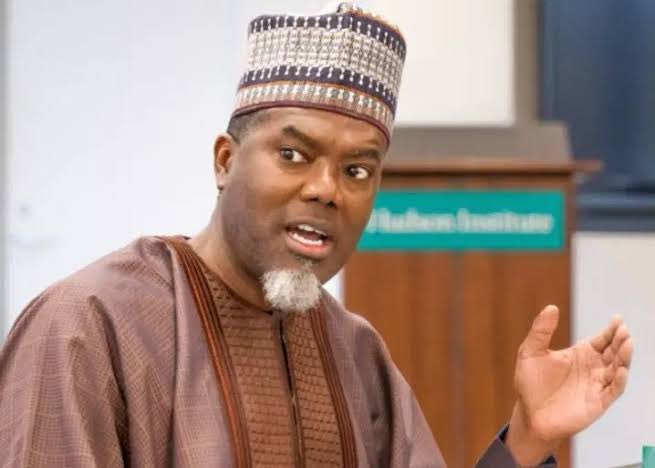
Omokri accuses Obi of politicising Flamingos’ victory

Published

on

Nigeria’s Ambassador to Mexico, Guatemala, Honduras and Nicaragua, Reno Omokri, has accused former Anambra State Governor Peter Obi of politicising the Flamingos’ FIFA U-17 Women’s World Cup victory by attempting to associate himself with the team’s achievement.

Omokri recalled how former President Goodluck Jonathan and former Head of State Muhammadu Buhari received victorious Nigerian football teams in 2013 and 1985, respectively, amid the controversy surrounding Obi’s attempt to meet the Flamingos at the airport.

He made the remarks in a statement on Tuesday while criticising Obi over his claim that officials of the Nigeria Football Federation prevented him from greeting the Flamingos after their FIFA U-17 Women’s World Cup triumph.

Omokri said he was physically present with Jonathan at the Presidential Villa, Abuja, in February 2013, when the then President received the Super Eagles following their AFCON victory.

He argued that Buhari and former Vice-President Atiku Abubakar, despite their political ambitions ahead of the 2015 general election, did not attempt to bypass the protocol or politicise the team’s achievement.

“Neither General Muhammadu Buhari nor Waziri Atiku Abubakar, who had contested and lost to the then incumbent, and were planning to throw their hats in the ring with him in 2015, attempted to circumnavigate the protocol or sour the joyous national mood by politicising the situation. Rather, they commended the team and the nation,” he said.

Omokri also recalled the 1985 victory of Nigeria’s Baby Eagles, now known as the Golden Eaglets, saying they first met Buhari, who was then the military Head of State, after winning the inaugural FIFA U-16 World Championship in China.

See also  Supreme Court voids PDP Ibadan convention

He noted that the late businessman and politician Moshood Abiola, whom he described as one of Nigeria’s biggest contributors to sports development, particularly football, supported the team financially and morally throughout the tournament.

Omokri said Abiola’s contributions to sports were recognised in 1980 when the African Sports Journalists Union named him the Pillar of Sports in Africa.

However, he noted that despite Abiola’s support for the team, the players did not meet him first after their victory on August 11, 1985.

The ambassador also cited Spain’s reception of its national team after winning the 2026 FIFA World Cup, saying the players first met King Felipe VI before formally engaging with the media.

According to the Royal Spanish Football Federation, the team’s first official stop after returning to Madrid was the Zarzuela Palace, where the King, Queen Letizia and other members of the Royal Family received the delegation before it proceeded to meet Prime Minister Pedro Sánchez.

“That is the convention, not only in Nigeria and Spain, but in every respectable, responsible and ordered society run by the rule of law and constitutional democracies,” Omokri said.

He argued that placing personal interests above established national protocols could be interpreted as a failure to prioritise the country’s interests.


“Placing yourself above such conventions and wanting them circumvented because of your personal agenda, itinerary, and convenience could be interpreted by reasonable people as you not putting national interest first,” he said.

Omokri further accused Obi of attempting to associate himself with a victory he did not contribute to, describing the move as opportunistic.

“Sports should be protected from the ‘toxic’ politics of individuals who try to sow disunity at a time when football has united the nation,” he said.

See also  Wike PDP bloc rejects Makinde interim NWC, primaries schedule

He added, “Wanting to insert yourself into a victory that you did not contribute to, and a team that you did not even acknowledge until they won, is not only opportunistic, it falls beneath the standard of behaviour expected from a statesman, who should know that their first port of call should be the Head of State.”

The controversy followed Obi’s allegation that NFF officials prevented him from greeting the Flamingos when they returned to Abuja from Morocco after winning the FIFA U-17 Women’s World Cup.

Peter Obi
File: Peter Obi

Obi said he arrived at the Abuja airport at about 7am on Monday to board a flight to Enugu when he sighted the team.

He said he asked his protocol officer, Jackie Wayas, to find out whether he could greet and welcome the players but was informed that NFF officials had refused his request.

He also alleged that the officials warned they could lose their jobs if they allowed him to approach the players, describing the incident as another example of what he called toxic politics.

However, the Chairman of the National Sports Commission, Shehu Dikko, rejected Obi’s account, saying officials who accompanied and received the Flamingos did not see the former governor around the players or the international terminal.

Dikko said two individuals wearing Obi’s campaign face caps and other campaign attire approached officials to request a meeting and photographs with the players.

He explained that the request was declined because it was made without prior arrangement and the players were tired after their journey from Morocco.

He also disputed Obi’s claim that officials risked losing their jobs over the matter and urged the former governor to apologise to the players, arguing that the controversy had shifted attention away from their achievement.

See also  ADC will go for presidential primary if consensus fails – Atiku

Similarly, the Director-General of the National Institute for Sports, Philip Shaibu, said Obi could have waved at the players like other Nigerians at the airport rather than seeking a meeting with them.

Speaking on Channels Television’s Morning Brief on Tuesday, Shaibu argued that the support given to athletes before and during competitions was more important than seeking to celebrate with them after victories.


He also maintained that President Bola Tinubu had supported the team during the tournament.

The Director-General of the NSC, Bukola Olopade, also accused two men claiming to be Obi’s protocol officers of breaching security procedures while attempting to arrange a meeting with the Flamingos.

Olopade said officials did not see Obi at the airport when the team returned, adding that the two men approached officials while the players were being escorted into buses after their flight.

The Flamingos defeated Japan 2-1 in the final in Rabat, Morocco, on November 7 to win their first FIFA U-17 Women’s World Cup title, becoming the first African country to win the competition.

Source: punchng.com

FOLLOW US ON:

FACEBOOK

WHATSAPP CHANNEL

TWITTER

PINTEREST

TIKTOK

YOUTUBE

LINKEDIN

INSTAGRAM

Continue Reading

Trending