Connect with us

Politics

APC Muslim-Muslim ticket sparks fresh debate ahead of 2027 Presidential elections

Published

on

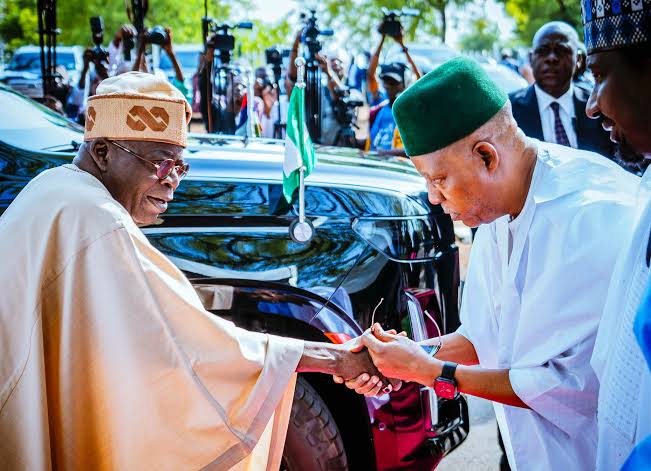
The decision by President Bola Tinubu to retain Vice President Kashim Shettima as his running mate for the 2027 presidential election has reignited debate over the All Progressives Congress’ Muslim-Muslim ticket.

Shettima’s confirmation for the 2027 presidential election has reopened debate over the APC’s Muslim-Muslim ticket, with political parties and stakeholders divided over whether religion or competence should shape leadership choices.

The APC’s decision ended months of speculation that Tinubu could replace Shettima with a Northern Christian, while reviving arguments that dominated the build-up to the 2023 election.

Although critics had argued that the same-faith ticket undermined Nigeria’s religious balance, Tinubu and Shettima won the presidency, and the ruling party has now opted to retain the combination for a second term.

While some opposition parties, including the All Progressives Grand Alliance and the Young Progressives Party, have downplayed concerns over the same-faith ticket, others have warned that religious balance remains an important factor in Nigeria’s politics.

The renewed debate followed the APC’s confirmation on Friday that Tinubu would contest the 2027 election with Shettima, a move that effectively ended months of speculation that the President could pick a Northern Christian as his running mate.

Ahead of the announcement, several names had been linked to the position, including the Minister of Defence, Gen Christopher Musa (retd.); the Catholic Bishop of Sokoto Diocese, Most Rev Hassan Kukah; and former Speaker of the House of Representatives, Yakubu Dogara.

The APC’s decision has revived arguments that dominated the 2023 election after Tinubu, a Muslim from the South-West, selected Shettima, also a Muslim from the North-East, as his running mate.

Critics had argued that the ticket broke with Nigeria’s tradition of balancing presidential tickets along religious lines to reflect the country’s diversity. However, Tinubu and Shettima went on to win the election, defeating candidates of the Peoples Democratic Party, Atiku Abubakar; the Labour Party, Peter Obi; and the New Nigeria Peoples Party, Rabiu Kwankwaso.

Reacting to the development, APGA said the focus of elections should be on leadership capacity rather than religion.

The party’s National Publicity Secretary, Ejimofor Opara, said Nigeria must move beyond identity politics and judge leaders by their performance.

“Competence should remain the defining issue in 2027, not whether candidates are Muslims or Christians,” he said.

See also  Police disperse #ReleaseNnamdiKanuNow protesters after regrouping in Abuja

The Young Progressives Party also argued that character, competence and integrity should outweigh religious or ethnic considerations in leadership selection.

Its spokesman, Wale Egbeola-Martins, said Nigeria’s major challenge had been poor leadership rather than the religious identities of those in power.

“The real challenge confronting our nation since the return to democratic rule has not been the ethnic or religious identity of those in power, but the persistent deficit of purposeful and accountable leadership,” he said.

The party said it would continue to support politics based on merit, service and national interest rather than religious or ethnic considerations.

APC defends retention

Meanwhile, the APC has defended its decision to retain Shettima, insisting that the choice was based on national interest and a careful assessment of political realities.

The party’s Director of Publicity, Bala Ibrahim, said the Muslim-Muslim ticket had not produced the religious tensions predicted by critics ahead of the 2023 election.

“The decision was reached after a careful assessment of the situation. The party is conscious of religious sensitivities but is also mindful of the broader interests of Nigerians,” he said.

Ibrahim dismissed fears that the ticket could fuel religious division, arguing that the administration had promoted interfaith harmony since assuming office.

The National Chairman of the Action Democratic Party, Yabagi Yusuf, and a leader of the Coalition of United Political Parties, Mark Adebayo, also argued that issues such as security, the economy and governance performance would dominate the 2027 campaign rather than religious identity.

Yusuf said the APC’s decision was largely influenced by electoral considerations, particularly the need to secure support across key voting blocs.

He argued that while religious considerations remain part of political discussions, parties ultimately consider the electoral strength and acceptability of their candidates when making strategic decisions.

Yusuf said the APC’s decision was driven by electoral calculations rather than religious considerations.

According to him, political parties are primarily concerned with assembling tickets capable of attracting the broadest electoral support.

“It’s politics. They must have done their calculations and concluded that this is their best chance of winning. In the end, elections are about where the votes are,” he said.

See also  2027: ‘Tinubu-Shettima zero-zero ticket, not Muslim-Muslim ticket’ – Adebayo

The immediate past National Publicity Secretary of the Coalition of United Political Parties, Mark Adebayo, also argued that the Muslim-Muslim ticket is unlikely to generate the level of controversy it did in 2023.

He said issues such as security, the economy and governance would dominate the 2027 campaign.

“I do not think the Muslim-Muslim ticket will generate the same level of traction in 2027 as it did in 2023. The next election will be driven more by security, the economy and the government’s performance,” Adebayo said.

The Ijaw Youths Council also dismissed religious identity as the basis for evaluating political leaders.

The President of IYC Worldwide, Jonathan Lokpobiri, said Nigerians should focus on competence and good governance rather than the faith of candidates.

“What we need is a competent, focused and compassionate leader who can take difficult decisions and improve the lives of Nigerians. Religion should not be the yardstick for leadership,” he said.

Groups oppose ticket

However, the Coalition of South East Youth Leaders criticised the APC’s decision, describing the retention of the Muslim-Muslim ticket as insensitive to Nigeria’s religious diversity.

Its President-General, Goodluck Ibem, said overlooking the opportunity to nominate a Northern Christian could deepen feelings of exclusion among many Nigerians.

“In a nation as religiously and culturally diverse as ours, leadership must not only be fair but must also be seen to be fair,” he said, urging the APC to embrace greater inclusiveness.

Similarly, the South-South Youths Initiative rejected Shettima’s renomination.

Its National President, Imeabe Oscar, argued that the APC’s decision was politically motivated and alleged that the party retained the Vice President largely for electoral advantage in Northern Nigeria.

‘Christians feel excluded’

The National President of the Middle Belt Forum, Dr Pogu Bitrus, criticised the APC’s decision, describing the retention of the Muslim-Muslim ticket as a slight on Christian Nigerians.

“To retain a Muslim-Muslim ticket after 2023 sends the wrong signal in a country as religiously diverse as Nigeria,” he said, urging the APC to reconsider its decision in the interest of national unity.

The Chairman of the Centre for Accountability and Open Leadership, Debo Adeniran, however, said fears expressed over the Muslim-Muslim ticket before the 2023 election had not materialised.

See also  PICTURES: Protest rocks APC headquarters over Kayode Ojo’s Ekiti primary exclusion

“The fears widely expressed in 2022 did not happen. The President and the Vice President have worked together, and that relationship appears to have remained stable,” he said.

Adeniran added that Shettima’s loyalty and working relationship with Tinubu may have influenced the President’s decision to retain him.

APC backs Shettima

Stakeholders of the APC in Abia State also defended the President’s decision.

The state chairman of the party, Chijioke Chukwu, said there was no justification for replacing Shettima, describing the President and Vice President as a team that had worked harmoniously since assuming office.

“It’s unreasonable to drop him (Shettima). Tinubu is a Muslim from the south and has been supporting Christians. Going for his second tenure, it is proper for the President to pick from the North. They have collaborated well without any problems between the Vice President and the President. There is no reason for a new VP. To us, this is a wonderful decision,” he said.

Similarly, Ohanaeze chieftain Justice Rowland Ajuzieogu said Tinubu was constitutionally entitled to choose his running mate, adding that Shettima had remained loyal throughout the administration.

“Tinubu looks at loyalty. Shetima is loyal.”

Industrialist and politician Sam Ohuabunwa also backed the decision, saying the Tinubu-Shettima ticket had already secured victory in 2023 and there was no compelling reason to alter it.

“Since Tinubu made the choice, heaven did not fall. He can do it again, and I believe that is the right thing to do.”

Afenifere faults decision

A faction of Afenifere led by Oba Olaitan Oladapo, however, faulted the renomination of Shettima.

Its National Publicity Secretary, Justice Faloye, said retaining another Muslim-Muslim ticket failed to reflect fairness, religious balance and inclusiveness in a multi-faith country.

Speaking on Tinubu’s choice of Shettima, Faloye said “President Tinubu has continued to show disregard for federal character and religious balance  and fairness.

“Most important is that we can expect more of the  same if he chooses to coronate himself in 2027. May God save Nigeria sociopolitically and economically from this regime.”

punch.ng

FOLLOW US ON:

FACEBOOK

TWITTER

PINTEREST

TIKTOK

YOUTUBE

LINKEDIN

Continue Reading
Click to comment

Leave a Reply

Your email address will not be published. Required fields are marked *

Politics

SEE FULL LIST: Lagos, Rivers, 10 other states Tinubu may join APC rallies

Published

on

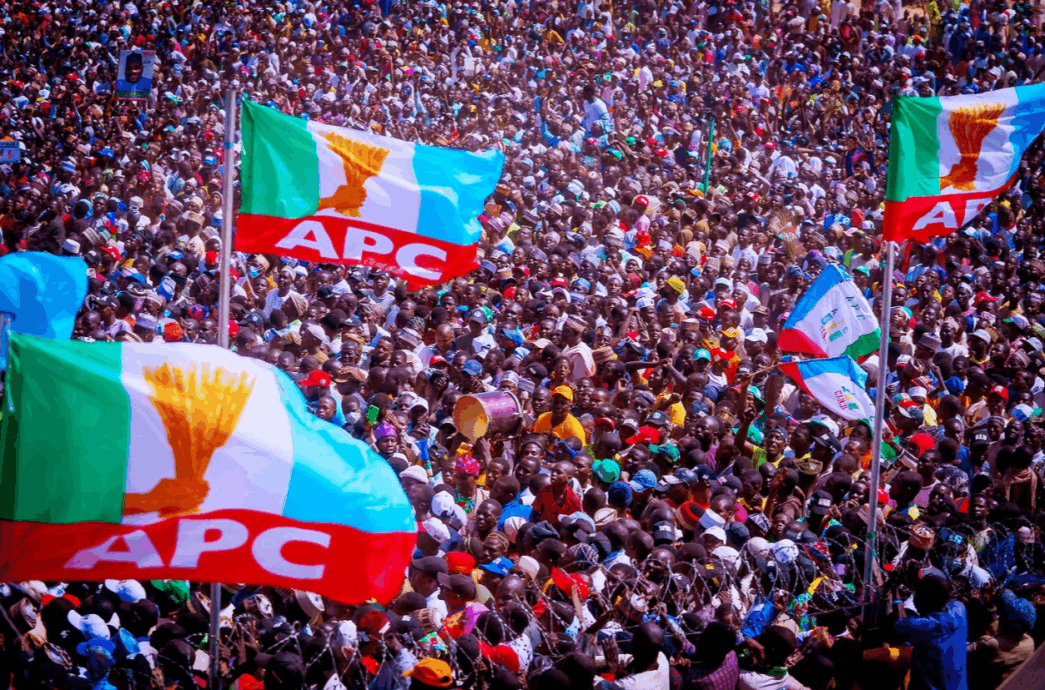
The All Progressives Congress has outlined a proposed nationwide campaign rally schedule covering the 36 states of the federation and the Federal Capital Territory ahead of the 2027 general elections.

The proposed campaign is scheduled to kick off in Kaduna on October 24, 2026, and conclude with a grand rally in Lagos on January 9, 2027.

The itinerary identifies 12 strategic locations where President Bola Tinubu is expected to join the party’s presidential campaign activities, with rallies planned across the country’s six geopolitical zones.

Here is the full list of the 12 states proposed for Tinubu’s presidential campaign appearances.

According to the proposed schedule, the 12 locations and dates are as follows:

1. Kaduna, Kaduna State — October 24, 2026 (Saturday)
2. Port Harcourt, Rivers State — November 7, 2026 (Saturday)
3. Jos, Plateau State — November 14, 2026 (Saturday)
4. Ibadan, Oyo State — November 21, 2026 (Saturday)
5. Maiduguri, Borno State — November 25, 2026 (Wednesday)
6. Enugu, Enugu State — November 28, 2026 (Saturday)
7. Bauchi, Bauchi State — November 29, 2026 (Sunday)
8. Sokoto, Sokoto State — December 4, 2026 (Friday)
9. Asaba, Delta State — December 12, 2026 (Saturday)
10. Kano, Kano State — December 17, 2026 (Thursday)
11. Yola, Adamawa State — January 4, 2027 (Monday)
12. Lagos, Lagos State — January 9, 2027 (Saturday)

Kaduna to Host Opening Rally

Kaduna is listed as the starting point of the proposed nationwide campaign tour, with the opening rally scheduled for October 24, 2026.

See also  Daniel Bwala - Seyi Tinubu can challenge his father for president

From Kaduna, the campaign is expected to move to Port Harcourt in Rivers State on November 7, followed by Jos in Plateau State on November 14 and Ibadan in Oyo State on November 21.

The itinerary then lists Maiduguri, Borno State, for November 25, before moving to Enugu on November 28 and Bauchi on November 29.

December Rallies Across Four States

The proposed schedule continues into December with rallies in Sokoto on December 4, Asaba in Delta State on December 12 and Kano on December 17.

The campaign is then scheduled to resume in January 2027, with Yola in Adamawa State listed for January 4.

Lagos to Host Grand Finale

Lagos State is designated as the venue for the proposed grand finale on January 9, 2027.

The rally would mark the scheduled conclusion of the nationwide campaign itinerary, following the opening event in Kaduna in October 2026.

The proposed schedule covers 12 locations across different regions of the country as the APC prepares for the 2027 general elections.

Continue Reading

Politics

Dave Umahi inaugurates APC infrastructure campaign team ahead of 2027 elections

Published

on

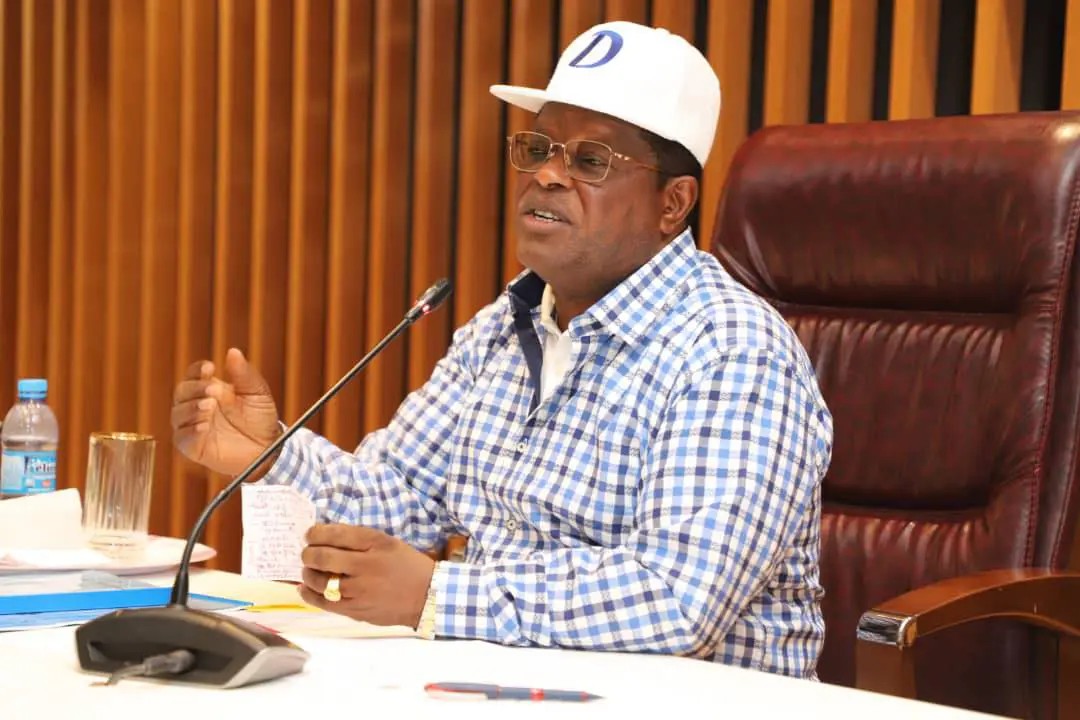
The Minister of Works, Dave Umahi, has inaugurated members of the Office of the Deputy Director-General, Infrastructure, Mobilisation and Sensitisation, of the All Progressives Congress (APC) Presidential Campaign Council for the 2027 elections.

Umahi, who serves as DDG, Infrastructure, Mobilisation and Sensitisation for the council, said the team would identify, document and publicise infrastructure projects being executed by the Federal Government across the country.

Speaking at the inaugural meeting in Abuja on Thursday, he said the initiative was aimed at strengthening coordination, infrastructure communication, mobilisation and public sensitisation ahead of the 2027 presidential election.

“The team’s primary responsibility is to identify, document, compile, and publicise infrastructure projects the Federal Government is executing across Ministries, Departments, and Agencies (MDAs).

“Although the Federal Ministry of Works accounts for a significant proportion of the Federal Government’s infrastructure investments, the team’s coverage should extend to other MDAs.

“This is to ensure a comprehensive account of infrastructure development across the six geopolitical zones of the country.”

Umahi said the Senior Special Assistants to the President (SSA-P) on Community Engagement for the six geopolitical zones who also appointed as Zonal Coordinators, other members of the ODDG, alongside the Secretary, should work collaboratively.

This, he said, was to identify and document relevant infrastructure projects within their respective zones.

He emphasised that the compilation should cover projects executed by the Federal Ministry of Works, as well as infrastructure initiatives undertaken by other MDAs.

He said this was to provide a comprehensive overview of infrastructure investments and the developmental strides of the Renewed Hope Administration of President Bola Tinubu, across the length and breadth of the country.

The minister clarified that existing publicity activities between the Ministry of Works and the senior special assistants would continue.

See also  Kaduna ADC expels deputy chairman, eight others over misconduct

He added that the new office would provide a broader framework for coordinating information on infrastructure projects undertaken by other MDAs at zonal, sub-national and national levels.

According to him, accurate documentation and effective communication will make information on government infrastructure investments more accessible to Nigerians.

Umahi described infrastructure development as a key driver of economic growth, national development and community integration.

“Infrastructure investment stimulates economic activities, connects communities, creates opportunities and supports the growth of other sectors of the economy,” he said.

He also highlighted the Federal Government’s adoption of continuous reinforced concrete pavement (CRCP) technology in road construction, saying it would reduce dependence on imported bitumen and promote the use of local resources and expertise.

The minister said the technology would support local economic activities, reduce foreign exchange demand associated with imported road construction material and promote more durable infrastructure delivery.

He urged members of the office to ensure that information on infrastructure projects was accurately compiled and effectively disseminated to the public.

NAN

Source: punchng.com

FOLLOW US ON:

FACEBOOK

WHATSAPP CHANNEL

TWITTER

PINTEREST

TIKTOK

YOUTUBE

LINKEDIN

INSTAGRAM

Continue Reading

Politics

INEC begins early logistics planning for 2027 elections

Published

on

The Independent National Electoral Commission has inaugurated a multi-agency electoral logistics committee for the 2027 general elections, warning that no Nigerian should be disenfranchised because of delays in the arrival of election materials.

The commission also charged the National Orientation Agency to intensify grassroots mobilisation against voter apathy, vote buying and electoral violence ahead of the elections scheduled for January 16 and February 6, 2027.

The INEC Chairman, Prof. Joash Amupitan (SAN), gave the charge on Thursday in Abuja during the inauguration of the committee and the flag-off of the NOA’s nationwide grassroots mobilisation campaign.

Amupitan said the logistics committee would strengthen the commission’s operational capacity and ensure the timely deployment of personnel and election materials across the country.

He said the decision to adopt a multi-agency approach was informed by the complexities of transporting election materials across Nigeria’s diverse geographical terrain.

“Today’s inauguration of the Electoral Logistics Committee marks a proactive step in ensuring that the 2027 General Election is defined by seamless execution and operational excellence,” the INEC chairman said.

He named a National Commissioner, Rear Admiral Jamila Malafa (retd.), as chairperson of the committee, which comprises representatives of security agencies, transport unions and relevant government institutions.

Amupitan said the credibility of an election depended significantly on whether voters found their polling units open, equipped and ready at the appointed time.

“Election logistics involve the intricate movement of both sensitive and non-sensitive materials by land, sea and air. It requires precision, security and timeliness. This is why we are starting early,” he said.

The committee is expected to assess the commission’s logistics requirements, develop a comprehensive plan for storing, distributing, deploying and retrieving election materials, and audit the readiness of warehouses, vehicles, airports and seaports.

See also  PICTURES: Protest rocks APC headquarters over Kayode Ojo’s Ekiti primary exclusion

It will also identify operational gaps, recommend corrective measures, monitor compliance with approved logistics schedules and develop strategies to address transportation bottlenecks, shortages and security threats.

Other responsibilities include coordinating the secure movement of materials through road, air and maritime channels, liaising with government agencies and transport unions, and submitting periodic reports to the commission.

Amupitan said Nigeria’s geographical diversity required a flexible and resilient logistics framework capable of addressing weather conditions, difficult terrain and security challenges.

“We must anticipate the weather, the terrain and the security environment to ensure that no Nigerian is disenfranchised due to late arrival of materials,” he said.

He described preparations for the 2027 elections as “a marathon, not a sprint,” adding that early planning was necessary to deliver a transparent, efficient and credible electoral process.

Speaking on behalf of the committee, Malafa said its mandate included reviewing previous elections, identifying operational weaknesses and developing strategies to ensure the timely deployment of personnel and materials.

She said the committee would focus on airlift operations, cargo handling, land and maritime transportation, storage facilities and security arrangements.

According to her, the committee would also map difficult terrain, security-challenged areas and crisis-prone locations to enable the development of customised transportation and security arrangements.

Malafa said the committee could establish specialised subcommittees to handle airlift, land transportation, maritime transportation, storage and security operations.

She stressed that effective coordination among participating agencies would be essential to achieving the committee’s objectives.

Meanwhile, at the flag-off of the NOA’s nationwide grassroots mobilisation campaign, Amupitan charged the agency’s leadership and field officers to take voter education messages to communities across the country.

He urged the officials to extend the campaign to traditional palaces, markets, places of worship, campuses and village squares in all 774 local government areas.

See also  Yilwatda, Basiru cleared as APC maps out 2027 convention

The INEC chairman identified voter apathy, vote buying and electoral violence as major threats to the credibility of the 2027 elections.

On voter apathy, he said citizens who failed to vote surrendered their democratic power to others, urging Nigerians to verify their registration status, collect their Permanent Voter Cards and participate peacefully in the elections.

“Do not wait until election week to get involved. Check your registration status, collect your PVCs now, stay informed, come out on Election Day, vote peacefully according to your conscience, and protect your community from violence,” he said.

Amupitan assured voters that their ballots would be accurately counted and reflected in the final results, citing the commission’s use of the Bimodal Voter Accreditation System and the INEC Result Viewing portal.

He also condemned vote buying, describing it as an attack on constitutional democracy.

The chairman said INEC had reconfigured polling unit layouts to protect ballot secrecy and prevent voters from displaying their marked ballots to party agents or individuals attempting to influence their choices with money.

He added that the commission was working with the Economic and Financial Crimes Commission, the Independent Corrupt Practices and Other Related Offences Commission and other security agencies through the Inter-Agency Consultative Committee on Election Security to monitor financial activities around polling units and apprehend those involved in vote buying.

On electoral violence, Amupitan warned political actors against resorting to violence, hate speech and other actions capable of undermining peaceful participation.

“No political ambition justifies the shedding of blood or the destruction of property,” he said.

He also raised concerns about the use of artificial intelligence-generated deepfakes to incite ethnic and religious conflict, urging political parties, candidates and youth groups to embrace peace and resolve electoral disputes through lawful channels.

See also  Insecurity: Tinubu pledges state police to US, European allies

The INEC chairman further called on political parties to campaign on issues rather than resort to hate speech or vote buying, while urging civil society organisations and the media to fact-check viral claims and promote accurate electoral information.

In his remarks, the Director-General of the NOA, Lanre Issa-Onilu, said the campaign would be implemented through the agency’s directorates in the 36 states and the Federal Capital Territory, alongside Community Orientation and Mobilisation Officers in the 774 local government areas.

He said the campaign would be non-partisan and would use community dialogues, local-language communication, radio discussions, drama, audio messages and digital platforms to reach Nigerians.

Issa-Onilu said voter apathy reduced public participation, vote buying undermined freedom of choice, while electoral violence threatened lives and damaged relationships within communities.

“No political ambition should cost a Nigerian life. No disagreement should destroy the bonds between neighbours. No temporary inducement should determine a citizen’s choice about our collective future,” he said.

The NOA director-general called for continued technical collaboration with INEC, including timely access to verified voter education materials and coordination across national, state and local structures.

He said the campaign, themed “Your Vote, Your Voice, Our Future: Say No to Apathy, Vote Buying and Violence. Let’s Build a United Nigeria in 2027”, was designed to encourage greater citizen participation and peaceful elections.

The event was attended by INEC national commissioners, representatives of security agencies, political parties, civil society organisations, traditional and religious leaders, and representatives of youth, women and persons with disabilities.

Source: punchng.com

FOLLOW US ON:

FACEBOOK

WHATSAPP CHANNEL

TWITTER

PINTEREST

TIKTOK

YOUTUBE

LINKEDIN

INSTAGRAM

Continue Reading

Trending