**By Newsbreak365 Editorial Team**
*Published: October 16, 2026*
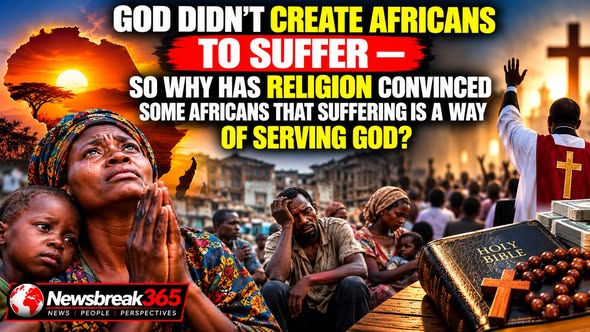
**Africa faces a difficult question: Does faith help people overcome hardship, or can some religious teachings encourage people to accept suffering instead of demanding change?**
Across many African communities, religion plays a powerful role in everyday life. Churches, mosques, prayer meetings, and religious gatherings provide millions of people with hope, comfort, community, and a sense of purpose.
For many believers, faith is a source of strength during unemployment, illness, family difficulties, and financial hardship. Yet an important question deserves serious attention: **When does faith become a source of hope, and when does it become a reason to accept suffering that could be prevented?**
This is not an argument against God or against people who practise religion. It is a call to examine how religious messages are sometimes interpreted and how those interpretations can influence people’s attitudes towards poverty, education, leadership, and social change.
## The Belief That Suffering Is a Test From God
In difficult circumstances, people are often encouraged to remain patient, pray harder, trust God, and believe that their situation will eventually improve.
For some people, these messages provide emotional strength and help them survive painful experiences. Patience and hope can be valuable, particularly when circumstances are beyond an individual’s immediate control.
However, problems arise when people are led to believe that questioning injustice demonstrates a lack of faith, that poverty must simply be endured, or that practical efforts to improve their circumstances are less important than waiting for a miracle.
**There is a difference between finding meaning in suffering and accepting preventable suffering as a permanent condition of life.**
A person can pray for employment while learning new skills and searching for opportunities. A family can believe in divine healing while seeking appropriate medical treatment. A community can pray for good leadership while demanding accountability from elected officials.
Faith and practical action do not have to be enemies.
## Why Is Poverty Sometimes Treated as a Spiritual Problem Alone?
Poverty is complex. It can result from unemployment, limited access to quality education, poor infrastructure, conflict, corruption, economic inequality, inadequate healthcare, and other social and economic conditions.
Prayer alone cannot replace a functioning healthcare system, create enough jobs for an entire population, or guarantee that public funds are properly managed.
When people experience hardship, spiritual support may help them cope. But lasting improvements also require practical solutions, responsible institutions, education, investment, and opportunities for people to improve their lives.
Imagine a young African who has prayed for years to find employment but has no access to quality training or a fair opportunity to compete for available jobs. Encouraging that person to maintain hope may be helpful. Suggesting that prayer is the only necessary response, however, ignores the practical barriers that must also be addressed.
Similarly, a family struggling to feed its children may need emotional and spiritual support, but it may also need stable employment, affordable food, social protection, and effective public services.
**The question is not whether people should pray. The question is whether prayer is being used alongside practical action or as a substitute for it.**
## Religion, Leadership, and the Responsibility to Ask Questions
Another important issue is the relationship between religion and leadership.
Across Africa, religious institutions and leaders can play constructive roles by supporting education, helping vulnerable people, providing community services, promoting peace, and speaking against corruption and injustice.
At the same time, religious authority should not place any individual beyond reasonable scrutiny.
When political leaders fail to provide basic services, citizens have a right to ask questions. When public resources are mismanaged, accountability matters. When a religious leader makes claims or requests financial contributions, people should be able to ask reasonable questions without being intimidated or shamed.
Blind loyalty can be dangerous in any institution, whether religious, political, cultural, or economic.
No society becomes stronger by discouraging critical thinking. A healthy community allows people to examine claims, seek evidence, discuss difficult issues respectfully, and distinguish genuine service from exploitation.
## Does God Want Africans to Suffer?
This question touches on deeply personal beliefs, and people from different religious traditions will answer it differently.
Many Christians believe that God does not delight in human suffering and that believers have a responsibility to care for the poor, defend the vulnerable, and work for justice. Many Muslims likewise emphasise charity, compassion, responsibility, and helping those in need.
Religious traditions also contain teachings about patience, sacrifice, perseverance, and enduring hardship. These teachings can inspire courage, but their meaning and application are often debated.
It would therefore be unfair to claim that all religious leaders encourage poverty or that all Africans accept suffering because of religion. Many religious people work tirelessly to improve living conditions and challenge injustice.
The concern is narrower but important: **What happens when religious messages are interpreted in ways that discourage people from addressing problems they have the power to change?**
If a community believes that suffering must simply be accepted, it may become harder to challenge harmful practices, demand better public services, or pursue available opportunities.
But if faith encourages compassion, responsibility, courage, education, and service to others, it can become a force for positive change.
## Africans Deserve Faith, Dignity, and Opportunity
Africa’s future should not be framed as a choice between religion and progress.
People should be free to worship, pray, and practise their beliefs. They should also be free to question religious teachings, seek knowledge, challenge corruption, and demand better living conditions.
A child deserves access to education regardless of the family’s religious beliefs. A patient deserves appropriate medical care. Workers deserve fair treatment. Citizens deserve responsible leadership and access to essential public services.
These goals require action from governments, institutions, businesses, communities, and individuals.
Religious organisations can contribute by investing in education, supporting vulnerable families, promoting peaceful coexistence, and encouraging responsible citizenship. Governments must fulfil their obligations, while individuals and communities can work together to solve problems and hold decision-makers accountable.
There is no contradiction in believing in God while also believing that human beings have a responsibility to improve the world around them.
**Praying for change and working for change can go hand in hand.**
## The Debate Africa Needs to Have
Perhaps the most important question is not whether religion is good or bad. Religion means different things to different people, and its influence varies across communities.
The more useful question is whether the way people practise and interpret their beliefs helps them live with dignity, think critically, support one another, and address the problems facing their societies.
When someone is poor, should the response be limited to telling them to pray, or should the community also ask what opportunities, resources, and support could improve their situation?
When a leader fails, should citizens simply wait for divine intervention, or should they also exercise their right to demand accountability?
When hardship can be reduced through education, healthcare, better policies, and collective action, should those solutions be ignored?
These questions deserve honest discussion without insulting believers or dismissing the experiences of people who have found genuine comfort in their faith.
Africa does not need to abandon hope. It needs hope that encourages people to think, act, build, and demand better.
### Final Thoughts
God did not have to create Africans for suffering for suffering to become a reality in people’s lives. Poverty, inequality, poor governance, and preventable hardship are human and social challenges that deserve serious attention.
Faith may help people endure difficult circumstances, but enduring hardship should not mean surrendering the possibility of change.
**Africans deserve the freedom to believe, the courage to question, the opportunity to prosper, and the dignity to live better lives.**
The challenge is to ensure that faith inspires people to confront suffering rather than teaching them that suffering is all they should expect.
### What Do You Think?
Does religion help Africans overcome poverty and hardship, or do some religious teachings encourage people to accept suffering instead of demanding practical solutions?
Can a person be deeply religious while questioning religious leaders, challenging poor governance, and pursuing a better life?
Share your opinion in the comments. Let us have a respectful but honest debate.
**Newsbreak365 — News | People | Perspectives.**
FOLLOW US ON:
FACEBOOK
TWITTER
PINTEREST
TIKTOK
YOUTUBE
LINKEDIN
INSTAGRAM