Connect with us

News

Senate, SGF fault Makinde’s UN probe demand on Oyo abduction

Published

on

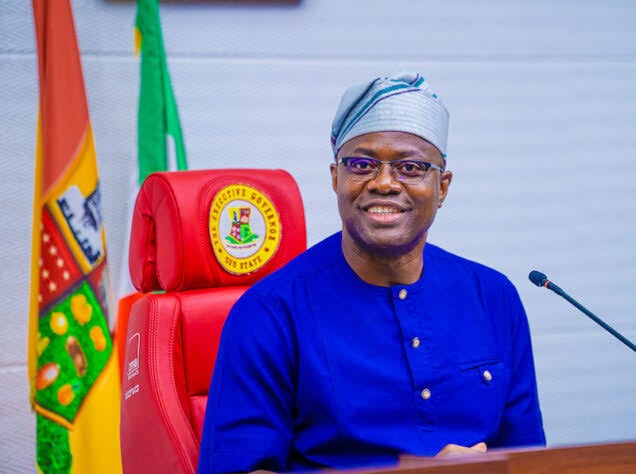
The Senate on Tuesday cautioned Oyo State Governor, Seyi Makinde, over his call for a United Nations-led investigation into the abduction and rescue of 39 pupils and six teachers in the state, warning that such remarks could undermine the efforts of the Federal Government and security agencies in tackling insecurity.

The warning followed the consideration of a motion sponsored by the Senate Leader, Opeyemi Bamidele, on the successful rescue of the victims after 56 days in captivity and the sacrifices made by security personnel during the operation.

The Senate also commended President Bola Tinubu, the Armed Forces, intelligence agencies and other security institutions for securing the release of the victims without the payment of ransom.

Also on Tuesday, the Secretary to the Government of the Federation, George Akume, faulted Makinde for what he described as politicising the abduction of pupils and teachers in Oyo State, insisting that Tinubu prioritised their rescue over making telephone calls.

Makinde had, on Monday, while formally assuming responsibility for the welfare, rehabilitation and education of the rescued teachers and pupils, called for a UN-backed investigation into the abduction, arguing that Nigerians deserved a full account of the circumstances surrounding the incident.

Bandits had on May 15, 2026, attacked three schools in Yawota and Ahoro Esiele communities in Oriire Local Government Area of Oyo State, abducting 39 pupils and six teachers.

Leading the criticism of the governor during plenary, the senator representing Edo North, Adams Oshiomhole, described Makinde’s call as unnecessary and capable of diminishing the achievements of the security forces.

He said, “Mr President, I read it this morning in newspapers, and I have also seen it in the electronic media that the governor of Oyo State is calling on the United Nations to probe the overall circumstances surrounding the kidnap and even the rescue.

“I thought that was unsportsmanlike. He has carried partisan politics too far, and this Senate should condemn his unguarded statement.

“Nigeria is a sovereign nation. When we wake up and call on foreign authorities to investigate.

“This is one case in which our armed forces have shown that, without paying a ransom, even though it meant those children and some adults remained in captivity for almost two months, they worked quietly to carry out the rescue operation.

“As captured in this motion, the operation unfortunately resulted in the loss of some lives.

“To trivialise it or suggest, as Oyo governor seems to have done, that the UN needs to unearth the circumstances is to question the sovereignty of our nation, and to downplay the achievements of the Commander-in-Chief, President Bola Tinubu and all the service chiefs involved in this process.

“I think there is a moment in the history of this nation when, across party divides, we should stand in unity to commend the manner in which these victims were released and encourage the armed forces to build on it.

“It is not possible for them to share with us some of the things they did, like I heard they were able to identify the guys and arrest some of their relatives.

“I want us to resolve that the governor of Oyo State should not be seen as downplaying, undermining and politicising an issue that ought to be something the whole nation across party divides should commend the armed forces for what they have done on this occasion and continue to encourage them to do so.”

Oshiomhole’s position was seconded by Senator Aniekan Bassey, who represents Akwa Ibom North-East Senatorial District.

Consequently, the Senate resolved to urge the Oyo governor to avoid statements capable of undermining the ongoing efforts of the Federal Government and security agencies in addressing terrorism, kidnapping and other forms of insecurity.

In its resolutions, the upper chamber commended the Armed Forces, intelligence agencies and other security institutions for securing the release of the victims after more than 50 days in captivity.

See also  ADC picks Tinubu’s challenger for the 2027 race today

The lawmakers also praised Tinubu for directing security agencies to deploy all necessary resources to ensure the unconditional release of the victims abducted by heavily armed terrorists.

According to the Senate, the rescue operation, which culminated in the victims’ release on July 10, 2026, led to the arrest of eight suspected terrorists, while several others were killed.

The Senate noted that the operation demonstrated growing professionalism, operational efficiency and improved inter-agency collaboration among the security agencies involved.

The lawmakers, however, paid tribute to security personnel who lost their lives during the operation.

They identified the fallen officers as Lt F.A. Isaac of the Nigerian Army, Private Silas Musa of the 81 Battalion of the Nigerian Army and Sgt Abena John Jerome of the Nigeria Police Force.

The Senate also recognised Lance Cpl Adamu Hussain, who sustained injuries during the rescue mission.

The chamber equally expressed sadness over the death of two of the abducted teachers while in captivity but described the successful rescue of the remaining victims as a major achievement that had restored hope among Nigerians, particularly parents and school communities.

The Senate urged the Federal Government to ensure the prompt payment of statutory death benefits, insurance claims, pensions and other entitlements due to the families of the deceased security personnel.

It also called for improved welfare, training, equipment and operational capacity for members of the Armed Forces, the Nigeria Police Force and other security agencies.

The lawmakers further urged the Federal Government to intensify military and intelligence operations against terrorists, kidnappers, bandits and other criminal groups through the provision of modern equipment, advanced surveillance technology, enhanced intelligence capabilities, improved logistics and better welfare packages for security personnel.

They also called on security agencies to sustain efforts to secure the release of other Nigerians still being held captive across the country.

In his statement on Tuesday, Akume said the President’s focus was on securing the release of the victims through intelligence-driven security operations rather than engaging in “public grandstanding.”

The statement released by the SGF’s media aide, Yomi Odunuga, said Akume spoke in Abuja while receiving members of the Global Association of Christian and Muslim Youth for Peace and Development led by its President, Peter Bassey.

Making an apparent reference to Makinde’s remarks, Akume said what was before the President was “more important than a telephone call.”

Akume was quoted as saying, “We live in a society where everything is politicised. Yes, we inherited difficult situations, but we are improving by the day.

“You could see the political sagacity and strategy of the President by ensuring the release of our dear ones who were held captive by these crooks.

“When the noise was rife that the President did not place a phone call to someone, it did not make sense. Would a telephone call to that person have resolved the case? Would those held captive have been released? No.

“It is the strategy being used to ensure the safety of those held in captivity that should be paramount. We should be interested in the release of these children and others. We should not be interested in a telephone call.”

Akume described Tinubu as “a doer” whose leadership is defined by action rather than rhetoric.

“This is why I tell people that Asiwaju (the President) is a doer. He is not a talker. He is like the Centurion of the old Roman Empire, whose services were rendered in deeds and not in words. His leadership is defined by action and results.

“Nigerians wanted to see the safe return of those innocent children and, today, they have been rescued through the strategic efforts of our security agencies under the President’s leadership. That is what matters,” he said.

See also  Kwara APC, PDP spar as DPP report clears Bukola Saraki from Offa robbery case

The SGF maintained that the successful rescue operation demonstrated the Federal Government’s commitment to protecting lives through carefully coordinated security operations.

He stressed that terrorism and kidnapping required intelligence-led responses rather than political rhetoric.

“The President has taken the fight against insecurity very seriously. His administration remains focused on restoring peace across the country, protecting lives and creating an environment where Nigerians can live and pursue their legitimate aspirations without fear,” Akume said.

The SGF also commended the Global Association of Christian and Muslim Youth for Peace and Development for promoting religious harmony and national unity.

Earlier, the association’s President, Bassey, said the group visited the SGF to strengthen its relationship with his office, citing Akume’s record in public service.

“We have come to familiarise and strengthen our relationship with you because we believe strongly in your leadership. We have followed your antecedents over the years, and we are convinced that you are committed to the service of our nation,” Bassey said.

Oyo APC slams Makinde

The Oyo State chapter of the All Progressives Congress, on Tuesday, condemned Makinde’s call on the UN to investigate the circumstances surrounding the killings, abductions and subsequent rescue of 44 abductees, describing it as “shameful, shocking and unbecoming of a leader.”

The APC, in a statement issued by its Publicity Secretary, Olawale Sadare, in Ibadan, described the governor’s position as “the height of ineptitude, cluelessness and grandstanding.”

The party urged the governor to be “circumspect, decorous and statesman-like in his politicking, even as he prepares to leave office in about 10 months.”

It added, “Nigeria has been battling banditry and related crimes in recent times, and this can be attributed to a number of factors. But most people are worried that Oyo has emerged as the worst-hit state in the southern part of the country since 2019, when Makinde came on board.

“Meanwhile, events in the last two months have provided answers to many questions being raised in that regard. Oyo State has a governor who plays politics with everything, including the welfare and security of the masses.

“Cluelessness is when a governor feels he would only function well as the chief security officer of his state if he were handed the power to appoint and control the Inspector-General of Police, the Chief of Army Staff and the rest of them.

“It is safe to say that it is on this premise that Governor Makinde has thrown his hat into the ring as a contestant for the presidency, but his laughable ambition cannot see the light of day because he lacks the wherewithal to lead a nation like Nigeria.

“But for dirty politicking, naivety and cluelessness, an average elite should know about Article 2(7) of the United Nations Charter, which shields sovereign states from external interference.

“And if it becomes a must for Makinde to make such a call, he should be courageous enough to submit himself to investigations over the diversion of local government funds, the abduction and brutal killings of Igangan residents, the N7.7bn surveillance aircraft deal, the firefighting truck scam, the possession of lethal weapons by Mukaila Auxiliary, the N50bn Bodija explosion relief fund, the Agbowo Shopping Complex contract, the Ibadan Airport and stadium upgrade projects, loan scandals, among others.”

The position by the Senate, SGF and Oyo APC comes a day after the Presidency faulted Makinde’s call for a UN-led investigation, describing it as unnecessary and politically motivated.

The Special Adviser to the President on Information and Strategy, Bayo Onanuga, had said the governor’s request suggested a lack of confidence in Nigeria’s security institutions, insisting that the military and other security agencies had already provided explanations on the rescue operation.

See also  US embassy in Abuja cancels visa appointments for March 4 over protest fears

Onanuga, however, said the Federal Government had no objection to an international body examining the incident if the governor believed there were unresolved issues.

Oyo Assembly backs Makinde

The Oyo State House of Assembly, on Tuesday, reaffirmed its support for Makinde’s call for an independent international investigation into the circumstances surrounding the abduction of schoolchildren and their teachers in Oriire LG.

It maintained that an international probe remained necessary to establish the facts surrounding the mass abduction, strengthen Nigeria’s security architecture and help prevent similar attacks on schools across the country.

The House, in a statement from the Office of the Speaker in Ibadan, the state capital, congratulated the government and the people of the state on the successful rescue of the pupils and teachers abducted by terrorists in the local government.

It said, “Mass abduction of schoolchildren has become a disturbing pattern in Nigeria. If our collective efforts as a country have not been sufficient to end this menace, it is only appropriate to invite the relevant agency of the United Nations to investigate the unusual circumstances surrounding the Oyo State case and make recommendations that will help prevent a recurrence. Enough is enough.”

The assembly also reacted to the Senate’s resolution cautioning Makinde against seeking a UN-backed investigation, insisting that the governor’s position had been misconstrued.

According to the House, “Governor Makinde’s call should not be misinterpreted, but rather it should be seen as a patriotic appeal for greater transparency, accountability and international collaboration in addressing the growing menace of terrorism and mass school abductions.

“The governor had consistently commended President Tinubu, the Armed Forces, intelligence agencies, the Nigeria Police Force, Amotekun Corps and other security stakeholders for their coordinated efforts that culminated in the successful rescue of the victims after weeks in captivity.

“The call for an independent international investigation is neither an indictment of the Federal Government nor a criticism of our gallant security agencies.

“It is a responsible request aimed at establishing the full circumstances surrounding this unfortunate incident, identifying possible security gaps and making recommendations that will help prevent a recurrence.

“Commending the efforts of our security agencies and seeking a transparent review of the incident are not mutually exclusive.”

It further explained that terrorism and attacks on schools had assumed transnational dimensions, making international cooperation increasingly important in developing effective counter-terrorism strategies.

The House stressed that many democratic nations had subjected major security incidents to independent investigations without undermining the professionalism of their security institutions or their national sovereignty.

It stated that Makinde’s proposal was not about apportioning blame but about ensuring that every lesson from the Oriire abduction was fully understood and translated into stronger security measures capable of protecting innocent schoolchildren across Nigeria.

While commending the Senate for recognising the bravery and sacrifices of the Armed Forces, intelligence agencies and other security operatives involved in the rescue mission, the House also praised the upper chamber’s call for improved welfare, training, logistics and modern equipment for security agencies, as well as prompt payment of benefits to the families of fallen personnel.

It, however, maintained that these resolutions complemented, rather than contradicted, Makinde’s call for an international investigation, noting that both are aimed at strengthening Nigeria’s fight against terrorism and kidnapping.

The House, therefore, called on Nigerians, irrespective of political, ethnic or religious affiliations, to support every genuine initiative capable of improving national security, safeguarding schools and protecting children from future attacks.

It also commiserated with the families of the security officers and the teacher who lost their lives during the tragic incident.

punch.ng

FOLLOW US ON:

FACEBOOK

TWITTER

PINTEREST

TIKTOK

YOUTUBE

LINKEDIN

Continue Reading
Click to comment

Leave a Reply

Your email address will not be published. Required fields are marked *

News

Trump jokes about renaming Strait of Hormuz ‘Trump Strait’

Published

on

US President Donald Trump on Wednesday suggested renaming the Strait of Hormuz as “Trump Strait” despite ongoing clashes with Iran — then hours later implied he wasn’t serious.

Trump has made a series of geographical name changes to international bodies of water in his second term, at least partly with the aim of trolling other countries.

The latest suggestion came as Trump insisted the US had full control of the crucial waterway, even as fresh clashes raged there with Iran.

“Now that we have it under USA control, should we change the name Hormuz Strait to Trump Strait??? Like America itself, it would be ‘hotter’ than ever before!” Trump said on his Truth Social network.

The White House later posted a map of the Gulf on social media with his suggested name, adding: “It’s got a nice ring to it.”

Trump has in recent weeks repeatedly threatened to claim sovereignty over the Strait of Hormuz, even posting a map showing the waterway as a “new US territory.”

Trump, however, later played down the idea of rebranding the Strait of Hormuz.

“It was just thrown out there,” Trump said with a chuckle after an AFP reporter asked him in the Oval Office if he was serious about renaming it.

But a number of the 80-year-old Republican’s previous suggestions have been dismissed as being humorous before they ended up happening for real.

Last week Trump signed an order renaming Lake Ontario as “Lake America” amid a trade war with neighboring Canada, just days after apparently raising the idea in jest.

– Iran war grinds on –

Trump also renamed the Gulf of Mexico as the “Gulf of America” on his first day back in the White House in January 2025. Neither Mexico nor Canada have accepted the changes.

See also  Two-year refining milestone: Fuel import spending crashes 54% to $6.7bn

He has also gone on a spree of renaming things after himself, including the Kennedy arts center in Washington, while the US Treasury meanwhile on Wednesday issued $1 coins featuring Trump’s face to mark the 250th anniversary of US independence.

The Iran war remains a deadly serious issue, with no sign of ending more than six months after the initial US-Israeli assault.

Fighting has flared again after weeks of calm, with US forces launching fresh strikes near the Strait of Hormuz on Tuesday in response to what Trump said were new minelaying efforts by Iran.

Iran said one of the US strikes killed four people at a wedding, branding it a “war crime”, and launched a wave of retaliatory strikes at US bases in Jordan, the UAE, Kuwait, Bahrain and Iraq.

At home, Trump has presided over a steep rise in US fuel costs as a result of the war and his Republican Party looks likely to lose at least partial control of Congress in the November midterm elections.

Iran has effectively shut down the choke point, through which a fifth of the world’s oil passes, in retaliation for the war Trump started along with Israel in late February.

Trump said on Wednesday that the United States was ready to attack Iran again — while adding that the renewed campaign would not last “too long.”

“It was a very heavy attack last night, and we’re prepared to do another one any time we want,” Trump told reporters in the Oval Office.

AFP

Source: punchng.com

FOLLOW US ON:
FACEBOOK

TWITTER

PINTEREST

TIKTOK

YOUTUBE

LINKEDIN

INSTAGRAM

See also  Police disperse #ReleaseNnamdiKanuNow protesters after regrouping in Abuja

Continue Reading

News

Workers demand N300,000 minimum wage

Published

on

The Federal Workers Forum has written to President Bola Tinubu and the National Assembly, demanding an immediate review of the salaries of federal civil servants and an increase in the minimum wage from N70,000 to N300,000.

The letter, dated September 2, 2026, and signed by the National Coordinator, FWF, Andrew Emelieze and General Secretary, Ogundele Ayodele, was addressed to the Senate President and Speaker of the House of Representatives through the Clerk of the National Assembly, with President Tinubu, the Chief Justice of Nigeria, and the Head of the Civil Service of the Federation also listed among the recipients.

The forum also proposed a salary of N1.5m for Level 17 officers, arguing that the current wage structure no longer reflects the economic realities confronting federal workers.

Backing its demand, the workers said in the letter, “We call for justice and immediate wage review now, adjust the federal minimum wage to N300,000 and a maximum wage of N1.5m for the Level 17 officers.”

The FWF said the demand was necessitated by what it described as the incomplete implementation of the N70,000 minimum wage approved in 2024, claiming that federal workers had yet to receive the full consequential adjustment and associated allowances.

The group stated, “It will surprise you to hear that the Federal Government has not fully implemented the new national minimum wage since July 2024. We have been in the battle for full consequential adjustment of the new minimum wage.”

According to the workers, the 2024 wage review increased the minimum wage from N30,000 to N70,000 but resulted in what they described as a flat N40,000 increase across all levels of the federal civil service.

The forum said, “Only N40,000 was added to the salaries of every federal worker across all levels.”

The latest demand comes amid continuing disagreements over the implementation of the 2024 minimum wage and related allowances.

See also  Failed coup: Presidential Villa worker admits role in alleged 2025 plot to overthrow Tinubu

The N70,000 minimum wage replaced the previous N30,000 benchmark after negotiations between the Federal Government and organised labour, with the new wage framework subject to review after three years.

The FWF argued that the statutory three-year review period should not prevent the government from responding immediately to what it described as an emergency deterioration in workers’ purchasing power.

The forum said, “As a matter of fact, it is suicidal for the federal workers to continue in this ugly situation. Hence, based on the current cost-of-living crisis, it can only be a matter of justice that the federal wages be immediately reviewed to meet up with the current economic realities in Nigeria.”

The workers complained that the rising cost of food, transportation, accommodation, electricity, cooking gas and other necessities had made the N70,000 minimum wage inadequate.

“Federal workers have been enduring the situation, and everything has been frustrating and nauseating. We cannot cope again. Federal workers are dying in instalments; we are suffering in silence; our salary is too poor; it is not taking us home,” the letter stated.

The FWF further alleged that some federal workers had become heavily indebted to microfinance institutions and digital loan platforms in an attempt to meet their daily needs.

“Federal workers are now heavily indebted to microfinances and, most times, federal workers resort to phone loan apps to get transportation to work,” the group said.

The forum also claimed that some workers had resorted to using firewood because they could no longer afford cooking gas.

It argued that the worsening financial situation could affect workers’ productivity and create conditions conducive to corruption.

“While the Federal Government is making more money now, the federal workers are underpaid and subjected to unprecedented sufferings and hardship,” the workers said.

The forum also linked its demand to the wider increase in government revenues and expenditure, arguing that federal workers, whom it described as the “engine room of governance,” should benefit from improved national earnings.

It said, “The federal workers are the goose that lays the golden egg, but we are alienated from our labour.”

See also  Police disperse #ReleaseNnamdiKanuNow protesters after regrouping in Abuja

The proposed salary structure attached to the letter provides for N300,000 for Level 1 Step 1 workers, rising progressively to N1.5m for Level 17 Step 1 officers.

Under the proposal, Level 2 workers would earn N330,000; Level 3, N360,000; Level 4, N390,000; Level 5, N420,000; Level 6, N450,000; and Level 7, N480,000.

The forum proposed N510,000 for Level 8; N550,000 for Level 9; N600,000 for Level 10; N700,000 for Level 12; N750,000 for Level 13; N800,000 for Level 14; N1m for Level 15; N1.2m for Level 16 and N1.5m for Level 17 officers.

The workers said their N300,000 minimum wage proposal was based on an estimated monthly expenditure covering feeding, transportation, accommodation, family support, electricity, cooking gas, phone and data, water and other utilities.

“Our projections here are fair, and we believe it can still be accommodated in the present budget based on the daily increased earnings and the excess crude oil sales earnings,” the forum said.

Among its other demands, the FWF called for payment of all outstanding salaries, promotion arrears and other entitlements owed federal workers.

It also demanded the immediate implementation and payment of arrears of the 40 per cent peculiar allowance, full consequential adjustment of the 2024 minimum wage, and the introduction of a permanent Cost of Living Allowance.

The workers further sought a Family Support Allowance, an end to stagnation in the civil service, declaration of vacancies for promotions, comprehensive health insurance for federal workers and pensioners, car and housing loan schemes, long-service awards and improved pension arrangements.

The forum also called for free education for the children of federal workers and pensioners in federal institutions, reduced taxation of workers’ allowances and tax relief measures.

See also  Mali, Burkina Faso Join African Countries Barring US Citizens Over Trump Visa Ban

Beyond workers’ wages, the FWF appealed to the government to introduce a comprehensive social security programme for unemployed and underemployed Nigerians, provide free medical care for children, pregnant women and elderly citizens, and establish federal intervention programmes for the treatment of cancer and other life-threatening diseases.

It also called for stronger measures to tackle insecurity, including the release of kidnapped Nigerians.

The forum demanded an investigation into reports that part of workers’ contributory pension savings was being borrowed by the executive.

“We like to bring to the notice of the National Assembly that we are hearing rumours that part of our contributory pension savings is being borrowed by the executive. We are calling for investigations and an immediate stoppage cum refund if it is true,” it stated.

The workers also called for the return of petrol subsidy, price-control measures for essential goods and services, efforts to strengthen local production and industrialisation, and measures to address the declining purchasing power of Nigerians.

The FWF urged the National Assembly to take up its demands with the President, stressing that federal workers could not afford to wait until July 2027 before their salaries were reviewed.

It said, “Federal workers have suffered enough. It has been three years of torture, torment and agony for the federal workers since the removal of fuel subsidy.”

The forum concluded by appealing to the lawmakers and other government officials to treat its letter as an emergency intervention, saying improved wages were necessary to protect workers’ welfare and enhance their ability to effectively implement government policies.

The group stated, “It is our prayers that the National Assembly, being the representative of the people, take up our plea with the utmost responsibility and act accordingly to ensure a just society.”

Source: punchng.com

FOLLOW US ON:

FACEBOOK

TWITTER

PINTEREST

TIKTOK

YOUTUBE

LINKEDIN

INSTAGRAM

Continue Reading

News

Tenure countdown: States owe N5.3tn as 12 govs near exit

Published

on

Twelve state governors whose tenures will end in 2027 and early 2028 are set to leave behind a combined debt burden of about N5.3tn, comprising domestic and external obligations, findings by The PUNCH have shown.

The affected governors are Umaru Fintiri of Adamawa, Mai Mala Buni of Yobe, Abdullahi Sule of Nasarawa, AbdulRahman AbdulRazaq of Kwara, Dapo Abiodun of Ogun, Inuwa Yahaya of Gombe, Bala Mohammed of Bauchi, Babajide Sanwo-Olu of Lagos, Babagana Zulum of Borno, Seyi Makinde of Oyo, Hope Uzodimma of Imo and Douye Diri of Bayelsa.

Data obtained from the Debt Management Office showed that the 12 states had accumulated domestic debts of N2.16tn as of the first quarter of 2026, while their external obligations stood at about $2.33bn based on the latest available state-level external debt data.

Most of the governors are expected to complete their second terms in 2027, while Uzodimma and Diri will remain in office until January 15 and February 14, 2028, respectively.

The debt positions of the states have, however, followed different trajectories under the governors, with some reducing their domestic or external obligations despite the overall increase in the combined debt stock.

Lagos tops list

Lagos State carries by far the largest domestic debt burden among the 12 states.

The state’s domestic debt stood at N1.205tn as of the first quarter of 2026, according to the DMO, accounting for more than half of the N2.16tn combined domestic debt of the affected states.

At the other end of the scale is Nasarawa, whose domestic debt stood at N27.15bn, the lowest among the 12 states.

Lagos also recorded the highest external debt, with outstanding foreign obligations of $1.174bn in the DMO’s 2025 external debt profile.

Yobe had the lowest external debt at $46.67m.

See also  My father’s death turned me to Lagos hawker – Gov. Umo Eno inspiring story

The combined obligations could increase further before the governors leave office if the states undertake fresh borrowing or updated DMO data show additional liabilities.

Debt management record

An analysis of the debt positions inherited by the governors shows a mixed record, with some administrations increasing both domestic and external obligations while others succeeded in reducing at least one component of their debt.

In Adamawa, Fintiri is expected to leave office with domestic debt of N64.7bn, down from N95.22bn when he assumed office. However, the state’s external debt increased to $124m from $100.614m.

Yobe’s Buni increased domestic debt to N98.60bn from N27.47bn. Its external obligations also rose to $46.67m from $26.911m.

Sule is expected to leave Nasarawa with domestic debt of N27.15bn, which is a reduction from N89.95bn when he came to office. His state has external debt of $60.82m.

In Imo, Uzodimma reduced domestic debt substantially to N81.65bn from N164.436bn inherited when he took office. However, external debt increased to $117.08m from $64.762m.

Kwara also recorded a reduction in domestic debt under AbdulRazaq, falling to N56.92bn from N59.58bn. External obligations, however, rose to $64.159m from $47.961m.

Abiodun of Ogun increased both domestic and external debt. Domestic obligations rose to N200.748bn from N97.050bn, while external debt increased to $217m from $102.154m in the first quarter of 2019.

Gombe’s Yahaya reduced domestic debt to N65.17bn from N76.895bn but increased external obligations to $88.7m from $36.960m.

In Bauchi, domestic debt climbed to N154.45bn from N93.320bn under Bala Mohammed, while external debt rose to $220.6m from $133.705m.

Zulum increased Borno’s domestic debt to N88.44bn from N78.259bn and external debt to $69.9m from $21.313m.

Bayelsa recorded one of the sharper reductions. Diri cut domestic debt to N50.17bn from N147.930bn and external debt to $55.5m from $59.551m.

Makinde also reduced Oyo’s domestic debt to N69.8bn from N94.140bn and external obligations to $87.5m from $136.531m.

See also  ADC picks Tinubu’s challenger for the 2027 race today

In Lagos, Sanwo-Olu increased domestic debt to N1.205tn from N542.231bn but reduced external obligations to $1.174bn from $1.421bn.

A Professor of Development Economics at Nnamdi Azikiwe University, Uche Nwogwugwu, said states could reduce their debt burden by investing borrowed funds in productive sectors capable of generating sufficient revenue to repay the obligations.

He said the lack of policy continuity remained a major obstacle, as successive administrations often abandoned existing strategies and introduced new ones instead of building on previous investments.

“Under the current arrangement, every government that comes wants to invent its own wheel. States can actually reduce their debts if they can identify productive investments and channel resources into them,” he said.

Nwogwugwu cited Imo’s investment drive in the gas sector as an example of an attempt to develop alternative sources of economic growth.

“Hope Uzodimma is being inventive in Imo State by trying to channel investments into gas. Alex Otti is also being very inventive by focusing on people-oriented programmes,” he said.

He warned that governments that prioritise projects without clear economic returns risk accumulating large debt burdens.

“Governments that work on publicist projects borrow very heavily. It is not rocket science because every state has something that it can invest in and generate returns,” he said.

According to him, borrowing is not inherently harmful if the funds are deployed into investments that generate returns and improve citizens’ welfare.

“Debt is a micro-unit of a nation. Every part of the state should feel both the cost and the benefits. States have to borrow. There is nothing wrong with states borrowing as far as the debts will be paid back,” he said.

Similarly, a Professor of International Economics, Jonathan Aremu, said borrowing could support economic development when funds were channelled into productive investments but could become a burden when used for projects that generated little or no economic returns.

See also  Ban on sale of sachet alcoholic drinks remains – NAFDAC

“I always say that there is nothing wrong with debt. If the debt is productive, there is nothing wrong with it. If you borrow N10m and it generates N20m, the debt is a good one,” Aremu said.

He said infrastructure that improves economic activity could constitute productive borrowing.

“If I can borrow and build a road that will help agricultural produce get to the market, the debt is a good one. If it is not producing anything, it is dead-weight debt. It means it is putting a lot of burden on the economy,” he said.

Aremu urged governments to assess the long-term economic impact of every borrowing decision, particularly its ability to generate revenue and improve living standards.

“You have to decide whether it is productive or a dead weight. One thing about debt is that it should not tamper with the sustainability of the economy. The government must consider whether it is productive, dead weight or whether it will improve the lives of the people in the future,” he said.

An emerging markets analyst, Ike Ibeabuchi, meanwhile, warned states against excessive reliance on external borrowing, particularly because the naira’s depreciation has significantly increased the local-currency cost of servicing foreign obligations.

He noted that the naira had weakened substantially from about N465/$ in May 2023 to around N1,326/$, making dollar-denominated obligations considerably more expensive when measured in naira.

“With naira depreciating, external debts are quite a big burden. If you must borrow, look for domestic sources or assets to sell,” he said.

Source: punchng.com

FOLLOW US ON:
FACEBOOK

TWITTER

PINTEREST

TIKTOK

YOUTUBE

LINKEDIN

INSTAGRAM

Continue Reading

Trending