Connect with us

News

FG overshoots borrowing limit as new debt reaches N12.62tn

Published

on

The Federal Government exceeded its 2024 borrowing target by N4.79tn after a wider-than-projected budget deficit forced it to raise significantly more financing than originally planned, the Budget Office of the Federation has disclosed.

According to the latest Fourth Quarter and Consolidated Budget Implementation Report for 2024, the Federal Government’s new borrowings rose to N12.62tn, exceeding the budgeted N7.83tn by N4.79tn, or 61.2 per cent.

The higher borrowing requirement followed a substantial revenue shortfall, which pushed the fiscal deficit to N13.51tn, well above the approved deficit of N9.18tn.

The report showed that aggregate Federal Government revenue stood at N20.98tn, compared with the budget estimate of N25.88tn, representing a shortfall of N4.90tn.

Total expenditure, however, amounted to N34.49tn, only N561.29bn below the approved estimate of N35.06tn, indicating that the wider fiscal gap was driven primarily by weaker revenue rather than higher spending.

The report read, “The revenue and expenditure outturn of the Federal Government resulted in a fiscal deficit of N13.51tn in the 2024 fiscal year. This was N4.34tn (47.33 per cent) above the projected budget deficit estimate for the year.”

It added that the deficit also exceeded the N10.55tn recorded in 2023, showing the increasing pressure on the country’s public finances.

An analysis of the government’s financing profile showed that domestic borrowing remained exactly on target at N6.06tn, but higher foreign borrowing and budget support significantly increased overall borrowings.

Foreign borrowing rose from the budgeted N1.77tn to N3.37tn, representing an increase of N1.60tn above target.

Also, the Federal Government received N3.19tn in budget support, despite making no provision for such financing in the 2024 budget. The source of the budget support, which was classified as new borrowing, was not disclosed.

Together, domestic borrowing, foreign borrowing and budget support brought total new borrowings to N12.62tn, exceeding the approved borrowing programme by N4.79tn.

An analysis of the Budget Office report showed that new borrowings financed about 36 per cent of the Federal Government’s 2024 budget, highlighting the country’s continued dependence on debt to fund public expenditure.

Separate from the new borrowings, the report showed that multilateral and bilateral project-tied loans amounted to N1.98tn, compared with the budget estimate of N1.05tn, representing a positive variance of N929.45bn.

The report also showed that expected privatisation proceeds of N298.49bn did not materialise, as no revenue was realised from that source during the fiscal year.

According to the report, the fiscal deficit “was financed through multi-lateral/bilateral project-tied loans of N1.98tn, domestic borrowing of N6.06tn, foreign borrowing of N3.37tn and budget support of N3.19tn in the period under review.”

The report attributed the wider financing gap largely to revenue underperformance.

It stated that total Federal Government revenue stood at N20.98tn, representing an increase of N8.50tn, or 68.11 per cent, over the N12.48tn generated in 2023. However, revenue remained N4.89tn, or 18.92 per cent, below the annual budget target.

See also  Refineries spend N5.7tn on foreign oil despite naira-for-crude policy

It stated, “Total Revenue Inflow of the Federal Government stood at N20.98tn at the end of December 2024. This represents an N8.50tn (68.11 per cent) increase when compared to N12.48tn that was reported at the end of 2023, but N4.89tn (18.92 per cent) lower than the 2024 annual budget estimate.”

Oil revenue remained the biggest source of weakness. Gross oil revenue amounted to N15.07tn, falling N4.93tn below the budget estimate of N19.99tn.

The report explained that international crude oil prices averaged $74.65 per barrel during the fourth quarter, below the budget benchmark of $77.96 per barrel. Average daily crude oil production also stood at 1.54 million barrels per day, well below the budget assumption of 1.78 million barrels per day.

Despite the weak oil performance, non-oil revenue exceeded expectations. The report showed that gross non-oil revenue reached N16.09tn, surpassing the annual estimate of N10.81tn by N5.29tn, or 48.91 per cent.

According to the report, the improved performance was driven mainly by stronger collections from Company Income Tax, Value Added Tax, Electronic Money Transfer Levy and Customs revenue.

Although revenue fell short of expectations, government expenditure remained broadly aligned with the approved budget.

Total expenditure stood at N34.49tn, only N561.29bn, or 1.6 per cent, below the budget estimate of N35.06tn.

Compared with 2023, however, expenditure increased by N11.45tn, or 49.7 per cent, from N23.04tn.

The report showed that non-debt recurrent expenditure amounted to N8.53tn, below the budget estimate of N11.27tn, while debt service obligations increased significantly during the year.

According to the report, total debt expenditure reached N12.36tn, exceeding the budgeted N8.27tn by 52.71 per cent.

It stated, “A total of N12.36tn was committed as total debt expenditure for the year, 52.71 per cent above the N8.27tn budgeted for the period.”

Amid mounting fiscal pressures, the Federal Government struggled to prioritise capital expenditure.

The report disclosed that N5.81tn was released and cash-backed for capital projects during the 2024 fiscal year.

However, utilisation remained below releases. According to the report, Ministries, Departments and Agencies had utilised N3.27tn, representing 81.91 per cent of the funds released and cash-backed as of June 30, 2025.

It stated, “A total of N5.81tn was released and cash-backed to MDAs for their 2024 capital projects and programmes in 2024 fiscal year. Available fiscal data revealed that only N3.27tn (81.91 per cent) of the total amount released and cash-backed was utilized by MDAs.”

The report also highlighted Nigeria’s rising debt burden.

It showed that total public debt rose to N144.67tn at the end of December 2024, with the debt-to-GDP ratio increasing to 61.22 per cent.

See also  Iyaloja concept is alien to our culture, Oba of Benin tells President Tinubu’s daughter

The Budget Office warned that the ratio had exceeded both Nigeria’s self-imposed threshold of 40 per cent and the international benchmark of 56 per cent for comparable economies.

It stated, “This translates to a net present value of total public debt/GDP ratio of 61.22 per cent as at the end of December, 2024. This is above the country’s threshold of 40 per cent and the international threshold of 56 per cent for comparator countries.”

Despite the weaker fiscal outcome, the Budget Office maintained that ongoing reforms aimed at strengthening tax administration, improving non-oil revenue mobilisation, reviewing fiscal incentives, plugging revenue leakages and improving remittances from government-owned enterprises would help reduce reliance on borrowing and improve fiscal sustainability over the medium term.

Commenting, the Chief Executive Officer of CSA Advisory and a development economist, Aliyu Ilias, said the sharp increase in borrowing raises serious macroeconomic concerns, warning that the scale of new debt could worsen inflation and cost-of-living pressures.

Speaking with The PUNCH, Ilias said that while borrowing could support growth if properly deployed, the risks currently outweigh the benefits, especially given Nigeria’s rising debt service burden.

“The fact is that it has negative and positive impacts. But the negative impact is that we already have issues of debt service. You look at our budget, about N15tn is needed to service debt, and now we’re incurring more,” he said.

According to him, increased borrowing could inject excess liquidity into the economy, fuelling inflationary pressures if not well managed.

“When you have more money in circulation, it depends on how we manage it. It can bring inflation, and when you have inflation, it will actually increase the cost of living,” he added.

He stressed that the key issue is not borrowing itself but how effectively the funds are utilised.

On alternatives to borrowing, the economist urged the government to focus on boosting oil output and strengthening trade performance.

However, he described the current borrowing trend as excessive, especially in light of earlier reforms aimed at increasing government revenue.

During a recent media chat, the Chief Economist and Director of Research at the Nigerian Economic Summit Group, Dr Olusegun Omisakin, said the issue is not borrowing itself but how the funds are utilised.

“Without justifying borrowing, if you look at contemporary economies, you hardly see a significant difference in terms of borrowing levels. Nigeria is still relatively okay when you look at debt-to-GDP and debt-to-revenue indicators,” he said.

He, however, stressed that the real concern is the use of borrowed funds, noting, “The challenge is what we use the money for. If Nigeria borrows and you see the impact on infrastructure, nobody will really be concerned about the rate of borrowing.”

See also  Allow new service chiefs to be professional – Security consultant, Adamu advises

A renowned economist and Chief Executive Officer of the Centre for the Promotion of Private Enterprise, Muda Yusuf, said while borrowing may not be entirely avoidable, Nigeria must urgently rein in its rising debt profile and reduce reliance on loans through stronger revenue and fiscal discipline.

Yusuf said, “We need to work on the growth of our debt. We need to devise strategies to ensure that our debt levels are sustainable.”

He noted that recent tax reforms could play a critical role in easing borrowing pressures if properly implemented.

The Emir of Kano, Muhammadu Sanusi II, and the Presidency recently traded words over Nigeria’s rising debt burden, following renewed concerns by the monarch about continued borrowing by President Bola Tinubu’s administration.

Sanusi, a former Governor of the Central Bank of Nigeria, questioned the Federal Government’s growing reliance on loans despite the removal of petrol subsidy, warning that weak fiscal discipline could undermine the gains expected from the reforms.

“We’ve removed the subsidy. We’re now spending it. What we should not see is fiscal indiscipline. You cannot remove wastages and continue borrowing. If you’re not paying the subsidy and you’ve got the money, why are we still borrowing?” he asked during an interview on News Central TV.

Responding, the Presidency, through the Special Adviser on Policy Communication, Daniel Bwala, defended the borrowing plan, saying it was targeted at critical infrastructure development.

The Minister of Finance and Coordinating Minister of the Economy, Taiwo Oyedele, recently faulted Nigerians, especially analysts and commentators, for attacking government borrowing without considering the purpose, cost and expected return on such debt.

He said, “When analysts go on TV and join the populist view to accuse the government of borrowing, you are doing a disservice. The relevant question is never simply how much debt. It is always debt for what and what cost, against what return, and repaid on what terms?

“A nation, a state, or a business that borrows to finance a productive asset generating returns above the cost of that capital is not behaving recklessly; it is behaving rationally.”

However, much earlier, the finance minister had said that Nigeria could no longer rely mainly on borrowing to fund development, warning that the country must build a sustainable fiscal system capable of supporting critical sectors of the economy.

“Nigeria cannot continue to finance development primarily through borrowing. We must build a fiscal system capable of sustainably supporting critical infrastructure, quality education, affordable healthcare, security, and social protection,” he said.

punch.ng

FOLLOW US ON:

FACEBOOK

TWITTER

PINTEREST

TIKTOK

YOUTUBE

LINKEDIN

Continue Reading
Click to comment

Leave a Reply

Your email address will not be published. Required fields are marked *

News

No Nigerian should go hungry – Remi Tinubu

Published

on

Nigeria’s First Lady, Oluremi Tinubu, has said the Federal Government will intensify efforts to combat hunger and child malnutrition through the establishment of community food banks and the expansion of food outreach programmes under the Renewed Hope Initiative (RHI).

Tinubu made the statement on Tuesday, July 28, in Akure, the Ondo State capital, during the distribution of food items to vulnerable groups.

Represented by the wife of the Vice President, Hajia Nana Shettima, the First Lady said the intervention reflects the Renewed Hope Initiative’s commitment to supporting vulnerable Nigerians and ensuring children have the opportunity to grow, remain healthy and thrive. She explained that the initiative complements President Bola Tinubu’s Renewed Hope Agenda by helping Nigerians pursue their aspirations regardless of their circumstances while addressing food insecurity and malnutrition.

According to her, the Food Outreach Scheme was launched in March 2024 to provide food items to persons with disabilities and other vulnerable groups, supporting their families and improving their well-being. “No Nigerian should go hungry, that is our mandate and part of our vision for Renewed Hope Initiative,” she said.

Tinubu added that the programme is sustained through the support of two donors who provide two truckloads of food items to the Renewed Hope Initiative every month, enabling two states to benefit monthly. Speaking at the event, Ondo State Governor Lucky Aiyedatiwa described the intervention as a demonstration of the Federal Government’s commitment to reducing poverty and supporting vulnerable Nigerians.

He said the programme goes beyond food distribution, describing it as a celebration of compassion, solidarity and a shared commitment to improving the lives of the less privileged. The governor commended the Renewed Hope Initiative for identifying and addressing pressing needs within communities.

See also  The Comptroller-General of Fire Service is From South West - Shehu Sani Reacts to Tinubu's New Appointment

Aiyedatiwa also reaffirmed his administration’s political support for President Tinubu ahead of the 2027 presidential election. “We have already declared Ondo State for Tinubu 2027 and we remain unwavering in our resolve to deliver en masse in the Sunshine State for President Bola Ahmed Tinubu’s second term,” he said.

He stressed that food security is central to human dignity and social stability, noting that adequate access to food enables children to learn better, eases the burden on parents and strengthens the workforce. The governor urged beneficiaries to view the programme as part of broader efforts to build resilient communities through social investments that uphold human dignity.

FOLLOW US ON:

FACEBOOK

TWITTER

PINTEREST

TIKTOK

YOUTUBE

LINKEDIN

INSTAGRAM

Continue Reading

News

American Bar Association condemns intimidation of judges

Published

on

The American Bar Association has condemned what it described as increasing personal attacks and intimidation directed at judges, warning that such rhetoric threatens judicial independence and erodes public confidence in the rule of law.

ABA condemned growing personal attacks on judges by government officials, saying they threaten judicial independence and the rule of law, amid escalating tensions between the judiciary and the Trump administration over court rulings on key policies.

In a statement on its website issued on Tuesday, the ABA criticised recent attacks on judges by government officials, saying public figures must uphold civil discourse and respect the independence of the courts.

“The American Bar Association strongly condemns personal attacks on judges by government officials and calls on all public officials, lawyers and citizens to reject rhetoric that targets judges or seeks to delegitimize the judiciary because of disagreement with a particular decision,” the statement read.

It added, “Words matter. Public officials have a responsibility to engage in civil discourse that respects the independence and integrity of our courts.”

The association said recent social media posts by an unnamed administration official criticising judges by name reflected “the growing pattern of threats, intimidation and personal attacks directed at our judiciary.”

“Judges must be free to decide cases based on the facts, the law and the Constitution — not fear for their personal safety or the safety of their families,” the ABA said.

The organisation acknowledged that disagreement with court rulings is a normal part of the constitutional system but stressed that criticism should remain within legal and democratic boundaries.

See also  Kabiru Turaki assumes office as PDP Chairman as the party's crisis deepens

“In our constitutional system, disagreement with a court’s decision is both expected and protected. Judicial opinions should be analyzed, debated and, when appropriate, challenged through the appellate process,” the statement said.

It warned, however, that “personal attacks, inflammatory rhetoric, baseless accusations and calls to remove judges because of their rulings cross a dangerous line. They undermine public confidence in the judiciary, threaten judicial independence and erode the rule of law.”

The ABA further stated that, “The separation of powers depends on fair and impartial courts that can fulfill their constitutional responsibilities free from political pressure, retaliation or fear.”

Describing judicial independence as fundamental to democracy, the association said, “Judicial independence is not a partisan principle. It is a cornerstone of our democracy and essential to preserving public trust in the administration of justice.”

The ABA also called on members of the legal profession to defend the judiciary.

“The ABA urges members of the legal profession to speak out in defense of courts, judges and the rule of law,” the statement added.

The American Bar Association said it remains committed to improving the administration of justice, supporting lawyers and judges, promoting continuing legal education and advancing public understanding of the importance of the rule of law.

Recall that this latest statement follows a similar warning issued by the ABA in March after US Chief Justice John Roberts cautioned that “personally directed hostility is dangerous” and had “gone too far.”

At the time, the association said there had been “an alarming pattern of rhetoric targeting individual jurists with labels like ‘crooked’ and ‘out of control’,” warning that “such language does not critique a legal outcome; it seeks to intimidate individual judges. It undermines the public’s faith in the impartiality of the courts.”

See also  “We Cannot Sacrifice Our Children On The Altar Of Trade” – NAFDAC Defends Ban On Sachet Alcohol

The ABA also said it was “aware of and alarmed by reports of increasing physical threats, assassination plots and harassment directed at judges and their families,” adding that “the appellate process is the proper channel for resolving legal disagreements, not personal vilification or calls for impeachment.”

punch.ng

FOLLOW US ON:

FACEBOOK

TWITTER

PINTEREST

TIKTOK

YOUTUBE

LINKEDIN

Continue Reading

News

We are stabilising Nigeria, Tinubu tells Catholic Bishops

Published

on

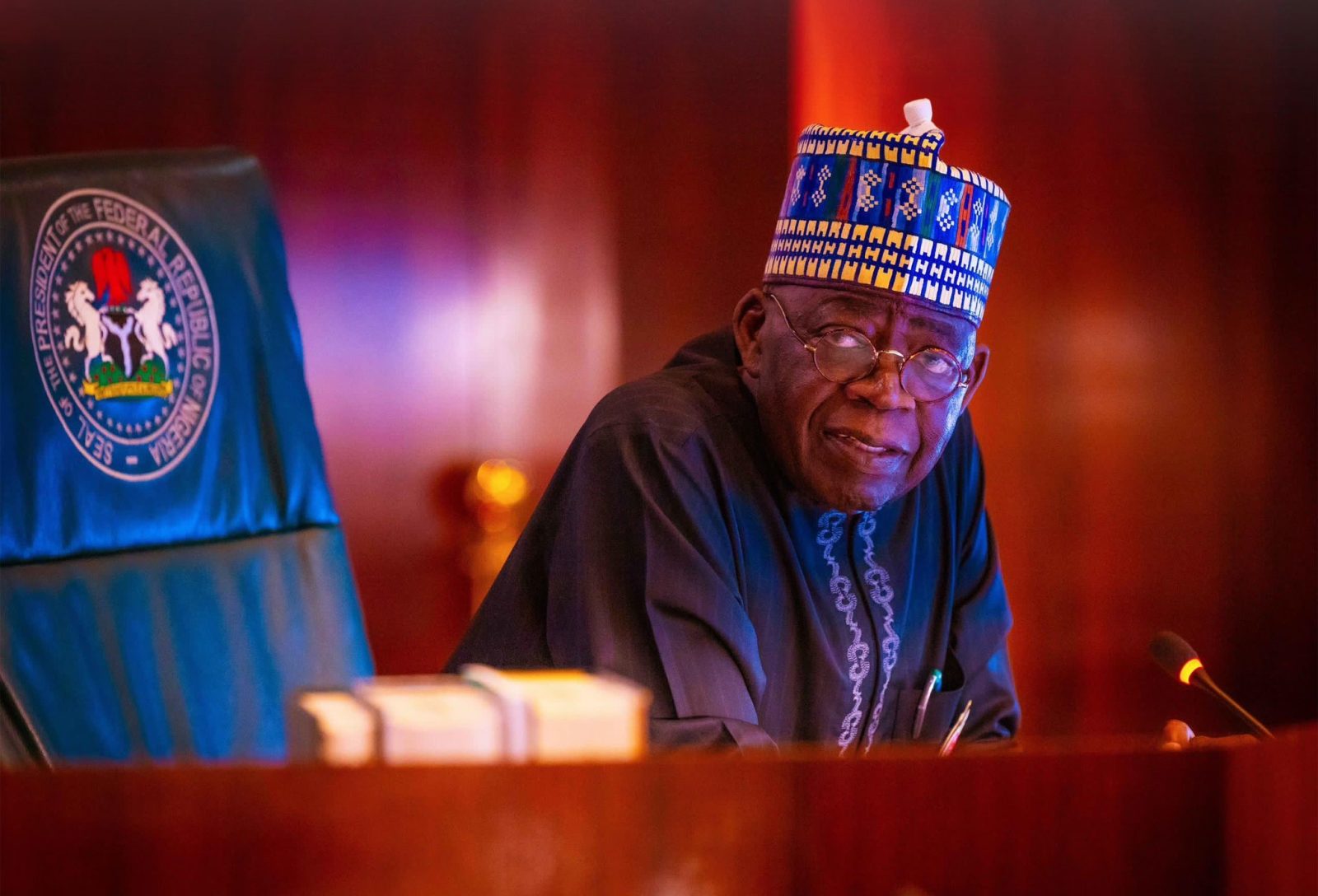
President Bola Tinubu, on Tuesday in Abuja, assured that the ongoing restructuring of security operations and institutions will deliver victory over terrorism, banditry and kidnappings across the country.

Receiving the leadership of the Catholic Bishops’ Conference of Nigeria (CBCN), led by its President, Most Reverend Matthew Ndagoso, at the State House, President Tinubu stressed that Nigeria’s security architecture is being repositioned for greater efficiency.

Ndagoso, Archbishop of Kaduna, attended the meeting with 19 CBCN leaders.

President Tinubu, in a statement signed by his Special Adviser on lnformation and Strategy, stated that the security challenges are being confronted through enhanced intelligence gathering, restructuring and repositioning of security institutions, improved logistical support and prioritisation of frontline personnel welfare.

He called on the CBCN and all religious leaders to actively condemn violent attacks, guide their members and support government efforts to end insurgency.

“We don’t have another country but here, this Nigeria. And I will refer to the national anthem that in our complexity and diversity, we shall thrive, live, rejoice and be good to all and humanity.

“I have just approved the expansion of the armed forces. We are getting more equipment, building new barracks. We will defeat terrorism. It should be part of your sermons. I won’t deviate from our national anthem,”he added.

On poverty alleviation, President Tinubu affirmed that the government will sustain interventions that directly improve the livelihoods of families and citizens, such as the Nigerian Education Loan Fund (NELFUND).

“I have listened to you carefully, and most importantly, your key areas are security and education. I can tell you categorically with sincerity that the country has been placed on a sound footing. The economy has recovered. The alarm for bankruptcy and dark tunnel of uncertainty that we had when I came in has been changed.

See also  Alleged kidney harvesting: Noah Kekere breaks silence after court victory

“I always say, because of my background and profession, that I inherited the assets and liabilities of my predecessor. I have been running with it. This government has stabilised, and there is prosperity on the horizon. Life is improving,’’ he stated.

The president urged citizens to explore available opportunities for engagement provided by the government and private institutions and embrace education, entrepreneurship and skills acquisition.

“To educate our children, I can say your children because you are revered fathers. You can’t say a four-year course in the university is not four years now. ASUU is not on strike. They are not bringing agony to our homes. Is that not an answer to our prayers? For me, that’s answered prayer,’’ President Tinubu noted.

On preparations for the general election, the president said INEC had been neutral. “The opportunities are equal. INEC is neutral. They have never intimidated anyone. If political opponents are crying wolf, maybe they are afraid of their own shadows and uncertainty in the companies they keep, not me.

The president told the leaders of the CBCN that state governors, following the constitution, have the authority to decide the return of mission schools.

In his remarks, the President of the CBCN appreciated the president for the warm reception extended to the Holy See’s Secretary for Relations with States and International Organisations, Archbishop Paul Gallagher, on the occasion of the 50th anniversary of relations between Nigeria and the Vatican.

Ndagoso outlined areas of concern in the country, which include security, quality tertiary education and limited spaces, sustaining gains of democracy, credible elections and poverty.

See also  Ibadan convention: PDP delegates arrive amid Saraki’s cancellation move

The President of CBCN also urged President Tinubu to consider the return of mission schools and fair treatment for all worshipers, including the provision of worship places in all parts of the country, without bias.

The delegation included: Most Reverend Alfred  Martins, Archbishop of Lagos/CBCN Vice President; Most Reverend  Peter Odetoyinbo, Bishop of Abeokuta/CBCN Secretary and Most Reverend Moses Chikwe Auxiliary, Bishop of Owerri/CBCN Assistant Secretary

tribuneonlineng.com

FOLLOW US ON:

FACEBOOK

TWITTER

PINTEREST

TIKTOK

YOUTUBE

LINKEDIN

Continue Reading

Trending