30 months after President Bola Tinubu removed petrol subsidy and introduced other sweeping economic reforms, the Federal Government has spent N30.64tn as government expenditure to ease effect of its policies, while the policies generated N15.8tn in savings for the Federation.
The government said its total incremental expenditure between June 2023 and December 2025 was N30.64tn, exceeding the N20.4tn in additional resources available to the Federal Government from subsidy savings, higher revenue and borrowing by N10.24tn, or 50.2 per cent.
This show that the removal of petrol subsidy created significant fiscal space but did not produce a pool of idle cash for the Federal Government.
Instead, the government said the resources were absorbed by rising wage costs, debt servicing, infrastructure spending and other obligations arising from the same economic reforms.
Put differently, for every N100 the Federal Government generated in additional resources, it spent about N150, leaving about one-third of the expenditure to be funded from its existing revenue base.
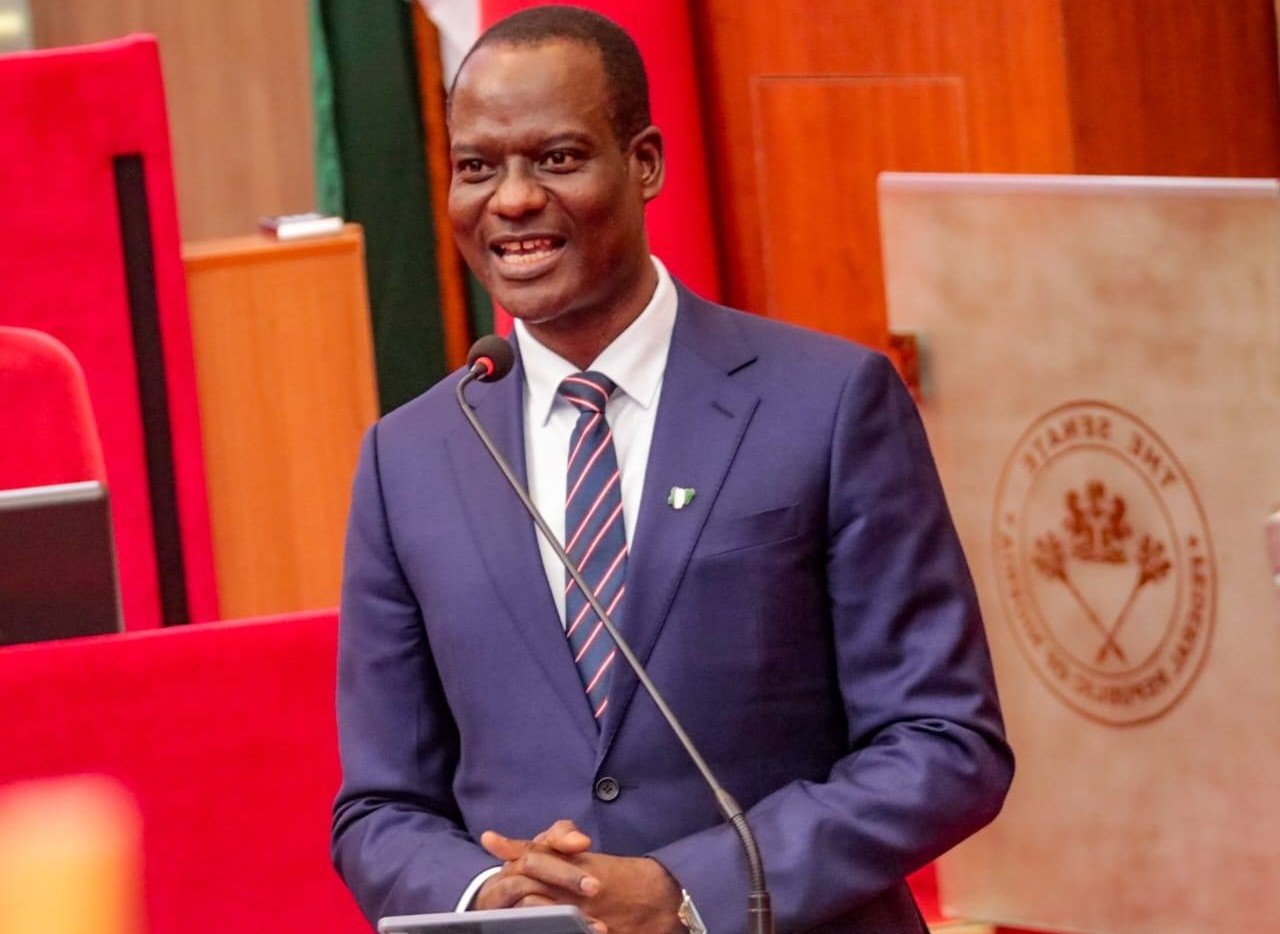
The development came as the Finance Minister and Coordinating Minister of the Economy, Taiwo Oyedele, disclosed that the removal of petrol subsidy and the unification of the foreign exchange market mobilised N15.8tn in additional resources for the Federation during the period.
However, the government received only N5.4tn, representing 34 per cent of the subsidy savings, while the states received N6.5tn and local governments got N3.9tn under the Federation Account allocation formula.
These figures were contained in the Federal Government’s Nigeria Reform Scorecard titled, “The Benefits, Costs and Harm Prevented”, released on Wednesday. The purposes of the news conference was to provide Nigerians with clear and factual information on the savings arising from the removal of the foreign subsidy and foreign exchange unification.
According to Oyedele, the N15.8tn was not paid into the Federation Account under a heading described as “subsidy savings.”
Instead, he said the combined effect of the petrol subsidy removal and foreign exchange reforms increased the naira value of revenues accruing to the Federation.
“Between June 2023 and December 2025, subsidy savings mobilised a sum of N15.8tn in resources for the Federation,” Oyedele said.
“Many people will say, ‘Where is the subsidy saving?’ As a matter of fact, there wasn’t any line in the Federation Account with the description, ‘subsidy savings.’
“So, the subsidy savings showed up in the form of higher collection by Customs because, for every one dollar of import duty before, at N460, it became one dollar at N1,004, N1,003, N1,005.
“The NRS, Petroleum Profit Tax that it collected before, same dollar, higher amount in naira. So, the savings showed up in the Federation accounts by way of higher revenue collections as a result of the reforms.”
The minister said the additional fiscal resources were not generated by the petrol subsidy removal alone, arguing that the foreign exchange reforms also ended what he described as an implicit subsidy that had created opportunities for rent-seeking.
He said, “Not just the subsidy removal, but also the exchange rate flotation, because we were subsidising the exchange rate. And that subsidy was not going to the ordinary person or manufacturers. It was going to rent-seekers.”
The Finance Minister explained that although the removal of petrol subsidy generated N15.8tn in savings for the Federation between June 2023 and December 2025, only N5.4tn, or 34 per cent, accrued to the Federal Government.
The balance was shared among the states and local governments under the statutory Federation Account allocation formula.
According to the scorecard, states received N6.5tn, representing 41 per cent of the total subsidy savings, while the 774 local government areas received N3.9tn, or 24 per cent.
The Federal Government also generated N3.1tn in additional independent revenue, mainly from increased remittances by government-owned entities, while N11.9tn came from additional borrowing.
This brought the Federal Government’s total incremental resources to N20.4tn, of which borrowing accounted for 58 per cent, subsidy savings 27 per cent and other revenue 15 per cent.
Of the N30.64tn in total incremental expenditure during the 31-month period, N9.39tn was spent on wage adjustments, including the increase in the national minimum wage, wage awards and allowances for public servants.
Another N9.37tn was spent on additional external debt servicing resulting from the depreciation of the naira, while N6.47tn went into strategic infrastructure development.
The three items alone accounted for about N25.22tn, or more than 82 per cent of the total incremental expenditure.
The remaining spending included N3.14tn in additional electricity subsidy costs, N1.24tn in increased domestic debt servicing linked to higher interest rates, N423.8bn for social welfare transfers and N419.1bn for the Federal Capital Territory, Ecological Fund, Natural Resource Fund and other interventions.
The government also spent N201.26bn on the higher naira cost of foreign obligations.
He said, “In addition, the Federal Government earned incremental independent revenue of
N3.1tn, principally remittances from government-owned entities while N11.9tn came from incremental borrowing, a figure that would have been far higher, and economically destabilising, without the fiscal space the reforms created.
“Altogether, the Federal Government’s incremental resources over the period came to N20.4tn. That money did not sit idle, it partly funded incremental expenses of N30.64tn. Of this, N9.39tn went to wage adjustments, minimum wage increases and allowances for public servants; N9.37tn went to external debt service made necessary by exchange rate depreciation; and N6.5tn went into strategic infrastructure, making the top three expenditure lines. Every naira of this is accounted for, and the breakdown is in the scorecard we are releasing today.
“Put another way: of the N20.4tn, 58 percent came from borrowing, 27 per cent from subsidy savings, and 15 per cent from other revenue. Against total incremental spending of N30.64 trillion, two-thirds was funded by these new resources, while the remaining third, about N10tn, came from the existing revenue base, despite ending the excessive printing of naira. That, in itself, is evidence of improved public financial management.”
He added, “Every naira of this is accounted for, and the breakdown is in the scorecard we are releasing today.”
The latest disclosure provides a detailed answer to the question that has followed the removal of petrol subsidy since President Bola Tinubu announced the policy on May 29, 2023: where did the savings go?
Tinubu had promised that money previously spent on subsidy would be redirected towards investments and programmes that would benefit Nigerians, including infrastructure, education and other social interventions. In a July 2023 national broadcast, the President said more than N1tn had been saved within the first few months of the policy and pledged that the resources would be used “more directly and more beneficially” for Nigerians.
However, the administration faced persistent public demands for a clear account of the savings as inflation, transport costs and other living expenses surged after the subsidy removal.
Last month, Oyedele acknowledged that the question was legitimate and promised to publish a comprehensive breakdown of the subsidy savings and their utilisation. He explained that the money was not kept in a separate savings account but was absorbed by higher government obligations, particularly debt servicing, wages and social interventions.
The new scorecard appears to be the government’s most detailed accounting yet of the resources generated by the reforms and how they were deployed.
It also underscores a central contradiction in the post-subsidy fiscal narrative: while the removal freed trillions of naira for the Federation, the Federal Government’s share was significantly smaller than the headline savings figure, and its new expenditure still outpaced its additional resources by more than N10tn.
Oyedele argued that the difference was partly financed from the existing revenue base and reflected improved public financial management, rather than a return to heavy monetary financing.
The government also maintained that the reforms prevented a deeper fiscal and economic crisis, arguing that debt service had fallen relative to revenue and that states which previously struggled to pay salaries now had improved fiscal capacity.
Oyedele said the scorecard was not designed to claim that the reforms had come without costs.
“We invited you here today not to declare a victory, but to give an account,” he said.
“For the past three years, the administration of President Bola Ahmed Tinubu has embarked on major reforms to address age-long economic challenges, the removal of a fuel subsidy that was quietly bankrupting the country, and the unification of an exchange rate system that had become a source of arbitrage, distortion and corruption rather than stability.”
He added, “Those decisions came at a real cost, and we are not here to pretend otherwise. Prices rose. The naira adjusted sharply. Households and businesses felt it, and many still do.”
The Federal Government said the scorecard was intended to show not only what the reforms generated, but also what the administration believes Nigeria would have faced if the subsidy regime, multiple exchange rates and unchecked Ways and Means financing had continued.
Also speaking, the Minister of Information and National Orientation, Mohammed Idris described the decision to remove the fuel subsidy as one of the most significant and difficult economic reforms undertaken by the Tinubu administration, acknowledging that it had imposed real costs and adjustments on households, businesses and communities.
He, however, said the reforms were necessary to redirect resources previously committed to an unsustainable subsidy regime towards investments capable of delivering greater and more sustainable value to Nigerians.
“Citizens have a right to know what resources have been freed up, what these resources mean for the Federation, and how the benefits of reform are being translated into tangible improvements in their lives,” the minister said.
Also in his remarks, the Minister of Budget and Economic Planning, Senator Abubakar Atiku Bagudu, provided further context on the rationale for the reforms, noting that President Tinubu inherited an economy with one of the world’s lowest revenue-to-GDP ratios and, consequently, limited fiscal capacity relative to Nigeria’s population and developmental needs.
Bagudu said the administration had to make bold and difficult choices to address fiscal leakages, restore confidence in the economy and create greater room for investment in security, infrastructure, human capital development and grassroots development.
He said President Tinubu chose to confront the economic realities he inherited rather than apportion blame, drawing lessons from international experience in pursuing the difficult reforms required to place the Nigerian economy on a more sustainable footing.
The minister said the reforms had also been accompanied by interventions to cushion their effects on vulnerable Nigerians, stressing that increased revenues would provide government with greater capacity to discharge its constitutional and developmental responsibilities.
He noted that resources generated and mobilised through the reforms were being invested in projects and programmes across the six geopolitical zones, adding that improved connectivity, security, infrastructure and economic opportunities would ultimately benefit Nigerians across the Federation.
Source: punchng.com
FOLLOW US ON: