Connect with us

Business

Uber exit: Drivers brace for car loan defaults

Published

on

Drivers who obtained or deployed vehicles through financing arrangements to operate on Uber’s platform in Nigeria now face uncertainty after the ride-hailing company exited the country, the drivers’ association said on Thursday.

Uber Technologies Inc. discontinued its Nigerian operations on Wednesday, September 2, ending a 12-year presence in the country as it shifts investment towards markets where it believes it can create the most value.

Uber and Moove have a partnership under which vehicles financed by Moove for drivers were deployed for use on Uber’s platform. Uber is also one of Moove’s major investors.

The arrangement meant that drivers using Moove-financed vehicles for Uber’s UberGo service had previously been required to operate exclusively on the Uber platform.

Uber’s withdrawal from Nigeria therefore left affected drivers uncertain about the use of their vehicles and how they would continue earning from ride-hailing while meeting their financing obligations.

The Amalgamated Union of App-Based Transport Workers of Nigeria told The PUNCH that Uber’s departure would require drivers who depended on the platform to migrate to competing services, particularly Bolt and inDrive. “Now they have to migrate officially to Bolt and inDrive,” the union’s Public Relations Officer, Steven Iwindoye, stated.

The union also raised concerns about vehicles financed through mobility company Moove, asking what would happen to cars acquired or deployed specifically for Uber operations now that the platform had ceased operating in Nigeria.

However, the union said the migration would take place against the backdrop of existing financial pressures on drivers, who have repeatedly complained about the cost of fuel, vehicle maintenance and other operating expenses.

The union said many drivers were struggling to maintain their vehicles. “Look at the condition of our car; many of us don’t even have money to maintain, to take care of our car,” the executive stated.

The union also argued that ride-hailing companies could not sustain their businesses by focusing primarily on market dominance without ensuring adequate returns for the platforms and viable earnings for drivers. “What is the essence of you dominating the market when you are not making profit?” Iwindoye asked.

See also  PHOTOS: Groundnut Pyramids, Kano – Northern Nigeria’s Cash Crop Symbol

Drivers said they had repeatedly attempted to engage Uber on issues affecting them but received little attention from the company, while describing Bolt and inDrive as more receptive to discussions and interactive sessions with drivers and their representatives.

“Bolt, inDrive, sometimes they reach out to us; we do interactive sessions,” Iwindoye said, adding that attempts to establish similar engagement with Uber had yielded little response. But on the aspect of Uber, nothing, nothing,” he said.

For Bolt and inDrive, Uber’s departure presents an opportunity to attract some of the riders and drivers who previously used the platform. But the union warned that market dominance would not necessarily address the underlying economic challenges facing the industry.

The organisation said drivers were already facing difficulties maintaining their vehicles and argued that ride-hailing platforms needed to ensure that the economics of the sector worked for both operators and drivers.


Nigeria’s ride-hailing and mobility platforms market was valued at $450m in 2025 and is projected to reach $982m by 2032, representing a compound annual growth rate of 11.8 per cent, according to Ken Research.

The market’s size and projected growth contrast with Uber’s decision to withdraw, underscoring the increasingly selective approach global technology companies are taking to capital allocation.

An Uber spokesperson disclosed the withdrawal in an email to The PUNCH on Wednesday, saying that the withdrawal was specific to Nigeria and Uganda and would not affect its other African operations.

It reiterated its commitment to sub-Saharan Africa, where it said it continued to see “robust growth and long-term opportunity”.

Uber revealed it was shifting investment towards markets where it believed it could create the most value for drivers by providing earning opportunities at scale and enabling riders to travel seamlessly.

The company said its immediate priority was to support drivers, riders and employees affected by the withdrawal, adding that it had begun communicating with active drivers and would provide them with a token of appreciation during the transition.

The Nigerian withdrawal comes as Uber undergoes a major restructuring that will cut about 3,300 jobs, representing roughly 10 per cent of its global workforce.

See also  Oil prices spike after Trump rejects Iran truce offer

Chief Executive Officer Dara Khosrowshahi said the restructuring was intended to make Uber simpler and faster, with the company reducing management layers and reorganising teams to operate more efficiently at its current scale.

The restructuring also reflects Uber’s focus on areas of future growth, including autonomous transportation and robotaxis, as the mobility industry prepares for the possibility of driverless vehicles altering the economics of conventional ride-hailing.

Before its exit, Uber had been less visible in its engagement with drivers than Bolt, its biggest rival. The company did not have a public relations officer in Nigeria, with its communications handled through a third-party PR firm, and also operated without a country manager.

It is unclear how many employees Uber had in Nigeria. Globally, the company has about 34,000 employees and operates in more than 70 countries, according to a recent filing with the US Securities and Exchange Commission.

Uber’s Nigerian exit follows a series of changes to its African operations. In January, the company withdrew from Tanzania following years of regulatory tensions involving fares, commissions and regulatory control.

The company also left Côte d’Ivoire in September 2025 after six years of operations. In South Africa, Uber discontinued UberX, its lower-cost service, on September 1, although it continues to operate other services in the country.

Nigeria had been an important part of Uber’s African expansion since the company entered Lagos in 2014 before expanding to Abuja in 2016.


The market has since developed into a broader mobility ecosystem involving ride-hailing platforms, drivers, fleet operators, vehicle-financing companies and businesses that use digital platforms to arrange transportation.

The union is also seeking a greater role in discussions over the future regulation of app-based transportation.

It stated that it was participating in policy discussions in Abuja involving transport commissioners, the Minister of Transportation, Vice-President Kashim Shettima, government agencies and other stakeholders.

See also  Dangote pumps 43 million litres, denies petrol shutdown

The organisation said it had presented its proposals to policymakers and believed that the resulting policies would apply across Nigeria’s transportation sector, including ride-hailing platforms.

Uber, however, rejected any suggestion that its Nigerian withdrawal was linked to a recent directive by the Federal Airports Authority of Nigeria concerning e-hailing operations at Nigerian airports. The company said the decision followed its own review of business priorities and investment focus.

Economist reacts

In an interview with The PUNCH, Chief Executive Officer of Economic Associates, Dr Ayo Teriba, described Uber’s exit from Nigeria as a sector-specific regulatory issue that should not reflect on the country’s overall investment attractiveness.

Teriba criticised the government’s handling of Uber’s operations at the Murtala Muhammed International Airport, Lagos, arguing that restrictions and charges affecting its airport business could have contributed to its decision to leave.

“The airport or no airport issue definitely must be one of the factors. When they are in the country, but cannot do airport business, what other business will they be doing? We do not have to create a jungle-like situation and make life difficult for people,” he stressed.

The economist also questioned the impact of airport charges and the protection of designated taxi operators on Uber’s business model, saying, “And if Uber must be paying exorbitant parking fees at airports, what business will they have?”

Teriba, however, rejected suggestions that the exit represented a broader deterioration in Nigeria’s investment climate, stressing that the development remained specific to the transport sector. “This is sector-specific. And exceptions don’t prove the rule. This is exceptional,” he said.

He said authorities should investigate whether Uber’s exit could have been prevented and improve the operating environment for companies still active in the sector. “This is about those who manage that sector. The transport sector, in particular, the interface between air transport and road transport. We should not generalise it,” he cautioned.

Source: punchng.com

FOLLOW US ON:

FACEBOOK

TWITTER

PINTEREST

TIKTOK

YOUTUBE

LINKEDIN

INSTAGRAM

Continue Reading
Click to comment

Leave a Reply

Your email address will not be published. Required fields are marked *

Business

Jide Kosoko laments debt following N300m movie cinema loss

Published

on

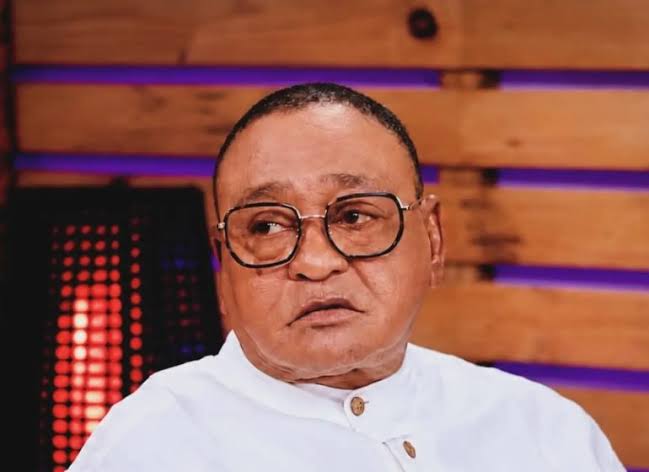
Veteran Nollywood actor and filmmaker Jide Kosoko has said he is in debt after his film, Eleko: Oba Esugbayi, failed to recoup its production cost of over N300m in cinemas.

Kosoko disclosed this in a now trending clip from his interview on African A-List published on October 17, where he explained that the money used to produce the film came from investors who expected returns on their investment.

According to him, the film which premiered in the cinemas in March, failed to generate enough revenue to recover its production cost, while the little money earned was shared among those involved.

“My film ‘Eleko: Oba Esugbayi’ that recently came out and we took to the cinemas, cost us over N300 million. Do I have 300 million? You should know that some people gave it to me and it was not that they dashed me, they invested in it and we took the film to the cinemas,” he said.

He added, “Different things happened and we did not earn our money back. The little that was earned was split. As I am, if you hear someone with debt dancing around their neck, it is me.”

PUNCH Online had earlier reported that Kosoko revealed he had been living with diabetes since 1996, saying his decades-long experience with the condition had given him a better understanding of his health.

The actor made this known in an interview on African A-List, uploaded to YouTube on Saturday.

“I became diabetic in 1996; I understand my health better than some doctors do. Do not misquote me. I am not saying I know how to do everything, I just do not want to die,” Kosoko said.

See also  PHOTOS: Groundnut Pyramids, Kano – Northern Nigeria’s Cash Crop Symbol

He also spoke about his personal life, disclosing that he had lost three wives, including the mother of his daughter, Bidemi Kosoko, who died during childbirth.

“I lost my wife during childbirth; that’s Bidemi’s mother. I have lost three wives,” he said.

Continue Reading

Business

Airline extends Saudi flights suspension after Houthi strikes

Published

on

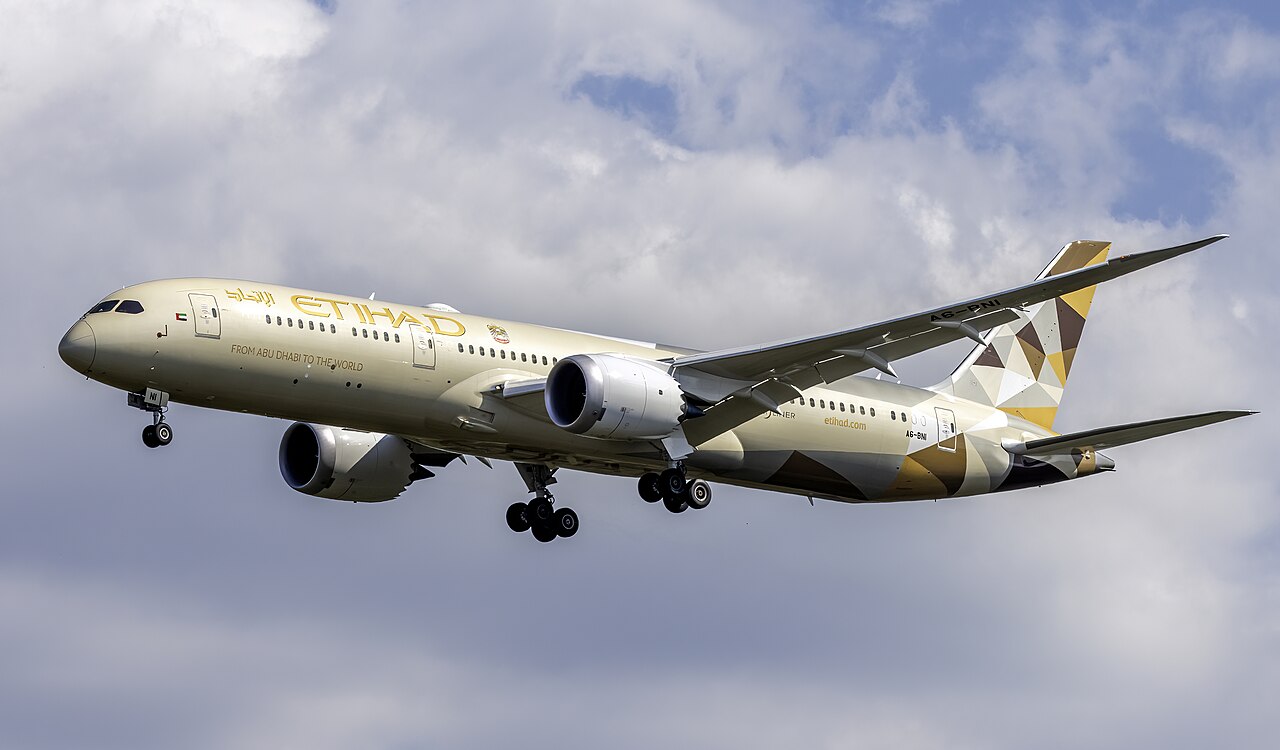
UAE national airline Etihad has extended until November 5 its suspension of flights to Riyadh and Dammam in Saudi Arabia, targeted by strikes from Yemen’s Houthis.

Etihad had suspended its service to Riyadh on October 12, two days after a deadly attack on a passenger terminal killed 13 people.

In a statement on Thursday, Etihad specified that flights to and from Riyadh and Dammam would remain suspended due to “operational disruptions”.

On Wednesday evening, two people were killed and eight others wounded in an attack on Dammam airport.

The airport, however, reopened the following day, while the capital’s airport remains closed.

Etihad added that it would operate only daytime flights to the western city of Jeddah, with night flights cancelled until November 5.

In recent weeks, Houthi attacks on Saudi civilian infrastructure including oil facilities and airports have reached a scale unprecedented since the start of the conflict in Yemen in 2014.

AFP

See also  Nigerians spend N1.54tn on beer, others in nine months
Continue Reading

Business

States push for suspension of Paris Club deductions

Published

on

State governors have rejected deductions from allocations due to the states from the Federation Account in the September 2026 revenue-sharing cycle, arguing that the deductions would further squeeze their finances, The PUNCH reports.

The states also called for the suspension of deductions linked to the Paris Club refund to local government councils, alleging that the payments were resumed without prior communication and reconciliation with affected states.

Their opposition comes after the three tiers of government shared N668.4bn less of August 2026 revenue distributed in September, heightening concerns over the impact of lower revenue receipts on states’ ability to meet their financial obligations.

The governors also demanded the redistribution of the proposed N240bn savings, insisting that the funds should be shared among the federal, state and local governments rather than deducted or retained under the proposed arrangement.

The complaints were raised by several state Accountants-General during the technical session of the Federation Account Allocation Committee meeting, according to a report by the committee’s technical sub-committee, dated 14 October, 2026, obtained by The PUNCH on Thursday.

The meeting, held at the Federal Ministry of Finance headquarters in Abuja, considered revenue accounts for August and the amounts available for distribution in September.

The report showed that the total amount recommended for distribution to the federal, state and local governments stood at N2.339tn, compared with N3.007tn shared in the previous month, representing a decline of N668.4bn.

The statutory revenue available for distribution dropped more sharply, falling from N2.283tn in the previous month to N1.566tn in August, a decrease of N717.08bn.

See also  PHOTOS: Groundnut Pyramids, Kano – Northern Nigeria’s Cash Crop Symbol

However, revenue from Value Added Tax increased to N773.23bn from N724.46bn, providing some relief amid the decline in statutory revenue.

The Director of the Federation Account Department, Okolie Rita, who presented the accounts, told the committee that the statutory revenue available for distribution was calculated after deducting N85.71bn and N36.83bn as four per cent costs of collection for the Nigeria Revenue Service and the Nigerian Upstream Petroleum Regulatory Commission, respectively.

The revenue decline triggered calls from state representatives for the Federal Government to release additional funds and reconsider deductions that they said were putting pressure on state finances.

The Accountant-General of Akwa Ibom State, Andrew Essien, observed that August revenue had dropped considerably compared with July and appealed for the proposed N240bn savings to be returned to the distributable pool.

The Accountant-General of Jigawa State, Abdullahi Shehu, recalled an earlier proposal to augment the previous month’s revenue with N250bn, which he said had not been implemented. He urged the committee to combine the promised N250bn with the proposed N240bn savings and redistribute the funds to the three tiers of government.

The Accountant-General of Bayelsa State, Tokoni Ifidi, supported the demands and raised concerns about deductions for the Paris Club refund to local government councils.

She said the deductions were introduced without prior communication to the states, despite what she described as an earlier commitment in 2025 concerning the deductions, which began in February that year and were stopped by a court order in April 2026.

The document read, “AG Akwa Ibom observed a considerable drop in the revenue of August, 2026 compared to July, 2026 and appealed for the proposed savings of N240bn to, instead, be redistributed. AG Jigawa recalled that there was a proposal to augment the previous month’s revenue with the sum of N250bn but it had not been done. He suggested that the N250bn promised in the previous month should be added to the proposed savings of N240bn and be redistributed.”

See also  Dangote pumps 43 million litres, denies petrol shutdown

The Director of the Federation Account Department explained that the Paris Club deductions were not new, noting that they had previously been suspended following a court order.

The Bayelsa representative, however, maintained that the deductions should continue to be suspended pending reconciliation. She said the Economic and Financial Crimes Commission had held reconciliation sessions with local government councils and was awaiting feedback from the Office of the Accountant-General of the Federation on the commencement and continuation of the deductions.

The Accountant-General of Niger State, Saidu Abdullahi, criticised the handling of the deductions, arguing that the ministry had made a mistake from the beginning by distributing funds without adequate planning and proper communication.

He insisted that previous agreements should be honoured, particularly the proposed N250bn augmentation, while supporting calls for the redistribution of the N240bn savings.

The Accountant-General of Cross River State, Glory Effiong, also backed the demand for the savings to be redistributed, observing that deductions had consumed a substantial portion of the earnings of many states.

She said she had not been invited to any reconciliation meeting on the Paris Club debt since joining the committee and urged the Office of the Accountant-General of the Federation to improve its communication with state representatives.

The Accountant-General of Jigawa State further questioned the amount deducted under security-related expenditure, describing the quantum of deductions as alarming and calling for a review.

The Accountant-General of Nasarawa State, Musa Mohammed, stressed that states should be properly informed and invited to reconciliation meetings before decisions affecting their allocations were implemented.

See also  US now has 44% more home sellers than buyers

Source: punchng.com

FOLLOW US ON:

FACEBOOK

WHATSAPP CHANNEL

TWITTER

PINTEREST

TIKTOK

YOUTUBE

LINKEDIN

INSTAGRAM

Continue Reading

Trending