Connect with us

Business

Rivers oil tragedy: 37 die from toxic fumes

Published

on

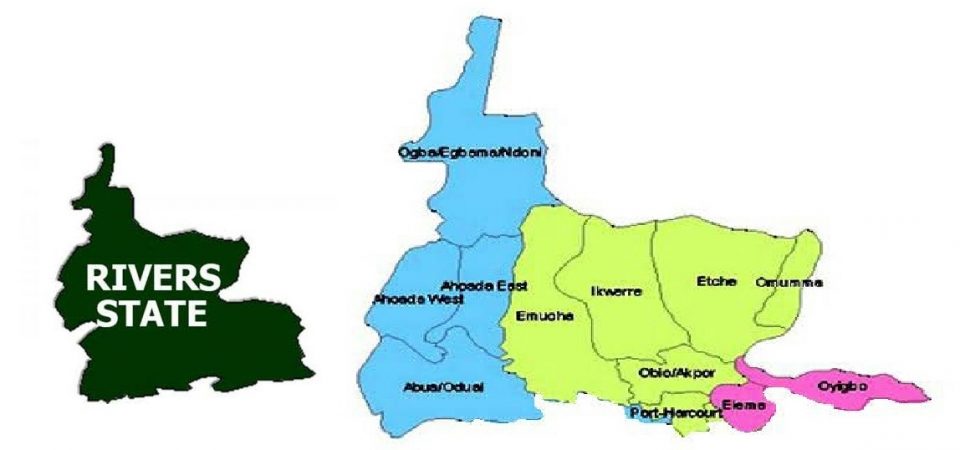
About 37 persons have reportedly died after inhaling fumes from a petroleum product at a jetty in Okrika Local Government Area of Rivers State.

The incident occurred on Thursday at the Okari Jetty in the Okrika Mainland area, where youths from Okrika and neighbouring communities had reportedly gathered to load a petroleum product from an illegal tapping point.

Many others were said to be missing following the incident, which occurred in the mainly coastal community.

A source in the community told our reporter that more than 100 persons had stormed the jetty with locally made boats while a vessel was anchored at the riverside to load petroleum products.

The source said trouble started while the youths were loading the product, as a strong smell suddenly saturated the air, causing several of them to collapse.

“Many of them collapsed into the river, while others who managed to escape the scene had serious respiratory disorders and were being treated at the hospital.

“As I speak to you, over 37 bodies were identified as Okrika people, while six others were yet to be identified and many are still missing,” the source, who pleaded anonymity, said.

The Youths and Environmental Advocacy Centre also confirmed the incident, saying its network of youth volunteers and human rights defenders in the Niger Delta had reported that no fewer than 37 persons suspected of involvement in illegal oil activities died after inhaling what was locally referred to as “Indorama fuel.”

The Executive Director of YEAC-Nigeria, Dr Fyneface Dumnamene, said in a statement that the incident occurred at about midnight on Thursday at the Okari Jetty.

See also  Nigerians Will Soon Be Able To Buy Dangote Refinery Shares Soon – Dangote Announces

“According to the report, no fewer than 37 persons suspected to be oil thieves died after inhaling what is locally called ‘Indorama Fuel.’

“Many others are still missing. The incident occurred during the illegal loading of the product into a ship at a tapping point,” he said.

Dumnamene said the victims had connected a pipe to a tapping point on a pipeline that transported petroleum products from the Indorama Eleme Petrochemical through the Port Harcourt Refinery to vessels that reportedly came every two weeks to load products for export.

He added that the youths inhaled the product while a vessel was loading and they were simultaneously loading it into their waiting boats from the illegal tapping point.

“This led to the death of not fewer than 37 persons. Many are still missing, and some corpses have been seen floating on the river but have not yet been recovered,” he stated.

Dumnamene called on the National Oil Spill Detection and Response Agency to immediately conduct a joint investigation visit to the site of the incident.

He also urged the company that owned the vandalised facilities to provide adequate security for its pipelines to prevent a recurrence.

The YEAC-Nigeria boss condemned the alleged sabotage, warning youths to stay away from oil and gas infrastructure because of the dangers associated with high-pressure pipelines.

He also called for alternative livelihood opportunities for youths in the Niger Delta, including the establishment of modular refineries and the legalisation of artisanal refining.

When contacted, the spokesperson for the Rivers State Police Command, Blessing Agabe, confirmed the incident and said the victims were reportedly attempting to steal crude oil.

See also  FG offers up to 16.54% yield on September savings bonds

Agabe, an Assistant Superintendent of Police, said no official complaint had been lodged with the command but added that an investigation had commenced.

“The suspects reportedly died in the process of attempting to steal crude oil. However, no official complaint has been received in connection with the incident at this time.

“Investigation is ongoing to establish the circumstances surrounding the incident and ascertain the facts,” the police spokesperson stated.

However, the Commander of the Civilian JTF in Okrika LGA, Igwe Godswill, gave a different account of the incident, saying the victims had gone to scoop petroleum products that had spilled into the river when they were allegedly overwhelmed by fumes from a vessel loading products at the jetty.

Godswill described the incident as tragic, saying most of the victims were youths searching for means of livelihood amid a lack of employment opportunities.

“It is so pathetic that this incident is happening in our community. These are young guys who have gone to search for their daily bread, only for the fumes from the fuel that was pumped to kill so many of our youths under the bridge.

“Many of them were choked to death. These are not criminals or anything, but they went out in search of their daily meal. I am advising the community, the leaders and every other person that we need legitimate jobs in the community.

“These things are risky, but when you cannot feed your children, most times, those risky jobs become the only option,” Godswill stated.

He explained that the victims had gone to scoop petroleum products floating on the water when they were overcome by fumes from a vessel loading petroleum products at the jetty.

See also  Read Tinubu's unveiled plan to turn flood Threat into economic goldmine

Godswill, however, said about 10 bodies had been recovered, adding that only some of the victims could be identified because of the condition of their remains.

He said, “We saw about 10 of them. Four were still unrecognisable, while four persons were identified. The rest could not be identified because their bodies were badly damaged and their faces were severely affected.”

The Civilian JTF commander called on the Rivers State Government, community leaders and other relevant authorities to create employment opportunities for youths in the area to discourage them from engaging in dangerous activities.

“I am calling on the relevant authorities, community leaders, the chairman and every other person to look into this. It is not enough to stop them because, yes, it is a risky job, but they should create jobs for the youths so that everybody will have something to eat.

“Something that can put food on the tables of these young men, the youths and every other person. I can tell you for free that it will not just stop because when that source is the only livelihood, people will still go there.

“Even as of yesterday, people still went there, despite the fact that we had confirmed that people had died from the same activity. So, we are calling on the leaders to look into it and see how they can create job opportunities, especially for the youths,” Godswill added.

Source: punchng.com

FOLLOW US ON:

FACEBOOK

TWITTER

PINTEREST

TIKTOK

YOUTUBE

LINKEDIN

INSTAGRAM

Continue Reading
Click to comment

Leave a Reply

Your email address will not be published. Required fields are marked *

Business

States push for suspension of Paris Club deductions

Published

on

State governors have rejected deductions from allocations due to the states from the Federation Account in the September 2026 revenue-sharing cycle, arguing that the deductions would further squeeze their finances, The PUNCH reports.

The states also called for the suspension of deductions linked to the Paris Club refund to local government councils, alleging that the payments were resumed without prior communication and reconciliation with affected states.

Their opposition comes after the three tiers of government shared N668.4bn less of August 2026 revenue distributed in September, heightening concerns over the impact of lower revenue receipts on states’ ability to meet their financial obligations.

The governors also demanded the redistribution of the proposed N240bn savings, insisting that the funds should be shared among the federal, state and local governments rather than deducted or retained under the proposed arrangement.

The complaints were raised by several state Accountants-General during the technical session of the Federation Account Allocation Committee meeting, according to a report by the committee’s technical sub-committee, dated 14 October, 2026, obtained by The PUNCH on Thursday.

The meeting, held at the Federal Ministry of Finance headquarters in Abuja, considered revenue accounts for August and the amounts available for distribution in September.

The report showed that the total amount recommended for distribution to the federal, state and local governments stood at N2.339tn, compared with N3.007tn shared in the previous month, representing a decline of N668.4bn.

The statutory revenue available for distribution dropped more sharply, falling from N2.283tn in the previous month to N1.566tn in August, a decrease of N717.08bn.

See also  Read Tinubu's unveiled plan to turn flood Threat into economic goldmine

However, revenue from Value Added Tax increased to N773.23bn from N724.46bn, providing some relief amid the decline in statutory revenue.

The Director of the Federation Account Department, Okolie Rita, who presented the accounts, told the committee that the statutory revenue available for distribution was calculated after deducting N85.71bn and N36.83bn as four per cent costs of collection for the Nigeria Revenue Service and the Nigerian Upstream Petroleum Regulatory Commission, respectively.

The revenue decline triggered calls from state representatives for the Federal Government to release additional funds and reconsider deductions that they said were putting pressure on state finances.

The Accountant-General of Akwa Ibom State, Andrew Essien, observed that August revenue had dropped considerably compared with July and appealed for the proposed N240bn savings to be returned to the distributable pool.

The Accountant-General of Jigawa State, Abdullahi Shehu, recalled an earlier proposal to augment the previous month’s revenue with N250bn, which he said had not been implemented. He urged the committee to combine the promised N250bn with the proposed N240bn savings and redistribute the funds to the three tiers of government.

The Accountant-General of Bayelsa State, Tokoni Ifidi, supported the demands and raised concerns about deductions for the Paris Club refund to local government councils.

She said the deductions were introduced without prior communication to the states, despite what she described as an earlier commitment in 2025 concerning the deductions, which began in February that year and were stopped by a court order in April 2026.

The document read, “AG Akwa Ibom observed a considerable drop in the revenue of August, 2026 compared to July, 2026 and appealed for the proposed savings of N240bn to, instead, be redistributed. AG Jigawa recalled that there was a proposal to augment the previous month’s revenue with the sum of N250bn but it had not been done. He suggested that the N250bn promised in the previous month should be added to the proposed savings of N240bn and be redistributed.”

See also  Nigerian states’ revenues rise 93%, but education spending drops — World Bank

The Director of the Federation Account Department explained that the Paris Club deductions were not new, noting that they had previously been suspended following a court order.

The Bayelsa representative, however, maintained that the deductions should continue to be suspended pending reconciliation. She said the Economic and Financial Crimes Commission had held reconciliation sessions with local government councils and was awaiting feedback from the Office of the Accountant-General of the Federation on the commencement and continuation of the deductions.

The Accountant-General of Niger State, Saidu Abdullahi, criticised the handling of the deductions, arguing that the ministry had made a mistake from the beginning by distributing funds without adequate planning and proper communication.

He insisted that previous agreements should be honoured, particularly the proposed N250bn augmentation, while supporting calls for the redistribution of the N240bn savings.

The Accountant-General of Cross River State, Glory Effiong, also backed the demand for the savings to be redistributed, observing that deductions had consumed a substantial portion of the earnings of many states.

She said she had not been invited to any reconciliation meeting on the Paris Club debt since joining the committee and urged the Office of the Accountant-General of the Federation to improve its communication with state representatives.

The Accountant-General of Jigawa State further questioned the amount deducted under security-related expenditure, describing the quantum of deductions as alarming and calling for a review.

The Accountant-General of Nasarawa State, Musa Mohammed, stressed that states should be properly informed and invited to reconciliation meetings before decisions affecting their allocations were implemented.

See also  FG offers up to 16.54% yield on September savings bonds

Source: punchng.com

FOLLOW US ON:

FACEBOOK

WHATSAPP CHANNEL

TWITTER

PINTEREST

TIKTOK

YOUTUBE

LINKEDIN

INSTAGRAM

Continue Reading

Business

Report reveals Inflation to decline to 15.6% in 2026

Published

on

Nigeria’s annual average inflation is projected to decline significantly to 15.6 per cent in 2026 before easing further to 14.7 per cent in 2027, according to the latest economic assessment by the International Monetary Fund.

This expected slowdown marks a noticeable deceleration from the elevated 23.0 per cent average inflation recorded in 2025.

Economic analysts at Coronation Research highlight that key macro stabilisation measures are actively contributing to this cooling trend. Specifically, increased exchange rate stability alongside growing domestic refining capacity is playing a central role in moderating persistent domestic price pressures across supply chains.

Despite this encouraging downward trajectory, persistent risks could temper the speed of relief for businesses and consumers.

In its evaluation of the macroeconomic environment, Coronation Research noted, “Exchange rate stability and increased domestic refining capacity could help moderate price pressures. However, higher energy and fertiliser costs, alongside election-related spending, may slow the pace of disinflation”.

High input expenses and local food insecurity continue to present direct risks to overall household welfare, threatening to constrain how effectively macro disinflation translates into immediate improvements in daily living standards.

Looking ahead, the IMF projects Nigeria’s gross domestic product to grow by 4.2 per cent in 2026 and 4.3 per cent in 2027, driven by continued foreign exchange reforms and strong performance in the non-oil sector.

Analysts from Coronation Asset Management broadly backed these projections, pointing out that their internal estimate for 2027 annual average inflation sits very close to the multilateral lender’s forecast at 14.56 per cent. “While structural headwinds remain, the ongoing economic policy reforms and expanded refining operations provide a strong foundation for steady, long-term price moderation”, an analyst said.

See also  Read Tinubu's unveiled plan to turn flood Threat into economic goldmine

In recent years, Nigeria has grappled with elevated price pressures, fuelled by macroeconomic imbalances, foreign exchange volatility, and external supply chain disruptions. Following a period of aggressive policy interventions, including foreign exchange market adjustments and structural economic reforms aimed at stimulating non-oil production, the focus has shifted toward restoring price stability and stabilising the local currency.

The latest October 2026 World Economic Outlook update by the International Monetary Fund and companion analyses from Coronation Research offer an updated projection on the country’s macroeconomic path.

After headline annual-average inflation climbed to an estimated 23.0 per cent in 2025, persistent tight monetary policy, combined with a gradually stabilising foreign exchange regime, has begun easing price pressures across major consumer categories.

“Increased local refining capacity has further aimed to reduce energy import dependency and temper transportation fuel costs. However, lingering supply risks, higher agricultural input costs, and fiscal pressures continue to pose potential risks to the broader disinflation trend”, the report added.

Source: punchng.com

FOLLOW US ON:

FACEBOOK

WHATSAPP CHANNEL

TWITTER

PINTEREST

TIKTOK

YOUTUBE

LINKEDIN

INSTAGRAM

Continue Reading

Business

FG settles N100bn gas debts to boost power supply

Published

on

The Federal Government says it has settled more than N100bn in longstanding gas debts since January 2026 as part of efforts to strengthen the gas-to-power value chain.

The Special Adviser to the President on Oil and Gas, Mrs Olu Verheijen, disclosed this on Wednesday in her keynote address at the Africa Interviews Sustainability Forum 2026 in Lagos.

She said the settlement was carried out under the administration’s Presidential Power Sector Financial Reforms Programme.

The presidential adviser also highlighted measures introduced since 2023 to encourage the adoption of liquefied petroleum gas for household cooking.

She said the government had instituted import duty waivers and zero-rated value-added tax measures for LPG and gas cylinders to promote cleaner cooking alternatives and reduce dependence on firewood.

“A gas-rich nation cannot be comfortable while families remain stuck in the age of firewood,” she said.

Verheijen attributed progress in the gas sector to reforms under President Bola Tinubu’s administration aimed at removing investment barriers and unlocking Nigeria’s gas resources for industrialisation, electricity generation and economic growth.

She disclosed that Nigeria had recorded four final investment decisions in gas projects in less than two years, while average daily gas production had risen from about seven billion cubic feet to eight billion cubic feet.

Speaking on Nigeria’s gas potential, Verheijen said the country held more than 200 trillion cubic feet of proven reserves but stressed that resource abundance alone did not guarantee prosperity.

“A country can sit on enormous natural wealth and fail to turn it into energy to power industry, industries that create jobs and jobs that help us grow incomes.

See also  Nigerians Will Soon Be Able To Buy Dangote Refinery Shares Soon – Dangote Announces

“What turns resources into prosperity is investment, consistent investment that responds to predictable incentives and a stable environment,“ she noted.

The presidential aide maintained that Tinubu had given his administration a clear mandate to address the factors preventing investment from matching Nigeria’s economic potential.

“When President Bola Tinubu assumed office in 2023, he gave us a very clear mandate: understand why investment has not moved at the pace of Nigeria’s potential and fix it,” she said.

According to her, gas remained central to the administration’s reform agenda because of its importance to electricity generation, manufacturing, transportation, fertiliser production and cleaner cooking.

“Gas has been a priority within that reform agenda because Nigeria is, as you all know, even more gas-rich than it is oil-rich, and the gas is arguably the most important physical resource for industrialisation,” she added.

Verheijen disclosed that Nigeria had recorded four gas final investment decisions in less than two years, including the Ima project in September 2026. Indigenous producers, she added, were playing an increasingly significant role in the country’s gas supply.

Addressing Africa’s energy transition, Verheijen said the continent must prioritise energy security, industrial development and job creation while pursuing environmental sustainability.

“For Africa, the energy transition must mean transformation, molecules converted into megawatts, fertilizer, petrochemicals, cleaner mobility, manufacturing, jobs and exports,” she said.

She argued that African countries must retain the freedom to determine the pace of their energy transitions in line with their development priorities and economic circumstances.

“The energy transition must also mean agency. Africa is right to decide for itself how fast it decarbonises, rather than having those choices made for us by others. It is about affirming our right to be the authors of our own energy transition,” she said.

See also  Price Of Refilling Cooking Gas Per Kg In Nigeria

Verheijen also emphasised the need to measure and mitigate methane emissions and ensure that host communities benefited meaningfully from gas development.

Continue Reading

Trending