Connect with us

Business

Ogun begins N6bn fund disbursement to 3,855 women groups

Published

on

The Ogun State Government, in partnership with the Federal Government and the World Bank, has begun disbursing N6 billion from the Community Investment Fund to 3,855 women affinity groups across four local government areas under the Nigeria for Women Programme Scale-Up.

The intervention is aimed at expanding women-led businesses, strengthening household livelihoods and increasing women’s participation in economic activities.

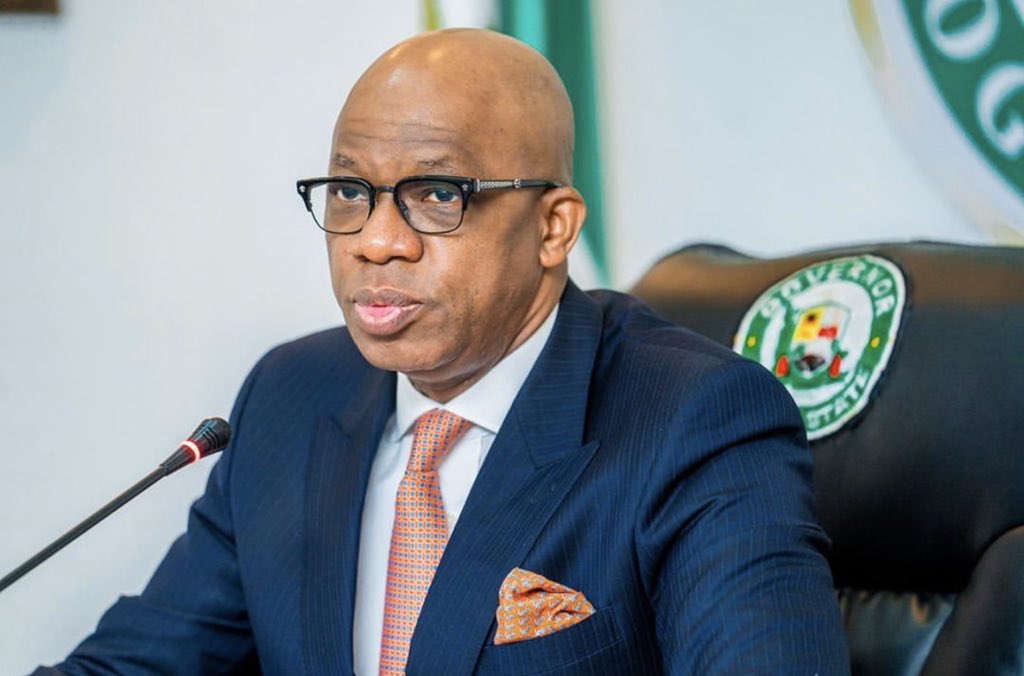
Speaking at the flag-off ceremony in Ijebu-Ode, Governor Dapo Abiodun, represented by the immediate-past Commissioner for Women Affairs and Social Development, Motunrayo Adeleye, said the fund was designed to enable women to move from subsistence activities to sustainable enterprises.

“Today, we gather not merely to mark the disbursement of a fund, but to celebrate another important step in our deliberate journey of empowering women, strengthening families and expanding opportunities for sustainable livelihoods.

“The beneficiary groups have demonstrated their readiness for the intervention by meeting key programme requirements, including regular participation, savings and internal lending, opening bank accounts and preparing Micro-Investment Plans.”

He disclosed that the women had collectively saved N2.6bn in the past seven months, while loans accessed through the groups had risen to more than N4bn.

According to him, the figures demonstrated the financial discipline, trust and commitment developed by the WAGs.

“These figures are more than statistics; they are compelling evidence of the financial discipline, trust, commitment and readiness that the Women Affinity Groups have developed under the programme,” he said.

The governor clarified that the N6bn CIF was not an outright grant but a sustainable revolving financing facility designed to provide capital for establishing and expanding businesses, creating employment and improving household welfare.

See also  Court freezes N448m assets in Keystone Bank debt recovery suit

He explained that the intervention was an extension of the Nigeria for Women Project, which commenced in the state in December 2020, following the signing of the project between the World Bank and the Federal Government in 2018.

Abiodun said the parent project established 3,792 WAGs across 1,003 communities in Odeda, Ikenne, Ijebu North-East and Yewa North Local Government Areas.

He added that 368 Ward Facilitators were trained and deployed, while 67,094 women beneficiaries received individual grants in April 2022.

According to him, the Scale-Up phase has expanded to seven local government areas— Ifo, Ado-Odo/Ota, Ijebu-Ode, Sagamu, Abeokuta North, Ipokia and Remo North.

He said 5,394 WAGs had been formed under the scale-up phase, reaching 124,062 women as of September 21, 2026.

“The programme has also covered 3,489 communities, with 664 trained ward facilitators, while about 26 states have visited Ogun to study its model and the World Bank has adopted the state as a training hub,” Abiodun stated.

The governor said the WAG model went beyond providing access to finance, noting that it also incorporated financial literacy, savings, responsible borrowing, collective accountability, business and entrepreneurial skills, gender awareness and life skills.

He added that beneficiaries were also being exposed to opportunities relating to health insurance, climate adaptation, strategic partnerships and National Identification Number enrolment.

“In other words, the programme is building not only businesses, but knowledgeable, financially disciplined and economically resilient women,” he said.

Abiodun reaffirmed his administration’s commitment to providing the policy support and institutional collaboration required to complement the intervention, while appreciating the World Bank, Federal Project Coordinating Unit and other partners for their support.

See also  CCB quizzes OSOPADEC leadership over alleged N463m misappropriation

Also speaking, the Minister of Women Affairs, Hajiya Imaan Sulaiman-Ibrahim, represented by her Special Assistant on Technical Management, Jummaih Idonije, described the initiative as a strategic economic intervention consistent with the Renewed Hope Agenda of President Bola Ahmed Tinubu.

She said expanding women’s economic opportunities remained central to inclusive national development.

The minister commended Ogun State for its leadership in implementing the programme, urging the beneficiaries to sustain the momentum and serve as models to other WAGs across the participating local government areas.

The World Bank Task Team Manager, Michael Ilesanmi, said the programme was helping to bridge financial access gaps for women while strengthening their capacity to withstand economic pressures.

The Commissioner for Finance and Chief Economic Adviser to the Governor and Chairman of the Multi-Sectoral Committee of the NFWP-SU, Dapo Okubadejo, said the intervention underscored the importance of deliberate investment in women.

Okubadejo, who was represented by the Permanent Secretary, Ministry of Women Affairs and Social Development, Adebimpe Obienu, noted that women played significant roles as traders, farmers, processors, artisans, entrepreneurs and community builders.

He commended the World Bank, Federal Ministry of Women Affairs and other stakeholders for their contributions to the implementation of the programme, while acknowledging the support of community leaders in ensuring its acceptance at the grassroots.

Some beneficiaries, including Oyesanya Omotoke of Irede WAG in Sagamu, Ayomide Ogunleye of Ifeoluwa WAG in Ijebu-Ode and Adesola Teriba, Chairperson of Success WAG in Abeokuta North, expressed appreciation for the intervention.

They said the fund would help women strengthen their businesses and improve their livelihoods, while commending the WAG model for promoting savings, internal lending, financial discipline and collective responsibility.

See also  Remi Tinubu defends her akara/roasted corn business idea, says petty traders given N50, 000 empowerment appreciate it

Source: punchng.com

FOLLOW US ON:

FACEBOOK

TWITTER

PINTEREST

TIKTOK

YOUTUBE

LINKEDIN

INSTAGRAM

Continue Reading
Click to comment

Leave a Reply

Your email address will not be published. Required fields are marked *

Business

Shipowners urge Dangote to support local fleet

Published

on

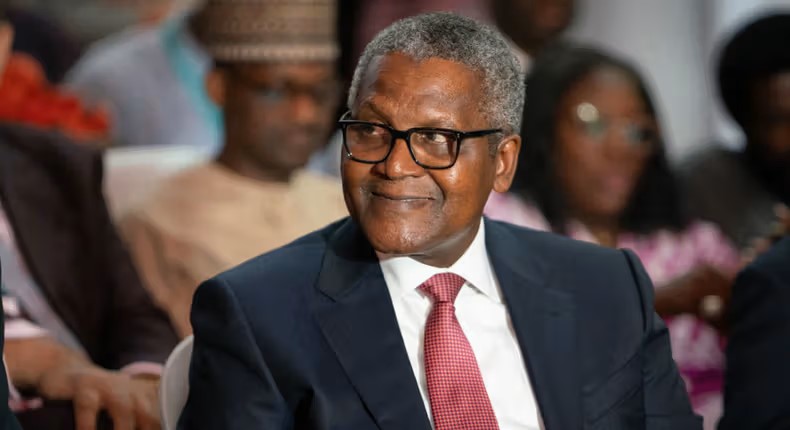
Indigenous shipowners have called on major cargo owners, including the Dangote Group, among others, to support local fleet development by offering long-term Contracts of Affreightment for petroleum products, cement, fertiliser and other bulk cargoes.

The shipowners said cargo is the foundation of shipping, and predictable cargo contracts are what make vessel financing and acquisition possible.

The call was made by a former Nigeria Chapter President of the African Shipowners Association and Group Managing Director of Seamate Maritime Integrated Services Limited, Capt. Ladi Olubowale, at a Public-Private Dialogue with CEOs organised by the Nigerian Chamber of Shipping in Lagos recently.

The dialogue, themed ‘Unlocking efficiency in the marine and blue economy value chain’, brought together industry stakeholders, including Mr Edwin Devakumar, Group Vice President of Dangote Group (Oil and Gas), as guest CEO.

Olubowale explained that Nigeria’s maritime strategy must move beyond debates about vessel ownership to “creating commercial conditions that make indigenous vessel acquisition bankable.”

“Give credible Nigerian shipowners long-term Contracts of Affreightment, and those contracts become the commercial foundation upon which vessels can be financed, acquired and deployed,” Olubowale said.

Olubowale argued that shipping is capital-intensive and Nigerian owners cannot sustainably acquire large vessels without guaranteed cargo volumes and bankable employment contracts.

He said Dangote, with its refinery, cement and fertiliser operations generating huge maritime cargo volumes, is well placed to catalyse local fleet growth by allocating portions of its cargo requirements to qualified indigenous operators under multi-year CoAs.

Such contracts, he noted, would enable Nigerian shipowners to approach banks, development finance institutions, export credit agencies and international financiers with identifiable cargo and predictable revenue.

Olubowale also raised concern over the dominance of foreign-controlled vessels in lifting Nigerian crude from terminals at Forcados, Bonny and Escravos, earning huge freight revenues from Nigerian cargo.

See also  PHOTOS: Blue Band Margarine Advertisement in Nigeria, circa 1966

He said the policy question should be how to convert the movement of Nigerian cargo into domestic assets, jobs, technical capacity and long-term economic value.

“There is no structural reason why Nigerian companies should not ultimately own and operate Suezmax tankers and other large commercial vessels. But fleet development must be connected to cargo, finance, technical capability and long-term employment,” he said.

He advocated a four-pillar model for fleet development — Cargo, Contract, Finance and Vessel — where cargo owners provide volumes, CoAs create bankable contracts, financiers fund vessel acquisition, and Nigerian owners provide vessels and services.

According to him, the model would complement, not replace, government interventions like the Cabotage Vessel Financing Fund.

Olubowale stressed that the government’s role should be that of enabler, regulator and facilitator, while the private sector drives the commercial engine.

“Nigeria’s ambition to build a globally competitive marine and blue economy will require deeper collaboration between cargo owners, indigenous shipowners, banks, investors, ports regulators and government,” he said.

He added that as intra-African trade grows under the African Continental Free Trade Area, maritime transport will become even more critical, and Nigeria must deliberately use its huge cargo base to build a sustainable indigenous shipping industry.

“The maritime industry must ultimately be driven by the private sector. If we connect Nigerian cargo to Nigerian maritime capacity, we will not merely acquire ships — we will build a sustainable shipping industry,” he said.

Source: punchng.com

FOLLOW US ON:

FACEBOOK

TWITTER

PINTEREST

TIKTOK

YOUTUBE

LINKEDIN

INSTAGRAM

Continue Reading

Business

Electricity subsidy may hit N2tn amid tariff freeze

Published

on

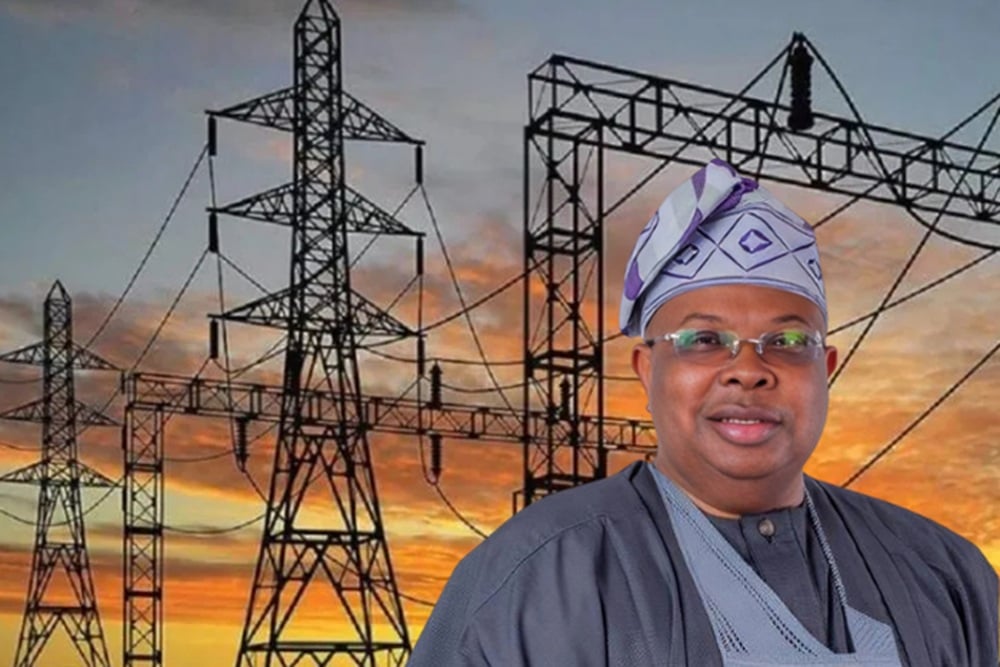
The Federal Government may spend about N2 trillion to subsidise electricity this year as it maintains its position against an immediate increase in electricity tariffs.

The Minister of Power, Joseph Tegbe, disclosed the government’s position on electricity tariffs at a media parley in Abuja on Monday while marking his first 100 days in office.

“There are no immediate plans to increase electricity tariffs. Our goal is to build a commercially viable power sector while protecting vulnerable consumers,” Tegbe said.

The minister’s position comes against the backdrop of the N1.93tn electricity subsidy incurred by the Federal Government in 2025, according to the Nigerian Electricity Regulatory Commission’s 2025 Annual Report.

NERC said the subsidy obligation represented 57.44 per cent of the total Nigerian Bulk Electricity Trading invoice during the year and averaged N160.69bn monthly.

The commission said the government incurred the subsidy because allowed electricity tariffs remained below cost-reflective levels, with the Federal Government covering the resulting gap.

“In the absence of cost-reflective tariffs, the government undertakes to cover the resultant gap (between the cost-reflective and allowed tariff) in the form of tariff subsidies.

“It is important to note that due to the absence of cost-reflective tariffs across all DisCos, the government incurred a subsidy obligation of N1.93tn (57.44 per cent of total NBET invoice) during the year,” the commission said.

With the government maintaining that there are no immediate plans to increase tariffs, the subsidy burden could remain around the N2tn level this year. The subsidy burden neared N2tn in 2024 and 2025 despite the Band A to E tariff categorisation introduced in 2024.

See also  PHOTOS: Blue Band Margarine Advertisement in Nigeria, circa 1966

Aside from Band A customers who pay the real cost of electricity, customers on other bands still enjoy government subsidies, which are now close to N2tn.

Earlier, electricity generation companies questioned the effectiveness of the Federal Government’s N4tn Presidential Power Sector Debt Reduction Programme, warning that fresh liabilities estimated at over N7tn could accumulate before the programme is fully implemented.

The power producers, under the aegis of the Association of Power Generation Companies, said that while they were not opposed to the Federal Government’s plan to raise bonds to settle outstanding obligations, the initiative would not provide a lasting solution to the liquidity crisis in the Nigerian Electricity Supply Industry because debts continue to accumulate monthly.

“Every month, the DisCos are not paying 100 per cent. NBET is not paying 100 per cent. The N4tn legacy debt is until December 2024. So, how about the accumulation for 2025? And what is already accumulated for 2026? So by the time you finish issuing this N4tn bond over seven years, by 2033, two times what you’re going to pay would have accumulated. So what is your plan?” the APGC Chief Executive, Joy Ogaji, asked the question.

Ogaji also called on the Federal Government to adopt a more sustainable approach to electricity subsidies, arguing that the current subsidy arrangement exists largely on paper because there is no corresponding budgetary provision.

“One of the sustainable ways is for the Federal Government to acknowledge the fact that they cannot subsidise the power market. Because you can see it’s only on paper that the government is subsidising power. It’s not in the budget.

“There is no monetary provision anywhere for subsidies, not even in the supplementary budget; it’s nowhere. It’s just being. You said you would pay. We have not seen it,” she stressed.

See also  Venezuela must buy only made in America products with money made from oil deal, Trump says

The CEO proposed that the government should clearly define the level of subsidy it could afford and make budgetary provisions for it instead of maintaining a blanket subsidy policy that has contributed to mounting debts across the electricity value chain.

Speaking on Monday, the minister said the administration was working to address the sector’s long-standing debt, revenue leakages, metering gaps and infrastructure constraints.

He said his first 100 days, covering June 8 to September 16, had largely focused on diagnosing the problems across the electricity value chain, stabilising existing infrastructure and restoring market discipline.

According to him, gas supply to power plants was constrained by damaged pipelines and commercial conditions that discouraged investment, while ageing equipment, deferred maintenance and stalled projects prevented available capacity from reaching consumers.

He said the sector was also weakened by poor payment discipline, with generation companies receiving only 27 per cent of their bills.

“When President Bola Tinubu entrusted me with the responsibility of serving as Minister of Power, I made four promises to Nigerians. I promised a disciplined approach to solving the sector’s problems. I promised to pursue grid stability through structured, strategic reforms. I promised visible incremental improvements.

“Upon assuming office, the diagnosis we undertook at the onset revealed constraints at every segment of the electricity value chain. Gas supply to power stations was limited by damaged pipelines and commercial terms that discouraged investment.

“Our generation fleet was heavily dependent on thermal plants, with ageing equipment, deferred maintenance, stalled projects, and capacity unable to reach consumers. The sector diagnosis revealed payment of only 27 per cent of generation companies’ bills, undermining their ability to maintain plants and pay gas suppliers,” Tegbe stated.

See also  CCB quizzes OSOPADEC leadership over alleged N463m misappropriation

The minister said transmission infrastructure was similarly under pressure from vandalised towers and lines, overstretched equipment and frequent system tripping.

NERC explained in its 2025 report that, under the subsidy regime, the government covers the gap between the cost-reflective and allowed tariffs through tariff subsidies.

The regulator said the subsidy is applied to the generation cost payable by DisCos to NBET, while the portion of generation costs not covered by the DisCos is invoiced to the Federal Ministry of Finance for settlement.

It said the framework was introduced partly to prevent unpaid subsidy debts from accumulating on the balance sheets of DisCos and limiting their ability to raise finance for critical investments in their networks.

The N1.93tn subsidy obligation recorded in 2025 highlights the financial cost of keeping electricity tariffs below the cost of supplying power.

For 2026, the government’s decision not to immediately raise tariffs means it will continue to bear a significant portion of the cost of electricity while efforts are made to improve collections, infrastructure, gas supply and service delivery.

Source: punchng.com

FOLLOW US ON:

FACEBOOK

TWITTER

PINTEREST

TIKTOK

YOUTUBE

LINKEDIN

INSTAGRAM

Continue Reading

Business

NMDPRA cracks down on filling stations for petrol under-dispensing

Published

on

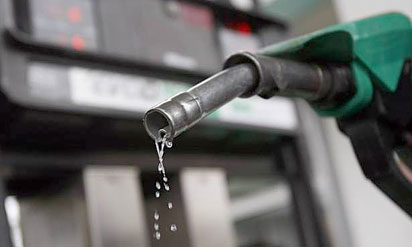
Filling station operators across the country are under pressure to check and recalibrate their dispensing equipment as the Nigerian Midstream and Downstream Petroleum Regulatory Authority intensifies its crackdown on outlets accused of under-dispensing petrol to motorists.

The regulator’s latest directive followed a series of enforcement operations carried out in the past, in which several filling stations were sealed for short-measuring customers, with the authority warning that persistent offenders risk losing their operating licences.

About 20 filling stations were reportedly sealed by the regulator between 2025 and 2026 for under-dispensing.

Following the NMDPRA warning, petroleum marketers said they had risen to ensure fuel retailers give customers the right value for their money. While some of them said pump attendants might be responsible for such sharp practices, others said faulty fuel pumps could be responsible for under-dispensing.

The NMDPRA, in an industry notice issued on Tuesday, directed all retail outlet operators to immediately calibrate and verify their dispensers and totalisers to ensure that consumers receive the full quantity of petroleum products for which they pay.

The authority said it had observed incidents of under-dispensing at retail outlets nationwide, describing the practice as a serious breach of consumer trust.

The regulator warned that outlets found under-dispensing, operating improperly calibrated equipment or otherwise compromising dispensing accuracy would be required to take immediate corrective action.

It added that persistent or serious violations would attract sanctions, “up to and including revocation of the outlet’s licence”.

IPMAN alerts members

Reacting to the directive, the Publicity Secretary of the Independent Petroleum Marketers Association of Nigeria, Chinedu Ukadike, said the association had circulated the NMDPRA notice to its members nationwide.

Ukadike said marketers were operating in a competitive environment where product quality, price and quantity were important factors in attracting and retaining customers.

He explained that the deregulated nature of the downstream sector made it important for independent marketers to protect their reputation and retain customers.

“I’m aware of the NMDPRA notice. We have also distributed the information to our members nationwide, drawing their attention to the NMDPRA notice. But I still want to let you know that we are in a very competitive environment. What drives the market is: one, quality of the product; two, price of the product; three, quantity of the product.

“These are the things that drive this kind of market now. We are in a deregulated economy. And what drives your market is your ability to convince your customers and sustain your customers. You have seen the innovations that we have done in all our businesses nationwide. We are ready for this deregulation and this competition. So nobody will indulge in underselling or cheating customers,” Ukadike said.

See also  Naira, stocks drop after Trump’s military threat

However, he acknowledged that sharp practices by individual pump attendants could not be completely ruled out, saying IPMAN was working to reorient its members and their employees.

“But sometimes you cannot rule out some sharp practices from some of our pump attendants, which is why we are trying to go nationwide now, to see how we can reorientate them, to be steadfast and truthful to customers,” he noted.

Ukadike disclosed that the association would not allow customers to be cheated at the pump, stressing that marketers had a responsibility to ensure that their dispensing equipment remained accurate.

“I don’t know if there is any reason that could prompt a manager to adjust the pump below the normal value. But this is an announcement by NMDPRA. We have set out our eyes to ensure that such a thing does not happen. And if there are sharp practices, we are ready to curtail them. So, some pump attendants adjusting prices and engaging in sharp practices may not be ruled out. But we are ready to ensure no customer is cheated at the pumps,” he said.

He added, “Don’t quote me incorrectly. I say you cannot rule out sharp practices from a few individuals like some attendants. For us, the independent marketers, we want to build our brand, and the three cardinal points of building our brand are low pricing, quality, and service.”

Another IPMAN major dealer, who spoke in confidence due to the lack of authorisation to speak on the matter, stated that the association had identified some lapses among pump attendants and would intensify its orientation programme to address the problem.

“No independent marketer will like to indulge in any sharp practices, but because we employ people who are working for us, we have identified some of the lapses, and the executive council will move into this orientation policy to ensure that some of these sharp practices by some pump attendants will be cut out,” he said.

PETROAN intensifies checks

The Petroleum Products Retail Outlets Association of Nigeria also directed its members to inspect their dispensing meters following the NMDPRA warning.

Speaking on Channels Television’s The Morning Brief on Wednesday, the National President of PETROAN, Billy Gillis-Harry, said the association had convened an emergency meeting of its National Executive Council on Tuesday after receiving the regulator’s warning.

He said the meeting lasted until about 10 pm, after which members were instructed to check their dispensing equipment. “PETRON circulated a message around the country, calling our members to check their meters as quickly as possible,” Gillis-Harry said.

He explained that prolonged use could cause dispensing equipment to develop faults, resulting in either under-dispensing or over-dispensing. “Equipment can be faulty over time because of usage,” he said.

See also  Venezuela must buy only made in America products with money made from oil deal, Trump says

Gillis-Harry assured motorists that PETROAN members would ensure that customers received the quantity of fuel they paid for. “But I can tell you that PETRON members will, at all times, insist on making sure that they sell their products one litre for one litre,” he said.

He advised motorists to monitor the quantity displayed on the dispenser whenever they buy fuel and request receipts after transactions.

The PETROAN president also urged consumers to familiarise themselves with their vehicles’ fuel capacities and compare them with the quantity shown on the dispensing meter.

“Oftentimes, we educate our staff to call the attention of the customer to check the meter while it is being dispensed. And also to get the customer to check after the product has been dispensed,” he said.

Gillis-Harry said PETROAN worked with the Weights and Measures Division of the Ministry of Industry, Trade and Investment and the NMDPRA on the maintenance and accuracy of dispensing meters.

“PETRON consistently works with the Weights and Measures Division of the Ministry of Trade and Investment, and also the NMDPRA. These are the two regulatory authorities that ensure that our meters are functional. And they are up to date and accurate,” he said.

He stressed that the association had commenced engagement with its members following the regulator’s warning. “We took what the NMDPRA called our attention to yesterday very seriously. And we already started working on that,” he said.

NMDPRA seals stations

The NMDPRA’s latest directive comes after the regulator had stepped up enforcement against filling stations found to be short-measuring customers.

In February, the authority sealed 11 petrol stations in Rivers State for alleged under-dispensing, failed pumps and other regulatory infractions.

The exercise, conducted in Obio-Akpor and Port Harcourt City Local Government Areas, was part of the NMDPRA’s “Operation One Litre for One Litre” surveillance initiative. The authority said the affected stations would remain shut until the integrity of their pumps was confirmed.

The NMDPRA’s South-South Coordinator, Victor Owodiasa, warned at the time that persistent offenders could have their licences revoked.

He also said under-dispensing could sometimes result from mechanical faults, but insisted that operators had a responsibility to regularly check their meters rather than wait for regulators to detect the problem.

In July, the NMDPRA Abeokuta Field Office also sealed two filling stations in the Akute/Ajuwon area of Ifo Local Government Area of Ogun State for under-dispensing and other sharp practices.

The authority said one of the stations had repeatedly violated regulatory requirements, including allegedly removing official seals placed on the facility and resuming operations without authorisation. It disclosed that the station had been sealed at least six times since 2025.

See also  NUPENG accuses Dangote of sponsoring division among tanker drivers

The regulator warned that further violations could lead to penalties, suspension of operating licences and criminal prosecution where applicable.

Earlier, in October 2025, the NMDPRA Eket Field Office sealed five petrol stations in Akwa Ibom State over various infractions, including alleged under-dispensing, diversion and operating without a licence.

The issue has also affected major oil marketers. In August 2025, NNPC Retail sanctioned employees at its Ikorodu, Lagos, station after an investigation confirmed an incident involving a pump attendant who allegedly attempted to short-change a customer.

The company said the attendant was disengaged, the station manager was suspended, and a formal warning was issued to the dealer.

With the latest directive, the NMDPRA has now directed industry associations, including IPMAN, PETROAN, the Major Energy Marketers Association of Nigeria and the Depot and Petroleum Products Marketers Association of Nigeria, to notify their members and support compliance.

The regulator said its intensified inspections were aimed at protecting consumers, promoting transparency and ensuring that motorists receive the quantity of petroleum products for which they pay.

The directive comes against the backdrop of the Federal Government’s broader efforts to strengthen regulatory oversight of the downstream petroleum sector following the removal of the petrol subsidy and the transition to a market-based pricing regime.

With petrol now sold at prices determined largely by market conditions, accurate dispensing has become an important part of consumer protection, particularly as motorists and other users pay varying pump prices across locations.

Under-dispensing occurs when a retail outlet’s dispensing equipment delivers less product than the quantity displayed or paid for by the consumer. Faulty or improperly calibrated pumps can therefore result in consumers paying for a volume of petrol that they do not receive.

The NMDPRA said its latest enforcement action was aimed at preventing such practices and improving confidence in petroleum product transactions. The Authority also directed major industry associations to ensure that their members comply with the directive.

“MEMAN, DAPPMAN, IPMAN and PETROAN are kindly requested to promptly notify their members of this directive and to support full compliance across the industry,” the regulator stated.

The NMDPRA stressed that consumer protection remained a key part of its regulatory responsibility, particularly in ensuring that petroleum transactions were transparent and accurately measured.

It said, “NMDPRA remains committed to protecting consumers, promoting transparency, and upholding the integrity of petroleum product transactions nationwide.”

The directive means filling stations now face closer scrutiny of their dispensing equipment, while operators will be expected to correct any identified defects promptly or risk regulatory sanctions.

Source: punchng.com

FOLLOW US ON:

FACEBOOK

TWITTER

PINTEREST

TIKTOK

YOUTUBE

LINKEDIN

INSTAGRAM

Continue Reading

Trending