Connect with us

Lifestyle

When Love Becomes Emotional Blackmail: How to Recognise the Difference

Published

on

“If you really loved me, you would do it.”

It sounds like an emotional statement, but sometimes a sentence like this can be more than an expression of hurt—it can be a way of putting pressure on someone to do something against their wishes.

Emotional blackmail occurs when a person uses guilt, fear, threats, punishment, or emotional pressure to influence another person’s decisions.

It can happen in romantic relationships, friendships, families, workplaces, and even between parents and children.

When Does Emotional Pressure Become Manipulation?

Everyone expresses disappointment. Everyone can feel hurt when someone says no.

The difference is in how those emotions are used.

Statements such as:

“After everything I have done for you, this is how you repay me?”
“If you really loved me, you would do this.”
“Fine, do whatever you want. Now I know where I stand.”
“You will regret it if you refuse.”
“Do it, or I will never forgive you.”

can place someone under significant emotional pressure.

A person may eventually agree—not because they genuinely want to, but because they feel guilty, frightened, or responsible for the other person’s emotions.

Love Does Not Mean Giving Up Your Right to Say No

Healthy relationships involve compromise, but compromise should not require manipulation.

You can love someone and still disagree with them.

You can appreciate everything someone has done for you and still refuse a request.

You can care deeply about a partner, friend, parent, or family member while maintaining personal boundaries.

Saying “no” does not automatically mean that you do not love someone.

See also  PHOTOS: Seriki Williams Abass Slave Museum: A Historic Reminder of Nigeria’s Role in the Transatlantic Slave Trade

Likewise, someone being disappointed by your decision does not automatically mean they are emotionally blackmailing you.

Context matters.

Why Emotional Blackmail Can Be Difficult to Recognise

Emotional blackmail does not always look aggressive.

Sometimes it appears as crying, withdrawal, silence, repeated reminders of past sacrifices, threats to end a relationship, or making someone feel responsible for another person’s happiness.

That is why it can be difficult to recognise.

A useful question to ask yourself is:

“Am I changing my decision because I genuinely changed my mind, or because I am afraid of what will happen if I say no?”

The answer may reveal whether you are making a free choice or responding to emotional pressure.

Boundaries Are Not Disrespect

Setting a boundary does not necessarily mean rejecting someone.

A person can say:

“I understand that you are hurt, but I am still not comfortable doing this.”

That response acknowledges the other person’s feelings without surrendering personal choice.

Healthy communication allows people to express disappointment without using guilt, threats, fear, or punishment to force an outcome.

Love, Sacrifice and Control

Relationships often require sacrifice. Parents sacrifice for their children. Partners make compromises. Friends support each other.

But sacrifice should not automatically become a tool for control.

“I did this for you, so you must do this for me” can turn kindness into a transaction.

The important question is not simply whether someone has sacrificed for you. It is whether that sacrifice is now being used to control your decisions.

The Bigger Question

Emotional blackmail is not always obvious, and not every emotional statement is manipulation.

See also  Ekei Eyo as Malvolio in Shakespeare’s Twelfth Night, Queen’s College for Girls, Lagos Circa 1940s

Sometimes people simply express their pain badly. Other times, repeated guilt, threats, fear, or punishment may be deliberately used to control another person’s choices.

The difference deserves honest conversation.

So, what do you think?

When someone says:

“If you really loved me, you would do it.”

Is it simply an expression of hurt—or can it become emotional blackmail?

Share your opinion in the comments.

FOLLOW US ON:

FACEBOOK

TWITTER

PINTEREST

TIKTOK

YOUTUBE

LINKEDIN

INSTAGRAM

Continue Reading
Click to comment

Leave a Reply

Your email address will not be published. Required fields are marked *

Lifestyle

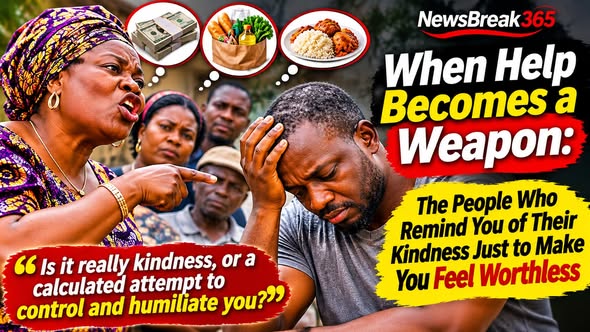
When Help Becomes a Weapon: The People Who Remind You of Their Kindness Just to Make You Feel Worthless

Published

on

Not everyone who helps you genuinely wants to see you succeed. Some people offer assistance today so they can use it as a weapon against your dignity tomorrow.**

There is a particular kind of humiliation that comes from receiving help from someone who never allows you to forget it.

They give you money, buy you food, pay your bills or support you during difficult moments. At first, you see their actions as kindness. You appreciate their generosity and remain grateful for everything they have done.

But as time passes, something changes.

Every conversation becomes an opportunity to remind you of their sacrifices. Every disagreement becomes a reason to bring up the money they gave you. Every gathering becomes an opportunity to announce to other people how much they have done for you.

Suddenly, your personal struggles become public entertainment.

**Is that generosity, or is it a calculated attempt to control another human being?**

## When generosity becomes public humiliation

Some people cannot help you privately. They want an audience.

They want your family, friends, neighbours and even strangers to know that they once rescued you from a difficult situation.

They repeatedly announce:

– “I was the one feeding you when nobody cared.”
– “I gave you money when you had nothing.”
– “Without me, you wouldn’t have survived.”
– “Look at everything I have done for you!”

Their intention appears to be more than reminding you of their kindness. They want to establish a position of superiority over you.

They want everyone to see themselves as the generous benefactor and you as the helpless individual who cannot survive independently.

See also  Ilorin Emirate sets stage for 2026 Grand Durbar

Unfortunately, some people measure their importance by how dependent they can make others feel.

## They don’t want you to forget your struggles

The most disturbing part is that some people seem uncomfortable when the person they once helped begins to stand on their own feet.

Instead of celebrating your progress, they remind you of your past.

You could get a better job, start a business, become financially independent or improve your circumstances, but they still want to introduce you as the person they once helped.

Why?

Because your independence threatens the position of superiority they have built around your dependence.

They may have helped you when you were struggling, but that does not give them permanent ownership of your life.

**Helping someone should never become a lifetime licence to humiliate them.**

## Gratitude should not mean surrendering your dignity

Let’s make something clear: Being grateful is important.

If someone genuinely supports you during difficult times, appreciating that person is the right thing to do.

However, gratitude and humiliation are two different things.

You can appreciate someone’s generosity without accepting public embarrassment. You can acknowledge their sacrifices without allowing them to control your decisions. You can remember their kindness without being reminded of it every week.

A good deed should not become a chain around another person’s neck.

True generosity does not need constant public announcements to prove its value.

## The painful truth: Some people want appreciation, others want control

There is a difference between someone who helps because they genuinely care and someone who helps because they want to feel superior.

See also  PHOTOS: Chief Alimotu Pelewura – Champion of Market Women

The first person celebrates your independence.

The second person constantly reminds you that you once needed them.

The first person wants to see you rise.

The second person may prefer that you remain beneath them so they can continue feeling important.

And perhaps the greatest lesson is this: Never allow someone’s financial assistance to convince you that your dignity has no value.

You may have needed help yesterday, but that does not mean you are destined to remain dependent tomorrow.

**Remember: You can owe someone gratitude without owing them your freedom, your silence or your self-respect.**

## The Big Question: Is It Really Kindness?

If someone gives you money, feeds you, pays your bills and supports you during difficult times, but constantly uses those actions to embarrass you before other people, should you still consider that person genuinely generous?

Or does helping someone become meaningless when it is repeatedly used to destroy their confidence and dignity?

Perhaps it is time we had an honest conversation about the difference between genuine kindness and generosity used as a tool for control.

**What do you think?**

1. Should people who help others be allowed to remind them publicly of everything they have done?
2. Is it better to struggle alone than depend on someone who constantly humiliates you?
3. Do some people genuinely help others, or do they sometimes help just to feel superior?

Share your opinion. This conversation deserves an honest debate.

—

**Newsbreak365 Editorial | Human Behaviour, Relationships and Society**


Continue Reading

Lifestyle

Some People Are Happier to Spread Your Misfortune Than to Celebrate Your Success: The Ugly Reality of Human Nature

Published

on

There are people who will eagerly announce your failures to the world but struggle to acknowledge your achievements. Your pain becomes their gossip, your struggles become their entertainment, and your success becomes their biggest disappointment.**

Have you ever wondered why certain people are always quick to spread bad news about you but suddenly become silent when something good happens in your life?

When you lose your job, they hear about it before you can even process the disappointment. When your marriage encounters difficulties, they become unofficial reporters. When you make a financial mistake, they ensure the story travels from one person to another.

But when you finally get promoted, buy a house, establish a successful business, or achieve something you have struggled for years to accomplish, their enthusiasm mysteriously disappears.

Welcome to one of the ugliest realities of human relationships: **some people are more interested in witnessing your downfall than celebrating your progress.**

## Your Misfortune Is Their Favourite Conversation

Not everyone who asks about your life genuinely wishes you well.

Some people are not asking because they care. They are collecting information. They want to know what is going wrong, where you are struggling, what problems you are facing, and whether life is treating you badly.

Unfortunately, some of these people hide behind friendship, family relationships, neighbourhood connections, and even professional associations.

They smile when they see you, ask questions about your welfare, and pretend to be concerned.

Yet, the moment they discover something negative about your life, they cannot wait to share it with others.

See also  Why I Sold Limousine Car Someone Gifted Me – Pastor Adeboye

Your private struggles suddenly become public entertainment.

And the most disturbing part? Some may even exaggerate your problems just to make the story more interesting.

## Why Does Your Success Make Some People Uncomfortable?

Your success can reveal uncomfortable truths about the people around you.

When you are struggling, some people feel comfortable because they believe they are doing better than you. Your difficulties make them feel superior.

But when you rise above your circumstances, their perception of you changes.

The person they once considered unsuccessful suddenly becomes financially independent. The person they underestimated begins achieving things they never expected.

Instead of celebrating your progress, they start looking for reasons to discredit it.

They question how you made your money, minimise your achievements, spread rumours, or suggest that your success must have come through questionable means.

For some people, accepting your success is more difficult than discussing your failure.

## The People Who Celebrate Your Pain But Ignore Your Victories

There is a difference between someone who genuinely cares about you and someone who is simply interested in your personal affairs.

A genuine friend will be concerned when you are going through difficulties and happy when you overcome them.

But a jealous individual may show more excitement when you encounter problems than when you achieve something meaningful.

They will share your bad news in several WhatsApp groups but struggle to share your business opening, promotion, wedding anniversary, or professional achievement.

They have enough energy to discuss your mistakes but suddenly have no time to acknowledge your accomplishments.

See also  Ilorin Emirate sets stage for 2026 Grand Durbar

That behaviour tells you something important about the relationship.

Not everybody standing close to you is standing with you.

## Stop Giving Everyone Access to Your Private Life

One important lesson life teaches is that privacy is sometimes a form of protection.

You do not have to announce every financial decision, relationship problem, business plan, personal ambition, or upcoming achievement.

Some people do not need access to every chapter of your life.

Learn to distinguish between people who genuinely support you and those who simply want information about you.

You do not owe everyone an explanation about your struggles, and you do not need everyone’s approval to succeed.

Most importantly, never allow people’s jealousy or gossip to distract you from building the life you want.

## Your Success Is Not an Apology to Anyone

Perhaps the biggest mistake people make is trying too hard to prove their worth to those who secretly want to see them fail.

You do not have to convince everybody that you are successful. You do not have to respond to every rumour, fight every critic, or explain every achievement.

Keep working. Keep improving. Keep moving forward.

Let your achievements speak louder than the rumours.

And remember this: the same people who eagerly spread stories about your misfortune may eventually become silent witnesses to your success.

**Never allow people who enjoy your struggles to determine how you celebrate your victories.**

—

## THE BIG QUESTION: LET’S DEBATE!

Why do you think some people are always eager to spread bad news about others but struggle to celebrate their success?

See also  PHOTOS: Chief Alimotu Pelewura – Champion of Market Women

1. Is it jealousy and envy?
2. Is it bitterness caused by personal failures?
3. Are some people simply uncomfortable seeing others rise above them?
4. Or have social media and gossip turned people’s private struggles into public entertainment?

**Have you ever experienced someone who was quick to spread your bad news but refused to acknowledge your achievements?**

Share your experience in the comment section. Let’s have an honest conversation about human nature.

*Newsbreak365 — Bringing Issues That Matter to Light.*


Continue Reading

Lifestyle

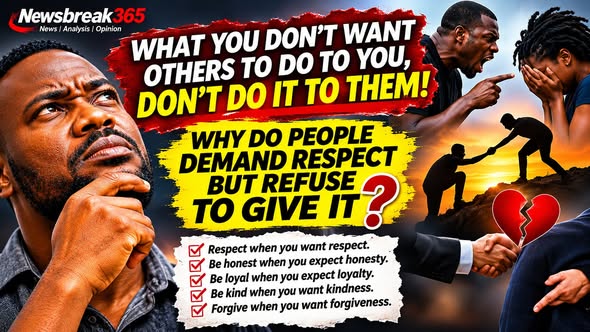
WHAT YOU DON’T WANT OTHERS TO DO TO YOU, DON’T DO IT TO THEM: WHY DO PEOPLE DEMAND RESPECT BUT REFUSE TO GIVE IT

Published

on

Some people want loyalty but betray others. They demand honesty but live by deception. They expect kindness but treat people with cruelty. So why do we expect others to treat us better when we refuse to treat them the same way?**

There is something deeply disturbing about human behaviour: some people want the best treatment from everyone around them, yet they have no problem making other people’s lives miserable.

They want respect, but they disrespect others. They want loyalty, but they betray those who trust them. They want forgiveness, but they hold grudges. They want people to understand their struggles, but they show no compassion when someone else is going through difficult times.

The biggest problem is that many people have become experts at identifying how others have wronged them while remaining completely blind to the pain they inflict on others.

**Is this not the height of hypocrisy?**

## THE HYPOCRISY OF DEMANDING WHAT YOU CANNOT GIVE

Think about it.

You don’t want anyone to embarrass you in public, yet you find pleasure in humiliating others.

You don’t want anyone to betray your trust, yet you betray people who genuinely believe in you.

You don’t want anyone to lie to you, yet you manipulate the truth whenever it benefits you.

You don’t want anyone to take advantage of your kindness, yet you exploit the kindness of others.

You don’t want anyone to abandon you when you need help, yet you disappear when someone needs you.

See also  PHOTOS: Seriki Williams Abass Slave Museum: A Historic Reminder of Nigeria’s Role in the Transatlantic Slave Trade

You don’t want people to speak badly about you behind your back, yet you participate in destroying other people’s reputations.

And when someone finally decides to treat you the way you have treated them, suddenly, you become the victim.

**Why should you expect a different standard of treatment when you refuse to practise the same values you demand from others?**

## PEOPLE HAVE FEELINGS TOO — NOT EVERYONE WILL TELL YOU WHEN YOU HURT THEM

One of the most dangerous assumptions people make is believing that someone who remains silent is not hurting.

Some people smile while carrying emotional wounds. Some people pretend everything is fine because they don’t want to explain their pain. Others simply withdraw because they have realised that explaining their feelings to someone who doesn’t care is a waste of time.

Never mistake someone’s silence for weakness.

The person you constantly insult may eventually stop speaking to you. The person whose kindness you repeatedly exploit may eventually walk away. The person you repeatedly disappoint may eventually stop expecting anything from you.

And when that happens, don’t always accuse them of changing.

Sometimes, your behaviour is the reason they changed.

## YOUR ACTIONS SAY MORE ABOUT YOU THAN YOUR WORDS

It is easy to preach about love, respect, kindness, loyalty and humanity.

It is easy to post inspirational quotes about treating people well.

It is easy to condemn wickedness when you are the victim.

But the real test of character is how you treat people when you have power over them, when they cannot offer you anything in return, and when nobody is watching.

See also  Architect Olufemi Adetokunbo Majekodunmi in Lagos – Circa 1980

Do you respect people who cannot help you financially?

Do you treat workers, cleaners, security guards and vulnerable people with dignity?

Do you keep people’s secrets?

Do you apologise when you are wrong?

Do you consider the emotional consequences of your actions before hurting someone?

These are the questions that reveal genuine character.

## BEFORE YOU HURT SOMEONE, PUT YOURSELF IN THEIR SHOES

Imagine someone treating your mother, father, spouse, children or someone you deeply love the same way you treat other people.

Would you accept it?

Imagine being betrayed by someone you trusted. Imagine being publicly humiliated, manipulated, lied to or emotionally destroyed by someone you considered a friend.

Would you call it acceptable?

If you wouldn’t want it done to you or someone you love, why do you think it is acceptable to do it to another human being?

Nobody is perfect. Everyone makes mistakes. But there is a difference between making mistakes and repeatedly hurting people without taking responsibility.

**Being human is not an excuse for treating other human beings like they don’t matter.**

## THE GOLDEN RULE WE SHOULD NEVER FORGET

The principle is simple:

**WHAT YOU DON’T WANT OTHERS TO DO TO YOU, DON’T DO IT TO THEM.**

If you want respect, learn to respect others.

If you want honesty, be honest.

If you want loyalty, demonstrate loyalty.

If you want kindness, show kindness.

If you want forgiveness, learn to forgive.

If you want people to consider your feelings, start considering theirs.

The world would be a much better place if people stopped measuring good behaviour by what they personally receive and started measuring it by what they give.

See also  Ayra Starr visa denial: S’Africa demands proof as Tyla cancels Lagos show

Remember, you are not the only person with feelings. You are not the only person who deserves respect. And you are certainly not the only person whose heart can be broken.

**Before you make someone cry, ask yourself whether you would be comfortable experiencing the same pain. Before you destroy someone’s peace, ask yourself whether you would accept someone destroying yours.**

Because demanding good treatment while deliberately treating others badly is not strength. It is hypocrisy.

—

## LET’S DEBATE: ARE PEOPLE BECOMING MORE SELFISH?

Why do some people demand respect, honesty, loyalty and kindness when they themselves refuse to offer those same values?

Is it selfishness, hypocrisy, lack of empathy or simply a society that has forgotten the meaning of humanity?

**Do you believe people should treat others exactly the way they want to be treated? Or should everyone simply treat others according to how they are treated?**

Share your thoughts in the comment section. Your opinion matters.

*Newsbreak365 — Bringing You Stories, Issues and Conversations That Matter.*

#Humanity #Respect #Hypocrisy #Kindness #LifeLessons #HumanBehaviour #GoldenRule #Newsbreak365


Continue Reading

Trending