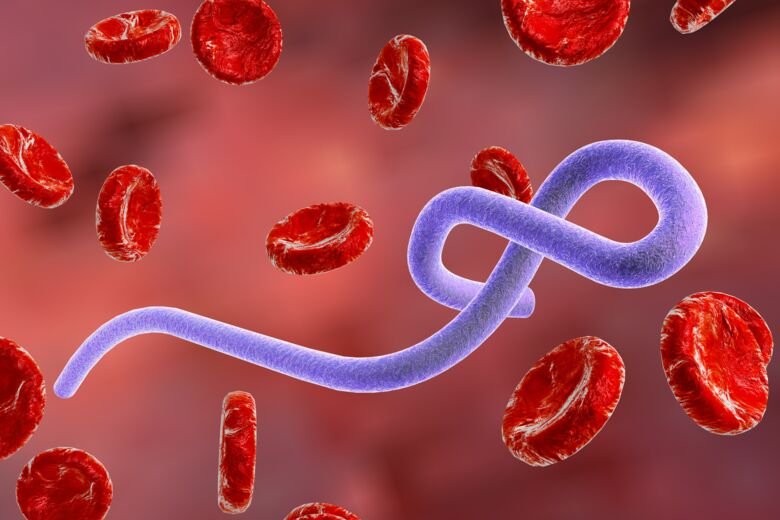
The Federal Government has directed hospitals nationwide to prepare isolation beds and strengthen infection prevention measures as part of efforts to contain the Ebola outbreak, warning that 15 states are yet to update their response plans.
The Coordinating Minister of Health and Social Welfare, Prof Muhammad Pate, gave the directive in Abuja during a press briefing on the government’s response to the outbreak, saying health facilities had been instructed to make adequate provisions for suspected cases and protect frontline health workers.
Again, while briefing the National Economic Council, he said 21 states had already accelerated preparations and strengthened their capacity to respond to the possible spread of the diseases and warned the remaining 15 states to speed up their preparations.
Pate said the government was coordinating the national response through the Nigeria Centre for Disease Control and Prevention, with support from the World Health Organisation and the Africa Centres for Disease Control and Prevention.
He also urged private hospitals to promptly report suspected cases and called for the training and protection of health workers.
“We have notified all our hospitals to make room for bed capacity, isolation, and prepare their health workers in terms of infection prevention in these cases, because health workers are on the front lines,” Pate said.
He added that the Federal Government had also informed the Federal Capital Territory authorities and would continue to engage state governments to ensure that hospitals under their jurisdictions were adequately prepared.
The directive comes as health authorities intensify contact tracing, surveillance and emergency preparedness following the confirmation of an imported Ebola case in the FCT, raising questions about the capacity of Nigeria’s health system to manage additional infections should the virus spread.
Pate said the government was taking steps to ensure that the infection did not extend beyond the index patient and develop into community transmission.
“We don’t want it to go beyond it, and there is no need to panic, but we have to be vigilant,” he said.
The minister explained that Nigeria’s response involved not only identifying and monitoring people who had contact with the infected woman but also preparing healthcare facilities to detect, isolate and manage any additional suspected cases.
He stressed that health workers were particularly vulnerable during outbreaks because of their direct contact with patients, making strict adherence to infection prevention and control protocols essential.
According to him, the government had activated its incident management system, with the NCDC coordinating the operational response in collaboration with the FCT authorities and other relevant agencies.
Pate said the Federal Government was also working with state governments to ensure that preparedness measures extended beyond Abuja, where the confirmed case was detected.
He disclosed that most states already had response plans developed with the guidance of the NCDC, but some had yet to complete theirs.
“Most of the states have already response plans, which were developed with the guidance of the NCDC. Those that have not finished their response plans, we’ve asked them to quickly finish their response plans,” he said.
The minister said coordination with the states was crucial because an effective outbreak response required early detection, prompt reporting, adequate isolation facilities and the capacity to prevent infections within hospitals and communities.
He announced that the government would meet with state commissioners of health on Friday and invite commissioners of information to ensure that public communication and emergency response measures were coordinated.
Pate also called on private healthcare providers to strengthen their surveillance systems and promptly report suspected cases to public health authorities.
He said the involvement of private hospitals was particularly important because the infected woman had sought care at a private facility before the infection was confirmed.
“The private sector is important because, as you saw, this case went to a private facility. In 2014, it was a private facility,” he said.
The minister urged private practitioners across the country to remain alert to symptoms that could suggest Ebola, particularly among patients with relevant travel histories, and to establish links with public health authorities rather than manage suspected cases without notifying the appropriate agencies.
He disclosed that additional funds had been provided to the NCDC to strengthen the response, while the WHO and the Africa CDC were supporting the country.
The government had also invited Prof. Christian Happi, a renowned genomics expert based at Redeemer’s University, Ede, to complement the NCDC’s work and support further investigation of the virus.
Pate said the authorities intended to conduct genomic sequencing to improve their understanding of the virus and strengthen the evidence guiding the response.
The current outbreak is linked to the Bundibugyo strain of Ebola virus, which has been reported in the Democratic Republic of the Congo and other countries in the region.
The strain is distinct from the Zaire ebolavirus responsible for the major West African outbreak of 2014–2016.
Pate urged Nigerians experiencing symptoms such as fever, headaches and muscle aches, particularly those with a relevant travel history or possible exposure, to isolate themselves and promptly contact public health authorities.
Speaking with the NEC, Pate said 21 state governments had updated their Ebola response plans, and urged the remaining 15 states to speed up the setting up of preparedness and response mechanisms.
At the 161st meeting of the council, which was held virtually and chaired by Vice President Kashim Shettima, according to a statement by Senior Special Assistant to the Vice President on Media and Communications, Stanley Nkwocha, on Thursday, it received an update on the reported Ebola situation in the FCT from the minister, who allayed fears of a major public health crisis and assured members that Nigeria had the institutional capacity to contain it.
“Pate identified coordination and governance, detection at points of entry, laboratory testing capacity, logistics for essential kits and personal protective equipment, and effective strategic communication as critical components of the response.
“The minister acknowledged the efforts of 21 state governments that had updated their response plans and urged the remaining 15 states to expedite the establishment of appropriate preparedness and response mechanisms,” the statement read.
Pate said Nigeria had handled the disease before and had the institutions to do so again.
“The Federal Government has competent authorities to deal with this. We have done it in 2014, and we have good public health institutions. Nigerians should be reassured.
“We must be vigilant, but not panic. People should respect public health information from trusted sources and not spread misinformation and false rumours,” Pate added.
The minister promised regular updates and said he would soon receive a report on the case.
The council also endorsed a 90-day economic action plan proposed by the Federal Ministry of Finance to consolidate the gains of President Bola Tinubu’s economic reforms.
The plan focuses on reducing the cost of living, improving food affordability, attracting investment and speeding up the delivery of projects with direct benefits to Nigerians.
The endorsement followed a presentation by the Minister of Finance and Coordinating Minister of the Economy, Taiwo Oyedele.
The plan identifies five priority areas: food affordability, tax harmonisation, completion of high-impact projects, resolution of investment bottlenecks and regulated household support.
NEC also approved a national dashboard to track ongoing projects across the federation, with emphasis on transparency, accountability and accurate reporting of how proceeds from fuel subsidy removal are being used.
Presenting the economic outlook, Oyedele expressed optimism about the progress recorded under the Tinubu administration and the prospects for further recovery.
He named bringing headline inflation and interest rates down to single digits by 2027 as key policy objectives, and said the next phase of reforms would need coordinated implementation across federal and state institutions.
Shettima charged state governors and relevant institutions to ensure that the gains of the reforms translated into affordable transport, better healthcare, jobs and greater financial security.
He said the success of economic policy must be measured by its impact on citizens’ daily lives, and that government’s responsibility extended beyond announcing reforms to building institutions that let Nigerians plan their futures with confidence.
“The first dividend of prosperity should be the confidence to plan a life. Our task is to make such confidence less dependent on fortune,” he said.
On the National Compressed Natural Gas Bus initiative, Shettima said state governments must support affordable transport systems that would reduce the financial burden on commuters, adding that the programme’s success should be judged by affordability and accessibility rather than by the number of vehicles deployed,
He added. “The cost of reaching a livelihood should never consume the livelihood itself. The passenger’s experience must guide our ambition, because the value of public transport resides in the journeys it makes possible. We should assess success through affordability and access, rather than fleet size alone.”
NEC also received the report of its ad hoc committee on polio eradication, chaired by the Governor of Gombe State, Inuwa Yahaya, and directed states to conduct post-campaign reviews, particularly in areas where children were missed during immunisation exercises and in communities affected by insecurity.
It stressed the need for timely release of counterpart funds, stronger routine immunisation, better coordination with security agencies and closer cooperation among states.
The report added that sustained commitment from governors, traditional rulers and security agencies would remain critical to eradicating polio.
On livestock, the council received the report of its ad hoc committee on Livestock Development, chaired by the Governor of Kebbi State, Nasir Idris.
It noted the sector’s potential to stimulate growth, create jobs and improve livelihoods, and that all states had indicated interest in supporting the Federal Government’s livestock initiatives.
The council resolved to strengthen collaboration between the Federal and state governments to unlock the sector’s potential.
FG intensifies Ebola enlightenment
The Minister of Information and National Orientation, Mohammed Idris, directed agencies under his ministry to intensify public enlightenment on Ebola Virus Disease following the confirmation of a case in the FCT.
Idris gave the directive to the National Orientation Agency, Nigerian Television Authority, Federal Radio Corporation of Nigeria, Voice of Nigeria and News Agency of Nigeria to educate Nigerians on the disease and measures to prevent its spread.
In a statement issued on Thursday by his Special Assistant on Media, Rabiu Ibrahim, the minister said accurate information was critical to containing the disease and preventing public panic.
“The Federal Government is taking every necessary step to contain this case and protect Nigerians. Accurate and timely information is one of our strongest defences. Our agencies must reach every community, in every language, with clear facts on how Ebola spreads, how to protect ourselves and where to report suspected cases,” Idris said.
He directed the agencies to work closely with the Federal Ministry of Health and Social Welfare and the NCDC to ensure that public information on the outbreak was verified and evidence-based.
The minister also tasked the NOA with deploying its nationwide offices for grassroots sensitisation in collaboration with traditional and religious leaders, community groups and the media.
The ministry said it would strengthen engagement with broadcast media organisations, including the Broadcasting Organisations of Nigeria, to expand public awareness of Ebola prevention and containment.
“The collaboration will support the dissemination of verified health information, the production and airing of public enlightenment jingles, and the development of information, education and communication materials in Nigerian languages to reach communities across the country,” the statement read.
The minister urged Nigerians to remain calm, rely on official information and avoid spreading unverified claims on social media.
He also advised members of the public to report suspected cases immediately through the NCDC’s toll-free, 24-hour emergency line, 6232.
Source: punchng.com
FOLLOW US ON: