Connect with us

Business

Petrol battlefield: Dangote, importers locked in brutal price war

Published

on

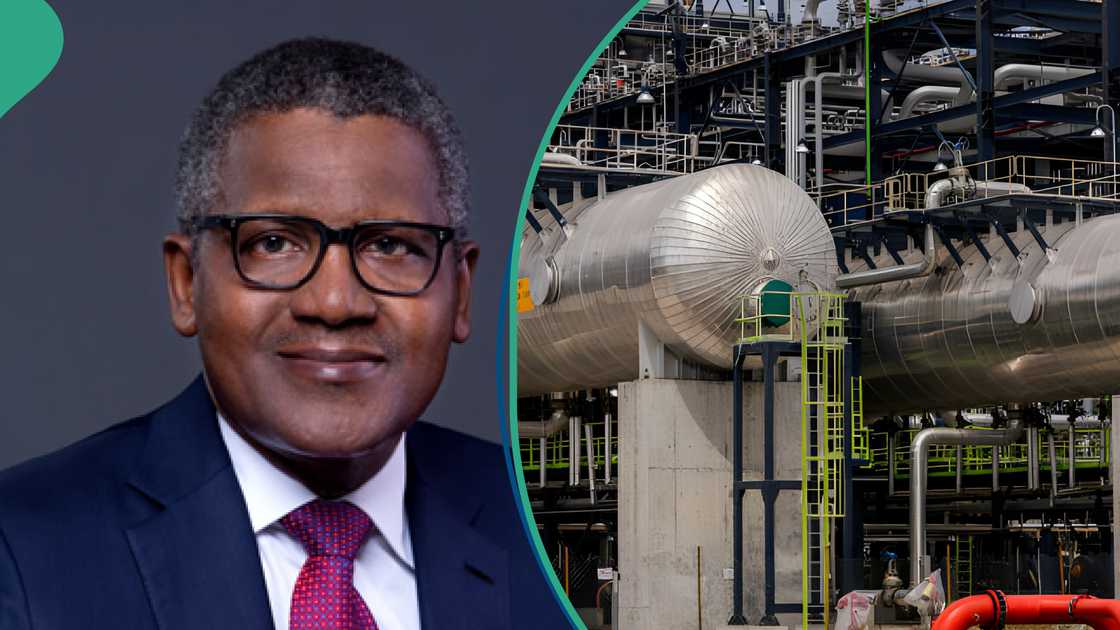
Nigeria’s downstream petroleum sector has descended into what industry players describe as a full-blown price war following the decision by the Dangote Petroleum Refinery to slash the gantry price of Premium Motor Spirit (petrol).

The move has triggered massive losses for fuel importers, depot owners, and retail marketers, even as the refinery itself admits it is bleeding financially.

Findings by The PUNCH show that petrol importers are on the verge of losing as much as N102.48bn monthly after the Dangote refinery reduced its gantry price from N828 per litre to N699.

At the same time, the refinery is also projected to lose about N91bn in a month as a direct consequence of the price cut, underscoring the intensity of the competition currently reshaping Nigeria’s downstream oil market.

While many Nigerians have welcomed the price reduction as a major relief, especially during the Yuletide season, fuel marketers running filling stations across the country say they are counting heavy losses, as they would be forced to sell existing stocks purchased at higher prices below cost.

The development has exposed deep fault lines in the deregulated petroleum market, with winners and losers emerging almost simultaneously.

The PUNCH reports that the Dangote refinery announced the N129 per litre reduction in petrol gantry price on Friday, cutting the ex-depot rate from N828 to N699 per litre.

This came just days after the refinery assured Nigerians of sufficient fuel supply to avoid queues at filling stations during the festive period. The company also announced a 10-day credit facility for marketers, stating that the new price regime took effect from December 12.

At a press briefing on Sunday, President of the Dangote Group, Aliko Dangote, vowed to enforce the new pricing regime, insisting that filling stations must sell petrol at N739 per litre nationwide from today (Tuesday). He disclosed that MRS filling stations would begin implementation immediately, with other partner stations expected to follow.

Depots cut prices

To remain competitive, importers and private depot owners have been compelled to slash prices to align with Dangote refinery’s rates, triggering sharp losses across the supply chain.

Market checks conducted by The PUNCH using data from Petroleumprice.ng revealed that private petroleum depots in Lagos had slashed PMS prices by about 14 per cent within days of Dangote’s announcement.

Several major depots in Lagos were found to be selling PMS at N710 per litre, down from an average of N828 per litre barely a week earlier. Dangote-linked marketers were selling PMS around N703 per litre, forcing nearby depots to recalibrate their prices to avoid weak sales and stock overhang.

At MENJ private depots, the price of PMS dropped from N828 per litre on December 8 to N710 per litre on December 15, representing a reduction of N118. Integrated and Bovas depots also reduced PMS prices from N826 per litre to N710, a N116 drop. A.A. Rano Depot recorded the steepest cut, with prices falling from N829 to N710 per litre, amounting to a N119 reduction.

See also  Super Eagles soar to 26th, highest FIFA ranking in 16 years

At Dangote Depot, PMS was selling at N702.5 per litre, while Automotive Gas Oil sold at N916 and Liquefied Petroleum Gas at N815 per litre. Pinnacle Depot offered PMS at N710 per litre and AGO at N941.

Menu and Bovas depots aligned their PMS prices at N710 per litre, while Matrix Depot sold PMS at N800 per litre. Rainoil had PMS priced at N803 per litre, with other depots focusing largely on AGO and LPG supplies.

In the AGO segment, NIPCO sold at N930 per litre, Duport at N944, Ibachem at N930, while African Terminal and Gulf Treasure depots sold at N944 per litre. Bono Depot recorded the highest AGO price at N945 per litre.

Overall, the adjustments reflected an average 14 per cent reduction across Lagos depots, driven largely by competitive pressure from Dangote refinery’s aggressive pricing.

The losses

According to data from the Nigerian Midstream and Downstream Petroleum Regulatory Authority, Nigeria consumes an average of 50 million litres of petrol daily, translating to about 1.5 billion litres monthly.

The data showed that the Dangote refinery supplies about 23.52 million litres per day, equivalent to 705.6 million litres monthly, while fuel importers supply the remaining 26.48 million litres daily, amounting to 794.4 million litres monthly.

A report by the Major Energies Marketers Association of Nigeria indicated that the landing cost of petrol stood at N828 per litre as of December 12, meaning that importers’ ex-depot prices were about N129 higher than Dangote’s price. Market pressure, analysts say, could force depot owners to sell petrol at the same rate as Dangote, resulting in losses of about N129 on each litre sold.

Based on consumption figures, this would translate to losses of about N3.41bn daily and N102.48bn monthly for importers. Similarly, if the 705.6 million litres supplied monthly by Dangote refinery is multiplied by the N129 reduction, it means the refinery itself would lose up to N91.02bn in one month.

Speaking with The PUNCH, the spokesman of the Independent Petroleum Marketers Association of Nigeria, Chinedu Ukadike, painted a grim picture for fuel importers, particularly those whose cargoes were still on the waterways.

“For importers, I will wish them good luck because most of them who have imported petrol and whose cargoes are still on the waterways have not been discharged. I don’t know how they are going to manage it this time around. But I wish them good luck, and I will also recommend high blood pressure medicines for them,” Ukadike said.

Ukadike disclosed that filling stations could lose over N80bn as they would be compelled to sell existing stocks below cost once cheaper products flood the market. While commending Dangote for slashing petrol prices and congratulating Nigerians for enjoying the benefits of local refining and deregulation, he said marketers had begun counting their losses.

See also  SEE FULL LIST: IG deploys new AIGs, CPs in major police re-organisation

“It is a welcome development. We marketers have since been anticipating that since crude prices and the exchange rate are stabilising, we should also gain meaningfully from the Dangote refinery as the largest producer of petroleum products in Nigeria, and it has come to pass,” he said.

On the downside, Ukadike said marketers who bought petrol at about N828 per litre would “continue to lick our wounds” as soon as the new product starts circulating in the market.

“Marketers will lose over N80bn on this reduction. We will lose more than N80bn. And now that this reduction is there, you will see that the pump price will start dropping gradually from N900 towards N750 per litre,” he said, adding that consumers would naturally flock to stations selling cheaper fuel.

Ukadike urged Dangote refinery to consider compensating marketers who bought petrol at the old rate, suggesting discounts on future purchases as a way of cushioning losses.

Dangote, however, insisted that the refinery was also losing heavily each time it reduced prices. During the Sunday briefing, he disclosed that the refinery lost about N60bn in November alone after reducing gantry prices by N49.

“For the marketers, I pray, and I wish they would even lose more because I’m not printing money. I’m also losing money; it’s not that I’m making money,” Dangote said.

He added, “They want imports to continue. I don’t think it is right. They want to continue to dump imported petrol, so I must have a strategy of how to survive because N20bn of investment is too big to fail. We are in a situation where we will continue to play cat and mouse, and at the end of the day, somebody will give up. It is either we give up, or they will give up, and I don’t think I will give up.”

The President of the Petroleum Products Retail Outlet Owners Association of Nigeria, Billy Gillis-Harry, also expressed concern over the impact of the sudden price cut on retailers holding existing stocks. He described the N129 reduction as a “big shock” to filling stations with substantial PMS volumes in their tanks.

“Dangote has announced it, and we commend him for making Nigerians happy. The only concern we have is that we have members who have stocks of their last purchases that are not within that bracket. What are they going to do? How are they going to cope?” Gillis-Harry asked.

He said abrupt price changes without adequate information flow create serious difficulties across the supply chain, noting that refining, transportation, and retailing are interconnected activities that require better coordination.

See also  Nigerians lose millions in dashed Umrah dreams due to US-Iran war

“This is a big shock now in the system, but we congratulate him for being focused on making Nigerians happier,” he added.

Energy security threat

The Chief Executive Officer of Petroleumprice.ng, Jeremiah Olatide, warned that rising tension between regulators and industry players could undermine energy security and destabilise the downstream sector.

He described the Dangote refinery as a “big blessing” to Nigeria’s economy, noting that its operations helped reduce PMS prices to N739 per litre during the festive period.

“For me, I don’t think this is the right time for a blame game or rancour between NMDPRA and Dangote Refinery, because the regulators and those being regulated need a cordial and working relationship to achieve energy security,” Olatide said.

He acknowledged the regulator’s role in ensuring a balanced energy mix, stressing that Nigeria should not rely on a single refinery despite Dangote’s scale. He warned that continued rancour would not help the downstream sector or the wider economy.

Reps intervene

The crisis took a political turn on Sunday when Dangote accused the Chief Executive of the Nigerian Midstream and Downstream Petroleum Regulatory Authority, Farouk Ahmed, of sabotaging the economy by granting import licences “despite enough local production.”

He also challenged Ahmed to explain how he allegedly paid $5m for his four children’s secondary school education in Switzerland.

Following the allegations, the House of Representatives Committee on Petroleum Resources (Downstream) intervened, summoning both Dangote and the NMDPRA leadership. Committee Chairman, Ikenga Ugochinyere, said the move was necessary to address what he described as “growing tension” threatening the stability recently achieved in the downstream sector.

“We can only find sustainable solutions when we identify the critical issues leading to this tension,” Ugochinyere said. “By the time Alhaji Aliko Dangote, the NMDPRA, and other stakeholders meet with the committee, we will get the real gist of what is happening.”

Despite the escalating conflict, Dangote reiterated his resolve to crash petrol prices further, insisting that transportation costs from the refinery do not exceed N15 per litre. He questioned why pump prices should rise as high as N900 per litre and accused the regulator of issuing 47 import licences to bring in more than seven billion litres of petrol in the first quarter of 2026.

For now, as MRS filling stations begin selling petrol at N739 per litre and private depots continue to slash prices, Nigerians may enjoy temporary relief at the pumps. However, beneath the celebrations lies a brutal price war that has left importers, depot owners, and marketers bleeding financially, with no clear resolution in sight.


Continue Reading
Click to comment

Leave a Reply

Your email address will not be published. Required fields are marked *

Business

FG borrows N2.69tn from bond market in three months

Published

on

The Federal Government borrowed N2.69tn from the domestic bond market in the first quarter of 2026, as strong investor demand continued to drive subscriptions above offer levels despite tighter allotments, an analysis of Debt Management Office auction results has shown.

Data from the DMO for January, February, and March 2026 indicated that the total was raised through a combination of competitive and non-competitive allotments across the three months.

The figures showed that the government offered N2.45tn worth of bonds in the quarter, while investors submitted subscriptions totalling N5.88tn. Out of this, about 45.64 per cent was allotted, indicating that less than half of the total bids were accepted.

This also means that total subscriptions were about 240.14 per cent of the amount offered, reflecting a strong oversubscription level of more than two times the offer size. On a strictly competitive basis, the allotment ratio was slightly lower at about 43.42 per cent.

A year-on-year comparison showed that the government significantly increased its borrowing from the bond market. In the first quarter of 2025, total allotment stood at about N1.94tn, compared to N2.69tn in the same period of 2026, representing an increase of N750.08bn or 38.76 per cent.

Total subscriptions rose from N2.83tn in 2025 to N5.88tn in 2026, indicating a jump of N3.05tn or 107.71 per cent, while the amount offered increased from N1.10tn to N2.45tn.

Despite the stronger demand, the proportion of subscriptions accepted declined from about 68.32 per cent in the first quarter of 2025 to 45.64 per cent in 2026, suggesting a more cautious approach to borrowing.

See also  Lagos hotel room rates hit N205,534 as supply lags

A breakdown of the 2026 figures showed that the bulk of the borrowing occurred in January. In January 2026, the government offered N900bn and received subscriptions of N2.25tn, with total allotment, including non-competitive allotments, standing at N1.68tn. This represented about 74.37 per cent of subscriptions and about 186.16 per cent of the amount offered.

Compared to January 2025, when N601.04bn was allotted, the January 2026 figure was higher by N1.07tn, representing a 178.75 per cent increase. Subscriptions also rose significantly from N669.94bn in January 2025.

In February 2026, the government offered N800bn and recorded subscriptions of N2.70tn, the highest monthly subscription in the quarter. However, only N524.28bn was allotted.

This translated to a subscription rate of about 337.40 per cent, while only 19.42 per cent of bids were accepted, indicating a wide gap between investor demand and actual borrowing.

Year-on-year, February 2026 recorded stronger demand but lower borrowing compared to February 2025, when N910.39bn was allotted from subscriptions of N1.63tn. This represents a decline of N386.11bn or 42.41 per cent in allotment despite higher subscriptions.

In March 2026, the government offered N750bn, received subscriptions of N931.50bn, and allotted N485.50bn. This represented a subscription rate of about 124.20 per cent, with about 52.12 per cent of subscriptions accepted.

Compared to March 2025, when total allotment stood at N423.68bn, the March 2026 figure reflected an increase of N61.82bn or 14.59 per cent.

Month-on-month analysis showed that the offer size declined steadily from N900bn in January to N800bn in February and N750bn in March. However, subscriptions rose from N2.25tn in January to N2.70tn in February before dropping sharply to N931.50bn in March.

See also  SEE FULL LIST: IG deploys new AIGs, CPs in major police re-organisation

Similarly, total allotment fell from N1.68tn in January to N524.28bn in February and further to N485.50bn in March, indicating that borrowing was heavily concentrated in the first month of the quarter.

The auction results also showed that marginal rates declined significantly compared to the corresponding period of 2025, although there was a slight increase in March 2026.

In January 2026, marginal rates ranged between 17.50 per cent and 17.62 per cent, compared to between 21.79 per cent and 22.60 per cent in January 2025, indicating a sharp drop in borrowing costs.

In February 2026, rates declined further to a range of 15.50 per cent to 15.74 per cent, compared to about 19.20 per cent to 19.33 per cent in February 2025, showing a reduction of about 3.5 to 3.8 percentage points.

However, in March 2026, marginal rates rose slightly to between 16.00 per cent and 16.64 per cent. Despite this increase, rates remained below March 2025 levels, which ranged from 19.00 per cent to 19.99 per cent.

Overall, the data showed that while borrowing costs increased slightly towards the end of the quarter, they remained significantly lower than the levels recorded in the same period of 2025.

The trend suggests that the Federal Government benefited from improved market conditions and strong investor demand, even as it maintained a conservative stance on the volume of bids accepted during the period.

The PUNCH earlier reported that the Federal Government planned to raise N700bn from the domestic bond market in April 2026, extending a gradual reduction in offer size as it continues to navigate elevated borrowing costs.

See also  Read Tinubu's unveiled plan to turn flood Threat into economic goldmine

Details from the April 2026 Federal Government of Nigeria Bond Offer Circular issued by the Debt Management Office showed that the auction is scheduled for April 27, with settlement on April 29.

The issuance will be executed through the re-opening of existing instruments across three maturities, a strategy aimed at improving liquidity in benchmark securities.

The PUNCH earlier reported that the Federal Government’s domestic borrowings from financial market operators rose sharply in 2025 despite high interest rates, widening the gap between public and private sector access to credit.

A renowned economist and Chief Executive Officer of the Centre for the Promotion of Private Enterprise, Dr Muda Yusuf, earlier warned that rising Federal Government borrowing from the domestic financial system is increasingly crowding out the private sector, as banks favour low-risk, high-yield government securities over lending to businesses.

“The increase in credit to the government can be attributed to a number of factors. The government has been raising money to finance the deficit. So this financing of the deficit has led to the issuance of bonds, treasury bills, and so on, which banks also buy. The rate is also very attractive, and it’s more attractive to them than lending to the real sector,” Yusuf said. He further urged the government to moderate its borrowing.

Continue Reading

Business

Atiku, economists raise concern over Tinubu’s $516m loan request

Published

on

Former Vice President Atiku Abubakar and economists have raised concerns over President Bola Tinubu’s request for Senate approval of a fresh $516m external loan to fund sections of the Sokoto–Badagry Super Highway.

The President had written to the Senate seeking approval for a $516,333,070 external loan to finance parts of the 1,000-kilometre highway project, a flagship infrastructure initiative under his administration.

The request, addressed to the President of the Senate, Godswill Akpabio, was read during plenary on Thursday, formally triggering legislative consideration.

According to the President, the loan—expected to be sourced from Deutsche Bank—will support the construction of Sections 1, 1A, and 1B of the highway linking Sokoto, Kebbi, Niger, Kwara, Oyo, Ogun, and Lagos states, stretching from Illela to Badagry.

Atiku, in a statement signed by his Senior Special Assistant on Public Communication, Phrank Shaibu, acknowledged the importance of the project but warned against rising debt levels and weak transparency in borrowing decisions.

He said, “At a time when Nigeria is already groaning under the weight of unsustainable debt, the resort to yet another foreign loan—without transparent terms, clear cost-benefit analysis, and a credible repayment framework—raises profound questions about prudence and accountability.

“This is not a regional issue, nor should it be framed as one. The people of Northern Nigeria, like their counterparts across the country, deserve development that is sustainable, transparent, and not mortgaged against their future.

“What Nigerians expect is not just ambitious projects, but responsible financing. Development must not become a euphemism for deepening debt traps that generations yet unborn will be forced to repay.”

See also  Read Tinubu's unveiled plan to turn flood Threat into economic goldmine

The former vice president further cautioned the National Assembly against approving the loan without rigorous scrutiny. “Nigeria must build, but Nigeria must not borrow blindly. Progress anchored on opacity and debt accumulation is neither progress nor leadership—it is postponement of crisis,” Atiku added.

Economists also expressed mixed reactions to the loan request, warning that Nigeria’s rising debt profile poses risks to fiscal sustainability, while others defended borrowing for infrastructure development.

Professor of Economics and Public Policy at the University of Uyo, Prof Akpan Ekpo, warned that Nigeria’s growing reliance on external borrowing is becoming a concern.

“The economy is getting too exposed to external debt, that’s my worry. The debt profile is rising alarmingly, and it’s worrisome and disturbing in the sense that we claim that we have almost reached our revenue target. Certainly, this windfall from oil revenues, what should it be used for?

“The windfall should go into infrastructure because when you keep borrowing, and we are not sure they have done enough cost analysis, whether the tolls they collect on the road will pay for it in the next nine years, it becomes a burden,” Ekpo said.

He added, “GDP does not pay debt, revenue pays debt, and our revenue profile is shaky. Most of our revenue comes from oil, which we do not control in terms of price or output, so it is an exogenous source. I worry that borrowing is getting too much, and there is no clear balance of contingency.”

Ekpo urged the government to explore alternatives such as Public-Private Partnerships, concessions, and Sukuk financing. “There are other options to build roads than borrowing. You can use Public-Private Partnerships, you can concession the road to private investors… The key issue is that we must retain more of the financing within the domestic economy so that it creates jobs and strengthens local capacity,” he said.

See also  Lagos hotel room rates hit N205,534 as supply lags

However, Chief Executive Officer of Economic Associates, Dr Ayo Teriba, supported the loan, saying it is appropriate for capital projects that generate long-term value.

“As the report noted, the loan is going to fund a capital project that has a life well beyond the loan. The superhighway will open up income opportunities, and repayment will come from the income it creates. I do not see any good president who will not take this kind of opportunity, especially at a 5.3 per cent interest rate, which is far better than the nine per cent we have been paying,” Teriba said.

He added, “Any capital project funded by debt will outlive the loan, so you are not passing net debt to future generations but assets that create opportunities.”

Teriba, however, criticised the exclusion of local banks and called for reforms to unlock domestic funding. “We have over N28tn trapped in CRR deposits earning zero interest. Why are Nigerian banks not part of these opportunities? It is time to rethink the CRR model… If properly structured, banks can deploy part of their sterilised liquidity into projects like this and earn returns while supporting national development,” he said.

President Tinubu had said the loan would finance Sections 1, 1A, and 1B of the Sokoto–Badagry Super Highway, designed to improve connectivity, reduce travel time between Sokoto and Lagos, and boost economic integration across the corridor. The Senate has referred the request to the Committee on Local and Foreign Debts for further legislative scrutiny.

Continue Reading

Business

NNPC April crude supplies to Dangote cross 1bn barrels

Published

on

Crude oil supply from the Nigerian National Petroleum Company Limited’s trading arm surged in April 2026, with shipment records indicating that more than 1.03 million metric tonnes, equivalent to about 6.8 million barrels or over 1.08 billion litres, were delivered to the Dangote Oil and Gas Company Limited within the month.

An analysis of tanker vessel movements obtained by The PUNCH on Tuesday shows that the deliveries were executed through eight crude cargoes handled by NNPC Trading, reinforcing the state oil firm’s role as a major feedstock supplier to the 650,000 barrels-per-day Dangote refinery.

The shipments, sourced from key Nigerian crude streams including Anyala, Bonga, Odudu, Forcados, Qua Iboe, and Utapate, were routed through the refinery’s Single Point Mooring systems, SPM-C1 and SPM-C2.

The document shows that out of the eight cargoes, five have been fully discharged, while three others are still awaiting berthing or completion, indicating a steady pipeline of crude inflows into the refinery.

This development comes amid the refinery’s continued complaints of supply inadequacies, with a total requirement of 19 cargoes monthly, and a recent report that the country imported 55.39 million barrels in January and February 2026.

A breakdown of the deliveries showed that Sonangol Kalandula initiated the supply chain, delivering 123,000 metric tonnes of crude from Anyala. The vessel arrived on April 5, berthed on April 8, and sailed on April 9.

This was followed by Advantage Spring, which supplied 128,190 metric tonnes from Bonga, arriving on April 11 and completing discharge by April 13.

See also  Insecurity: Tinubu meets service chiefs as military pounds terrorists

Similarly, a vessel code-named Barbarosa delivered 125,000 metric tonnes from Odudu, while Sonangol Njinga Mban transported 129,089 metric tonnes from Bonga.

Another completed shipment, handled by Nordic Tellus, brought in 139,066 metric tonnes from Forcados, completing discharge on April 17.

However, three additional cargoes remain in progress. Advantage Sun, carrying 142,327 metric tonnes from Bonga, has arrived but is yet to berth. Also pending are Advantage Spring from Utapate with 120,189 metric tonnes, and Sonangol Kalandula from Qua Iboe with 126,471 metric tonnes.

In total, the NNPC Trading cargoes account for 1,033,332 metric tonnes of crude, underscoring what industry analysts describe as a “strong and sustained supply commitment” to the Dangote refinery.

Further findings show that, beyond crude deliveries, the Dangote refinery also received multiple shipments of refined products and blending components from international markets during the period.

Among them, Seaways Lonsdale delivered 37,400 metric tonnes of blendstock gasoline from Immingham, United Kingdom, handled by Vitol, between April 18 and 19.

Another vessel, Augenstern, supplied 37,125 metric tonnes of Premium Motor Spirit from Lavera, France, discharging between April 8 and 9.

From Norway, Emma Grace brought in 37,496 metric tonnes of PMS from Mongstad, while LVM Aaron delivered 36,323 metric tonnes from Lome, Togo.

Similarly, Egret discharged 35,498 metric tonnes of naphtha from Rotterdam between April 16 and 18, providing critical feedstock for gasoline blending.

A pending shipment, Mont Blanc I, carrying 36,877 metric tonnes of blendstock gasoline from Antwerp, Belgium, is yet to berth, while Aesop is expected to deliver 130,000 metric tonnes of residue catalytic oil from Singapore later in April.

See also  Super Eagles soar to 26th, highest FIFA ranking in 16 years

In addition to NNPC Trading volumes, other crude cargoes from international and domestic traders also supported refinery operations.

Notably, Yasa Hercules delivered 273,287 metric tonnes of crude from Corpus Christi, United States, while Front Orkla brought in 264,889 metric tonnes from Ingleside, US.

A major cargo, Navig8 Passion, supplied 496,330 metric tonnes of crude from Cameroon, highlighting regional supply integration.

Domestic contributions included Harmonic, which delivered nearly 993,240 barrels from Ugo Ocha, and Aura M, which supplied 1 million barrels from Escravos, alongside an additional 651,331 barrels of cargo from Anyala.

Operational data indicate that most vessels berthed within one to two days of arrival and departed shortly after discharge, suggesting improved efficiency at the refinery’s offshore terminals.

The Dangote refinery, located in Lekki, Lagos, is Africa’s largest single-train refinery, with a nameplate capacity of 650,000 barrels per day.

The facility is expected to significantly reduce Nigeria’s dependence on imported petroleum products by refining domestic crude and supplying petrol, diesel, aviation fuel, and other derivatives to the local market.

NNPC Limited, through its trading arm, has remained a central player in supplying crude to the refinery under evolving commercial arrangements, amid ongoing reforms in Nigeria’s downstream oil sector.

Earlier this month, Africa’s richest man and President of the Dangote Group, Aliko Dangote, revealed in a report by Bloomberg that the refinery received 10 cargoes of crude oil from the state-owned oil firm in March, compared to an average of about five cargoes monthly since late 2024.

Dangote said the shipments included six cargoes paid for in naira and four in dollars, under the crude supply arrangement between the refinery and the NNPC.

See also  ‘Price Of 5kg Cooking Gas Increased To ₦8,324’

“Nigeria doubled crude supply to Dangote Refinery in March as Africa’s top oil producer moved to shore up fuel availability after the Iran war disrupted Middle East shipments. Last month, they gave us six cargoes with payments in naira and four cargoes with payments in dollars,” he stated.

Continue Reading

Trending