
Connect with us

News

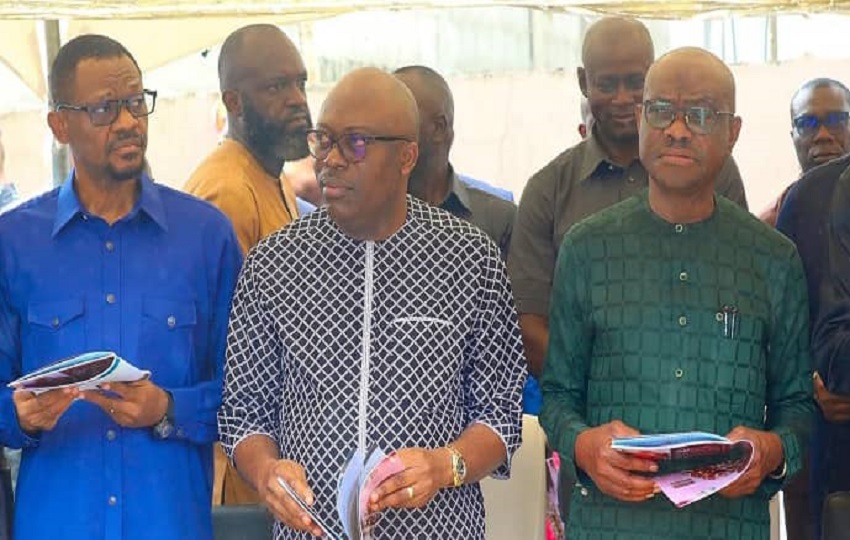
Fubara’s men absent at gov’s reunion with Wike

Published

on

Signs of a renewed reconciliation between Rivers State Governor Siminalayi Fubara and his political mentor, now Minister of the Federal Capital Territory, Nyesom Wike, appear to be emerging, following a high-level meeting of key political stakeholders in Port Harcourt.

The closed-door meeting, held on Saturday night, brought together Fubara, Wike, members of the Rivers Elders and Leaders Council, the leadership of the state House of Assembly, and several prominent politicians loyal to the FCT Minister, including members of the Rivers National Assembly caucus.

Although details remained sketchy as of the time of filing this report, sources said the meeting was convened at the instance of the  Chairman of the Rivers Elders and Leaders Council, Chief Ferdinand Alabraba.

However, concerns have surfaced over the absence of Fubara’s loyalists, marking the second time such a peace gathering was reportedly dominated by Wike’s camp.

Governor Fubara returned to office on September 18, following the suspension of the six-month emergency rule in the state and the exit of Vice Admiral Ibok-Ete Ibas (retd.), who served as State Administrator under President Bola Tinubu.

Since his reinstatement, the governor has dissolved the Rivers State Pensions Board and the state Microfinance Agency, both reconstituted during Ibas’s administration.

Among those present at the Saturday meeting were Wike, Fubara, Alabraba, Speaker of the Rivers State House of Assembly, Martin Amaewhule, Deputy Speaker, Dumle Maol, House Leader, Major Jack, and Senate caucus leader, Senator Barry Mpigi.

Also in attendance were former and serving lawmakers, including Senators Magnus Abe, George Sekibo, Olaka Nwogu, Wilson Ake, Felix Nwaeke (Tai/Oyigbo Federal Constituency), and Kelechi Nwogu (Etche/Omuma Federal Constituency).

See also  JUST IN: Emir of Gusau dies at 71

Other attendees included former NBA President Onueze Okocha (SAN); elder statesman and monarch Chief Sergent Awuse; former Attorneys-General Prof. Zacchaeus Adangor (SAN), Frank Owhor, Ken Chikere, and Worgu Boms; APC Deputy National Vice Chairman (South-South) Chief Victor Giadom; Rivers PDP Chairman Chief Chukwuemeka Aaron; and former Environment Minister Udi Odum.

Also present were Elder Chidi Wihioka, Dr. Chinyere Igwe, Pro-Chancellor, Ignatius Ajuru University of Education, Ikuinyi Ibani; Executive Director, Finance and Administration, NDDC, Chief Boma Iyaye;, Chief Marcus Nle Eji, Prof. Ogiri, Chief Chukwuemeka Woke, Dr. Sampson Parker, Dr. Fred Kpakol, and Chief Felix Obuah, among others.

Although the exact agenda was not disclosed, sources close to the meeting said it focused on reconciling Wike’s loyalists with Governor Fubara and fostering cooperation between both camps.

Recall that on September 19, when Fubara returned to the state after his reinstatement, neither members of the State Assembly, local government chairmen, nor known Wike loyalists were at the Port Harcourt International Airport to receive him.

Similarly, during the Independence Thanksgiving Service at St. Paul’s Cathedral, Garrison, last Sunday, most of the figures who attended Saturday’s meeting were noticeably absent.

Last week, the governor officially sacked all commissioners and public office holders affected by the Supreme Court judgment that recognised Martin Amaewhule as the authentic Speaker of the State Assembly.

The judgment invalidated the appointments of those screened by the faction led by Victor Oko-Jumbo, a Fubara ally.

A Fubara loyalist, who spoke to The PUNCH on condition of anonymity, expressed reservations about the meeting, describing it as one-sided.

See also  ‘Your Estranged Wife Accused You Of Domestic Voilence’ – Atiku’s Aide Blasts Fani-Kayode

“It’s like what happened during the emergency rule when we saw pictures of the governor, the FCT Minister, and Martin Amaewhule with President Tinubu in Aso Rock claiming reconciliation,” the source said.“Now again, it’s the same faces, known loyalists of the FCT Minister. Where are elders like Chief Rufus Ada-George, Dr. Gabriel Toby, or High Chief Anabs Sara-Igbe, who stood by the governor? If this is reconciliation, it should be sincere and inclusive.”

However, a Wike loyalist, who also pleaded anonymity, defended the meeting, insisting it was meant to “bring the governor back to his political roots.”

“Politics is about loyalty. What you’re seeing is the governor returning to his original family. These are the same people who stood with Wike when he nominated Fubara in 2023. Many of those now complaining were not even part of the process.”

Following what appeared to be a harmonisation meeting, sources hinted that Governor Fubara may soon submit a list of commissioner-nominees to the Rivers State House of Assembly for screening and confirmation.

Meanwhile, the Rivers Peace Initiative has appealed for patience and trust in the ongoing peace efforts, describing them as a critical step toward lasting stability.

In a statement issued in Port Harcourt on Sunday, the group’s convener, Obinna Ebogidi, lauded the renewed dialogue among political and community leaders, urging all parties to protect rather than politicise the reconciliation process.

“Peacebuilding is a process that begins in phases, building confidence, establishing mutual respect, and preparing the ground for broader participation,” the statement read.

“What matters most is that the conversation has started again, and that leaders are finding the courage to meet, talk, and seek common ground.”

See also  Asylum surge: UK stops study visas for four countries

Ebogidi urged stakeholders, political actors, and citizens to exercise restraint, adding:

“No one wins in a divided Rivers State. Everyone stands to gain from a peaceful, stable, and prosperous state where governance and development can thrive again,”he said.

punch.ng

FOLLOW US ON:

FACEBOOK

TWITTER

PINTEREST

TIKTOK

YOUTUBE

LINKEDIN

TUMBLR

INSTAGRAM

Continue Reading
Click to comment

Leave a Reply

Your email address will not be published. Required fields are marked *

News

Tinubu reveals how he diversified Nigeria’s economy, read details

Published

on

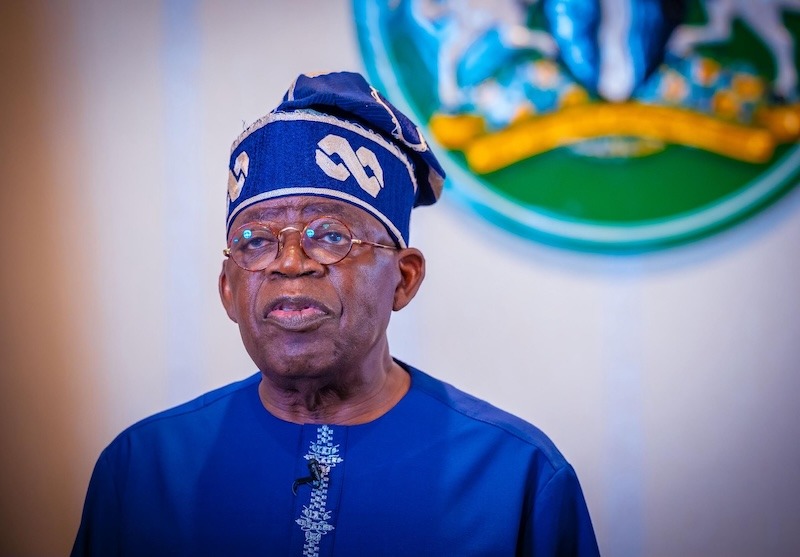
President Bola Ahmed Tinubu has declared that the Nigerian economy has witnessed a transformation from total dependence on sale of hydrocarbon resources to potential growth in agriculture, manufacturing, and the digital and creative industries.

President Tinubu gave his scorecard on diversification of the economy on Tuesday while speaking during the fifth anniversary of the Nigerian Upstream Petroleum Regulatory Commission (NUPRC).

Represented by Vice President Kashim Shettima at the event, President Tinubu maintained that in the last three years of his administration, there has been a massive drop in oil revenue, as a result of growth in other sectors, a feat he attributed to his Renewed Hope Agenda.

He said: “These gains matter well beyond the oil and gas industry. Under the Renewed Hope Agenda, we are building a diversified economy in which agriculture, manufacturing, the digital and creative industries all play their part.

“We have already reduced our dependence on oil revenue, and we intend to go further. But a diversified economy still needs energy, foreign exchange and investment, and that is where this sector serves the nation. Our gas can power homes and factories. Petroleum earnings support a stable naira and help fund the Federation.”

Vice-President Shettima also told the gathering of players in the oil and gas industry that there has been an increase in investment in upstream sector and stability in hydrocarbon production, positive developments he attributed to the joint effort of security agencies, operators, host communities, and the regulatory agency, the NUPRC.

He stated that a well-run upstream industry is capable of creating jobs for Nigerian engineers, fabricators, and service companies, as his administration plans to use petroleum resources to build the wider economy, rather than depend on them.

See also  Asylum surge: UK stops study visas for four countries

He said: “With the largest gas reserves in Africa, we will expand gas supply for power, industry and clean cooking, reduce flaring and methane emissions, and grow renewable energy alongside it. Nigeria will meet its climate responsibilities without sacrificing the development and energy access our people deserve.”

President Tinubu also charged the International Oil Companies to reciprocate his favorable fiscal policy in the oil industry.

“Operators who enjoy incentives must deliver on their commitments to work programmes, local content, the environment and host communities, and the Commission must also account publicly for its own performance. We will uphold the rule of law and the sanctity of contracts, so that disputes are fewer and, where they arise, are resolved quickly and fairly.”

Identifying the Petroleum Industry Act (PIA) as a strong foundation for the achievements recorded in the sector, President Tinubu observed, however, that a foundation is only the beginning, as laws only set the rules, while investors decide on commercial terms.

He charged the Commission “to keep its processes clear and its timelines reliable, to work closely with sister agencies so that investors are not caught between overlapping requirements, and to remain firm, fair and independent in its decisions.”

“Acknowledging that five years was a short time in the life of any institution, President Tinubu applauded the NUPRC for using the period well, urging the Commission to “approach the next five years with the same commitment, integrity, and sense of purpose.”

In his presentation, Minister of State for Petroleum Resources, Oil, Senator Heineken Lokpobiri, said NUPRC has recorded significant achievements in the last five years, attributing the progress to the leadership and reform agenda of the Tinubu administration.

See also  VIDEO: Lagos begins probe as ambulance hits woman during Lagos marathon

According to him, Nigeria, with crude oil production of about 1.7 million barrels per day and over 37 billion barrels of oil reserves, still requires increased investment, additional licensing rounds, and intensified exploration to unlock the full potential of the nation’s petroleum resources.

Also speaking, the Chairman of the NUPRC Governing Board, Senator Magnus Abe, said the creation of the Commission under the PIA was evidence that Nigeria was making progress in reforming the oil and gas sector.

He credited the Commission’s success to President Tinubu’s dogged leadership and his decision to shield the regulator from political interference.

Abe commended the management and staff of NUPRC for what he called their exceptional commitment to transparency, professionalism and operational efficiency over the last five years.

The anniversary event also featured the presentation of awards to former Directors of the Department of Petroleum Resources (DPR), which was transformed into the NUPRC, in recognition of their contributions to reforms in the upstream petroleum sector.
Source: tribuneonlineng.com

FOLLOW US ON:

FACEBOOK

TWITTER

PINTEREST

TIKTOK

YOUTUBE

LINKEDIN

INSTAGRAM

Continue Reading

News

Christa Pike awake, speaking after failed execution, lawyer says

Published

on

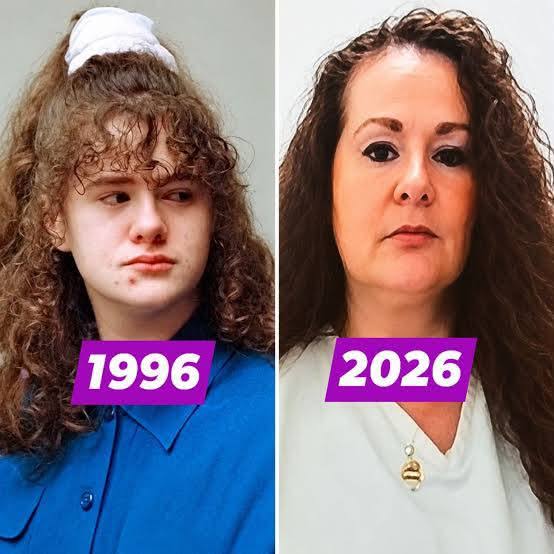
Christa Pike, the Tennessee death row inmate in the United States who survived a failed execution last week, is now conscious, speaking and receiving medical treatment, according to her attorneys.

Pike remains in hospital following two unsuccessful attempts to administer a lethal dose of pentobarbital. Her lawyers said Tuesday that she is still handcuffed and shackled and has suffered significant injuries to her arms.

Her prognosis remains uncertain, with her attorneys warning that she faces a lengthy recovery.

“At a minimum, we expect a long recovery,” attorneys Randy Spivey and Kelly Gleason said. “We are incredibly grateful to the first responders and the medical team at the hospital who treated Christa like a human and have provided exceptional care to her. We also want to thank thousands from all over the world who sent messages offering prayers and support for Christa.”

The attorneys described Pike’s survival and current condition as “unprecedented” and said they will provide further details during a news conference Wednesday.

Pike, 50, became the first person known to survive a lethal injection execution after two rounds of the procedure failed to kill her in Tennessee.

Her case has drawn attention from President Donald Trump, who questioned how the execution could have failed and suggested that carrying out a lethal injection should not be difficult.

“How does that happen?,” Trump said. “Should be easy to do. It shouldn’t be very difficult.”

Trump described the case as an “interesting situation” but said Tennessee authorities would decide whether another execution attempt would be made.

See also  Asylum surge: UK stops study visas for four countries

“That was an interesting situation, but you’re going to have to speak to Tennessee about it. Whether or not they’re going to go forward,” he told reporters who traveled with him to Texas.

Pike’s attorneys previously said she was subjected to at least seven needle insertions during the failed execution. Spivey described the procedure as “cruel and torturous” and urged Tennessee Gov. Bill Lee to commute Pike’s death sentence to life imprisonment.

Lee subsequently suspended executions in Tennessee while the state investigates the circumstances surrounding the failed procedure, calling Pike’s case a “tragedy.”

Before the execution attempt, Pike had sought to be executed by hanging, citing concerns that damaged veins in her arms could prevent the execution team from successfully administering pentobarbital.

Pike had been scheduled to become the first woman executed by Tennessee in 200 years.

She was sentenced to death for the 1995 killing of a classmate when both were teenagers. Pike was convicted of torturing and killing the girl before cutting her body with a box cutter.

Source: tribuneonlineng.com

FOLLOW US ON:

FACEBOOK

TWITTER

PINTEREST

TIKTOK

YOUTUBE

LINKEDIN

INSTAGRAM

Continue Reading

News

Kenya confirms first imported Bundibugyo virus case, patient dies

Published

on

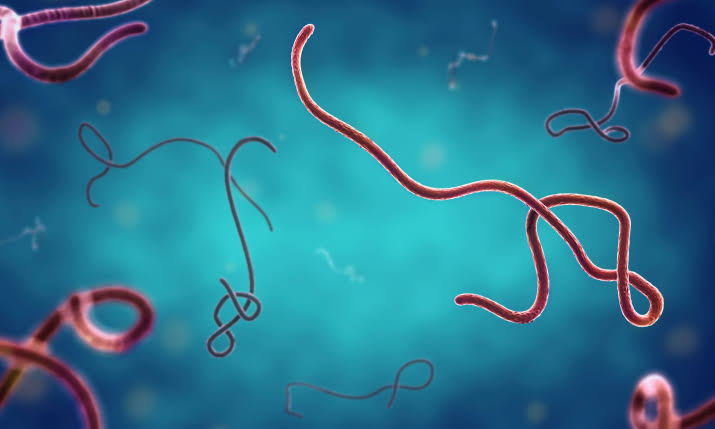
Kenya has confirmed its first imported case of Bundibugyo virus disease (BVD), with the patient dying after travelling from the Democratic Republic of the Congo (DRC) through Uganda to Nairobi, the World Health Organisation (WHO) has said.

The WHO said the Kenyan government had activated measures to prevent further transmission, including case investigation, contact tracing, enhanced surveillance, screening at points of entry and risk communication with affected communities.

The patient, a Kenyan citizen who had been living in the DRC, fell ill and received treatment at several health facilities in the country before travelling by road through Beni to Kampala, Uganda, on October 2, 2026.

The patient subsequently flew to Nairobi, arriving on October 3, and was immediately transported to a hospital where the person was isolated.

Samples tested positive for Bundibugyo virus at both the National Virology Reference Laboratory and the Kenya Medical Research Institute.

Despite receiving supportive care, the patient died on the night of October 5 and was buried on October 6 in line with Kenya’s Ebola safe and dignified burial protocol.

The government notified the WHO of the case on October 6 in accordance with the International Health Regulations (2005).

Kenya is the fourth country to confirm BVD. The DRC is currently responding to an outbreak, while Uganda, where the Bundibugyo virus species was first detected in 2007, ended its latest outbreak in August 2026.

France also reported a travel-related case of BVD in June 2026.

According to the WHO, Kenyan health authorities have so far identified 28 contacts, including family members and health workers who cared for the patient.

See also  Russia says any foreign forces in Ukraine would be ‘legitimate targets’, after UK and France pledge troops

They are also tracing 23 passengers and four crew members who were on the same flight as the patient, with arrangements being made for follow-up and quarantine of individuals assessed to be at risk.

WHO Regional Director for Africa, Dr Mohamed Janabi, said Kenya’s preparedness for health emergencies had helped the country respond quickly to the imported case.

“Health emergency preparedness gives us a head start. Kenya has put important outbreak control measures in place,” Janabi said.

He said the priority was to rapidly identify any additional cases before the virus could spread further, adding that WHO was supporting Kenya’s response.

“With rapid and coordinated action, we can prevent the virus from gaining a foothold and stop a potential larger outbreak,” he said.

Kenya had been on high alert since May 2026 following outbreaks in the DRC and Uganda.

As of October 6, the country had screened more than 652,000 travellers entering Kenya, tested 267 suspected samples and trained about 5,000 health workers on Ebola prevention and management.

The WHO said it had worked with partners to support Kenya’s Ministry of Health and National Public Health Institute through Ebola simulation exercises, training of rapid-response trainers and strengthening of surveillance and laboratory capacity.

Isolation units in 27 high-risk counties have been identified and assessed, while case managers have been trained and Ebola surveillance tools updated to facilitate rapid identification, reporting and investigation of suspected cases.

The agency said risk communication and community engagement had also been strengthened through public messaging, media and community engagement, call-centre support and monitoring of rumours and misinformation.

See also  ‘Your Estranged Wife Accused You Of Domestic Voilence’ – Atiku’s Aide Blasts Fani-Kayode

It added that about 1,000 Ebola tests and 1,000 personal protective equipment kits had been delivered to high-risk counties.

Kenya’s Ebola preparedness score, covering areas such as surveillance, laboratory testing, isolation and treatment facilities and trained response teams, rose from 66 per cent in May to 82 per cent in July 2026.

The WHO advised against imposing travel or trade restrictions on the DRC, Uganda or Kenya based on available information, saying it would continue to monitor the situation and verify travel and trade measures where necessary.

Bundibugyo virus disease is a severe and potentially fatal illness transmitted through direct contact with the blood or body fluids of an infected person or contaminated materials.

The WHO said there were currently no approved vaccines or specific treatments for the disease, although candidate products were being evaluated in clinical trials.

Source: tribuneonlineng.com

FOLLOW US ON:

FACEBOOK

TWITTER

PINTEREST

TIKTOK

YOUTUBE

LINKEDIN

INSTAGRAM

Continue Reading

Trending