Connect with us

News

Fubara’s men absent at gov’s reunion with Wike

Published

on

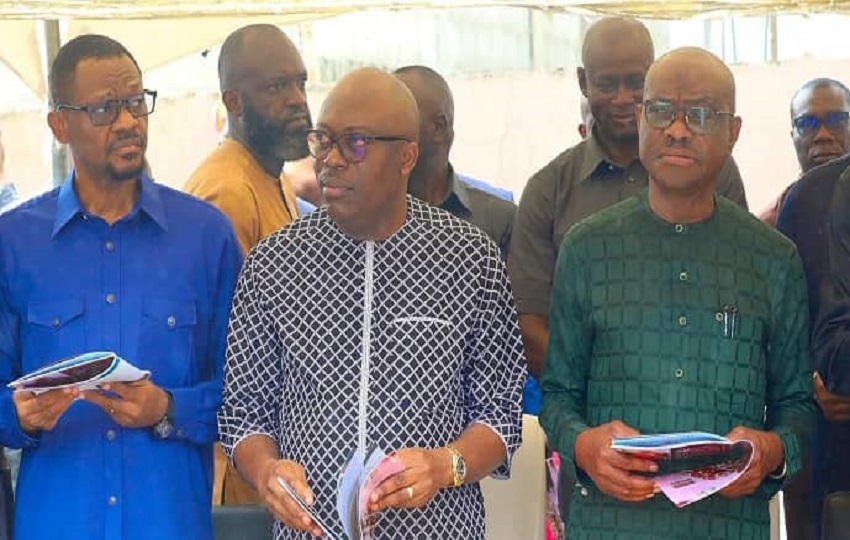
Signs of a renewed reconciliation between Rivers State Governor Siminalayi Fubara and his political mentor, now Minister of the Federal Capital Territory, Nyesom Wike, appear to be emerging, following a high-level meeting of key political stakeholders in Port Harcourt.

The closed-door meeting, held on Saturday night, brought together Fubara, Wike, members of the Rivers Elders and Leaders Council, the leadership of the state House of Assembly, and several prominent politicians loyal to the FCT Minister, including members of the Rivers National Assembly caucus.

Although details remained sketchy as of the time of filing this report, sources said the meeting was convened at the instance of the  Chairman of the Rivers Elders and Leaders Council, Chief Ferdinand Alabraba.

However, concerns have surfaced over the absence of Fubara’s loyalists, marking the second time such a peace gathering was reportedly dominated by Wike’s camp.

Governor Fubara returned to office on September 18, following the suspension of the six-month emergency rule in the state and the exit of Vice Admiral Ibok-Ete Ibas (retd.), who served as State Administrator under President Bola Tinubu.

Since his reinstatement, the governor has dissolved the Rivers State Pensions Board and the state Microfinance Agency, both reconstituted during Ibas’s administration.

Among those present at the Saturday meeting were Wike, Fubara, Alabraba, Speaker of the Rivers State House of Assembly, Martin Amaewhule, Deputy Speaker, Dumle Maol, House Leader, Major Jack, and Senate caucus leader, Senator Barry Mpigi.

Also in attendance were former and serving lawmakers, including Senators Magnus Abe, George Sekibo, Olaka Nwogu, Wilson Ake, Felix Nwaeke (Tai/Oyigbo Federal Constituency), and Kelechi Nwogu (Etche/Omuma Federal Constituency).

See also  Rivers achieves 95% HIV testing among pregnant women — Institute

Other attendees included former NBA President Onueze Okocha (SAN); elder statesman and monarch Chief Sergent Awuse; former Attorneys-General Prof. Zacchaeus Adangor (SAN), Frank Owhor, Ken Chikere, and Worgu Boms; APC Deputy National Vice Chairman (South-South) Chief Victor Giadom; Rivers PDP Chairman Chief Chukwuemeka Aaron; and former Environment Minister Udi Odum.

Also present were Elder Chidi Wihioka, Dr. Chinyere Igwe, Pro-Chancellor, Ignatius Ajuru University of Education, Ikuinyi Ibani; Executive Director, Finance and Administration, NDDC, Chief Boma Iyaye;, Chief Marcus Nle Eji, Prof. Ogiri, Chief Chukwuemeka Woke, Dr. Sampson Parker, Dr. Fred Kpakol, and Chief Felix Obuah, among others.

Although the exact agenda was not disclosed, sources close to the meeting said it focused on reconciling Wike’s loyalists with Governor Fubara and fostering cooperation between both camps.

Recall that on September 19, when Fubara returned to the state after his reinstatement, neither members of the State Assembly, local government chairmen, nor known Wike loyalists were at the Port Harcourt International Airport to receive him.

Similarly, during the Independence Thanksgiving Service at St. Paul’s Cathedral, Garrison, last Sunday, most of the figures who attended Saturday’s meeting were noticeably absent.

Last week, the governor officially sacked all commissioners and public office holders affected by the Supreme Court judgment that recognised Martin Amaewhule as the authentic Speaker of the State Assembly.

The judgment invalidated the appointments of those screened by the faction led by Victor Oko-Jumbo, a Fubara ally.

A Fubara loyalist, who spoke to The PUNCH on condition of anonymity, expressed reservations about the meeting, describing it as one-sided.

See also  AEDC sacks 800 workers amid power crisis

“It’s like what happened during the emergency rule when we saw pictures of the governor, the FCT Minister, and Martin Amaewhule with President Tinubu in Aso Rock claiming reconciliation,” the source said.“Now again, it’s the same faces, known loyalists of the FCT Minister. Where are elders like Chief Rufus Ada-George, Dr. Gabriel Toby, or High Chief Anabs Sara-Igbe, who stood by the governor? If this is reconciliation, it should be sincere and inclusive.”

However, a Wike loyalist, who also pleaded anonymity, defended the meeting, insisting it was meant to “bring the governor back to his political roots.”

“Politics is about loyalty. What you’re seeing is the governor returning to his original family. These are the same people who stood with Wike when he nominated Fubara in 2023. Many of those now complaining were not even part of the process.”

Following what appeared to be a harmonisation meeting, sources hinted that Governor Fubara may soon submit a list of commissioner-nominees to the Rivers State House of Assembly for screening and confirmation.

Meanwhile, the Rivers Peace Initiative has appealed for patience and trust in the ongoing peace efforts, describing them as a critical step toward lasting stability.

In a statement issued in Port Harcourt on Sunday, the group’s convener, Obinna Ebogidi, lauded the renewed dialogue among political and community leaders, urging all parties to protect rather than politicise the reconciliation process.

“Peacebuilding is a process that begins in phases, building confidence, establishing mutual respect, and preparing the ground for broader participation,” the statement read.

“What matters most is that the conversation has started again, and that leaders are finding the courage to meet, talk, and seek common ground.”

See also  Trump’s Threat: Use local, foreign collaboration to crush t3rrorists, OPC Tells Tinubu

Ebogidi urged stakeholders, political actors, and citizens to exercise restraint, adding:

“No one wins in a divided Rivers State. Everyone stands to gain from a peaceful, stable, and prosperous state where governance and development can thrive again,”he said.

punch.ng

FOLLOW US ON:

FACEBOOK

TWITTER

PINTEREST

TIKTOK

YOUTUBE

LINKEDIN

TUMBLR

INSTAGRAM

Continue Reading
Click to comment

Leave a Reply

Your email address will not be published. Required fields are marked *

News

SEE FULL LIST: NJC recommends 28 candidates for judicial appointments

Published

on

The National Judicial Council (NJC) has recommended 28 candidates for appointment as judicial officers across six states, including 24 candidates for various State High Courts.

The recommendations cover the High Courts of Kano, Ebonyi, Edo, Adamawa and Ogun states, the Plateau State Sharia Court of Appeal, Adamawa State Sharia Court of Appeal and Adamawa State Customary Court of Appeal.

The Council announced the recommendations in a statement issued on Wednesday by its Deputy Director of Information, Kemi Babalola-Ogedengbe.

It said the decisions were taken at its 112th meeting held on November 3, 2026, under the chairmanship of the Chief Justice of Nigeria, Justice Kudirat Motonmori Olatokunbo Kekere-Ekun.

According to the Council, one candidate was recommended as Grand Kadi of the Plateau State Sharia Court of Appeal, while another was recommended as Kadi of the Adamawa State Sharia Court of Appeal.

Two others were recommended as judges of the Adamawa State Customary Court of Appeal.

The appointment includes “24 High Court candidates and four candidates for the Sharia and Customary Courts of Appeal.”

The full list of the 28 recommended candidates is as follows:

PLATEAU STATE SHARIA COURT OF APPEAL (GRAND KADI)

1. Tijjani Jibrin Zololo

KANO STATE HIGH COURT

2. Nafisah Yusuf Hassan
3. Halima Yahuza Ahmad
4. Abdullahi Abdulsalam Bature
5. Musa Ibrahim Umar

EBONYI STATE HIGH COURT

6. Dickson Edmund Amaga

EDO STATE HIGH COURT

7. Benson Osagie Osawaru
8. Taiye Osayanmon Omoruyi
9. Dorothy Ibhade Adamaigbo
10. Festus Osagie Usiobaifo
11. Pius Idemudia Oiwoh
12. Majebi Samuel Amune
13. Emike Jessica Imuekemhe

See also  AEDC sacks 800 workers amid power crisis

ADAMAWA STATE HIGH COURT

14. Aminu Sa’ad
15. Ibrahim Ulenda Musa
16. Sadiq Giwa
17. Musa Bala Mijinyawa
18. Japhet Ibrahim
19. Aliyu Bakari
20. Yakubu Ahmadu

OGUN STATE HIGH COURT

21. Olakulehin Luqman Abiola Oke
22. Adebimpe Folusho Obienu
23. Fatimat Adeola Daudu
24. Rafiat Bolanle Kadiri
25. Oludotun Olaniyi Osho

ADAMAWA STATE SHARIA COURT OF APPEAL (KADI)

26. Abubakar Ishaku

ADAMAWA STATE CUSTOMARY COURT OF APPEAL

27. Elshama Gwama Dimas
28. David Benjamin Pembi

The NJC said all the recommended candidates were expected to be sworn in by their respective state governors without delay.

Source: punchng.com

FOLLOW US ON:

FACEBOOK

WHATSAPP CHANNEL

TWITTER

PINTEREST

TIKTOK

YOUTUBE

LINKEDIN

INSTAGRAM
Continue Reading

News

JD Vance reveals Iran war cost Republicans midterm elections, read details

Published

on

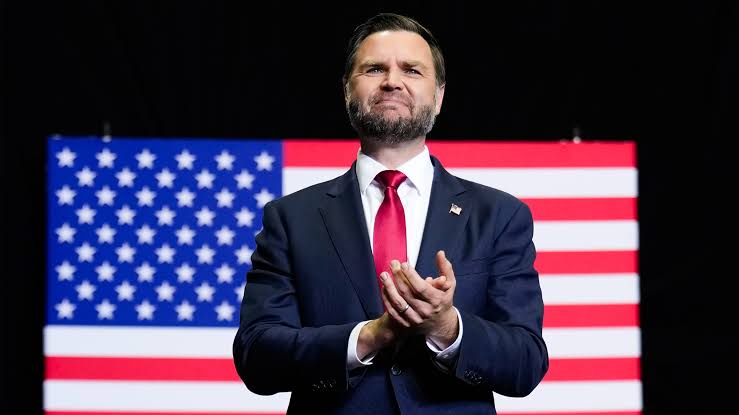
United States Vice President JD Vance has blamed the Iran war for the Republican Party’s poor performance in the 2026 midterm elections, saying many supporters of President Donald Trump switched allegiance to Democrats over dissatisfaction with the conflict.

Vance said this in a post on his X handle on Wednesday, arguing that the party’s defeat was not primarily caused by poor voter turnout but by the defection of voters who supported the Trump-Vance ticket in 2024.

He said data analysis conducted by his team before the elections had shown that Republican supporters were turning out in significant numbers, despite opinion polls predicting a major Democratic victory.

“One of the things the data analysts on our side obsessed over was ‘composition’—whether the electorate looked close enough to 2024 for Republicans to win,” he said.

Vance explained that although turnout was encouraging in several states, a member of his data team had warned him that many Republican voters were angry and might not vote for the party.

“Well, that looks prophetic now. Our voters did show up. In Florida, for example, the electorate was nine points more Republican than Democrat, just a couple points worse than 2024,” he said.

“But the main problem is not turnout. The main problem is that many people who voted for Trump/Vance in 2024 voted for Democrats in 2026.”

The Vice President acknowledged that the party might have failed to communicate its economic policies effectively, particularly on the cost of living and inflation.

However, he said the major reasons voters abandoned the Republicans were concerns about the war, economic hardship, America’s foreign policy priorities and its relationship with Israel.

See also  AEDC sacks 800 workers amid power crisis

According to Vance, a pollster who accurately predicted the election outcome identified four major demands among former Republican supporters who switched to the Democrats.

The demands were to end the war, prioritise the cost of living and inflation, put America first and change the country’s relationship with Israel.

“The reason we lost is the war. The president himself said so last night,” Vance stated.

He also defended television personality Rachel Campos-Duffy, saying her earlier call for a diplomatic resolution to the conflict had proved politically sound.

Vance warned against attempts by Republican establishment figures to attribute the party’s electoral setback to other issues, particularly immigration policy.

He said he was open to reviewing immigration enforcement strategies, including targeting businesses that employ undocumented workers, but rejected calls for amnesty.

“Anyone pushing amnesty is lying to you,” he said.

The Vice President challenged those who believed the war was worth the political cost to defend that position openly, noting that the defeat could cost Republicans control of the Senate for the next six years.

“If you’d like to argue it was worth it, that losing the Senate for the next six years was worth it, then do so. Argue it was a worthwhile cost to pay,” he said.

“Agree or disagree, that’s at least honest.”

Despite the setback, Vance expressed optimism about the country’s future, urging disappointed Republican supporters to channel their anger into rebuilding the party and electing candidates who share their political views.

“Let’s take that anger and get back to the work of saving our country,” he added.

See also  Rivers achieves 95% HIV testing among pregnant women — Institute

Source: punchng.com

FOLLOW US ON:

FACEBOOK

WHATSAPP CHANNEL

TWITTER

PINTEREST

TIKTOK

YOUTUBE

LINKEDIN

INSTAGRAM

Continue Reading

News

UK to strengthen immigration enforcement with facial recognition

Published

on

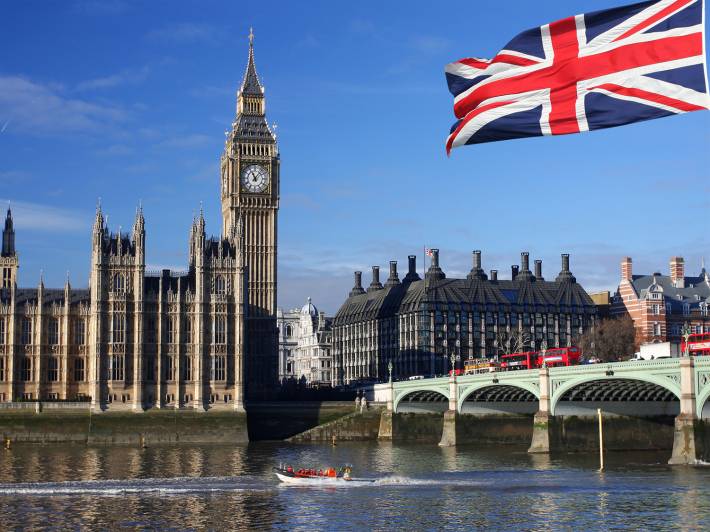
The United Kingdom government plans to expand live facial recognition technology to strengthen immigration enforcement and identify individuals who have violated immigration rules.

The initiative, being developed by the Home Office, could see facial recognition cameras deployed at transport hubs and public events to help immigration officers identify people who have overstayed their visas, entered the country unlawfully or breached their immigration conditions.

According to policy documents published in October and sighted by PUNCH Online on Thursday, the proposed expansion could extend the technology’s use to general immigration enforcement, including civil immigration violations that do not necessarily involve criminal offences.

The development comes as Home Secretary Shabana Mahmood seeks to intensify immigration enforcement through increased funding, additional personnel and expanded deportation operations.

The Home Office said the technology would help officers identify individuals subject to removal proceedings and those attempting to re-enter the UK unlawfully.

The policy documents also suggest that facial recognition could reduce the need for repeated enforcement visits to residential properties and workplaces.

Authorities have already conducted three trials of the technology at Holyhead port in north Wales between November 2025 and February 2026. The trials focused on identifying individuals travelling from Ireland who were subject to deportation orders or wanted over immigration-related criminal offences.

The programme has now entered its formal delivery phase, with officials considering wider deployments at transport hubs and large public gatherings.

A Home Office spokesperson confirmed that further trials were being considered while the government examined the potential benefits and implications of the technology.

See also  VIDEO: Police identify officer in viral video saying Obi can never be President

U K Home Secretary, Shabana Mahmood, said: “Facial recognition technology has been the biggest breakthrough for catching criminals since DNA matching, already helping police take thousands of dangerous criminals off our streets.

“The benefits are clear, but we must ensure that its use is fair, safe and proportionate.

“It is right we put in place clear laws to ensure that the use of this technology is watertight, so the public can have confidence that these tools, which are vital to our safety, are used responsibly too.”

However, the proposed expansion has raised concerns among civil liberties organisations and migrant rights advocates over privacy, surveillance and the possibility of inaccurate identification.

The Joint Council for the Welfare of Immigrants described the development as a significant escalation of immigration enforcement powers, while the Open Rights Group questioned the transparency of the plans, public consent and the absence of comprehensive legislation governing facial recognition.

Critics have also warned that the technology could disproportionately affect people of colour because of concerns about identification accuracy.

Meanwhile, Biometrics and Surveillance Camera Commissioner William Webster has questioned whether existing regulatory arrangements are sufficient to oversee the expanding use of facial recognition across government agencies.

Under the proposed policy, individuals under 18 will not be included on facial recognition watchlists.

Source: punchng.com

FOLLOW US ON:

FACEBOOK

WHATSAPP CHANNEL

TWITTER

PINTEREST

TIKTOK

YOUTUBE

LINKEDIN

INSTAGRAM
Continue Reading

Trending