
Connect with us

Business

Trump threatens to end cooking oil purchases from China

Published

on

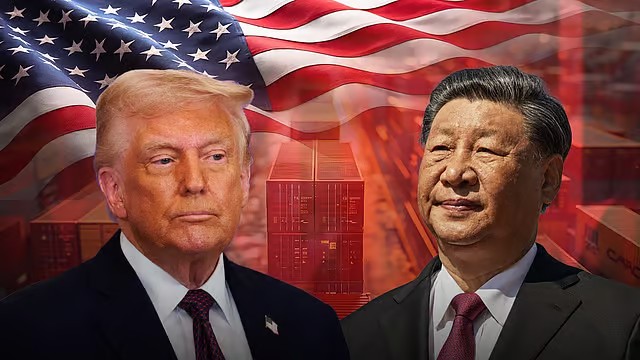
US President Donald Trump has lashed out at China for suspending purchases of American soybeans, calling the move an “economically hostile act” and warning that Washington could retaliate by halting imports of cooking oil and other goods from the world’s second-largest economy.

“We are considering terminating business with China having to do with Cooking Oil, and other elements of Trade, as retribution,” Trump wrote on his Truth Social platform on Tuesday, October 14.

The remarks came just hours after the president struck a more conciliatory tone when speaking to reporters at the White House, saying: “We have a fair relationship with China, and I think it’ll be fine. And if it’s not, that’s okay too.”

The back-and-forth comments underscore renewed trade tensions between the two economic superpowers during Trump’s second term, with tariffs once again soaring into the triple digits on key imports.

In a separate interview with the Financial Times on Monday, US Treasury Secretary Scott Bessent accused Beijing of trying to destabilize global markets after it imposed sweeping export controls on rare earth materials, which are vital for high-tech manufacturing and defense industries.

Trump told reporters the US must remain “careful” in its dealings with Beijing, emphasizing his complex relationship with Chinese President Xi Jinping.

“I have a great relationship with President Xi, but sometimes it gets testy because China likes to take advantage of people,” he said. “When punches are thrown, you’ve got to put up the blocks.”

The president’s online statement also acknowledged the strain China’s soybean halt is placing on American farmers, a key political constituency for Trump. US exports of animal fats, greases, and processed oils, including used cooking oil, have surged in recent years, driven by booming domestic demand for biofuels.

See also  TCN declares force majeure as rainstorm collapses Lagos-Osun power line

Despite occasional attempts to cool tensions, the trade truce between Washington and Beijing remains fragile.

After China imposed new restrictions on rare earth exports, Trump announced plans to introduce a 100 percent tariff on Chinese goods starting November 1, a move that US Trade Representative Jamieson Greer said could be accelerated depending on Beijing’s next steps.

“Much depends on what the Chinese do,” Greer said in an interview with CNBC, adding that Beijing had “chosen to make this major escalation.”

China remains the world’s largest producer of rare earth minerals, which are critical for the production of magnets used in electronics, electric vehicles, and defense systems.

Bessent described Beijing’s latest measures as evidence of a “weak economy” attempting to “pull everybody else down with them.”

Tensions have also spilled into diplomacy. Last week, Trump hinted he might cancel a planned meeting with President Xi at the upcoming Asia-Pacific Economic Cooperation (APEC) summit, citing China’s trade policies.

Beijing responded by accusing the United States of “double standards”, while vowing on Tuesday, October 14, that it was ready to “fight to the end” if a full-scale trade war resumed.

With both governments digging in, analysts warn that the renewed US-China confrontation could have global economic repercussions, potentially disrupting supply chains, raising prices, and further straining diplomatic ties between Washington and Beijing.

FOLLOW US ON:

FACEBOOK

TWITTER

PINTEREST

TIKTOK

YOUTUBE

LINKEDIN

TUMBLR

INSTAGRAM

Continue Reading
Click to comment

Leave a Reply

Your email address will not be published. Required fields are marked *

Business

TUC urges subsidy for Dangote, modular refineries to lower fuel costs

Published

on

The Trade Union Congress (TUC) has proposed a “production subsidy” for the Dangote Refinery and other modular refineries as a way to reduce the rising cost of premium motor spirit (PMS), commonly known as petrol.

TUC President Festus Osifo made the proposal on Friday while speaking on Politics Today, a current affairs programme on Channels Television.

Osifo said that since the Federal Government has ruled out reintroducing petrol subsidies, alternative measures are needed to ease the burden of high fuel prices on Nigerians.

“So for us as a country, we are making a lot of money. In excess of what we budgeted. All right, so today we make at least $35 or so dollars per barrel beyond what we budgeted,” Osifo said on the programme.

He outlined the TUC’s proposal, focusing on redirecting excess oil revenue to support local refining.

Osifo queried, “So, what we proposed, knowing and understanding that they wouldn’t want to bring consumption subsidy, we were advocating for a production subsidy.

“Production subsidy, in that today we have modular refineries, right?

“So we were advocating that this extra $35, for example, that you are making per barrel, why don’t you take half of it, for example, and use it to subsidise the crude that you are giving to Dangote Refinery and the modular refineries so that they will be able to produce cheaper PMS?”

Petrol prices have surged significantly in recent weeks, rising from about ₦800 to around ₦1,300 depending on location, following the outbreak of the US/Israel-Iran War.

See also  PHOTOS: Devastating Fire Still Raging At Kano Market As Traders Count Their Losses

Despite mounting pressure to reinstate fuel subsidies, which were removed when Bola Tinubu assumed office in May 2023, the Federal Government has maintained its stance against the policy.

On Tuesday, Nigeria’s Coordinating Minister of the Economy and Minister of Finance, Taiwo Oyedele, speaking in Paris at an event, said the Federal Government will not reintroduce subsidies or impose price controls, reaffirming its commitment to market-driven economic reforms.

“We will not bring back fuel subsidy because it creates distortions for the economy, and we won’t introduce price control because we believe in the market… the situation in Iran presents new opportunities for us as the world looks to diversify sources of energy and invest in new markets,” said Oyedele.

Osifo, however, urged the government to explore creative solutions to support citizens amid rising living costs.

But Osifo wants the government to “think out of the box and quickly do things to assist its citizens”.

Continue Reading

Business

Nigeria pledges to strengthen bilateral cooperation with India

Published

on

The Permanent Secretary of the Ministry of Foreign Affairs, Ambassador Dunoma Ahmed, has reaffirmed Nigeria’s commitment to strengthening bilateral cooperation with India.

Ahmed stated this during a meeting with the High Commissioner of India to Nigeria, Abhishek Singh, at the Ministry’s Headquarters on Thursday in Abuja.

A statement issued by Kimiebi Ebienfa, the ministry’s spokesman, said Ahmed expressed appreciation to Singh for the cordial relations between Nigeria and India.

He said that cooperation between both countries would focus on deepening ties ahead of the India-Africa Forum Summit scheduled to be held in New Delhi in May, 2026.

According to him, both countries are strategic partners united by shared democratic values and common aspirations for sustainable development and South-South cooperation.

He underscored the importance of the forthcoming BRICS and India-Africa Forum engagements in advancing multilateral cooperation among developing countries amid evolving global political and economic realities.

Ahmed reiterated Nigeria’s interest in increased Indian investments in key sectors of the economy, particularly manufacturing, agriculture, mining, renewable energy, and local value addition.

He further stressed the need for strengthened collaboration in security and counter-terrorism, especially through technological cooperation and defence capacity building.

Earlier, Singh briefed Ahmed about preparations for the BRICS Foreign Ministers’ Meeting slated for May 14 to 15, at the Bharat Mandapam in New Delhi.

Meanwhile, the India-Africa Forum Summit is expected to convene African leaders and senior officials later in the month.

Singh said, “ Nigeria, as a BRICS partner country and a major stakeholder in Africa, occupies a strategic place in India’s foreign policy engagement with the continent.

See also  World Bank flags ‘hidden spending system’ diverting over N34.53tn of Nigeria’s revenue

“The Government of India looks forward to Nigeria’s active participation at the meetings and in deepening cooperation between both countries in areas of trade, renewable energy, defence, industrialisation, agriculture, and technology.”

He further highlighted ongoing initiatives under the International Solar Alliance and Africa Solar Facility, including proposed renewable energy investments and enhanced developmental partnerships with Nigeria.

NAN

punch.ng

FOLLOW US ON:

FACEBOOK

TWITTER

PINTEREST

TIKTOK

YOUTUBE

LINKEDIN

INSTAGRAM

Continue Reading

Business

National Assembly okays N2.29tn FCT budget, sets 76% for capital projects

Published

on

The National Assembly on Thursday passed the 2026 Statutory Appropriation Bill for the Federal Capital Territory, approving a total expenditure of N2.285tn for the development and administration of the nation’s capital.

The approval followed the presentation and consideration of the harmonised report of the Senate and House of Representatives Committees on the FCT during plenary.

The report was presented by the Vice Chairman of the Senate Committee on the FCT, Austin Akobundu (Abia Central), on behalf of the committee chairman, Ibrahim Bomai (Yobe South).

Presenting the report, Akobundu said the joint committees recommended the sum of N2.285tn as the FCT statutory budget for 2026 from a projected revenue of N2.385tn.

He explained that the budget proposal contained N165.7bn for personnel costs, N378.2bn for overhead costs, while N1.741tn was allocated to capital expenditure.

According to him, the structure of the budget indicated a strong focus on infrastructure development and public service delivery, with 76.19 per cent of the total allocation devoted to capital projects, while recurrent expenditure accounted for 23.8 per cent.

Akobundu said the appropriation process complied with constitutional provisions and emerged after extensive deliberations between the National Assembly committees and officials of the Federal Capital Territory Administration.

He said, “The committees met with the minister and other relevant officials of the FCTA and deliberated extensively on the subject matter.”

Lawmakers who contributed to the debate commended the fiscal framework of the budget, describing it as balanced and development-oriented.

Deputy President of the Senate, Jibrin Barau, praised the spending plan, saying it demonstrated a strong commitment to infrastructural renewal in the FCT.

See also  Nigeria’s Non-Oil Exports Hit $3.225bn In H1 2025

He said, “Mr President, the budget is top-notch. You know, I am the only one in the history of the legislature in this country that has had the opportunity to serve as chairman appropriation committee in the House and in the Senate.

“So when I see a good budget, I know it’s a good budget. It is a budget that’s top-notch. We have to commend the FCT minister for doing a very good job.

“A budget that you have a total of N2.2tn, and out of this, N1.7tn is going for capital. It shows his willingness and determination to continue to show FCT to the admiration of all.”

Abdul Ningi (Bauchi Central) described the appropriation as well-structured and responsive to concerns previously raised by lawmakers during oversight engagements with the FCTA.

Ningi said the budget was well-packaged and well-balanced, considering the observations made by the Senate Committee on the FCT last year.

The Senate thereafter passed the bill through third reading, paving the way for its transmission for presidential assent.

At the House of Representatives, the lawmakers also passed the 2026 statutory budget proposals of the FCT.

They also passed N1.75tn respectively for the Niger Delta Development Commission.

The approvals followed the consideration and adoption of reports presented to the House during plenary by the relevant committees.

Presenting the report on the FCT budget, Chairman of the House Committee on the Federal Capital Territory, Muktar Betara, said the N2.29tn proposal was structured to address personnel obligations, overhead costs and critical infrastructure projects across the nation’s capital.

See also  TCN declares force majeure as rainstorm collapses Lagos-Osun power line

According to him, “Out of the N2.29tn, the sum of N165.78bn is for personnel costs while N378.23bn is for overhead costs.

“The balance of N1.74tn is for capital projects, for the service of the Federal Capital Territory, Abuja, for the financial year commencing January 1 and ending December 31, 2026.”

A breakdown of the recurrent expenditure showed that the Federal Capital Territory Administration secured N151.44bn for its operations.

In what lawmakers described as part of ongoing efforts to strengthen security architecture in Abuja and surrounding satellite communities, the House approved N6.79bn for the security services department of the FCTA.

The lawmakers also approved N1.51bn and N910.20m for the FCT Muslim Pilgrims Welfare Board and the Christian Pilgrims Welfare Board, respectively.

For capital projects, the education sector received N162bn, while engineering services got the largest allocation of N758.15bn.

The resettlement and compensation department was allocated N143.18bn, public buildings received N2.38bn, while the satellite towns development department secured N212.74bn.

Meanwhile, details of the N1.75tn NDDC appropriation obtained by The PUNCH showed that N47.57bn was earmarked for personnel costs, while overhead expenditure stood at N49.93bn.

The commission also secured N22.36bn for internal capital expenditure, with the bulk of the budget — N1.63tn — dedicated to development projects across the oil-producing Niger Delta region.

The approval followed the consideration of a report presented by the Chairman of the House Committee on NDDC, Erhiatake Ibori-Suenu.

For the NDDC, the passage of the N1.75tn budget is expected to strengthen intervention projects in the oil-rich region, where concerns over underdevelopment, environmental degradation and youth unemployment have persisted for decades despite the area’s contribution to national revenue.

See also  World Bank flags ‘hidden spending system’ diverting over N34.53tn of Nigeria’s revenue

Continue Reading

Trending