Connect with us

Education

Stakeholders back establishment of African aviation varsity in Abuja

Published

on

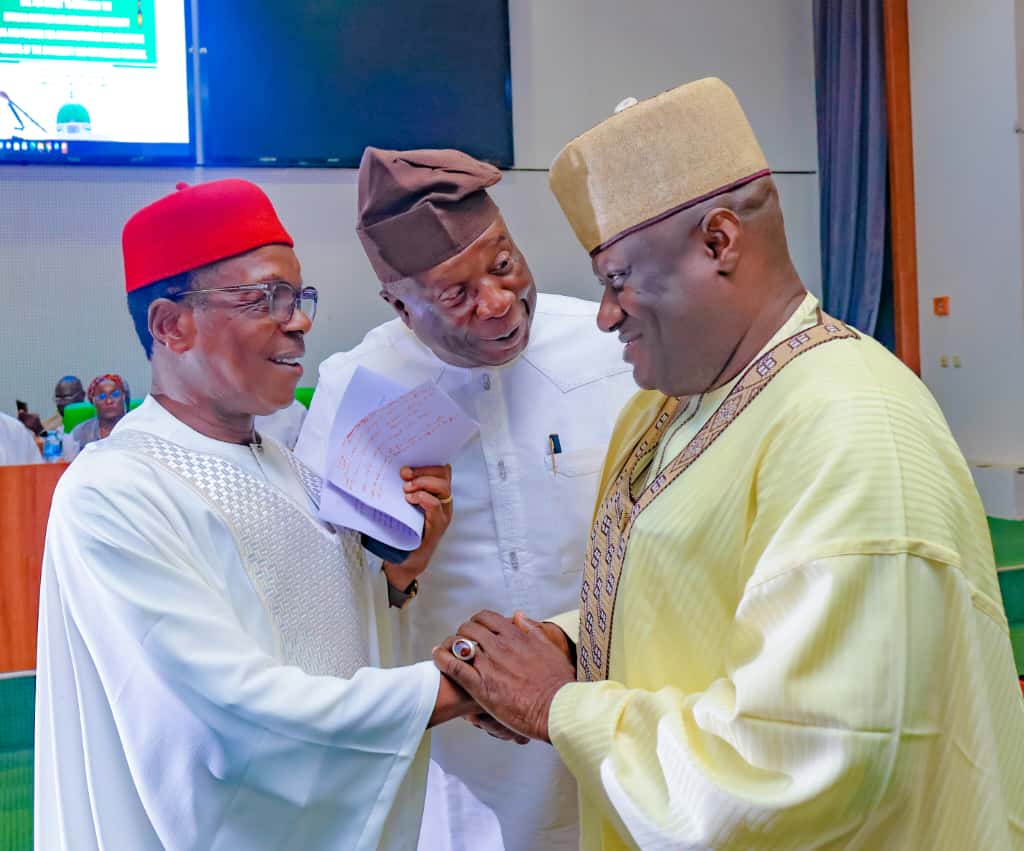
The establishment of the University of the African Aviation and Aerospace University has received stakeholders’ support at a public hearing of the House of Representatives Committee on Aviation Technology.

This was made known through a statement made available to The PUNCH by the committee on Thursday.

The committee said the hearing was held to advance legislative efforts for the formal establishment of the African Aviation and Aerospace University, Abuja.

When fully operational, the African Aviation and Aerospace University is expected to be a pioneering institution in the region, offering specialized training and research in aviation and aerospace technologies.

According to the statement, the hearing, which brought together a broad spectrum of key stakeholders from across the aviation and aerospace sectors, aimed to enrich and support the bill seeking to establish the university through an Act of Parliament.

The statement partly reads, “The occasion which took place at the Conference Rm 231 of the House of Representatives was well attended by various prime Stakeholders cutting across the whole gamut of the Aviation and related industries,who made their respective presentations towards enrichment of the Bill.”

Speaking on behalf of the Minister of Aviation and Aerospace Development, Festus Keyamo, the Permanent Secretary of the Ministry, Ibrahim Kana, emphasized the Ministry’s commitment to the university project and the importance of legislative backing for its long-term success.

Also, the Pro-Chancellor of AAAU and former Head of the Civil Service of the Federation, Goni Aji, highlighted the significance of the event, describing it as “a major step in institutionalizing the university through legislative means.”

See also  NYSC reforms: All you need to know about 11 specialised streams, new camp structure

Notable participants included representatives from the Office of the Chief of Air Staff, Federal Airports Authority of Nigeria, Nigerian College of Aviation Technology, Zaria, Academic Staff Union of Universities, Nigerian Airspace Management Agency, Nigeria Meteorological Agency.

Others include, Nigerian Institute of Transport Technology, and Nigerian Safety Investigation Bureau, and the Council for the Regulation of Engineering in Nigeria, among others.

Speaker of the House of Representatives, Dr. Tajudeen Abbas, who spoke through the House Leader Prof. Julius Ihonvbere, reiterated the commitment of the House to drive the bill through legislative channels.

In his closing remarks, Chairman of the House Committee on Aviation Technology, Tajudeen Abiodun, expressed gratitude to attendees and assured that the committee would give the bill “expedited attention to ensure its timely passage.”

Earlier, representing the Senate Committee on Aviation Technology, Patrick Ndubueze, also pledged the Senate’s support and assured stakeholders of concurrence when the bill reaches the upper chamber.

punch.ng

FOLLOW US ON:

FACEBOOK

TWITTER

PINTEREST

TIKTOK

YOUTUBE

LINKEDIN

TUMBLR

INSTAGRAM

Continue Reading
Click to comment

Leave a Reply

Your email address will not be published. Required fields are marked *

Education

How Nigerians Can Apply for ECOWAS Fully Funded Graduate Programme

Published

on

The Economic Community of West African States has opened applications for its 2027 Young Graduates Immersion Programme, offering young Nigerians and other eligible citizens of member states a one-year, fully funded professional placement across ECOWAS institutions and agencies.

The regional bloc announced the opportunity in a notice published on July 31, 2026.

The notice read, “Are you a dynamic young graduate and citizen of an ECOWAS Member State? Do you want to kick-start your career with an excellent professional experience in a regional institution? This is your opportunity!

“ECOWAS is officially accepting applications for its one-year, fully paid professional immersion program.

“This unique initiative allows young professionals to actively contribute to regional integration strategies while developing high-level skills alongside sector experts.”

Who Can Apply?

To qualify for the programme, applicants must “be citizens of an ECOWAS member state,” including Nigeria.

Applicants must “be 32 years old or younger and hold a degree in a relevant field from a recognised institution.”

Application Period

Applications opened on July 31, 2026, and will close on August 31, 2026.

How Nigerians Can apply

Interested Nigerians are required to submit their applications through the dedicated ECOWAS Young Graduates Immersion Programme portal at youngprofessional.ecowas.int.

Applicants will be expected to complete the following six stages:

Create an account and access the application form.

Fill in personal and contact information.
Provide academic and professional background details.
Upload required documents, including a degree certificate, curriculum vitae and motivation letter.
Review and validate all submitted information.
Submit the completed application.
What successful applicants will gain
See also Agbakoba Reveals Best System of Government to Manage Nigeria’s Diversity
According to ECOWAS, selected graduates will spend one year in its institutions and agencies, where they will work on projects supporting regional integration across West Africa.

See also  Rising fuel prices: NNPC may supply foreign crude to Dangote refinery

The organisation said participants would benefit from
Professional experience in ECOWAS institutions;
Advanced training and personalised mentoring;
Leadership development opportunities; and Access to a network of regional and international experts.

ECOWAS said the programme seeks to develop the next generation of African professionals while strengthening regional cooperation and development across its member states.

FOLLOW US ON:

FACEBOOK

TWITTER

PINTEREST

TIKTOK

YOUTUBE

LINKEDIN

INSTAGRAM

Continue Reading

Education

Sex-for-marks: 60 randy lecturers axed in five years

Published

on

No fewer than 60 lecturers across Nigerian universities and polytechnics have been suspended, dismissed, had their appointments terminated or been prosecuted over allegations of sexual harassment and other forms of sexual misconduct in the last five years.

An analysis of disciplinary actions publicly announced by tertiary institutions between 2021 and July 2026 shows that while universities and polytechnics have maintained zero-tolerance policies against sexual misconduct, reports of lecturers demanding sex from students have continued to emerge across the country.

The latest incidents occurred on July 27, 2026, when Paul University, Awka, Anambra State, announced the suspension of a practical biology technologist in its Faculty of Natural and Applied Sciences, Cornelius Eze, over allegations of serious sexual misconduct after a complaint was lodged with the institution on July 14.

A week earlier, on July 18, Kogi State Polytechnic terminated the appointment of a lecturer, Mukhtar Muhammed, over allegations that he sexually molested a student.

The institution said the decision was part of efforts to maintain discipline and protect students from abuse.

The latest action was not the first by the institution.

In December 2025, the polytechnic also terminated the appointment of a lecturer, Abutu Thompson, after he was allegedly found guilty of sexually harassing and victimising a female student in the Department of Computer Science.

Similarly, in May 2024, a lecturer in the Department of English and Literary Studies at the Federal University, Lokoja, Kogi State, was investigated after he was allegedly caught attempting to sexually harass a female student through repeated inappropriate messages.

The crackdown intensified in 2024 and 2025.

In April 2024, the University of Nigeria, Nsukka, suspended a lecturer, Mfonobong Udoudom, indefinitely after a viral video allegedly showed him sexually harassing a female student.

Also, in April 2025, the Governing Council of the Lagos State University of Science and Technology dismissed three lecturers over allegations of sexual harassment following disciplinary proceedings.

Barely 10 days later, the Governing Council of Abubakar Tafawa Balewa University, Bauchi, dismissed a senior lecturer, Dr. Usman Aliyu, after finding him guilty of sexually harassing a married postgraduate student who had accused him of demanding sexual favours and threatening her academic progress.

See also  Reps order IG to produce fake, PFIPC agency DG Adeyemi within 48 hours

The list grew further in July 2025 when the Lagos State University dismissed two lecturers after its Governing Council reportedly found them guilty of offences, including sexual harassment, inhumane treatment of students and financial misconduct.

The latest sanctions are only a fraction of the disciplinary measures taken by tertiary institutions over the past five years.

In February 2021, the University of Nigeria, Nsukka, suspended a lecturer in the Department of Archaeology and Tourism, Dr Chigozie Odum, over allegations of sexual misconduct.

Four months later, the Federal University, Oye-Ekiti, suspended a lecturer in its Department of Media and Theatre Arts over similar allegations, while the University of Lagos dismissed two lecturers in June 2021 for sexual misconduct.

The University of Port Harcourt also dismissed a lecturer in the Department of Foreign Languages and Literature in August 2021 over sexual misconduct.

Similarly, in June 2021, the Vice-Chancellor of Akwa Ibom State University, Prof. Nse Essien, disclosed that the institution had sacked about 14 lecturers for engaging in the sexual molestation and abuse of female students.

In October 2021, the Federal Polytechnic, Bauchi, dismissed two lecturers from its Departments of Nutrition/Dietetics and General Studies over sexual misconduct.

Also in 2021, Ignatius Ajuru University of Education dismissed a lecturer in its Department of Sociology for impregnating a female student, while Kwara State University, Malete, sacked a lecturer in December for sexually harassing a student in the Department of Pure and Applied Sciences.

The sanctions continued in 2022.

In January of that year, Elechi Amadi Polytechnic in Rivers State dismissed a lecturer over allegations of sexually harassing a female student.

Three months later, Obafemi Awolowo University, Ile-Ife, Osun State, launched an investigation into allegations of sexual harassment involving a professor in its Department of Linguistics and African Studies, bringing to two the number of professors at the institution who had faced similar allegations within a few years.

In June 2022, the then Vice-Chancellor of the University of Abuja, Prof. Abdul-Raheed Na’allah, announced the dismissal of two professors over sexual misconduct, describing the decision as part of efforts to uphold the university’s ethical standards.

The year 2023 recorded another wave of disciplinary actions.

See also  NYSC reforms: All you need to know about 11 specialised streams, new camp structure

The Independent Corrupt Practices and Other Related Offences Commission arraigned a lecturer at Tai Solarin University of Education, Dr Balogun Olaniran, over allegations that he demanded sexual gratification from a female student to alter her examination results.

In May of the same year, Ambrose Alli University dismissed a lecturer over allegations of sexual harassment after its Staff Disciplinary Committee found him guilty of misconduct.

According to the institution’s Vice-Chancellor, Prof. Asomwan Adagbonyin, the lecturer admitted making advances to the student and even visited her church to seek forgiveness.

In July 2023, Na’allah disclosed that the University of Abuja had dismissed two additional lecturers over allegations of sexual harassment.

Saturday PUNCH also learnt that in August 2023, the University of Calabar suspended its then Dean of the Faculty of Law, Prof. Cyril Ndifon, over allegations of sexual harassment.

The case later became one of the country’s most prominent campus sexual harassment cases after criminal proceedings were initiated against him.

Barely a month later, the University of Lagos suspended a lecturer, Kadri Babalola, over allegations that he raped a 21-year-old student.

Similarly, the Federal College of Forestry in Plateau State suspended four lecturers in October 2023 over allegations of sexually harassing female students.

The recurring cases have reinforced concerns that sexual harassment remains entrenched within Nigeria’s tertiary education system despite repeated disciplinary actions by institutions.

A 2018 survey by the World Bank Group found that about 70 per cent of female graduates from tertiary institutions in Nigeria experienced one form of sexual harassment during their academic journey.

The report identified lecturers and fellow students as the major perpetrators, while many victims said they failed to report incidents because of fear of victimisation, intimidation, academic repercussions and lack of confidence in existing reporting systems.

The issue has again come under public scrutiny following recent developments involving students who accused lecturers of misconduct.

A student of the University of Lagos recently approached the court after accusing a lecturer of sexual harassment, a development that has reignited conversations about access to justice for survivors and the responsibility of institutions to protect complainants from retaliation.

See also  Post-primary chaos worsens as INEC fixes candidates’ submission deadline

The renewed public attention comes amid fresh legislative efforts to strengthen the country’s legal response to sexual harassment in tertiary institutions.

In 2025, lawmakers in the House of Representatives introduced a bill seeking stiffer punishment for lecturers found guilty of sexually harassing students.

The proposed legislation seeks to strengthen existing legal provisions by prescribing tougher penalties for offenders while compelling tertiary institutions to establish transparent reporting and investigative procedures.

The move followed years of advocacy after the Sexual Harassment in Tertiary Educational Institutions Prohibition Bill, which had generated widespread public support, failed to become law despite receiving legislative approval in previous assemblies.

Education rights advocates have maintained that while universities have become more willing to dismiss offending lecturers, criminal prosecution remains uncommon, allowing many perpetrators to escape with only administrative sanctions.

Speaking on the issue, the Director of Programmes at Reform Education Nigeria, Ayodamola Oluwatoyin, urged President Bola Tinubu to assent to the proposed legislation.

“The President signing the bill will be a game-changer. We need to make schools safe for our students. The most unfortunate part of the issue is that some of these students, even when harassed, are scared to come out in the open for fear of victimisation and other issues,” Oluwatoyin said.

Similarly, the former Programme Manager, Gender Justice at the Shehu Musa Yar’Adua Foundation, Nafisa Atiku-Adejuwon, called on tertiary institutions to adopt survivor-centred reporting systems that encourage victims to speak out without fear.

“The response system has to be survivor-centred and holistic; mental and physical health concerns must be taken seriously. The response system shouldn’t be created to make the university look good; it should be to take care of the survivors,” she said.

She added that universities must build trust with students by guaranteeing confidentiality, protecting complainants from retaliation and ensuring that allegations are investigated promptly and transparently.

punch.ng

FOLLOW US ON:
FACEBOOK

TWITTER

PINTEREST

TIKTOK

YOUTUBE

LINKEDIN

Continue Reading

Education

FG launches nationwide AI training for 11,700 unity schools’ teachers

Published

on

The Federal Government has launched a nationwide Artificial Intelligence (AI) capacity-building programme for teachers in Federal Unity Colleges, with about 11,700 educators expected to receive digital skills training aimed at transforming classroom teaching across Nigeria. NigerianBusiness News

The initiative advanced on Thursday with the signing of the Terms of Reference (ToR) between the Federal Ministry of Education and ICEDT Consult Limited, paving the way for the nationwide implementation of the AI Teacher Capacity Development Programme.

The programme, to be implemented through the Ministry’s Education Support Services Department, forms part of the Federal Government’s broader strategy to modernise Nigeria’s education sector, strengthen teacher professionalism, and prepare students for a technology-driven global economy in line with President Bola Tinubu’s Renewed Hope Agenda.

Speaking during the signing ceremony in Abuja, the Director of the Education Support Services Department, Gabriel Amudipe, described the programme as a strategic investment in Nigeria’s teaching workforce and the future of education.

He said the nationwide rollout followed the success of an earlier pilot phase and commended ICEDT Consult Limited for developing a structured implementation model that would ensure effective coordination and quality delivery across the country’s six geopolitical zones.

Amudipe stressed that the standards achieved during the pilot phase must be maintained throughout the national rollout. He also urged ministry officials assigned to monitor the programme to carry out their responsibilities professionally and ensure strict compliance with every provision of the agreement.

“The Ministry remains committed to supporting innovative initiatives that strengthen teacher professionalism, improve learning outcomes and promote the responsible integration of emerging technologies into education,” he said.

See also  El-Rufai: DSS detains five over airport incident, N1bn suit hangs

Earlier, Deputy Director of the Education Support Services Department, Oladele Fapohunda, described the programme as a strategic intervention designed to deepen digital innovation in Federal Unity Colleges. He emphasised that collaboration among all stakeholders would be critical to the successful implementation of the initiative nationwide.

Providing further insight into the programme, the Head of Strategic Partnerships and Learning Scientist at ICEDT Consult Limited, Dr Abdulrahman Orosanya, said the project was approved for national expansion after a successful pilot conducted in six Federal Unity Colleges, representing the country’s six geopolitical zones.

According to him, the pilot demonstrated how Artificial Intelligence could significantly improve lesson planning, classroom instruction, assessment methods and teachers’ overall productivity.

He noted that the nationwide rollout would strengthen teachers’ digital competencies, enhance instructional delivery and support the Federal Government’s vision of building a technology-driven education system capable of producing globally competitive learners equipped with 21st-century skills.

The ceremony concluded with the formal signing of the Terms of Reference by officials of the Federal Ministry of Education and ICEDT Consult Limited, signalling the commencement of preparations for the full implementation of the programme across all Federal Unity Colleges.

Beyond the direct training of approximately 11,700 teachers, the initiative is expected to benefit thousands of students through improved classroom practice, increased digital innovation and the responsible application of Artificial Intelligence in teaching and learning.

The Federal Ministry of Education reaffirmed its commitment to partnering with key stakeholders to modernise Nigeria’s education system, improve teacher quality and deliver inclusive, equitable and future-ready education nationwide.

See also  Benin varsities, Nigerian polys in NYSC fraud

FOLLOW US ON:

FACEBOOK

TWITTER

PINTEREST

TIKTOK

YOUTUBE

LINKEDIN

INSTAGRAM

Continue Reading

Trending