Connect with us

Lifestyle

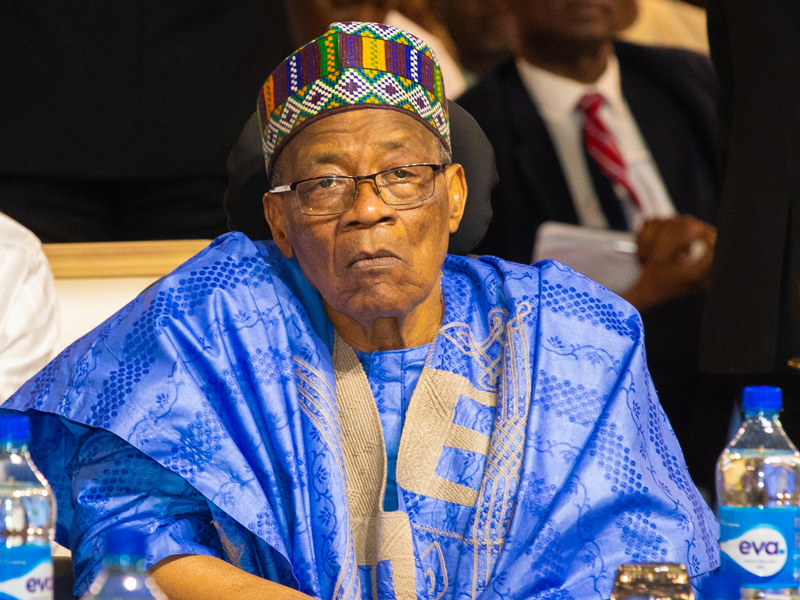
Ibrahim Badamasi Babangida: The General Who Annulled Nigeria’s Historic Election

Published

on

Ibrahim Badamasi Babangida (IBB), born on August 17, 1941, is a retired Nigerian Army General and one of the most influential and controversial political figures in Nigeria’s history. A former military ruler, Babangida governed Nigeria from 1985 to 1993, leaving behind a legacy marked by ambitious reforms, bold economic policies, and one of the most contentious political decisions in the country’s history—the annulment of the June 12, 1993, presidential election.

Rise Through the Military Ranks

Hailing from Minna, Niger State, Babangida joined the Nigerian Army in 1962. He was part of the first generation of officers trained in post-colonial Nigeria and quickly rose through the ranks. A skilled strategist, he played prominent roles in several coups that shaped Nigeria’s political trajectory, including the 1975 coup that removed General Yakubu Gowon and the 1976 counter-coup that installed General Olusegun Obasanjo.

By 1985, as Chief of Army Staff, Babangida orchestrated a bloodless coup that ousted then-Head of State, Major General Muhammadu Buhari. He justified the coup on grounds of curbing authoritarianism and restoring civil liberties.

Military Rule and Structural Adjustments

As Head of State, Babangida projected himself as a visionary reformer and adopted the title “President” instead of “Head of State,” reflecting his desire to give a civilian tone to military governance. His administration initiated significant reforms:

Economic Reforms: Under the guidance of international financial institutions, Babangida introduced the Structural Adjustment Programme (SAP) in 1986. The policy aimed to revitalize Nigeria’s ailing economy through deregulation, privatization, and currency devaluation. While SAP sought to stabilize the economy, it also led to widespread hardship due to inflation, job losses, and reduced social services.

See also  Growing up in Afrika Shrine made me free — Made Kuti

Infrastructure and Institutions: Babangida established key institutions such as the Federal Road Safety Corps (FRSC), National Drug Law Enforcement Agency (NDLEA), and the Nigerian Deposit Insurance Corporation (NDIC). He also relocated Nigeria’s capital from Lagos to Abuja.

Media and Press Freedom: He liberalized the media space, allowing for a boom in independent newspapers and radio stations, although his regime still cracked down on dissent when challenged.

The June 12, 1993 Election Crisis

Despite being a military ruler, Babangida promised a transition to civilian rule and began a lengthy and expensive political transition process, creating two government-funded political parties: the Social Democratic Party (SDP) and the National Republican Convention (NRC).

On June 12, 1993, Nigeria held what is still regarded as the freest and fairest presidential election in its history. The unofficial results showed Moshood Kashimawo Olawale (M.K.O.) Abiola of the SDP leading with a wide margin across ethnic and religious lines.

However, on June 23, 1993, Babangida annulled the election, citing legal and security concerns. This decision sparked nationwide outrage, protests, and international condemnation. It is widely believed that elements within the military and political elite pressured Babangida into the annulment out of fear that Abiola’s presidency would disrupt entrenched interests.

Aftermath and Exit from Power

The annulment led to a deep political crisis and the eventual collapse of the transition program. Facing mounting pressure, Babangida “stepped aside” on August 26, 1993, handing over power to an Interim National Government led by Ernest Shonekan. The interim government was soon overthrown by General Sani Abacha in a palace coup, plunging Nigeria into another phase of dictatorship.

See also  See what fans loved about BBNaija S10 winner, Imisi

Legacy and Controversy

IBB remains a polarizing figure in Nigerian history. His supporters regard him as a strategic leader who tried to modernize Nigeria’s economy and institutions. His critics view him as a cunning and manipulative ruler who prioritized self-preservation over national interest.

The annulment of the June 12 election remains the most defining moment of his regime and casts a long shadow over his legacy. In 2018, the Nigerian government under President Muhammadu Buhari officially recognized June 12 as Democracy Day, honoring Abiola and formally acknowledging the injustice of the annulled election.

In Retirement

Since leaving power, Babangida has largely stayed out of active politics, though he has occasionally granted interviews and issued statements on national issues. He resides in Minna, Niger State, where he remains a respected figure among certain political and military circles.

Ibrahim Babangida’s rule represents a complex chapter in Nigeria’s history—marked by reform, ambition, and controversy. While his government initiated lasting institutional frameworks, his decision to annul the June 12 election stands as a powerful cautionary tale about the dangers of authoritarian interference in democratic processes.

FOLLOW US ON:

FACEBOOK

TWITTER

PINTEREST

TIKTOK

YOUTUBE

LINKEDIN

TUMBLR

INSTAGRAM

Continue Reading
Click to comment

Leave a Reply

Your email address will not be published. Required fields are marked *

Lifestyle

Women Who Love and Listen to Their Pastors More Than Their Husbands Should Be the Pastor’s Second Wife

Published

on

This statement may sound funny, provocative, or even offensive, but it raises an important question about priorities in marriage and religion.

A pastor is a spiritual leader, but he is not supposed to replace a woman’s husband. If a married woman consistently values her pastor’s opinions above her husband’s, obeys her pastor while dismissing her husband, or shows greater loyalty and admiration toward her pastor than toward her spouse, then something may be seriously wrong with the balance in that marriage.

Marriage requires communication, mutual respect, trust, and understanding. A pastor can provide spiritual guidance, but that guidance should not become a reason for a husband and wife to lose respect for each other.

At the same time, husbands should not expect their wives to obey them blindly. Both husband and wife should seek God’s wisdom, communicate openly, and make decisions with love and respect.

So perhaps the real question is not whether such a woman should become the pastor’s “second wife,” but why has the pastor become more important in her marriage than her own husband?

Put God first. Respect your spouse. And never allow a spiritual leader to become a substitute for your marriage partner.

FOLLOW US ON:

FACEBOOK

TWITTER

PINTEREST

TIKTOK

YOUTUBE

LINKEDIN

INSTAGRAM

See also  South Africa’s top court rules men can take wives’ surnames
Continue Reading

Lifestyle

Why is it only in Africa that we hear so much about “generational curses”?

Published

on

This is a question worth asking—not to insult African traditions or dismiss anyone’s beliefs, but to encourage honest reflection.

Across Africa, it is common to hear people explain repeated family problems as a “generational curse.” When poverty, broken relationships, addiction, failure, sickness, family conflict or misfortune appears to repeat from one generation to another, some people immediately conclude that an ancestor, spiritual force or past wrongdoing is responsible.

But is every repeated family problem truly a curse?

If a child grows up in poverty, has limited access to quality education, receives little financial support and then struggles as an adult, is that necessarily a spiritual curse—or could it be the result of circumstances that have been passed from one generation to another?

If children grow up watching violence, substance abuse, unhealthy relationships or constant conflict, they may unknowingly repeat those patterns. That does not necessarily mean they are cursed. Sometimes behaviour is inherited through environment, not through supernatural forces.

And Africa is certainly not the only place where people believe in supernatural explanations for suffering or misfortune. Different societies around the world have their own concepts of inherited wrongdoing, family misfortune, ancestral consequences, fate and spiritual punishment.

So perhaps the more important question is not:

“Who cursed my family?”

But:

“What pattern has been passed down to me, and what can I do to stop passing it to the next generation?”

We should be careful not to use the idea of a curse to discourage people from taking action. A family facing poverty may need education, opportunity and financial planning. A family experiencing repeated conflict may need healthier communication. A person struggling with addiction may need professional support and a strong recovery environment. Communities facing injustice may need better institutions, accountability and opportunity.

See also  Family announces burial arrangements for late actress Allwell Ademola

Faith and spirituality are deeply meaningful to many people, and everyone has the right to hold their beliefs. But faith should not prevent us from examining the practical causes of our problems.

We cannot change the past, but we can change what we pass forward.

Instead of teaching our children that they are victims of an unavoidable family curse, let us also teach them knowledge, discipline, emotional strength, financial responsibility, education, healthy relationships and the courage to break destructive patterns.

Maybe the greatest “curse” is not something mysterious placed upon a family.

Maybe sometimes it is simply a problem that nobody stopped long enough to understand and change.

And the greatest inheritance we can give the next generation is not fear of a curse—but the knowledge and courage to build a better future.

FOLLOW US ON:

FACEBOOK

TWITTER

PINTEREST

TIKTOK

YOUTUBE

LINKEDIN

INSTAGRAM

Continue Reading

Lifestyle

You are very proud to speak big English, but yet you cannot speak your own language?

Published

on

There is nothing wrong with speaking English fluently. In fact, being able to communicate confidently in different languages is a valuable skill. But we should ask ourselves a deeper question: while learning to speak the language of another culture, are we slowly losing the language that connects us to our own roots?

Your mother tongue is more than just words. It carries the stories of your ancestors, the wisdom of your grandparents, the jokes that only your people understand, the traditional greetings, the names, the songs, the history and the identity of your community.

Imagine being able to speak perfect English, but struggling to have a simple conversation with your own grandmother because you do not understand the language she grew up speaking. Imagine your children knowing foreign languages but being unable to understand the language of their own heritage.

That should make us pause.

Speaking English does not make you more intelligent, and speaking your indigenous language does not make you less educated. One is a communication skill; the other can be a connection to your heritage. We should not have to choose between being educated and preserving our identity.

Learn English. Speak it confidently. Learn French, Dutch, Spanish or any other language that opens doors for you.

But don’t let the pursuit of foreign languages close the door to your own.

Teach your children your language. Speak it at home. Ask your parents and grandparents to teach you the words you never learned. If you have forgotten it, it is never too late to start again.

See also  Growing up in Afrika Shrine made me free — Made Kuti

Because when a language disappears from a family, something precious disappears with it.

Be proud of your education. Be proud of your ability to speak English. But also be proud of where you come from.

Your language is not something to be ashamed of. It is a part of your story. Preserve it before the next generation only knows it as something their ancestors once spoke.

FOLLOW US ON:

FACEBOOK

TWITTER

PINTEREST

TIKTOK

YOUTUBE

LINKEDIN

INSTAGRAM

Continue Reading

Trending