Connect with us

Lifestyle

I took inspiration from sex workers for ‘To Kill a Monkey’ role – Sunshine Rosman

Published

on

Actress, Sunshine Rosman, tells OGHENOVO EGODO-MICHAEL about her career, role played in the movie series, ‘To Kill A Monkey’, and other issues

Tell us about your family background.

My mum is from Imo State and my dad is Canadian. I grew up in the Ijeshatedo area of Surulere, Lagos. Later, I lived in Magodo, then Bode Thomas, before moving back to Ijesha (all in Lagos). I was very much a daddy’s girl and spent a lot of time with him. He was a hands-on father who even cooked for the family sometimes.

How did your journey into acting begin?

Acting is something I’ve always known. My parents always encouraged me. My sisters and I would put together little plays or record songs and make our dad watch them when he came back from work, even when he was exhausted. Many times, he pretended to be happy and applauded us regardless. We were all entertainers in my family and we loved watching movies together.

I remember watching a Marilyn Monroe film and being fascinated by her expressions beyond just her beauty. My dad told me she was one of the biggest actresses in the world, and at that moment, I said to myself, “I want to be like that.”

In what ways did Marilyn Monroe influence your acting or performance style?

Performance-wise, I can’t say I picked much directly from her, but there’s something about her that lights up a room. However, her style has definitely influenced me. Whenever I’m choosing what to wear, she is often on my mood board.

In what ways did ‘To Kill a Monkey’ push you to prepare differently?

The experience was unique. I had auditioned a year earlier but wasn’t initially cast. Just when they were about to start filming, I was contacted to step in for the role. At the exact time, I was supposed to begin my school exams. School has always been tricky for me because of work; when exams come, I focus solely on reading.

See also  CORRECT YOUR CHILDREN WITH LOVE

I had to choose between deferring the semester or starring in ‘To Kill a Monkey’. I didn’t want an extra year in school, but I had also prophesied that I would one day work with Kemi Adetiba. So, I went ahead to write my exams and thought I had lost the role. During my school break, I didn’t get a call back in time and decided to move on to another project. But then I had a dream where I saw myself moving across film sets in full hair and make-up. I strongly believed it was Kemi Adetiba’s set.

A few days later, I got the call. Ironically, I was at a radio interview telling them I was going to star in her film, even though I hadn’t been called yet. When the call finally came, everything fell into place.

What strong lesson did the movie teach you?

I would say that there are many “Efes” in our daily lives. In the story, no one was completely innocent— it wasn’t black and white. Each character had both good sides and flaws. I have learnt that people who glorify themselves as good may still have hidden dirt.

From Amanda Sparkles’ (her character in the movie)’s perspective, the lesson is clear: when a man brings you down, don’t stay there; flip the script.

You’ve worked across genres from comedy to drama. What helps you adapt to such contrasting roles?

I use anchors— inspirations for the characters I play. For Sparkles, it was high-class Lagos “runs” girls. These anchors could be a person, an object, or multiple things at once. Amanda Sparkles was a blend of my personal experiences and those of other women I’ve observed. Sometimes, I just sit in a club and watch people. Above all, God’s grace helps me.

How has your experience learning French and your openness to mastering other languages shaped your career?

I must clarify that I don’t speak French fluently. The rumours may have come from an interview I did years ago when I was studying at Alliance Française in Ikoyi. At the time, I had just finished my first class and could hold basic conversations. I even switched my phone language to French to immerse myself.

See also  Nigerian men reveals why they can’t use condoms with their wives

During an interview, I mentioned that I spoke “a little French,” which was an exaggeration. While I can understand a few words if spoken slowly, I am far from fluent.

That said, I remain fascinated by languages. If a role requires me to learn one, I’ll do the work. Whether it’s spending time in an Indian community or immersing myself in Spanish culture, I am open to the challenge. Being multilingual as an actress creates more opportunities.

Your mixed heritage gives you a bicultural perspective. How does that shape how you interpret characters?

Being biracial is sometimes an advantage, but often a disadvantage. Casting-wise, people struggle to place me. My features don’t always fit the typical Nigerian look, yet I don’t fully look foreign either.

For instance, if I’m cast as a daughter, they may have to recast one of the parents to make the family look believable. In international films, they face the same challenge. I fall in between.

Would you say your relationship with Bucci Franklin contributes to your on-screen chemistry?

I can’t speak to that directly, but Bucci is an extraordinary actor; truly a gift. I have had the honour of working with him several times, and each time was a privilege. Beyond his talent, he is a fantastic person with a great character. In this industry, it’s not just about working with skilled people but with good-hearted ones too. I look forward to more projects with him.

You volunteer for a charity organisation. What is that like?

The organisation was founded by my mother and supported by my late father. It has always been a family commitment; something I’ve done since childhood and will continue for life. Recently, my mum opened an orphanage in Abia State with about eight girls under her care.

See also  Cubana Chief Priest's Alleged Baby Mama, Hellen Ati Mocks Him After He Pleaded For US Visa To Attend Davido’s Wedding

What are your ambitions beyond Nollywood?

I want to feature in all the “woods”— Nollywood, Hollywood, Bollywood, even the Asian and British film industries. My dream is to be an international actor, not just a Nigerian one. I want roles that challenge me and push me beyond my comfort zone. I don’t want to limit myself in any way.

How do you feel about sharing the same birthday with your mum?

It makes me feel special. It’s a bond I truly cherish. As a child, I sometimes wished for my own birthday, since my sisters had theirs. I even felt jealous at times. But growing older, I’ve come to see it as a blessing.

Are there roles that are off-limits for you?

Yes. I’ve restricted intimacy scenes. Too often, producers see a beautiful girl and the first instinct is to sexualise her on screen. Sometimes, even costumes for simple roles like an office worker are unnecessarily provocative. Some directors exploit that.

I am not interested in being reduced to an object of desire, except if there’s a powerful message behind it. For example, Amanda Sparkles wasn’t just a prostitute; she was central to Oboz’s downfall and brought depth to the story.

Is there a dream role or project outside acting you’d love to pursue?

Yes. I’m a businesswoman at heart. I love fashion, haircare, skincare, and make-up. That side of me hasn’t been fully revealed yet, but soon people will meet Shine, the businesswoman.

Outside of business, how do you unwind?

I love serene places, especially being by the beach or a lake. I also treasure time with my family and close friends.

FOLLOW US ON:

FACEBOOK

TWITTER

PINTEREST

TIKTOK

YOUTUBE

LINKEDIN

TUMBLR

INSTAGRAM

Continue Reading
Click to comment

Leave a Reply

Your email address will not be published. Required fields are marked *

Lifestyle

FAKE IT TILL YOU MAKE IT — BUT AT WHAT COST?

Published

on

In today’s world, looking successful can sometimes seem more important than actually becoming successful. From luxury cars and designer clothes to expensive holidays and flashy social media posts, the pressure to appear wealthy is influencing how many people present themselves to the world.

But behind the glamorous pictures, is everything really as it seems?

The Culture of Pretending to Be Successful

The popular expression “Fake it till you make it” is often used to encourage confidence, ambition and the courage to pursue success before you feel fully prepared.

However, there is a difference between believing in your potential and pretending to possess wealth or achievements you have not earned.

Some people borrow money to maintain expensive lifestyles. Others spend beyond their means to impress friends, family members or social media followers. Some even sacrifice their financial security simply to avoid being perceived as unsuccessful.

The result can be a dangerous cycle in which maintaining appearances becomes more important than building a stable future.

The Nigerian Perspective: When Success Becomes a Competition

In Nigeria, visible displays of wealth can attract admiration, respect and social recognition. A person who drives an expensive car, builds a magnificent house or frequently displays luxury purchases may be celebrated as someone who has made it in life.

Meanwhile, someone who works honestly, saves carefully and builds wealth gradually may receive less attention.

This raises an important question: Have we become so obsessed with the appearance of success that we have forgotten how to recognise the real thing?

See also  Parents, Home Training Starts at Home

There is nothing wrong with celebrating genuine achievements or enjoying the rewards of hard work. The problem begins when people measure their worth by public approval rather than financial stability, personal growth and meaningful accomplishments.

Young people, in particular, may feel pressured to imitate lifestyles they see online without understanding the income, financial support, debt or circumstances behind those images.

Social media shows us what people want us to see. It rarely reveals the full story.

The Hidden Cost of Fake Success

The consequences of pretending to be wealthy can extend far beyond an empty bank account.

Financial pressure: Spending money you cannot afford to lose can lead to debt and financial insecurity.

Mental stress: Constantly maintaining a false image can create anxiety and fear of being exposed.

Damaged relationships: Borrowing money to impress others or lying about your circumstances can undermine trust.

Delayed progress: Money spent on appearances is money that could have gone towards education, business, savings, housing or other meaningful goals.

Real success does not always look glamorous. Sometimes, it looks like living within your means, paying your bills on time, supporting your family, learning a valuable skill and steadily improving your circumstances.

These achievements may not attract thousands of likes, but they can make a lasting difference in your life.

Confidence Is Good. Deception Is Different.

The expression “fake it till you make it” does not have to mean lying about your wealth. It can mean developing the confidence to apply for a better job, start a business, speak publicly or pursue an opportunity before you feel completely ready.

See also  PHOTOS: Professor Peller - The Enchanting Story of Nigeria's Most Famous Magician and how he got Assassinated in 1997

That kind of confidence can be constructive.

But pretending to own what you do not own, borrowing recklessly to impress people or misrepresenting your financial position is a different matter.

You do not have to look rich to build wealth. You do not have to impress everybody to make progress. And you certainly do not have to prove your success to people who are not contributing to your future.

Build the life first. Let the appearance follow naturally.

The Big Question: Are We Living for Ourselves or for Other People’s Approval?

Ultimately, everyone has a choice. You can spend your life competing with other people’s carefully curated images, or you can concentrate on building a life that genuinely works for you.

The real measure of success is not simply what you wear, the car you drive or the destinations you post online. It is also the security you build, the responsibilities you fulfil, the opportunities you create and the peace of mind you enjoy.

At NewsBreak365, we want to hear your perspective.

Join the conversation:

Is “fake it till you make it” a useful strategy for developing confidence, or does it encourage people to deceive others?

In Nigerian society, do people respect genuine achievement more than visible displays of wealth?

Would you rather live modestly while building real wealth or maintain an expensive lifestyle to impress people?

Has social media made success look more like a competition than a personal journey?

Share your views in the comments. Respectful disagreement is welcome.

NewsBreak365 — News. People. Perspectives.

See also  Nigerian men reveals why they can’t use condoms with their wives

Follow NewsBreak365 for more thought-provoking stories and discussions about society, money, culture and everyday life.

#NewsBreak365 #FakeItTillYouMakeIt #RealSuccess #NigerianSociety #FinancialLiteracy #SocialMediaPressure

FOLLOW US ON:

FACEBOOK

TWITTER

PINTEREST

TIKTOK

YOUTUBE

LINKEDIN

INSTAGRAM

Continue Reading

Lifestyle

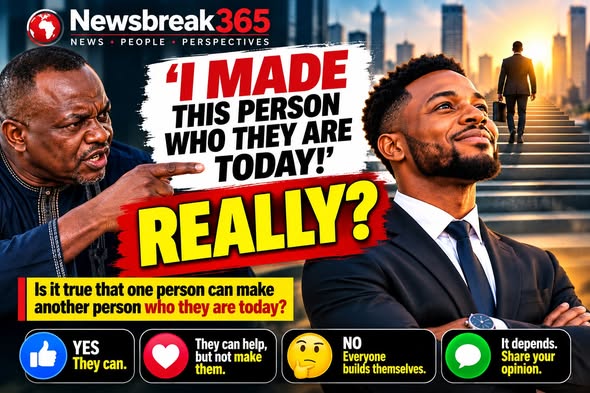
“I MADE THIS PERSON WHO THEY ARE TODAY!” — REALLY?

Published

on

In Nigeria, you sometimes hear people say, “If not for me, where would you be today?”

It could be a politician reminding constituents of the favours he claims to have done for them. It could be a wealthy businessman telling a former employee that they would still be struggling without him. It could be a family member reminding a younger relative of the school fees they paid, the business they financed, or the connections they provided.

Sometimes, even after the person has become successful, the reminder never stops.

But does helping someone succeed give you permanent ownership of their achievements?

Let’s look at the Nigerian reality.

A young Nigerian gets a job through someone’s connection. Years later, that young person builds a successful career through hard work, experience, sacrifice, and personal determination. Yet the person who introduced them to the employer continues to claim all the credit.

A young entrepreneur receives financial support from a relative and turns a small business into a thriving company. Instead of celebrating the entrepreneur’s growth, the relative repeatedly reminds everyone, “I was the one who made him rich.”

In politics, some Nigerian leaders speak as though providing roads, scholarships, appointments, or other public benefits means citizens must remain personally loyal to them. But public service is not a personal favour when it is funded by public resources.

Here is the uncomfortable question: When does gratitude become control?

Let us be fair. Many Nigerians have succeeded because someone believed in them when nobody else did. Parents sacrificed their comfort, relatives paid school fees, mentors opened doors, and friends provided support during difficult times. Those contributions should never be dismissed.

See also  AFRICA, WHEN WILL WE STOP TALKING AND START BUILDING?

But opening a door is not the same as walking the entire journey.

The person who helped you deserves appreciation. The person who worked hard to build a future also deserves recognition.

Nigerians must learn to distinguish between being grateful to someone and becoming permanently indebted to their ego.

If you helped someone become successful, celebrate your contribution without trying to control their decisions forever. And if someone helped you, never allow success to erase your memory or turn you into an ungrateful person.

NEWSBREAK365 ASKS:

In Nigerian society, have you noticed how some people use past favours to demand lifelong loyalty?

1️⃣ Is it right to keep reminding someone of what you did for them?

2️⃣ If you helped someone get a job or start a business, do you deserve credit for their entire success?

3️⃣ Should Nigerians remain loyal to politicians simply because those politicians once helped them?

4️⃣ Have you ever seen a relationship damaged because someone kept saying, “I made you who you are today”?

💬 Drop your opinion in the comments. Let’s have an honest discussion.

Share this post with someone who believes in gratitude—but also understands the importance of personal independence.

Follow Newsbreak365 for bold conversations about Nigerian society, politics, relationships, culture, and everyday life.

#Newsbreak365 #Nigeria #NigerianSociety #NigerianPolitics #SuccessAndGratitude #LifeLessons #SocialCommentary

FOLLOW US ON:

FACEBOOK

TWITTER

PINTEREST

TIKTOK

YOUTUBE

LINKEDIN

INSTAGRAM

Continue Reading

Lifestyle

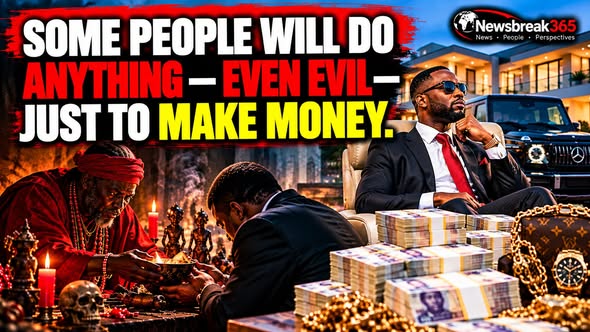
SOME PEOPLE WILL DO ANYTHING — EVEN EVIL — JUST TO MAKE MONEY!

Published

on

In Nigeria today, one question deserves serious attention: Have we reached a point where the amount of money you have matters more than how you made it?

Look around. Someone builds a mansion, buys an expensive SUV, wears designer clothes, or sprays bundles of ₦1,000 notes at parties, and suddenly, everybody wants to associate with them. They are celebrated, respected, and treated like champions—even when nobody knows the true story behind their wealth.

But why are we so quick to celebrate money without asking questions?

Millions of Nigerians wake up every morning to work honestly. Traders struggle to keep their businesses alive. Teachers work hard for their salaries. Young graduates search endlessly for jobs. Parents make sacrifices to feed their children and pay school fees. Yet, some people feel that honest work is too slow and that becoming rich by any means necessary is the only way to survive.

That is where the real danger begins.

When society celebrates wealth without integrity, some people may become tempted by internet fraud, scams, corruption, exploitation, and other harmful practices. Others may even turn to alleged ritual practices because they believe wealth must come at any cost.

The problem is not that Nigerians want to become rich. The problem is when the desperation to become rich destroys people’s conscience.

Think about the message we are sending to the younger generation. When a young person sees someone flaunting millions online and receives more admiration than a hardworking professional, what lesson are we teaching?

See also  Nigerian men reveals why they can’t use condoms with their wives

Are we teaching our children to value education, creativity, patience, and honest business? Or are we teaching them that the only thing that matters is having money, regardless of its source?

At parties, we celebrate the person spraying cash. On social media, we admire the person showing off a fleet of cars. In some communities, people who suddenly become wealthy receive praise before anyone considers how that wealth was acquired.

Meanwhile, honest people who are struggling financially can be mocked, ignored, or treated as failures.

WHEN DID POVERTY BECOME A SHAME, AND WHEN DID QUESTIONABLE WEALTH BECOME A BADGE OF HONOUR?

Nigeria needs a change in values. We need to celebrate honest entrepreneurs, hardworking workers, innovative young people, and those who build successful businesses without destroying other people’s lives.

We must also stop confusing expensive possessions with genuine success. A luxury car does not prove good character. A mansion does not guarantee peace of mind. And a fat bank account does not automatically make someone a role model.

There is nothing wrong with dreaming of wealth. Nigerians deserve good jobs, profitable businesses, financial freedom, and a better quality of life. But no amount of money should be worth sacrificing your humanity, integrity, or another person’s future.

LET’S HAVE AN HONEST NIGERIAN CONVERSATION!

👇 QUESTION 1: Do you think Nigerian society celebrates wealthy people too much without asking how they made their money?

👇 QUESTION 2: Has the pressure to become rich made some young Nigerians lose sight of the value of honest work?

👇 QUESTION 3: If someone is rich but acquired their wealth through dishonest or harmful means, do they deserve to be celebrated?

See also  CORRECT YOUR CHILDREN WITH LOVE

Drop your opinion in the comments. Don’t just read and scroll past—let’s discuss this important issue.

📢 Share this post. The conversation about money, morality, and success needs to happen.

Newsbreak365 — News • People • Perspectives

#Nigeria #NigerianSociety #DirtyMoney #YahooBoys #Corruption #MoneyAndMorality #NigerianYouth #HonestWealth #SocialCommentary #Newsbreak365

FOLLOW US ON:

FACEBOOK

TWITTER

PINTEREST

TIKTOK

YOUTUBE

LINKEDIN

INSTAGRAM

Continue Reading

Trending